In the Plex

In the Plex: How Google Thinks, Works, and Shapes Our Lives
pub. 2011 Steven Levy
437 pages

Full disclosure: I was a passionate Googler ten years ago, an early adopter of anything that the Mountain Brook, CA firm produced — even programs like GoogleDesktop, which I never even used. It was when Google devoured YouTube and started making its mark on there that the plucky upstart of the internet started looking a little more dangerous — and with every passing year I’ve become a little more concerned about the amount of internet traffic Google controls.   Regardless of whether one trusts or fears Google, however, it is an incredible company with extraordinary influence on the web. In the Plex is a fanboyish history of how it came to be, from its early origins in a dorm room to its present goliath state, with various aspects of Google’s culture and various products being examined in turn.

Those of us logged into the English-speaking net scarcely need to know what Google began as:  Google’s initial product was so successful that it’s wormed its way into our language. What is most remarkable about Google is how it changed the internet, and changed expectations.  That story really begins with Gmail — a product which was produced by a Google employee on the side, then officially sanctioned once the triumvirate in charge of Google had experienced it.  Gmail’s enormous free storage option — an entire gigabyte of storage, an amount that flabbergasted Bill Gates when he heard of it —  allowed people the luxury of never having to delete their mail. That didn’t just mean they no longer had to save everything to their computers; it meant they could keep every little thing from conversations to emailed receipts online, and considering how much use emails get by other websites, that could mean a sizable amount of their lives would now be shared with Google.  Prior to Google and facebook, privacy was a web hallmark;  unless you were a network engineer monitoring ISP traffic, people couldn’t tell who you were unless you told them — and I was encouraged to not tell or trust anyone. It took years of conversation between close AIM friends before I’d consent to voice chat, let alone sending picture.

Gmail changed that, and it wouldn’t be the last time Google changed our expectations about what normal online. Now instead of seeing ads that were  static billboards, erected on websites in the hopes of catching some eyes,  the web would be increasingly filled with very personal ads — solicitations to buy a book we’d just been looking at online,  ads in Spanish after using DuoLingo or watching Butterfly Spanish on Youtube,  announcements of Caribbean cruises after GoogleMaps is used to look at the Mexican coast.  GoogleMaps’ associated project, Latitudes, even tracked users locations —  if they wanted. And when Google ventured into the smartphone market and purchased Android,  location tracking became the norm….and even if user try to opt out, on some level it still occurs because the phone has to communicate with cell towers and satellites.   Other projects were even more controversial, like Google’s desire to start scanning the world’s books and provide them for free, online.

Google is an unusual company in that it started with the ambition of a nonprofit: to make the world a better place. Levy believes this philosophy is real and still guides Googled despite their incredible wealth and influence on the web.  And there’s no denying that Google’s products have transformed the internet in a positive way;  GoogleMaps alone is an incredible tool, offering not only maps but information layered within the maps — reviews of restaurants, the ability to see the street’s landmarks, to browse through user-submitted photos.  YouTube, too, isn’t just a place for funny clips: it holds hour upon hours of educational content, and allows people to pursue their interests and passions.  Between Google Search, Maps, and YouTube,  we  have the computer databanks of the Enterprise-D at our command.

I thoroughly enjoyed this history of Google  and its facets, but  keep in mind it’s written by an ardent admirer, whose love for “cool” firms like Google and Apple manifest itself in a nasty contempt for others, like Microsoft.. He refers to Microsoft employees as “Gates’ minions”, which makes Levy sound like less a serious author and more like a blogger with an axe to grind.  Levy’s admiration for Google also means he doesn’t fully examine the  potentials for abuse inherent in one company running so much internet traffic. Chrome, for instance, has virtually taken over, and Microsoft is building a new Edge browser around its source code Chromium. What will it mean when 80% of web traffic is Chrome-based?

Posted in history, Reviews | Tagged , , , , | 4 Comments

Classics Club Schedule, 2019

I have 21 months left to finish my Classics Club list, with 22 books remaining. I’m not sure what happens if one fails to complete the list — perhaps it involves being attacked by moody English teachers, I’m not sure.   Anxious to avoid such a fate, I plan to make classics my priority this year, and have developed a tentative schedule for this year that will make 2020’s classic requirements relatively light.  Most of the sets (save January’s) have a paired connection, like Rome, travel,  and so on.  If I actually get this done, I’ll  reward myself with a little bottle of scotch.

January:
Invisible Man, Ralph Ellison
Moby-Dick, Herman Melville

February
The Aeneid, Virgil
The Conquest of Gaul, Julius Caesar

March
The Moviegoer, Walker Percy
Love in the Ruins, Walker Percy

April
The Decline and Fall of the Roman Empire, Vol. 1,  Edward Gibbon
The Vicar of Wakefield, Oliver Goldsmith

May
Life on the Mississippi, Mark Twain
The Swiss Family Robinson, Johann David Wyss

June
A Farewell to Arms,  Ernest Hemingway
Catch-22, Joseph Heller

July
The Grapes of Wrath, John Steinbeck
The Sun Also Rises, Ernest Hemingway

August
The Education of Henry Adams,  Henry Adams
The Three Musketeers, Alexander Dumas

September
The Histories, Herodotus

October 
The Hunchback of Notre Dame, Victor Hugo
The Jungle, Upton Sinclair

November
War and Peace, Tolstoy

December
The Brothers Karamazov, Fyodor Dostoeyesky

This leaves The Federalist Papers as the odd man out for 2020.   I wanted to make it the September read (September 17 is Constitution Day, a date presumably unremarked on by anyone other than con-law professors), but The Histories seems formidable.  We’ll see what happens!

Posted in General | Tagged | 8 Comments

What I Read Before

This “post” is an index page linking to previous “Books I Read in 20__” posts, with a favorite from each year.

Posted in General | Tagged | Leave a comment

2018 Roundup: Best-Of and Pie

Well, dear readers, another year has come and gone. It’s been a good year here, though not as active as usual. My goal is 150 books a year, and I barely made that this year, with 154 books read. I blame The Sims 4, which I acquired in June during a sale and subsequently became my favorite activity to combine with podcasts.  Looking on what I read, technology edged out everything else — and honestly, that goes beyond my reading,  because I’ve been subscribing to more tech channels and listening to a lot of synthwave this year.

As usual, nonfiction predominates, totaling 64% this year which is right in line with my usual average. History, Science, and Technology were the leaders there.  Ebooks came in strong this year, accounting for 44% of my reading.  When I converted all of my booklists into Excel and imposed a uniform categorization, I noticed that female authors were….scarce, usually under 10% of my reading. This year I had an unannounced goal of reading more female authors, and consider the 22% they managed to be an improvement.

This year’s highlights, with the top ten in bold.

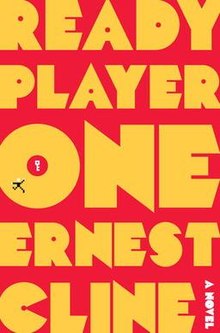
Science fiction had a banner year — 17 books, not counting Star Trek and Star Wars, and most of them  were hits this year. as I discovered and explored the works of John Scalzi (Agent to the Stars), Cory Doctorow (Little Brother and Pirate Cinema), and Ernest Cline (Ready Player One  &; Armada) I also read Andy Weir’s second novel, Artemis.  I experienced RPO, uniquely, across three mediums: I listened to the Audible presentation first, watched the movie, and read the physical book.  A special note about Ready Player One: I read the book, listened to the Audible experience, and watched the movie.  I really liked that book.  It’s one I’ve already started to re-read.

Star Trek also had a strong year,  with nine titles between The Fall,  Vanguard, Section 31, and the Mirror Universe series.  My favorite was David Mack’s Ceremony of Losses, followed by Rise Like Lions, which put the Mirror Universe in a good position for future stories beyond tired rebels v alliance tropes.

In History, always queen of the stacks, my favorite was easily Exploding the Phone, a history of the phone-pheaking movement which later gave rise to the first computer hackers. Ian Mortimer’s A Time Traveler’s Guide to Medieval England was another favorite. I also want to mention Skygods, a history of Pan Am, and Fares Please!, a social history of trolleys, buses, and subways in America.  Fool’s Errand and The Looming Tower were also notable.

Biographies had an uptick this year,  and Steve Jobs by Walter Isaacson was so good that I wound up reading a series of Apple-related books because of it.

Science had an OK year, fine on numbers but lukewarm on quality. Two science books didn’t get full reviews. Ends of the EarthGut, and This is Your Brain on Parasites  stood out from the rest.

Technology had a healthy year, and I especially enjoyed  The One Device and The Art of Invisibility

Historical Fiction practically didn’t exist this year, with under five titles. The Memory of Old Jack and Anne of Avonlea  were the most exceptional titles, and they’re only arguably historical fiction.  I picked up the latest Cornwell novel on release, and…well, turned it back in. I like the Saxon stories, but at this point Uhtred is old and tired, and I can’t tell the last few books from each other.

Religion and Philosophy were…well, even more nonexistant, with one standout title in philosophy (How Adam Smith Can Change Your Life), and…no books on religion? I did read Anthony Esolen’s Nostalgia, which partially involves religion, but wasn’t overtly about it. Religion  was a strong presence in books like From Achilles to Christ and Further Up and Further In: A Guide to Narnia, however.  Caitlin Doughty’s Smoke Gets In Your Eyes, reflections on working in a funeral home, arguably has a place here. What are religion and philosophy, after all, except attempts to make sense of the world — and our inevitable departure from it?

Looking back, I’m not entirely comfortable with the paucity of more meaningful books as opposed to technology,  but one year doesn’t make a pattern. I’ve had years where I was obsessed with France, or health. We’ll see how things look next year!

Posted in General | 14 Comments

What I Read in 2018

Books in bold were superior favorites. 

— January —
1. The Rooster Bar, John Grisham
2. Star Trek the Fall: Ceremony of Losses, David Mack
3. Star Trek the Fall: The Poisoned Chalice, James Swallow
4. Poetry Night at the Ballpark, Bill Kauffman
5. Lessons from a Lemonade Stand,  Connor Boyack
6. Star Trek the Fall: Peaceable Kingdoms, Dayton Ward
7.  Grocery: The Buying and Selling of Food in America,  Michael Ruhlamn
8. Amsterdam: A History of the World’s Most Liberal City,  Russell Shorto
9. Fools and Mortals, Bernard Cornwell
10. Munich, Robert Harris
11. Fares, Please! A Popular History of Trolleys, Horsecars, Streetcars,Buses, Elevateds, and Subways, John Anderson Miller
12. Every Man a King, Bill Kauffman
13. Fool’s Errand: Time to End the War in Afghanistan, Scott Horton
14. The Truth about Nature, Stacey Torino
15. 1906, James Delassandro (Historical Fiction)
16. The Indian in the Cupboard / The Return of the Indian, Lynn Reid Banks

–February–
17. Sinatra: The Chairman, James Kaplan
18. The Gulag Archipelago, Volume III, Aleksandr Solzhenitsyn
19. Verbal Judo: The Art of Persuasian, George Thompson
20. The Many Loves of Dobie Gillis, Max Shulman
21. A Time Traveler’s Guide to Medieval England, Ian Mortimer
22. Everyday Life of the North American Indian, Jon White
23. House of Rain: Tracking a Vanished Civilization, Craig Childs
24; Overclocked: Stories of the Future Present, Corey Doctorow
25. 9 Presidents Who Screwed Up America, Brion McClanahan
26. The Silent Intelligence: The Internet of Things,  Daniel Kellmereit
27. Atlas ShruggedAyn Rand
28. Gut: The Inside Story of Our Body’s Most Underrated Organ, Giulia Enders

— March —
29. How Adam Smith Can Change Your Life, Russ Roberts
30. This Is Your Brain on Parasites, Kathleen McAuliffe
31. Tomorrowland: Our Journey from Science Fiction to Science Fact,Stephen Cutler
32. Smart Cities: Big Data, Civic Hackers, and the Quest for a New Utopia, Anthony Townsend
33. Star Trek Vanguard: Declassified, various authors
34. City of Fortune: How Venice Ruled the Seas, Roger Crowley
35. Door to Door: The Magnificent, Maddening World of Transportation,Edward Humes
36. The Inevitable: Understanding the 12 Technological Forces That Will Shape Our Future, Kevin Kelly
37. Skygods: The Fall of Pan Am, Robert Gandt
38. Hornblower Addendum, C.S. Forester
39. The World as Stage: William ShakespeareBill Bryson
40. Right Ho, Jeeves! P.G. Wodehouse

— April (Read of England) —
41. Wisdom and Innocence: A Life of G.K. Chesterton, Joseph Pearce
42. Rifleman Dodd and The Gun, C.S. Forester
43. The Letters of C.S. Lewis, Warren Lewis and Walter Hooper
44. Further Up and Further In: Understanding Narnia, Joseph Pearce
45. A Hobbit, a Wardrobe, and a Great War, Joseph Loconte
46. The Birth of Britain, Sir Winston Churchhill
47. A Time Traveler’s Guide to Elizabethan England, Ian Mortimer
48. Redcoat: The British Soldier in the Age of Horse and Musket, Richard Holmes
49. Love Among the Chickens, P.G. Wodehouse

— May —
50. Star Trek Mirror Universe: Glass Empiresvarious authors
51. Star Trek Mirror Universe: Obsidian Alliances, various authors
52. Star Trek Mirror Universe: Shards and Shadows, various authors
53. Star Trek Mirror Universe:  Rise Like Lions, David Mack
54. Don’t Go There: From Chernobyl to North Korea, Adam Fletcher
55. From Achilles to Christ: Why Christians Should Read the Pagan Classics, Louis Markos
56. The Ayatollah Begs to Differ: The Paradox of Modern Iran, Hooman Majd
57. Tales from a Techie: Funny Real Life Stories from Tech Support Matt Garrett
58. The Computer Guy is Here! Mainframe Mechanic, John Sak
59. Mirrors of the Unseen: Journeys in Iran, Jason Elliot
60. The Ministry of Guidance Invites You Not to Stay, Hooman Majd
61. Exploding the Phone: The Teenagers and Outlaws Who Hacked Ma Bell, Phil Lapsley
62. Stuff Matters: Exploring the Marvelous Materials That Shape Our Man Made World,  Mark Midownik
63. Gates: How Microsoft’s Mogul Reinvented an Industry,  Stephen Manes and Paul Andrews

— June —
64.  9 Dragons, Michael Connelly
65. Han Solo Trilogy: The Paradise Snare,  A.C. Crispin
66. Ready Player One, Ernest Cline
67. Replay: The History of Video Games, Tristian Donovan
68. Little Brother,  Corey Doctorow
69. Han Solo Trilogy: Rebel Dawn, A.C. Crispin
70. Han Solo Trilogy: The Hutt Gambit, A.C. Crispin
71. Homeland, Corey Doctorow
72. Star Trek: Brinksmanship, Una McCormack
73. Daemon, Daniel Suarez
74. 50 Popular Beliefs That People Think Are True, Guy Harrison
75. The Switch, Joseph Finder
76. America’s Forgotten Founders, Gary Gregg II
77. Fire and Blood: A History of Mexico, T.F. Fehrenbach
78. Armada, Ernest Cline
79. The Art of Invisibility,  Kevin Mitnick

— July —
80. How to Watch TV News, Neil Postman and Steve Powers
81. How the Post Office Created America,  Winifred Gallagher
82. What If? Serious Scientific Answers to Absurd Questions, Randall Munroe
83. The Invaders: How Humans and their Dogs Drove Neanderthals to Extinction,  Pat Shipman
84. A Crack in Creation: Gene Editing and the Unthinkable Power to Control Evolution,  Jennifer Doudna
85. The Second Machine Age,  Erik Byrnjolfson
86. The Grid: Electrical Infrastructure for a New Era, Gretchen Bakke
87. Anne of Avonlea,  Lucy Maud Montgomery
88. From Russia with Love, Ian Fleming
89. The Ends of the World, Peter Brannen
90. Brave New World RevisitedAldhous Huxley
91.  We the Living, Ayn Rand
92.  Among the Wild CybersChristopher L. Bennett

 — August–
93. Machine Man, Max Barry
94. Artemis,  Andy Weir
95. ST DS9: Force and Motion, Jeffrey Lang
96. Broad Band: The Untold Story of the Women Who Made the Internet, Claire Evans 
97. The Hiding Place, Corrie ten Boom
98. The New Tsar: The Rise and Reign of Vladimir Putin, Steven Lee Myers
99. Pirate Cinema, Corey Doctorow
100. The Believing Brain,  Michael Shermer
101. Agent to the Stars, John Scalzi
102. Old Man’s War, John Scalzi

— September —
103. Centauri Dawn, Michael Ely
104. Smoke Gets In Your Eyes and Other Lessons from a Crematory, Caitlin Doughty
105. Antiquity, N.F. Cantor
106. Fly Girls Keith O’Brien
107. Fire and Fury, Michael Wolff
109. The Water Will Come: Rising Seas, Shrinking Cities, and the Remaking  of the Civilized World,  Jeff Goodell
110. Our Only World, Wendell Berry
111. First Light: The Search for the Edge of the Cosmos, Richard Preston
112.  Down and Out in the Magic Kingdom, Cory Doctorow
113.  A Nation Challenged,  The New York Times
114.  The Looming Tower: Al-Queda and the Road to 9/11, Lawrence Wright
115. Digital Filmmaking for Kids,  Nick Willoughby
116. Build Your Own PC for Dummies, Nick Willoughby
117. The Iran Wars: Spy Games, Bank Battles, and the Secret Deals that Reshaped the Middle East, Jay Solomon
118. Within Arm’s Reach: The Extraordinary Life and Career of a Special Agent in the United States Secret Service,  Dan Emmett

 — October —
119. Church of Spies: The Pope’s Secret War Against Hitler, Mark Riebling
120. An Iron Wind: Europe Under Hitler, Peter Fritsche
121. Frankenstein, Mary Shelley
122. The Shining, Stephen King
123. Very Good, Jeeves, P.G. Wodehouse
124. Oliver Twist, Charles Dickens
125. Dispatches from the Muckdog Gazette, Bill Kauffman
126. The Memory of Old Jack, Wendell Berry
127. Fear: Trump in the White House, Bob Wooward
128. Bikeonomics: How Cycling Can Save the Economy, Elly Blue
129. The PrinceMachiavelli
130. The Bicycle Diaries: My 21,000-Mile Ride for the Climate, David Kroodsma

— November–
131. Troubleshooting Your PC For Dummies, Dan Gookin
132. Great Rulers of the African PastLavinia Dobler and William Brown
133. Talking to the Ground: One Family’s Journey on Horseback Across the Sacred Lands of the Navajo, Douglas Preston
134. The Arabian Nights, trans. Hussein Hadawy
135. H+, Gary DeJean (Science Fiction)
136. Nostalgia: Going Home in a Homeless World, Anthony Esolen (Society and Culture)
137. Coffee to Go: Travels in Europe by Truck, Neil Hobbsc
138. The Cathedral and the Bazaar: Musings on Open Source by an Accidental Revolutionary, Eric Raymond
139. The Mind of the Market, Michael Shermer
140. ST S31: Disavowed, David Mack

–December —
141. ST S31: Control, David Mack
142. Pinpoint: How GPS is Changing Technology, Culture, and Our Minds,Greg Milner
143. Steve Jobs,  Walter Isaacson
144. Hubble: Window on the Universe, Robin Kerrod
145. The One Device: A Secret History of the iPhone, Brian Merchant
146. The Perfect Thing: How the iPod Shuffles Commerce, Culture, and Coolness, Steven Levy
147. Minimalism: The Path to an Organized, Stress-Free, and Decluttered Life; Gwyneth Snow
148. Seeing Further: The Story of Science and the Royal Society, Bill Bryson
149. Insanely Great: The Life and Times of Macintosh, Steven Levy
150. Talk Southern To Me: Stories and Sayings to Accent Your Life, Julia Fowler
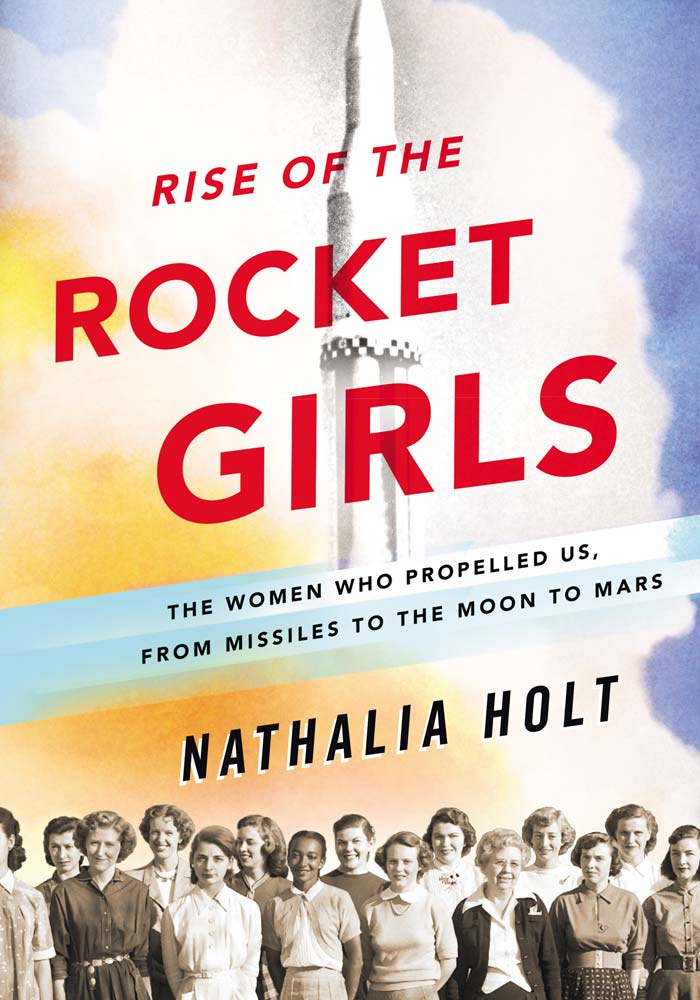
151. Rise of the Rocket Girls, Nathalia Holt
152. Calypso, David Sedaris
153. The Reckoning, John Grisham
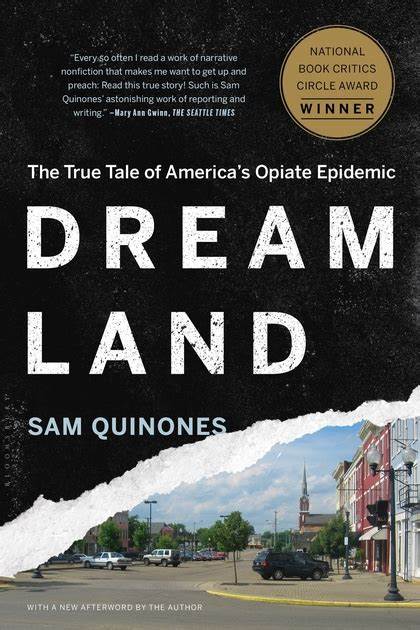
154. Dreamland: The True Story of America’s Opiate Epidemic, Sam Quinones

Posted in General | Tagged | 2 Comments

Flying high in rockets and opiods

Well, folks, Christmas is over, and so is 2018 — almost.  Below are the final comments or reviews for 2018: Dreamland and Rocket Girls,   two very different histories. One is inspiring, the other….so very not.

First up, Rocket Girls!  Call to mind the space race, and very likely the people who come to mind are German scientists and lantern-jawed American airmen, the right-stuff hotshots who explored beyond the atmosphere.  The story of American rocketry begins before the sixties, however, and from the beginning it involved both sexes. In Rocket Girls we visit the early days of rocketry, even during World War 2.  This is really a history of the Jet Propulsion Laboratory, of its inception and early work, as told through serial biographies. Well over a dozen women’s contributions are chronicled here,  and they include a Chinese dissident and the first African-American hired to a technical position at the JPL.   Although the women’s work in computing trajectories, and working out by hand how different materials and propellant mixes might chance results is increasingly supplanted by IBM’s computers,  I really enjoyed the extensive on-the-ground history of the JPL. The amount of work that went into every launch  — of everything from antiaircraft missiles to probe launches — is awe-inspiring, and the July lunar landing seems even more incredible.

Not quite as uplifting but lamentably important is  Dreamland, a history of the opiod crises in America.  The historical narrative considers two stories that converge into one. The first is the rise of a black tar heroin distribution network in the United States, in which a small village in Mexico revolutionized drug marketing to make buying safe, easy, and satisfying – at least until the high wore off. The second story is the rise of prescription opiods in the United States, as aggressive marketing to local general practitioner  wore down decades of reluctant to freely prescribe strong pain medications for fear of addiction.  Spurred by a small study whose import was amplified far beyond reality to think that opiods could never become addictive so long as they were being used for physical pain,  optimistic physicians and ambitious pharmaceuticals undermined the previously existing framework for addressing pain and replace it with it with pills. Use pills, and if they don’t work, use more pills.   When medical patients became addicts and their doctors became concerned,  the addicts were able to get their fix from the new  heroin distributors, the “Xalisco Boys” as the author calls them.  All they had to do was call a number and meet a car at a given location, and they were in business.  The prescription pills also became big business in themselves on the black market, creating pill mills so openly phoney that they operated out of portable trailers and subscribed OxyContin to lines of hundreds.   The two narratives interlace together incredibly well, and as sad a history as this is, it bears considering.   There’s also a bit of philosophy in the title and the deliery; Quinones opens with an attractive look at an Ohio town’s pool and community center, a place called Dreamland, where the people of the town came together and shared their lives — as children they played in the pool, as teens they necked in the high grass, and as adults they came with their kids to experience the wading pool all over again. But then another dreamland, a private one where people dropped out of life and hid themselves in their rooms, lost in their own drug-addled minds, took over. Although the destruction of that Ohio town’s park had more to do with economics than drugs,  it’s a very effective image.

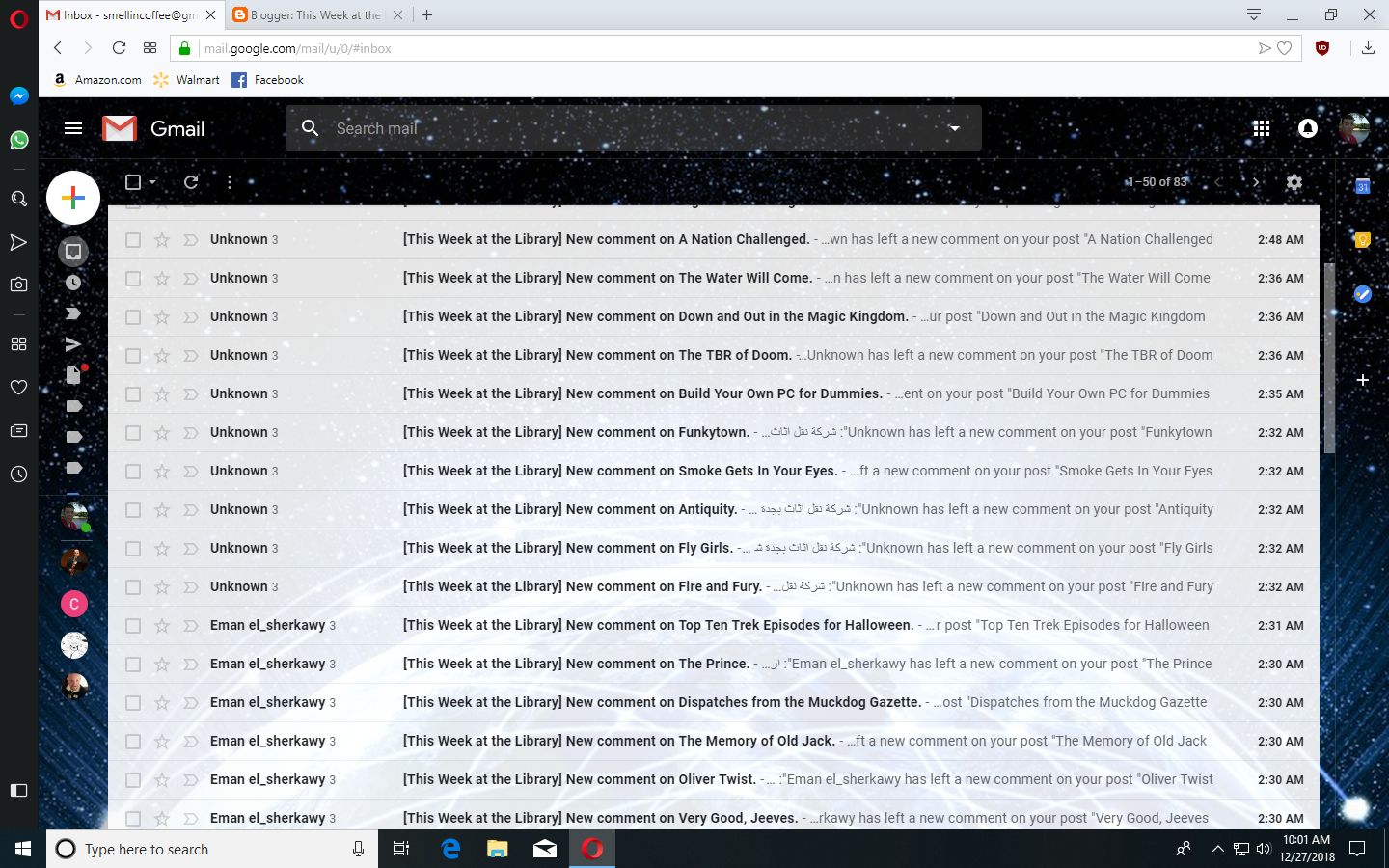
That wraps 2018 up;  later this week I’ll do a best-of-posting and share some data pie.  I’ve got a couple of books at the ready, but don’t imagine I’ll be finishing either one up before tonight.    Because of another outburst of spam (all in Arabic or Farsi, which is…interesting.), I’ve had to impose moderation, but I’ll check on a daily basis, and this explosion of nonsense ever ebbs I’ll turn the moderation off.

Posted in history, Reviews | Tagged , , , , , , , | 6 Comments

So I uh, may have to turn those captchas on….

Lot more of those overnight, too. At least blogger lets me mass-delete!

Posted in General | 9 Comments

The Reckoning

The Reckoning
© 2018 John Grisham
432 pages

On an otherwise unremarkable autumn morning in rural Mississippi,  an idolized war hero traveled from his farm into town, visited the preacher, and shot him. The sheriffs found the shooter patiently waiting for them on his front porch, where he offered neither resistance nor explanation.  The entire town is dumbfounded to see two of its favorite sons turn on one another so inexplicably, and in a way that will destroy the families as the criminal trial and then a wrongful death trial wear on.  The trials here are quick and brutal; instead, the meat of The Reckoning lies in an account of the Bataan Death March and the plight of two children whose lives and homes are destroyed by their parents’ decisions.

Say what you will about The Reckoning, but it’s decidedly different from anything else Grisham has written, set completely in the 1940s and featuring an aspect of the Pacific War (American resistance in the Philippines to Japanese occupation) few will be familiar with.  The first third of the novel addresses the immediate consequences of the preacher-killing, before shifting several years prior, to tell the story of a country farmer turned jungle commando, who barely survived the Bataan death march and escaped to take up with American and Filipino soldiers in the mountains who were engaged in guerilla warfare against the Japanese occupational forces.  The novel then shifts back to the aftermath of the killing and the trials, which….is about as uplifting as reading about the Japanese torturing and starving thousands of men after Bataan. That bit in the middle about the resistance was nice, though.

I can’t deny that I enjoyed reading The Reckoning — I only received it Christmas morning and now write this  less than 24 hours later,  like a few other Grisham reads over the years.  The first two thirds are unexpected, and with all the Faulkner references (characters are constantly reading him, and the writer himself appears as a minor character) I thought Grisham might produce a completely unexpected conclusion. Why did the hero shoot the preacher?  Was this the hero’s way of immolating himself for not living up to his own legend, and taking another secret ne’er do well with him?  Was the preacher a Japanese sympathizer?  In the end it comes down to a very old story, which is unsatisfying given how depressing the novel was as it reached the conclusion. 

While I was appropriately intrigued and riveted by The Reckoning, it’s mostly melancholy.

Posted in historical fiction, Reviews | Tagged , , | 6 Comments

Short rounds: of southern accents and cancerous snapping turtles

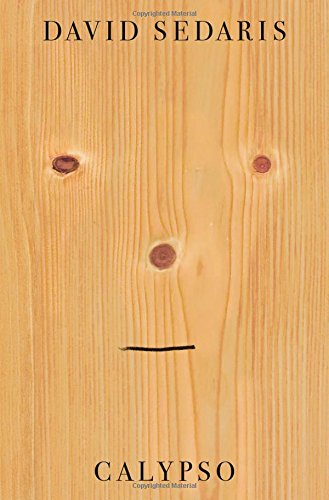
I’ve a free moment between family gatherings and outings, so here’s a short rounds post on Talk Southern to Me, as well as David Sedaris’ new book Calypso.

First up, Talk Southern To Me.   As mentioned a few days ago,  I was interested in the book because its author produces a series on YouTube called “Sh%t Southern Women Say”.  Talk Southern to Me is similar, a bit of southern culture and humor, which has chapters on southern manners and culture but is mostly about language; every chapter closes with sayings related to it, and what’s not covered there is included in a list of words and their translation at the end. Southerners have a distinct family of dialects, whether we’re from the country-club-and-family-money society, or the trailers, muddin’, or outlaw-country side of the woods. Southerners, of course, will see themselves and their families in every chapter, and — depending on how many Yanks they count in their circle of friends — may be startled to learn that more of their use of language is distinctly southern than they thought. (Expressions like “He used to could”, which a Michigan friend of mine of mine was baffled about, are an example.)   Although Fowler is very general at times, I love discovering southern creators who are enthusiastic about preserving the distinct culture of the South in a positive, fun way, instead of edging into prickly defensiveness. Particularly amusing was the section that potent expression, “Bless your/her/his/their heart”,  can be used for everything from sincere sympathy to a manners-approved method of gossiping.

David Sedaris, for those who don’t know, is an American-born humorist whose essays and short fiction usually evoke a strong sense of pathos, often being unbelievably personal, so much so that discomfort turns to giggles.  Sedaris is an acquired taste, I think, as if a reader is introduced to him in the wrong way they might be left thinking “Why would anyone read him?”. He has a strong taste for the odd and unusual, and enjoys derailing social scripts by  asking taxi drivers about local cockfighting laws, or inquiring of supermarket clerks if they have any godchildren. His latest collections of musings, Calypso, seems to be inspired by the onset of old age, as he and his siblings cope with not only the decline of their once-formidable father (who now needs constant care and is alarmingly pleasant to be around,  a distinct change from his forbidding childhood presence), and the suicide of their sister Tiffany.  David himself had a momentary scare with cancer, but the tumor was easily isolated and removable, and he happily fed it to snapping turtles after finding a doctor who was willing to do the operation for him and give him the tumor. Apparently it’s illegal for surgeons to give people anything that comes out of them during surgery (presumably C-section babies are an exemption).   Sedaris had hoped to feed the tumor to a snapping turtle which had a cancerous growth on its head (his favorite turtle), but the cheeky reptile disappeared during the winter.  I enjoyed Calypso well enough, but I’m probably too young to appreciate it in full given the general theme.   My favorite Sedaris story remains “Six to Eight Black Men“, his rendering of Christmas in the Netherlands.

Oh, and apparently the Southern Women Channel just posted a new episode not a month ago to celebrate the end of hurricane season:

Lord, I hope it don’t flood the Wal-Mart.”
“Didje git your milk and bread?”
“Fill up the tub so we can flush the commode!”
“Bless her heart, she’s wearin’ white rain boots after Labor Day.”
“Pray for me, I gotta tell my husband they postponed deer season.” 

Posted in Reviews | Tagged , , | 4 Comments

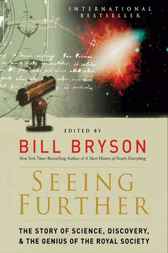
Seeing Further

Seeing Further: The Story of Science, Discovery, and the Genius of the Royal Society
© 2010 Bill Bryson
512 pages


Although Bill Bryson is  chiefly known for his humorous travelogues, he has been known to venture into other nonfiction at times, and in fact the first science book I ever read for fun outside of high school was his A Short History of Nearly Everything.   I wasn’t too surprised, then, to see his name on a history of the Royal Society.  What did come as a surprise was the tenor of the contents, because Bryson was the editor here rather than the author, and the contributing scientists deliver a far more thoughtful history than I’d anticipated, one that’s almost introspective.  Rather than a straightforward chronicle of discoveries made and lines of thought pursued year by year,  the essays are more  thematic, emphasizing  through moments and movements  the evolution of natural philosophy and the development of a distinct discipline which rebuilt the world. (The history of the Royal Society itself appears at the beginning of the book, then the individuals and their contributions take over.  One of the earliest essays, dwelling on the rise of scientific materialism,  argues that the greatest disruption to traditional thought was the idea that the entire cosmos was made of the same material thing, that the stars had fallen from a heavenly realm and were instead pedestrian, subject to the same laws as apples and the dead leaves of autumn. In the monist world, where was the otherworldly?  Another explores the tension between logic-driven natural philosophers and experiential ones in the late medieval period, whose work would eventually dovetail together. It’s not all introspection, as chapters on the important of mathematics (undergirding science) and engineering (applying science) bring us out of the clouds and closer to earth.  

Posted in Reviews, science | Tagged , , | 2 Comments