In the last four years it’s been my habit to structure my science reading, mitigating my tendency of reading some subjects devotedly and ignoring the others (‘others’ almost always being physics and chemistry.) This year I completed the survey early, on 9/2/2021, and continued reading for an end total of 22 science books. I’ve already got some interesting titles lined up for 202!
Goals and ambitions disappear in the glow of Christmas lights, lost in the end-year hubbub and reflection. I’ve been taking it easy by reading a couple of on-the-job memoirs, one by a Nevada state trooper and the other by a British immigrant to Canada who began driving commercial freight trucks in her fifties.
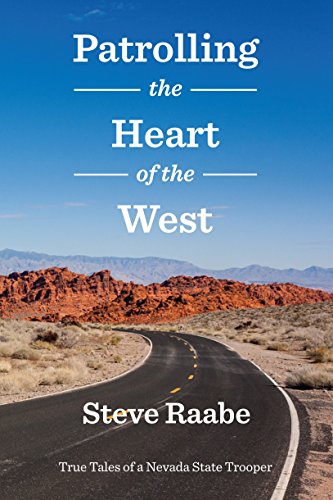
I suspected Patrolling the Heart of the West would make for a good read, given how desolate Nevada is; there, a trooper works alone, and has to be a resourceful jack of all trades, equally skilled at un-snaring traffic after a wintry jacknife or rendering first aid to someone critically injured. There were no desperate straits recorded here to witness Trooper Raab climbing out of, though; the one time he squares off with an armed felon, said felon is so tired of running that they shoot themselves in the car. There are a lot of human-interest stories here, but not much of the “A Man Alone Against the Elements”-type adventures I was expecting. It’s…cop work — pulling over people, sometimes chasing them, analyzing traffic accidents to figure out whose insurance agency gets the unhappy news. If you like COPS or LivePd (and I’m an addict of the latter’s youtube clips), it’s enjoyable enough.
Far more entertaining was Trucking in English, the story of a middle-aged ambulance driver and British mom turned American truck driver. Steele offers the most detailed memoir I’ve ever encountered on learning to operate big rigs, devoting a full third of her book to training alone, then detailing her first few months as a driver — beginning in the Canadian winter (!) before finding warm respite in Texas, Kentucky, and the Carolinas. Steele introduces herself as a longtime feminist crusader, claiming to have fought for the right of women ambulance drivers to be taken seriously some decades prior. The advancing of years apparently removed the chip on her shoulder, as she takes the kidding of other drivers in good humor and occasionally uses the lovable-English-mum to good effect in enlisting help or getting past obnoxious bureaucrats. I found Steele to be warm, amusing company; although frequently on the verge of feeling overwhelmed by the challenges before her (climbing the Canadian Rockies in winter, navigating Detroit), she buckles down and does the work. She learns from her mistakes, too, filling a book with notes about particular drop areas and accumulating tools in her cabin to handle any contingency. Not until the end of the book, when months of seventy hour weeks take their toll does her dauntless and good humor begin to fade Steele’s memoir is breezy but detailed.
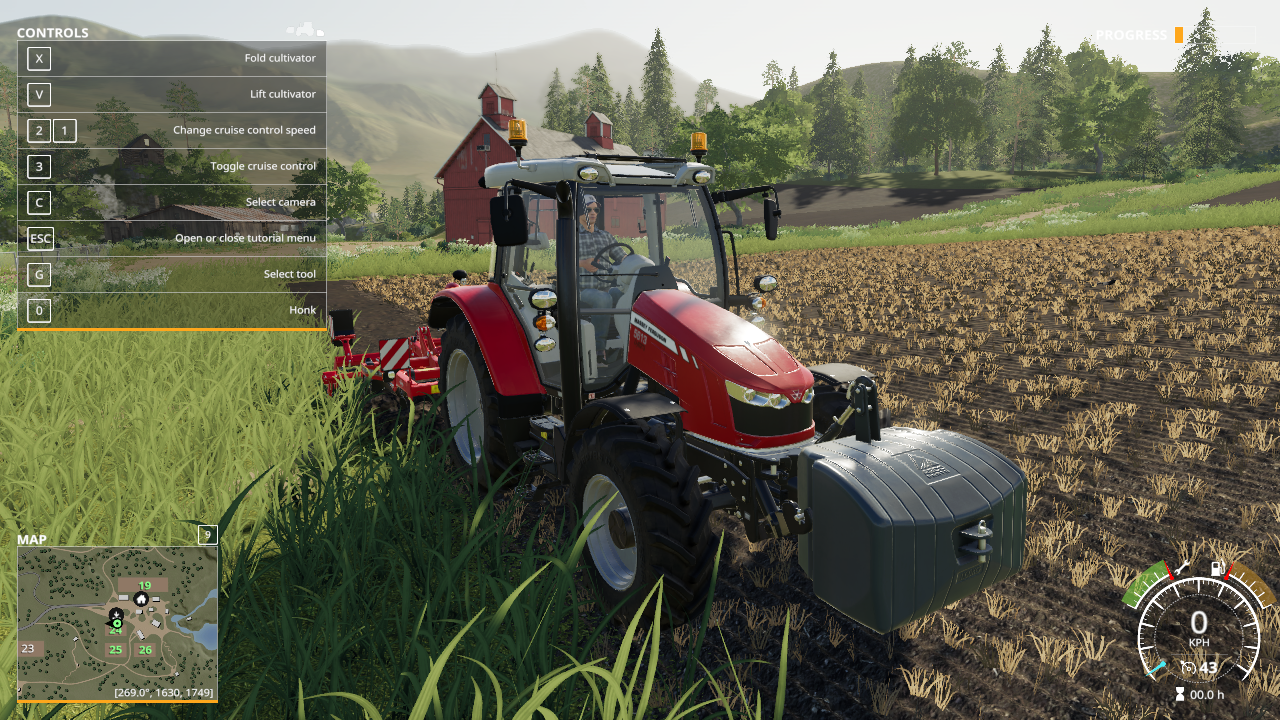
This year is not over yet. I may finish The Prince of Frogtown (Rick Bragg) or The Judge’s List (John Grisham) before 2022 rolls around…provided I don’t get distracted by my Christmas gift to myself, Farming Simulator 2019.
In early November I finished reading Philosophy: Who Needs It by Ayn Rand. Her works are so much of one piece that every time I’ve started tinkering with a review I find it repeats some of the same assessments of her other work this year. Rand’s answer to the question is that philosophy is necessary for all, because being one’s fundamental approach to the world, everything else develops from it. In addition to her making this argument, she also analyzes some of the intellectual trends of the time of her writing.
A philosophic system is an integrated view of existence. As a human being, you have no choice about the fact that you need a philosophy. Your only choice is whether you define your philosophy by a conscious, rational, disciplined process of thought and scrupulously logical deliberation—or let your subconscious accumulate a junk heap of unwarranted conclusions, false generalizations, undefined contradictions, undigested slogans, unidentified wishes, doubts and fears, thrown together by chance, but integrated by your subconscious into a kind of mongrel philosophy and fused into a single, solid weight: self-doubt, like a ball and chain in the place where your mind’s wings should have grown.
Nothing is given to man automatically, neither knowledge, nor self-confidence, nor inner serenity, nor the right way to use his mind. Every value he needs or wants has to be discovered, learned and acquired—even the proper posture of his body. In this context, I want to say that I have always admired the posture of West Point graduates, a posture that projects man in proud, disciplined control of his body. Well, philosophical training gives man the proper intellectual posture—a proud, disciplined control of his mind.
The price of rationalizing is the hampering, the distortion and, ultimately, the destruction of one’s cognitive faculty. Rationalization is a process not of perceiving reality, but of attempting to make reality fit one’s emotions.
Most men spend their lives in futile rebellion against things they cannot change, in passive resignation to things they can, and—never attempting to learn the difference—in chronic guilt and self-doubt on both counts.
He has the power to suspend, evade, corrupt or subvert his perception of reality, but not the power to escape the existential and psychological disasters that follow.
If any man feels that the world is too complex and its evil is too big to cope with, let him remember that it is too big to drown in a glass of whiskey.
Justice does exist in the world, whether people choose to practice it or not. The men of ability are being avenged. The avenger is reality.
If you find it puzzling, the premise to check is the idea that governmental repression is the only way a government can destroy the intellectual life of a country. It is not. There is another way: governmental encouragement. Governmental encouragement does not order men to believe that the false is true: it merely makes them indifferent to the issue of truth or falsehood.
If a dictatorship ever comes to this country, it will be by the default of those who keep silent. We are still free enough to speak. Do we have time? No one can tell. But time is on our side—because we have an indestructible weapon and an invincible ally (if we learn how to use them): reason and reality.
Only one thing is certain: a dictatorship cannot take hold in America today. This country, as yet, cannot be ruled—but it can explode. It can blow up into the helpless rage and blind violence of a civil war. It cannot be cowed into submission, passivity, malevolence, resignation. It cannot be “pushed around.” Defiance, not obedience, is the American’s answer to overbearing authority. The nation that ran an underground railroad to help human beings escape from slavery, or began drinking on principle in the face of Prohibition, will not say “Yes, sir,” to the enforcers of ration coupons and cereal prices. Not yet. If America drags on in her present state for a few more generations (which is unlikely), dictatorship will become possible. A sense of life is not a permanent endowment. The characteristically American one is being eroded daily all around us. Large numbers of Americans have lost it (or have never developed it) and are collapsing to the psychological level of Europe’s worst rabble.
Merry Christmas week, all! Some book comments for you amid a busy holiday week…
The first, Police Craft is a sequel to the author’s 400 Things Cops Know, which shared insights on how cops view the world — reading body language as a cue for when someone is lying, or determining if a gun is being concealed (and where) by subtle effects on the movement of clothing. Police Craft is more general than this, offering a twenty-odd year veteran’s take on everything from the culture of The Streets to what happens during police academy bootcamp. Although it’s intended for those who are curious about police operations, Platinga works in a fair bit of humor into his recollections, as well as practical advice: he advises readers that there’s virtually no upside to speaking to police officers in a “you’ve been read your rights” situation. (There’s no upside: see You Have the Right to Remain Innocent by defense attorney James Duane, who has a youtube lecture titled “Don’t Talk to the Police”. )
Next up was Mortuary Confidential, a…..collection of funny stories from funeral directors? They’re short, varied, and amusing but insubstantial. This was amusing but nothing like Smoke Gets In Your Eyes, for instance, a reflection on how working as a funeral director had changed the author’s approach to death.
More recently I’ve been on a Rick Bragg kick, reading his All Over But the Shoutin’ and Ava’s Man, to be followed by The Prince of Frogtown; the three together constitute a family history that sheds a lot of light on the white working poor in the thirties through the sixties. Look for a combined review of those! Presently I’m reading a memoir by a Nevada state trooper, to be followed by an English lady’s trucking adventures in the US. I’m currently between three houses (tis the season for dog/cat/house-sitting!) so I’m rarely settled enough to focus on anything serious.
There’s no bond like that between a boy and his dog – except, maybe, that of an old man and his dog. Rick Bragg never meant to adopt “Speck”, the mangy and parasite-ridden stray who arrived in his yard one day; he just encountered the dog while sitting under a tree and offered it food – and friendship. Beginning with nothing more than the intention of nursing the sad spectacle back to health, Bragg wound up letting the heeler join his growing pack of adopted strays and letting the chaos that ensued buoy him out of a rough time in his own life. Struggling with the death of a relative and his own renal and cardiac issues, Bragg found the lovable but extremely problematic new ward a welcome distraction. Speckled Beauty is both a memoir of a man and a dog finding one another, and an author’s reflection on growing older.
Of all the Bragg books I’ve yet read, Speckled Beauty instantly rises to the top of the pile; it’s hard to go wrong with a dog book, especially when combined with Bragg’s personal style and humor. The initial appeal lies in how troublesome Speck is; a born herder, the dog constantly harrasses the cats and provokes Bragg’s mules and donkeys, creating a stampede so that it can do what it was born to do: move `em out! Any idea of a drowsy retirement in the country is put to pasture by the presence of Speck, who runs half-blind at full throttle and is perfectly capable of destroying a barbed-wire fence through sheer impact. Part of the fun for dog owners, of course, is that we recognize our own quarrelsome roommates in Speck. To this Bragg weaves in the family stories that he’s made a career out of, as he, his brother, and his mom all try to come to peace with their farm’s new resident; because all three members of his family are having health issues, Speckled includes ruminations on old age and the inevitablity of death.
Despite that, however, this is a funny, warm book — a definitely win for any dog lovers.
Pursuant to my goal of reading more southern history and literature, I’m creating an index to get an at-a-glance idea of areas I’ve read more in or have ignored. I’m planning on developing this more in 2022!
Sturdivant Hall (Selma), reenacting the Battle of Gettysburg, Huey Long facing off against the State of Louisiana, and the Great Smokey Mountains
LAND, LITERATURE, and CULTURE
The Sunny South: of Mountains, Coastal Plains, and Too Many Mosquitos (Books on the southern landscape, ecology, etc)
Tonight I watched the new West Side Story in theaters, and I have to say — I’m a fan. I love it. I’ve seen the original at least a dozen times (I used to be obsessed with it), know the score by heart, and was fully poised to be disappointed. That..didn’t happen.
West Side Story is a wholly faithful remake; all the glorious original music is there, along with a brief new song and more dialogue that adds to characterization. We get a much clearer sense of the Jets’ challenging background of poverty and familial chaos, for instance. There are numerous shot-for-shot callbacks, and although the order of songs is slightly different, this sometimes adds to the story. Tony, for instance, sings “Cool” to Riff in the hopes of getting the rumble called off, and it doubles as a struggle over a revolver that Riff wants to bring with him to the fight; in the original, “Cool” was sung by Ice to keep the Jets calm in the chaos after the rumble. The “West Side” feels more like a place than a set, and there’s even a reference made to Robert Moses’ war on the city’s existing neighborhoods to make room for grandiose building projects and interstates. I somewhat missed Russ Tamblyn and Natalie Wood, but their successors won me over by the end. Probably my favorite adjustment to the singing was that “America” is a moving shot, taking place on the city streets — and not just because it involved wide shots of attractive women doing the whirling-skirt thing! For fans of the original, there’s an added bonus: the original movie’s “Anita” returns as an advisor to Tony, Maria, and the kids — this time as “Valentina”, an original character who replaces the kindly Doc. This is definitely one I’ll buy on DVD or Blu-Ray when it comes out — and that’s something I never do anymore.
Boney is beaten, his ruined army streaming across the country. The way to Paris is open for the Allied armies, and yet Richard Sharpe’s war is not yet done. As much as he’d like to retire to Normandy with his future wife Lucille, raising their son Patrick in peaceful wedded bliss, there’s still trouble that needs Sharpe’s special touch. The Duke of Wellington needs Sharpe to rescue an English intelligence asset from a French prison before the spiteful Crapauds execute him, and the agent has his own bad news: there’s a plot afoot: a small cabal of embittered Bonapartists plan on spoiling the Allies’ victory by assassinating the Duke of Wellington, King Louis, and possible leaders of the Austrian, Prussian, and Russian parties as they enter Paris. Sharpe’s Assassin proves that Cornwell has lost none of his talent for small-scale military drama, or for the unique characters who give his novel such energy.
As much as I enjoyed the larger military dramas that Cornwell spun around Sharpe — as he stormed castles and broke enemy columns from Portugal to India — the small-scale espionage novels that he sprinkled in tend to be be my favorites. Sharpe’s Assassin is to that model, and most of the novel is spent with Sharpe and his chosen men sneaking around Paris, pretending to be stranded Americans, while investigating two suspected members of the cabal. The city is in chaos, and between the conspirators and common disgruntled French soldiers, there’s no end of the threats to Sharpe’s life. Balancing the tension is the ever-lively dialogue, as Sharpe and Harper exchange witticisms amid their marches, and Sharpe has verbal tangles with several other characters, included a hated character from the past and a French officer who bares an uncanny resemblance to the much-traveled rifleman. The background of Paris is especially considering given the time period: I’d completely forgotten about the “Bastille elephant” Simon Schama devoted a chapter to in Citizens, and I wasn’t aware (but not surprised) that the Louvre was at this time filled with the stolen art of Europe.
Although this isn’t a grand-scale Sharpe story, it’s a welcome return for an old friend — and the beginning, one hopes, of a happy retirement. Definitely recommended to previous Sharpe readers.
December will be a housekeeping/catch-up month, with a focus on Mount Doom and the CC challenge. I’m expecting one book in via ILL, one named Brothers and Friends: it’s an edited diary from Major Warren (Warnie) Lewis, C.S. Lewis’ brother. I also have a few Kindle Unlimited titles that I’ve had checked out for weeks and never gotten around to, so now’s the time to either read or return. I’ve already taken care of two (The NakedMan and How to Live in a Car, Van, or RV). The remainder include: [*] Runaway Masters: A True Story about Slavery, Freedom, Triumph, and Tragedy. A history of the “black Seminoles“, escaped slaves who became members of the Seminole tribe. [*] Carrying the Fire, Michael Collins. The memoir of Apollo 11’s third man, Mike Collins, who circled the moon alone while Armstrong and Aldrin explored the surface. [*] Dangerous Passions, Deadly Sins: Learning from the Psychology of Ancient Monks, Dennis Okholm
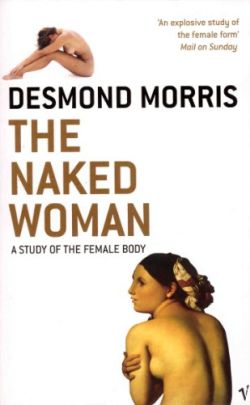
Years ago I read Desmond Morris’ The Naked Ape, an anthropological look at humanity. In scrutinizing human beings’ animal nature directly, Morris was something of a pioneer. The Naked Man and The Naked Woman borrow that title’s naming trend, and provide a study of the human body from the top of our hair to the bottom of our feet. The result is an entertaining if sometimes opinionated study that mixes biology, history, culture, and speculation. Morris begins with the top of the head and moves steadily downward, although he spends proportionately more time around the head for each subject – understandable given how many different individual subjections our heads contain. Morris typically opens by describing the section of the body in question, commenting on its variations within nature, elaborates extensively on its use in body language, and wraps up with how the body part has been regarded, used, or abused across cultures. The study of how different body parts have been decorated or mutilated in some cultures provided fascination and horror at the same time. Although Morris sometimes repeats himself across the books, it isn’t terribly noticable unless you read them back to back as I did. A bit of repetition is unavoidable to some degree, since some body parts aren’t hugely variated. Sexual differences are enormous, though, and not merely the obvious bits that we think of; there are differences in shoulder size, forearm length, eye dilation and more that make the male and female distinct, and place sex well beyond surgical erasure. Both books abound in interesting information (like the importance of spit in sealing human pacts) and speculation – like Morris’ offering that breasts draw male eyes not for their parental potential, but for their similarity to the buttocks, where male primates across species have looked for sexual-interest cues. Although our bodies, male and female, are unalterably distinct from the other, Morris does not argue that one is better than the other; the male grip may be stronger, but the female grip is more flexible. We are partners made for the other, each possessing different strengths – not rivals.