The Top Ten Most Additions to my Pile O’ Doom

Today we’re yakking about recent additions to our book collections. 

The Judge’s List, John Grisham. This legal thriller about a homicidal judge was given to me as a Christmas present. The fact that I haven’t already read it testifies to how unexcited I am about Grisham these days…

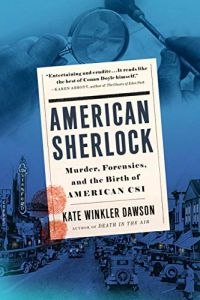
American Sherlock: Murders, Forensics, and the Birth of American CSI. Kate Winkler Dawson. This was on sale at some point in November/December and I thought it might make an interesting science read.  

Life in the Confederate Army, William Watson. A Scotsman  joins the rebel cause and offers a memoir.  Of obvious appeal given the author’s status as a quasi-outsider. I’m always curious about the divided loyalties of immigrants to the rebel and union causes.

Reading the Bible Again for the First Time, Marcus Borg. Chosen for a book club I’m a member of as our first-quarter read.  I’ve read Borg before (a biography of Jesus) and expect this to be interesting.

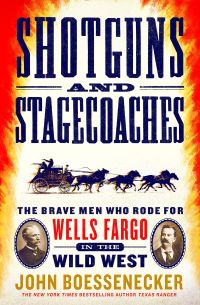
Shotguns and Stagecoaches: The Men Who Rode for Wells Fargo, John Boessennecker. I’m really looking forward to this one. It’s meant to be for an American history series in June-July, but don’t bet on my fighting temptation that long..

Pioneer Priests and Makeshift Altars: A History of Catholicism in the Thirteen Colonies, Fr. Charles Connor I’ve been planning to read this one for years, and intend to use it in June-July.

The Dirty Life: A Memoir of Food, Farming, and Love. Bit of an impulse buy…it was quoted in a history of horses and mules I’m meandering through and attracted my attention.

Beauteous Truth: Faith, Reason, and Literature. Joseph Pearce.  On the pursuit of the good, the true, and the beautiful — and their relationship to one another.

Unmasked: Inside Antifa’s Radical Plan to Destroy Democracy, Andy Ngo. I first heard of Ngo when I saw a clip of some blackbloc bottom-feeders attacking a random Asian man (who was one of their supporters) on suspicion of being Andy Ngo.  Intrigued, I looked up Ngo and he proved to be one of the few voices spotlighting the unchecked violence  and laughable hypocrisy of this organization, which behaves exactly like the SA/SS goons of old who it purports to be against. They’re as far from Hitler as Stalin, which is to say — not far at all.

The Real Anthony Fauci: Bill Gates, Big Pharma, and the Global War on Democracy and Public Health, Robert F. Kennedy Jr.. This is a new release selling for $3, and considering that the corporate media tried to memory-hole it, I figured it must be worth reading.

Posted in General | Tagged | 11 Comments

2022: A World of Cities

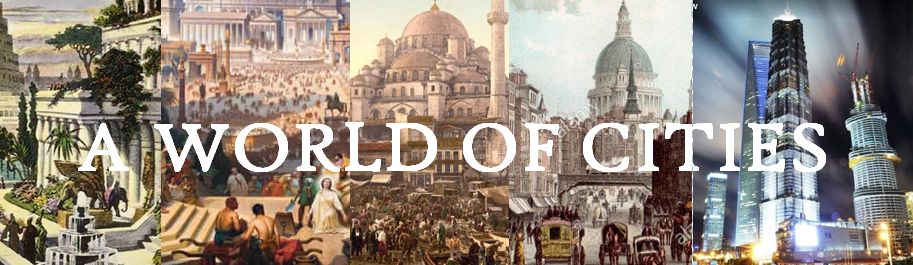
I’m posting this largely for planning purposes. (I’d made the header at some point last year….bit of a shame not to use it!). I have a few titles already in hand for this, and hope to pursue it further in the year. The cities empaneled above are Babylon, Athens, Istanbul, London, and Guangzhou (I think). I would have searched for either Guangzhou or Shanghai to reference China’s exploding metropolitan habit.

Civilization as the Story of Cities

Books on cities in general

The Challenge of Making a City

Books on modern urbanism and infrastructure

Cities in History

Histories of specific cities, especially as they defined, dominated, or epitomized an era in history

Posted in General | Tagged , , | 4 Comments

The way of men – pagan and Christian

Late last year I re-read Jack Donovan’s The Way of Men, written for identifying what it means to be a man, and what men need and want. Donovan argues that men are largely driven by the need for the respect of men who we are united to by a common purpose. The way of men is the way of the gang — small groups of men defining and protecting the tribe’s boundaries, driving away or destroying its enemies, joining together in larger parties to take down quarry or raid other tribes. This is what men were made for: it is the mandate expressed in our bones, and it guides the way we regard one another, consciously or no. The evolutionary orientation of men toward the gang and its mission — the hunt, the fight, the watch — establishes four virtues at the heart of man: Strength, Courage, Honour, and Mastery. These are not virtues possessed by men alone, but they define men, and are how we gauge one another. No woman is thought less of for not having bulging biceps, or from backing down from a fight; men would be. Girls mature into women simply by the dictates of genes, but men must work and fight for a place in the ranks, to be regarded as a man among men. After exploring each virtue in full, Donovan further argues that the modern world is incompatible with the expression of these traits — it no longer values men or our purpose — and urges men to form their own gangs and reject being a passive consumer. Instead, embrace the struggle of reality, and do it with men who you can respect and trust. It’s a bit as thought Tyler Durden wrote a book, with the same mix of insight and zeal.

Related: Art of Manliness interview with Jack Donovan on the book. My introduction to it.

A few quotes:

“While the job description for men undeniably changes according to time, place and culture, the primal gang virtue that unifies them all is ‘being able to carry your own weight'”.

Their version of a good man is isolated from his peers, emotional, effectively impotent, easy to manage, and tactically inept.   A man who is more concerned with being a good man than being good at being a man makes a very well-behaved slave.

Men must have some work to do that’s worth doing, some sense of meaningful action. It is not enough to be busy. It is not enough to be fed and clothed given shelter and safety in exchange for self-determination. Men are not ants or bees or hamsters. You can’t just set up a plastic habitat and call it good enough. Men need to feel connected to a group of men, to have a sense of their place in it. They need a sense of identity that can’t be bought at the mall.

Forming gangs and potentially wrecking things is not exactly the constructive mandate and life-defining purpose a man would hope for. It’s Good to be A Man offers a Biblical argument that parallels Donovan’s to some degree, in effect sanctifying his thoughts and others by making them inform a Christian approach to masculinity rather than Donovan’s pagan* one. The authors here argue that man is made for Dominion, and that patriarchy is inevitable: men are compelled by their nature to compete for rule, so the only question is : what kind of men will prevail? The authors draw heavily on the Creation account in Genesis, and argue that men are mission-oriented — created for the purpose of dressing and keeping the garden. Women are a complement to the mission, and not the mission itself: living for romance, they write, is a fool’s game, one which will inevitably ruin the relationships initiated. To idolize a romantic partner is to miss their status as a Person, and to expect them to complete us or make us happy is to place the weight of the worlds onto the shoulders of a single individual. This is both unjust and unwise: the more a man relies on a woman to validate his masculinity, the needier he becomes, and the less attractive a partner. Hence the authors’ repeated advice: pursuit excellence, not women. We find completion through determining God’s mission for us, and living it out. The authors felt compelled to write because 21st century men are completely lost — not just in the religious sense, but lost as men. Family culture and the skills it once propagated have largely evaporated, making most men directionless and often incompetent — forced to rely on youtube for instructions on how to change a tire or knot their tie. They emphasize, too, the importance of male relationship, writing on the need for male mentors and brothers to support one’s growth. Jordan Peterson may be an excellent guide, but in-person accountability is necessary for lasting maturity. This book proved to draw from far more varied sources than I’d expected, quoting everything from The Church Impotent to No More Mr Nice Guy. Related titles would be Leaving Boyhood Behind (to be reviewed in May alongside Defending Boyhood), The Catholic Gentleman (Sam Guzman) and Be a Man! by Larry Richards. These are about Catholic masculinity as opposed to Foster and Tennant’s more protestant approach, but the underlying theology is compatible.

A few quotes:
We are the ones now living in burning Jerusalem, and we are the ones who must rebuild the walls. We are the ones who must overcome the evil patriarchs of our day, whether in the deep state or the media-industrial complex. We are the ones who must refuse to be turned aside to their will by deception and gaslighting, refuse to be numbed by their offers of cheap pleasure, and refuse to be cowed by their intimidation and oppression.

Whenever there is an unbalanced emphasis on one virtue, it can become a vice. This happens simply because each virtue must be applied in another. Wisdom without the strength to put it into action is worthless. Strength without wise application is destructive. Workmanship without wisdom is toil and futility, and so on.

Do not be harnessed, pacified, or destroyed; rather, build yourself up, and start working to exercise dominion over yourself and your world. Everything else will follow from that.

*I don’t mean “pagan” as in “secular”, I mean pagan as pagan. Donovan regards masculinity as essentially religious, and he has a particular devotion for Odin and Zeus. He’s a fascinating author, often disturbing but never boring.

Posted in Religion and Philosophy, Reviews, Society and Culture | Tagged , | 2 Comments

2021, Year in Review!

What’s this? Another year gone? Well, on to the books!


Most of my reading fell into the above categories, the remainder being small fry like fantasy, Star Trek, and world affairs. Most of my reading was nonfiction, no surprise there – 62% if you want the cold hard number. A slight majority of my books were e-books rather than physical, and an even slighter majority of them were borrowed instead of purchased.  

Starting out I had several goals – to restart the Classics Club with fifty fresh titles; to read more southern history and literature, and to make progress on my TBR pile.  I’d say I did well on all three; the continuing existence of TBR pile is mostly my friends’ fault. They keep giving me books, the villains! The Classics Club Strikes Back is off to a good start, with 20 titles read, and a respectable distribution across the categories I chose, the exception being Classic Science Fiction, I most favored One Day in the Life of Ivan Denisovich, not only for its illustration of how abysmal life in the Soviet Union was,  but  for its message that a man could still triumph over the dehumanizing nature of the prison camp. 

History made its usual showing, though science was right on its tail for most of the year. There’s no shortage of excellence here; Midnight in Chernobyl and Touching History: 9/11 in the Skies both come to mind, as does Liza Picard’s Victorian London. The latter drove me to buy several books by Picard, which will feature in 2022’s Read of England. 

Science had, on the surface, a strong year, with twenty titles read. When I looked back at my reading, though, I was dismayed to find that I hadn’t posted many proper reviews at all, instead relegating virtually all my science reviews after February to mini-reviews, presenting them in twos and threes. My favorites were Good Reasons for Bad Feelings and How Emotions are Made, though The Storytelling Animal was another strong contender.  

 Religion and Philosophy had a good, if….weird, year. I attempted to read all of Ayn Rand’s nonfiction (two volumes remain), finding her more interesting than expected, and a welcome rebuttal against the mobbishness that’s dominated 2020 and 2021. My favorite reads in this area, though, were Brad Birzers’ Beyond Tenebrae, and Seeking Christendom, both reviewing Christian humanism and literature connected to it.

In Science Fiction and Technical Thrillers,  there were numerous hits. Project Hail Mary was arguably the best, but The Warehouse  showed a future we’re not too far away from now. Doctorow’s Attack Surface was a welcome continuation of his Little Brother series.  I was in a serious dystopian mood during the summer, thanks in part to how insane organizations, governments, communities, and private companies have been in the last year. It’s been a strange period of collective madness, of institutionalized hypochondria.

Historical Fiction, which typically puts in a strong showing, faltered a bit this year. I continued with a few familiar authors (Cornwell, Collard) and began exploring Ben Kane’s works, which proved very promising. His Eagles at War was a superb depiction of Rome’s defeat by the Germans; only the surprise return of Richard Sharpe in Sharpe’s Assassin gave it any  competition. 

Southern Fiction, which debutes in the end-year review this year,  has Robert Ruark and Rick Bragg in serious competition; as much as Bragg’s writing moves me, though, I love The Old Man and the Boy’s  combination of outdoors adventure and the unique moment in time it captured (1920s-30s Carolina).  I read five Bragg books, enjoying his family trilogy the best — and its middle volume, Ava’s Man, particularly.

One fun thing I did this year was Space Camp, in which I read numerous astronaut memoirs. Of these, my favorite was Spaceman by Mike Massimino, followed by Eileen Collin’s Through the Glass Ceiling to the Stars.

What’s next?

So, what’s coming in 2022? ….much the same as came in 2021, to be honest. I’ve done legwork for several themes of varying lengths (weekly, monthly, and year-long), but haven’t locked in anything at present: in consideration are a month devoted to the medieval epoch, a year-long series with a traveling spotlight on cities that dominated or epitomized a particular era (think caliph-era Baghdad, renaissance Venice, Victorian London, etc), and revisits of my past Mideast and Asian reading focuses. I’m leery of launching into a project that will require getting access to a bunch of books, though, when I live with the draining presence of my TBR pile. I want so much to be rid of it, and yet friends keep giving me books — so that despite the dozens of TBR titles I tackled in 2021, the mount is as substantial as ever. What will definitely happen is the usual:

Science Survey:
– BASE GOAL: 12 books, one for each category
– SECONDARY GOAL: 20 books in total
– SPECIFIC TARGETS: Science books in my TBR stack include DNA is Not Destiny, This is Your Brain on Music, and The Moral Animal.

The Classics Club Strikes Back, Year II
– BASE GOAL: 10 books
– SECONDARY GOAL: 15 books

Readin’ Dixie
– BASE GOAL: One book a month in southern literature or history
– SECONDARY GOAL: An average of two books a month in southern literature or history
– SPECIFIC TARGETS: Finish reading available Rick Bragg works, try Pat Conroy

Climbing Mount Doom
– BASE GOAL: Confront at least one TBR book a week with the aim of reading or discarding it.
– SPECIFIC TARGET: Level Mount Doom.

Thanks for reading, and happy New Year!

Posted in General | Tagged , | 8 Comments

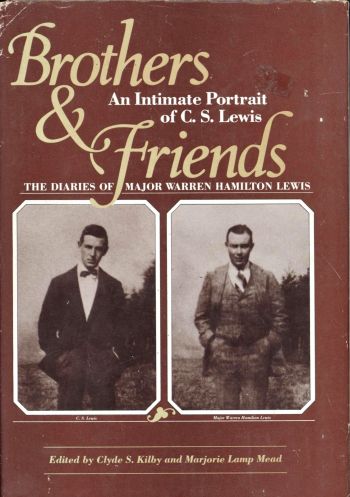
Brothers and Friends

Brothers and Friends: The Diaries of Major Warren Hamilton Lewis
© 1981 Warren Lewis, ed. Clyde S. Kilby and Marjorie Mead
301 pages

Reading of C.S. Lewis’ life and letters, I often encounter his brother Warnie Lewis, and regard him with complete sympathy. An historian and  lifelong bachelor, he was happiest with a book, a beverage, a comfy chair, and his pipe. Though overshadowed by his younger brother Jack, Warren held no grudge;  he and his brother’s life centered around the other, and he was only happy to help Jack cope with his affairs when the younger Lewis became a celebrity. Brothers and Friends makes their close relationship plain,    evidenced by their constant activity together and Warnie’s obvious loss of heart in the years after Jack’s death in November ‘63.  

Warren’s initial diary begins at the close of the Great War, upon receipt of a journal for Christmas; he then writes faithfully with interruptions for the remaining decades of his life.  He is a vociferous a reader as his brother, and the book brims over with recollections of their frequent pub arguments and long walks together in the English countryside, discussing and debating matters of literature, politics, and theology. (These walks included short strolls with the dogs, and longer annual hikes  that went on for days.)     Although Warren didn’t share his brother’s tastes for Shakespeare and philosophy,  he was an avid consumer of English poetry, biographies, histories, and novels, and he contributed several French histories to his chosen field.  A reader who is aware of Warren’s later struggle with alcoholism will note with sadness the frequent and steady mentions of whisky-and-sodas early on, but cheer Warnie on when he begins recording his tee-totaling days, having become aware of the cycle of insomnia, depression, and drunkenness that he was slipping in to. Warren is amusingly uncomfortable around the fairer sex, and asserts that men in general find women poor company indeed unless they’re attracted to them. (Warnie seems to have been fond of at least two, though: his brother’s semi-ward, Maureen Moore, and Joy Davidman.)  

Warren is wonderful company, especially for a chronic bachelor-reader like myself who sees in him a kindred spirit. Not for Warren was the rat race, or the pursuit of honors; he wanted nothing but stimulating reads and good conversation, and his life was filled with both. As life wore on, especially after his brother’s death, he was increasingly sad for the world they were leaving behind: he saw country scenes plowed under for dismal architecture, and witnessed a growing sterility in the world around him. In his later years, he turned to the classics with fuller devotion, even reading Shakespeare which he’d once found unpalatable.  Although it’s very difficult to separate an appreciation for Warren from an appreciation for Jack — so closely do they stand together — he does appear here a distinct figure, with his own tastes entirely apart from his brother. Those who are interested in the personalities of the Inklings will find this especially attractive, given that Warren documents who was at which meeting and so on, and the subject of conversation at each meeting: poetry and literature, typically. Interestingly, he harrumphs against the idea of the Inklings as a deliberate literary society, with a characteristic influence on its members: Warren writes that they were merely friends, who, by virtue of their common literary interests, spent part of their time comparing and improving the others’ work.

Posted in Classics and Literary, Reviews | Tagged , , , , | 2 Comments

No Domain: The John McAfee Tapes

No Domain: The John McAfee Tapes
© 2021 Mark Eglinton
271 pages

How could one life possibly have so many dimensions? How could it all be true? How the hell was this man still alive?

When the talking heads begin rattling on about notable deaths of 2021, they will mention all manner of useless, uninteresting people — politicians, athletes, pop musicians. They will not mention John McAfee, who after months on the run from multiple states and various criminal organizations, was captured by the Spanish and succumbed to ‘suicide’ in his lonely prison cell. He lived hard, fast, and brilliantly — embracing chaos in his own life and almost exulting in it, until at last it got the better of him. He entered the public domain as a self-made tech millionaire, riding the wave of his antivirus software, and decades later would be more notable as an eccentric fugitive, whose paranoia or zest for life led him to live abroad and frequently abandon everything to start again — who made his return to the United States by mocking the media’s presentation of him as a druglord with a harem. John’s is a voice which has been silenced — but not quite, for here we have a collection of interviews in the last year of his extraordinary, singular life, getting another look into this mind that occupied the line between genius and insanity.

No Domain is not a formal biography of McAfee, but a collection of interviews between himself and Englinton that were given with an eye to creating an authorized story of the man’s life. The interviews are given sporadically, as McAfee was on the run at the time, and Englinton ties them together with a narrative detailing his struggles to make progress getting a self-professed paranoiac to trust him — and to trust what the subject was telling him. McAfee grew up in a troubled household, with an abusive father who beat him and committed suicide when he was but a teenager. Something of a math prodigy, McAfee quickly realized he could game college by reading and mastering the textbooks quickly, then spending his time partying and making money on the side. This philosophy continued as he aged; in his twenties, he accepted training as a computer programmer back when executing a program meant manually flipping switches on a computer control board. His talents here led him to work at numerous high-profile companies, and at each he employed the same strategy that worked in college: knock out the work quickly, then focus on drugs and women. As computer technology matured, McAfee became fascinated by the appearance of the first computer virus, and crafted a way to detect and remove it from affected machines. This was the beginning of McAfee Associates’ VirusScan, which would catapult him into the realm of the super-rich and allow him to become the….colorful character of the 2000s.

McAfee, throughout these interviews, presents himself as someone who was devoted to Living — not merely existing. He couldn’t abide a 9-5 grind, to live every day according to a preordained pattern. He chased highs, through a wide array of illicit substances and women, and once he had money, explored his creative side by sinking money into developing properties throughout the world. Some were more art projects than functional residences. McAfee often appears to be a creature of impulse, attempting to solve social problems in Belize and Hawaii through massive expenditures, and invariably attracting the wrath of local powers and authorities who didn’t like this strange outsider throwing his weight around them. His time in Belize was particularly…dramatic, as he was compelled to hire a security force the size of a small army to prevent retaliation from hurting those he was trying to help. (That’s his story: what passes for authorities in Belize claim he killed his neighbor.) Eventually the chaos forced him out and back to the United States, where after some political activities, he is targeted by the IRS for not paying tribute to the state — for ten years. Such was the path that led him to living on a boat and eventually being arrested in Spain.

I was disappointed that there’s almost no content on McAfee’s warnings about the technocratic surveillance state, and the exposure American IT infrastructure has to cyberattacks. These were what first drew me to McAfee, and kept me interested despite realizing he was….troubled. In many ways, his was not a life I’d model mine after, and yet I valued him for his frequent warnings about the rising surveillance system, his full-throated advocacy for cryptocurrency to thwart the corruption of money by states and banks, and admired him for his continued defiance of the state. They killed him in the end, as no state-gangster can abide someone who doesn’t cower under Ozymandias’ glare, but his spirit lives on. While this is not the biography of McAfee his fans might hope for, it’s a welcome release.

Related:


Posted in Reviews | Tagged , | 2 Comments

What I Read in 2021

Books in bold are superior favorites.

— January —

1. Mama’s Last Hug: Animal Emotions and What They Tell us About Ourselves, Frans de Waal 
2. Alice’s Adventures in Wonderland, Lewis Carroll (CCSB)
3. Permanent Record, Edward Snowden
4. The Old Man and the Boy, Robert Ruark (CCSB)
5. The Autobiography of Miss Jane Pittman,  Ernest Gaines (CCSB)
6. A Walk Around the Block: Stoplight Secrets, Mischievous Squirrels, Manhole Covers, & Other Stuff You See Every Day (and Know Nothing About),  Spike Carlsen
7.  Beyond Tenebrae: Christian Humanism in the Twilight of the West, Brad Birzer
8. Star Wars: Kenobi, John Jackson Miller9. A Time for Mercy, John Grisham
10.  Where I Come From: Stories from the Deep South, Rick Bragg
11.The Wonder Boy of Whistle Stop Cafe,   Fannie Flagg
12. Alabama: The Making of an American State, Edwin C. Bridges
13. Some Assembly Required, Neil Shubin
14. Fried Green Tomatoes at the Whistle Stop Cafe, Fannie Flagg
15. Battle for the Southern Frontier:  The Creek War and the War of 1812,  Mike Bunn & Clay Williams

— February —
16. Andrew Jackson and the Miracle of New Orleans, Brian Kilmeade
17. The Bird Way: A New Look at How Birds Talk, Work, Play, Parent, and Think, Jennifer Ackerman
18. Why We are Here: Mobile and the Spirit of an American City, E.O. Wilson & Alex Harris
19. The Network: The Battle for the Airwaves and the Birth of the Communications Age, Scott Woolley
20. Forgotten Continent: A New History of the New Latin America, Michael Reid
21. The Lost Classics,  Robert Ruark. ed. Jim Casada
22. The Cultural Revolution: A People’s History,  1962-1976,  Frank Dikotter
23. Cold Sassy Tree, Olivia Ann Burns (CCSB)
24. The Last Stargazers, Emily Levesque
25. The Hardest Job in the World: the US Presidency,  John Dickerson

–– March —
26. Jesus the Son of Man, Kahlil Gibran
27. Camino Winds, John Grisham
28. Ironies of Faith: The Laughter at the Heart of Christian Literature, Anthony Esolen
29. Disasters by Choice: How Our Actions Turn Natural Hazards into Catastrophes, Ilan Kelman
30.  Travels with Foxfire:  Stories of People, Passions, and Practices of Southern Appalachia, Foxfire fund
31. Rogue Code, Mark Russonovich
32. The Big Book of Autocorrect Fails, Tim Dedopoulous
33. WTF Evolution? A Theory of Unintelligble Design, Mara Grunbaum
34. Just in Case: How to be Self-Sufficient when the Unexpected Happens,  Kathy Harrison
35. Women of Genesis: Rebekah, Orson Scott Card
36. The Storytelling Animal: How Stories Make us Human, Johnathan Gottschall
37. Conspiracies Declassified: The Skeptoid Guide to the Truth behind the Theories, Brian Dunning
38. Davita’s Harp, Chaim Potok
39. The Fox from his Lair, Max Hennessy
40. How to Live: What the Rule of St. Benedict Teaches Us About Happiness, Meaning, and Community,  Judith Valente
41. The Rebel Killer, Paul Fraser Collard

–April–
42. A Visitor’s Guide to Jane Austen’s England,  Sue Wilkes
43. Master of War: The Blooding, David Gilman
44.  We Have Been Harmonized: Life in China’s Surveillance State, Kai Strittmatter
45.  His Majesty’s Dragon, Naomi Novik
46. Captains Courageous, Rudyard Kipling
47. Victorian London: The Tale of a City, Liza Picard
48. Sword and Serpent, Taylor Marshall
49.  Black Beauty, Anna Sewell
50. Traveller,  Richard Adams
51. The Tech-Wise Family,  Andy Crouch
52. The Church Impotent: The Feminization of Christianity, Leon Podles
53. Grandma Gatewood’s Walk: The Inspiring Story of the Woman Who Saved the Appalachian Trail, Ben Montgomery

–May–

54. Countereconomics, Samuel E. Konkin III
55. Alongside Night, J. Neil Schulman
56. No Treason: The Constitution of No Authority, Lysander Spooner
57. Forward collection, various
58. Project Hail Mary, Andy Weir
59. Clean: The New Science of Skin, James Hamblin
60. Drug Use for Grown-Ups, Carl Hart
61. She Come By It natural, Sarah Smarsh
62. Enemies: A History of the FBI, Tim Weiner
63. ST: The Captain’s Oath, Christopher L. Bennett
64. Broke, USA: How the Working Poor Became Big Business, Gary Rivlin
65. Gambling with Other People’s Money, Russ Roberts
66. Make Russia Great Again, Christopher Buckley
67. A Gathering of Old Men, Ernest Gaines
68. Spying on Whales, Nick Pyenson

–June–
69. Legacy of Ashes: A History of the CIA, Tim Weiner
70. Never a Dull Moment: A Libertarian Looks at the Sixties, Murray Rothboard
71. #agora, Anonymous
72. Vonu: A Strategy for Self-Liberation, Shane Radliffe
73. Steal this Book, Abbie Hoffman
74. The Return of the Primitive, Ayn Rand and
75. The Man in the High Castle, Phillip Dick
76. Possum Living: Living Well without a Job, Dolly Freed
77. The Eagle’s Claw: A Novel of Midway, Jeff Shaara
78. Of Mice and Men, John Steinbeck
79. Solzhenitsyn: A Soul in Exile, Joseph Pearce
80. Nomadland: Surviving America in the 21st Century, Jessica Bruder
81. Men on Strike: Why Men are Boycotting Marriage, Helen Smith

–July–
82. The Return of George Washington: Reuniting the States, Edward Larson
83. Lafayette in the Somewhat United States, Sarah Vowell
84. Stars on the Sea, F. Van Wynck Mason
85. The First Conspiracy: The Plot to Kill Washington, Brad Meltzer
86. The Virtue of Selfishness, Ayn Rand
87. Stoicism for Inner Peace, Einzelgaenger
88. Spaceman, Mike Massimino
89. Los Angeles is Hideous: Poems about an Ugly City, Andrew Heaton
90. Leonard: My 50 Year Friendship with a Remarkable Man, William Shatner
91. The First Men in the Moon, H.G. Wells
92. Endurance: My Year in Space, Scott Kelley
93. Into the Black: The Extraordinary Untold Story of the First Flight of the Space Shuttle, Rowland White
94. Through the Glass Ceiling: The Story of the First American Woman to Command a Space Mission, Eileen Collins

–August–
95. The Social Instinct, Nicholai Raihani
96. The Red Planet: A Natural History, Simon Morden
97. Collapse Depth, Todd Tucker
98. Ghost Sub, Todd Tucker
99. The Choice, Claire Wade
100. The Disappeared, Amy Lord
101. Broadcast, Liam Brown
102. Please Stop Helping Us: How Liberals Make it More Difficult for Blacks to Succeed, Jason Riley
103. The Call to Antarctica, Leiliana Raashida Henry
104. The Unplugged Alpha, Richard Cooper
105. There is no Cloud, Kat Wheeler
106. Back to Earth: What Space Taught Me About Our Home Planet, Nicola Stott
105. Attack Surface, Cory Doctorow
106. What’s Eating the Universe? And Other Cosmic Questions, Paul Davies
107. Chemistry for Breakfast, Mai Thi Nguyen-Kim
108.Hurricane Lizards and Plastic Squid: The Biology of Climate Change, Thor Hanson
109.Soviets in Space: The People of the USSR and the Space Race, Colin Thurbett
110.The Lost Outlaw, Paul Fraser Collard
111.Like a River Flows, Hanna Grace Kraker
112.No More Mr. Nice Guy, Richard Glover
113.Seeking Christendom: An Augustinian Defense of Western Civilization, Brad Birzer


–September–
114.Traitors of Rome, Simon Scarrow
115.The Moon is Down, John Steinbeck
116.The Pearl, John Steinbeck
117.The Red Pony, John Steinbeck
118.How Emotions are Made, Lisa Feldman Barrett
119.The Unbroken Thread: The Wisdom of Tradition in an Age of Chaos, Sohrab Ahmari
120.The Warehouse, Rob Hart
121.Naked Statues, Fat Gladiators, and War Elephants, Garrett Ryan
123.Anthropology: A Degree in a Book, Julia Morris
124.A Day in the Life of Ivan Denisovich, Aleksandr Solzhenitsyn
125.Blackout: How Black America Can Make Its Second Escape from the Democratic Plantation, Candace Owens
125.Eagles at War, Ben Kane
126.Revolutionary Ride: On the Road in Search of the Real Iran, Lois Pyrce
127.From Fire, by Water, Sohrab Ahmari
128.Anti-Politics, ed. Sal Mayweather
129.Touching History, Lynn Spencer
130. Midnight in Chernobyl, Adam Higginbotham

— October —
131.ST: The Dark Veil, James Swallow
132. An Astronaut’s Guide to Life on Earth, Chris Hadfield
133.Good Reasons for Bad Feelings: Insights from the Frontier of Evolutionary Psychology, Randolph Nesse
134.Fuzz: When Nature Breaks the Law, Mary Roach
135.D-Day Girls: The Spies that Armed the Resistance, Sabotaged the Nazis, and Helped Win WW2, Sarah Rose
136.Natchez Burning, Greg Iles
137.Northanger Abbey, Jane Austen
138.ST: The Enterprise War, John Jackson Miller
139.Zulu Five Oscar, Todd Tucker
140.Covert Duress, Todd Tucker
141.Erasing Death: The Science that is Erasing the Boundaries between Life and Death, Sam Parnia
142.The Death of Ivan Illyich, Leo Tolstoy
143.The American Way of Eating: Undercover at Walmart, Applebees, Farm Fields, and the Dinner Table, Tracie McMillian
145.The Five Capitals of Alabama, Tom Bailey
146.For all the Tea in China, Sarah Rose
147.The War that made the Roman Empire, Barry Strauss

–– November —
148.When Harry Became Sally: Responding to the Transgender Movement
, Ryan Anderson
149.The Great Gatsby, F. Scott Fitzgerald
150.The Metamorphosis, Franz Kafka
151.Travels with George, Nathaniel Philbrick
152. The Vampire Economy: Doing Business under Fascism, Günther Reinmann
153. The Reading Life: The Joy of Seeing New Worlds through Others’ Eyes, C.S. Lewis
154. Philosophy – Who Needs It? Ayn Rand
155. Enough Already: Time to End the War on Terror, Scott Horton
156. Jacked: The Outlaw Story of GTA, David Kushner
157. A Furious Sky: The Five Hundred Year History of American Hurricanes, Eric Jay Dolin
158. Watership Down, Douglas Adams
159. The Razor’s Edge, W. Somerset Maugham
160. The Narnian: The Life and Imagination of C.S. Lewis, Alan Jacobs
161. The Problem of Pain, C.S Lewis
162. Lewis Agonistes, Louis Markos

–December–
163. Once Upon a Wardrobe, Patti Callahan
164. The Naked Man: A Study of the Male Body, Desmond Morris
165. The Naked Woman: A Study of the Female Body, Desmond Morris
166. How to Live in a Car, Van, or RV, Bob Wells
167. Belt and Road: A Chinese World Order, Bruno Macaes
168. Sharpe’s Assassin, Bernard Cornwell
169. The Speckled Beauty: A Dog and his People, Rick Bragg
170. Police Craft: What Cops Know About Crime, Communities, and Violence, Adam Plantinga
171. Mortuary Confidential: Undertakers Spill the Dirt, Todd Harra
172. Patrolling the Heart of the West, Steve Raab
173. Trucking in English, Carolyn Steele
174. All Over but the Shoutin‘, Rick Bragg
175. Ava’s Man, Rick Bragg
176. The Prince of Frogtown, Rick Bragg
177. No Domain: The John McAfee Tapes, Mark Eglinton

Posted in General | Tagged | 3 Comments

A southern trilogy: Rick Bragg’s folks

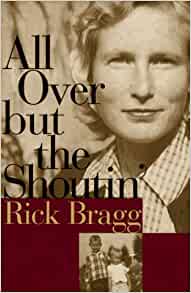
All Over but the Shoutin’ is perhaps Rick Bragg’s most well-known work, beginning a trilogy that, in its focus on one family in the early and mid-20th century,   takes readers into the generally ignored territory of the poor white working class of the South.   The book is a tribute to Bragg’s mother, Margaret Bragg, who was abandoned by her alcoholic husband and struggled to raise three boys on her own in unforgiving times, but also serves as a biography of Bragg – revealing how he became a Pulitzer-prize winning journalist despite his challenging upbringing.    Bragg accredits his gift for storytelling to his many hours listening to family members tell stories; the oral tradition has always been strong in the South. That gift is on display early here, when he struggled with his father’s legacy, knowing he was a good man at some point who was broken by Korea and whiskey and could never quite find the way home again.   Although All Over is replete with hardship and suffering – no more so than when his mother, struggling to make ends meet by picking cotton in the fields, is  made redundant by the arrival of the machines,  the story is flecked with humor and joy, too – culminating in Bragg’s being able to fulfill his lifelong dream, to buy his mother a home and place of her own.   

Ava’s Man takes us back earlier, to  Bragg’s maternal grandfather, Charlie Bundrum. Charlie appears briefly but memorably in All Over but the Shoutin’, as a hard-working man and a merry drinker who Bragg’s father compares unfavorably against. . Bragg never knew his grandfather Charlie; the man died the year he was born, but Charlie gave Margaret and his other girls a strength they needed to carry them through difficult days. Bragg couldn’t help but notice how powerfully Charlie’s memory affected his aunts, who would cry at the very mention of his name; such was their loss.  Although he never found material wealth,  through work and talent (at roofing and brewing moonshine) he made life for his wife and girls comfortable at times, and unlike many his love for ardent spirits never led him to jail or to abusive behavior. He was a happy drinker, a singer of songs, and when he quarreled with his wife it was because they both liked arguing with the other too much to give it up. Although his work as a carpenter had given him great, strong hands that could flatten a man in a single throw when they were used in anger, he was known for his gentleness — adopting a poor drifter who lived by the river, and taking joy in playing with his young grandchildren. He was no pushover, though, as many a revenuer learned — to their painful embarrassment.

In The Prince of Frogtown, Bragg returns to his father, Charles Bragg, attempting to find the man he was despite the wreck he became — a story told while Bragg also recounts his own experience with sudden fatherhood, having become a stepfather to a young boy. The book grew out of one of Bragg’s friends’ observation that he would never be able to rest until he’d tackled his father’s legacy square on. Bragg here focuses on the mill village that offered so many of his family a way out of poverty, as treacherous as it was. It was a society saturated with whiskey, violence, and cotton fiber; Charles sought to escape the fate being trapped into mill work, hoping for a career in the Marines, but between the war and a bad auto accident, he came home a different man — one who needed the whiskey to numb the pain, not just to have a good time. Although the track of this story will be familiar to those who have read Bragg’s other works , we get a much fuller idea of the Boy who was Bragg’s dad — a short but feisty boy who was the leader of his own pack, who took pride in his juvenile accomplishments and who was later frustrated by his lack of progress as a man. The story tends toward sadness, given Charles’ fate as a suicide eaten up with liver damage and tuberculosis, but it’s replete with memorable characters and funny stories.

These books are a tribute to not only Bragg’s family, but all the poor but proud southern workingmen forgotten by the history books, capturing their — our — unique culture and often chaotic history. The writing is superb, frankly, drawing the reader into these lives and making the emotions that drove them all the more real when life takes a comic — or tragic — turn. I can only admire Bragg for the difficulty undertaken in trying to face the sorrow and pain in his family history — and admire, too, his ability to take the oral history of his elders and turn it into three narratives that are each as spell-binding as the other. Ava’s Man remains my favorite among these, largely for the near folk-hero character of Charlie Bundum.

Posted in Reviews | Tagged , , , , , , | 2 Comments

Quotes from Rick Bragg’s family trilogy

ALL OVER BUT THE SHOUTIN’ 
 

“I know how silly and paranoid that sounds, especially coming from a man who gets a perverse thrill from taking chances. But it is a common condition of being poor white trash: you are always afraid that the good things in your life are temporary, that someone can take them away, because you have no power beyond your own brute strength to stop them.” 

“That night, when he came home, Sam and I, pitiful in our inability to help her, to protect her, stood in the door of the kitchen and watched as he opened the cupboard and reached for his home brew. ‘Not all of it?’ he asked, and she nodded. My momma did not run, did not hide. She stood there like a statue. Then, slowly she took off her glasses. 

‘Don’t hurt my teeth,’ she said.” 

AVA’s MAN 

But then, there were not many saints working at the end of an ax handle in the woods of Alabama and Georgia, as an era of failed, corrupt reconstruction gave way to a new century. The history books showed it in black-and-white, and in my mind’s eye, as a child, I imagined it that way, a place just too mean for color. I saw a gray landscape under lead-gray sky, where white-robed Klan rode through dead gray trees, where convicts striped in gray and white swung picks into the bleached, colorless ground, where even the big rivers, in my mind’s eye, ran black as tar. 

He was blessed with that beautiful, selective morality that we Southerners are famous for. Even as a boy, he thought people who steal were trash, real trash. He thought people who would lie were trash. “And a man who’ll lie,” he said, even back then, “will steal.” Yet he saw absolutely nothing wrong with downing a full pint of likker—a full pint is enough to get two men drunk as lords—before engaging in a fistfight that sometimes required hospitalization. He saw no reason to obey some laws—like the ones about licenses, fees and other governmental annoyances—but he would not have picked an apple off another man’s ground and eaten it. 

Some historians say the time that defines us, as a people, was the Civil War, and I guess that is true for those Southerners who hold tight to yellowed daguerreotypes of defiant colonels, distant ancestors who glare at the camera like it was a cannon, leaning on their swords. But you seldom hear people of the foothills talk much about the Civil War, contrary to the popular belief that all of us down here are sitting around waiting for the South to Rise Again, gazing at our etching of Robert E. Lee and sipping whiskey from the silver cups our great-aunt hid in the corncrib when she saw the Yankees comin’.  But you hear them talk a lot about the Depression, at reunions, at dinner on the ground, on that bench outside E. L. Green’s store, down the road from my momma’s house. They cannot tell you who commanded much of anything at Little Round Top or Missionary Ridge, but they know the names of all the knothead mules that dragged their daddies cussing and sweating across ground so poor that grass would not grow, and will look you dead in the eye and tell you that, yes, people really did work themselves to death. The Depression, endured in the lifetimes of people we know, was our time of heroes and martyrs, and our monuments are piled neatly on the ground. 

The doctor didn’t know when exactly, just that it was certain, the hurting and the dying. Charlie walked out of there and went to work, and just kept working, for months, because pity don’t feed the bulldog. 

THE PRINCE OF FROGTOWN 
The machines shut down five years ago. The roar that shook this village across a century shushed to a hateful quiet, and a blizzard of cotton fell through dead air to lie like dirty snow on scarred hardwood planks. The last to leave said they heard a rustling, as if generations still moved in the vast rooms that killed them one cut, one cough at a time. 

The sharecroppers marched away to hurrahs in one of the true oddities of Southern history, to die to preserve a way of life closed to them. It is hard to explain that to Northerners, hard to explain why, a century and a half later, poor men still fly the Confederate battle flag from rusted pickup trucks. It is hard to explain that, for some men, the fight, not the cause, is what they have. 

“I have run,” I explained, when I knew I couldn’t win, and the cause didn’t seem worth the pain. But I was always sick, after. You choose the sick feeling you can stand most, the one before you fight, or the one after you run away. But that was complicated, for a ten-year-old. 

“Doin’ somethin’ was always better’n talkin’ ’bout doin’ somethin’.” 

“I remember this time, up in Rich Bundrum’s barn loft, we found this case of dynamite,” Jack said, and then he paused and shook his head, as if realizing now what he should have then: that there are no good endings to stories that begin with we found this case of dynamite. 

Jack wiped at his eyes a lot as he talked of the last days. It is an acceptable way for a Southern man to cry. You can leak, when your heart busts in two, but you by God better not make any noise. 

Posted in quotations | Tagged , , | 1 Comment

Top Ten Tuesday: My Ten Favorite Reads from 2021

Final Top Ten Tuesday of 2021!

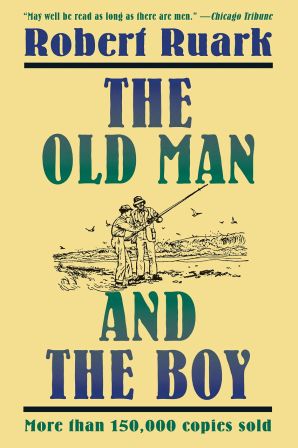
The Old Man and the Boy, Robert Ruark. Stories of a young boy growing up under the watchful eye and biting wit of his grandfather, who teaches him to be a man who lives and works with respect to the land and creatures around them — even the ones they hunt. A mix of nature writing and human interest, as if Aldous Leopold and Rick Bragg came together, it was an instant favorite.

Beyond Tenebrae: Christian Humanism in the Twilight of the West, Brad Birzer. Reviews how Christian intellectuals (Lewis, Kirk, Solzhenitsyn, etc) responded to the acceleration of Western decay in the 20th century.

How Emotions are Made, Lisa Feldman Barrett. A critical attack on the conventional explanation for human emotions, one which argues that specific emotions are a learned language of sorts.

Project Hail Mary.A man wakes up alone in a spaceship. His mission? Save Earth from the Sun’s destruction. One problem: he has no idea how.


Eagles at War, Ben Kane. A fantastic historical-fiction account of the Battle of Teutoberg Forest, Rome’s greatest military defeat.

Midnight in Chernobyl, Adam Higginbotham. A detailed but very human history of the Chernobyl nuclear accident which poisoned parts of the western Soviet Union

Ava’s Man, Rick Bragg. This has displaced The Best Cook in the World as my favorite Bragg work. I’m going to post an altogether review of it and the other books in this trilogy (All Over But the Shoutin’ and The Prince of Frogtown).

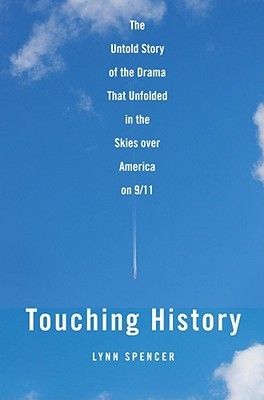
Touching History, Lynn Spencer. A history of 9/11 as experienced by air traffic control, airline employees, and US air defense.

Good Reasons for Bad Feelings, Randolph Nesse. An analysis of emotion and mental problems from an evolutionary psychological perspective.

.

The Razor’s Edge, W. Somerset Maugham. A young socialite goes to war and comes back searching for answers — a compelling character drama driven by the human need for meaning.

Honorable mention:

Natchez Burning, Greg Iles. A disturbing but engrossing thriller, driven by a two-part story — with a beginning in the Civil Rights movement of the sixties, and ending in the present day, each with a series of deaths. As huge as it is, it’s scary to think Iles wrote an even larger sequel called The Bone Tree

Posted in General | Tagged | 11 Comments