On protecting, serving, and burying

Merry Christmas week, all! Some book comments for you amid a busy holiday week…


The first, Police Craft is a sequel to the author’s 400 Things Cops Know, which shared insights on how cops view the world — reading body language as a cue for when someone is lying, or determining if a gun is being concealed (and where) by subtle effects on the movement of clothing. Police Craft is more general than this, offering a twenty-odd year veteran’s take on everything from the culture of The Streets to what happens during police academy bootcamp. Although it’s intended for those who are curious about police operations, Platinga works in a fair bit of humor into his recollections, as well as practical advice: he advises readers that there’s virtually no upside to speaking to police officers in a “you’ve been read your rights” situation. (There’s no upside: see You Have the Right to Remain Innocent by defense attorney James Duane, who has a youtube lecture titled “Don’t Talk to the Police”. )

Next up was Mortuary Confidential, a…..collection of funny stories from funeral directors? They’re short, varied, and amusing but insubstantial. This was amusing but nothing like Smoke Gets In Your Eyes, for instance, a reflection on how working as a funeral director had changed the author’s approach to death.

More recently I’ve been on a Rick Bragg kick, reading his All Over But the Shoutin’ and Ava’s Man, to be followed by The Prince of Frogtown; the three together constitute a family history that sheds a lot of light on the white working poor in the thirties through the sixties. Look for a combined review of those! Presently I’m reading a memoir by a Nevada state trooper, to be followed by an English lady’s trucking adventures in the US. I’m currently between three houses (tis the season for dog/cat/house-sitting!) so I’m rarely settled enough to focus on anything serious.

Anyway, here’s some Christmas music:

Posted in General | 5 Comments

The Speckled Beauty

The Speckled Beauty: A Dog and his People
© 2021 Rick Bragg
256 pages

There’s no bond like that between a boy and his dog – except, maybe, that of an old man and his dog.   Rick Bragg never meant to adopt “Speck”, the mangy and parasite-ridden stray who arrived in his yard one day;  he just encountered the dog while sitting under a tree and offered it food – and friendship.  Beginning with nothing more than the intention of nursing the sad spectacle back to health, Bragg wound up letting the heeler join his growing pack of adopted strays and letting the chaos that ensued buoy him out of a rough time in his own life.  Struggling with the death of a relative and his own renal and cardiac issues,  Bragg found the lovable but extremely problematic new ward a welcome distraction.   Speckled Beauty is both a memoir of a man and a dog finding one another, and an author’s reflection on growing older. 

Of all the Bragg books I’ve yet read,  Speckled Beauty  instantly rises to the top of the pile; it’s hard to go wrong with a dog book, especially when combined with Bragg’s personal style and humor.  The initial appeal lies in how troublesome Speck is; a born herder, the dog constantly harrasses the cats and provokes Bragg’s mules and donkeys, creating a stampede so that it can do what it was born to do: move `em out!     Any idea of a drowsy retirement in the country is put to pasture by the presence of Speck, who runs half-blind at full throttle and is perfectly capable of destroying a barbed-wire fence through sheer impact.  Part of the fun for dog owners, of course, is that we recognize our own quarrelsome roommates in Speck.  To this Bragg weaves in the family stories that he’s made a career out of,  as he, his brother, and his mom all try to come to peace with their farm’s new resident; because all three members of his family are having health issues, Speckled includes ruminations on old age and the inevitablity of death.

Despite that, however, this is a funny, warm book — a definitely win for any dog lovers.

Posted in Reviews | Tagged , , , , | 6 Comments

Readin’ Dixie: The Index

Pursuant to my goal of reading more southern history and literature, I’m creating an index to get an at-a-glance idea of areas I’ve read more in or have ignored. I’m planning on developing this more in 2022!

Sturdivant Hall (Selma), reenacting the Battle of Gettysburg, Huey Long facing off against the State of Louisiana, and the Great Smokey Mountains

LAND, LITERATURE, and CULTURE


The Sunny South: of Mountains, Coastal Plains, and Too Many Mosquitos
(Books on the southern landscape, ecology, etc)

Southern Classics
To Kill a Mockingbird, Harper Lee
I Know Why the Caged Bird Sings, Maya Angelou

American Other: On Southern Culture and Being Southern
I’ll Take My Stand, the Southern Agarians
Away down South: A History of Southern Identity, James C. Cobb
The Burden of Southern History, C. Vann Woodward
Don’t Get Above Your Raisin’: Country Music and the Southern Working Class, Bill Malone
Confederates in the Attic: Dispatches from the Unfinished Civil War, Tony Horwitz
The Redneck Manifesto: How Hicks, Hillbillies, and White Trash Became America’s Scapegoats, Bill Goad
Drivin’ with the Devil: Southern Moonshine, Detroit Wheels, and the birth of NASCAR, Neil Thompson

Southern Literature
A Gathering of Old Men, Ernest Gaines
Fried Green Tomatoes at the Whistle-Stop Cafe, Fannie Flagg
Where I Come From: Stories of the Deep South, Rick Bragg
The Autobiography of Miss Jane Pittman, Ernest Gaines
The Old Man and the Boy, Robert Ruark
Where the Crawdads Sing, Delia Owens
A Lesson Before Dying, Ernest Gaines
The Memory of Old Jack, Wendell Berry
The Unvanquished, William Faulkner
Hannah Coulter, Wendell Berry
Jayber Crow, Wendell Berry
The Best Cook in the World: Tales from my Mama’s Table, Rick Bragg
The Little Way of Ruthie Lemming, Rod Dreher


THE SOUTHERN STORY: HISTORY

Crackers, Captives, and Cavaliers: Peoples of the South
Poor but Proud: Alabama’s Poor Whites, Wayne Flynt
Runaway Slaves: Rebels on the Plantation, John Hope Franklin
Travels with Foxfire: Peoples, Passions, and Practices from Southern Appalachia, Phil Hudgins
Dixie’s Forgotten People: the South’s Poor Whites, Wayne Flynt
Born Fighting: How the Scots-Irish Shaped America, Jim Webb

Not Yet Gone with the Wind: the Dixie Frontier and the Antebellum Southland
The Spanish Frontier in North America, David Weber
The Miracle of New Orleans, Brian Kilmead
The Other War of 1812, John Cusick

Days of Hope and Hubris: The War
Look Away! A History of the Confederate States of America, William C. Davis
A People’s History of the Civil War, David Williams
The Yellowhammer War: The Civil War and Reconstruction in Alabama, Kenneth Noe
Johnny Reb’s War, David Williams
These Rugged Days: Alabama in the Civil War, John Sledge

Ruin, Reconstruction, and Revanchism
The South Since the War, Sidney Andrews
The Strange Career of Jim Crow, C. Vann Woodward
The Fiery Cross: The Klan in America, Wyn Craig Wade
Behind the Mask of Chivalry: The Making of the Second Klan, Nancy MacLean


Southrons of Note
Hank Williams: The Biography, Colin Escott
Robert E. Lee, Roy Blount

Posted in General | Tagged , , | 15 Comments

Maria! I just met a girl named Mariaaaaaaaaa

Tonight I watched the new West Side Story in theaters, and I have to say — I’m a fan. I love it. I’ve seen the original at least a dozen times (I used to be obsessed with it), know the score by heart, and was fully poised to be disappointed. That..didn’t happen.

West Side Story is a wholly faithful remake; all the glorious original music is there, along with a brief new song and more dialogue that adds to characterization. We get a much clearer sense of the Jets’ challenging background of poverty and familial chaos, for instance. There are numerous shot-for-shot callbacks, and although the order of songs is slightly different, this sometimes adds to the story. Tony, for instance, sings “Cool” to Riff in the hopes of getting the rumble called off, and it doubles as a struggle over a revolver that Riff wants to bring with him to the fight; in the original, “Cool” was sung by Ice to keep the Jets calm in the chaos after the rumble. The “West Side” feels more like a place than a set, and there’s even a reference made to Robert Moses’ war on the city’s existing neighborhoods to make room for grandiose building projects and interstates. I somewhat missed Russ Tamblyn and Natalie Wood, but their successors won me over by the end. Probably my favorite adjustment to the singing was that “America” is a moving shot, taking place on the city streets — and not just because it involved wide shots of attractive women doing the whirling-skirt thing! For fans of the original, there’s an added bonus: the original movie’s “Anita” returns as an advisor to Tony, Maria, and the kids — this time as “Valentina”, an original character who replaces the kindly Doc. This is definitely one I’ll buy on DVD or Blu-Ray when it comes out — and that’s something I never do anymore.

Posted in General | Tagged | 3 Comments

Sharpe’s Assassin

Sharpe’s Assassin
© 2021 Bernard Cornwell
400 pages

Boney is beaten, his ruined army streaming across the country. The way to Paris is open for the Allied armies, and yet Richard Sharpe’s war is not yet done. As much as he’d like to retire to Normandy with his future wife Lucille, raising their son Patrick in peaceful wedded bliss, there’s still trouble that needs Sharpe’s special touch. The Duke of Wellington needs Sharpe to rescue an English intelligence asset from a French prison before the spiteful Crapauds execute him, and the agent has his own bad news: there’s a plot afoot: a small cabal of embittered Bonapartists plan on spoiling the Allies’ victory by assassinating the Duke of Wellington, King Louis, and possible leaders of the Austrian, Prussian, and Russian parties as they enter Paris. Sharpe’s Assassin proves that Cornwell has lost none of his talent for small-scale military drama, or for the unique characters who give his novel such energy.

As much as I enjoyed the larger military dramas that Cornwell spun around Sharpe — as he stormed castles and broke enemy columns from Portugal to India — the small-scale espionage novels that he sprinkled in tend to be be my favorites. Sharpe’s Assassin is to that model, and most of the novel is spent with Sharpe and his chosen men sneaking around Paris, pretending to be stranded Americans, while investigating two suspected members of the cabal. The city is in chaos, and between the conspirators and common disgruntled French soldiers, there’s no end of the threats to Sharpe’s life. Balancing the tension is the ever-lively dialogue, as Sharpe and Harper exchange witticisms amid their marches, and Sharpe has verbal tangles with several other characters, included a hated character from the past and a French officer who bares an uncanny resemblance to the much-traveled rifleman. The background of Paris is especially considering given the time period: I’d completely forgotten about the “Bastille elephant” Simon Schama devoted a chapter to in Citizens, and I wasn’t aware (but not surprised) that the Louvre was at this time filled with the stolen art of Europe.

Although this isn’t a grand-scale Sharpe story, it’s a welcome return for an old friend — and the beginning, one hopes, of a happy retirement. Definitely recommended to previous Sharpe readers.

Posted in historical fiction, Reviews | Tagged , , , | 7 Comments

November 2021

November proved to be a reasonably productive month!

Classics Club Strikes Back:
The Great Gatsby, F. Scott Fitzgerald
Watership Down, Richard Adams
The Metamorphosis, Franz Kafka

Climbing Mount Doom:
Enough Already: Time to End the War on Terror, Scott Horton
When Harry Became Sally: Responding to the Transgender Movement, Ryan Anderson
Lewis Agonistes, Louis Markos

Southern History / Literature:
…nichts. Callahan is technically a southern writer, but her Lewis book had nothing to do with the South.

November theme/special series: “A Week with Jack”
The Reading Life: The Joy of Seeing New Worlds through Others’ Eyes, C.S. Lewis. (Anthology)
The Narnian: The Life and Imagination of C.S. Lewis , Alan Jacobs
The Problem of Pain, C.S. Lewis
Lewis Agonistes, Louis Markos
Once Upon a Wardrobe, Patti Callahan

December Plans:

December will be a housekeeping/catch-up month, with a focus on Mount Doom and the CC challenge. I’m expecting one book in via ILL, one named Brothers and Friends: it’s an edited diary from Major Warren (Warnie) Lewis, C.S. Lewis’ brother. I also have a few Kindle Unlimited titles that I’ve had checked out for weeks and never gotten around to, so now’s the time to either read or return. I’ve already taken care of two (The Naked Man and How to Live in a Car, Van, or RV). The remainder include:
[*] Runaway Masters: A True Story about Slavery, Freedom, Triumph, and Tragedy. A history of the “black Seminoles“, escaped slaves who became members of the Seminole tribe.
[*] Carrying the Fire, Michael Collins. The memoir of Apollo 11’s third man, Mike Collins, who circled the moon alone while Armstrong and Aldrin explored the surface.
[*] Dangerous Passions, Deadly Sins: Learning from the Psychology of Ancient Monks, Dennis Okholm

Posted in General | Tagged | 5 Comments

Studying naked people

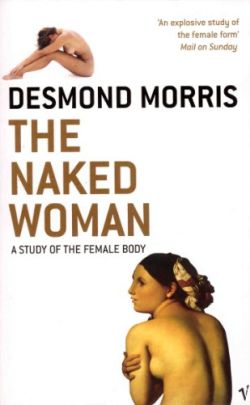
The Naked Woman: A Study of the Female Body © 2005 Desmond Morris
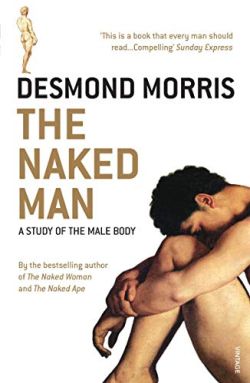
The Naked Man: A Study of the Male Body © 2009 Desmond Morris


Years ago I read Desmond Morris’ The Naked Ape, an anthropological look at humanity. In scrutinizing human beings’ animal nature directly, Morris was something of a pioneer. The Naked Man and The Naked Woman borrow that title’s naming trend, and provide a study of the human body from the top of our hair to the bottom of our feet. The result is an entertaining if sometimes opinionated study that mixes biology, history, culture, and speculation.  Morris begins with the top of the head and moves steadily downward,  although he spends proportionately more time around the head for each subject – understandable given how many different individual subjections our heads contain.  Morris typically opens by describing the section of the body in question, commenting on its  variations within nature,  elaborates extensively on its use in body language, and wraps up with how the body part has been regarded, used, or abused across cultures.  The study of how different body parts have been decorated or mutilated in some cultures provided fascination and horror at the same time.   Although Morris sometimes repeats himself across the books,  it isn’t terribly noticable unless you read them back to back as I did. A bit of repetition is  unavoidable to some degree, since some body parts aren’t hugely variated.   Sexual differences are enormous, though, and not merely the obvious bits that we think of; there are differences in shoulder size, forearm length, eye dilation and more that make the male and female distinct,  and place sex well beyond surgical erasure.  Both books abound in interesting information (like the importance of spit in sealing human pacts) and speculation – like Morris’ offering that breasts draw male eyes not for their parental potential, but for their similarity to the buttocks, where male primates across species have looked for sexual-interest cues.  Although our bodies, male and female, are unalterably distinct from the other, Morris does not argue that one is better than the other;   the male grip may be stronger, but the female grip is more flexible. We are partners made for the other,  each possessing different strengths – not rivals.  

Posted in Reviews, science | Tagged , , , , | 5 Comments

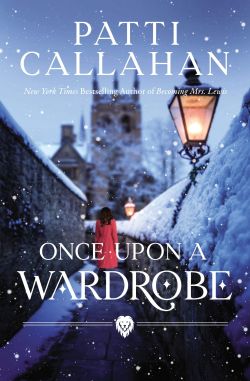
Once Upon a Wardrobe

Once Upon a Wardrobe
© 2021 Patti Callahan
311 pages

Once Upon a Wardrobe takes us to Oxford, 1950, where a young woman named Megs nervously approaches a tutor of English, C.S. Lewis, and asks: where did Narnia come from? She asks not for herself, but for her dying brother — a young boy born with a bad heart, who is largely confined to bed and who lives through the stories she reads to him. With a smile, Lewis invites her into his office….and begins to tell the tale. Once Upon a Wardrobe is both the story of Lewis’ life, and that of a cool logician’s wakening to wonder as she grapples with the decline of her beloved young brother. It is a terribly sweet novel that invites us into the life of an extraordinary mind.

This is not the first time Patti Callahan has drawn inspiration from the life of Jack Lewis; her Becoming Mrs. Lewis introduced me to the author, so when I learned she’d created something else along those lines I didn’t hesitate to launch into it. There are two stories being told here, one framed inside the other; as Megs seeks out Lewis (stalking him, even), and subsequently comes to know him and his brother Warnie personally, then relates their reminiscences about growing up to the bedridden George. The series of conversations begins with a question — whence Narnia? — but the answer isn’t an easy one, which is why Lewis essentially tells his life story to Megs in a series of walks and cozy office chats. (It’s good timing for him, actually: a publisher has been nagging him to write an autobiography.) Although Megs struggles with Lewis’ roundabout answer, her debates with her brother, Lewis, and a new friend, an Irish lad who studies medieval literature, break the crust of her near-disdain for anything but math and science and allow her to see the importance of imagination and story to the human heart.

Having recently read several Lewis biographies and revisited a couple of his works, I was impressed by how directly Callahan draws on Lewis’ written words — in letters and essays — in his conversations with Megs, working them in rather naturally. It’s a beautiful tribute to a man who took the pain of of his early life and forged it into a story that has inspired readers of all ages for generations.

Posted in Reviews | Tagged , , | 3 Comments

Advent hello

Broad Street Books, Christmas display. Selma AL.

A close relative of mine was rushed to the hospital last week and discovered to have kidney (!) cancer, so it’s been a stressful few days. Their offending kidney has been removed and they’re recovering nicely. Who knew such little organs could be so much trouble? Last week I did read The Narnian, The Problem of Pain, and Lewis Agonistes, and still intend to re-read The Four Loves this week. Reviews of some kind will start coming out. I suspect I’ll combine the biographies and tackle The Problem of Pain by itself. It’s Advent now, and I hope to rescue In Search of Zarathusta as relevant reading. It’s about the origins of Zoroastrianism, and I’m hoping it will have info on the Persian apocalypticism that influenced Jewish thought in the immediate pre-Christian era. It’s a skinny book and fell between my bed and my headboard bookcase, so I have to move the entire bed just to fetch it from the nether regions. (I can’t move the headboard book case because it’s blocked in by….another bookcase. Oh, the woes of a reader.) I may also try a Purgatorio in Advent, Paradiso in Christmas, for the CCSB — though Lent/Easter is far more appropriate thematically.

Posted in General | 7 Comments

The Reading Life

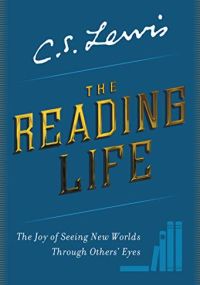
The Reading Life: The Joy of Seeing New Worlds through Others’ Eyes
© 2019 C.S. Lewis
192 pages

One of the reasons I’ve grown so fond of Jack Lewis over the years is that he and I share some of the same chief pleasures; reading, writing,  long walks, and warm evenings with friends and potable beverages.   Lewis in his time wore many hats, but central to his life were the joys of reading —  reading stories that enlarged the spirit, and reading arguments which forged, tempered, and sharpened the mind.  The Reading Life collects Lewis’ writings about the joys and virtues of a life spent in books. Of all the posthumous themed collections of Lewis’ writings which I’ve read,  it’s easily the most delightful. 

Alan Jacobs comments in The Narnian that much of Lewis’ adult work was committed to re-enchanting the world, to countering the dismal sterility of modernity.  Key to his conversion to Christianity from the hard materialism of his teens and early college years was a belief that Story was central to human life; for all his attempted embrace of modernity as a youth, Lewis was invariably tugged away from it,   fascinated by the power and significance of Myth.   In our time, so much is lost that we mis-use the word myth as a synonym for lie – but this only reveals our own ignorance. We are no less driven by myth today than we were yesterday; the only difference is that our myths are far less noble and interesting.  

In The Storytelling Animal, Jonathan Gottschall elaborated on the centrality of Story to all levels of human life, from mere adaptation and survival – allowing us to empathize with others and rehearse skills – but be bound together in larger groups, knit together by narrative. Much of this was already understood by Lewis,  who saw stories not only the path to moral formation – teaching us courage in the face of danger, for instance – but  the path out of our own self-absorption. We can encounter older minds, formed in different cultures – ones that are flawed in their own way, but not in ours, and which can throw a light onto our own limitations and often offer a hand in inspiring us to virtues often ignored by our own time.  Literature rescues us from not only cultural provincialism, but chronological snobbery; we can stand with our brothers and sisters from ages past, learning from them instead of looking down on them in smug condescension.  That is one of the most extraordinary things about books; their ability to introduce us to Persons who, while no longer living, are certainly not dead.  in sitting with a book and reading attentively, we can enter into a conversation with  minds and personalities and find unexpected solidarity.  

For readers, this is preaching to the choir — but it’s a wonderful sermon. Coming up later in A Week with Jack: The Narnian, a literary biography; The Problem of Pain, and possibly The Four Loves, which I need to re-read and review.

Related:
Of Other Worlds:Essays and Stories, C.S. Lewis. A posthumous (Walter Hooper) collection of Lewis’ writings on SF and fantasy. Very similar in theme. One I need to re-read and review, but I have to find it first…

Posted in Classics and Literary, Reviews | Tagged , , | 6 Comments