The Razor’s Edge

The Razor’s Edge
© 1944 W. Somerset Maugham
314 pages

“And what is that going to lead to?”
“The acquisition of knowledge,” he smiled.
“It doesn’t sound very practical.” “Perhaps it isn’t and on the other hand perhaps it is. But it’s enormous fun.”

Larry Darrell was an unremarkable young man with a pre-determined future: possessing independent wealth from his family background, he needed only marry his childhood friend and fiancé Isabel, take his place in one of America’s many booming young firms, and create his fortune at the dawn of the American Century. But when Larry returned from the Great War, something had changed; the once carefree youth was haunted by an act of grace which saved his life but rattled his soul. Instead of a wife and fortune, he sought answers. The Razor’s Edge is a story of homo viviator, man on a journey — to find the answers, to find the truth, to find one’s self.

The Razor’s Edge is at, once compelling in its premise, for we have a character for whom the road to success is wide open, free and clear of any obstacles, willfully abandoning that road to take on the wilderness, in search of answers when sometimes the questions themselves are not clear. While Larry’s friends are all ambitious and looking ahead to the bright future they’ll surely have a hand in creating, Larry has a new found horror of the rat race. “I want to do more with my life than sell bonds,” he says, and so to the dismay of his fiancé and bewilderment of his peers and mentors, he turns to copious reading, manual labor, and wandering the globe speaking with learned personalities, often in humble circumstances. For his friends and former love, life-as-intended goes on: they all become increasingly rich and accomplished, while he only descends further into the libraries, coal mines, and ashrams of the world. Eventually Larry’s life reconnects with his friends, at a time when Depression has hit and their newly-made fortunes are all wiped out in hours.

A week ago, a friend introduced me to this story through a movie suggestion, and so captivated by it was I that I watched both adaptations of the story, and then read the novel. I’m glad I took on the source, for Maugham’s writing has enormous appeal in itself, beyond the depths he gave each character, most of whom the movies treat far more casually. Having made the choice to pursue a career which was more meaningful than expedient myself, I could only envy Larry’s ability to devote himself fully to the pursuit of the truth We are all are conscious to some degree of our need for clarity, wisdom and meaning, but for Larry there was none other. The story is especially fascinating when Larry returns from his travels and begins interacting with his friends again, and we see the characters as foils to some degree for one another, each person distinct and admirable in their ways. Each gets what they wish — but the reader may judge which paths are more worthy of human attention and devotion.

The Razor’s Edge is not merely a novel to enjoy the once, but to return to and savor again and again.

QUOTATIONS

If the rose at noon has lost the beauty it had at dawn, the beauty it had then was real. Nothing in the world is permanent, and we’re foolish when we ask anything to last, but surely we’re still more foolish not to take delight in it while we have it.

Passion doesn’t count the cost. Pascal said that the heart has its reasons that reason takes no account of. If he meant what I think, he meant that when passion seizes the heart it invents reasons that seem not only plausible but conclusive to prove that the world is well lost for love. It convinces you that honor is well sacrificed and that shame is a cheap price to pay. Passion is destructive. It destroyed Antony and Cleopatra, Tristan and Isolde, Parnell and Kitty O’Shea. And if it doesn’t destroy it dies. It may be then that one is faced with the desolation of knowing that one has wasted the years of one’s life, that one’s brought disgrace upon oneself, endured the frightful pang of jealousy, swallowed every bitter mortification, that one’s expended all one’s tenderness, poured out all the riches of one’s soul on a poor drab, a fool, a peg on which one hung one’s dreams, who wasn’t worth a stick of chewing gum.”

He took long rides in those solitary, mysterious woods; they’re like the woods in a play of Maeterlinck’s, so gray, so silent, it’s almost uncanny; and there’s a moment in spring—it hardly lasts more than a fortnight—when the dogwood bursts into flower, and the gum trees burst into leaf, and their young fresh green against the gray Spanish moss is like a song of joy; the ground is carpeted with great white lilies and wild azalea. Gray couldn’t say what it meant to him, but it meant the world. He was drunk with the loveliness of it. Oh, I know I don’t put it well, but I can’t tell you how moving it was to see that great hulk of a man uplifted by an emotion so pure and so beautiful that it made me want to cry. If there is a God in heaven Gray was very near Him then.
Posted in Reviews | Tagged , , , | 9 Comments

Watership Down

Watership Down
© 1972 Richard Adams
413 pages

A small community sits on the precipice of destruction, but the few who realize it are unable to fully warn their comrades. A small band leave everything they’ve ever known behind, to face the unknown perils of the wilderness on their own – their only resources, one another. Their goal: to find a new home. The gifts of each will be demanded in full before they have found safe harbor again, and while their potential enemies are numberless, not every friendly face along the way proves true – and their best allies come from an unexpected source. Oh, and did I mention they’re all rabbits? 

Watership Down is a rabbit adventure story, but you know that already. That it involves rabbits is Watership’s most salient fact, a bit like Gone with the Wind being a romance or War and Peace being big. Although the subjects are animals, this is not a cutesey woodland adventure:  the stakes are high, nothing less than survival,  and the way forward is one obtained only through blood, work, and ingenuity. Adams finds a way to make his subjects relatable, with distinct personalities and a shared culture, without overly anthropomorphizing them; there are no bunnies wearing suits and smoking pipes here, no monastery in Mossflower where woodland creatures in monks’ tunics bake bread and run about with swords. (I love the Redwall series, but its premise is silly on the face of it.)   The rabbits occupy the same world we live in; Watership Down is the name of a place in England, in fact, and the author includes a map to demonstrate how closely he hewed to reality in creating the rabbits’ journey.  

Our main characters include young Hazel, who is beneath respectability in his warren despite his intelligence and bravery; his brother Fiver, a runt with an uncanny sensitivity to danger; Bigwig, a bruiser who was one of the few prominent males in the warren to take Hazel’s warning seriously;  and more as the story progresses. Being rabbits, they are exposed to danger for most of the novel;  there’s no shortage of predators – cats and foxes being the most dangerous foes, but human snares and guns also coming into play. More interestingly, though, the rabbits-on-a-journey encounter two other rabbit warrens, both of which pose unique dangers to the intrepid band.  

Watership Down was unexpectedly compelling for me,  in part because of Adams’ Tolkienesque use of a rabbit language and even rabbit mythology to give his characters and world a certain richness, even beyond the full descriptions of the England countryside;   tales about a rabbit hero-progenitor appear throughout the novel, as  Hazel and Blackberry and others try to entertain their fellows, or bolster their morale.  This adds more depth and interest to a novel that would already be appealing given the premise of plucky, humble characters overcoming serious challenges through their wits and hard work. I’ll be interested to see how Tales from Watership Down further develops the setting and characters!

Posted in Classics and Literary, Reviews | Tagged , , , | 20 Comments

The Great Gatsby

The Great Gatsby
© F. Scott Fitzgerald

It is interesting how the passage of years can suddenly alter a reader’s take on a given book. Take The Great Gatesby, for instance, which I read in early college and was so underwhelmed by that nothing of it made it from my eyes into the brain.  Reading it as an adult, though, is an entirely different experience.  As most readers will already know, given Gatesby’s reputation, it’s a character drama and a not-subtle critiqe of the excesses of  high society in the jazz age, told through the eyes of a young midwestener who has come east to make his fortune. Having shared some of Nick’s journey as a thirty-something myself,  the book’s value is far more obvious now.  Money can’t buy love – nor happiness.  

Nick’s introduction to high society comes through his neighbor Jay Gatsby, an extraordinarily rich young man who owns a mansion next door to Nick’s far more humble abode. Gatsby hosts riotous parties on a regular basis, and it’s not long before he extends an invitation to his neighbor – an invitation prompted, we later learn, by some of Nick’s social connections. Specifically,  we learn that Gatsby was once romantically involved with Nick’s cousin Daisy, and it is in earnest hope of restoring his connection with Daisy that Gatsby’s every activity seems to revolve.  Although Gatsby appears to be a man who has Made It in life – he has fortune, acclaim, a house filled with people who speak well of him —   his love for Daisy and sadness at their being once separated by his lack of means  makes him a sad, unenviable character. 

There’s a sadness throughout the book, in fact, as we observe the goings-on of Gatsby’s parties. They are filled with excess; men and women in elaborate dress,  engorging themselves on rich food and drinking late into the night. For all this activity, there is an emptiness that they all seem to be trying to escape. Ultimately, it ends in tragedy for several of the characters, and Nick himself abandons his plans of pursuing  the dream.   Reading this as a thirty-year old who has experienced a bit more of life than I had at nineteen, I was struck by the thought that for all his wealth, charisma, and achievements, Gatsby was still miserable for the same reason many others are miserable, regardless of their standing or bank statements:  he longed for love.    Death unites all, rich and poor, but so does heartache – and in our failings we are all very much alike. Some wear clothing with higher thread counts and putter around in larger homes,  but ultimately none of us can escape the need for meaning.   

Special thanks to Marian for joining me on this re-read! Having someone to discuss the book with made it more interesting than it was already.

Posted in Classics and Literary, Reviews | Tagged , , , , | 12 Comments

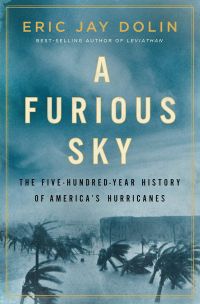
A Furious Sky

A Furious Sky: The Five Hundred Year History of America’s Hurricanes
© 2020 Eric Jay Dolin
415 pages

A Furious Sky is a history of hurricanes in American history, opening with Columbus’ attempts to warn a rival governor of imminent danger and wrapping up with one of the busiest hurricane seasons on record, in which three major systems crashed into the American mainland in a few months’ time.   Although the author focused on the development and impact of the storms themselves, featuring numerous systems from colonial days until the present,  he also follows the growth of meteorological  forecasting in the United States, culminating in satellite coverage.  Many of the high-dollar storms have occurred in living memory, like Andrew and Katrina, but there are more here from the 18th and 19th centuries that have more generic names (“The Great Storm of 18__”,etc).  I didn’t appreciate how devastated the northeast has been by hurricanes throughout  history, in part because they’re rare enough that locals forget about the threat.  Furious Sky is quite readable, but were it not for the occasional forays into another topic, like the curious tale of how hurricanes came to be named after women,  repetition would be an issue – it’s literally one storm after another,  and the study of hurricane science stops in the early 20th century, with no discussion of oceanic cycles and that sort of thing.  If you enjoy reading about disasters (and I, for some perverse reason, too), this should be a good read — but I’d go slow and take it in sections to keep it from growing stale. If you live in a hurricane-prone area, it’s also a grim antidote to the tendency to forget the dangers posed by Katrinas, Marias, and Zetas in quieter years like 2021.

Coming up this week: The Great Gatsby and wabbit season.

Posted in history, Reviews | Tagged , , , | 12 Comments

Harry Potter Fanfic: They Shook Hands

“Americans are very unusual wizards. They’re particularly fond of explosions.”

I’m officially reading two nonfiction works. My weekend was spent, however, reading through a fanfiction series called “They Shook Hands“, an alternate-history approach to the Harry Potter adventures. The titular point of departure is that Harry and Draco’s initial meeting happens somewhat more amicably, but there’s a prior change that the reader becomes aware of not long thereafter. Because Draco is his guide into the wizarding world, Harry doesn’t bring any animosity towards Slytherin with him to the Great Hall, and is sorted into that house as a result. The author gives full personalities to people who, in the official series, only appeared as villainous last names, minions to a Draco who we only see in his worst moments. Because of Harry’s association with Draco and Slytherin House, Ron and he never become friends — quite the opposite, in fact, given Ron’s enormous prejudice toward Slytherin. Although the main plot of the books unfolds within the stories as expected, the paths taken to the same conclusions are different, and character fates diverge more widely with every succeeding ‘book’. Harry has a far more productive relationship with Professor Snape here, for instance, thanks to his Slytherin connection, and as a consequence Snape takes Harry’s story about Peter Pettigrew seriously when the Shrieking Shack confrontation between those two, Lupin, Sirius, and Ron occurs. Although Harry’s being sorted into Slytherin has salutatory effects — he’s a far more dedicated student, for instance, driven by the demanding Slytherin work ethic — he’s also a harder, slightly darker Harry, one encouraged by his friends’ outrage to dwell on his abuses at the Dursley’s hands, who grows to genuinely hate his former guardians and who deeply resents Dumbledore for abandoning him to their gracelessness. I’m currently beginning its take on Goblet of Fire, and looking forward to seeing how Voldemort’s return is effected and handled with the slightly different world at play.

Posted in Reviews | Tagged , , | 2 Comments

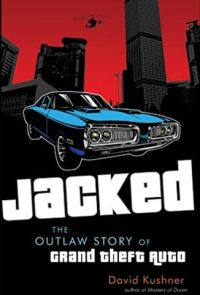
Jacked!

Jacked! The Outlaw Story of Grand Theft Auto
© 2012 David Kushner
301 pages

Twenty years ago, Grand Theft Auto III released in the United States, to popular and later critical acclaim.  The GTA series had already established a name for itself as a cheeky rebel, defying convention and pleasantness by allowing players to assume the role of an unnamed street thug, carrying out missions for various gang leaders and creating urban chaos in their off-time.  The games were lauded for their energy, humor, and free-form nature – allowing players to do missions however they liked,  or to just  blitz through the city at will without ever having answered the first phone.  Jacked is a history of the series which focuses on Rockstar’s successful attempt to push that experience into 3D gaming, and the legal storm that brewed when a prominent attorney turned moral guardian, Jack Thompson, attempted to arouse public condemnation and legal barriers to the games’ purchase. Although of interest to the GTA fan hunger for the inside story of the games’ development, the focus here is more on Take-Two/Rockstar’s business history and the legal battle, with the creative element competing for page space besides a legal campaign that ultimately went nowhere. Masters of Doom it isn’t.

Given the goliath which the GTA became, it’s surprising to learn how humble its origins were, beginning as a simple cops-and-robbers game called Chase ‘n’ Race.  The designers took  special pleasure in creating a simulated city, just as Will Wright did when designing the background for Raid on Bungeling Bay,  but they found that playing a law-abiding cop in a city with working traffic lights and law wasn’t particularly fun. When they flipped the table and played as the robber, though – all bets were off!     The game became an underworld action story, in which the player did a series of missions of missions for the city’s petty thugs, and the designers deliberately chose to prioritize gameplay over appearance – knowing they’d never compete with other games then in production, like Tomb Raider.  The sheer novelty of the game, coupled with its open-world freedom and the thrill of being the baddie for once, won it a growing audience.  

Rockstar took seriously its claim to having pushed PC games to become an adult medium, growing with the aging audience to present more interesting stories than plumber-seeks-princess Nintendo games.  They began building a brand around themselves – youthful, rebellious,  elite, and cool.   Their entry into 3D games – GTAIII, GTA Vice City, and GTA San Andreas – would see ever-larger budgets,  featuring recognizable voice and movie actors and copious research to make their created worlds come alive.  Rockstar’s researchers didn’t just take photos of street scenes to mock them up in a computer world; they studied traffic patterns to ensure that the proportional number of taxis in Liberty City, for instance, were consistent with those  in New York City.  The storytelling would mature rapidly; the phone-call missions of earlier games replaced by elaborate cinematics.

Rockstar fed on controversy; every politician who scolded them only increased their profile, and each of their games pushed the envelope a little further. It was San Andreas that finally got them into real trouble, however.  Sam Houser wanted to introduce a sex element into the games,  despite knowing that the industry – blamed for scattered acts of violence in the 1990s by politicians who love pointing fingers and condemning someone, if they can look good on camera doing it —  would slap the game with an Adults Only rating, effectively barring it from stores. Houser had the idea: develop the appropriate code,  deactivate it so it didn’t display in store copies, but then make a patch available to the buying public so that those who wanted to play a sex mini-game could. Rockstar would go beyond what anyone else had done and satisfy the censors at the same time. Genius!   ….unfortunately for Rockstar, modders discovered the concealed code and were able to bring it to life, and in the fracas that ensured, Rockstar blamed the modders for tampering with the source code.   Intended to further Rockstar’s reputation as the leader in adult video game entertainment,  the whole affair instead burned many employees and fans, and resulted in the PC game being re-released in a crippled form that was unmoddable.  That disservice to fans is made worse by Rockstar’s hypocrisy, in blaming the modders for the discovery of material that it had planned to release for its own self-promotion.

Although rabid fans of the original 3D games (facelifted versions of which are being released for sale today) may find some interest here, the story of GTA’s creative development is only one piece of the book; it doesn’t go into as much detail as Master of Doom into the games themselves, and  given the animosity between most GTA fans and  the attorney who tried to make the game harder to buy, I doubt there’s much interest in reading his side of the story as presented here.   The author’s criticism of Rockstar focuses entirely on its business practices, not creative choices; no mention is made of the increasingly schizophrenic design of the games, in which inter-mission freedom exists alongside tightly scripted missions that  railroad the player into playing missions One and Only Way. This has continued into the RDR series, which – while phenomenal – is maddening in its practice of  frog-marching the player through many areas.  

Posted in Reviews | Tagged , , | 6 Comments

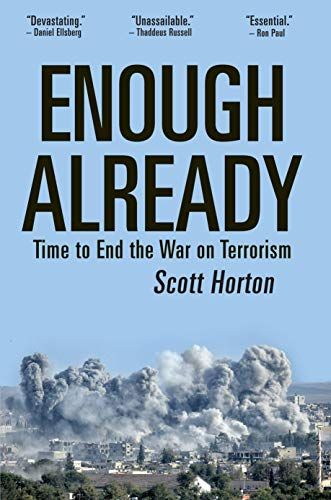
Enough Already

Enough Already: Time to End the War on Terrorism
© 2021 Scott Horton
330 pages

The war on terror has consumed American resources and human lives for well over twenty years now,  breaking numerous countries, deforming the United States at multiple levels, and perpetuating itself like a cancer. In Enough Already, a journalist who has specialized in understanding the Middle East and DC’s role there, armed with experience from thousands of interviews with authorities across the world and spurred by his passion for justice,  offers a critical history of the conflict which urges Americans to stop being so complacent about the corruption at home and devastation abroad which DC’s policies have created. It is infuriating, tragic, and comprehensive as a single volume can be without exploding to Biblical lengths.  

The war on terror did not begin on September 12th, 2001.  al-Queda’s infamous and murderous attack upon New York City and the American people was inspired by longstanding meddling by DC.  The United States became increasingly involved in the Middle East throughout the 20th century for geopolitical reasons, needing to stabilize access to its oil reserves and sea lanes for its allies, and to limit access from DC’s foes – including Germany, but especially the Soviet Union.  This meant that the Empire of Liberty,  beset with a sense of mission and power after World War 2,  became increasingly involved in the business of people a world away – supporting dictators or even replacing leaders with a democratic backing to create a order most amenable to its own interests. This generated – unsurpisingly to anyone but DC’s experts —   reaction. Bush’s asinine explanation of the terrorists’ motives (“They hate us for our freedoms”) ignored the perpetuator’s steady stream of releases decrying DC’s frequent mideast interventions, bombings, and placement of troops through the region. The latter decades of the 20th century were flecked with explosive anger targeted at American interests in the middle east, crowned by the “planes mission” that Osama bin Laden conceived to draw the United States further into the mideast so that it might drive itself to financial ruin and bankrupt any influence it had in the region. Well, “Tamat almuhima!” as they might say in Arabic —  Mission Accomplished.  

In the aftermath of September 11, George W. Bush committed the nation not to simply finding the persons responsible and then giving them their just desserts, but to fighting terrorism abroad – any time, any place, anywhere.   This grandiose mission led to first invading Afghanistan when the ruling powers the Taliban would have been happy to surrender bin Laden in a way that would let them save face, and then invading Iraq for an array of farcial reasons, and still later sowing chaos in Somalia, Libya, and most notably, Syria.  Rather than destroying al-Qaeda,  the sudden expansion of American power in the region inflamed passions, particularly as DC picked favorites to rule Iraq and Afghanistan, persons and parties who were already at odds with other groups in the country.  Al-Qaeda and sister groups’ membership ballooned,  to the point that after American troops had officially “left” Iraq, they were forced to re-invade after an al-Qaeda offshoot labeling itself the Islamic State took over large portions of Iraq and Syria —  an event entirely made possible by DC’s recklessness.  So catastrophically did DC fail in its mission, so far did it stray from its own ideals, that in Syria  it was actively helping fund  groups linked to al-Qaeda.  The war on terror has driven the war-state to bankruptcy – moral and fiscal.  

After recounting the train of horrors visited upon people the world over by the overweening ambition of DC’s political types, all of whom have sworn to end or curtail the terror war only to continue and expand it, Horton ends with a chapter on how the war on terror has adversely affected Americans through the expanding security state. Perhaps we don’t care that DC and by connection the American people are complicit in hundreds of thousands of deaths — through wars created by DC-spurred chaos, through starvation caused by sanctions, through disease because of DC’s bombing of civilian infrastructure — but surely the insidious growth of the NSA and CIA’s online surveillance networks, treating us all like subjects in 1984, might stir us to action? The ongoing militarization of the police force — both the direct transferral of ex-servicemen into the law enforcement sector, with laxer engagement standards and the use of military-grade armor, weapons, and equipment by civilian law enforcement — has provoked some response, but in a distorted way. Instead of targeting militarization itself, public outcry is fixated on the red herring of racist cops.

For me, Horton is preaching to the choir. I’ve been angry about the war on terror for sixteen years now, growing to hate Bush and Obama because of their expansion of the polite state and their aggressiveness abroad. The war on terror helped form my political identity as a libertarian, and my copy of this book is autographed — a result of having funded Horton’s kickstarter. A lot of this sorry story I already knew, but the chaos in Libya, Somalia, and Mali has fallen under my radar until now. Horton does an admirable job of addressing decades of action and misery in just a few hundred pages, and — despite his passion for the subject, which listeners of his podcast are familiar with — he only rarely editorializes, instead letting the raw facts speak for themselves.

Related:
Fool’s Errand: Time to End the War in Afghanistan, Scott Horton. Intended as part of this volume, but a re-write prompted Horton to release a separate book on Afghanistan and then a broader view of the terror-wars.
The Looming Tower: al-Queda and the Road to 9/11, Lawrence Wright
The Scott Horton Podcast, featuring thousands of interviews since 2003. Listen and you’ll never take a talking-head on the mainstream media seriously again.

Posted in Politics and Civic Interest, Reviews, World Affairs | Tagged , , , , , , , , | 15 Comments

Germans: terror and tedium

In the past week I’ve read or mostly-read, in the case of The Vampire Economy, two books with a German connection.

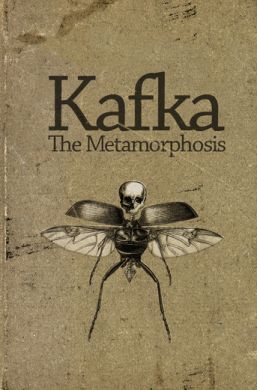
The first, The Metamorphosis by Franz Kafka, was by far the most interesting of the two. I read this almost entirely thanks to Marian’s interest in Kafka. The book is more a short story, and opens with a poor man (Gregor Samsa) who during a night’s sleep has turned into a hideous vermin, one with a hard back and lots of sticky little legs. How or why this happened isn’t the point of the novel: instead, it visits how poor Gregor and his family deal with this sudden inexplicable horror. There’s a layer of surrealness here, as once Gregor has realized that yes, his body is not what it once was and that no, staying in bed won’t help, his thoughts fix on how on Earth he can get dressed and go to work as a salesman now. Surprisingly, his employer is just as obsessed with this question as he is: fifteen minutes past the time he was expected at work, someone arrives at his apartment to scold him for playing hooky. Although Gregor looks horrible on the outside, the reader never confuses this with Gregor’s true nature: although he has been caught in the rat race, plowing away at a job he doesn’t especially like, he does it for noble purposes, to support his aging parents and little sister — and it’s the sudden loss of his income, not necessarily his reduced dating prospects or new dietary challenges, that Gregor mourns. The story has a tragic ending, but it’s one worth reading and thinking about.

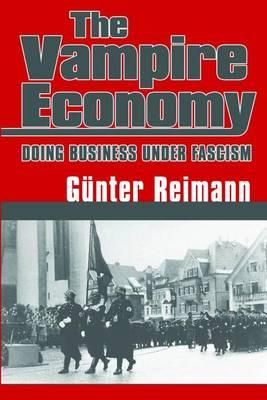
Far less compelling was The Vampire Economy, an extremely detailed analysis of how Nazi policies deformed the German economy through the Hitler years. When I say extremely detailed, every chapter examines some narrow economic subset — bank managers, industrial planners and the like — and comments in depth on how these businesses were changing as a response to Nazi policies. The book was published in 1939, so its critique of the Nazi state is based on its economic malpractice rather than Hitler’s expansionism or his murder camps. Most interestingly, the author was a Communist resistor to the Nazi state, giving additional heft to his observation that the Nazis’ economic policies were no more market-friendly than Stalin’s; in both cases, the economy was stretched, rearranged, and generally contorted in the hopes of meeting the political authorities’ national goals, with deleterious and sometimes absurd results. (Absurd, like businesses who were unable to obtain rubber because of military directives buying new cars instead, then using the tires and scrapping the vehicles. Imagine how badly deformed an economy is when buying an entire car is more cost-effective than bribing officials to buy the rubber outright!) The general effect is that all else fell to an aristocracy of pull; businesses were forced to hire advisors who were a mix of lawyer and salesman, finessing Nazi authorities and giving businessmen advice on how best to navigate the obstacle course. Although the book clearly demonstrates how Nazi economics was in the same family of economic garbage as Lenin-Stalin-Maoist approaches, it’s so detailed that the casual reader may tire of the repeated lesson.

Achtung! Excerpts!

“When we consider that Hitler himself came not from the ranks of organized labor, but from the ruined middle class or the fifth estate, what guarantee have we that he will not make common cause with the bandits whom he has put into uniforms? The difference between this and the Russian system is much less than you think, despite the fact that officially we are still independent businessmen. […] Some businessmen have even started studying Marxist theories, so that they will have a better understanding of the present economic system.”

“The capitalist under fascism has to be not merely a law-abiding citizen, he must be servile to the representatives of the State. He must not insist on ‘rights’ and must not behave as if his private property rights were still sacred. He should be grateful to the Fuehrer that he still has private property.”

“Under fascism, it is not primarily the power of money which corrupts, but rather does corruption spring from the power of the State. Whereas in democratic countries the businessman may use his money to influence legislation and public opinion and thus operate as a source of power and corruption, in fascist countries he can exist only as the subject upon whom State power operates. The corruption in fascist countries arises inevitably from the reversal of the roles of the capitalist and the State as wielders of economic power.”

“In the old days he decided for himself what he should buy and where he would sell, without asking anybody for a permit—especially not someone residing in Berlin. Today he cannot move hand or foot without a permit or certificate, quota or allowance. He cannot make the smallest purchase abroad without first taking into account a hundred new decrees and laws and filling out a score of application forms and petitions. No longer is his the pleasure and profit of buying raw materials abroad when they are cheap; he can buy only when he can get foreign currency.”

“The skill of the firm’s representative in advertising its patriotism and military fervor is often more important than anything else as a means of impressing a patriotic bureaucrat who makes the decisions of the distribution board.”

Posted in Classics and Literary, General, Reviews | Tagged , , , , | 3 Comments

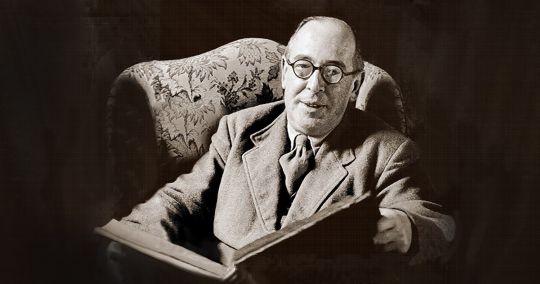
CS Lewis, a reader’s gift to readers

Recently, while slogging through a dull but sometimes promising book, I turned to Lewis for help: relieve me, Jack, from the tedium of Nazi economics! He delivered, though my review will wait until the Lewis-themed week coming up in a few…

“Those of us who have been true readers all our life seldom fully realise the enormous extension of our being which we owe to authors. We realise it best when we talk with an unliterary friend. He may be full of goodness and good sense but he inhabits a tiny world. In it, we should be suffocated. The man who is contented to be only himself, and therefore less a self, is in prison. My own eyes are not enough for me, I will see through those of others. Reality, even seen through the eyes of many, is not enough. I will see what others have invented.”

“Literary experience heals the wound, without undermining the privilege, of individuality. There are mass emotions which heal the wound; but they destroy the privilege. In them our separate selves are pooled and we sink back into sub-individuality. But in reading great literature I become a thousand men and yet remain myself. Like the night sky in the Greek poem, I see with a myriad eyes, but it is still I who see. Here, as in worship, in love, in moral action, and in knowing, I transcend myself; and am never more myself than when I do.”

“The first demand any work of any art makes upon us is surrender. Look. Listen. Receive. Get yourself out of the way. (There is no good asking first whether the work before you deserves such a surrender, for until you have surrendered you cannot possibly find out.)”

“Naturally, since I myself am a writer, I do not wish the ordinary reader to read no modern books. But if he must read only the new or only the old, I would advise him to read the old. And I would give him this advice precisely because he is an amateur and therefore much less protected than the expert against the dangers of an exclusive contemporary diet. [….] A new [theology] book is still on its trial and the amateur is not in a position to judge it. It has to be tested against the great body of Christian thought down the ages, and all its hidden implications (often unsuspected by the author himself) have to be brought to light.”

“We may be sure that the characteristic blindness of the twentieth century—the blindness about which posterity will ask, ‘But how could they have thought that?’—lies where we have never suspected it, and concerns something about which there is untroubled agreement between Hitler and President Roosevelt or between Mr. H. G. Wells and Karl Barth. None of us can fully escape this blindness, but we shall certainly increase it, and weaken our guard against it, if we read only modern books. Where they are true they will give us truths which we half knew already. Where they are false they will aggravate the error with which we are already dangerously ill. The only palliative is to keep the clean sea breeze of the centuries blowing through our minds, and this can be done only by reading old books. Not, of course, that there is any magic about the past. People were no cleverer then than they are now; they made as many mistakes as we. But not the same mistakes. They will not flatter us in the errors we are already committing; and their own errors, being now open and palpable, will not endanger us. Two heads are better than one, not because either is infallible, but because they are unlikely to go wrong in the same direction.”

Posted in quotations | Tagged , | 1 Comment

Travels with George

Travels with George: In Search of Washington and his Legacy
© 2021 Nathaniel Philbrick
400 pages

Travels with George couldn’t help but be interesting, what with its premise of the author following George Washington’s footsteps in an reenactment of his tour of the  united States during his first term in office.   Its promising mix of history and travel is marred (to what degree may be determined by the reader’s taste) by the author’s frequent inclusion of irrelevant stories about himself, and even more chronic infusion of contemporary politics with the text.    As a work of history,  I was not impressed in the least by the text, but it was frequently interesting, comparable to Sarah Vowell’s history tourism but with her dry humor replaced by constant fretting ruminations on slavery and American history. 

Washington is the American Demigod.  His stature dwarves all others, and countless places in the United States are named in his honor – including a certain city along the Potomac which hasn’t deserved the honor in decades.   Philbrick took this journey in hopes of meeting the human Washington, however, the traveler who would be grappling with storms, delays, and bad taverns, not necessarily questions of national consequence.  Washington’s role as President and Father of his Country sat on him regardless of travel demands, though, for as the Constitution was still being ratified by two last holdhouts, the new polity’s nature was his to imbue with authority and legitimacy.  His ‘journey’, or rather journeys, were practical in that Washington had to travel to the moving capital – first to New York, then to Philadelphia, and then to a site upon the Potomac that would be called the Federal City in its first decades    Although the author is ostensibly focused on covering Washington’s horse-and-carriage tour of the nation, a lot of other revolutionary and other history is woven in,  some of it connected to Washington and some not. (The author keeps trying to work in Henry and Bess Truman, as well as John Steinbeck, into the text,  when he’s not sharing his own travel experiences, few of which are interesting except for his sailboat encounter with a tornado while sailing to Newport.)  

Despite its flaws, I mostly enjoyed Travels with George, largely because of its premise and the strength of the central subject, who I count  as one of the most admirable men in history.  I found it deeply flawed, though, both by Philbrick’s inability to stay on topic and by his very-Whig history approach to the national story.  Most odiously, he dismissed all critics of the early Constitution as southern slaveholders, as though Sam Adams and Luther Martin didn’t exist, and that no motives could possibly exist for opposing the centralization of power aside from the self-interest of an economic minority.  (Author is also apparently oblivious to the existence of southerners besides the slave-holding patricians,   as are most people. Vanishingly few books have been written about southern yeomen or poor whites.)     While I don’t necessarily recommend the book,  it’s enjoyable enough, and there are numerous drinking games which could be fabricated from the author’s frequent mentions of his dog, irrelevent sidelines, and political lectures.  

Posted in history, Reviews | Tagged , , | 6 Comments