To the States or any one of them, or any city of the States, Resist much, obey little, Once unquestioning obedience, once fully enslaved, Once fully enslaved, no nation, state, city of this earth, ever afterward resumes its liberty. (Walt Whitman)
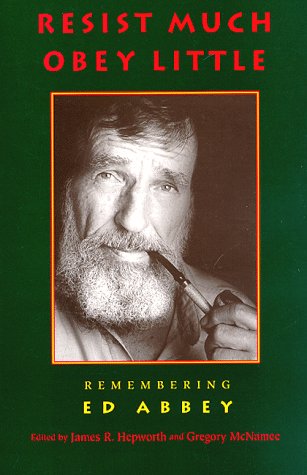
Years ago I had the stupid luck to attract a visitor who suggested I try Edward Abbey’s Desert Solitaire. It was the beginning of a love affair for me, for Ed Abbey remains one of my favorite writers — of nonfiction, at least. He was he who spurred me into New Mexico and Arizona, he who put the hunger in my soul to go back there whenever our modern-day War of the Worlds panic eases away. Borrowing its title from Walt Whitman, Obey Little, Resist Much is a collection of essays about Ed Abbey’s life and work, together with two interviews and a handful of eulogies. The essays vary from middling to superb; Wendell Berry’s piece which opens the collection sets a high bar. The authors are a varied lot, with unique perspectives — one tries to connect Abbey to themes in Hindu & Buddhist philosophy. This collection reminded me of how grateful I am Abbey’s Desert Solitaire was introduced to me years ago, for Abbey was a true American character, one whose passion and voice I never tire of encountering.Abbey was fascinating, with a spellbinding way of describing the natural wonder of the Southwest, and urging readers to protect what little wilderness remains: we need it, he urges, if for nothing else than to put everything else into its proper perspective. Abbey didn’t just decry destructive development and pollution: he fought against them. Constantly hiking and camping beneath the stars, he made a habit of pulling up development stakes, destroying billboards, and engaging in other acts of resistance to forestall a dreaded corporate takeover of the last respite. Often described as a nature writer, or an environmentalist, Abbey disliked both labels — as he did the frequent comparisons to Henry David Thoreau, another fascinating American figure pigeon-holed into the nature-writer category. In my review for The Journey Home, I described him as ‘rough-hewn’, impossible to put in any box. Although I’ve read much of Abbey over the years, I found in this collection fresh glimpses of the man — whose love for classical music was matched only by his appetite for books, for instance, whose boisterous energy in books belied a far more quiet and genteel nature when he was in interviews or at dinner with new friends. Perhaps one of the more interesting pieces was written by a man who was part of the burial party that met at Abbey’s house at 3 am, then transported his body into the desert and buried him, quite illegally but very appropriately, in the terrain he’d adopted, loved, and defended.
It’s been too long since I spent any time with Abbey; I’ll have to remedy that soon!
Below is a musical tribute to Ed from a favorite musician of mine, Tom Russell. The piece ends with a ‘benediction’ from Ed himself.
But across most of history, you didn’t require a grasp of the finer points of a Puritan worldview to understand the simple secular reality that if you didn’t work hard, you were going to die, soon. God is love; winter is not.
Human flourishing, in Aristotle’s term, is won through the recognition of what you ought to be and the hard work of doing the things that are fitting for you as a human to do in service of others. There’s an ancient corollary to that idea: “He dies for lack of discipline, and because of his great folly he is led astray,” the book of Proverbs warns.
This crisis of idleness and passive drift is profound for every citizen of this republic. For this nation is premised on the idea that the government exists not to define and secure the good, the true, and the beautiful, but rather to maintain a framework for ordered liberty—so that free people can pursue their happiness in the diverse ways that they see fit.
Unfortunately, centralized education bureaucrats tend to see every failure as a product of still not enough centralized bureaucracy. Most of these experts are blind to the possibility that perhaps we are still trying to spoon-feed young adults who we should instead nudge to travel and to read, to work and to become the kind of students who ask questions before being handed a three-point formulaic answer.
What’s true for marriage or for animal flight training is truer still for coming of age. Teenagers need help. Growing up is actual, hard work. I would venture to guess that most of our teens don’t need more therapy or more antidepressants. They need direction about how to acquire the habits essential for navigating adulthood, and experiences that introduce and instill those habits.
We are fashioned to redeem our time on earth. As such, we need to make our days matter, make them meaningful. Adults need to pause to reflect. We need to “escape” the tyranny of the urgent and the loud.
Unless you are dead or in the process of withering away in front of your screen the way so many millions of us do, there’s an imperative in your soul to unpack life and its endless mysteries. This is an active, not a passive, pursuit. For people who are alive, really alive, their brains are in motion.
A plea for self-discipline and self-control is the one and only dignified alternative to discipline and control from without. For in this broken world of lawless souls, there will be control; there will be government. Order-seeking and security-seeking people, as well as those in search of power for their own purposes, will invariably seek to hold back the chaos of the world. The question is whether people will control themselves or submit to the control of another.
Lincoln’s “silver frame” of Constitutionalism enables many competing pursuits of happiness. Liberty empowers individuals and local communities to make their own choices. Liberty does not mandate how you live, but it does make a grand claim about your dignity and your unalienable rights—and therefore by implication it urges you to embrace a creed affirming the dignity and natural rights of everyone across the globe.
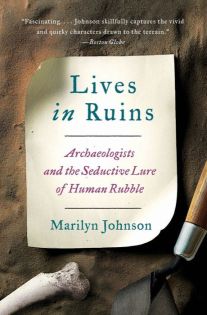
Archaeology’s blend of history and science, topped off with a bit of danger, is a winsome combination. For those curious about it, Marilyn Johnson’s account of her time spent with field archaeologists — investigating the past in places as diverse as the Caribbean, the World Trade Center underground, and New York fields that bear the revolutionary war dead — is all kinds of fascinating fun. Johnson’s style is a bit like Mary Roach’s, but with less toilet humor. Although it’s not a comprehensive treatment of archaeology, it communicates the field’s unique appeal, challenges, and dangers in a highly readable fashion.
Although I would have read this for the subject alone, I was immediately taken in by the author’s humor and personal dedication to her subject. When visiting archaeologists studying various hominids scattered throughout Eurasia, for instance, she tries her hand at flint knapping — and even helps butcher a lamb, being tutored in the finer points of extracting the best cuts of meat while not being butchered herself by the beast’s bones. The scientists she works with are a varied lot, men and women, and their particular objects of interest range from ancient beer to undocumented burial grounds. What unites them is their passion for understanding the past, and rescuing it from being destroyed completely by the passage of time — either by nature, or by humans who never saw a pastoral scene they thought couldn’t be improved by a strip mall and a parking lot big enough to land a Cessna on. That passion has to motivate them, because most of the scientists Johnson works with are paid worse than teachers or librarians — and that’s interesting, given that their work often puts them into harsh, dangerous, and isolated conditions. There are the perks, though: archaeologists are at the forefront of human history; a day’s work might render textbooks obsolete, and those harsh conditions offer beauty in equal measure to their perils.
I found Lives in Ruins to be a delight to consider and read, with all kinds of little attractions — Johnson’s immersion in the field, practicing archaeology along with her subjects, and her inclusion of pop culture topics, like the discussion of Auel’s Clan of the Cave Bear series. It’s breezy, but there’s substance here for the casual reader, and it’s just fun. Johnson has evidently done other books on librarians and….obituary-writers, so she has a unique interest in those who work to understand and protect the past.
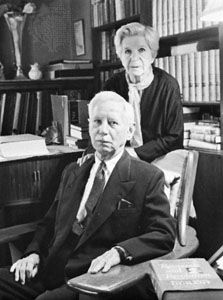
This week features a quote from Will Durant, whose epic Story of Civilization, partially co-written with his wife, was a masterful review of western history — surveying literature, politics, philosophy, etc — from Mesopotamia to Napoleon. This particular quote comes from his much shorter Heroes of History, which introduced me to the author.
“I will not subscribe to the depressing conclusion of Voltaire and Gibbon that history is ‘the record of crimes and follies of mankind’. Of course, it is partly that, and contains a hundred million tragedies — but it also the saving sanity of the average family, the labor and love of men and women bearing the stream of life over a thousand obstacles. It is the wisdom and courage of statesmen like Winston Churchill and Franklin Roosevelt, the latter dying exhausted but fulfilled; it is the indiscouragable effort of scientists and philosophers to understand the world that envelops them; it is the patience and skill of artists and poets giving lasting form to transient beauty, or an illuminating clarity to subtle influence; it is the vision of prophets and saints challenging us to nobility.
“On this turbulent and sullied river, hidden amid absurdity and suffering, there is a veritable City of God, in which the creative spirits of the past, by the miracles of memory and tradition, still live and work, carve and build and sing. Plato is there, playing philosophy with Socrates; Shakespeare is there, bringing new treasures every day; Keats is still listening to his nightingale, and Shelley is borne on the west wind; Nietzsche is there, raving and revealing; Christ is there, calling to us to come and share his bread. These and a thousand more, and the gifts they gave, are the Incredible Legacy of the race, the golden strain in the web of history.
” We need not close our eyes to the evils that challenge us — we should work undiscouragingly to lessen them — but we may take strength from the achievements of the past; the splendor of our inheritance. Let us, varying Shakespeare’s unhappy king, sit down and tell brave stories of noble women and great men.”
Fathers and teachers, I ask myself: “What is hell?” And I answer thus: “The suffering of being no longer able to love.”
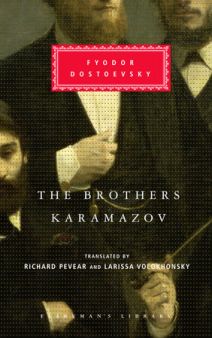
The Brothers Karamazov has the unusual distinction of having been recommended to me, repeatedly, over a course of fifteen years, by both hardened atheists and arch-traditional Catholics. First appearing as a family drama and murder mystery, it quickly proves to be far more substantial than that, doubling as a medium for philosophical debate about the nature of man, God, and the cosmos. In this first reading, I’m almost certain that there’s much I’ve missed, and yet even so I suspect I’ll be thinking about it for a long while to come.
I didn’t think much of the Brothers K at the start, peopled as it was by some fairly odious characters. Fyodor Karamazov, for instance, is a man so void of principle he cannot even rise to the level of villain; he is merely a pig, divided between appetite and filth. He’d somehow married twice, and driven both women away, and between the two had three legitimate children — there being a fourth, if you believe the town gossips. The brothers Karamazov are archtypes of a sort, all with extreme personalities; Dmitri is the most his father’s son, and is another of creature and appetite — though as the narrative progresses, he proves to have something worthier inside. Then follows Ivan — the rationalist and skeptic, who struggles with his sanity late in the novel and strikes me as a sorrowful figure. Last, and for me the most likable, is Aloysha,the faithful, who at the book’s beginning is planning on joining a monastery. All of the brothers are thrown into self doubt throughout the story, and there is considerable interest in their debates with one another.
The debates are a welcome distraction from the drama which pushes the story forward: Karamazov’s feud with his oldest son Dmitri over both money and a woman. Karamazov himself is almost pathetic, an old man going moony over the same woman as his son, and when the men all seek the advice of a monastery elder over their conflict, he makes even more of an ass himself in front of the elder….who sees him for the fraud he is, and doesn’t believe his flannel for a minute. Eventually, the feud between Karamazov and Dmitri comes to a head, blood is spilled, and a trial ensues.
There’s so much more to the book than the fighting between two dogs over a bone, though, particularly the ongoing debate about God, man, and morality. A few characters, most notably Ivan, do not believe in God or a moral universe, and while some see this as as a license to do whatever they can get away with, Ivan himself is troubled by that possibility, especially when he believes that his observation about atheism and license lead to the murder that marks the latter half the story. For all his doubt, Ivan seems to believe in something — one of the more interesting chapters in the novel is his poem, “The Grand Inquisitor”, in which Jesus reappears in Spain and is immediately apprehended by the Inquisition….which recognizes and rejects Jesus for what he is, arguing that the Son of Man’s trust in humanity was misplaced, and that the church’s embrace of Caesar has proven an easier cross to bear. Ivan’s moral analysis of the church’s embrace of what Christ shunned is surely based in an understanding of moral order: if there is none, the church was merely being pragmatic and clever. There are several side stories throughout the book, my favorite being the history of the monastery elder, Zosima, who never appears but to offer wisdom of a kind well worth remembering. One of the monastery scenes has an extended debate about the nature of church and state, in which it is argued that Rome tried to make the Church the state, when the correct approach is to make the State become the church. I found this especially interesting given the cult/state religion status of communism in Russia following the fall of the tsar. Dostoevsky weaves insights and arguments of interest throughout the story.
Although at novel’s end I still found myself preferring the obvious character evolution within War and Peace — and its connection to a history I knew well enough to follow along with — this more intimate village moral & legal drama had many winsome moments, and my appreciation for several of the characters grew throughout the work — particularly Dmitri, who proved that he could rise to the occasion when truly put to the fire.
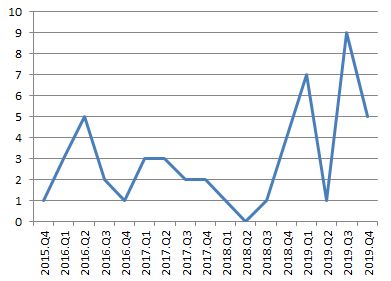
Yesterday, I finished The Brothers Karamazov, and, with that last page, completed the Classics Club challenge. I began the challenge in September 2015, and pecked away until late 2018, when I realized I had two years left and over half the stack still to tackle. Just for my own amusement, I took a look at how my reading was dispersed, more or less*:
As you can see, I started making a concerted and deliberate effort only at the end of 2018, although this was interrupted by Red Dead Redemption 2 in late March and April of last year. (That huge dive in Q2 2019? Allllllll Arthur Morgan’s fault.) By way of wrapping up, here are a few highlights:
Favorite from the list: The Gulag Archipelago
The Unfavorite: The Sun Also Rises. I figured I would take to Hemingway, but the appeal of this one was lost entirely on me.
Books I would drop from the list were I do it again:
Most of the nonfiction (surprisingly, given my usual reading is 70% nonfiction).
Books that surprised me: The Gulag Archipelago (amazing), The Gallic Wars (…not exciting), The Jungle (more enjoyable than I’d anticipated)
Book I started and stopped the most times before I finished: Catch-22. I’d tried the book three times before, once in high school and twice during the CC period.
Book I’m proudest to have finished: War and Peace, Bragging rights for life!
First and last read: Emma (Dec 2015), The Brothers Karamazov (Sept 2020).
Oldest and youngest(The Epic of Gilgamesh, ~2000 BC; 2001: A Space Odyssey, A.D. 1968)
Authors introduced to me from this series whom I’ll be reading more of: Willa Cather (O Pioneers!), Aleksandr Solzhenitsyn (Gulag Archipelago), and Leo Tolstoy (War and Peace).
Fastest and slowest reads: The Picture of Dorian Gray (<2 days); War and Peace (~ five weeks). Brothers K wasn’t too far behind War and Peace, though.
Will the Classics Club return? Absolutely; I’ve been keeping a word file with ideas, and will start the challenge again on January 1st, 2021, which is when the list is scheduled to go live. So far I only have about twenty possibilies, but I’m shopping and adding.
*I stay more or less because I created it in late ’19, in anticipation of finishing Brothers K in December. For that graph to have remained accurate, I would have needed to add an extremely long tail to account for my farting around throughout all of 2020.
There was a time when I was a youthful idealist, full of love and hope for humanity. These days, sometimes the only guard against misanthropy in my possession is recognition that we’re all broken creatures – in the gutter, as Oscar Wilde might say. But to follow on his epigram…if some of us are looking at the stars from that gutter, what are the rest looking at? In The Coddling of the American Mind, Greg Lukianoff and Jonathan Haidt argue that a new philosophy has made itself predominant in American, and increasingly western, culture — and that it rests on three untruths, promoted in schools, by parents, and enforced by the rest of society. Not only is it driving depression and anxiety, it also foments violence in the streets. Coddling is an insightful, sometimes depressing, but ultimately hopeful look at why people have sunk to such lows in recent years, and how we can rise again to assume the dignity of human beings – and treat each other likewise.
It begins with a visit to the guru of Stupid – or rather, ‘Koalemos’, as the authors open the book by recounting their visit to a guru in the Greek hinterlands who taught three things:
What doesn’t kill you makes you weaker.
Always trust your feelings.
Always assume the worst about other people, for the war is divided between good and evil people.
If the curious reader googles Koalemos, s/he will discover that said deity was the Greek god of stupid. The guru, as it happens, is fictional; a rhetorical invention. But his untruths are taught still – by our schools, at all levels – and increasingly encouraged throughout society, from parenting strategies to government policy. The untruths are manifestly destructive, sabotaging self-development and inculcating anxiety, depression, and paranoia. One of the authors, Greg Lukianoff, reveals far into the text that he once very nearly committed suicide; he was able to recover his mental health by learning to identify the ways his own mind was poisoning itself, through self-defeating ways of thinking. He learned to use CBT, a psychological tactic very kin to Stoic mindfulness, to break loose of his worst inclinations. The great untruths, he couldn’t help but notice, operated the same way his former destructive mental habits did.
Lukianoff and Haidt believe the initial popularity of these untruths came from an obsession for safety that overtook parents of the eighties and nineties – spurred by the crime spike of that era, and several public health crises. But overprotection can be deadly; an immune system that doesn’t get tested early on will become self-destructive later on, resulting in autoimmune disorders and rampant increases in food allergies. We are, Lukianoff and Haidt write, anti-fragile creatures: we not only find strength in resistance, we need resistance and danger if we are to grow at all. What the modern world is continuing to build for itself, however, is a world where people are expected to be completely sheltered from not only what might hurt them, but what they imagine hurts them. Somehow, we have fallen from being watchful for bad actors, and become paranoid about opinions which go against ours, or disrupt our peace of mind. We’ve become like the people in Fahrenheit 451, wanting to lose ourselves in fantasy and throwing into the fire anything that disrupts the dream.
This book can be thoroughly depressing, infuriating, or otherwise dispiriting in several chapters, but never moreso when chronicling the campus riots and unrest of the 20-teens, as ‘student’ bodies rushed to de-platform or get fired anyone they disagreed with – including professors who were their ideological allies. Haidt & Lukianoff document this kind of hysterical childishness on both sides, though as one ideological bent dominates college, it pops up proportional more in this view. But Haidt & Lukianoff are not talk-show hosts or polemicists casting a mocking eye at this fracas and scoffing at them: they present it at the same time as they present figures on growing rates of suicide, depression, and mental health disorders among the young. Something is deeply wrong here.
The authors then explore various contributing factors; the cult of safety being one, but supported by a maniacal obsession with college, one that often begins in kindergarten as overzealous parents try to get their little ones working on their college resumes before they’ve mastered the art of Play-Doh. Another giant problem in this mental health arena is that the present generation has been wholly reared on devices. The ramifications of obsessive screentime are still being studied, thirteen years after Steve Jobs opened that particular pandora’s box, but device usage has already been linked to growing rates of depression, as people’s doting on social media timelines convinces them that they’re not as popular, and their lives not as good, as the peers around them.
Is there a way out of this? Lukianoff & Haidt hope so. They note that some of the masters of social media are pretending to care about their products’ role in damaging mental health and fomenting radicalization, and there are growing enclaves of people who realize how unsustainable giving into childish mobs on campuses every other week is – who realize that the purpose of a university is to push young people to become more than they are, to refine their dross – not to patronize their worse impulses. There are parents, too, who realize children need freedom to grow….that exercising autonomy is a necessary experience. Unfortunately, parents in this regard have to work in tandem with local governments, since there exist cretins masquerading as humans who will call the police if they see a child playing outside on her own. Ultimately, Haidt and Lukianoff write, Americans need to restore the culture of dignity over the culture of victimhood – to push for social justice along common identity, not common enemy, lines. Treat a man as your enemy and he will become one.
The Coddling of the American Mind is a most helpful book, helping readers understand the chaos around us without dismissing its participants as universal bad actors. Much of what has happened, what continues to happen, is driven by people with the best of intentions – but good intentions count for little when the consequences are quite this bad. Although it’s not as eye-opening and insightful as The Righteous Mind, Haidt’s previous work, it’s not too far from its neighborhood. It is especially relevant into today’s hysteria over COVID and racially-linked police deaths, as people tar and feather those whose opinions differ from their own. We can have calm discussions on the efficacy of masks, or on the nature of death-by-cops, or we can scream “YOU JUST WANT PEOPLE TO DIE” at each other. One course is more helpful.
Mal Reynolds didn’t survive the Independence War by not trusting his gut. It was that same gut that told him to back away from this latest job of Badger’s. The item may have looked like a crate, but when he saw how anxious the middle-men were to get rid of it, and saw the Blue Sun markings on its exterior, Mal knew that little box was more trouble than it was worth. But Jayne had different ideas, and when he smuggled the cargo onto Serenity in the middle of the night, he unwittingly exposed them to being lost and destroyed by their own fantasies.
Almost immediately after the ‘ghost machine’, as the mules called it, is aboard Serenity, the story as traditionally developed disappears. The Firefly’s crew sink to dreamworlds reflecting their heart’s desire. For Mal, this is a home and family, with Inara and handful of beautiful kids; for Kaylee, it’s to work side by side with her now-living pop in his repair shop. But while the Serenity‘s crew sleeps, the ship sails on — to its looming destruction, for with no one at the helm it’s on a course to crash at full speed into the surface of a moon. And still worse: those dreams have a way of turning into nightmares. Their only hope is River — River, who could sense something dangerous in Jayne’s bunk, River who alone could stay awake and then enter her friends’ dreams to try to rescue them from the nightmares they’re immersed in, and to get the ship out of danger.
Ghost Machine is easily the most unusual of the Firefly novels so far released, and the most unsuited for those not already familiar with the characters — because its appeal is how it twists and plays with people we’re already familiar with, exploring their innermost dreams and fears. The dreamworlds are sometimes amusing or endearing: while one might expect Jayne’s living fantasy to involve mansions and women in their ‘scanties’, in truth it’s nothing more than to fight with his brother, defending the family farm against ne’er do wells. Jayne’s a simple man. Wash’s, unexpectedly, is to be a transportation mogul with Zoe at his side. Because the character’s dreams often involve one another, each succeeding chapter might see radically different interpretations of the same person — Zoe as a charismatic captain of industry in Wash’s dream, and a whiskey-slugging bounty hunter in her own. When the dreamscapes turn to nightmares — a flaw of the machine — familiar characters become treacherous and unrecognizable.
I’ve thoroughly enjoyed the Firefly series so far, but if you’ve not watched the show, this would not be the place to start. Its appeal is more like that of “The Naked Now”, “The Naked Time”, or “Dramistas Personae” from Star Trek’s bench: a deliberate toying-with of loved characters to see a little deeper into them.
Kindle Highlights:
“Wash can make takeoff nice and gentle,” said Mal. “Can’t you, Wash?” “A feather on a breeze,” Wash said, then frowned. “Something like that, at any rate. There may be a better analogy.”
“Damn straight you couldn’t,” Jayne growled. “If you’d gone and committed suicide, Mama would’ve killed you!” “That makes no—” It dawned on Matty that Jayne was ribbing him. “Oh yeah. I get it.”
Maybe Mal Reynolds always needed someone to fight against. He defined himself by what he resisted, and therefore without anything to oppose, he was nothing.
“Where’d you come from?” he said. “Your head,” she replied. “And mine. It’s complicated.” “Sounds like it.”
“This? It’s a distortion. It’s what you thought you wanted, but what the heart desires isn’t the same as what the heart needs.”
From The Brothers Karamazov, an early chapter in which the brothers and their father receive advice from an Elder at the monastery:
“Above all, above everything else — do not lie.”
“About Diderot, you mean?”
“No, not exactly about Diderot. Above all, do not lie to yourself. A man who lies to himself and listens to his own lie comes to a point where he does not discern any truth either in himself or anywhere around him, and thus falls into disrespect towards himself and others. Not respecting anyone, he ceases to love, and having no love, he gives himself up to passions and coarse pleasures, in order to occupy and amuse himself, and in his vices reaches complete bestiality, and it all comes from lying continually to others and to himself.”




 Reading Freely