This week’s prompt from Long and Short Reviews is “weirdest thing I loved as a kid”. I suppose every kid is weird in their way — I knew one who loved eating Cool-Whip with a spoon right out of the container — but what comes to mind for me is this little game of my own invention. I think it started while on road trips, but I would close my eyes and then open them dramatically, and pretend I’d just woken up in my own body not knowing who I was or where, and then I would try to gather clues about my life and the people around me, looking at my books and clothes like a stranger would. This was more interesting on road trips, because I would try to use license plates and street signs to “figure out” where I was. This is not as easy as you’d think, especially when we were driving through border areas like the corner of Tennessee, Kentucky, and North Carolina. Similarly, I would try to shift my brain into “seeing” unfamiliar places as familiar, and familiar places as those I was seeing for the first time. Can you tell I was very much the introvert until my twenties?
Lately I’ve gotten into the bad habit of getting almost to the end of the book, and then saying — “Okay, not enough of that to take to work, I’ll start a new one and then finish the other one tonight.” When tonight comes, of course, I’m busy trying to understand SQL and database organization or get to level one hundred in the Skull Caverns, so now I have a little stack of “80-90% read” books sitting on my desk. A couple of short rounds, though:
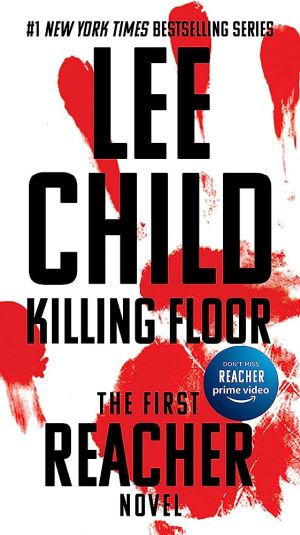
Someone or something suggested that I would like the Jack Reacher novels by Lee Child. I can’t remember the source, oddly, but the premise of Killing Floor immediately drew me in. A man with a mysterious past disembarks from a bus and walks fourteen miles to a small Georgia town in the middle of nowhere, one that’s oddly well kept-up, and is immediately arrested after he orders breakfast at the local diner. The reader quickly gathers that Reacher is a man with formidable talents, especially in the realm of security, investigation, and combat. Reacher is accused of being involved in a murder outside of town, but fortunately for him one of the cops is an outsider in the city whose own problems with the local establishment make him take Reacher’s claims of an alibi more seriously — but there are more reasons than his own safety for Reacher to take what’s going on in this little town seriously. I thoroughly enjoyed the character and the initial mystery, but there was one extraordinary coincidence that’s remarked on and never explored properly, and Child introduces a romance almost immediately that (as someone who is just meeting the character) I wasn’t particularly invested in.
Swiching to nonfiction, I also read through the short KU title Mass Killings: Myth, Reality, and Solutions. The title largely addresses mass shootings, and Hardy helpfully advises the reader of the particular FBI-rooted definition he’s using, one which is more concise than the sloppy “Whatever we can use to boost ratings” used by the media. Hardy compares mass killings in other countries and points out that one reason most people aren’t aware of them is because they don’t get broadly publicized. He then tackles misconceptions about shooters themselves, namely that they’re bullied and just ‘snapped’: in point of fact, most shootings are planned out for weeks, sometimes even months, and the perps tended to be the ones being antagonistic toward those round them. David Cullen’s Columbine dived deeply into both the shooters’ preparation and their personalities, indicating how deeply antisocial they were. Mental illness is ubiquitous among the shooters, who are often narcissistic, sociopathic, or both at the same time. Hardy also evaluates proposed solutions, favoring most the hardening of potential targets, and pro-active intervention in the cases of those who express violent contempt or the idealization of murder of those around them. He argues that even if every single one of the most common gun control proposals were adopted, they wouldn’t be efficacious, pointing to the number of shooters who were not legally allowed to possess arms yet obtained them anyway, through theft, deception, etc. Restrictions on magazine sizes would also be pointless, given the number of shooters who have brought multiple firearms with them, and restriction of certain firearm types would also do little given the sheer variety of firearms used, most of which are ordinary arms used in self-defense, from pistols to hunting rifles and shotguns. He also strongly admonishes the media for their role in the poisonous and symbiotic relationship in the rise of mass shooters: medias make narcissistic individuals into celebrities, attracting further malignant acts in the pursuit of infamy. Recent shooters have gone as far as mailing the corporate press what amount to press kits, with their screeds and video clips for mass distribution. If there was ever one just reason to ‘cancel’ anyone, it should be the perpetrators of mass violence: do not name them, Hardy writes, and never, under any circumstances, share their manifestos. Why do the the press make sure we know the names of the murderers, but not those of the fallen?
Ahoy there, mateys! Today Top Ten Tuesday’s theme be “Water”, so we’ll be lookin’ at me favorite stories of the seven seas, both fiction and otherwise! Hope ye have your sea legs about ye! Oh, but first — a wee bit of teasin’.
“No doubt about it,” the guy said. “Hypostasis is clear in both corpses.” He looked at me. Wanted me to ask him what hypostasis was. I knew what it was, but I felt polite. So I looked puzzled for him. “Postmortem hypostasis,” he said. “Lividity.”
The Killing Floor, Lee Child
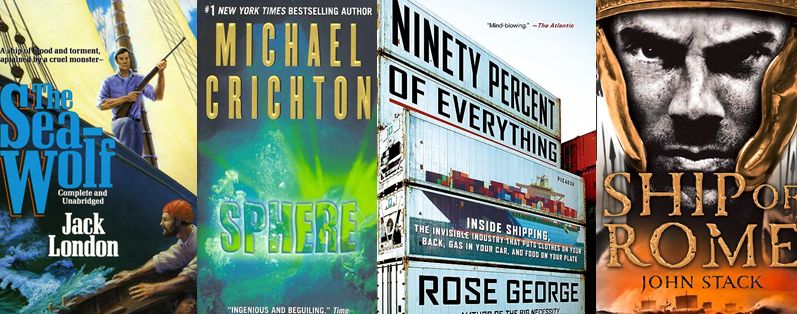
(1) The Sea Wolf. My favorite Jack London novel, childhood attachment to The Call of the Wild aside. A perfectly nice but largely useless effete is swept overboard from a passenger ship, and picked up by a whaler. After accepting that he won’t be going home immediately, Humpfrey gets his Captains Courageous act on and grows to be a man in full — one whose physical strength and technical aptitude become just as developed as his intellectual powers and cultural graces. This isn’t just an adult Courageous, though, because London has Humpfrey pitted against Wolf Larsen, a man who wants to embody the Nietzschean ubermensch, and they spar both intellectually and then physically as the book progresses. I owe this one a re-read!
(2) The Voyage of the Dawn Treader. A Narnian adventure at sea, this opens with that classic line, “There was a boy named Eustance Clarence Scrubb, and he almost deserved it.”. The kings and queens of Narnia are attempting to rescue some allies scattered hither and yon, abandoned to fates like being turned into dragons and the like. This introduced the original mighty mouse, Reepicheep. Quite fun!
(3) Sphere, Michael Crichton. One of the creepiest SF novels I’ve ever read. The US military discovers a unique craft deep on the ocean floor, and the suspense of exploring it — and evaluating what it means — is made all the more gripping by the inherent dangers and mysteries of the Deep.
(4)The Deep: Extraordinary Creatures of the Abyss. This is a large photo book with information about the endless forms most beautiful and (apologies to Darwin) most weird in the lightless depths of the ocean.
(5) Deep Seas and Foreign Going | 99% of Everything, Rose George. A journalist explores the strange and un-ignorable world of oceanic shipping — its unique labor setup, and the eerie fact that these huge ships are largely automated and empty of human activity, with very small crews.
(6) Collapse Depth, Todd Tucker. A short technical thriller part of a series of the same, this combines technical issues, politics, and a mentally distressed crewman. I’ve never read a technical thriller set on a submarine (no, not even The Hunt for Red October), so I thoroughly enjoyed learning about both the operations of nuclear subs, and the training of officers — who, going by Tucker’s account, are responsible for knowing every detail of how a sub works and might fail, rotating from department to department to become familiar with operations.
(7) The Armada, Garrett Mattingly. The best history of the abortive Spanish invasion of England, frustrated by weather, logistics issues, and the Royal Navy.
(8) John Stack’s Roman navy books. A reccommendation from Cyberkitten ages ago. Throughout his trilogy, we see Rome take to the seas to fight Carthage, improvising so Rome can use her strengths in a new arena to defeat the Republic’s most dangerous foe.
(9) Max Hennessey’s naval fiction, especially The Lion at Sea. I enjoy the historical and technical parts of his stories, but Hennessey is a stirring and hilarious writer at the same time.
‘You are a wart,’ the sub-lieutenant of the gunroom had told him firmly. ‘An excrescence. An ullage. A growth. You probably imagine that when signalled “House your topmast”, you should reply, “fine, how’s yours?” and doubtless the only time you’ll show any enthusiasm for the navy will be on full-belly nights when we’re entertaining visitors.’
(10) Horatio Hornblower. You didn’t think I’d end with anything else, did ya? A young man sent to prove himself as a midshipman finds a career of purpose and adventure after the French start revolting and trying to take over Europe. Turned into a Gregory Peck movie and an exciting A&E series featuring all manner of talent, from Ioan Gruffyd to David Warner. (Cheers to Warner for introducing me to “Spanish Ladies”. Have you lived until you’ve heard him RANT and ROAR like a true British sailor? Well, you probably have — but listening to Warner would make your life better.)
“It’s our duty to search out anywhere the excellent that exists within culture, and to promote it — because the excellent is always going to be in the minority. Excellence is the particular, whereas crud is universal. We find only the goodness where we look for it.”
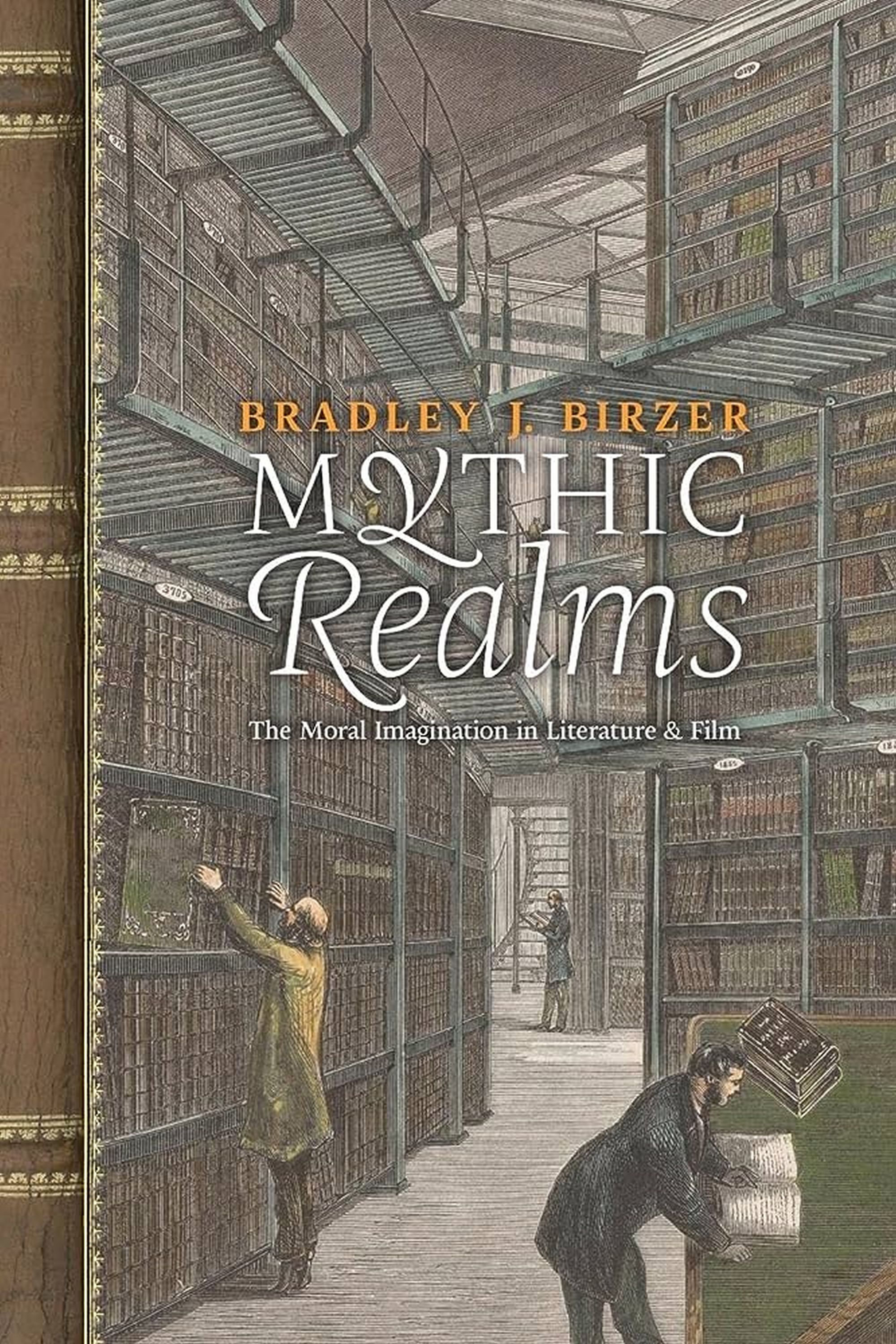
Brad Birzer said those words amid an interview on “Great Film and the American Spirit”, and they sum up Mythic Realms fairly well. It is common to divide books into Literature and popular fiction, or film into Cinema and regular ol’ movies — but there is often truth buried in the mundane, so much so that classics do not become classics for until centuries have passed, and people realize the buried truth is still speaking. Many a classic author was wholly ignored in their lifetime, Jane Austen and William Shakespeare being prize example. In Mythic Realms, Brad Birzer takes literature, film, and even a few TV shows seriously — probing them for what they say about the human heart and our place in the Cosmos. They are a mix of old and new, ranging from Willa Cather’s O Pioneers to Star Trek and Stranger Things.
Dostoevsky remarked that Beauty will save the world, and books have been written on written on that remark alone, and on Beauty’s connection with Truth and the Good. In Mythic Realms we explore the practical application of that, of the power that stories have to awake us, to draw us out of the drowsy haze of the everyday and into the transcendent. He begins by sharing the authors who first made him aware of the power of literature, who formed him through their words and ideas, before settling into reflections on books and film. Mythic Realms is in large part surprising because he so often focuses on obscure and and unusual picks, like the pulp era in adventure, fantasy, and SF. (C.S. Lewis and Tolkien both feature, but one can’t write a book on the power of literature without looking at those two!) The excellence that Birzer finds here — sometimes glittering on the surface, sometimes needing a little smelting — varies on the book. Cather provides the deep, earnest love of the land that makes it possible for human civilization to endure despite hardship, whether that be prairie winds or Gulf coast humidity; pulp writers like Robert Howard celebrated strength, heroism, and man’s essential fire, which may be tamed and squelched by modernity but which will never be extinguished; in Star Trek, Birzer sees not only the power, but the importance of friendship. Jim Kirk was treble the man he would have been alone, because of Spock and McCoy, whose virtues complemented and balanced his own. It is not good for man to be alone — that is true whether a man is alone in a garden, a family struggling on the plains, or the captain of a ship to the stars. The film section does deep dives into he works of John Ford, Hitchcock, and — interestingly — The X-Files. I never watched the latter, but Birzer makes both it and (gasp) the Disney remake of Beauty and the Beast sound compelling enough to sit down and experience properly.
I thoroughly enjoyed Mythic Realms, from Birzer’s personal reflection on the power of literature, his appraisals of emerging genres like science fiction and progressive rock (at some point I need to listen to some to find out what he and Tom Woods find so compelling), to the case-by-case studies themselves. He’s introduced me to more than a few new names here, and prompted me to revisit films like Vertigo that I’ve watched previously and take them more seriously. My only caveat to the reader would be to keep in mind that this began as a collection of essays, and that mark lingers in some repeatedy quotes and background information. If you take books and film seriously, though, this is a volume to look for and savor. There’s nothing like discussing either with someone who loves and is inspired by them.
Quotes from Highlighted Authors:
“Religion and art spring from the same root and are close kin, but economics and art are strangers.” (Willa Cather)
The clear white lamp of science and the passionless pursuit of knowledge are not enough for me; I must live deeply and listen to the call of the common clay in me, if I am to live at all. Without emotion and instinct I would be a dead,stagnant thing. . . . Defeat waits for us all. (Robert E. Howard)
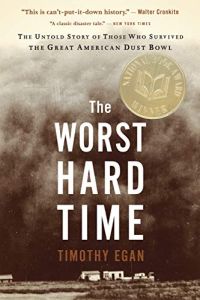
I first encountered the Great Depression and the Dust Bowl in the same history book, and images of houses covered by drifts of dust and those of men standing in line looking for relief or work are forever twinned in my mind. I’ve never read a proper history of either, though, but was prompted to by reading The Four Winds, which a coworker recommended to me. Although there was some overlap in what the books have to offer — driving home how prolonged and miserable the conditions were in the Dust Bowl areas — I did not find The Worst Hard Time redundant at all, in part because the back story and scientifically-informed analysis of what led these conditions. It also explained why Oklahoma has that strange little strip appended to it, sticking into Texas — a strip which, in the 1930s, was known as No-Man’s Land because until 1890 no state claimed ownership of it.
Egan begins his story with conflict between Texans and Comanches, conflict that led to the same result in 1850 as it had for the Creeks in 1814: the US Army, aroused to action by attacks on civilians, drove the Comanche from the land. That land was pure prairie, home to bison and chicken and many other species. It was part of what was called the Great American Desert, a place no stranger to searing heat and prolonged periods of no rain. The first to move in were ranchers and cowboys: in place of the bison, many of whom were killed in order to force the Comanche away, there were thousands upon thousands of cattle. Cows were ecological misfits, though, not providing the same benefits to the prairies as the bison and (more importantly) often not able to stand the prairie winters. The United States government was eager to fill the land with settlers, to fully realize Manifest Destiny: cowboys weren’t quite the ticket to civilization. And so they came — and not just Americans looking for opportunities, but European immigrants like the Volga Germans (there’s an interesting story in itself) who were seeking to escape the thumb of the czar. They were urged on by pamphlets that told them how to ‘do’ dryland farming, and popular dogma that declared rain followed the plow. Tragically, these years of settlement and expansion were unusually wet, marrying people to the idea that Man had nature’s number and could make her dance to his music. Then, the rains stopped — and they would not begin again for eight years. The wind is seemingly constant in the western flatlands, and as crops died and fields lay bare, the dead land began to move. It was first obvious in 1932, when farmers and townspeople alike stood staring at the skies, seeing a new thing that they had no words for: it was though a mountain of roaring dirt was approaching them.
The pictures sent out by the wire service during that winter and early spring told as much, if not more, than Geiger’s prose: people with masks and flashlights, navigating the perils of small-town main streets, cars dodging the drifts and haze of a country road, storefronts boarded up, schools closed, cattle lying dead in the dust.
Dust storms would become a constant hazard in the years to come, and retreating inside only offered so much protection. Dust found a way in, blasting through cracks and crevices and sometimes open windows. It buried towns, cars, attempts at crops, and often people. It filled the lungs and intestines of animals and people alike, leading to something like tuberculosis among the people, and starvation for the animals. As the crops withered and the land grew in desperation — accumulating drifts and closed buildings, beaten by dust and tornadoes and plagues of rabbits and locusts, the population shrank. The government at first responded with aid that would make sense in the light of a short-term disaster, providing food and places to stay — but as the drought lingered and the storms grew worse, sandblasting buildings and people alike, shutting down life in gloom, dirt, and static electricity, the state began appraising why the land was failing so dramatically — realizing what cowboys of days past had warned, realizing what others familiar with the land had said. It was no place for thirsty, heat-sensitive annuals. Industrial man began to reprise the lessons he’d abandoned in the excitement of machinery, beginning to work with the land and climate instead of trying to run over it. As the “Dirty Thirties” began to give way to the forties, the rains came again — coinciding, oddly, with FDR’s visit out there to boost the spirits.
The Worst Hard Time is a sombering book, largely for what has already transpired: Egan is generous with graphic details of everyday hardships, of mothers losing children and having to begin the day washing a film of mud off of faces, and he even integrates one man’s increasingly despairing diary. It’s remarkable that the subject kept plugging on, kept planting crops that he knew he’d lose, but that’s human nature. We are admirable in that way, but sometimes we can persist in mistakes — and that, unfortunately, is a lesson Egan teases we have yet to learn. The land of the prairies was plundered without thought to its constitution, to its unique nature, to its environment — and the people there paid the price for over a decade. But we persist in treating our natural resources as geese that lay golden eggs, not realizing that just as topsoil that took a thousand years to develop can be destroyed in a decade, so to can aquifers that built up over generations be sucked dry. And yet the aquifers continue to be greedily sucked at, and the rivers too, and we in general continue believing that technology is a genie that will give us all we want without consequences: “We shall be as gods!”. The dark years of the Dust Bowl remind us that we know very little despite our accomplishments and ambition.
The Worst Hard Time is a solid piece of history writing, which not only covered the subject amply, but made me interested in other minor topics, like the German Russians who inhabited part of the plains, and has lit a fire under me to begin my next trip west in Amarillo, there to explore places that the whirlwind could not quite kill.
Highlights:
At its peak, the Dust Bowl covered one hundred million acres. Dusters swept over the northern prairie as well, but the epicenter was the southern plains. An area the size of Pennsylvania was in ruin and on the run. More than a quarter-million people fled the Dust Bowl in the 1930s.
The tractors had done what no hailstorm, no blizzard, no tornado, no drought, no epic siege of frost, no prairie fire, nothing in the natural history of the southern plains had ever done. They had removed the native prairie grass, a web of perennial species evolved over twenty thousand years or more, so completely that by the end of 1931 it was a different land—thirty-three million acres stripped bare in the southern plains.
The ground could be mined at the deepest levels for water, using new and powerful centrifugal pumps, to create the garden state of Oklahoma. They could grab onto that underground lake, the Ogallala Aquifer, like the Sooners had grabbed the old Cherokee lands, and so what if the water was nearly seven hundred feet deep and had taken at least a hundred centuries to build up—it was there to be grubstaked.
It’s the earth itself, Bam said. The earth is on the move. Why? Look what they done to the grass, he said. Look at the land: wrong side up.
The great unraveling seemed to be caused by man, Bennett believed. How could it be that people had farmed the same ground for centuries in other countries and not lost the soil, while Americans had been on the land barely a generation and had stripped it of its life-giving layers? “Of all the countries in the world, we Americans have been the greatest destroyers of land of any race of people barbaric or civilized,” Bennett said in a speech at the start of the dust storms. What was happening, he said, was “sinister,” a symptom of “our stupendous ignorance.”
High Plains nesters were more intimate with the elements than perhaps any other people in the country. They knew black dust came from Kansas, red from eastern Oklahoma, a yellow-orange from Texas. And sometimes all of Kansas, Oklahoma, and Texas seemed airborne at once: black, red, and orange converging. The sunlight that filtered through these dusters took on eerie hues—sometimes even green. People knew that when the wind blew from the southwest, the duster to follow would go through a range of colors—everything but the golden light they remembered from the first days of breaking the sod.
Bennett had told Congress that fifty-one million acres were so eroded they could no longer be cultivated. It would take a thousand years to rebuild an inch of topsoil.
Strong men still wept, hiding their lapses like alcoholics sipping in secret. The men cried because they had never seen anything like this and had never before been without a plan of action. Always, they had been able to hammer at something, to dig and scrape and cut and build and plant and harvest and kill—something forceful to tip the balance, using their hands to make even the slightest dent during the bleakest times.
Today’s prompt from Long and Short reviews is “fun facts about ourselves”.
(1) One of my favorite hobbies/passions is singing. I sing tenor in a church choir with the odd solo, but I especially like singing traditional British-American folk music. This was a genre I discovered thanks to Civil War reenactments, and listening to the music there. Although some music was written during the war, most soldiers began the war singing the same music they already knew, and then adopted the lyrics to their circumstances. The best example is “Rye Whisky”. Compare —
Oh Molly, Oh Molly, it’s for your sake alone I’ve left my ol’ parents, my house and my home My love for you, it has caused me to roam I’m a rambling’ rouser and Dixie’s my home
~ ~ ~
Oh Molly, oh Molly, it’s for your sake alone I’ve left my old father, my country and my home. I’ve left my old mother, to weep and to mourn, I am a Rebel soldier, and far from my home.
(2) Although I’ve been telling stories in my head for years, until recently the only one I’d shared was a silly little mystery that resolved with a pun draw from Roman history, probably inspired by Asimov’s Black Widower mysteries or Steven Saylor’s Roman stories. I recently wrote a little story story about small-town church drama, employing some characters who have been bouncing around in my head for fifteen years. I’m hoping to do a few more in the vein of small-town goings-on as inspiration & time allow.
(3) I’d never flown before, left the South, or planned and conducted a vacation until 2016, when I flew to New Mexico and commenced a thousand-mile GPS-free driving tour of the state. Before that, the last time I’d been “on vacation” was…2004, the last time I did a summer trip with my parents. I am hoping to go west again next year.
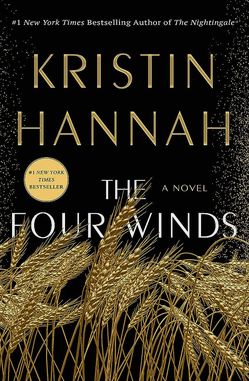
When the clerk at my local diner coughed at me to remind me that I was standing in front of her cash register, bill and money in hand, but ignoring her to finish the chapter I’d walked up reading, I realized that the coworker who lent this to me with a warning about its compelling nature had undersold it. The Four Winds begins as the story of Elsa, a young woman growing up in the Texas panhandle, overlooked and unloved by her own despite her best efforts to please them, who begins finding happiness only to see it buried by the drought and dust storms of the 1930. Forced to leave her home behind in order to keep her children alive, they migrate west and find not a land of promise and opportunity, but of cruelty and contempt. The Four Winds is a novel of enormous pain and suffering, of human resilience, of a woman’s tortured love for her daughter — and finally, of courage. It is quite the book.
Elsa was sickly as a child, and perhaps that explains why her parents distanced themselves from her emotionally, bestowing more love on their flower garden than her. She sought love elsewhere, and (as is the natural course of things) found herself pregnant with the child of a young man who was engaged to someone else. Despite their reservations, the Martinelli family are good Catholics, and make their son Rafe do the proper thing — and they quickly learn to love Elsa, who doesn’t cling to her city ways but throws herself into the life of the farm, growing to love it. Though her husband is not in love with her, she has their children, and she is much the Martinelli’s daughter in law as she could have been their daughter in blood. But then the rains stop, and the dust begins to blow.
It’s one thing to read nonfiction about the Dust Bowl, another to see photos of it — but Hannah’s slow burn of misery really drives home the point that the Dust Bowl sucked. Through Elsa’s eyes we witness the boom years of the 1920s, when farmers in the Texas panhandle were enjoying high cotton — or high wheat, in their case, buying threshers and more land on credit. But then the rains failed, as they were known to do in the Great American Desert, and the plowed-up land waiting for growth began to blow away — and nothing would be reaped for years but the whirlwind. We experience through words the slowly growing desperation and fear as the seasons pass and nothing gets better — as the pantry empties out, as the light in her husband’s eyes grows dimmer and dimmer and soon there’s nothing but the moonlight reflecting off his whisky glass and the pale glow of a cigarette as he mopes for hours on end in the now-desolate barn loft. The physical torture of a place is one thing — the constant fight against the growing dust dunes, the groans of starving animals whose bellies are filling with dirt, the all-too-frequent arrival of death. But for Elsa, the hardest part is watching her husband, never happy, sink into true misery — and enduring her daughter’s sudden viciousness, for Loreda is very much a daddy’s girl and blames her mother for trapping her father here, for depriving them of lives of adventure and fun. Loreda is a character I’d very much like to see a switch taken to early on.
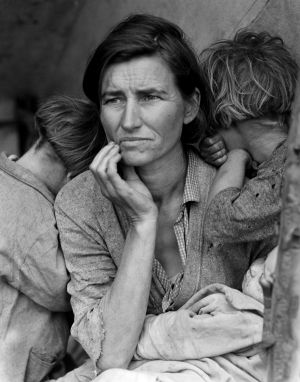
Migrant Mother Dorothea Lange
Despite her fierce love for her in-laws and for the farm, despite her stubbornness, when her husband abandons her and her son almost dies of dust pneumonia, Elsa has to take her two children and seek work elsewhere. Anyone who has read The Grapes of Wrath knows what’s waiting for her there: desperate men hardened by their hunger, frightened Californians who don’t know what to do with this sudden tide of displaced farmers looking for work, who close their hearts and doors to fellow Americans; cruel men who see in the need of others an opportunity to make the most of hard times. It isn’t just that the hours are long and the pay envelope light, but the workers are paid in scrip and the company store charges money to cash that scrip, and if people have cash from elsewhere, the store won’t take it: only company credit will do. The result is debt-slavery, not even worthy of being called serfdom because the feudal lord at least saw peasants as people he was obliged to take care of. At every turn, Elsa is wrung like a turnip for the little she can produce, and survives only by the help of those around her — sharing resources admid the hatred of the Californians for these ‘Okies’, and the armed viciousness of the bosses. These hardships are a forge, though — forcing Lareda to grow up and see her mother for who she is, a woman of inexaustible strength. Lareda has that strength, too, but instead of merely enduring meanness until she dies, she wants to fight back against the cruelty — but we’ll not cross that line into spoiler territory. Suffice it to say, Hannah takes the politics of The Grapes of Wrath and raises the volume.
“This was a hell of a novel,” I said to that same clerk several days later, who had seen me reading it so intently and ignoring my food that she asked if anything was the matter. I was generally aware of the Dust Bowl and its connection with the Great Depression, but Hannah’s writing made the suffering and despair come alive — and perhaps that doesn’t sound attractive, but when a character I’d quickly become attached to because of her strength despite rejection and heartbreak had to face these challenges, I had to see her through them. The character drama in this novel is superb, its only weakness being how quickly Lareda erupts into viciousness. Frankly, I don’t buy her as a character who came of age in the 1920s: she has too much of the emotional shallowness and meanness of a kid who grew up with a smartphone in her hands. She has no roots to her time and place. I’ve seen nothing like her in Wallace Stegner or Willa Cather’s western novels, which shared the general temporal setting. She does mature, though, and her constant struggle with her mother — their love for one another despite their differences — continues making the novel work, even as the politics drift more obvious and more shallow. The Californians begin as antagonists who are roughly understandable, but by the time we’ve reached the end, they’re more Snidley Whiplashy. Their taking a level in villainry forces heroism from our main characters, though, so it’s not necessarily gratuitous.
The Four Winds is a novel I won’t forget about any time soon, and it prompted me to begin reading a nonfiction title about the Dust Bowl. I can definitely see visiting Hannah again, though she’s apparently known as a romance author. There’s little of that here: this is a love story, sure, but it’s about a mother and her daughter. Frankly, there’s more romance in the average Jack Lark novel than this.
Related: The Grapes of Wrath, John Steinbeck. My Antonia, Willa Cather; O Pioneers, Willa Cather. Other stories of resilient women who love the land of the West. The Jungle, Upton Sinclair. There are some definite similarities between Elsa and Jurgis’ determination to endure.
Today’s TTT is a ‘genre freebie’, and my first thought was near-future SF, but I did that one in spring. Whoopsie. Well, in honor of my current read, The Four Winds, I’m going to spotlight Historical Fiction, and restrict authors to one appearance only. That means you, Bernard Cornwell. But first, the tease, which is a nonfiction work that Four Winds got me interested in:
The tractors had done what no hailstorm, no blizzard, no tornado, no drought, no epic siege of frost, no prairie fire, nothing in the natural history of the southern plains had ever done. They had removed the native prairie grass, a web of perennial species evolved over twenty thousand years or more, so completely that by the end of 1931 it was a different land—thirty-three million acres stripped bare in the southern plains.
The Worst Hard Time: The Untold Story of Those Who Survived the Great American Dust Bowl
Now for the historical fiction! In order most random. These are mostly the shooty-stabby kinds of books, but there are a few departures from that.
(1) Ben Kane. I think it was Cyberkitten who introduced me to this author, and Kane has been one of my absolute favorites in recent years, especially his novel about the battle of the Teutoberg Forest and his King Richard the Lionheart trilogy.
(2) Michael Shaara. For me, the original. I’d read some scattering of historical fiction before picking up The Killer Angels at one of the multitude of Civil War museums I visited as a teenager, but I’d never read an author so absorbing that I instantly put his name to memory. The Killer Angels chronicled the story of the battle of Gettysburg, using a variety of viewpoint characters (from both sides, ranging from enlisted to the officers) to give the reader not only a view of the battle from the trenches and from the top, but to deliver a sense of what it was like to be agonized by knowing your best friend was on the other side, and that he might very well die from your own orders. I haven’t revisited TKA during the tenture of this blog (note to self: do that, me!), but I sometimes read his son Jeff, who used to imitate his dad’s style when he was still writing ACW books. Jeff has written novels about every American war from the Revolution to Korea.
(3) Robert Harrisis the king of variety historical fiction. Any other author on this list can be stuck in a box. It may be a big box (“Eh….combat fiction!”), but it’s still a box. Not so Harris, who has written books set everywhere from ancient Rome (Pompeii,the Cicero trilogy) to the modern British political scene, and even made one venture into technical thrillers with his Fear Index.
(4) Phillip Kerr has a series of very grim mystery-thrillers set in 1930s-1940s Germany, featuring a Berlin detective whose disdain for the Nazis makes him a useful investigator for the same: Himmler and company appreciate that he doesn’t take sides between different Nazi power players, but loathes all equally. There’s a lot of dark humor, but given the setting I had to restrict my Kerr reading to one-a-year, especially after reading The Lady from Zagreb. Getting up close and personal with genocide is not my stein of bier.
(5) C.S. Forester. When I read that Gene Roddenberry had told William Shatner that his character was intended to be Horatio Hornblower in Space, I had to give ol’ Horry a try, and I thoroughly enjoyed Forester’s long series of novels and short stories featuring a young officer who rises to fame throughout the Napoleonic wars, and ending up marrying the Duke of Wellington’s little sister.
(6) Anita Amirrezvani. I encountered by Amirrezvani by accident: I won her Blood of Flowers, about a young woman who learns the craft of creating Persian rugs, in a contest, and later purchased her Equal of the Sun, about a princess who comes to power following her aging father’s death. My favorite part of this books is Amirrezvani’s incorporation of Persian poetry & other literature into the texts, and she’s why I plan to read The Shahnameh.
(7) Steven Pressfield. He hasn’t written much, but what he has recreated is stellar. So far I’ve read his account of the Battle of Thermopylae and a history of Alexander the Great’s Afghan campaign. The latter was so visceral it reminded me of Vietnam literature.
(8) David Liss. Liss has written some of the most interesting HF on this list, in part because he does business and crime thrillers set during the late Age of Discovery, in England, Portugal, and the Netherlands. He uses a style that evokes the pattern of speech at that time without replicating it, so he’s quite readable.
(9) Khalid Hosseini. I almost didn’t mention Hosseini because he’s very well known at this point, but his stories in Afghanistan are unforgettable — “For you, a thousand times over!”. The Kite Runner is his most famous.
(10) Bernard Cornwell. The king, the champ, the capo di tutti i capi. Cyberkitten suggested I read Sharpe’s Eagle many years ago, and since then Cornwell has not only become my favorite HF author bar none, but my second-most-read-author-period. Over time he will may even surpass Asimov, who I’ve read over a hundred titles from. Where to start with BC? There’s the Sharpe series, of course, following a street urchin turned soldier turned officer who rises to fame thanks to his rifle skills and small-arms strategizing; his Saxon Chronicles series, about an English warrior who loses his family land during the Viking invasion of Britain, but who is raised by the Vikings and struggles between his loyalty for them and his own people — and then there’s the numerous bits of independent fiction, from novels about Shakespeare’s brother to a late-19th century murder mystery, and an American Revolutionary war title. Cornwell is consistently good.
Now, those who read this blog on the regular may notice some surprising absences. No Simon Scarrow? Steve Saylor? No John Stack? No Alison Weir or Sharon Kay Penman? I’ve read and loved them, but I was trying to vary up settings here, and Stack/Saylor/Scarrow are both in the same Roman fiction camp as Harris’ Cicero and Pompeii books, for instance, and English historical fiction is well-covered in general.


 Reading Freely