Satire and our dark hearts

From GK Chesterton’s Twelve Types:

It has become a breach of etiquette to praise the enemy: whereas when the enemy is strong every honest scout ought to praise the enemy. It is impossible to vanquish an army without having a full account of its strength. It is impossible to satirise a man without having a full account of his virtues. It is too much the custom in politics to describe a political opponent as utterly inhumane, as utterly careless of his country, as utterly cynical, which no man ever was since the beginning of the world. This kind of invective may often have a great superficial success: it may hit the mood of the moment; it may raise excitement and applause; it may impress millions. But there is one man among all those millions whom it does not impress, whom it hardly even touches; that is the man against whom it is directed. The one person for whom the whole satire has been written in vain is the man whom it is the whole object of the institution of satire to reach. He knows that such a description of him is not true. He knows that he is not utterly unpatriotic, or utterly self-seeking, or utterly barbarous and revengeful. He knows that he is an ordinary man, and that he can count as many kindly memories, as many humane instincts, as many hours of decent work and responsibility as any other ordinary man. But behind all this he has the real weaknesses, the real ironies of his soul: behind all these ordinary merits lie the mean compromises, the craven silences, the sullen vanities, the secret brutalities, the unmanly visions of revenge. It is to these that satire should reach if it is to touch the man at whom it is aimed. And to reach these it must pass and salute a whole army of virtues.

See also: “Dickens’ descent of desertion“, talking about the subtle snares that take over our hearts.

Posted in quotations | Tagged , | Leave a comment

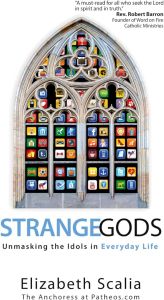
Quotes from “Strange Gods”

I was going to post this on Sunday, but then I realized it’s the Feast Day of St. Patrick, and I’ve something else planned. So, here you quotes, quotes on idolatry and mindfulness for your Saturday.

The human heart craves attention and love—love is the common longing of our lives. We may search for a career, or wealth, or status, but the desire to be loved and valued is usually at the root of our strivings. Finding this kind of love can be difficult. Giving love can be more difficult still. Sometimes, discouraged or impatient in our search, we chase illusions and yearn not for the give-and-take of a lifetime of sacrificial love but the fifteen minutes of fame Andy Warhol once predicted everyone would enjoy. Lacking loving relationships, we yearn instead for an audience.

Our feelings, desires, and convictions become our gods and, exactly as strange gods are wont to do, they lead us astray, down circuitous paths that appear to be taking us somewhere but are forever leading us back into the dungeon of ourselves.

No idol is constructed in the act of murder. Rather, the murder is, at its end, an offering to an idol. The real idol is the enlarged anger within us, and it forms through our willingness to sustain an idea about our righteousness and, therefore, an idea about ourselves. We cling to resentment or feed jealousy until it grows into something we burnish daily with our justifications. We get it to glitter in our minds like something alive, like a genuine force outside of ourselves. We go so far as to proselytize our grudges to others through spin, gossip, and even lies—see my anger, my resentment, my jealousy, and my spite! Acknowledge it with me; let us have communion in our shared umbrage! Worship me with me! The great evil of murder, then, is the fruit of the idolatry that is first an idea, and the idea is almost always about the self.

One thing that can hinder growth is our willingness to attach labels to ourselves and adopt identifications, particularly with groups, to whose ideas we’ve become attached. In doing so, we cease to ponder, cease to wonder, cease to think. Remember Saint Gregory of Nyssa: only wonder leads to truly knowing. When we over-identify with an idea or hermetically seal ourselves within the seemingly safe cocoon of groupthink, we stop knowing much at all. 

It shows us that the Internet, particularly social media, serves our idolatry by assisting in our fascinated pseudo-engagement with others. Or more precisely, the Internet assists our obsessed engagement with ourselves by disguising it as a fascination with others who—either by offering opposition or validation—keep us fixated on the self. All those social media friends who confirm our every thought, all those tweeting followers who make it seem like our ideas matter in the grand scheme of things, are like so many shiny trophies and mirrors, reflecting back at us what we think of as our best and truest selves.

What I have chosen to call “super idolatry” grows out of ideologies too well watered. A super idol is not one but two steps removed from God. If all idolatries contain elements of self-enthrallment, the enthronement of a collection of our ideologies ramps things up by endowing the ego with a heavy veneer of moral authority. Dress up tribal identifications that accompany one’s participation in a party or a movement, determine that the opposition is not merely wrong but evil, and suddenly mere ideas become glittering certainties. These certainties give us permission to hate and tell us our hate is not just reasonable but pure. If simple idolatry blocks our view of God, the super idol—because it is so highly burnished—makes us think we are seeing God in our hatred. 

We all do that from time to time; we get caught up in our cause, and we become careless with our words. Sometimes that’s about busyness and distraction, and not idolatry. But when we catch ourselves being thoughtless (or when someone points it out to us), we should consider the first commandment and ask ourselves if we have not elevated the object of our enthrallment to that position where it blocks God.

“[….] the Church is a giant and eternal urging toward yes to God —whose ways are not our ways and who draws all to himself, in the fullness of time—rather than a yes to ourselves.”

Justice and mercy are the right and left sides of the horizontal beam of the crucifix, upon which a near-constant tug of war ensues. Pro-justice tugs right, and pro-mercy tugs left, again and again. They both move farther away from each other and away from Christ, the centering balance who is all justice and all mercy.

Strange Gods: Unmasking the Idols of Everyday Life, Elizabeth Scalia
Posted in quotations | Tagged , | Leave a comment

Short rounds: Idols, community, and baseball bros

Despite appearances, I have been reading this past week…

Elizabeth Scalia’s Strange Gods: Unmasking the Idols of Everyday Life invites readers to consider those things which get between them and God. I heard sermons on this topic in my youth and was not expecting much, but Scalia proved surprising; she doesn’t settle for something trite like asking the reader to compare how much time they spend praying compared to how much time they spend watching television, but instead offers a reflection that points out how thoroughly most of us trapped in “the dungeon of ourselves”. At the beginning, she writes that many of our woes come from the need to be loved, the difficulty of finding that in a broken world, and a subsequent tendency to go the easy route — to pursue an audience instead of relationship. What an apt description for the rising generations, lost in social media apps and neuroticism — but she was writing this over ten years ago. Scalia’s work goes deep into mindfulness as she explores the way our reactions to what people do and say is often less about them, and more us; how we delight in raging self-righteous! I will be sharing excerpts from this a little later, possibly on Sunday.

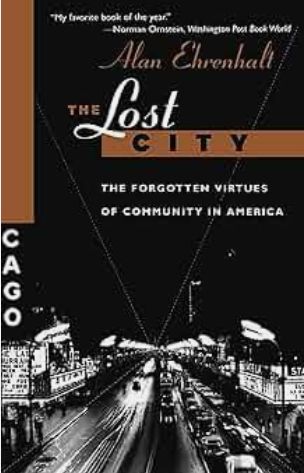
Lost City: The Forgotten Virtues of Community takes a look at three communities in 1950s Chicago: a working-class Catholic neighborhood centered around St. Nicks’s; a then-new suburban development erupting out of a pre-existing neighborhood, with tensions between the old residents and all the new up-and-comers; and Bronzeville, a black neighborhood that was much-dismembered in the name of slum clearing. Much of society has been dismembered since the 1950s, chiefly in the name of self-interest — both on the part of individuals and of corporations, the ties between having been gleefully severed. This book was of great interest to me, in part because because it’s illustrating the richness that Robert Putnam’s Bowling Alone documented our losing, and in part because it’s encounter an author who is capable of writing about the 1950s as were, instead of how they’re idolized or demonized. I was most interested in the section on St. Nick’s, because it so thoroughly demonstrates how multi-layered and reinforcing society used to be: teachers, clergy, and members of the community worked together to keep an eye on and discipline children, so that the nuns of St. Nicks would discipline boys in-class if they’d misbehaved on the street, parents kept an eye on each other’s children as they played together in the lane between houses; and the cathedral’s monsignor patrolled the neighborhood, offering admonition and mentorship at the same time. The author points out that some of the tension between old and young came from the fact that men like Father Lynch had grown up in the Depression and fought in World War 2, and were now having to deal with insolence from the children of peace, ease, and prosperity. Not done chewing on this one yet — I think re-reading it in tandem with a re-read of Bowling Alone, joined by another book I have my eye on, would be an interesting experience.

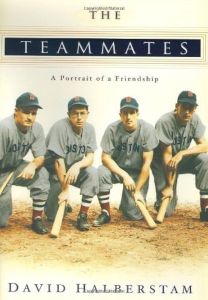
Next up, The Teammates: The Story of a Friendship. This is a brief mix of history and biography, taking a look at the friendship between four Red Sox players (Ted Williams, Joe Pesky, Dominic DiMaggio, and Bobby Doerr), framed around the latter three members’ final visit to Ted, dying of cancer. It’s short, sweet, and informative, at least if you (like me) don’t know much about these guys. I didn’t even know Joe DiMaggio had one brother playing baseball, let alone two. These four men were fortunate enough to spend years playing together on the same team, and maintained friendships long after they’d left the ball club. In the age of free agency when members float between teams at whim, I imagine that’s much rarer — especially since other bonds, like DiMaggio and Pesky both being the sons of immigrants who did not understand how their boys could mistake a game for a career — are less salient.

Posted in history, Politics and Civic Interest, Religion and Philosophy, Reviews, Society and Culture | Tagged , , , , , , , , | 1 Comment

WordPress prompt just for laughs

Daily writing prompt
What movies or TV series have you watched more than 5 times?

I don’t usually respond to these prompts, but this seemed fun. First up, TV series:

Star Trek Deep Space Nine. With the other Trek series, I generally pick and choose episodes. Yeah no, I’m not watching “Spock’s Brain”, “Code of Honor”, or that one Voyager episode in which Jeri Ryan is a cage wrestler fighting The Rock. (shudder) But Deep Space Nine, I love me some Deep Space Nine. It was the first Trek series I owned all the sets for, and whenever I want to go to sleep listening to Trek I always pick DS9.

Nothing has matched DS9 for moral/emotional complexity.

Boy Meets World. The first DVD set I ever owned was the first season of Boy Meets World. I grew up with this show, so it’s incredibly special to me. I even use the season 4 opening theme as my oldest niece’s ring-tone because it was one of the things we watched together when she was a wee bairn and I was her babysitter.

Survivor: Borneo and Survivor: All-Stars. Don’t judge me, it’s a nostalgia thing. Borneo is really interesting because it was the first series, with the rules still being made, and All-Stars was the peak of my Survivor fandom; I stopped watching not long after, in part because of college and in part because once you’ve seen Boston Rob in All-Stahs there’s really nothing better.

“My food is problematic.”

“….what’d y’all order a dead guy for?”

“Well, look at this! Seems we arrived just in the nick of time. What’s that make us?”
“Big Damn Heroes, sir.”

“Someone ever tries to kill you, you try to kill them right back!”

“Your mouth is talking. You may want to look to that.”

“May have been the losing side. Still not convinced it was the wrong one.”

“Mercy is the mark of a great man. (stab) Guess I’m just a good one. (stab) Well, I’m all right.”

Firefly. Not sure how many times I’ve watched this. Right after college I watched two clips from Firefly‘s pilot and was instantly hooked. The first was Wash doing his dinosaur thing (Ahh! Curse your sudden but inevitable betrayal!) and the second was Kaylee twirling her umbrella. I was hooked instantly, bought the DVD set, and have watched it continuously since.

Breaking Bad. Whenever I’m dogsitting for someone and realize they have Netflix, I just watch Breaking Bad. Better Call Saul will definitely earn that in time.

The Office (US) if we’re just counting the Michael Scott series. I can enjoy seasons 8 and 9 but I don’t watch them regularly.

Movies:

Hmm…

The Sandlot, definitely. No question. West Side Story, I watched 5 times in fourteen days in 2004 and have watched every other year or so since. The Philadelphia Story and Groundhog Day have been once-a-years for the last 15+ years, and Lemony Snicket’s Series of Unfortunate Events is not far behind. Contact, the original Ocean’s Eleven, and a few others are regular. For Star Trek, I know I’ve seen The Wrath of Khan, The Voyage Home, and First Contact more than five; for Star Wars, I used to make an annual habit of watching the original trilogy and then the sequel trilogy between Thanksgiving and Christmas. I haven’t followed that tradition for a few years but I’m sure I’ve seen them all at least five times or more. I’m sure there are many other movies that qualify: The Lion King and Home Alone, for instance, are movies I’ve seen so many times I can’t really give you numbers for. Not sure where the Harry Potter movies fall: I’ve seen the earlier ones several times, the later ones only once at best. Prisoner of Azkaban probably has the most re-watches because I will never get tired of watching Hermione punch Draco.

Posted in General | Tagged , , , | 4 Comments

A trio of teases

“When you set foot on an island without rats, the skies are full of seabirds. It’s noisy because of the cacophony that those birds are making. And it smells of guano and ammonia, particularly if it has recently rained. It’s a really rich, pungent, loud environment. But when you set foot on an island with rats present,” Graham said,
“there’s next to no seabirds. The skies are empty.” There is no smell, and
the only sound comes from the small waves lapping on the beach.

Eat, Poop, Die: How Animals Make Our World, Joe Roman

“Occasionally, the [airport] code chosen bears no relation to the name of the city. Who would know that MCO, as Orlando is known, was once McCoy Air Force Base? Or that TYS represents Knoxville, Tennessee, because the Tyson family donated the land for the airport?”

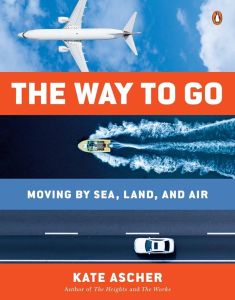
The Way to Go: Moving by Sea, Land, and Air. Kate Ascher

During the mid–1880s, when the late-night exploits of the Chicago players resulted in
listless and disinterested performance on the field, Spalding hired a private detective to tail Kelly and his teammates. The detective compiled a report, which Spalding then read aloud to his men. Players such as Anson, Burns, and Sunday got off easy, but Kelly, Flint, and the rest listened quietly as Spalding recounted what he later described as “stories of drunkenness and debauchery” and “scenes of revelry and carousing that were altogether reprehensible and disgusting.”Seven team members were implicated by name in the report, and when Spalding finished, a hush filled the room. Kelly, after a few tense moments, broke the silence. “I have to offer only one amendment,” he told Spalding. “In that place where the detective reports me as taking lemonade at 3 A.M., he’s off. It was straight whiskey. I never drank a lemonade at that hour in my life.”

The Irish in Baseball

Posted in General | Tagged , | Leave a comment

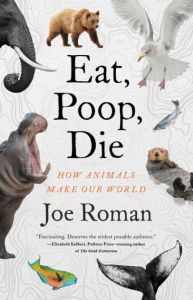
Eat, Poop, Die

Now there’s a sign you won’t see decorating someone’s living room. Their bathroom, maybe. Eat, Poop, Die: How Animals Make Our World takes a look at the way animals shape ecosystems. It begins with the absolutely fascinating study of Surtsey, a volcanic island that was created in 1968 and which has allowed scientists to follow the development of an ecosystem ex nihilo, and then moves into some particular case studies across the world. Although there’s no limit to the number of potential books detailing the way animals are active ‘shapers of our world’, Roman focuses on dining, defecating, and dying. Taking center stage is poop — or ‘animal subsidies’, if you like. Poop not only serves to spread plant seeds around (and provide an initial bank of nutriment), but to shuffle the chemicals within across wide landscapes, as do animal deaths to smaller degree — except in the case of whale falls. Easily for me the most interesting part of the book was the fascinating history of Surtsey, which was born (happily) in an era where people could appreciate its unique promise, and guard it accordingly. Roman details the way an ecosystem slowly developed on the newly minted piece of terra firma, using it to highlight how important poop (from birds, mostly) is at providing minerals to seeds that found their way to the island; over the decades, the ecosystem has grown in complexity. From here we examine the way salmon runs enrich the trees along the rivers they use, thanks to the fact that bears are incredibly sloppy and wasteful eaters, and dive into the ‘whale pump’, the way whales continually move nutrients between the upper layers of the ocean and its depths. The book ends with cicadas and otters; a population of the latter was moved from an area of Alaska that DC wanted to nuke (and did, because DC is terrible) to a bay that had once had otters but lost them to the fur trade. Eat, Poop, Die is a quick, easy read with no shortage of interest.

Related:
Ghosts of Evolution, Connie Barlow. One of my favorite science books ever, this one looks at what happens to species whose ecological partners have gone extinct — like trees who made fruit for ground sloths, but which now struggle to find a way to spread their seed.
The Origin of Feces, David Waltner-Toews. I have to stop misplacing this book and read it. On the ecological importance of poop.

Posted in Reviews, science | Tagged , , , | 4 Comments

Video Game of the Year

Minor: Hard-core gamers love Half-Life. It . . . probably should’ve gotten its
own chapter.

Me: YOU THINK?!?!

I came of age with video games, arriving in the world around the same time as Mario, and have enjoyed their maturation into a genuine art form, with sophisticated storytelling that makes most Hollywood offerings look like a middle school play by comparison. Video Game of the Year takes us through their development, beginning with Pong and continuing to 2022. The format is simple: there’s a brief write-up on each game, which varies in quality, followed by a section called “Extra Life” which has a briefer blurb on a game that followed in the highlighted game’s footsteps, followed by blurbs from other authors on other games that appear utterly random.How do you connect Mega Man and Madden? Or Sid Meier’s Civilization and Sonic the Hedgehog? (For that matter, the only mention of Civ is a blurb? This aggression will not stand, man.) The book is enjoyable enough if you’re a fan of videogames — well, tolerable — but it’s not impressive — not for its preachy writing or its selection. I was absolutely astonished that games like Civilization, Starcraft (STARCRAFT!), and Half-Life weren’t given their own chapters, but instead treated with little blurbs at the end of other chapters, or shoehorned in elsewhere. Another odd oversight is that games’ sound design and music is never referenced, which is frankly bizarre. It’s not “Hey, I’m going to write a book about video games and never mention Everquest or Ultima Online” bizarre, but still — pretty frickin’ weird. Beyond the games that are forgotten or dealt with shallowly despite their importance, Minor also has some games that are inexplicable. Spore, game of the year? Even as a Maxis-that-was fanboy I have to shake my head. Another game is included that no one has heard of beyond its role in a controversy that only reddit trolls care about, but it gives Minor the opportunity to fully mount his soapbox and dispensing the same shallow, boring takes as everywhere else on the internet. Given the repeated slights to PC games, I imagine a console gamer would enjoy this collection more.

Related:
Replay: The History of Video Games
The Nostalgia Nerd’s Retro Tech, which highlights games that dominated particular systems.
Masters of Doom, Prepare to Meet thy Doom, and Jacked, David Kushner. Histories of id software, Rockstar, etc.
Sid Meier’s Memoir, Sid Meier

Posted in history, Reviews | Tagged , | 9 Comments

The Way to Go

Longtime readers here know that I love reading about transportation, and not just Planes, Trains, and Automobiles. Ships, horses, bicycles — if it moves, I’ll follow and read books about it happily. A few years ago I delighted in the visual feast that was Kate Ascher’s The Works: Anatomy of a City. She’s also done books on skyscrapers and transportation, so I obviously had to check out The Way to Go. Like The Works, visuals are a core part of the text, as Ascher uses pictures to communicate how these great machines work, in addition to how they look. Such pictures also illustrate the functioning of support systems, like canal locks or the GPS network that helps airplanes and ships get a fix on their location, or bridge design and gas station operations for cars. Ascher works in examples from across the globe, though presumably there’s an American bias to visual and technical illustrations: the commercial truck shown, for instance, is a conventional hooded truck popular in North America and not the cabover kind that dominates worldwide. The color-coded illustration of an automobile indicating different subsystems was especially useful. This is not a picture book, though: instead, text and visuals work together. Ascher explores all aspects of what makes transportation work — the design of roads and rails, equipment like signals, rudders, and ailerons, and larger systems like the design of airfields and the establishment of national air traffic control networks to mitigate accidents. I especially like the section on airfield design, and the illustration of the various tender vehicles that evacuate waste, baggage, etc from airplanes upon landing. The past is not forgotten, either: Ascher often demonstrates the history of a particular microsubject, like the evolution of traffic signals. This is the kind of book that curious minds of all ages could savor, because Ascher avoids being both too simplistic or technical in her explanations. Shipping gets the lion’s share of the book, which is no surprise given that it’s been the lifeblood of economies and power for most of written history: air (space included) and ground transport share the second half of the book, along with a section on The Future, while ships and ship-support systems dominate the first half. Tragically, nary a mention is made of bicycles. I’ve read books all over the transportation field, from histories of shipping containers to the sociology of truck drivers, and even I learned a few things from this on the infrastructure and cultural sides: I didn’t know, for instance, that the peace sign comes from the semaphore alphabet, though I did associate it with a symbol for nuclear disarmament in some fuzzy way. I enjoyed this enormously, even with the appalling oversight of missing bike infrastructure.

Posted in Politics and Civic Interest, Reviews | Tagged , , , , , , , , | Leave a comment

Wednesday blogging prompt: Nonfiction

Today’s blogging prompt from Long and Short Reviews is ‘what nonfiction have you read lately’. After an early-year start dominated by fiction, nonfiction is at last beginning to regain its usual dominance of my reading pile. It began with some science and nature books in February on trees and deer, and then I read some new releases by Abigrail Schrier and Rob Henderson, one of which I’ve reviewed (Troubled) and the other of which (Bad Therapy) I’m working on a review for. Another NF title in this period has been the excellent How to Stay Married, a humorist’s account of discovering infidelity in his marriage and working through it, along with his wife who contributes her voice to the book. In the last two weeks perhaps half of my nonfiction reading has been for a week of themed reviews to close out March: I already have three reviews scheduled for that. The theme isn’t really a secret — you can literally see the books in my What I’ve Read This Year page — but I like pretending it is. On deck is at least one more book for that theme, plus an exploration of Antarctica for a possible science read, a look at processed food, and a biography of Amy Winehouse that I’m debating buying.

Posted in General | Tagged | 12 Comments

Teasing Tuesday x 3

Today’s TTT is weird or funny things we’ve done online searches for as a result of a book. I know I do this all the time, but I can’t really remember any. Instead, I’m going to list….’cryptic phrases in my notes app on the phone’.

MYSTERIOUS KEEP NOTES:

“Cow cow boogie”
“How the word is passed”
“Since Rebecca came back from Mecca”
“Monty Python Sam keckojgfall badminton”
“Mind parasites colon wilson”
“Strangers with Sndy”
“Feed Astair jukebox the ghost”
“St MOtel kz books”
“The Doritos effect”
“I don’t want to be nobody o just want to be myself”

I’m guessing most of those are songs I heard while a friends’ houses and wanted to look up later, along with some random book/movie recommendations. Now, a trio of teases!

This is the Red Sox and this is the Yankees. I am twenty-four, and I am pitching in Yankee Stadium, and every seat is taken.

In 1948, there was a crude attempt to televise the [World] Series to the East Coast from so distant a city as Cleveland by having a plane fly above the ball park in a kind of horse-and-buggy version of a satellite. That year there were so few television sets (by one count, 325,000 in all of America, half of them in the New York City area) that the Gillette Company, which was sponsoring the games, placed 100 new sets on the Boston Common so that ordinary fans might gather there and watch.

Summer of 49, David Halberstam

When you start a child on meds, you risk numbing him to life at the very moment he’s learning to calibrate risks and handle life’s ups and downs. When you anesthetize a child to the vicissitudes of success and failure and love and loss and disappointment when he’s meeting these for the first time, you’re depriving him of the emotional musculature he’ll need as an adult. Once on meds, he’s likely to believe that he can’t handle life at full strength—and thanks to an adolescence spent on them, he may even be right.

Bad Therapy: Why the Kids Aren’t Growing Up, Abigail Schrier

Each of my three names was taken from a different adult. Robert was the name of my biological father, who abandoned my mother and me when I was a baby. I have no memory of him. In fact, the only information I have about him is contained in a document given to me by the social worker responsible for my case when I was being shuffled around to different foster homes in Los Angeles. My middle name, Kim, is from my birth mother. It was her family name. She succumbed to drug addiction soon after I was born, rendering her unable to care for me. I have only two memories of her. I haven’t seen her since I was a child. And my last name: Henderson, which comes from my former adoptive father. After my adoptive mother separated from him, he severed ties with me to get back at her for leaving him. He figured that this would hurt me, and that my emotional pain would transmit to my adoptive mother. He was right. These three adults have something in common: All abandoned me.

Troubled, Robert Kim Henderson
Posted in General | Tagged , | 11 Comments