July 2024 in Review

July is the beginning of the Great Sticky Siege that is an Alabama summer, as we all flee inside to worship the freon god and hope our AC units can hold the line until relief breaks in October. It continued my unusual reading pattern this year, with a huge amount of fiction, but history did return fire a bit. We’ll see if it regroups and stages a counter-assault. I was also distracted by trying two ‘cozy’ games, Wylde Flowers and Sun Haven. They’re both a bit like Stardew Valley, which I tried a year ago and have played obsessively since, but markedly different despite both incorporating magic.

Month’s Best:
Extinction, Douglas Preston (F) & Brutal Reckoning, Peter Cozzens (NF)

Favorite Quote:

“This is interesting, meeting you here,” said Madred.
Placing his spoon next to his bowl, Garak clasped his hands on the table. “It was my understanding that being forced into exile meant never having to see people I don’t like. Leave it to Central Command to fail at something so simple.” Star Trek: Pliable Truths

Classics Club:

……

Readin’ Dixie:
While We Were Watching Downton Abbey, Wendy Wax. This is set in Atlanta, and some of the characters are deep-South aristocrats, so I’m claimin’ it.
Brutal Reckoning, Peter Cozzens. A comprehensive history of the Creek War that would open Alabama to settlement.

Science Survey:

…..

Science Fiction Book Bingo:

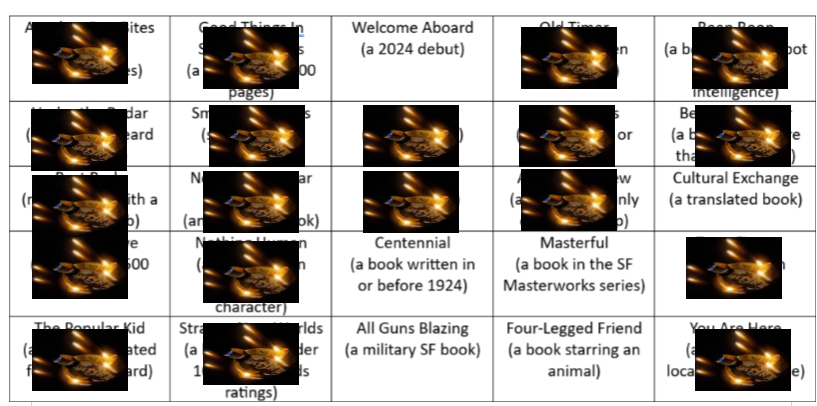
Terra Firmer (A Book Set on Earth): Extinction, Douglas Preston.

New Acquisitions:
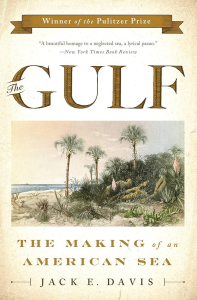
A new Star Trek novel (which I’m already halfway finished reading, hah) and a history of colonial Pensacola. I keep wanting to do a weekend there outside of tourist season. In addition to the historic town, it also hosts a naval aviation museum!

The Unreviewed:
None!

Coming up in August

Next week I’m planning on doing a reprise of Blast from the Past, though there will be history & Star Trek as well. I’d like to focus a bit on NF before grad school opens again in the middle of the month, and I have a science series in mind that will have a rather obvious theme.

Posted in General | Tagged | 8 Comments

Moviewatch: July 2023

July was an unusal month in that I literally only watched one movie by myself, Father Stu. The rest were watched with (and chosen by) friends.

Manhattan Murder Mystery, 1993. Woody Allen’s wife Diane Keaton is suspicious about the death of their next-door neighbor when her widower is far too peppy to be in mourning. She and Hawkeye Pierce begin investigating and become obsessed with the prospect. Bit of a dark comedy, I suppose.

Grey Gardens, 1975. Apparently Jackie Kennedy had crazy relatives. This documentary just puts the camera on them. I have no idea why my friend wanted to watch this. I kept sneaking peeks at the Red Sox -Yankees game instead. Sox won 5-3. Then they lost 14-4. -_- Duran did really well in the All-Stars game, but it’s not been a good month for Boston.

Monkey Man, 2024. A REALLY interesting film about an Indian orphan whose mother was brutally killed by a cop, who burns for vengeance. He’s a boxer who starts working for a hotel so he can get close to the cop, but after his first attempt fails catastrophically, The Kid regroups at a temple of people who have been persecuted by the cop. Interesting look at modern Mumbai, good acting, all around good time, and rooted in Indian religious culture..

Blue Velvet, 1985. A young man finds an ear in a park. Things go downhill.

The Paperboy, 2012. Easily my least favorite film for this year. Watched it without knowing the premise or anything, we just saw Matthew McConaughey and decided to give it a shot. The premise is that two brothers and a reporter have come to a small town to investigate the death of a widely-loathed cop, which has been pinned on an alligator hunter who is now on death row.   It’s set in 1969, so there are a lot of race-strife elements, and those factor in to McConaughey being raped and beaten.   Nicole Kidman being present is the film’s only redeeming aspect.

Brewster McCloud, 1970. A young man named Brewster is working on a project to create a pair of working wings for individual humans. He is also suspected of strangling a series of people, and is guarded by Hotlips Hoolihan whose mysterious black bird is always involved in the stranglings. Unrelatedly,   Brewster meets a young Shelly Duvall in her debut film (Duvall recently died, hence our watching this), who he falls in love with despite being told by Hotlips that his project will be doomed if he makes love with a woman.  The ending is a bit surreal.    A fun enough movie – great cars & car chases –  but very strange.  One of the early smothered victims is the Wicked Witch from Oz, and amusingly she’s wearing red heels.  Rene Auberjoinis also appears as someone lecturing on bird behavior throughout the film. 

Vicky Christina Barcelona, 2008. Two American women who are friends go to Barcelona for a little vacation. One is looking for Something Special, the other isn’t.  One Spanish painter gets a relationship with both of them, though not (as he wishes) together. Interesting enough film, mostly because of Scarlett Johannson and Penelope Cruz.   The architecture and landscape of Spain are gorgeous.

Boogie Nights, 1997. Star-filled cast  involving Burt Reynolds trying to get Mark Wahlberg to do porn in the ‘70s/’80s. Appearances by a bunch of known actors. Nice music. Cars were tolerable. Dug the chick on rollerskates.

Mean Streets. 1973. Early Scorcese film about the New York Mafia, featuring a young Robert de Niro (pre-Taxi Driver), as well as a youngish David Proval, better known as Richie Aprile from The Sopranoes. I was surprised he was the only Sopranoes actor I recognized. Good music, NYC at night is pretty. Possible shot of WTC towers right after constrution, but not positive. 

What Have I Done to Deserve This!, 1985. Pedro Almadovar. A….weird film about a Spanish housewife who tries to make ends meet as a cleaning lady, despite her grumpy husband’s wishes. He’s a taxi driver and a talented forger, but has some pride about being an honest man. He’s also obessed with an older German  he used to date, though oddly they use Sie on the phone instead of du. Grumpy and Housewife have two kids, a young teenager who apparently deals smack in Madrid and another son who is a male prostitute. As the film develops we witness the general suckitude of her life until she lets a dentist “adopt” her youngest son, defends a neighbor’s telekinetic daughter from her abusive mother (this is never further explored, the housewife is just ‘Ah, cool, can you help me wallpaper my kitchen?’), kills her husband with a hambone, and is then deserted by her drug-dealer son and mother-in-law because they want to return to rural Spain and farm. Then the prostitute son comes back and the movie ends. (shrug)

The Death of Stalin, 2017. Rewatch for me of a favorite film which takes the death of one of the most odious people who ever lived and turns it into a comedy about the viciousness and loathsomeness of politics. Arguably worth watching for the scenery and Jason Isaac’s performance of Marshal Zhukov.

“Life’s gonna give you a gut full of reasons to be angry, kid. You only need one to be grateful.”

“I think God saw something in you worth savin’. It’s up to you to find out what you’ve got to offer.”

Father Stu, 2022. Mark Wahlberg plays Fr. Stuart Long, a boxer who begins hanging around the Catholic church for lust of a woman, but embraces it fully after a near-death experience in which he has a vision of the Virgin Mary who urges him to find purpose in his life. Despite his love for Carmen, he pursues a calling to the priesthood that becomes more difficult after he is diagnosed with a progressive muscle disease which renders the proud former boxer into a humble man in a wheelchair. Despite his suffering and limitations, he finds meaning and imparts that to others. Best movie I’ve seen this year. Based on a true story.

Posted in General | Tagged , | Leave a comment

Haunted house BNB? + WWW Wednesday

There’s a blogging event that happens on Wednesdays in which readers answer these questions three:

  • WHAT have you finished reading recently? I just finished A Brutal Reckoning.
  • WHAT are you currently reading? I’m about to start The Dixie Frontier, a social history of the “old Southwest”.
  • WHAT is the capital of Assyria? I mean, WHAT are you reading next? Most likely Star Trek TOS: Lost to Eternity, by Greg Cox.

Today’s prompt from Long and Short Reviews is, “Would you stay in a haunted house”, to which I say — sure, as I don’t believe in haunted houses. As a kid I loved reading ghost stories, but I never believed in ghosts themselves, though I did have an interesting conversation in high school with a friend who believed it was possible for human beings to leave some kind of ‘impression’ on the environment that was sometimes visible under strict circumstances. These visible or audible impressions — ghosts of emotionally charged events repeating themselves, like the sound of a woman crying for a fallen lover, or the sight of a doomed company’s last charge — were not the personalities themselves, just impressions or echoes. Anyhoo, I’ve never had any experiences that would prompt me to believe in ghosts, though a girlfriend of mine from a few years ago swore that the first house she ever bought she sold within a year because it was so haunted she couldn’t sleep, and she added that her brother had laughed at her, but after she challenged him to live there for a month, he moved out within a week. Frankly, I’d be curious about visiting that place myself. A friend of mine, who like me occupies an awkward place between science and faith, believes her late father is still present around her: he appears and talks to her in her dreams, she sees him in flashes around the house, just sitting or walking, that sort of thing. Personally, one thing I’ve learned in my 30+ years is that the human brain is a strange place. I can stand at the side door of a friend’s house and vividly smell the peppers that were growing in his yard the first summer I ever house-sat for him, regardless of the season and regardless of the fact that there’s now a swimming pool where that pepper patch was. At any rate, while I don’t believe in ghosts myself, I’ve grown to appreciate both the complexity of the human mind and the limits of our perceptions, enough that when people talk about ethereal encounters I try to listen to understand what they’ve felt and how that’s shaping their beliefs and actions now rather than just dismissing them as an overactive imagination. To return to the question: I would stay in a haunted house, both because I don’t believe in them and because I’d be interested in finding out what I might experience. I toured a ‘haunted’ place a year or so ago but encountered nothing but the gloom and dread of a decaying place that might have squatters. The closest I’ve come to this kind of experience is taking a cemetery tour with a group, and then hearing a music-box left at the grave of a child begin playing by itself, without any hint of wind. It died almost immediately but was sufficient to stop the entire group in its tracks. Readers interested in this kind of thing may want to check out Will Storr versus the Supernatural, his memoir of visiting haunted houses, exorcists, etc.

Posted in General | Tagged | 14 Comments

Brutal Reckoning

I live in a place named for people no longer present: the Alibamu[*], part of the Creek confederacy which was driven from the southeast after the Battle of Horseshoe Bend. I loved history even as a child, and it was fascinating and haunting to me to think that a people’s presence could simply be erased from where they had been. Brutal Reckoning is the story of how that came to be, which first establishes the historical background before giving a full history of the rise and collapse of the Creek Confederacy. Extensively documented and fair-minded, neither sparing grisly details nor marinating in them to shock the reader, it recommends itself easily to readers interested in the Creek peoples or the settlement of the Alabama-Mississippi territories.

Brutal Reckoning won me over in its opening pages, as it does a dive into the history and culture of the Creek Confederacy. The arrival of Hernando de Seto was calamitous for the native polities of the upper gulf region, not because of de Soto’s martial brand of tourism (what’s Latin for “I came, I saw, I grabbed some locals and left”?) but for the Old World diseases the New World’s immune system had no answer for. Cozzens covers how the Creek Confederacy emerged from that great devastation — not as an organized polity, but a highly decentralized, clan-based population of interrelated but often rivaling groups, with an economy based on hunting & some agriculture. Cozzens then tracks the ongoing effects of European trade and colonization, which created a growing number of Métis, or mixed, people — and accordingly, a mixed culture. After the British and the Creeks established regular relations, the Brits assigned a trader — to each Creek town, usually a Scots-Irish merchant who would marry into the local population. When Britain’s need for trade & tax increased, it offered more trading licenses — with deleterious results. A merchant who settled in a given town and had family ties to it felt some sense of kinship and responsibility towards its people: more mercenary traders had no compunction against soliciting as many deerskins as he could from the Creeks and rewarding them with as many ardent spirits as they’d buy. Cozzens’ account details how the Creek economy and society began reeling from this, at the same time as some Creeks were moving towards European-style agriculture and creating factionalism that would lead to civil war.

This first third of the book sets the stage for how complicated the rest of the book is, with very fuzzy and often chaotic lines between groups as both European and American & native powers vied for power on the continent. Despite the name of the Creek Confederacy, it was not an organized polity, and there were no central leaders: occasionally some talwas authority or religious figure would develop a following and inspire a movement, but if they were defeated their supporters would melt away in a moment. In addition to basic clan rivalries, there were talwas-specific rivalries. These were further complicated by the Creeks’ differing responses to European settlement, and later on the expansion of the American government: some might embrace colonial agriculture while at the same time opposing American expansion. European trade unsettled prexisting balances of power, as well as social structures, with a mixed-sex economy quickly becoming more dominated by male-led enterprises like ranching. The métis population plays an enormous role in this book, and across sides: this may owe to mixed-culture peoples having an advantage in leadership in diplomacy, with a foot in both camps, or because Cozzens draws so much on letters and memoirs from the métis themselves. Divided loyalties are a core part of what makes this history so interesting because boxed-up and convenient thinking don’t apply. Redstick leaders might militantly attack other Creeks and Americans, while at the same time maintaining their own plantations (complete with captive slaves, Creek and African) — far from being reactionaries living in the woods. William Weatherford, who led the Redstick assault on Fort Mims, didn’t even support the Redstick cause: he had been forced into it after his family was taken hostage by Redstick leaders, and then became increasingly saddled with its cause and bound in brotherhood with the men he led so that he became the man most associated with the Redsticks, so much so that it was he who surrendered himself to Andrew Jackson after the bloody Battle of Horseshoe Bend. Of course, a lot of this conflict also takes place within the context of the War of 1812: the Redsticks remained obdurate for so long, despite repeated defeats at the hands of Generals Claiborne and Jackson, in part because they believed the British would come to their aid. Both DC and London were preoccupied with the northern and eastern seaboard, though, so for the most part we have here American and Creek volunteers versus other Creeks, chiefly the Redsticks: once Jackson was able to secure regular Army troops, things come to a dramatic and bloody climax.

This is an impressively thorough history, and saturated with primary resource quotations from letters, memoirs, and reports. I suspected from the start that Cozzens would err on the side of Zinn-style history, given that he referred to the first European explorers of the region as intruders, but as the book developed I became impressed by his ability to render both the humanity and brutality of all parties involved. This is a book full of awful savagery on both sides, a grim reminder of how terrible a thing the human being at war is. Those who still subscribe to the patronizing noble savage myth will find here Creeks who delighted in taking captive brides from other Creeks long before Civilization descended upon them, and torturing male captives extensively until at least they perished — and they will shudder to read of women being raped and killed and their pregnant bellies spilled open. I’d liken it to nature red in tooth and claw, but given the human mind there’s something far more unsettling at work here: not passion, but deliberation, as victorious US Army soldiers burn towns and club children on the basis that they’ll grow up to be full-sized Indians one day. Speaking of violence, Andrew Jackson cuts a large figure here, but Cozzens does a good job of avoiding caricature. We find the backwoods orphan, coming to age amid poverty and climbing his way to respectability and authority, brooking no attack on his honor — quick to duel, and so utterly stubborn that he leads campaigns while wracked with pain and nausea and dealing with men who are unpaid and unfed. Although he’ll later catch opprobrium for the Trail of Tears, here he’s less easy to dismiss — a fierce, defiant, and resilient leader of men who — upon meeting William Weatherford — readily recognized him as a great and worthy opponent, more admirable than the men on the East Coast who Jackson supposedly answered to. (Quintessential Jackson: expressly told by President Madison to leave the Spanish alone, Jackson decides to take Pensacola regardless, because the Redsticks and Brits were using it.) He is at his worst when abandoning his former allies — all Creeks lost their lands following the Treaty of Fort Jackson, not just the Redsticks — on the basis that had the Redsticks won the inter-Creek war, those allies and their talwas would have been lost anyway.

This is substantial history, easily the most thorough treatment of the Creek War I have seen in my many years of searching for the same. I appreciate its balanced tone which does not shy away from injustice, but doesn’t attempt to turn itself into a political work; the saturation of primary source materials was especially helpful in seeing all individuals as they were, rather than heroes and villains in a narrative that excites the brain but does not have the substance of truth; the writing is easy to follow, and the illustrated plates were attractive. I will definitely be reading more of Cozzens, as he’s written several histories about the Indian Wars as well as the Civil War, including one on the Battle for Stones River which I encountered in God Rest Ye Merry, Soldiers.

[*]: It means “Thicket-clearers”.

Related:
The War of 1812, John K. Mahon. A beefy history of the war which includes an account of the Creek War within it.
Chainbreaker’s War: A Seneca Chief Remembers the American Revolution
The Spanish Frontier in North America, David Weber
The Other War of 1812, James Cusick
Battle for the Southern Frontier: The Creek War and the War of 1812, Mike Bunn and Clay Williams. A much abbreviated history of the war(s).
Andrew Jackson and the Miracle of New Orleans, Brian Kilmeade. Pop-history but fun.

Posted in history, Reviews | Tagged , , , , , , , , , , , | 2 Comments

Teasing Tuesday

Today’s treble-T is things we wish _______ had more of. I can’t really think of a topic, so here’s a trio of teases instead. Oh, for those who were anticipating Blast from the Past II this week, I’m going to do it next week. Finishing up a dense history read today!

In the end, Lizzie chose insult by way of Shakespeare. It felt more
dignified. “I do wish that we could become better strangers,” she said
coldly. It took Collins a moment to register her jab, and his faux polite
expression darkened into open resentment (Pride and Premeditation)

As chief of staff in the Kremlin, Voloshin occupied an office just steps from Lenin’s sarcophagus in the mausoleum. “My desk stood by the window. It was no more than fifteen meters in a straight line from me to the corpse. He was lying there, I was working here. We didn’t bother each other,” says Voloshin wryly. (All the Kremlin’s Men: Inside the Court of Vladmir Putin)

The heart itself is but a small vessel, yet dragons are there, and there are also lions; there are poisonous beasts and all the treasures of evil. But there too is God, the angels, the life and the kingdom, the light and the apostles, the heavenly cities and the treasuries of grace—all things are there. —Pseudo-Macarius, (as quoted in Philokalia: The Bible of Orthodox Spirituality)

Tagged , | 3 Comments

Right! Stop that! It’s getting a bit silly!

…and a bit suspect, I think.

I’m surprised they’re not leading off with the Gorn cliffhanger, buuuuuuut I can see why they thought the fans would get a kick out of this. It’s more Lower Decks style, though….not as if Vulcan self-discipline comes in a vaccine!

Posted in General | Tagged , | 9 Comments

Pride and Premeditation

Liz Bennet’s mother wants to marry her and her four sisters off, but Liz has something more interesting in mind for her life than men — most of whom, her father aside, she has little use for. She wants to be a barrister, and has in fact been helping at her father’s firm unofficially for some time now. She knows the law as well as any man, and sees in a new case a chance to prove her merit to her father. A wealthy fellow named Bingley has been accused of murdering his useless drunk of a brother-in-law, and netting his business would not only be good for the firm, but establish Liz’s credentials. Too bad some fellow named Darcy has already beaten her to the punch. Fortunately, Bingley is still interested in any evidence Liz’s detective work might turn up, so she’s hired — and soon in peril from the actual killer. If any of these names sound familiar, they should: this is a strange kind of Pride and Prejudice fanfiction. Not a retelling, mind — that would entail the original story being followed, but with some new element like zombies or sea monsters thrown in. Instead, this is a new story with characters who have some superficial resemblance to the originals, and with some deliberate allusions to the original story like the mention of Wickham kidnapping Lydia. The central story is Liz’s investigation of the murder, which soon gets her and several other characters into trouble — lethal trouble. At first, she and Darcy are at odds, but as the book develops they become collaborators. The dramatic music swelling and empassioned kissing of the original romance aren’t here, though — in fact, if you’re looking for romance it’s practically nonexistant. Although the story itself proved interesting, it took a bit to get into given that our main character is exceeding anachronistic, someone who acts like a woman of the mid-20th century instead of a Regency personality whose father is a competent but retiring barrister with no ambitions or pretensions. When Alice Roosevelt played detective in Alice and the Assassin, it was plausible because of the temporal setting and the sheer fact that it was Alice Roosevelt, who would have made herself a celebrity by controversy even if her father hadn’t been Teddy Roosevelt. The author herself acknowledges taking a lot of liberties, and despite my annoyance at the fact that Liz sounds more like Gloria Steinem than an Austen character, the mystery itself proved both interesting, surprising, and fun. I can see continuing in this series, but only by couching it as ‘respectable fanfiction’.

Highlights:

This was the dull thing about society—one was always saying what they
didn’t mean, and if they did say what they meant, it was considered rude.

“This is really quite the twist,” she said. “Like something out of a novel, but even more exciting. It’s very clever, isn’t it?”

If Darcy really thought that she was going to stay put while he investigated danger . . .
“Go,” Georgiana whispered. “I’ll pretend I tried to stop you.”
“I rather like you,” Lizzie said, and she went after Darcy.

“Darcy!” she screamed into the dark water. “If you drown, I will be very angry with you!”

Related:
Pride and Prejudice, Jane Austen
Pride and Prejudice and Zombies, Seth Grahame-Smith
Also, Amazon is loaded with this kind of stuff. There’s one where Georgiana is in a marching band and Darcy goes around in a helicopter.

Coming up:
Er, something more typical for RF, a history of the Creek Wars in Alabama. Expect to finish it over the weekend.

View Post

Posted in historical fiction, Reviews | Tagged , , | 1 Comment

Back to Battle

Kelly McGuire came of age in his Majesty’s Navy during the Great War, and unlike many he stuck it out through the ‘peace” — though for him it wasn’t so peaceful, between running around in China and having his heart broken. Now Europe is preparing for another attempt at suicide, and McGuire and his destroyer are in the heart of it. Opening outside of Iberia, where McGuire and company are helping nuns escape from the Marxists and helping political dissidents escape from Franco, McGuire witnesses the invasion of Norway and does his bit to savage German ammunition transports. From his assumption of command at the Battle of Jutland when his captain perished, McGuire is now a commander of destroyer flotillas. As it becomes obvious that the British expeditionary force is about to be trapped in Dunkirk, McGuire — with a history of pulling off evacuations — he’s tapped to help. As usual, McGuire is one part Horatio Hornblower, one part Forrest Gump: he’s always where the action is and making history, despite occasionally losing lovers and ships. There are a few lulls between assignments, and here Charley makes a return. One element of the McGuire stories I’ve especially enjoyed is his complicated relationships, both with a fellow officer who he’s frenemies with and the woman he loves but can’t be with because he’s married to the Navy. His and Charley’s relationship and interactions are heavy with emotion — pain, resentment, and love all jockying for space in their hearts and heads as they stare and make their way in war that’s already cost both. As you’d expect from a novel set during World War 2, there is a lot of action in this, with more death than the prior two books together, and many scenes that deliver some sense of the horror and chaos of battle — decks slick with blood from the wounded, men gasping for air as their ship is burning beneath them. Given that this is the third book in the trilogy, Hennessy wraps things up nicely, both with the war and with Charley — but boy, does poor McGuire have to earn his happy ending.

Highlights:

Si vis pacem para bellum. Well, now we’re up to the necks in the bellum we haven’t para’d for.

‘I’m bloody hungry,’ a Guardsman next to him said. ‘I ain’t had anything to eat for three days.’ ‘We could always eat each other,’ Kelly suggested. ‘But, as senior officer,’ he said, ‘I expect first bite.’

There was a line of splashes alongside the leading Italian cruiser, then they all saw a yellow flash just abaft the bridge. ‘One for his nob!’ Latimer said. ‘With your knowledge of Shakespeare,’ Kelly observed, ‘you might have come up with something more memorable than that.’ ‘How about “A hit, a hit, a palpable hit”, sir?’

She immediately gave him a drink and said she was going to change into something comfortable. His look of alarm made her smile. ‘Sorry,’ she said. ‘That was a silly thing to say. It doesn’t mean what it means in novels.’

Posted in historical fiction, Reviews | Tagged , , , , , , | 5 Comments

Teesday Toose & Novels New

Today’s TTT is our favorite debuts by authors. I’m going to mix them up between new finds and old friends.

‘Why did you disappear, Teresa?’ She gave him an anguished look.
‘My country was suffering. To the Basques there is such a thing as honour.’
‘To the British,’ Kelly said, ‘there’s such a thing as love. I was on the point of asking you to marry me.’ (Back to Battle, Max Hennessey)

In the Forests of the Night, Amelia Atwater-Rhodes. Atwater-Rhodes wrote this when she was thirteen and it was my introduction to urban fantasy. Her version of vampires enthralled me. I can’t remember if this is the book that introduced me to Blake’s poem — the first I ever memorized — or an X-Files novel that also referenced it. (Some kids have football player posters in their bedrooms. Mine was tigers, lions, cheetahs, and more tigers. Also, some aliens. Oh, and glow-in-the-dark stars.) At any rate, this is one of the few books from middle school I’ve managed to hang on to over the years.

A Man Called Ove, Frederik Backman. Easy contender for this year’s top ten list.

The Unlikely Pilgrimage of Harold Frye, Rachel Joyce. And ditto.

Star Trek: Ex Machina, Christopher L. Bennett. Okay, this is one of the few Bennett novels I’ve not read over the years, but it’s CLB so I’ve faith it’s good. The only books of his I haven’t liked are the Department of Temporal Mechanics books.

Sharpe’s Gold, Bernard Cornwell. Bernard Cornwell is second only to Asimov as far as “sheer number of his books I’ve read” on this blog, and considering that Asimov is dead and no longer writing, Cornwell is bound to catch up.

The Kite Runner, Khaled Hosseini. It’s been years since I read this book, but phrases like “For you, a thousand times over!” still ring in my head.

The Awakening of Miss Prim, Natalia Sanmartín Fenollera. A cozy philosophical romance with a dash of GK Chesterton.

The Blood of Flowers, Anita Amirrezvani. I won this in a context nearly two decades ago, and this story of a Persian woman who learns to craft carpets fascinated me. Unfortunately Amirrezvani has only written one other novel besides this, Equal of the Sun, about a Persian princess who begins ruling her father’s stead and then had to confront a coup.

Pebble in the Sky, Isaac Asimov. The first book in his Empire series, which was later connected to both his Robots and Foundation books.

The Martian, Andy Weir. This book had no right being so funny & scientifically sharp.

Also, today is the 13th anniversary of Amy Winehouse’s death, so here’s some Amy, Amy, Amy! for you.

Posted in General | Tagged , | 22 Comments

MOON DAY!

On this date, men from Earth, having ventured forth by the power of math and sheer chutzpah, landed on the surface of another cosmic body and stepped foot on the Moon. It’s been fifty-five years but I think that’s still pretty awesome.

Prometheus, they say, brought God’s fire down to man
And we’ve caught it, tamed it, trained it since our history began
Now we’re going back to Heaven just to look Him in the eye
And there’s a thunder ‘cross the land and a fire in the sky!

Gagarin was the first, back in 1961,
When like Icarus undaunted, he climbed to reach the Sun.
And he knew he might not make it, for it’s never hard to die,
But he lifted off the pad and rode a fire in the sky.

Yet a higher goal was calling, and we vowed to reach it soon,
And we gave ourselves a decade to put fire on the Moon.
And Apollo told the world we can do it if we try,
And there was one small step and a fire in the sky.

Now two decades past Gagarin, twenty years to the day,
Came a shuttle named Columbia to open up the way.
And they said “She’s just a truck”, but she’s a truck that’s aiming high!
See her big jets burn! See her fire in the sky!

Yet the gods do not give lightly of the gifts that they have made
And with Challenger and seven, once again the price was paid.
Though a nation watched her falling, all the world could do was cry
As they passed from us to glory, riding fire in the sky.

Now the rest is up to us. There’s a future to be won.
We must turn our faces outward. We will do what must be done.
For no cradle lasts forever; every bird must learn to fly.
And we are going to the stars. See our fire in the sky.
Posted in General | Tagged | 6 Comments