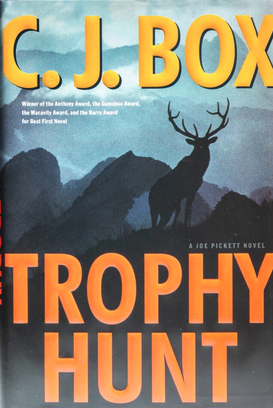
Terror in the deep woods! A hunter has been deliberately killed, then field-dressed like a deer. The gruesome sight makes Wyoming law enforcement realize that two prior ‘accidents’ may be connected, and Joe Pickett, Game Warden at Large, is asked by the governor to join the investigation, offering his knowledge of the land to the feds who are coming. Joe’s enemy, his boss, is fixated on the case, so much so that he welcomes Joe’s skills even if he despises Joe himself. During the early part of the investigation, though, several members of the party tracking and searching for evidence are killed, resulting in all hunting, fishing, and outdoor recreation being suspended in Wyoming. Considering that licenses and taxes from outdoors-oriented tourists are what pays the bills in Wyoming, panic and confusion erupt. The result is yet another excellent thriller from CJ Box, one that uses the killer’s point of view to build suspense and add to the drama.
At one point in this book, Joe visits his old mentor, the disgraced Vern, who looks at him and tells Joe that he’s changed: he’s gotten hard. Joe is definitely changing as a character, and well he should given how many years have gone by since the series began, and by what he’s endured. Joe is still morally square and stubborn about getting to the truth, but he’s seen so much violence and corruption — and has himself taken life — that his soul is getting grey-haired even if his skull isn’t, and his temper is more feisty, something we see several times here in his altercations with his boss. Of course, it’s unlocked by the sheer amount of stress he is under at the moment, what with being actively hunted by an anonymous madman, at the cost of a friend. Although the setup appears to be some eco-terrorist raging against hunters, it wouldn’t be a Pickett book without there being more to the store, and I liked the way Box misdirected readers through multiple angles.
I don’t usually post weekend reviews, but I’ve already read the sequel to this, so…move `em on, head `em up, cut `em out, Pick-ett! Hah!
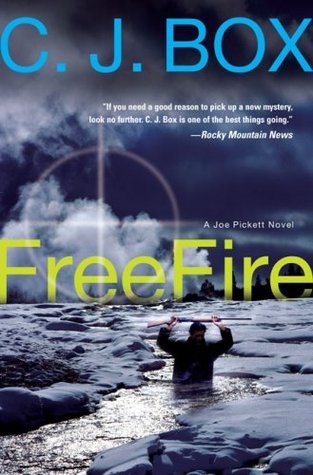
These days when Joe Pickett is building fences, it’s on his wife’s mother’s husband’s ranch property, rather than for the State of Wyoming. Joe’s tendency to get into trouble pursuing the truth, coupled with the appointment of a vindictive weasel as Game and Fish’s new director, got him fired as game warden…..but Wyoming’s colorful new governor is on the horn with an offer that might get Joe back in the field. Something funny is going on in Yellowstone National Park: a lawyer just got off the hook there for murdering four people in an area, and the four victims were not randomly chosen. The park rangers aren’t moving at a brisk enough pace for the governor, and knowing Joe’s tendency to gnaw on a problem until he’s gotten to the bottom of it, the governor wants Joe to investigate — unofficially, mostly — on his behalf. Free Fire offers a lot to the reader, but the star is Yellowstone National Park itself,
So, about those murders and the lawyer getting off: turns out because of Yellowstone’s unusual legal history — it was constituted before the two states whose land it’s within were made states — there’s a small stretch of land where a jury cannot formed, and crimes can theoretically not be legally prosecuted. A lawyer, McCann, used that fact to kill four people, but he did so not out of mere sociopathy, but for some ‘underground’ scheming, shall we say. Although this book doesn’t get into deep emotional water like some previous books, it’s not just an action thriller: for Joe, Yellowstone is the source of old pain, being the site of his younger brother’s suicide. The wonder of Yellowstone, though — a place where the Earth itself is alive, shooting forth geysers and sending tremors underfoot — largely helps override the pain, as does the work itself. When Joe arrives, the park rangers are not happy to see him: they’re federal employees with little regard for state authorities, and they’re wary of the unconventional new governor, a folksy populist who is intent on leaving his own mark on the office. One of the rangers, though, takes to Joe, finding him a man very much like her husband. Over the course of two weeks, they get to be friends despite her wariness of his real mission (his cover is that he’s there to interview everyone and compile a summary report for the governor). She proves a useful ally, as does Joe’s mysterious friend Nate, the falconer with the shady past who is very much wanted by the government. As you might guess, Joe finds trouble — and he also finds someone unexpected from his past.
Free Fire was quite different from the other books in this series, though no less a page turner. I liked the dramatic change of scenery, and learning about the geology — and biology! — that makes Yellowstone such a unique park. It looks like from the premise of the next book that Joe Pickett, Secret Agent Man, will continue riding for the colorful governor, so I’m looking forward to that.
“This is Mormon country,” Toomer said. “No bars.” “Mormons drink,” she said. “Especially if there’s just one of them. I’ve seen ’em go at it at Rocky’s. If there’s two, they watch each other and neither one will drink. It cracks me up.” “That’s what they always say in elk camp,” Toomer said, laughing with loud guffaws. “If a Mormon comes and he’s alone, hide the whiskey!”
(I’ve heard a different version of this: always invite two Baptists go to fishing with you unless you want one of them to drink all your beer.)
Saddlestring is a small town with a lot of big fish. One of those big fish, Opal Scarlett, has just been thrown in a river — or at least that’s what the sobbing drunk fisherman who threw her in the river claims. She’d been declaring that anyone using the river to transit her property had to pay a toll, state law be damned, and had recently strung up some wire to put that into effect, with ….ah, unfortunate neck consequences. Problem is with Opal Scarlett bein’ dead, that means there’s going to be a struggle for power between her two eldest sons, Arlen and Hank. (There’s also Wyatt, but in this redneck recreation of the splitting of the Carolingian Empire, he’s definitely the Lothar that no one but Carolingian historians remembers.) The Scarletts are major factors in the society of Saddlestring, and in the slow-brewing war for who inherits, every businessman and woman in town has to make their choice whose livery to wear: Arlen or Hank’s. Arlen is the prim and proper businessman whose charm belies the malice underneath, while Hank is….well, up front about being a mean cuss who will do what he wants to get what he wants. Joe Pickett is being sucked into this brewing Shakspearean drama by both the fact that his wife has a growing business that both brothers want to hire, and the fact that both brothers are trying to use state offices like the warden’s to wage lawfare against the other. Unfortunately, he also has a crazy man obsessed with vengeance who wants to ruin Joe, not merely kill him. Add to this equation a new boss who hates Joe and wants to make him miserable and the result is a compelling if infuriating story that results in the potential for a total sea change.
There’s a growing sense of entrapment in this book as Joe’s five years in the town begin to bear fruit that acts against him. A lot of the men who knew his character and worked with it even as they were up to skulduggery are now in prison, or dead; they’ve been replaced by bureaucrats who know nothing of the real world, only their statistics and pivot tables. These politicos and paper-pushers have no use and negative regard for a man who lives in the field and actually makes decisions for which he’s accountable like Joe, and as our game warden tries to figure out how to avoid getting his department trapped in a domestic business war and defend his family against a stalker who does crazy thing like leaving elk heads outside his home or firing into the windows, he finds that his superiors in the agency are just as hateful of him as whomever is terrorizing his family. We start seeing that other Joe, then, the man who despite his shooting deficiencies and tendencies to get beat up by thus, burns with vengeance for justice and can get real western real quick. Joe is aware of this tendency in himself and tries to guard against it, but when his family is threatened the gentle warden turns angry cowboy, not even trying to guard his tongue when talking to his new ‘boss’, who is just as hatable as the bureaucrat in Winterkill despite the fact that his only power lies in the state he bends the knee to: the actual man could be beaten up by an angry middle-schooler. At least the Winterkill villain had charisma and malignant energy, this cretin is more like Garanin in Chernobyl: a revolting weasel whose only power is the state’s. Picture Dolores Umbridge with a pocket protector and a calculator.
As with the previous book, I’m ranging far and wide away from the book’s happenings because I don’t want to give away the plot. Suffice to say there are direct connections to the first two books, as the stalker blames Joe for the death of his brother and a young child: he’s not a sociopath, since he definitely feels emotions and such, but he’s definitely off his rocker and calculating enough to be scary. The climax happens with a terrific drought-ending gully-washer that poses a challenge for Joe and the other law enforcers, and creates several scenes that add to the creepifying and scary experience. Definitely looking forward to continuing! (Though, I do need to incorporate some nonfiction because it’s Opening Day and it’s the middle of the month and I haven’t read anything for the Science Survey…….)
Happy to report that I read most of this book and the one previous in a manner befitting the books: outside, by sunlight and nary a screen involved.
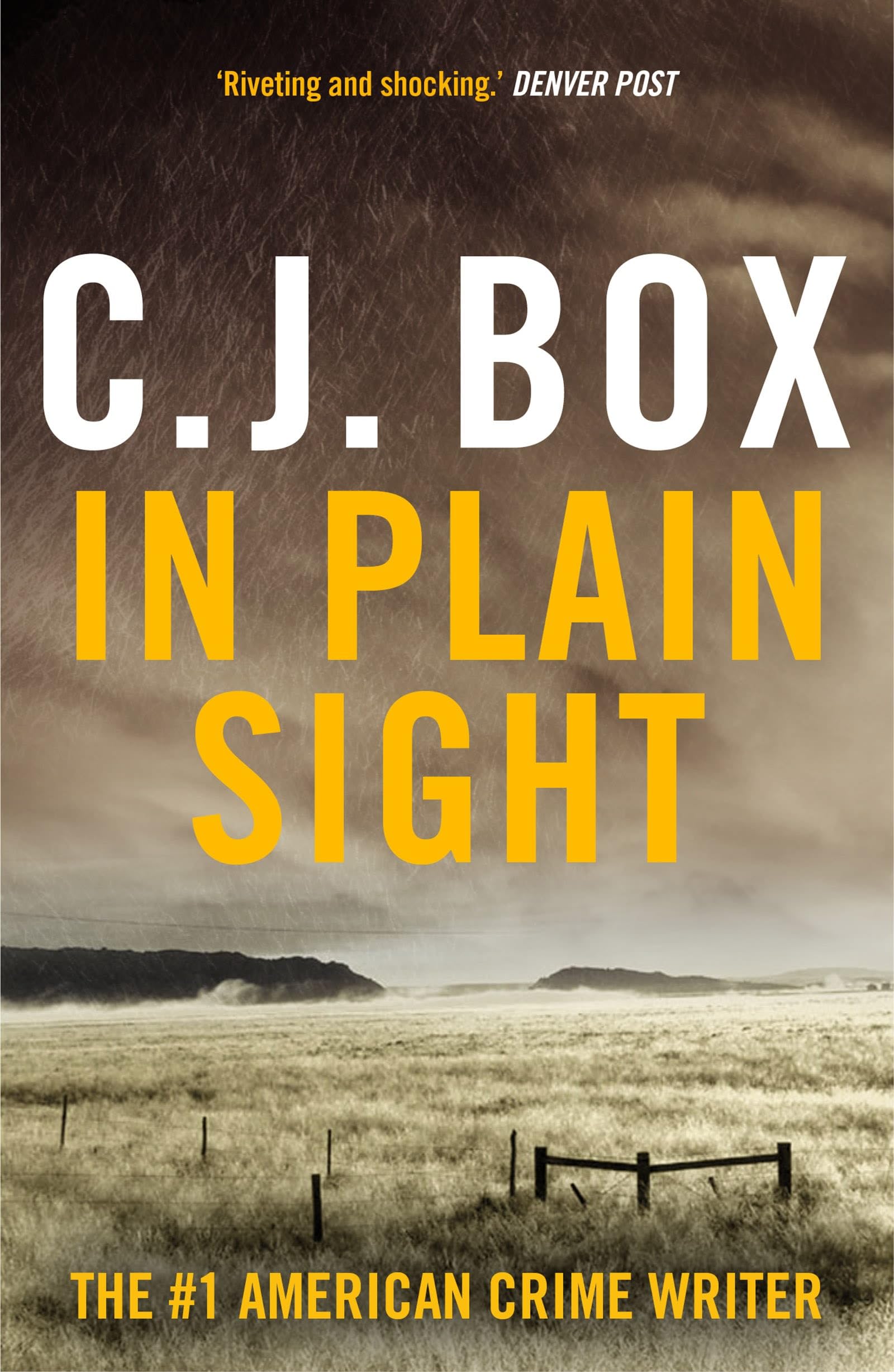
WHAT have you finished reading recently? Out of Range, CJ Box and In Plain Sight, CJ Box..
WHAT are you reading now? About to start Free Fire, CJ Box.
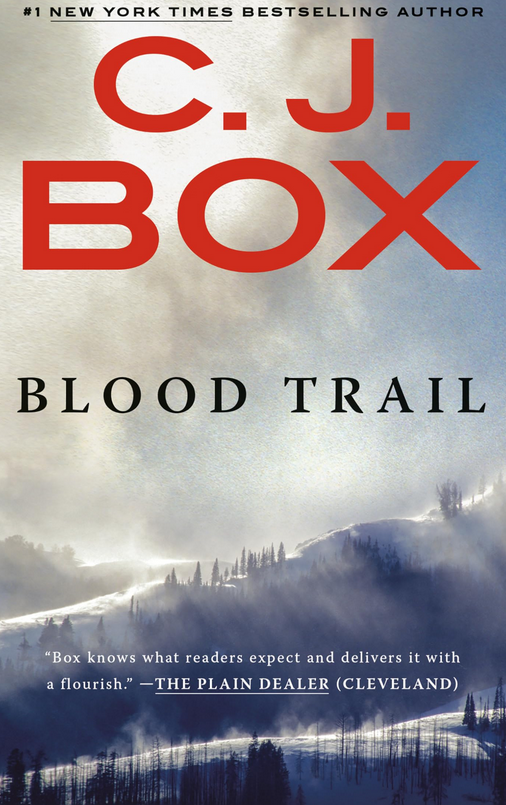
WHAT are you reading next? Images of America: Fenway Park, presumably followed by Blood Trail, CJ Box.
And now, favorite podcasts! I used to listen to podcasts a lot more than I do now, in part because I had more free time and in part because it was easier. Since Google killed their podcasts service, I haven’t found a service I like more: at the moment I’m trying to use audible for podcasts, since it can stay synced between my phone/car and computer.
(1) The Skeptics Guide to the Universe. This is easily the podcast I’ve listened to consistently for the longest, beginning in about 2006. It’s a panel show about science news and skepticism that’s generally entertaining, especially when they do segments like “Science or Fiction” where, a la Says You!, the panelists have to listen to several different ‘news stories’ and then decide which one is the real one.
(2)EconTalk. In 2011, I decided I wanted to find podcasts by an economist, a doctor, and a lawyer to understand related news through their lens. I was successful in finding EconTalk and Lawyer2Lawyer, though I’ve only continued listening to EconTalk. Over time, EconTalk has shifted much more toward being about human flourishing than discussing the economics of potato chips or a survey of Hayek’s work, and he features a lot of book dicussions. Over the years he’s introduced me to authors like Tyler Cowen, Gary Taubes, and Nassim Taleb. I’ve loved his books, too, especiallyThe Invisible Heart and How Adam Smith Can Change Your Life. Unfortunately, since he moved to Israel his audio quality with guests has diminished, so I don’t listen to him as much as I used to.
(3)The Tom Woods Show. I’m not entirely sure how I found Tom’s podcast: it would have been back in 2013 or so, I think. It’s a 30 minute weekday show that tends to be pretty mixed in its topics: history, economics, and libertarian politics predominate, but Tom has been known to include interviews with authors on science fiction and politics, for instance, or updates on regulations and the auto market. Woods’ show has introduced me to some of my favorite authors and speakers, like Brad Birzer and Scott Horton.
(4)Scott Horton. Speaking of the devil: Scott has been doing foreign policy and world affairs interviews for over two decades, with thousands of interviews. I encountered Scott on the Tom Woods show, of course, then later began listening to his interviews directly. I’ve found him extremely useful for understanding global affairs, and I’m enough of a booster that I contributed to his Enough Already: Time to End the War on Terror kickstarter. His latest book is on the Russo-Ukraine war, a complete history from the fall of the USSR til now.
(5) The Rest is Historywith Tom Holland and Dominic Sandbrook. This and Tom Woods are the shows I listen to most consistently: these guys are not only fun every single episode, but they shuffle their content a bit to keep things fresh. They might do two episodes on the French Revolution, then shift to popular culture during WW2, then back to the French.
(6)Ologies, with Ali Ward. Another fun one, this features interviews with scientists about their specialities, which can include everything from porcupines to butts. One of my best friends who is a biologist and a chronic podcast-listener introduced me to this one.
(7) AstronomyCast. Another one I’ve been listening to forever.
(8) Discerning Hearts — various. Discerning Hearts is less a podcast than a portal for a lot of Catholic podcasts; the problem is a lot of them tend to be short-runs. Discerning Hearts is where I found Joseph Pearce, via his Great Works of Modern Western Literature show, and another one I listen to from time to time is Inside the Pages, another literary-discussion based show.
I think that’s about it for podcasts — these days a lot of what I listen to as far as interviews or lectures comes from youtube, since I can search for hosts and guests there still.
I’m going to Jackson, I’m gonna mess around Yeah, I’m goin’ to Jackson Look out, Jackson town (Johnny Cash & June Carter — “Jackson”)
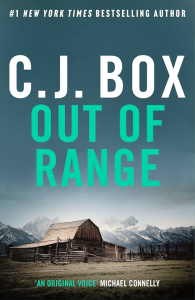
Tragedy has fallen on Wyoming’s department of Game and Fish, as one of their district game wardens has been found dead, victim of a very messy suicide. Joe is asked to cover the man’s job for a few weeks, and it’s as high-profile as it gets: Jackson Hole, a valley resort town with some of the highest home prices in all of Wyoming. It’s a place where rich people come to pretend to play cowboy, creating a little California-like enclave in rural Wyoming while driving out the locals through gentrification. Joe’s not a man to seek the spotlight, but he wouldn’t mind a change of scenery and some new faces after his prolonged struggles with the good ol’ boys club in Saddlestring. There is, however, his family to think about: not only does he not want to be more distant from them that his job already makes him, but there are some who genuinely hate Joe and might see hurting his family a path to hurting the warden. Still, duty impels, and so off he goes — to discover another case-closed that doesn’t close quite right for him, and another sheriff who doesn’t like a game warden asking questions with answers that have to be worked for. Out of Range weaves together a rural police drama with character & relationship drama, and was clearly written by someone who has raised a teenager or two. As with the last entry in this series, I finished this in two sittings: a long lunch, followed by an immediate “sit in the yard after work and read” session.
This being my fifth Box book in the last week or so, I took for granted that Joe would get to the bottom of the mystery — so while it was perfectly compelling on its own, I’ll confess to being more wrapped up in the emotional or relationship side of things. Joe’s marriage has been getting a little strained by their financial circumstances and Joe’s sense of duty. Being a game warden is not a nine to five job: depending on the season, Joe may never be home when there’s light enough to see, rising before the dawn and returning home late, sometimes with new injuries. Even so, it doesn’t pay quite enough for a family of four and two horses, and Marybeth has been working on the side to help balance the books. That would be a challenge in itself, but now Sheridan, the oldest daughter, is entering her terrible teens and is copping an attitude bigger than the Tetons. Marybeth so rarely sees Joe that she tells him him being gone fora few weeks won’t be all that noticable, and under that cloud of passive-aggressive gloom Joe departs for Jackson to wrangle bears and land developers and a woman who loves kayaking and is so striking that Joe feels guilty of infidelity just being in the same room with her. The distance makes communicating with Marybeth even more difficult, and on the few times he manages to catch her when she’s not working or arguing with Sheridan, their mutual exhaustion and Marybeth’s belief that Joe is living it up in a resort town don’t make for chicken-soup-and-quilts kinds of conversations. It would be easy, all too easy, to enjoy dinner conversation with someone who isn’t brooding and sniping — especially since the femme fatale is married to a man Joe is looking into as part of the job. He’s been asked to investigate the inexplicable suicide of his forebear, and there’s something strangely consistent about Jackson locals’ take on the warden: six months ago he started going off the rails. What happened six months ago and how could it take a man who was basically Joe Pickett in terms of temperament and character to the morgue, a trip preceded by chronic drunkenness and bar brawls?
Out of Range was another solid hit in this series, with the only disappointment being the loss of a character who was absolutely fascinating in conversation with Joe, and was used (in arguments with Joe) to illustrate Box’s ability to see different sides of the issue. That nuance and grasp of the complexity of both humans and issues like responsible land management or ethical food sourcing also plays into the relationship drama, since the reader knows that both Marybeth and Joe are good people who just struggling to connect for reasons of circumstance, like the weight of their responsibilities. Their own inner turmoil — blaming themselves, blaming the other, blaming themselves for blaming the other — is also well portrayed. On the brighter side, one nasty character who we’re familiar with at this point gets some nice comeuppance.
All around good stuff. Today’s Opening Day so I’m going to start a baseball book, but I forgot to bring it to work so more CJ Box it is. It will be interesting to see how far I go before I tire of game warden antics. Given that I’m attracted to this for many of the same reasons I’m drawn to Red Dead Redemption 2, and given that I haven’t gone a week without playing RDR2 since buying it,…..I may actually read every book in the series before summer, my joke to CK not withstanding!
Also, since I had this song in my head the entire time I was reading it, here you go:
Today’s TTT is top ten books on our spring TBRs — but first, the tease!
It was indeed a sweltering day, but before she could turn on the air-con, she needed to expel the stale air of yesterday and let fresh air in. When will I escape from the past, or is that a futile task? (Welcome to the Hyunam-Dong Bookshop)
“When I tell people what I’m telling you, they laugh at me,” Smoke said. “They didn’t used to, but they do now. They act like I’m something out of another century, some kinda throwback. I am, I guess. I’m a ——- arachnidism,” Smoke said. “You’re a spider?” (Out of Range)
And now, books I plan on reading this spring!
(1) Ty Cobb: A Terrible Beauty, Charles Leershen. A modern biography of Cobb that addresses the libel written about the Peach by the likes of Al Schmuck.
(2) The Confessions, St. Augustine. Translated by Anthony Esolen. Reading for Lent and Classics Club.
(3) Welcome to the Hyunam-Dong Bookshop,Hwang Bo-reum. Translated by Shanna Tan.
(4) Real England: The Battle against the Bland, Paul Kingsnorth
(5) France: An Adventure History, Graham Robb
(6) Crossings: How Road Ecology Is Shaping the Future of Our Planet, Ben Goldfarb
(7) Mansfield Park. A classics club entry and the last of Austen’s adult novels I’ve not read. Why does it have to be so big?
(8) The New York Game: Baseball and the Rise of a New City, Kevin Barnes.
(9) Star Trek. I have two new — well, published last year new — ST books I’ve not picked up yet.
Game Warden Joe Pickett’s peaceful fishing trip with his daughters is interrupted by a foul odor in the air — and following the scent, as the game warden must, leads him to an astonishing sight: the massive corpse of a bull moose that has been surgically mutilated, yet strangely left alone by scavengers. Days later, Joe hears reports over police radio that a group of cattle has been found mutilated in a very similar way, and goes to investigate despite the agitation and outright hostility of the sheriff — who regards Joe as a useless bumpkin despite the fact that our gentle warden has upstaged the good ol’ boy several times in this series. The creepy air around these sites of dead animals, with missing parts and skinned faces, grows menacing when two men are found in the same state. The rumors range all over the place, from aliens to cultists — but Joe, acutely disinterested in anything woo-woo, keeps ranging and digging, looking for the truth down more mundane avenues. This is an interesting entry in the seriesbecause of the supernatural atmosphere — not only the strange animal behavior around killsites, but a level of mysticism around two characters. This is the most unusual book in the series to date, as it’s more of a ‘traditional’ thriller than the more morally complex stories from early books: the baddie is most definitely the baddie, whatever it is: grizzly, demonic spirits, aliens, an extreme bovidaphobe. Joe appears to be growing as a character — more confident, based on his prior successes, even if he’s still a poor shot. His relationships with those around them are growing, too: although he has enemies like the sheriff, there are many in th community who recognize the warden as good people, and he has a genuine friend and ally in an….odd character who proves useful in unpredictable ways. That character has a strong presence here, and proves to be something of a mystic in regards to Nature. I liked how Box was able to keep characters and the reader moving through a fog until the back third, when some pieces fit together and then actions transpired to open even more cloudbreaks. Gripping, if weird.
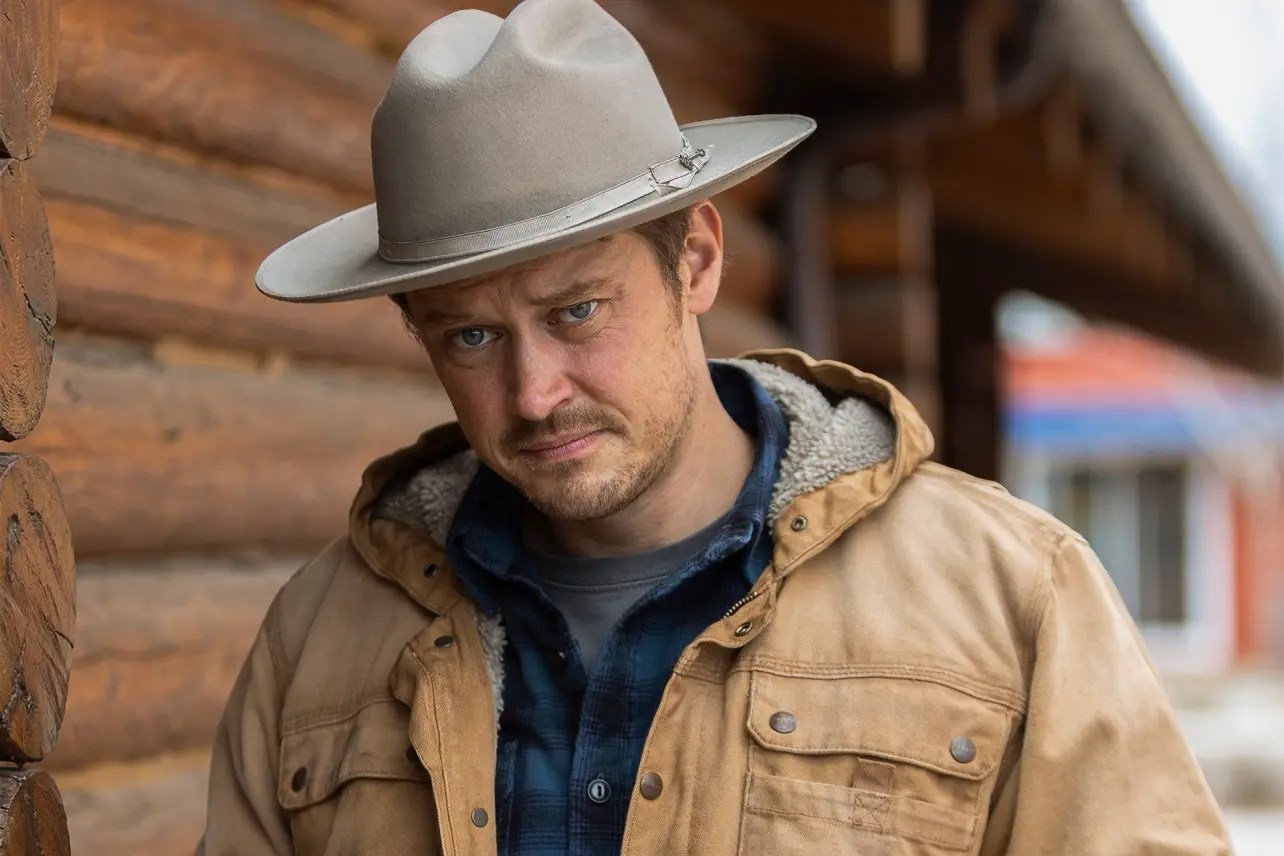
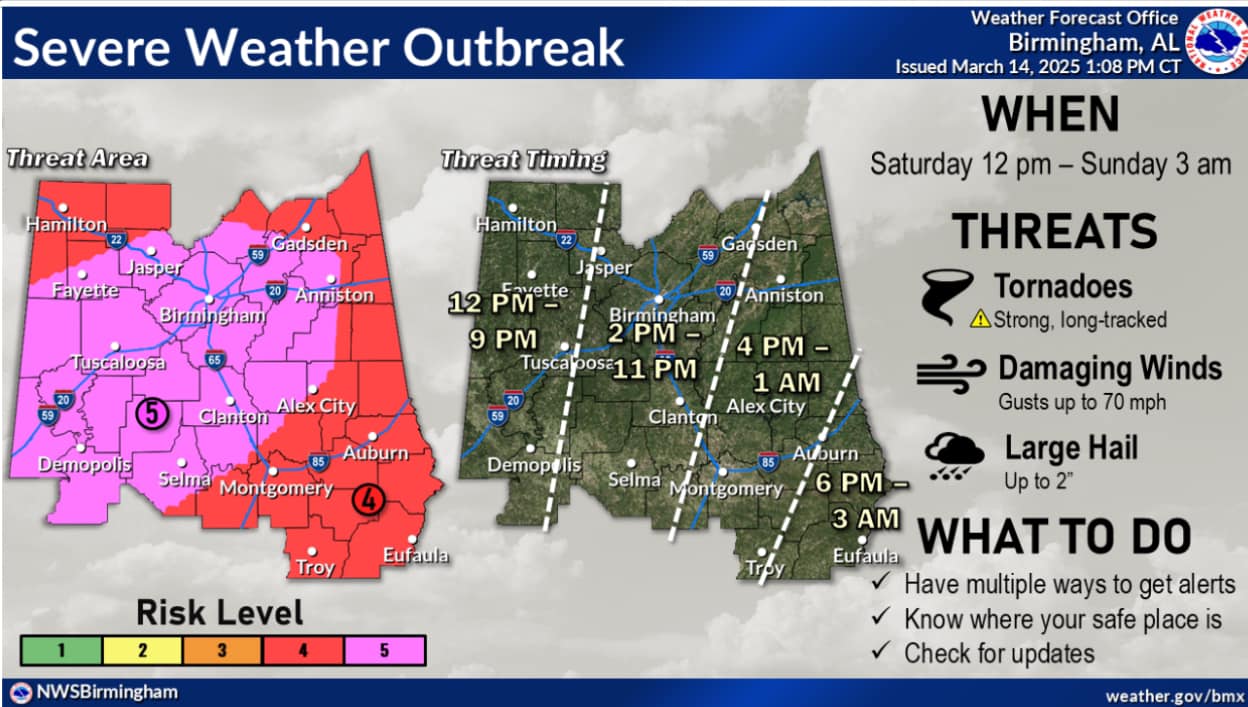
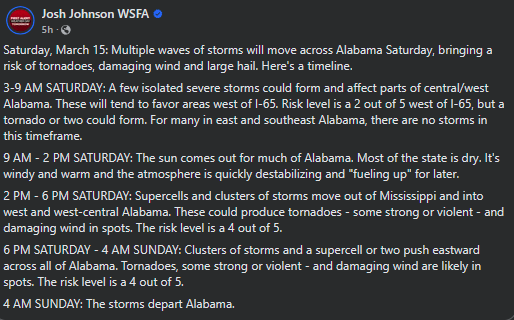
Alabama, including my home county, was hit hard by tornadoes last night, but the rough stuff went north of me. All of my family has checked in, but there were fatalities in the county and in Alabama. I haven’t seen any full writeups on the damage yet, just facebook chatter, but at least it’s over. I couldn’t exactly read last night, so I divided my time between listening to weather and watching Joe Pickett on Paramount Plus.
They’ve made some interesting choices with casting and storytelling, but I’m really enjoying it. +
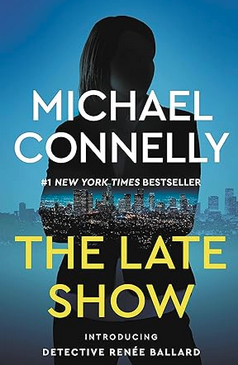
A few years ago Renee Ballard was an up-and-comer, rising through the ranks at the LAPD’s detective ranks: then a supervisor sexually assaulted her, she reported it, and soon found herself delegated to the ‘late show’. She and her new partner Jenkins’ job is to respond to crime scenes that happen overnight, collecting evidence and testimony while it’s fresh and then handing it cover to the appropriate departments. Ballard is not a punchclock cop, though: she’s not wearing the badge just to pay bills, she burns for justice and, when she’s really emotionally invested in a case, will work off her own time. At the start of The Late Show, Connelly takes us through a single shift that brings up multiple cases that snare Ballard’s heart, including a prostitute who was beaten nearly to death, and a mysterious shooting at a night club that ends with multiple fatalities, including a waitresses. One of these cases will, in the course of a few days, also claim the life of one of Ballard’s former partners, and despite the fact that he betrayed her (he didn’t support her claim against the supervisor, preferring instead to close ranks with the boys), Ballard wants to get to the bottom of it. She’s a creative and dedicated cop, sometimes going outside the rules to get at the truth: she uses her former partner’s password to access his case files so she can follow the leads and see why he was killed, for instance, and she pretends to be a civilian calling in a house burglary so she can then ‘overhear’ the local PD going to investigate and join them for support – giving her the ability to snoop around a house that’s not officially in her case notes. Working outside the lines has its perils, though, as we see when Ballard is attacked by a suspect and has no backup. Ultimately this was a good read: I like Ballard, especially her Hawaiian background and off-beat lifestyle, sleeping on the beach in a tent during the day when the wind and waves are right. It looks like there are some Connelly novels where she joins forces with Harry Bosch, so don’t be surprised to see more of Detective Ballard this year!
There is a strong chance that I’ll lose power tomorrow (or….worse….), so if things are quiet next week that may be why. I have a Monday review scheduled, as well as the TTT. As you can see below, with this system there’s not even anywhere to drive to to escape! The weathermen are giving off strong April 2011 vibes. I’m going to check out some extra CJ Box books in anticipation. (Speaking of: I started watching Joe Pickett on Paramount, which is based off the first book. I’m enjoying it so far, though TV-show is more of a hothead than book Joe.)
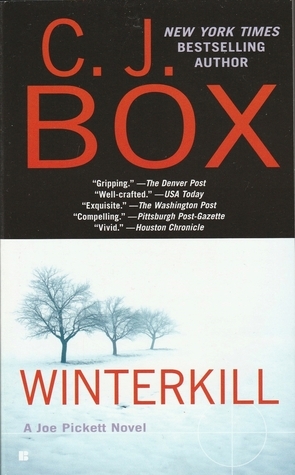
The peace of the wintry woods was shattered by rifle shots – a series of them. Game Warden Joe Pickett follows the sound and is stupefied to find the county’s leading forest service officer massacring elk, surrounded by seven massive corpses and an ample supply of tequila. The man is not in a right state of mind, but no sooner does Joe have him arrested with plastic ties than the fed has wriggled free and run into the forest, where Joe finds him dead – shot with arrows. As a savage snowstorm moves in, Joe struggles to get the body of the man to his truck, and barely gets to the safety of town before several feet of snow are deposited on Saddlestring and the surrounding country. The snowstorm makes it difficult to mount an investigation, and by the time things begin moving Joe realizes that this strange murder, coupled with the presence of a caravan of ‘sovereign citizens’ in the mountains, is going to grow into a nightmare, one spurred on by the presence of a unstable careerist in land management. Although Joe is a good man who hates abusive authority figures, he has an especially personal stake in the drama developing on ‘Battle Mountain: one of the sovereign citizens is the biological mother of his adopted child, April. WInterkill is a compelling thriller marked by natural and character drama, one that is especially fascinating because of the moral wringer it puts Joe through.
Winterkill makes a formerly subtle aspect of these books more obvious: the land itself is a force, almost a character, powerfully shaping the story itself and the characters enmeshed in the landscape. As with Wendell Berry’s Port William stories, the land is not a painted background, but a living presence that participates in the story. Several of the dramatic arcs in Winterkill owe entirely to geography, especially the mountain scenes where Joe’s options are tightly constricted by both the restricted access and the continuing snowstorm. Speaking of the mountain, I was very intrigued by some of the characters connected to the ‘sovereign citizens’, and impressed by Box’s depiction of them, which makes them human, if a bit paranoid. Joe’s ability to try teaching out to them despite his loathing of one of their members is admirable, and that makes his increasingly emotional battle all the more compelling towards the end, where circumstances and his desperation to defuse a potential Waco/Ruby Ridge situation see mild-mannered Joe replaced by someone altogether, someone he barely recognizes. Box’s ability to create a story with believable humans who have different values and flaws, then throw them off one another, is quite impressive and bids me to keep reading this series.
Quotes:
“They take a woman who hates people and put her in charge of a task force to go after rednecks who hate the government,” Nate said. “This is what I love about the Feds.”
“But if you don’t start telling me the truth, and I mean every bit of it, things are going to get real Western real fast.”