Ten Treklit Favorites

Today’s a TT freebie, so I’m doing… Star Trek novels! I’ve been inspired by the world of Star Trek since I was a kid, both for the sci-fi appeal and its promise of a better world.   The novels and their authors have had an outsized role in my appreciation of the series , which is why I’m more than a little concerned about the “new” stuff slowly but surely taking over the lit scene.  While the ‘real’ Trek universe has lived through the books despite the Abrams movies, now that there’s a revival in Trek shows, the novelists are writing for them  and David Mack (author of the phenomenal Destiny series)  intimated in a podcast that the prime verse’s lit days are numbered.
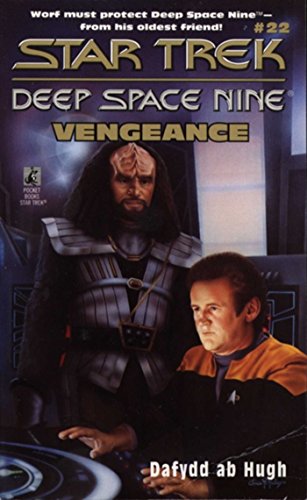
  1. Star Trek DS9 #22: Vengeance, Dafydd ab Hugh. The first Trek novel I ever read,  I have a special attachment to this story set during the Klingon-Federation crisis that STDS9 season four began in.  Truthfully, I don’t imagine the novel will have aged well;  the numbered novels were generally of mediocre quality, with recycled plots and meaningless aliens.  Still, I can’t forget  Bashir and O’Brien’s resistance to a sudden Klingon takeover of the station after the Defiant is manipulated into a wild goose chase, nor of Worf’s difficulty in fighting his own brother.
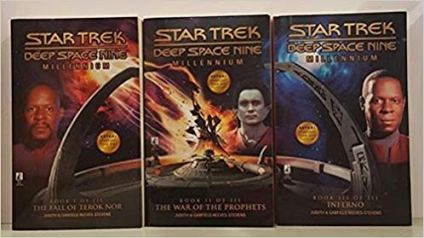
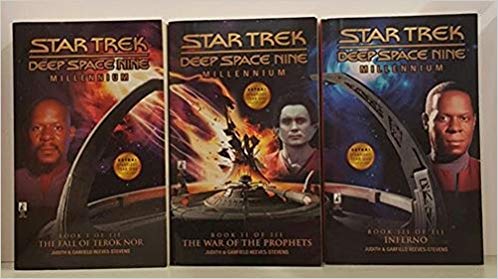
  2. Star Trek: Millennium.  Written by Judith and Garfield Reeves-Stevens, the Millennium trilogy were the best Trek books ever, as far as I was concerned, and it wasn’t until  the Destiny trilogy arrived that they had competition.  Beginning with a grisly discovery of a body beamed into the bulkheads of DS9 decades before,  Millennium’s mystery quickly deepens  and culminates with the station being destroyed, and a few survivors being thrown into a nightmare future that’s eagerly anticipating the induced obliteration of the cosmos.  The Reeves-Stevens had a superb handle on the shows’ character voices,  and the arc of plots produces a variety of interest.
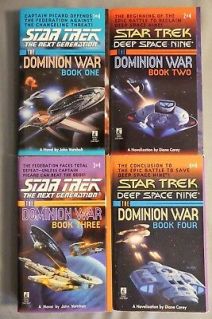
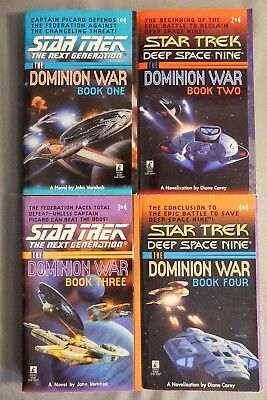
  3. ST: The Dominion War, various authors.     This two-duology series, one part original fiction and the other an expanded novelization of the shows,   was set in Trek’s hugest spectacle to date (the Dominion War was  the prime verse’s WW2, basically).  Again, while these novels probably wouldn’t age too well, they were among my first and favorites.   The DS9 novels simply expanded on what we saw in the show, but the TNG novels followed the Enterprise-E during the war,  including a prolonged spy arc wherein Picard and Data investigate claims that the Cardassians are building an artificial wormhole to bring in more troops from the Gamma Quadrant.   The Badlands ship graveyard scene is memorably spooky, although it helps to have read it as a kid.
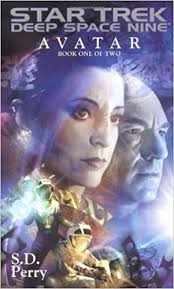
  4. Star Trek: Avatar.   As a dedicated Niner, I’m irrationally proud that  Star Trek Deep Space Nine created the Relaunch, which since 2004 has carried the Trek banner high and proud and created characters and stories far better than we often saw on the shows.  It all began with S.D. Perry’s Avatar books, which introduced us to a few new faces on the DS9 crew —   unprecedented — and then killed them.   The Avatar books grew, and now every Trek series has its own Relaunch series, and they all shared a continuity and it’s terrific.   Not everything was terrific – -the Mission Gamma books bored me, and I haaaaaaaaaaaaaaaaaaaaaaaaaaaaaaaaaaaaaaaaated the Andorian arc,  so much so that I’d watch the Andorians on ST ENT and wish the books were more like the show. Commander Shran was cool.  (Though to be fair, Jeffrey Combs  was just that good.)
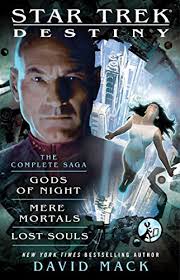
  5. Star Trek: Destiny.   It took me a few years to get to Destiny: I was a penniless college student, they were  praised to the heavens, and they promised  a cosmos-shattering ending.  But when I started Destiny,  I couldn’t stop. I literally drove an hour to a bookstore to pick up the next books in the series after I read the first one.   Destiny brought together alllllll the Relaunch characters into one big ol’ trilogy, one that concludes the Great Borg War series (my name, not the publishers).    Destiny is  still the king of modern Treklit.
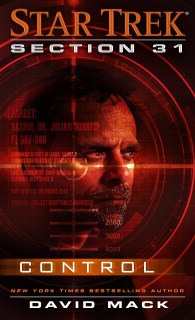
  6. Disavowed & Control, David Mack.    A decade after the Borg were resolved in full — their origins and destiny —   Mack was given the similarly formidable task of handling Section 31.  Control was the first cybersecurity Trek novel I ever read, and I enjoyed it more than any Trek book in years.
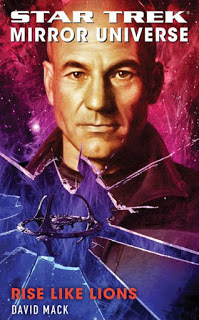
7. Rise Like Lions, David Mack.   Although several authors contributed to the  redemption of the ST MU, turning it into a serious story far removed from the bizarro world of DS9’s mirror universe  (sorry, DS9, you did many great things but not that),  Mack was the one who fulfilled it in the end, with the same style as Control and Destiny.

8. ST TNG Cold Mirror, Diane Duane. Speaking of the Mirror Universe, Duane did a TNG mirror story before DS9’s own offering. Duane  developed the Terran Empire as one that, like Alexander, had conquered all it could.  The TNG crew investigate their mirror counterpart’s sneaking investigation of their own universe, and realize:   the Federation is its next target.   Duane portrayed the MU — at least its humans — as innately more amoral. Picard is horrified at its Shakespeare, and dares not  open the Bible.  The ‘real’ ST MU is more of an alternate history,  with a point of departure some point in the 20th century — perhaps a Nazi  win in WW2.
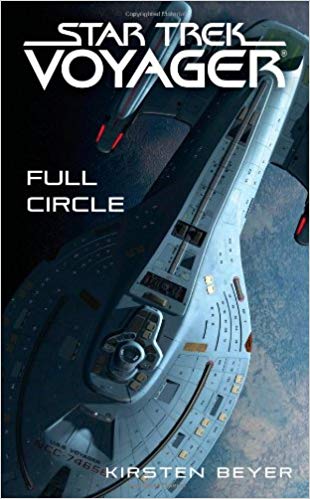
9. Full Circle and Unworthy, Kirsten Beyer.     The start of the Voyager relaunch (okay, there were two books before, but we all pretend they didn’t exist),    Beyer’s books would put meat on characters like Paris, Kim, and Chakotay,  and….bring Janeway back!   (….you didn’t know she died? Sorry. Borg war.)
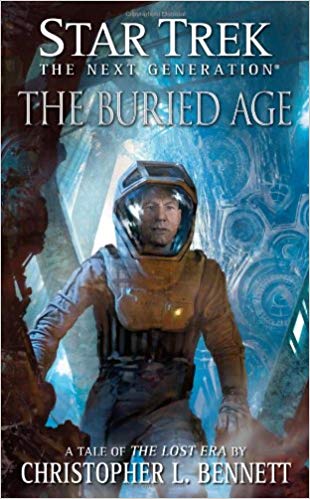
10. ST TNG: The Buried Age, Christopher L. Bennett.    The only Lost Years book I’ve read, this follows Picard during a hiatus from Starfleet, and features Troi and Data as young lieutenants.

Honorable mentions: 
The Stargazer books and  Starfleet :Year One, both by Michael Jan Friedman. I read and re-read these books and when we’re talking about personal favorites, they’d have to be here….but honestly,  Friedman could be a lazy author and I couldn’t justify  dropping any Mack, Beyer, or Bennett off the list when they’re undeniably better.  And now that I think about it, I feel guilty for not including any Greg Cox, my other favorite pre-Relaunch author, and one who’s actually penned some novels after the Relaunch era.    His KHAAAAAAAAAAAAANNNN! trilogy is definitely of interest.

Posted in General | Tagged | 15 Comments

More short rounds: hackers and silly vicars

Needing a quick break from all the classics,  I read The Hacker Crackdown, a bit of cybersecurity history.  Sterling first delivers the background of the telecommunications system in the United States, specifically the expansive growth of AT&T and its recent dismemberment at the hands of  the courts system.  A near-total  network outage during a national holiday, while  entirely a spontaenous glitch based on weaknesses in AT&T’s software,    was blamed on outside intruders ; the government’s own increasing interest  in suppressing pirate BBSes distributing pilfered, sensitive, or suspicious materials (everything from emergency telecom protocols to bombs), coupled with AT&T’s need for a villain,  combined into a general campaign against “cyberpunks”.     Hacker Crackdown is a fun look back at ‘the internet prior to the World Wide Web.

After play comes work, or rather something in the middle: The Vicar of Wakefield, originally scheduled for April,  was finally completed yesterday morning. I started on it last week but started slowing down as the silliness increased.  The March girls — Jo, Meg, Beth,  and Amy — introduced me to this book, which they thought was quite amusing.   Principally, it’s about the Job-like descent of a country vicar’s family into near-total ruin — and their rebound.   The vicar himself is a man of good intentions and principles, the latter of which are ignored when he gets distracted.    When the story opens, the vicar and his family are moving to a new position,   their fortune having been squandered by a poor investment.  Despite the vicar’s tendency to rattle off sermons and speeches on virtue, the family quickly ruins itself even more by trying to climb the social ladder, ignoring any sense of prudence: at one point,   someone’s been abducted, someone’s in jail, someone is lost on the continent, and the house is on fire.   There’s a lot of coincidences in the endgame, so much so that the Vicar comments on them, and in the end they muddle through to a happy ending — presumably a little wiser,  though human nature being what it is I doubt that wisdom will linger for very long.

Next up in the classics queue would be The Education of Henry Adams, though I also need to find time to tackle the first volume of Gibbon’s Decline and Fall of the Roman Empire if I’m to catch up fully before the year is out.  For the moment, I’m going to relax a bit with a couple of non-classics!

Posted in history, Reviews | Tagged , , , | 8 Comments

Perspective from Seven Brief Lessons on Physics

I recently finished Seven Brief Lessons on Physics, a slim little volume introducing readers to relativity (special and general), quantum mechanics, particle physics, heat, time, and our place in the universe.   As it’s less than a hundred pages I don’t know that I’ll give it full comments, but it is beautifully written, and offers powerful perspective (the kind Carl Sagan was good at delivering) along with some inkling into the basics of modern physics.    Below follow a few quotes:

“That is to say: space curves where there is matter. That is it. The equation fits into half a line, and there is nothing more. A vision — that space curves — became an equation. But within this equation there is a teeming universe.” 

“Physics opens windows through which we see far into the distance. What we see does not cease to astonish us. “

“Within the immense ocean of galaxies and stars we are in a remote corner; amid the infinite arabesques of forms that constitute reality, we are merely a flourish among innumerably many such flourishes. “

“Our moral values, our emotions, our loves are no less real for being part of nature, for being shared with the animal world, or for being determined by the evolution that our species has undergone over millions of years. Rather, they are more valuable as a result of this: they are real. They are the complex reality of which we are made.  Our reality is  tears and laughter, gratitude and altruism, loyalty and betrayal, the past that haunts us and serenity. Our reality is made up of our societies, of the emotion inspired by music, of the rich intertwined networks of the common knowledge  that we have constructed together.”

Posted in quotations, Reviews, science | Tagged , , | 5 Comments

Short rounds: Star Trek and Musketeers

It’s been open season on the classics this month: not only did I finish up June ( and take care of July, but I’ve recently advanced into August’s reading, defeating The Three Musketeers, and am about to mount an attack on The Vicar of Wakefield, to start making up for April.      Before moving forward, I wanted to wrap up with some comments.


First, on The Sun Also Rises: I read this shortly after A Farewell to Arms, or rather I finished it. I began reading it last year, and had lingered in it halfway through, completely apathetic about the novel’s characters or what happened to them.  I still didn’t care when I was finished.   They eat, they drink, they go to Spain and fish and watch bullfights, they go home.   It must have made some impact in its day to be remembered nearly a century hence, though.

Next up, not a classic, was Star Trek Rise of the Federation: Tower of Babel.    Admiral Johnathan Archer and his faithful friends, Captains T’Pol and  Reed, are working to secure Rigel’s entrance into the Federation despite the resistance of natives who find the idea of becoming part of an alien organization frightening, and the fact that Archer is being framed for attempted murder.  Despite that premise and the fact that Bennett’s novels are among my favorite Trek reads, I…didn’t care about the story here. Or the characters.


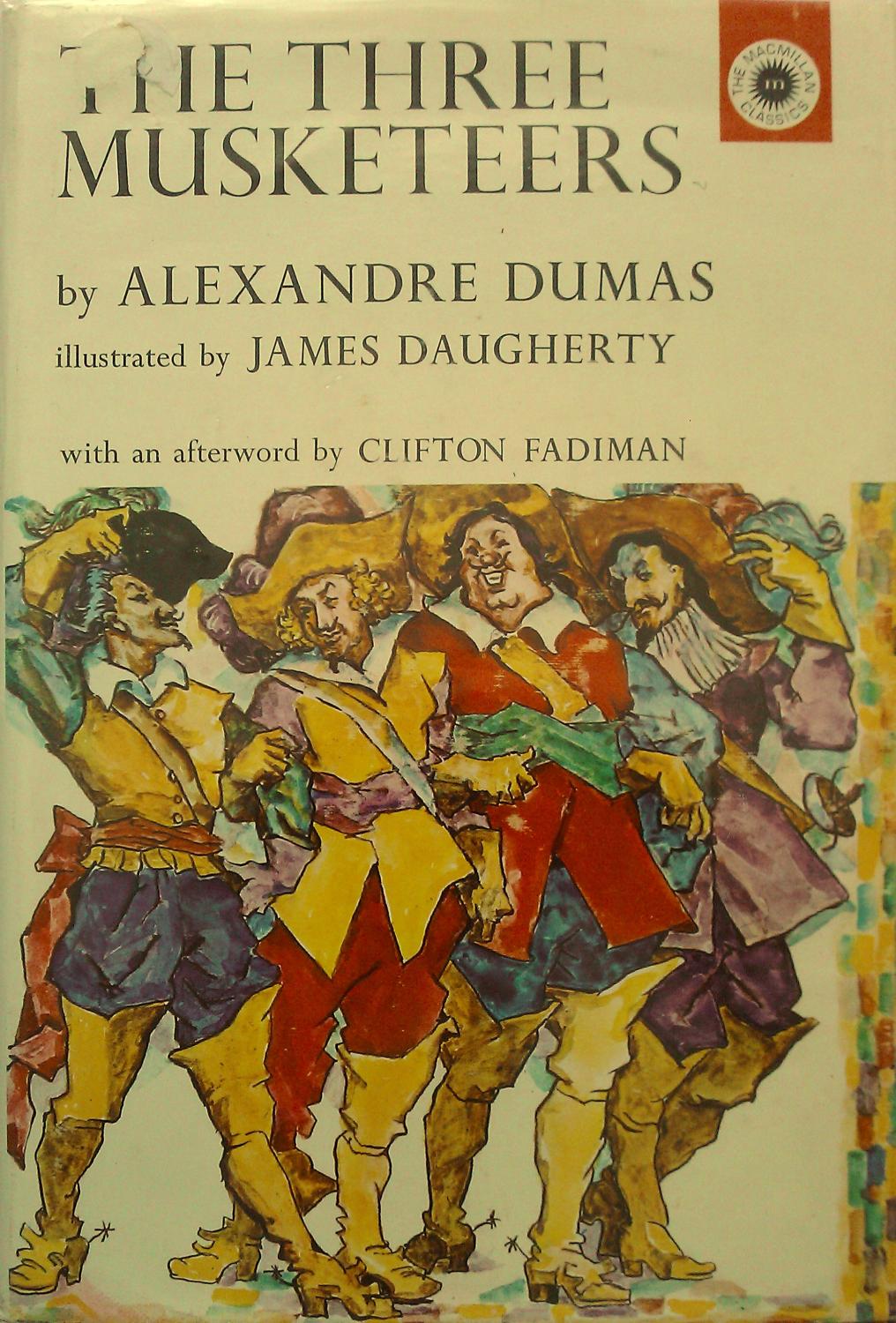
And lastly, The Three Musketeers,  which begins with the promising sight of a young man given three gifts and promptly losing them by getting into a fight with the first person he meets who has an unkind word about his horse — the horse he doesn’t even like. D’Artagnan’s desire is to join the Musketeers, but his youthful bravado gets him into fight after fight — including three duels with men he later learns are musketeers!  Although he cannot join the celebrated corps with a broken sword and a lost letter of recommendation, D’Artagnan’s  swordplay and loyalty earn him the friendship of the three Musketeers, and with them at his side he stumbles into a kidnapping with kingly importance: there’s a scheme to foment war between France and England afoot, aided and abetted by a murderously charming woman, Milady de Winter.    I enjoyed the novel well enough, but it’s…a strange adventure story, where the main character spends a good bit of the time half in love with his adversary and ends up getting promoted by the…..antagonist. Well…OK.

And that catches me up, I think. Now, on to the Vicar of WakefieldThe Education of Henry Adams, and….well, a few more, but not many at this point!


Posted in Reviews | Tagged , , | 8 Comments

Tranquility Base here….the Eagle has landed.


Prometheus, they say,  brought God’s fire down to man
And we’ve caught it, tamed it, trained it, since our history began
Now we’re going back to heaven, just to look Him in the eye
There’s a thunder across the land, and a fire in the sky

Gagarin was the first, back in 1961,
When like Icarus undaunted
He climbed to reach the sun
And he knew he might not make it,
For it’s never hard to die —
But he lifted off the pad, and rode a fire in the sky

Yet a higher call was calling, and we vowed we’d reach it soon
So we gave ourselves a decade to put fire on the moon
And Apollo told the world, we can  do it if we try —
There was One Small Step, and a fire in the sky!

I dreamed last night
Of a little boy’s first space flight
it turned into me watching a black and white TV
There was a fire in the sky
I”ll remember until I die
A fire in the sky
A fire in the sky!

Then two decades from Gagarin, twenty years to the day
Came a shuttle named Columbia to open up the way
They say she’s just a truck, but she’s truck that’s aimin’ high
See her big jets burnin’ ,  see her fire in the sky!

Yet the gods do not give lightly of the powers they have made
And with Challenger and seven, once again the price is paid
Though a nation watched her falling
Yet a world could only cry
As they passed from us to glory, riding fire in the sky

Now the rest is up to us,
And there’s a future to be won
We must turn our faces outward
We will do what must be done
For no cradle lasts forever,
Every bird must learn to flry
And we’re goin’ to the stars —
See our fire in the sky

Yes, we’re goin’ to the stars
See our fire in the sky

Posted in General | 4 Comments

Catch-22

Catch-22
© 1961 Joseph Heller
453 pages

“That crazy bastard might be the only sane one left on this base!”     Captain John Yossarian, said C.B.,  is convinced that everyone is out to kill him.  The Germans certainly are, at least when they aren’t being hired by the mess officer to cook for the men.  The American army certainly is —  not only do they keep telling him to bomb places where they know good and well there are Germans with guns, but  one officer delights in death because it means he gets to use more of his revolutionary new form letters.  And that crazy broad who keeps appearing out of nowhere, trying to stab him with a knife, a fork, or other kitchen implements certainly is.   Is there any wonder he just wants to go home?

But he can’t go home, because there’s a war on.   With a premise drawn from World War 2,  and a  spirit derived from Vietnam,  Catch-22 is a dark comedy about…well, take your pick.  War, bureaucracy, greed, the nature of man and the cosmos?  Okay, the last one is more of a a stretch.  Catch-22 defies easy summation because it doesn’t  progress as a linear story.  It moves between years and scenes in the blink of an eye, and this can be seem like so much chaos.  I’ve tried reading this novel three times since high school, two of those times in the last few years,  and it wasn’t until this fourth attempt that I stuck with it long enough for the chaos to start making sense.

I would liken Catch-22 to a carousel, one of the larger and complicated ones that has tracks within tracks. If  the reader stands too close,  it’s a confusing mess of color and movement; standing back, however,  brings the realization that all of the action is just circular.  At first,  seemingly major things being introduced and then disappearing without much comment bothered me, because I felt like I’d missed something and would read chapters looking for the rest.  After a while,   I realized that it’s circular:  every character and event of consequence is revisited multiple times,  and often  the reader doesn’t realize it. A scene named after one character will suddenly make what happens to another character make more sense .    Revisiting the carousel,  the reader will catch a glimpse of a story element, lose it, then see it again when trying to focus on something else.  Confusion turns to excitement with perspective.

That early confusion is worth soldiering through, however, because this truly is an absurd novel, filled with ludicrous characters who lampoon regulation-quoting bureaucrats,  careerists,   and even honest-minded mess sergeants who just want to make a buck.   There are sympathetic characters, too, like the poor Chaplain who is abused by everyone and suspects he’s going crazy. Although set in World War 2, Heller is more obviously inspired by Cold War militarization and paranoia, at one point having a general praise Hitler for his work in destroying Un-American activities. The loyalty oaths  and tribunals where the accused are guilty purely  on the basis of their accusal are reminiscent of McCarthy.  Heller’s writing can alternate between evocative narration that communicates the tedium, isolation, and horrors endured in combat, as well as absolute absurd dialogue at times.

Catch-22 has surprised me several times in reading it —  first for the bad, and eventually for the good.  I began it with fatalistic gloom, preparing to read it purely to finish it for the Classics Club challenge.    Perhaps that was just the right mood to read a novel about an airman trapped within the wheels of bureacrazy  (I’m leaving that typo in) and the war machine.  Although Yossarian is no hero, his story is unforgettable.


Posted in Reviews | Tagged , | 10 Comments

The Cancer Chronicles

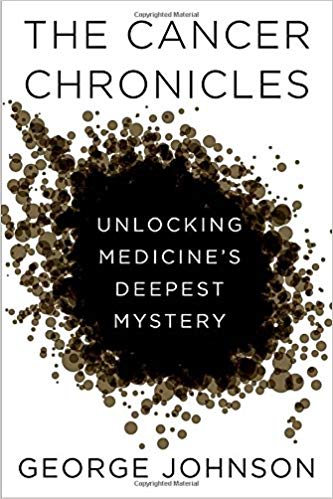
The Cancer Chronicles: Unlocking Medicine’s Deepest Mystery
© 2013 George Johnson
304 pages

As a kid,  Cancer was an ominous abstract monster, mentioned only in whispers,  that struck without warning and left no survivors.   You just hoped it didn’t happen to you.  I don’t know it’s the changing times or just the process of adulthood, but cancer is mentioned far more and more casually now, and I’ve some experience with it in my own family, so I wanted to learn a little more about it. The Cancer Chronicles  combines the author’s personal journey with cancer,  beginning when evidence of metastasis is discovered in his wife,  with a review of how humanity has grown in its understand of cancer over the centuries.  There is no one cancer demographic:  everyone, in every society, regardless of creed, caste, or skin color,  carries a bundle of risk factors for different cancers – and every action, every step taken, every food  eaten,  can simultaneously aid or diminish different cancer risks.  Johnson’s review reiterates that cancer is not one disease, but a multitude of diseases,    erupting from a variety of different failures – and sometimes utilizing the body’s defenses against it.   Perhaps we can take some marginal comfort in that cancer is universal,  affecting all kinds of animals through the ages. Humans are the most cancer-ridden creature on the planet, though, so  it may be a small help at best.   In the end, there’s not much we can do to load the dice in our factor, other than keeping moving and  at a healthy weight.  It seems a crapshoot.  

Posted in Reviews, science | Tagged , , | 5 Comments

Top Ten Authors on Auto-Buy

David Mack.   I recently drafted a list of ten of my favorite pieces of Trek lit, and David Mack’s name came up again and again.  He’s handled some of the biggest stories in the Trek Relaunch, including the origin and destiny of the Borg;  Section 31; the  fulfillment of the Mirror Universe; and authored or coauthored various miniseries.  His character drama is the best, period.  There’s a reason he’s a contributing writer for ST Discovery, and is helping with a Star Trek: Lower Decks type series.

Bernard Cornwell. Well…auto-read, anyway. Cornwell writes historical fiction, largely medieval and Napoleonic, and his dialogue is usually hilarious.  He has a flair for oratory that sometimes rises to the surface when a warlord is extolling the troops and telling them As luck would have it,  Cornwell is so popular at my library that we own most of his books, and being a librarian I can read them before they’ve seen the floor — or even been officially released! 
 

Christopher L Bennett.  Another favorite Treklit author, Bennett’s are the only Trek books I tag as science fiction – because he incorporates actual scientific mysteries and investigations into his books, not just technobabble.  Bennett is also good at political plots. My favorite part of his work, though, is that he provides annotations to his novels and stories that explain references,  etc.   


John Grisham.  I’m not a passionate Grisham fan at this point –   he’s been really hit and miss the last decade or so —  but I still read what he puts  out,  usually because  I receive them as gifts or can pick them up from the library.
 

Wil Wheaton (Narrator).   Most of my Audible library is narrated by Wheaton, the easy favorite being Ready Player One. I didn’t realize how good   narration could be until I heard an experienced actor do it.


Anthony Esolen.  There are vanishingly few authors I’ll preorder for, but Esolen is at the top of the list. His work is harder to summarize, but in general I’d say he writes on culture, society, and Christian tradition.  His books include a translation of the Divine Comedy;   a satirical parenting guide called Ten Ways to Destroy the Imagination Of Your Child;  an examination of liturgical music;   and several books on the chaos of modern western culture, in Out of the Ashes and Defending Boyhood.


Joseph Pearce  also specializes in religion and culture, although his beginnings were in biographies of luminaries like G.K. Chesterton and Aleksandr Solzhenitsyn.  He has expanded this to  write religious reflections on Shakespeare, Narnia, and Middle Earth;  produced a collection of essential Christian poetry;  and gotten philosophical with a book exploring the connection between truth, beauty, and goodness. 
 

Mary Roach, authored of books like Stiff, Bonk, and Gulp.  Roach writes pop science books that are a little more on the pop side; she likes to focus on topics that are a little taboo (sex, defecation, and death, say) and make the most of them with humor.  My enjoyment of her works has faded over the years, though, as some of her humor is gratuitous.  


Isaac Asimov.   Asimov used to be the undisputed king of my stacks,  because in 2007 – 2009 I worked on reading every thing I could find by him.   While he isn’t in the position of doing new releases (being dead has reduced his output a little bit), I still comb used bookstore shelves for his other works.  


S.D. Perry.   Stephanie Diane Perry is basically the mother of the Trek relaunch. Sure,  Marco Palmieri and other editors had a lot to do with it….but Perry wrote the DS9 Avatar books, and they MADE the Relaunch.   She also created Unity, the finale for that initial set of DS9 books, and since she lives in Portland, I wonder if I can’t get my original hardcopy signed when I visit in April 2020. Hmm…..ooh! She published a book in 2010 I missed!  Time to acquire it.  

Posted in General | 6 Comments

The Ballad of Tom Joad

Tom Joad got out of the old McAlester Pen;
There he got his parole.
After four long years on a man killing charge,
Tom Joad come a-walkin’ down the road, poor boy,
Tom Joad come a-walkin’ down the road.

Tom Joad, he met a truck driving man;
There he caught him a ride.
He said, “I just got loose from McAlester Pen
On a charge called homicide,
A charge called homicide.”

That truck rolled away in a cloud of dust;
Tommy turned his face toward home.
He met Preacher Casey, and they had a little drink,
But they found that his family they was gone,
He found that his family they was gone.

He found his mother’s old-fashion shoe,
Found his daddy’s hat.
And he found little Muley and Muley said,
“They’ve been tractored out by the cats,
They’ve been tractored out by the cats.”

Tom Joad walked down to the neighbor’s farm,
Found his family.
They took Preacher Casey and loaded in a car,
And his mother said, “We’ve got to get away.”
His mother said, “We’ve got to get away.”

Now, the twelve of the Joads made a mighty heavy load;
But Grandpa Joad did cry.
He picked up a handful of land in his hand,
Said: “I’m stayin’ with the farm till I die.
Yes, I’m stayin’ with the farm till I die.”

They fed him short ribs and coffee and soothing syrup;
And Grandpa Joad did die.
They buried Grandpa Joad by the side of the road,
Grandma on the California side,
They buried Grandma on the California side.

They stood on a mountain and they looked to the west,
And it looked like the promised land.
That bright green valley with a river running through,
There was work for every single hand, they thought,
There was work for every single hand.

The Joads rolled away to the jungle camp,
There they cooked a stew.
And the hungry little kids of the jungle camp
Said: “We’d like to have some, too.”

Now a deputy sheriff fired loose at a man,
Shot a woman in the back.
Before he could take his aim again,
Preacher Casey dropped him in his track, poor boy,
Preacher Casey dropped him in his track.

They handcuffed Casey and they took him in jail;
And then he got away.
And he met Tom Joad on the old river bridge,
And these few words he did say, poor boy,
These few words he did say.

“I preached for the Lord a mighty long time,
Preached about the rich and the poor.
Us workin’ folkses, all get together,
‘Cause we ain’t got a chance anymore.
We ain’t got a chance anymore.”

Now, the deputies come, and Tom and Casey run
To the bridge where the water run down.
But the vigilante thugs hit Casey with a club,
They laid Preacher Casey on the ground, poor Casey,
They laid Preacher Casey on the ground.

Tom Joad, he grabbed that deputy’s club,
Hit him over the head.
Tom Joad took flight in the dark rainy night,
And a deputy and a preacher lying dead, two men,
A deputy and a preacher lying dead.

Tom run back where his mother was asleep;
He woke her up out of bed.
An’ he kissed goodbye to the mother that he loved,
Said what Preacher Casey said, Tom Joad,
He said what Preacher Casey said.

“Ever’body might be just one big soul,
Well it looks that a-way to me.
Everywhere that you look, in the day or night,
That’s where I’m a-gonna be, Ma,
That’s where I’m a-gonna be.

Wherever little children are hungry and cry,
Wherever people ain’t free.
Wherever men are fightin’ for their rights,
That’s where I’m a-gonna be, Ma.
That’s where I’m a-gonna be.”

Posted in General | Tagged , | 3 Comments

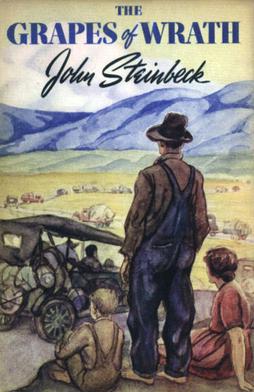
The Grapes of Wrath

The Grapes of Wrath
©
1939 John Steinbeck
464 pages

                                 “I’m just tryin’ to get along without shovin’ nobody around.”

When I drew up my list of Classics Clubs entries,  I made sure to include The Grapes of Wrath because I wanted an excuse to read it again.  I first encountered it in 10th grade English,  and the story never left my mind – aided, of course, by watching the movie and memorizing Woody Guthrie’s “Ballad of Tom Joad”.     Steinbeck’s story of a family  and nation in economic distress, moving desperately to find a new future for themselves and meeting more adversity with every step,  immediately  drew me  in.    While I tend to read most classics dutifully, like a student considering the classroom textbook, The Grapes of Wrath  so captivated my mind that I itched to keep reading it, even when work or sleep interrupted 

The story begins in Kansas, amid the Great Depression and the Dust Bowl.  Young Tom Joad just been released from prison, where he served for four years after killing a man in self defense.  Anxious to see his family again, he finds instead an empty home. The neighbors, too, are gone – -their places deserted. A straggler informs Joad that everyone’s farms have  been failing for years, and the banks are introducing tractor-farming and driving debtors off their leased property.  Joad is led to his family through the straggler and a preacher, and he finds that they’re preparing to strike for California  — where, they’re told, there are jobs for every willing hand.   

As you might imagine, The Grapes of Wrath does not end with the Joad family finding a land of milk and honey beyond the Rockies. They find hardship and cruelty and systematic abuse, as do hundreds and thousands others who are on the movie. Route 66 teams with desperation and hope, as impoverished  farming families look for something better and are joined by those retreating from the Promised Land, their bodies heavy with dejection.

Throughout the book, Steinbeck develops  a theme of solidarity vs selfishness.  The Joads and their friends, as poor as they are, never refuse to share what they have. When they encounter another family and strike up a rapport, they advance the idea that the two families should combine forces, splitting their loads between their two vehicles and doubling their resources. In contrast, other characters are ‘mean’ in the cheap, suspicious sense —  confronted with wave after wave of desperate migrants, some without the scruples of the Joads, they begin with suspicion and constantly repeat the refrain:  I can’t worry about you, I’ve got myself and my own to look after.  Even when the Joads find something of a save haven – -a self-organized camp with a committee-based government – it’s  a target by those who fear the migrants. Ultimately,  that suspicion being institutionalized in the work camps puts the Joads into serious straits.  There’s considerable frustration here, as people are being ruined not by any one person but by mysterious factors far away — the man destroying their home, the man reducing the wages, and the man sticking it to them at the company store with raised prices all eschew responsibility.

The Grapes of Wrath remains an incredible, powerful, novel, and I appreciate it ever so much more as an adult than in my original high school read. From Grandpa’s heartbreak over leaving his family farm, to  a son’s rebellion of the government to do what’s right by his father – the sheer weight of abuse endured by the characters, and the love and hope that young Tom lives for in the end —  it’s easily one of the most intense novels I’ve ever read.    Although it’s a novel made by the Great Depression — the poverty, anger, and fear of that period apparent on every page —   there’s no doubting its relevance today. One only has to think of other migrant crises, like that around the southern border, to find application in the call to treat people like persons with dignity, not as refuse to be cleared out.    In its day Grapes of Wrath was accused of advocating some kind of workers ‘revolution, although given the history of the Soviet Union and Steinbeck’s repeatedly voiced disgusted for coercion — here, and in East of Eden for instance  — I imagine Steinbeck would not have put Lenin and Marx into the same company as Jefferson and Paine had he been aware of the nature of the soviet experience. Banks kicking people off their land had nothing on the Soviets’ forced collectivization, and even the worst robber baron was a better man than the mustachioed offal who presided over Russia in the 1930s.


Posted in Reviews | Tagged , , | 17 Comments