Er Ist Wieder Da

Er Ist Wieder Da  |  Look Who’s Back!
© 2011 Timur Vermes
401 pages

widerda

“Herr Hitler … I’m calling to ask whether you’d like to write a book?”
“I already have,” I said. “Two, in fact.”

Hitler’s back, and boy is he popular on YouTube. Look Who’s Back!, as translated into English,  opens with an extraordinary premise: Adolf Hitler,  who for the west is the Face of Evil,  has found himself….unexpectedly alive. One moment he was in the Fuhrerbunker,   conducting the last-ditch defense of Berlin against an even more murderous dictator than himself, and the next…he was lying in the grass in the middle of Berlin,  nearly seventy years later.  Mistaken for a street performer using a controversial appearance to speak out against various social issues, and snatched up by a media company, Vermes-Hitler roars again to national prominence…this time, through social media.   So begins a dark comedy with a serious point.

I encountered this story through its superior movie dramatization, and found it amusing and provocative. Vermes-Hitler is an outsider, trying to understand the world around him, with varying results. Everyone believes he’s a comedian, and that his constant questions about the world around him, or his pointed opinions about them, are part of his act. He’s received with a mix of discomfort and delight, sometimes simultaneously. As one flirty barfly comments, “You may be awful, but at least you’re not boring.”  Traveling throughout the country and speaking with both the poor and influential, he builds an enormous following through his sharp and forceful commentary on everything from Turkish immigrants to the dangers of vehicular cellphone use.   Between a practiced stage presence and personal charisma, Vermes-Hitler overwhelms even those who find him patently offensive. The people are his piano, he says; and he is their Mozart.

Having a version of Hitler in my head while reading this was a disconcerting experience,  but Vermes’ frequent use of Hitler as a comic character eases that quite a bit. He’s not sympathetic, of course; even if  the reader finds unexpected common ground with his comments on the impotence of Germany’s present politicians, or the need for this economic reform, or for more conservation, etc,   Vermes-Hitler frequently reminds the reader of his nature by making mental notes to have this-or-that person thrown into the prisons once he’s rebuilt the movement and reclaimed his role as leader of the “Volk”.   Shock and laughs have an odd dance in this book.   In addition to Hitler’s use of Cockney rhyming slang, there are puns and jokes for those who know German, or German history: a frustrated secretary suggests her new boss get a cellphone; they’re “handy“, she says.  Hitler asks to see a mirror and is handed Der Spiegel, and refers off-hand to ‘my struggle in Munich‘.    The history in-jokes go beyond puns, as when Hitler finds the thought of his old PPK pistol to give him a headache.

What is the point of Er Ist Wieder Da?     I assume it gives voice to frustrations in Germany over various domestic issues (Germany’s milkcow role in the EU,  immigration,  environmental concerns, etc),   but what about non-Germans?   In reading this one can certainly appreciate why a creature like Vermes-Hitler would have made himself popular;  he is forceful and charming at the same time, speaking   his mind with quick clarity and never prevaricating.   The movie certainly has a powerful message for all viewers , but I’ll save that for the Reads to Reels followup.  At most we can say  it offers an imagined glimpse into why Germans found Hitler compelling, and reminds us that many of the issues and frustrations are still alive today, and ripe for an opportunist to build on.  The book is prescient, given the surge in populist parties in Europe following the migrant crisis, and  the appearance in the US of a forceful politician who achieved fame through provocative remarks and populist appeal.

Although Er Ist Wieder Da‘s story is  weaker than anticipated, if you’ve seen the movie which utterly eclipses it,   experiencing Vermes-Hitler’s internal narrative adds to the cinematic experience.  The book is entertaining and laudably daring, especially in an age in which so little can said without sending the bobble-heads on Twitter into an apoplectic rage.  In reading, though, I can only compare it against the movie which so succeeded it.

Some highlights:

To put it another way, conditions were absolutely perfect for me. So perfect that I resolved at once to examine the international situation in greater detail. Unfortunately I was detained from my research by an urgent communication. Someone with whom I was unacquainted had turned to me with a military problem, and as I was currently without a state to govern I decided to lend my comrade my support. Thus I spent the following three and a half hours engaged in a naval exercise by the name of “Minesweeper”.

I moved forward and readied myself to speak, but then merely crossed my arms – at a stroke the noise level dropped further by one hundred times, one thousand times even. Out of the corner of my eye I could see Gagmez the dilettante starting to sweat as he watched apparently nothing happening. I realised straight away that this man feared silence, and knew nothing of its power. His eyebrows contorted into a grimace, as if I had forgotten my script. An assistant tried to give me a sign, tapping furiously on her wristwatch. I prolonged the silence even further by slowly raising my head. The tension in the room was palpable, as was Gagmez’s anxiety. I enjoyed it. I let the air flow into my lungs, straightened up and broke the silence with a barely audible sound. When everyone is listening for cannon fire, a falling pin can suffice.

And much as I appreciate the careful handling of Volk property, I cannot recall large numbers of buildings having been damaged during my time in government, despite the generous use of candles. But I do concede that, from 1943 onwards, the statistics become rather less meaningful given the increasing absence of buildings.


Posted in Reviews | Tagged , , | 1 Comment

Aerial Geology

Aerial Geology: A High Altitude Tour of North America’s Spectacular Volcanoes, Canyons, Glaciers, Lakes, Craters, and Peaks
©
2017 Mary Caperton Morton
308 pages


airgeo

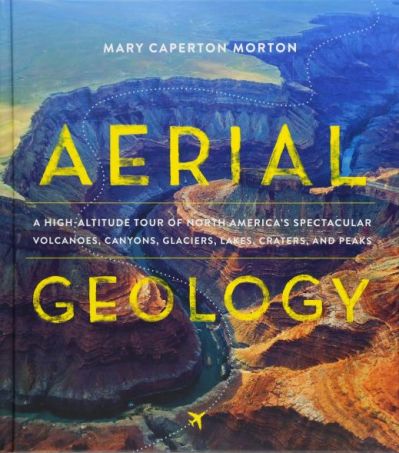
It was love at first sight, me and this book. There  I was, cruising BooksAMillion with coffee in hand, looking for a cute title to take home with me, and from across the way —  Aerial Geology, perched on the shelf.   It’s a guide to one hundred of North America’s most interesting geological spectacles.  In addition to the expected stunners (the Grand Canyon, White Sands, Niagara Falls),  other features that people may not expect, like the Mississippi delta and the Oregon coast,  also appear.    The book’s large size allows for generous spreads, and the visual information varies:  shots of the feature from multiple perspectives, yes, but there are also generated graphics to illustrate the processes at work.   Each feature’s formation is explained — or speculated on, in the case of those where there’s still debate   — and the author also includes suggestions for the best way to see them from the air. Most can be viewed from commercial liners, but a few in Alaska and the southwest are so remote that a plane would need to be chartered. Some locales, like Shiprock are strictly off-limits for in-person visitation, or highly restricted, like “The Wave” in northern Arizona. Although the writeups aren’t extensive (1-3 pages, depending), they’re most informative.   This book is definitely a joy to view and read, and one to return to:  despite my current efforts to greatly reduce my physical collection, this one is staying!


Posted in Reviews, science | Tagged , , , | 5 Comments

Top Ten Books I Read and Read Again

Today Top Ten Tuesday is celebrating its tenth birthday. I’ve been participating off and on since a month or so after its inception, and I’ve enjoyed it over the years. Today its host is asking readers to revisit or expand a favored list from the past.  I decided to share books I revisit over and over!

  1. The Black Widowers series, Isaac Asimov.   I’ve mentioned this series numerous times over the years. Imagine being able to join six professional men at the table of a fine restaurant every month,  meet a new guest with an odd story, and then sort through the mystery they present through reason and a good general-knowledge background.  I especially love reading the Widowers stories when I’m forced to eat alone.
    kunstler
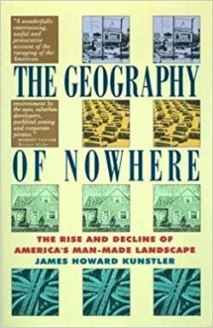
  2. The Geography of Nowhere, Jim Kunstler.   This curiously titled book tackles both culture and land-use policies, then rips off their helmets and drop-kicks them.  It manages to amuse and enrage me simultaneously while explaining a great deal of my own unease with the American landscape.
  3. Foundationor at least, the few few stories in the original Foundation book, the ones that follow Seldon’s persecution by the Empire,  the creation of Foundation at Terminus,  and the early triumphs of Salvor Hardin and the other Mayors over the empire and their neighbors.
  4. Jayber Crow, Wendell Berry.  Jayber Crow is my favorite novel, period,  and it’s one I read and listen to via audiobook form every year. After I read the book  I was lucky enough to spot its audio version on sale for $0.99, and quickly took advantage of it.  (It’s actually on sale for $8 right now from the same source.)
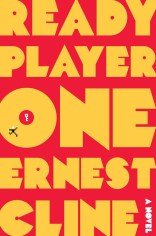
  5. Ready Player One, Ernest Kline.  RPO is unusual in that within three months, I listened to its Audible version (read by Wil Wheaton – incredible), read the real book, and watched the movie based on it.    RPO fits me like a glove.
  6. The Rainmaker, & The Last Juror, John Grisham.  The Rainmaker probably holds the record for “Book I’ve read through most times”.  I’ve completely destroyed my original copy of it, half-destroyed another copy, and now have a hardback that’s a bit more worthy of the constant abuse.  To me, it’s the perfect legal novel, and The Last Juror stands apart — a unique chronicle of life in a small southern town from the sixties to the seventies,  with a legal case and its consequences tying it together.
  7. Harry Potter and the Philosopher’s Stone  /Prisoner of AzkabanI read them, I watch them, I listen to their audiobooks.  They’re less books and more habits!
  8. Stargazer: Gauntlet.   Michael Jan Friedman was my earliest favorite Trek writer (until being supplanted by Christopher L. Bennett and David Mack, Destroyer of Worlds) , and the first two Stargazer books were much of the reason why.  The first one, especially:  the young captain is tasked with hunting a pirate, and he and his crew have to come up with all kinds of creative ways to track the pirate and evade his traps in a nebula. The ending is a big twist, too.  My battered copies of these books bear witness to how much I loved them in high school and beyond.
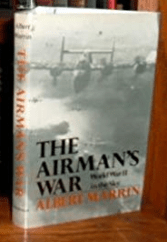
  9. The Airman’s War, Albert Marrin.   This book and Marrin’s other WW2 titles (Overlord and Victory in the Pacific, I think) blur together for me,  but The Airman’s War is the volume I remember and dote on the most. It gave me an obsession for World War 2;  an irrational fondness for P-51 Mustangs and B-17 Bombers, not to mention a sober appreciation for how many lives were lost flying daylight raids over Festung Europa.   Both high school and college saw me writing papers on the air wars of WW1 and WW2,  and that passion owed squarely to Marrin.
  10. The Many Loves of Dobie Gillis, Max Shulman. Before I met P.G. Wodehouse, I knew Max Shulman. His writing was dirtier, his language not nearly as fun  — but the absurdist humor is similar in both.    I’ve been reading and re-reading this collection of college stories since 2003.


Posted in General | 9 Comments

Seven of Nine

Star Trek Voyager: Seven of Nine
© 1998 Christie Golden
233 pages

resistanceisfutile

Sing a song of sixpence,
A pocket full of rye
Four and twenty blackbirds,
Baked into a pie

It began with a bird. A single black bird — a raven? A crow?  — perched in an alien marketplace, its eyes boring into Seven’s own.  Then the memories, the tide of sensations from a being who was not heard, overwhelming her. It was only the beginning for poor Seven, who found herself losing her mind even as her skills were desperately needed aboard Voyager.  Making its way through a vast empire fond of red tape, Voyager has become the target of a vicious insectoid species, intent on destroying it for reasons unknown. At risk are not only Voyager and her crew, but also a meager band of refugees from a planet which has been destroyed by war and plague.  They’re such nice people, so mild and pleasant.

Seven of Nine, so succinctly titled,   can’t be dismissed like so many of the numbered novels.  Although it carries some of the usual baggage — one-off aliens who we’ll never see again,  and language so vanilla it makes B’Elenna Torres say things like “hurts like the dickens” —    there’s more here than meets the eye.  Golden’s writing chops were enough to let her write the first two novels in the Voyager Relaunch, and there are little hints here as to why. Beyond the awkward language, which may have been imposed by Pocketbooks,  characterization is solid;  Seven relates to people in a unique way,  and Golden has a good grasp on that. There are dashes of humor, even though most of the story is full of bewilderment and fear as Voyager fights for its life and Seven struggles for her mind.   Golden not only introduces a premise that will later be explored in a full episode of Voyager (Seven being exposed to  and overcome bythe memories of those she’s assimilated — see “Infinite Regress“), but sheds a little light into one of the Borg’s more unique abilities.

Although there were warts and weaknesses, Seven of Nine still recommends itself to those who find its titular character as compelling as I do.

Some Kindle highlights:


“This is not a place for—for popular songs,” she said in a disapproving tone. The computer cheerfully belted out a song in which all the little birds went tweet, tweet, tweet. Seven found it annoying in a manner she could not articulate.

“Yes, it is I.” Peculiar word, that. One letter in the English alphabet, and yet it meant so much—more than her mind had even been truly able to grasp, yet. I. Me. Myself. The question of identity, of individuality, of a singular, unique entity dreadfully alone in the universe.

“Captain,” said the Doctor in a voice she couldn’t interpret, “I would like to introduce you to Annika Hansen.”

Disaster had not happened, and she, Seven of Nine, was in control. It felt … good.

“A Warm,” it said, its voice translated as harsh and mechanical. “A Borg warm. Better even. We will dismember and devour you, Warm, when our commander gives us the word.” “You are incorrect,” said Seven calmly. She stepped forward, lifting the phaser. She knew exactly where to place it, between the compound eyes, and fired before the Tuktak even knew what had hit it.

Posted in Reviews | Tagged , | 4 Comments

Scams, beer, and the Constitution

This past week I’ve read a few books which haven’t gotten full reviews, but I wanted to mention them anyway:.

scam

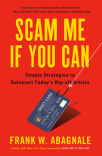
Scam Me if You Can, Frank Abanagle Jr. If that name sounds familiar to you, Abnagle’s youthful feats in fraud and bamboozling earned him a brief prison sentence, a movie based on his life called Catch Me if You Can, and a new vocation as a security consultant.  In that last light he writes this guide in conjunction with the AARP. While it’s targeted toward seniors who have to worry about investment scams and the like, there’s also a lot of general advice on protecting your digital information online, and not being roped into rackets run by scammers pretending to be IRS agents.

booze

Next up, The United States of Beer. It’s…an entertaining if light survey of beer’s history in America, beginning with the Anglo-Saxons bringing it with them from the continent. Beer’s role has fluctuated enormously with politics, long before prohibition:     it was touted as an American drink against British-imported rum and other spirits, at least until being undermined by an even MORE American drink:  corn whiskey. I enjoyed it well enough, but it wasn’t altogether compelling.  (It probably didn’t help that I’m not a beer enthusiast, preferring more ardent spirits.)

fpimdersgiode

Last was Brion McClanahan’s Founders Guide to the US Constitution, a review of the Constitutions meaning as ratified. McClanahan examines the arguments within the convention, and those made in the public forum as the Constitution was being debated, to determine what constitution people thought they were getting. I was going to do a full review but writing about the excesses of the US government does things to my blood pressure. Long story short:  strong Congress, much smaller president, and supreme court; much larger role for the States as States, etc. As McClanahan concludes, if today we lived under the Constitution as ratified, we’d have little reason to fear the government.    Instead — –

*deep breath*

Well, that’s it for the quickies.    Later this week…the Navajo in WW2,   geology by airplane, annnd maybe international crime.


Posted in history, Reviews | Tagged , , , , | 1 Comment

To Wake the Giant

To Wake the Giant: A Novel of Pearl Harbor
© 2020 Jeff Shaara
528 pages

boomboomboom

In To Wake the Giant,  Jeff Shaara returns to World War 2, this time with a curveball.  Unlike most of his other novels,  Wake the Giant follows three individuals in peacetime,  covering the year before the attack at Pearl Harbor.  War does arrive, though, as the story culminates in that quiet Sunday morning  in which the US Pacific Fleet was savagely ambushed. Shara uses three viewpoint characters to explore life as a sailor aboard the USS Arizona (Hospital Apprentice Biggs),  follow the Japanese planning and execution of the attack (Yamamoto), and  to lurk in the Oval Office as FDR and the Secretary of  State Cordell Hull  weigh their priorities and wonder what, if anything, the Japanese are up to. Once the attack on Pearl begins in earnest, a few more minor viewpoint characters enter the picture, though there’s not  as much time spent on the day itself as I’d expected.   Also unexpected, our main viewpoint character Biggs didn’t perish, although he certainly gave it the old college try, what with being burned, lacerated, thrown off the ship, and subjected to infection and maggots.  The same cannot be said of other characters throughout the book, as you might expect with a lot of the action set on the Arizona.   All three viewpoints are hugely sympathetic, even Yamamoto who is given the sorry task of plotting a strike against the United States —  the first blow in a war he is almost certain will lead to Japan’s ruin.  I enjoyed this largely to experience life aboard the Arizona; I’ve been aboard few WW2 museum ships (Alabama, Texas, and Kidd), and find the WW2 navy particularly compelling to read about.   It was good to read Shaara again.


Posted in historical fiction, Reviews | Tagged , , | 3 Comments

American Terrorist

American Terrorist: Timothy McVeigh and the Oklahoma City Bombing
©  2001, 2015 Lou Michel & Dan Herberck
426 pages

mcveigh


During a recreation period one day, a prisoner in an adjoining cage poured his heart out to McVeigh, telling him how his life had gone wrong. When he finished, the inmate looked at McVeigh and asked, “Tim, where did you go wrong?” “I didn’t go wrong,” McVeigh said.

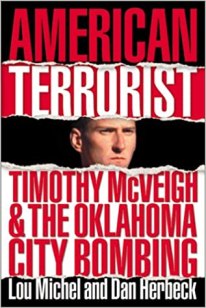
The Oklahoma City bombing is one of the first major news events I can remember hearing about as a kid; although I couldn’t appreciate its brutality then, I knew from the look of horror on adults’ faces as they took in the scene that it was serious.The bomber, I was told, was crazy. This was an act of violence perpetuated by a crazy person.  After reading American Terrorist, though,  I’m more disturbed about the bombing than ever — because its perpetrator was so frighteningly normal, and went to his death believing he’d done the right thing.  American Terrorist is the biography of Timothy McVeigh, an-All American boy broken by war and twisted by hate to become the monster he loathed and thought he was fighting.

Once expects, when reading the biography of someone like McVeigh, to find him pulling the limbs off lizards and throwing cats into ponds for laughs as a kid.   That McVeigh isn’t here. We find instead a young man who loved guns but recoiled from hurting others, who learned to hate bullies and yearn to overcome them, like a superhero. In his early youth he worked as a security guard, lauded for his honesty and astonishingly mature professionalism. He looked at Star Trek the Next Generation and saw it in an ideal future: he admired Picard’s moral convictions, Data’s pure reason, and Geordi’s hypercompetence as an engineer. His own interests were diverse, from firearms to computers.

But McVeigh also had his fears, and as they grew older they would dominate him. McVeigh’s interest in guns immersed him in gun culture, and he absorbed its frequent conflicts with the government and grew to see it not as his friend, but more like a really awful neighbor  — one who constantly filches your stuff and makes the very act of coexistence obnoxious. Despite this,  McVeigh’s interest in firearms and desire for a mission in his life took him into the US Army, where he served with distinction despite his misgivings about US foreign policy, which he regarded as invasive.  After being deployed in Iraq, his misgivings ripened into conviction:   the US government was a bully, both to its own people and those around the world.  When he returned home, he was a different man, sick and angry — and when the government managed to create two fiascos in six months, both of which involved besieging private property and then killing the people inside by purpose or accident,  he decided there was only one thing to do: fight back.  He was going to attack the government by finding a Federal building that housed ATF and FBI offices, and then blowing it up. He was inspired in part by The Turner Diaries, in which a revolutionary kicks off a war against an oppressive state by destroying the J. Edgar Hoover building. The book then follows McVeigh as he creates a plan and moves forward with it, then covers the trial. Interestingly, McVeigh had already been arrested when he became a person of interest in the case:  his tagless getaway vehicle attracted the attention of a state trooper, who then arrested him for the misdemeanor of carrying a concealed weapon without an Oklahoma license.

What makes American Terrorist so disturbing is that McVeigh is a fairly likable and interesting guy for most of the book — even after the bombing,  he was amiable to the marshals transporting him. So long as his rage against DC wasn’t activated,  he seems to have made for fairly good company: Ted Kaczynski found him an engaging conversationalist, one of the few prisoners who was still interested in the world around him.  Most striking to me was how McVeigh constantly groped for, but could not find, some purposeful meaning for his life outside of fighting the government  — the security work he took pride in before going into the military seemed pointless afterward, and none of his flirtations with women never grew into a relationship.  Perhaps with counseling after the war,  he could have had created a constructive life for himself, instead of letting hatred for the government poison his soul and motivate him to enact the same behavior he decried from them — returning ‘dirty for dirty’.


Those interested in the psychology of terrorism will find NPR’s article on self-radicalization helpful.

Posted in Reviews | Tagged , , | 7 Comments

Corona Diary #8

Well, the partial re-opening lasted exactly a month. In the face of skyrocketing ‘rona rates across the state, and particularly in the county,  the library today shifted back to curbside-only.   (Since May 18th, we have been following a split schedule:  9-1 open with masks required, 1 to 5 curbside only.)  Some people are relieved, others disappointed; I just go with the flow.   The entire library staff took turns being tested this morning, an experience  I won’t remember fondly.  I found it even more uncomfortable than my visits to the dentist.

The last month with the split schedule has been a positive experience — we were all happy to see most of our regulars back, and traffic was just starting to feel ‘normal’ when the hard decision to close the doors again had to be made.   But, we had anticipated having to retreat; it was the reason we were only slowly easing open.   I’ve gone hiking a few more time, and even bought a pair of binoculars,  but so far I’ve yet to turn them on anything more interesting than a sparrow.

On a quick blog-related note…since we’re approaching the end of June and the hastening of Independence Day, don’t be surprised if American history suddenly makes a strong showing soon!

Posted in General | Tagged | 4 Comments

Ruby Ridge

Every Knee Shall Bow / Ruby Ridge: The Truth and Tragedy of the Randy Weaver Family
© 1995, 2002  Jess Walter
416 pages

rybdy

“[….] people ought not to be murdered by their own government.”

The inherent brutality of the police state sometimes exposes itself to the light for comment. It has happened recently, and it happened in August 1992, when a missed court date resulted in three lives ended, more ruined, and millions of dollars wasted.

I was introduced to the Ruby Ridge case via Rise of the Warrior Cop. The short version: Randy Weaver and his wife had isolated themselves and their family on a mountain to protect them from the Apocalypse and government persecution. After receiving conflicting court summons and choosing to ignore them, Weaver’s property was surrounded by Federal agents, and they shot, in sequence, his dog, his son, a friend, his wife, and him. But why were they there, and why did Weaver resist them for months on the mountain, including eleven days when they were practically in his yard and his wife’s body lady in the kitchen?

The book begins by introducing us to Randy and Vickie, following their stories as they fall in love and begin making a life together. They were both unhappy with just living, and groped for meaning beyond the sex, drugs, and rock and roll embraced by their peers. They sought their meaning in religion, in an epic drama in which the world was a live battlefield between angels and demons — and they were a part of it, their minds consumed with the notion that one day soon a demon-driven goverment was going to come for them. Their electic beliefs, a mix of a race-cult and Jewish practices, drove them to a mountain retreat to live off the grid. The need to Be Prepared also motivated Randy to generate funds by selling firearms, and in so doing he became of interest to an ATF investigation into the remnants of violent white-nationalist groups with a penchant for robbery and explosions. Arrested by FBI agents pretending to be stranded motorists, Weaver retreated to his cabin after making bail and refuse to come down. Enter an increasing army of Federal agents gathering around his property with helicopters, troop carriers, and the works. This played perfectly into the Weavers’ persecution complex, so…the stage was set for a preview of Waco six months later: aggressive Federals sleep-walking to a violent confrontation with an increasingly paranoid target.

But while Waco was purely Federal incompentence at work, at Ruby Ridge the initial agents at least knew they were dealing with a man who didn’t trust them, and so they tread softly. They tried to understand how he was interpreting them, and to avoid escalation they simply waited. Eventually, Weaver would get tired of sitting, watching, and waiting and come out. But as months wore on and more agents became involved, people got careless, confrontational, and stupid. While exploring the Weaver property fringes, agents provoked the family dog and inagurated a firefight that got a child killed, as well as one of the officers. The Weavers were in the dark as to what happened, and assumed the Federals were at last coming in for the kill — and when the Hostage Response Team from the FBI was flown in, they assumed that the entire Weaver clan was actively trying to wipe out their ground forces. Two groups of people, both stumbling in the dark and driven by fear and sorrow, got into an armed standoff. Operating under aggressive orders that declared open season on any adult males, the FBI killed Vickie Weaver, severely wounded a Weaver family friend, and winged Weaver himself. Negotiations were impossible: Randy was paranoid BEFORE his son and wife were killed, and himself and his friend wounded. Both he and his oldest daughter believed they would be gunned down if they attempted to leave the house, and considering there was a remote-control robot with a shotgun barrel close to the house, they can hardly be blamed. Fortunately for all involved, a private citizen stepped in and served as meditator, preventing the FBI’s criminal incompetence and Weaver’s paranoia from killing even more people.

Ruby Ridge is a hard case to read about, with a strange and hostile family on one hand and a needlessly aggressive, frighteningly militaristic, and oblivious-to-apperances government on the other. The worst of it is that Weaver hadn’t even committed any serious crimes beyond refusing to leave his home: unlike David Koresh, he wasn’t screwing kids. When he was put on trial, he was found guilty of failing to apepar in court. When the government was put on trial for its own actions, they paid millions to the Weaver family in restitution. From its needless agression to consistently destructive failures to communicate, the FBI comes off here like Keystone Cops.

This is a hard tragedy to read about, but the expansion of militia groups in the nineties owed much to Ruby Ridge, as people saw they had good reason to fear the government. Ruby Ridge inflamed the minds of men like Timothy McVeigh; when he committed the largest act of domestic terrorism on American soil in 1995, Ruby Ridge and Waco were both on his mind. Ruby Ridge is a helpful reminder that “Goverment is not reason, it is not eloquence….it is force. Like a fire, a troublesome servant and a fearful master.”


Related:


Posted in Reviews | Tagged , , , | 9 Comments

Tully WAS known as the Roman king of coke

tullydrugbusher

Posted in General | Tagged , | 2 Comments