Related Videos: Losing an Enemy

A few months ago I read Losing an Enemy, written by Trita Parsi on the Joint Plan of Action, also known as “The Iran Deal”.     I just discovered a ten-minute clip from Parsi in a TED talk reviewing the history between  Iran and Israel, arguing that their contemporary poor relationship  — and Iran’s relationship with the DC — should be viewed not in ideological terms, but in geopolitical ones.

Posted in General | Tagged , , | 2 Comments

Stoicism and Western Buddhism

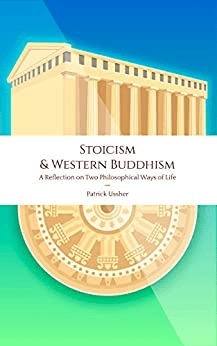
Stoicism and Western Buddhism: A Reflection on Two Philosophical Ways of Life
© 2018 Patrick Ussher
88 pages

stoic

We read philosophy in order to live philosophy.

In Stoicism and Western Buddhism, Patrick Ussher explores the kindred beliefs and practices of these two philosophies, and argues that their similarity is not an accident. Modern Stoicism and western Buddhism are custom builds; their teachers and students drop what they dislike and emphasize what they do, and a common goal, mindfulness,  drives modern expressions of much older thought.    In consequence, modern Stoicism and western Buddhism are both rather unlike their traditional antecedents,  and very close to one another.  That these traditions have been so hand-tailored to western countries is not a cause for distress, Ussher writes;  evolution and cultural adaptation  are the norm for philosophies of life.  He then surveys the full extent of Stoicism and western Buddhism’s commonalities, and ends by suggesting what they can learn from the other.

Those who have read even an overview of Buddhism as a world religion will know it originated in India, then spread widely across southeast Asia,  absorbing elements of the local cultures and developing into several schools. The core idea of Buddhism is that all beings are trapped in a cycle dominated by suffering, created by our own desires, and that to escape this cycle we must accept the four noble truths and follow the eight-fold path.  Those who fail to learn the lesson are doomed to repeat it, forever being reincarnated and forced to endure the travails of life in perpetuity.    Teachers of western Buddhist philosophy, however,  focus chiefly on the practical boons of Buddhist habits —  their immediate returns,  not the escape to Nirvana.  Their students are very unlikely to have read original Buddhist texts, instead drawing  their studies from western Buddhist writers: Thicht Nhat Hanh,  Stephen Batchelor, and Jack Kornfield are all considered, and are all purposely fine-tuning Buddhism for a western audience which is increasingly nonreligious.  Similarly, Stoicism —  based on conforming oneself to a rational order of the universe emanating from God —   is being  tailored to work sans Zeus, its teachers again focusing on the everyday boons of the Porch’s practice. Although the original Stoic authors are still very much read by students (Marcus Aurelius and Epictetus, chiefly),  there is growing pile of books by modern Stoic authors which might supplant the original texts, eventually.

Both philosophies, as expressed for modern audiences,   give their students a way to live well despite the harsh reality we are born into.  Both recognize that we often create or exacerbate our suffering by dwelling on what we want —  and wanting isn’t simply about greed, lust, or envy, but can be as simple as our frustration that things do not happen the way we wish them to.  Our idea didn’t succeed,  our object d’amor loved another —  that fool in front of us was driving slow and now we have to sit through the redlight.  Both philosophies call for letting go of this wanting, and for accepting what we have and finding a productive way to work with it. There are differences in Buddhist and Stoic mindfulness,  as Stoicism’s is more like mental hygiene (letting go of troublesome thoughts) and western Buddhism’s meditation calls for intense immersion in the moment.  Ethically, the two philosophies have an identical cosmopolitan  basis, urging students to view their fellow H. sapiens as brothers and sisters, members of one body.  Western Buddhism is more activist-oriented, Ussher notes,  as its students are urged to go out and do good, rather  simply respond to what happens with grace. In both, this call to help ones brothers balances the inward-focusing tendency of the philosophy.

Although this book is quite small, I appreciated getting a proper introduction to some of the commonalities between Stoicism and Buddhism, being a member of a facebook group that often discusses the common ground between them, as well as Epicureanism.  I may later read Buddhist and Stoic Wisdom, which appears to be a longer evaluation of the same topic.


Posted in Reviews | Tagged , , | 3 Comments

Waco: A Survivor’s Story

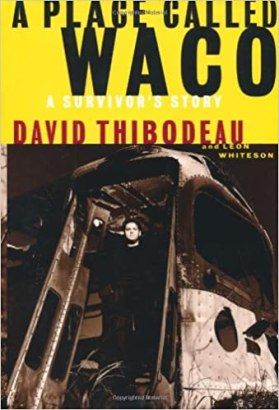
A Place Called Waco: A Survivor’s Story
© 1999 David Thibodeau
381 pages

waco

On April 19th, 1993, the arrogance of power was made obvious when scores of people were killed in a outstandingly incompetent, if not deliberately malicious, attempt to serve an arrest warrant.  “Killed” is rather a sterile word, of course,  considering what it encompassed:   the adults and children tortured and blinded by CS gas,  crushed by tanks and debris, and finally consumed by fire.   Although most of the survivors were put on trial and imprisoned,  one —  aspiring musician who found in David Koresh a friend, mentor, and inspiration  — was able to evade their interest, recover from his burns, and begin to speak on behalf of those voices which were silenced.

I’ve read accounts of Waco before, but never from someone who lived in Mount Carmel during its final days.   Although there are less impassioned accounts out there (Tabor’s & Reavis’),  A Place Called Waco  recommends itself, being one of the few survivor accounts out there. Thibodeau’s is a unique case given that he was nonreligious when he first encountered Koresh at a music shop in Los Angeles.  His absorption into the Mt. Carmel community , an esoteric sect of Seventh Day Adventists, mystified his parents and himself.  What drew him there was David Koresh, himself an aspiring musician — one who wanted to combine his religious message with the music. Koresh’s education was minimal,  but his gift for creating a compelling narrative out of bits and pieces of the Bible and applying them to contemporary goings-on  drew to him even religious scholars from Britain.  Thibodeau had no interest in deities and negative interest in the Bible, but when Koresh spoke, it was spellbinding.   Koresh had an innate verve that he brought to his music and his religious teachings,   a unique gift for making them his own. Although he’d followed Koresh to Waco mostly for the music, Thibodeau found life in the Mt. Carmel community oddly bracing:    its restrictions gave him structure in his life for the first time, and he was proud to have embraced its challenges and curved his own appetites.

There was the discord, though.  By the time Thibodeau had figured out the relationships between Koresh and the various women and children in the compound (Koresh  mandating celibacy among his students, save for those women, married or no, who God had told him to make babies with..including teenagers),  he’d bonded to many members of the group,   and his attachment to Koresh and one of his wives in particular dulled his criticism of Koresh’s teen brides.  Beyond that, Thibodeau’s account throws new light onto the everyday lives of the community: I was surprised to learn that not only did Koresh and other frequently move between Los Angeles and Waco before the siege,  but even during the siege people filtered in and out.  The Carmel complex was under constant construction throughout Thibodeau’s time there, and working on it was how Thibodeau earned his keep. The community  generated income through an autoshop and the gun trade, though it was the latter that drew the fire of the state upon them, as the ATF believed they were modifying semi-automatics  into full automatics.  This was perfectly legal — so long as the resulting firearms were registered. Thibodeau maintains that no one in the community had the technical expertise to make said modifications,  that the ATF had no evidence whatsoever for believing the Carmel community would have sold unregistered automatics even if they could make them, and that the ATF & FBI’s actions were undertaken out of paranoia and religious persecution.

Thibodeau’s account of the siege and final day are rough. It used to be difficult for me to believe that the state could act with such brutality to its own citizens, but now I accept it as a matter of course.  The same was true for Thibodeau, and he was further demoralized  when he realized how hostile so much of the nation was to him and the other survivors.   The Mt. Carmel community had pleaded for the press…but as Thibodeau reflects,  the press had been their worse enemy,   giving the federal forces a stage to perform for, and making the government’s suspicions into the mob concensus. The only communities who cared about what happened to the Mt. Carmel community  were those Thibodeau didn’t particularly like —  Patriot groups and militias.  Although he didn’t like them, especially after the first anniversary commemoration of the Waco massacre was commercialized by groups selling anti-government lit,   they would at least listen — and  speaking about the disaster and trying to make sense of it gave Thibodeux a renewed sense of purpose, a way forward in his life.

Although one has to be careful with witness accounts,  Thiboeau’s unique perspective and accessible style make this account worth evaluating. I saw no contradictions between it and more objective histories like those of Tabor and Reavis,  though Thibadeau is understandably more defensive of the community than others.  Originally published as A Place Called Waco, the book has been republished as Waco: A Survivor’s Story, complete with a cover drawn from a miniseries that Thibodeau contributed to.  It is superb drama and awful for one’s blood pressure.


Posted in Reviews | Tagged , , , | 5 Comments

(Not) the Top Ten Authors I’ve Read Most

This week’s TTT, bloggers are sharing the top ten authors they’ve read the most books by….but my top ten won’t have changed too much since the last time we did this in ’15 (lots of kid-lit heavyweights), so I’m going to  go beyond the likes of Asimov (70+) and Cornwell (49) to review the next tier of my most-read authors.   The numbers come from Goodreads.

  1. C.S. Lewis, 17 entries.  I’ve become increasingly fond of “Jack” since 2015,  first seduced by his Narnia books, and then by Surprised by Joy  He’s become a reading habit since, although I often don’t post reviews for his works because I’m still chewing on them. (The Screwtape Letters, The Weight of Glory, The Abolition of Man, and On Other Worlds are all Lewis titles I’ve read but not reviewed.)
  2. David Mack, Destroyer of Worlds. 17 entries.  Mack wrote Star Trek: Destiny,  easily the most generally-lauded Trek trilogy out there.  He’s also done other high-profile books, like the epic end to the Mirror, Mirror series.
  3. Robert Harris, 14 entries  I don’t know of a historical fiction writer whose work is more varied.Roman history? Cold War thrillers? Contemporary British politics?  French conspiracies? Stock market A.I. run amock? Post-apocalyptic neo-medieval?  Whatever your pleasure, Harris has you sorted.
  4. Wendell Berry, 14 entries.   I have such affection for this gentle Kentucky farmer I hesitate to start talking about him, lest I write a paper! Between his yearnful Port https://readingfreely.com/wp-content/uploads/2014/01/7e973-butididnotlovetroy.jpgWilliam novels and his numerous essay collections on agriculture, culture, and society,   I’ve read quite a bit of him and hope to read still more.
  5. Will and Aerial Durant, 13 titles.  These two would hold the record for Sheer Number of Pages Read, since their Story of Civilization books pegged a thousand pages on the regular.
  6. Bill Bryson, 13 titles.   Eh, you all know Bryson, author of many grumpy travel guides and far more amusing general-interest books.sagan
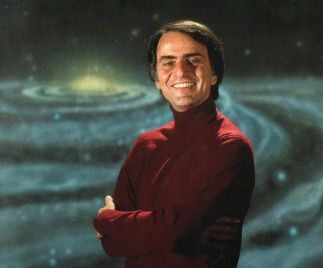
  7. Carl Sagan, 10 titles.   Sagan is my favorite science author (no one tell Isaac),  and whenever I’m low I’ll listen to recordings of him talking.
  8. Christopher L. Bennett. 10 titles.Another prolific Trek writer, Bennett’s books are science-rich. He was my first favorite author of the Relaunch era, but Mack overcame my loyalty.    However!  Bennett carries the distinction of being the only Trek author who I’ve read their own original works for.
  9. Rick Riordan. Author of several fantasy series whose books all have the same plot. A chaos monster is going to destroy the universe in two weeks on the solstice/equinox and a trio of teenage demigods is our only hope. Can they fight off monsters and adolescent drama to win?  (Yes, but it won’t matter because there’s always another chaos monster.) This story comes in Greek, Roman, Egyptian, and Norse flavors, and I read 10 iterations of it.  I like them, honest!
  10.  At nine titles,  I’ve a four-way tie between Michael Crichton,  J.K. Rowling, C.S. Forester, and Kurt Vonnegut.    Four fairly different authors, to say the least!


Still the king!

Posted in General | 20 Comments

Clutter Free

Clutter Free: Quick and Easy Steps to Simplifying Your Space
© 2015 Kathi Lipp
226 pages

clutter
“Enough is a beautiful thing.”

Reading books about decluttering is much easier than actually doing it, which is probably why I’ve read so many over the years.  Despite its brevity,  it’s one of the more useful books on minimalism, simple living, etc that I’ve read because of Lipp’s emphasis on habits that enable clutter to build up and overtake our lives. Clutter, as defined by Lipp, is anything in our homes that we do not love or use.  Part of Lipp’s intent is for the reader to evaluate their lives and the items they live with and decide what really matters. Letting go of items also means letting go of misguided attachments to the past;  items purchased in the pursuit of a new hobby five years ago, for instance, but never touched. People don’t like to admit their own mistakes, or to let go of the people they thought they were, or might become.  In addition to tactical counters to clutter — designating definite Places for items to go, and creating a daily routine for keeping things in their place — Lipp encourages the reader to look beyond cleaning and to think about their lifestyles, too.  She’s close friends with several women in her neighborhood, and in the interests of frugality they’ve taken to lending each other tools and supplies so that each of them has access to a greater pool of resources. I appreciated Lipp’s emphasis on the spirit-taxing effects of clutter, the constant stress that a life beset with mess creates.

Some highlights:

When you save everything, you can find nothing.

Organizational systems are to cluttered homes what credit cards are to debt. Credit cards tell you there is still more money, even though your bank account says no. Organizational systems tell us there is still more space, when our house cries “No!”

But another thing we must recognize about clutter is that it’s active. Even if it’s just sitting there on a shelf or buried in a box, clutter is actively working in our lives. It makes us feel unsettled. Clutter never lets you rest. It is constantly talking to you and letting you know that things are wrong and there will be no peace until you tend to the mess. You cannot enjoy any activity—time with your family and friends, reading, exercising, anything, because clutter is telling you, “Pay attention to me!”

You can spend a lot of money, time, and energy on something, and it can still be OK to admit that it’s over.

I needed a better set of clutter questions to help me get unburied from the piles of stuff that were taking over my home. Better questions like these: 1. Do I currently use it? 2. Do I really love it? 3. Would I buy it again? These three questions? They have become the clarifying lenses I see all my possessions through, and they help me quickly and unemotionally clear the clutter from my life.

Posted in Reviews | Tagged | 8 Comments

An uncluttered thought or two

weezen

Yesterday the library was closed in observance of Independence Day, and I have been using the time to get a little closer to my minimalist goals. This is a constant undertaking, an intermittent weekend project. Although I am frequently given pause by the thought of how much else I have to do — how far away it seems I am from my goal of a clutter-free life —  my memory is good enough to give me perspective. I  can compare what is now with what was two years ago, and in that comparison I find much progress.  So I press on!

When I approach an impasse, when I encounter items that I know I don’t want to hold on to forever, but what I cannot prompt myself to do away with just yet, I asked myself a question. It’s something of a meditation.  If worse came to worse and I lost everything I owned, save for the clothes on my back,  what would I seek to restore? What clothing, what books and DVDs?  What tools?     This question always throws light on a subject for me, because it makes me realize that I can live without the thing in question.     It gives me hope for the future, too,  because when I ask the question the answer in the back of my mind always surprises me:  astonishingly little.   In the last year I’ve drastically reduced my wardrobe and found that a boon to my daily routine, for instance, and these days I almost always give away the books I buy, and I steadily chip away at my book, CD, DVD, and game disc collections.    I can see myself at peace — one day.  The question is more interesting on a deeper level, too….stripped of of all our things and the sense of security they provide,  how would we cope as individuals? Do we find our meaning in the things we possess?  That was one of the largest burdens for me in attacking my book collection, because I was so proud of my enormous library and the variety of subjects it contained. It was a monument to vanity. Now  it’s just my TBR pile  that serves that function, doing double-duty as a monument to my gluttony as well…!

Anyhoo, enough rambling. Review to come for Clutter Free tomorrow.


Posted in Reflection | Tagged | 5 Comments

Music to dump tea by


Once an honest man could go from sunrise to its set
Without encountering agents of his state or government
But a sorry cloud of tyranny has fallen across the land
Brought on by the hollow men who did not understand
That for centuries our forefathers have fought and often died
To keep themselves unto themselves, to fight the rising tide
That if in the smallest battles we surrender to the state
We enter in a darkness whence we never shall escape
When they raise their hands up our lives to possess
To know our souls, to drag us down, we’ll resist

Watt Tyler led the people in 1381
To meet the king at Smithfield to issue this demand
That Winchester’s should be the only law across the land
The law of old King Alfred’s time of free and honest men
‘Cause the people then they understood what we have since forgot
That the government will only work for its own benefit
And I’d rather stand up naked against the elements alone
Than give the hollow men the right to enter in my home
When they raise their hands up our lives to possess
To know our souls, to drag us down, we’ll resist

Stand up, sons of liberty, and fight for what you own
Stand up, sons of liberty, and fight, fight for your homes
Stand up, sons of liberty, and fight for what you own
Stand up, sons of liberty, and fight, fight for your homes
Stand up sons of liberty, and fight for what you own
Stand up sons of liberty, and fight, fight for your homes
Stand up sons of liberty, and fight for what you own
Stand up sons of liberty, and fight, fight for your homes
So if ever a man should ask you for your business or your name
Tell him to go and [screw] himself, tell his friends to do the same
‘Cause a man who’d trade his liberty for a safe and dreamless sleep
Doesn’t deserve the both of them and neither shall he keep!


Posted in General | Tagged , | Leave a comment

Uncertain Logic

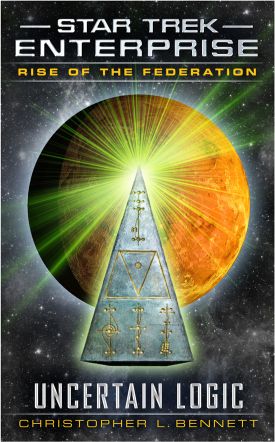
Star Trek Enterprise, Rise of the Federation:   Uncertain Logic
© 2015  Christopher L. Bennett
401 pages

uncertainlogic

Okay, reader. Have a seat. This book is a bit busy.   Let’s begin with the Starship Endeavour‘s investigation of several automated stations that rely on captured organics for their processing power.  Away from the frontier, Vulcan is being unsettled by evidence that the document under-girding their entire society,  the Kir’Shara, has either been stolen and replaced by a fraud, or was a fraud to begin with.  Admiral Archer, already facing rumors that he’s about to be promoted to Commander in Chief of Starfleet,  is now called into court to  offer testimony on his original discovery of the document.    And then there’s the Deltans, everyone’s favorite race of lusty bald coeds. The Orions have caught wind of their sexiness, and desire to crush the competition.  Oh! And Trip is taking a break from his Secret Agent Man business to be a chief engineer again, because he’s needed for the investigation of the automatics  — who,  Endeavor discovers, have overtaken entire planets. Oh, oh,  and do you remember that Methuselah fellow from “Requiem for Methuselah”? ….yeah, he’s here, too.

That’s a lot to take in in one novel, but Bennett  is an old hand, and the stories running together here were never overwhelming or confusing.  While I was fairly by the diplomatic goings on of the last novel, this one has so much variety it would have been hard to strike out.  I’m usually impressed by Bennett as an author, and here is no exception, despite the fact that the plot is more politics and action than science.   A solid portion of the book involves Vulcans’ dispute over their future — over the meaning of Surak’s teachings,  and how Vulcan political society should orient itself. Bennett does a excellent job of making  the antagonists credible,  grounding their arguments in interpretations of Surak’s teachings. (At least, until we find out that the dissidents are being manipulated by an another power altogether.)  The investigation into the “Ware”, as the automatics come to be know, is equally interesting —  mechanical civilizations are hard to come by in the Trek verse, the closest thing to them being the Borg, and they were steadily made less aliens as they were used. (Oh, for the Borg of “Q Who“, who were only interested in technology….) The ongoing character dramas are also winsome — especially Travis Mayweather’s difficulty in accepting that not only is Trip alive, but that he’s been living a lie for well over five years, working for some section of Starfleet Intelligence.

Uncertain Logic is a solid read all around, with a variety of content, and and a very PrimeTrek-esque ending,  complete with a speech by a Cardassian exile who warns Vulcan not to make the same mistakes his own planet did.   This was a welcome way to scrub the bitterness of ST Picard away.


As usual, Bennett provides annotations for the book at his website, Written Worlds.


Posted in Reviews | Tagged , , , | 6 Comments

Picard: Last Best Hope

ST Picard: Last Best Hope
© 2020 Una McCormack
335 pages

picard

I bought this on the strength of Una McCormack, nothing else. She’s contributed ably to the Treklit universe, delivering several superb novels. Even with her talents, however, there is only so much polishing one can do with such a turd of a premise.

ST-P ‘builds’ off the plot of Star Trek 2009: the Romulan star is about to go supernova. While in that film Nero’s rage against Starfleet was fueled by their “doing nothing” to help the Romulan people, here Captain Picard leads a charge to turn Starfleet into one massive service fleet for Romulan refugees. That comes at a cost: Starfleet’s mission is abandoned, its research and development is re-oriented for building and equipping fleets of transport ships, and its minor worlds are told to keep a stiff upper lip and help the Federation see this mission through. The Romulans, for their part, are not receptive of Federation help, and even once they’ve accepted the need for it, they continue to impede Federation efforts for the sake of saving face. Eventually something goes catastrophically wrong.   Last Best Hope is thus a prologue of sorts for Star Trek: Picard.

As stupid as I find the entire storyline of Star Trek 2009, I figured in the hands of a Treklit author, it might be redeemed. And it was, to a degree — there’s a lot to appreciate about the story as it develops here, in pitting Picard’s moral certitude against Starfleet pragmatism, in seeing Federation relief workers try to find a way to reach the suspicious Romulans. And there are fun moments, nice bits of dialogue. But LBH is …disconnected from onscreen Star Trek. Why is the Star Empire not making its own efforts in conjunction with Starfleet? It has considerable resources, enough to compete with both Starfleet and the Klingons, and enough to make it a significant factor in the Dominion War. Was the Empire weakened by the effects of Nemesis? We have no idea: despite the entire senate being wiped out, the only references to Nemesis all concern non-Romulan factors. There are no familiar faces among the Romulans, and the only meager connection to the Trek universe as a whole is the inclusion of Bruce Maddox.

Making matter worse is the fact that most of the characters here don’t seem like they belong in the Star Trek universe. They’re cynical, vulgar people, dropping expletives as though they were on The Sopranoes. Call me a snob, but Star Trek to me has always reminded me of the best in humanity; it was utterly urbane. Even during crises, characters acted with dignity, uttering phrases like “My god, Bones, what have I done?” These characters just swear like longshoremen, and it grows worse and worse as the novel progresses. At one point I’m fairly sure the F-s per minute outpaced Goodfellas. It’s in keeping with the Picard show,  unfortunately, and that combination of despair and vulgarity is the reason I stopped watching Picard to begin with.

It pains me to one-star a Trek book, especially by an author whose work I’ve enjoyed mightily in the past, but there’s only so much an author can do with a franchise whose storytelling now resembles The Avengers more than it does classic Trek.

Posted in Reviews | Tagged , , | 2 Comments

Reads to Reels: Er Ist Wieder Da

eiderdamovie

So there I was, innocently looking to see if Netflix carried  older WW2 films like 36 Hours,   when I spotted Hitler. “Look who’s back?” I said. “Oh dear.”  I’d previously watched The Death of Stalin (Jason Isaacs is a ball as Zhukov)  and thought this might be something similar, a kind of lampooning of various Nazis. It…wasn’t.   For those who haven’t seen any reviews of the book,  its premise is simple: Hitler inexplicably appears in modern-day Berlin,  and after stumbling around in confusion he comes to grips with his situation,  realizes that people are the same as they ever have been, and becomes a sensationally popular social media star. The book is incredibly amusing, despite its being narrated by an interpretation of Hitler,  but I wasn’ t sure what its attraction would be for those not conversant with Germany’s domestic issues. The film is much different, with general appeal. It’s in the same dark comedy genre,  but its ending is far more serious.

The film is a richer story all around, with characters other than Hitler getting fleshed out, some getting their own arcs; this proves especially important for one elderly character.  Despite not being able to  bombard the reader with puns, the movie manages to be similarly amusing: when Hitler is taught to use a computer and prompted to search, in Google, for anything he’s interested in, he promptly types in “WORLD DOMINATION”.  The film also mixes in real scenes of Hitler interacting with people on the streets — and while some are disgusted, many others are amused and drawn to him —  seeing in him, perhaps, a broadside against censorship, or more darkly a voice for their own contempt of others.

Although there are plenty of laughs to be had,   the movie is more serious under the hood. Hitler’s criticisms of the world, for instance, are not simply racist tirades. In one scene, he is given a bunch of anti-immigrant jokes by the media to tell, but he ignores them —  choosing instead  to confront the stupefying  effects of television,  deadening people to the poverty and unemployment around them.  “It is 8:45 P.M,” he says, “”And broadcasting is returning fire.”  But  Hitler is Hitler, not a social critic in costume, and this is made clear by another scene. Introduced early in the film as suffering from dementia,  one character’s grandmother sits in her own world — until  Hitler attends a dinner where she is present to celebrate the media company’s success, and the little girl within  the grandmother recognizes the man who  instigated the deaths of her entire family.  Her sudden impassioned rebuke of him, puts those who find the ‘comedian’ amusing and useful — including the viewer —  into an uncomfortable spot.  Ultimately, the filmmaker begins to realize the truth, and confronts Hitler….but the ending has a twist which  I don’t want to spoil.

What I can share, perhaps, is one of Hitler’s final lines. “You can’t get rid of me,”  he says, staring at Berlin beneath his feet. “I’m part of you — of every one of you.”      For Germans this line may simply mean that Hitler is part of their past, and no amount of denazification will remove him; no amount of rules censoring discussion will make him a nonentity.  For me, though, having read The Gulag Archipelago, the line resonated strongly with me, given Solzhenitsyn’s observation that the line between good and evil divides each of our hearts. We all have the germ of a monster inside, one that might sprout if fed. Of late I’ve been investigating Timothy McVeigh and Ted Kaczynski,   and their lives  reinforce the lesson.  Neither was  an irredeemable sociopath,  but they were warped by experiences which they lacked the inner strength or the outside help to overcome.  There is no one righteous; not one.   Less philosophically,   the film’s footage of Vermes-Hitler’s interactions with real people is disturbing, but, I don’t know how representative the footage is:  it could be easily edited to show more positive reactions on the whole than there were, much like late-night hosts on the idiot box do those “man in the street” sketches so that their viewers can get their jollies feeling superior to the rubes.  In this case the viewers would be basking in their moral superiority rather than their command of trivia.

This is, in short, a film which is entertaining, disturbing, and thought-provoking. Like Her,  I find myself re-watching it,  considering its issues despite the discomfort they provoke.  We will never be shed of violence or leaders who promote it,  and we should be ever on our guard against supporting it  — especially when we think our cause is just. Man never does more evil or mischief than when he thinks he is in the right.  This is a lesson demonstrable not just by history’s wars, but our own burning streets.


Posted in Reviews | Tagged , , | Leave a comment