How do you read? A bookish meme

Ruth from A Great Book Study recently posted a survey I thought of interest, so I’m participating.  Feel free to join in!

Do you have a certain place at home for reading?

I favor a cozy chair in the living room late in the evening, once my roomates have gone to bed and it’s not as noisy. In the mornings and evenings when it’s cooler, I also enjoy sitting on the porch.   In college,  I had a ‘reading tree’ on the quad, where I’d sit in the mornings and evenings.

31675_389053936785_8093032_n

Every time I visit the Montevallo campus, I visit this tree. I like it more than most people!

Can you stop reading anywhere, or do you have to stop after a chapter or certain number of pages?

I usually try to end at a new chapter, or an easy-to-remember page number.

Bookmarks or random slips of paper?

I can never retain bookmarks, so it’s whatever I have on hand….or, if the book is mine, I DOG EAR THE PAGES! Mwah hah hah hah!

Multitasking: music or tv while reading?

Television and I are not  agreeable roommates.   I’ve been known to put on music while reading, usually something ambient like peaceful classical music or smooth jazz.

Do you eat or drink while reading?

Always on the drinking — usually water or coffee, but sometimes hot tea. I find that eating while reading leads to page stains and weight gain, so I usually resist the urge.

Reading at home or everywhere?

Everywhere.   In college I was known for always carrying a book with me to the dining hall,   and just last night I read while in the drive-through line of place offering carryout.

Do you read ahead or skip pages?

I skim through scenes that aren’t doing anything for me or the story — sex scenes, for instance.

Break the spine or keep it like new?

N/A, because what few physical books I do buy are usually used.  These days most of  my reading is via ebooks.  (Quite a change from nine years ago!)

Do you write in your books?

Very rarely.  If I’m feeling particularly combative I’ll scribble notes in a book I’m arguing with, but it’s rare. Marking a book up makes something inside me scream.

Whom do you tag?

I’m going to copy Ruth and leave it to whosoever!

Posted in General | 6 Comments

Wisdom Wednesday: A Psalm of Life

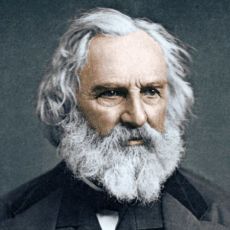
Today’s wisdom is more inspiration, as this poem came to mind often while reading 12 Rules for Life.  I first heard the poem on YouTube, read by Paul Scofield (he had magnificent force for narration),  and have grown to appreciate it more and more as the years wear on. Its author, Henry Wadsworth Longfellow, was an early American poet who is most known for his poem about the ride of Paul Revere.

longfellow

What the Heart of the Young Man Said to the Psalmist

Tell me not, in mournful numbers,
Life is but an empty dream!
For the soul is dead that slumbers,
And things are not what they seem.

Life is real! Life is earnest!
And the grave is not its goal;
Dust thou art, to dust returnest,
Was not spoken of the soul.

Not enjoyment, and not sorrow
Is our destined end or way;
But to act, that each to-morrow
Finds us farther than to-day

Art is long, and Time is fleeting,
And our hearts, though stout and brave,
Still, like muffled drums, are beating
Funeral marches to the grave

In the world’s broad field of battle,
In the bivouac of Life,
Be not like dumb, driven cattle!
Be a hero in the strife!

Trust no Future, howe’er pleasant!
Lethe dead Past bury its dead!
Act — act in the living Present!
Heart within, and God o’erhead!

Lives of great men all remind us
We can make our lives sublime
And, departing, leave behind us
Footprints on the sands of time;

Footprints, that perhaps another,
Sailing o’er life’s solemn main,
A forlorn and shipwrecked brother,
Seeing, shall take heart again

Let us, then, be up and doing
With a heart for any fate;
Still achieving,  still pursuing,
Learn to labor and to wait.


Posted in quotations | Tagged , | Leave a comment

Ten Books that I haven’t bought (yet)

Today’s TTT is a freebie, so I’m looking at books I’ve previewed (that is, had Amazon send me a kindle freebie of) but haven’t bought.

damnedoldcoyotes

Coyote America: A Natural and Supernatural History, Dan Flores. This was more of a  “I want to look at this book later” kind of preview.  I’ve never heard a good thing said about coyotes, so I’m interested in a book about them.

dict

The Dictator’s Handbook: Why Bad Behavior Is Almost Always Good Politics.   I definitely want to read this one, but I’m forbidding myself from buying more books until I have made more progress on Mount Doom.

killeranges

Killer High: The A History of War in Six Drugs, Peter Andreas.  Definite TBR. My thinking is  that I’ll permit myself to buy a new book for every five TBR books I dispatch.

shahneah

The Shahnameh: The Persian Epic as World Literature, Hamid Dabashi. From the title I was hoping this would be a study of the Shahnameh, a copy of which I own and intend to read. From what I’ve heard of it, its cultural importance in Iran is huge, as if it were the Greek classics, Shakespeare, and stories of King Arthur and George Washington all rolled into one.   The reviews of this particular title, however,  indicate that it’s less about the Shahnameh and more about Dabashi’s grievances with the category of world literature in general.

americasarmy

America’s Other Army :The US Foreign Service.    A probable-TBR, but not a lock-in.

coldwar

Cold War in the Islamic World:   Saudi Arabia, Iran, and the Struggle for Supremacy.  Dilip Hiro.    A possible-TBR, but  there’s a lot of competition in the geopolitics/foreign policy area.

oscar

A History of Violence: Living and Dying in Central America, Oscar Martinez.  An account of how Central America became so destabilized.  Martinez’ The Beast covered similar ground, on the horrors that narco-wars  have visited on Mexico,  and I’m waiting until my memories of that one are less salient.

gooodboidf

Good Birders Don’t Wear White: 50 Tips from North America’s Top Birders, various.  In the spring Amazon decided — after I read several books on birds and bought a pair of binoculars — that I was a birder, and for several weeks it recommended birding books to me obsessively.  This one caught my eye, but I was planning for Read of England at the time.

natasha

Natasha’s Dance: A Cultural History of Russia.  I’m interested in learning more about Russian culture, but this one is an absolute unit of a book.

wars

Console Wars: Sega, Nintendo, and the Battle that Defined a Generation.  I enjoy reading about video games and their history (I’m a child of the eighties and nineties, after all,  but this one wasn’t engaging enough to purchase.

Posted in General | 16 Comments

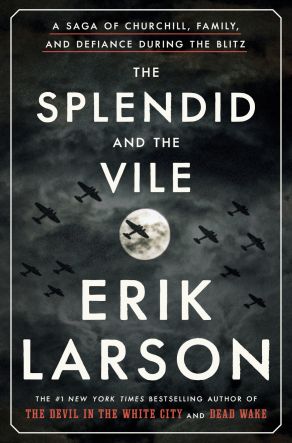
The Splendid and the Vile

The Splendid and the Vile: A Sage of Churchill, Family, and Defiance during the Blitz
© 2020 Erik Larson
464 pages

airplane

“Nothing could have been more beautiful and the searchlights interlaced at certain points on the horizon, the star-like flashes in the sky where shells were bursting, the light of distant fires, all added to the scene. It was magnificent and terrible: the spasmodic drone of enemy aircraft overhead; the thunder of gunfire, sometimes close, sometimes in the distance;  the illumination, like that of electric trains in peace-time,  the guns fired; and the myriad stars, real and artificial, in the firmament. Never was there such a contrast of natural splendor and human vileness.”  – John Coville, Private Secretary to Winston Churchill

The Splendid and the Vile is an intimate history of the first year of WW2, told principally through Winston Churchill’s personal and professional household’s perspective.  Taking office as World War 2 was just beginning, Churchill saw Britain through some of its darkest hours —   months in which Britain stood alone, its continental allies subdued by the ferocity of Blitzkrieg, and its great ally the United States not yet engaged.  In those hours the church-bells were still, waiting in dread silence for signs of Hitler launching his promised- and planned-for invasion of the Isle.  Throughout all that fear and uncertainty, though, life went on — couples fell in love,  common citizens dusted themselves off and picked up the pieces,  and gardens were tended. All the ordinary work of life continued apace.   The Splendid and the Vile offers a look into that year of the war as it was lived, sometimes day-by-day — drawing on the diaries of Churchill staff, family, others not associated. We jump, too, across the Channel, where Hitler & co nod with satisfactions at the quick consolidation of power in western Europe, and prepare for the real battle:  the invasion of Russia.    Here there is also interest; the decadent oafishness of Goering, which somehow won him fans instead of derision,  and one of the war’s odder stories, that of the deputy fuhrer taking off for Britain in hopes of securing a treaty with an old friend of his in the English nobility.  Although it suffers a bit from the sheer amount of people covered,  I thoroughly enjoyed this on-the-ground review of Churchill’s first year.   Although the PM is only one voice out of the many which feature here,  there’s no doubt in my mind he was the man for that hour —  who helped the British find their own courage, and endure until the Axis began making their fatal mistakes.

Related:
London at War, Phillip Ziegler
Alone: Britain, Churchill, and Defeat into Victory, Michael Korda
With Wings Like Eagles: The Battle of Britain,  Michael Korda

Posted in history, Reviews | Tagged , , , | 7 Comments

Harvard and the Unabomber

Harvard and the Unabomber: The Education of an American Terrorist
Original title: A Mind for Murder
© 2003 Alston Chase
352 pages

unabomb

Ted Kaczynski was hunted fruitlessly by the FBI for eighteen years, until finally being done in by his own need to spread his message.  However exceptional his mind, however, Alston Chase argues here that Kaczynski’s philosophy was one espoused by many of his generation —  that it was one fomented by the educational culture that Kaczynski’s cohort were immersed in at Harvard.  Subtitled The Education of an American Terrorist,  Chase’s work is an outstanding and thorough review of not only Kacynski’s life but of the intellectual and cultural currents that exacerbated his alienation — as well of the brutal psychological experiments, funded by the CIA, that no doubt galvanized him into violent reprisal against ‘the system’.

Chase opens with the FBI’s investigation of the UNABOMB case, then shifts to Kaczynski’s background as the son of working-class intellectuals who pushed their son to excel, heedless of the consequences. The better he performed in school, the more of a social misfit he became — especially after he skipped grades and entered college two years early.   At home, he’d been pushed in opposite directions — his parents demanded academic achievement, which isolated him, and yet chided him for being estranged socially. At Harvard, his isolation did not improve;   he was placed in a residence for especially gifted minds, but he and his housemates all lived solitary lives, and were separated from campus life on the whole.

His university studies offered no hope of a meaningful life; the general studies curriculum which had been drafted to ground and strengthen students in the western tradition was instead used to subvert it.  Instead of understanding the US government as being based on natural law, for instance, students were taught that the government rested merely on power;  that only statements which could be independently verified held any meaning, making beauty and much of the human condition irrelevant.  Everything that  students had previously taken for granted — morality, religion, culture, the rule of law — was  being actively dismantled. Although the tools of science were being used to render everything else meaningless, there was little hope to be found in science itself, for the students were being steeped in Cold War dread that technology would destroy the world. The growth of ecology indicated that even if the world did not end in a bang, it would end with a whimper as  human activity disrupted every natural system which sustained it.

Kaczynski is not the only subject of Harvard and the Unabomber, however, for Chase also introduces us to the strange figure of Henry Murray,  a scientist associated with the OSS/CIA and Harvard, a man fascinated by sex and violence (especially together), who called for volunteers to participate in philosophical discussions, and then subjected them to experiments that haunted the memories of many of its subjects years later.  What Harvard allowed its students to be subjected by a professorial spook under its aegis is so embarrassing and incriminating that they sealed their records after Chase began his review of them.  The section on the CIA’s obsession with mind control — and its contributions to the drug eruption of the sixties — is fascinating and  indicates how long that particular organization has been dominated by the dark side of power. (Stephen Kinzer recently produced a history on this particular episode in CIA History: Poisoner in Chief.)

Kaczynski’s treatment in the MKULTRA program left him psychologically troubled, increasingly fixated on revenge against ‘the system’, especially the psychologists who purposed to find ways to better manipulate people within society to conform. His course was already set before he began teaching professionally;  that job he engaged in only to raise funds for buying land to escape society.   Montana did not offer him peace, however;  instead Kaczynski was steeped further in rage against airplanes,  loggers, snowmobilers, and the like, and began looking for relief in striking back.   His ‘environmentalism’, Chase suggests, was a spin tactic;  the budding propagandist against the industrial system wanted public support, and going green struck him as an approach consistent with both his criticism and the student movements of the seventies.

Harvard and the Unabomber is a fascinating cultural and intellectual history of the late fifties and early sixties, a time when social unrest was beginning to simmer.  Chase and Kaczynski lived parallel lives — attending Harvard around the same time, and then lived in rural retreats — so his insight into the culture that Kacynski was immersed in is particularly helpful.   Although understanding what Kaczynski different is the most valuable contribution made by this book, it’s also generally helpful in putting into perspective the usual narrative lies about Kaczynski — that he was a mental case early on,  for instance, and that he had isolated himself in the middle of nowhere.  Reporters on the Unabomber case talked to people who barely knew Kaczynski, not his friends; when Chase began doing his own interviews, he found that the ‘rural recluse’ lived four miles from town,  right off a main road, and was favorably remembered at the local library.

Harvard and the Unabomber is impressive work, a serious evaluation of Kaczynski, his work, and his times which  offers insight into what really destabilized an otherwise brilliant mind.


Posted in Reviews | Tagged , , , | 6 Comments

Wisdom Wednesday: Rise and Shine

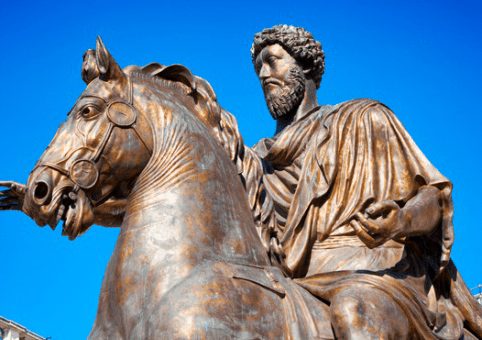
Today’s reading comes from Marcus Aurelius,  who has shamed me out of slumber many a winter’s morn. Aurelius was the last of Rome’s “five good emperors”, and produced a work called The Meditations which has been lauded through the centuries; I’m quoting a modern translation of his work called The Emperor’s Handbook.

ariseandwork

In the morning, when you can’t get out of bed, tell yourself:  “I’m getting up to do the work only a man can do. How can I possibly hesitate or complain when I’m about to accomplish the task for which I was born? Was I made for lying warm in bed under a pile of blankets?”

“But I enjoy it here.”

Was it for enjoyment you were born? Are you designed to act or to be acted upon? Look at the plants, sparrows, ants, spiders, and bees, all busy at their work, the work of welding the world. Why should you hesitate to do your part,  the part of a man, by obeying the law of your own nature?

“Yes, but nature allows for rest, too.”

True, but rest — like eating and drinking — has natural limits. Do you disregard those limits as well? I suppose you do, although when it comes to working, you are quick to look for limits and do as little as possible. You must dislike yourself. Otherwise, you’d like your nature and the limits it imposes. At the same time, you’d recognize that enjoyment is meant to be found in work too and that those who enjoy their work become totally absorbed in it, often forgetting to eat or drink and seek other forms of enjoyment. Do you think less of your life’s work than the sculptor does his sculpting,  the dancer his dancing, the miser his money, or the star his stardom?  They gladly forgo food and sleep to pursue their ends. To you, does the work of building a better society seem less important, less deserving of your devotion?


Posted in quotations | Tagged , | 5 Comments

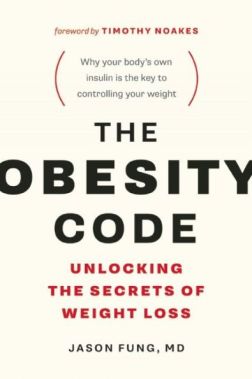
The Obesity Code

The Obesity Code
© 2016 Jason Fung
326 pages

obesity

Jason Fung begins with a question: why are there fat doctors?   If the conventional analysis  of fat and its prescription are accurate, why do many people struggle to make long-term headway against obesity?   The Obesity Code  argues the case against the caloric model, presenting its own: obesity is a multi-factorial disease,  one whose chief driver, insulin, is sorely unappreciated.   Related to Gary Taubes’ work arguing for the hormonal model (Good Calories, Bad Calories;  Why We Get Fat; The Case Against Sugar) and others,  The Obesity Code wraps up with advice for attacking fat by land, air, and sea. Those trying to understand the challenge of obesity, either for personal or social reasons, will find it a helpful resource — though one marginally diminished by its breeziness.

Fung begins by dismantling the caloric model,  both in theory and in practice, evaluating numerous studies which demonstrate the inadequacy of the calories in, calories out approach. The body responds to a drop in its caloric intake the same way those of us not holding political office respond to a drop in our income;  it spends less.  Those who attempt to eat less than they need, at the same time trying to increase their activity,  will find themselves beset with misery and cravings.   The crucial misstep in the caloric model is that it misses how fat is regulated by the body — every body, regardless of age or health.   Hormones drive the creation, dispersal, and use of fat, whether the case is girls developing curves in middle school or both sexes fighting the pudge amid their freshmen years in college. Although the main manager of fat is insulin, Fung points to several other factors, notably cortisol — a stress hormone that, if consistently present in the body, reliably drives weight up.

Because the lion’s share of weight problems are driven by by how modern diets interact with the insulin cycle in our bodies,  Fung devotes more attention to that factor than any others.  He uses an interesting example of money management to explain how it works.  After a meal, your body is flush in glucose and insulin, the latter of which has emerged  with one job: to get the glucose where it needs to be. That will be into your cells, at first, but you don’t need that much energy at one time, so it converts the glucose into glycogens, which it stores in the liver. Fung likens this to a wallet: it’s easy for insulin to move glucose in and out of the liver.   Wallets, though, have limits to how much they can hold — and so insulin creates fat to store the rest.    Because people in the modern world never stop eating,  we continually keep the short-term storage filled to capacity, and the fat stores…..are never touched.   If someone truly wants to lose weight,  they need to give their bodies time to empty the short-term storage and then begin using the long-term. This will not happen if they snack throughout the day, even if they’re just sipping a diet soda:     artificial sweeteners may not have calories, but they still summon forth insulin hormones to patrol around looking for glucose to store, and so long as insulin is around, it’s not letting your fat escape.  Fung advocates the practice of intermittent fasting (which can be something as simple as a no-snacks rule to reducing eating windows in a given day, to extensive multiday fasts)  to address the insulin problem head on. He’s written extensively on fasting’s application for both obesity and diabetes.

The Obesity Code is not a rehash of Gary Taubes’ work, though, because Fung addresses more factors — cortisol, for instance, and the body’s sleep cycle, and considers various kinds of diets.   There are several diets that work within the hormonal model, like Atkins and Keto,  but following a specific diet in perpetuity is difficult for most people. There are some items that should be avoided, like sugar and  highly processed foods,  but regulating the when of our food intake is more important than banning or promoting whole classes of macronutrients. Yung partially echoes Michael Pollan’s food rules:  Eat real food, not too much of it, and mostly plants.

1. Reduce your consumption of added sugars. 2. Reduce your consumption of refined grains. 3. Moderate your protein intake. 4. Increase your consumption of natural fats. 5. Increase your consumption of fiber and vinegar.

More importantly, however, he asks the reader to consider the virtues of current political and medical practices in the light of the hormonal model’s accuracy.  If the hormonal model is true, then Americans are being taxed to provide subsidies to the very companies growing products destroying our health;    and even more disturbingly, if the model is true,  the conventional treatment for type 2 diabetes will only lead to its growing progressively worse,  and inducing obesity in the bargain.

I began reading The Obesity Code merely as a reminder for what I knew:  I dropped a lot of weight in a short amount of time back in 2011-2012, and Taubes and others were the ones who helped me make sense of how that had happened.*  Yung’s work proved far more expansive than I figured for. While Gary Taubes’ work  is more professionally presented (Yung has a casual style),  there’s no denying the amount of useful content here. I can well understand its positive reception among those seeking to understand obesity both personally and as a medical crisis.


* In autumn 2011 I was diagnosed with hypertension. I was still looking for work and couldn’t afford to stay on medication, so I changed my diet to avoid high-salt foods, and began neighborhood walks because exercise was supposed to be combative as well.  Starting from the high 300s, I dropped down to 206 thanks to a diet very low in processed foods. I blame Mexican food and IPAs for never being able to crack the 200 barrier —  I love  tacos al pastor more than I love the idea of being in the hundred club.

Posted in Reviews | Tagged , , | 11 Comments

Classic Meme 2.0

The Classics Club is bringing back their monthly question, beginning with:

Which classic author have you read more than one, but not all, of their books and which of their other books would you want to read in the future?

solz

For me, it’s Alexandr Solzhenitsyn, without a doubt. His Gulag Archipelago  has been the hit of my entire classics club experience. He speaks with profound moral authority, and his epic threw light not only on the baked-in evils of the Soviet system, but on the moral minefield that is being human.  I first heard of Solzhenitsyn via Joseph Pearce,  I believe,  and I’ve been planning on doing a Solzhenitsyn series that would include some of his smaller works along with his biography,  written by Pearce.  On the radar would be Invisible Allies, A Day in the Life of Ivan Denisovich, and Solzhenitsyn: A Soul in Exile.

Posted in General | Tagged | 18 Comments

Wisdom Wednesday: Enough

Hearing wisdom and knowing wisdom are two different things. The usual human experience is to hear a thing, remark on its  insight, and then shove it away in some dark closet of our minds, where it is forgotten and fruitless.  As a way of keeping myself grounded and reminded, and helping interested others to do so,  I’d like to start sharing quotes or verses on human flourishing on a regular basis.

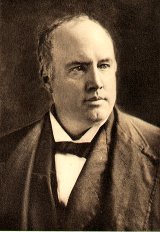
Kicking off the series is an old friend, Robert G. Ingersoll. This is from his “A Lay Sermon“.  Ingersoll was famous in his time (the latter 19th century) for his talents as an orator, speaking on religious skepticism, Shakespeare,  politics, and the human condition in general.

RobertGIngersoll

“The first thing a man wants to know and be sure of is when he has got enough. Most people imagine that the rich are in heaven, but, as a rule, it is only a gilded hell. There is not a man in the city of New York with genius enough, with brains enough, to own five millions of dollars. Why? The money will own him. He becomes the key to a safe. That money will get him up at daylight; that money will separate him from his friends; that money will fill his heart with fear; that money will rob his days of sunshine and his nights of pleasant dreams. He cannot own it. He becomes the property of that money. And he goes right on making more. What for? He does not know. It becomes a kind of insanity. No one is happier in a palace than in a cabin. I love to see a log house. It is associated in my mind always with pure, unalloyed happiness. It is the only house in the world that looks as though it had no mortgage on it. It looks as if you could spend there long, tranquil autumn days; the air filled with serenity; no trouble, no thoughts about notes, about interest — nothing of the kind; just breathing free air, watching the hollyhocks, listening to the birds and to the music of the spring that comes like a poem from the earth.”


Posted in quotations | Tagged , , , | Leave a comment

Top Ten Books That Make Ya Smile

Today’s TTT is….books that make us smile!

10. David Liss.  A writer of political & business thrillers, often set in the age of discovery,  Liss’ sense of humor snared me

“You have my word as a gentleman.”
“You are no gentleman!”
“Then you have my word as a scoundrel, which, I know, opens up a rather confusing paradox that I have neither the time nor inclination to disentangle.”

From The Whiskey Rebels, a novel set during the early American republic.

9. Mary Roach. Between the taboo topics and her dry delivery, Roach’s unique science-journalism books never fail to amuse.
8. Bill Bryson. Although many of his travel books are grumpy and unpleasant, his book on Australia was a riot.

7. Ready Player One, Ernest Cline.   RPO hits a sweet spot for me. I smile not because it’s funny, but because it’s cool. It’s awesome. It’s fun.

6. Night of the Living Trekkies,  Kevin David Anderson.  Where to begin with this one?  A zombie outbreak has happened at a Star Trek convention, and the main character’s name is Jim Pike.

5. In the City of Bikes: The Story of the Amsterdam Cyclist,  Pete Jordan.  It’s not a funny book, but it makes me smile with bliss.  I may be stuck driving to work and driving to the grocery store and driving for every darn-thing-else,  but somewhere in this planet there are people who can bike for everything they need,  and they don’t need helmets and lycra to do it because their city was built for people and not machines.  There’s bliss and ease  in the world, and that makes me smile.
4. Bernard Cornwell –   Sharpe & Saxon Stories

There’s a reason Cornwell is my second-most read author, ever. The man is good — good at creating believable historic settings, good at creating characters and relationships that draw readers in, good at getting the blood rushing with speeches and actions — but  good, too, at provoking belly-laughs.

“You did what, Sharpe? A duel? Don’t you know dueling is illegal in the army?”
“I never said anything about a duel, General. I just offered to beat the hell out of him right here and now, but he seemed to have other things on his mind.”

3. Harry Potter and the Prisoner of Azkaban, J.K. Rowling

The world of Harry Potter is enchanted by humor as well as magic, especially when Gred and Forge are around.  The two moments that stand out most for me are the twins teasing Harry during Chamber of Secrets (“Make way for the Heir of Slytherin! Seriously evil wizard coming through!”)  and the Marauder’s Map insulting Snape when he tried to compel it to reveal its secrets.

“Harry — I think I’ve just understood something! I’ve got to go to the library!”
And she sprinted away, up the stairs.
“What does she understand?” said Harry distractedly, still looking around, trying to tell where the voice had come from.
“Loads more than I do,” said Ron, shaking his head.
“But why’s she got to go to the library?”
“Because that’s what Hermione does,” said Ron, shrugging. “When in doubt, go to the library.”

2. Max Shulman.   I encountered Shulman in 2003, via The Many Loves of Dobie Gillis, and was so enamored of that work that I later read much more Shulman. While nothing after that really lived up to the first encounter,  what I liked about Shulman was made perfect in P.G. Wodehouse’s stories.
“What major are you most interested in?”
“What’s the easiest?” I said.
“Home economics,” he said.
“What’s the next easiest?” I said.
“It’s between sociology and library science,” he said. “To my certain knowledge nobody has ever flunked either.”
“Which one got the most girls in it?” I asked.

(From I Was a Teenage Dwarf)

1. P.G. Wodehouse.   You don’t know how funny English can be if you haven’t read Wodehouse.    A few from Right Ho, Jeeves! : 

“And yet, if he wants this female to be his wife, he’s got to say so, what? I mean, only civil to mention it.”
“Precisely, sir.”

“In this  life, you can choose between two courses. You can either shut yourself up in a country house and stare into tanks, or you can be a dasher with the sex. You can’t do both.”

“Well, Gussie.”
“Hullo, Bertie.”
“What ho.”
“What ho.”
These civilities included, I felt the moment had come to touch delicately on the past.

“I’m not saying I don’t love the little blighter,” he said, obviously moved. “I love her passionately. But that doesn’t alter the fact that I consider that what she needs most in this world is a swift kick in the pants.”
A Wooster could scarcely pass this. “Tuppy, old man!”
“It’s no good saying ‘Tuppy, old man!’”
“Well, I do say ‘Tuppy, old man!’. Your tone shocks me. One raises the eyebrows.

“I can never forget Augustus, but my love for him is dead. I will be your wife.”
Well, one has to be civil.
“Right ho,” I said. “Thanks awfully.”

Posted in General | 13 Comments