Wisdom Wednesday: Rise and Shine

Today’s reading comes from Marcus Aurelius,  who has shamed me out of slumber many a winter’s morn. Aurelius was the last of Rome’s “five good emperors”, and produced a work called The Meditations which has been lauded through the centuries; I’m quoting a modern translation of his work called The Emperor’s Handbook.

ariseandwork

In the morning, when you can’t get out of bed, tell yourself:  “I’m getting up to do the work only a man can do. How can I possibly hesitate or complain when I’m about to accomplish the task for which I was born? Was I made for lying warm in bed under a pile of blankets?”

“But I enjoy it here.”

Was it for enjoyment you were born? Are you designed to act or to be acted upon? Look at the plants, sparrows, ants, spiders, and bees, all busy at their work, the work of welding the world. Why should you hesitate to do your part,  the part of a man, by obeying the law of your own nature?

“Yes, but nature allows for rest, too.”

True, but rest — like eating and drinking — has natural limits. Do you disregard those limits as well? I suppose you do, although when it comes to working, you are quick to look for limits and do as little as possible. You must dislike yourself. Otherwise, you’d like your nature and the limits it imposes. At the same time, you’d recognize that enjoyment is meant to be found in work too and that those who enjoy their work become totally absorbed in it, often forgetting to eat or drink and seek other forms of enjoyment. Do you think less of your life’s work than the sculptor does his sculpting,  the dancer his dancing, the miser his money, or the star his stardom?  They gladly forgo food and sleep to pursue their ends. To you, does the work of building a better society seem less important, less deserving of your devotion?


Posted in quotations | Tagged , | 5 Comments

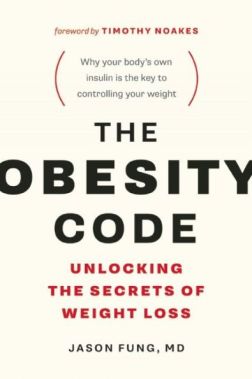
The Obesity Code

The Obesity Code
© 2016 Jason Fung
326 pages

obesity

Jason Fung begins with a question: why are there fat doctors?   If the conventional analysis  of fat and its prescription are accurate, why do many people struggle to make long-term headway against obesity?   The Obesity Code  argues the case against the caloric model, presenting its own: obesity is a multi-factorial disease,  one whose chief driver, insulin, is sorely unappreciated.   Related to Gary Taubes’ work arguing for the hormonal model (Good Calories, Bad Calories;  Why We Get Fat; The Case Against Sugar) and others,  The Obesity Code wraps up with advice for attacking fat by land, air, and sea. Those trying to understand the challenge of obesity, either for personal or social reasons, will find it a helpful resource — though one marginally diminished by its breeziness.

Fung begins by dismantling the caloric model,  both in theory and in practice, evaluating numerous studies which demonstrate the inadequacy of the calories in, calories out approach. The body responds to a drop in its caloric intake the same way those of us not holding political office respond to a drop in our income;  it spends less.  Those who attempt to eat less than they need, at the same time trying to increase their activity,  will find themselves beset with misery and cravings.   The crucial misstep in the caloric model is that it misses how fat is regulated by the body — every body, regardless of age or health.   Hormones drive the creation, dispersal, and use of fat, whether the case is girls developing curves in middle school or both sexes fighting the pudge amid their freshmen years in college. Although the main manager of fat is insulin, Fung points to several other factors, notably cortisol — a stress hormone that, if consistently present in the body, reliably drives weight up.

Because the lion’s share of weight problems are driven by by how modern diets interact with the insulin cycle in our bodies,  Fung devotes more attention to that factor than any others.  He uses an interesting example of money management to explain how it works.  After a meal, your body is flush in glucose and insulin, the latter of which has emerged  with one job: to get the glucose where it needs to be. That will be into your cells, at first, but you don’t need that much energy at one time, so it converts the glucose into glycogens, which it stores in the liver. Fung likens this to a wallet: it’s easy for insulin to move glucose in and out of the liver.   Wallets, though, have limits to how much they can hold — and so insulin creates fat to store the rest.    Because people in the modern world never stop eating,  we continually keep the short-term storage filled to capacity, and the fat stores…..are never touched.   If someone truly wants to lose weight,  they need to give their bodies time to empty the short-term storage and then begin using the long-term. This will not happen if they snack throughout the day, even if they’re just sipping a diet soda:     artificial sweeteners may not have calories, but they still summon forth insulin hormones to patrol around looking for glucose to store, and so long as insulin is around, it’s not letting your fat escape.  Fung advocates the practice of intermittent fasting (which can be something as simple as a no-snacks rule to reducing eating windows in a given day, to extensive multiday fasts)  to address the insulin problem head on. He’s written extensively on fasting’s application for both obesity and diabetes.

The Obesity Code is not a rehash of Gary Taubes’ work, though, because Fung addresses more factors — cortisol, for instance, and the body’s sleep cycle, and considers various kinds of diets.   There are several diets that work within the hormonal model, like Atkins and Keto,  but following a specific diet in perpetuity is difficult for most people. There are some items that should be avoided, like sugar and  highly processed foods,  but regulating the when of our food intake is more important than banning or promoting whole classes of macronutrients. Yung partially echoes Michael Pollan’s food rules:  Eat real food, not too much of it, and mostly plants.

1. Reduce your consumption of added sugars. 2. Reduce your consumption of refined grains. 3. Moderate your protein intake. 4. Increase your consumption of natural fats. 5. Increase your consumption of fiber and vinegar.

More importantly, however, he asks the reader to consider the virtues of current political and medical practices in the light of the hormonal model’s accuracy.  If the hormonal model is true, then Americans are being taxed to provide subsidies to the very companies growing products destroying our health;    and even more disturbingly, if the model is true,  the conventional treatment for type 2 diabetes will only lead to its growing progressively worse,  and inducing obesity in the bargain.

I began reading The Obesity Code merely as a reminder for what I knew:  I dropped a lot of weight in a short amount of time back in 2011-2012, and Taubes and others were the ones who helped me make sense of how that had happened.*  Yung’s work proved far more expansive than I figured for. While Gary Taubes’ work  is more professionally presented (Yung has a casual style),  there’s no denying the amount of useful content here. I can well understand its positive reception among those seeking to understand obesity both personally and as a medical crisis.


* In autumn 2011 I was diagnosed with hypertension. I was still looking for work and couldn’t afford to stay on medication, so I changed my diet to avoid high-salt foods, and began neighborhood walks because exercise was supposed to be combative as well.  Starting from the high 300s, I dropped down to 206 thanks to a diet very low in processed foods. I blame Mexican food and IPAs for never being able to crack the 200 barrier —  I love  tacos al pastor more than I love the idea of being in the hundred club.

Posted in Reviews | Tagged , , | 11 Comments

Classic Meme 2.0

The Classics Club is bringing back their monthly question, beginning with:

Which classic author have you read more than one, but not all, of their books and which of their other books would you want to read in the future?

solz

For me, it’s Alexandr Solzhenitsyn, without a doubt. His Gulag Archipelago  has been the hit of my entire classics club experience. He speaks with profound moral authority, and his epic threw light not only on the baked-in evils of the Soviet system, but on the moral minefield that is being human.  I first heard of Solzhenitsyn via Joseph Pearce,  I believe,  and I’ve been planning on doing a Solzhenitsyn series that would include some of his smaller works along with his biography,  written by Pearce.  On the radar would be Invisible Allies, A Day in the Life of Ivan Denisovich, and Solzhenitsyn: A Soul in Exile.

Posted in General | Tagged | 18 Comments

Wisdom Wednesday: Enough

Hearing wisdom and knowing wisdom are two different things. The usual human experience is to hear a thing, remark on its  insight, and then shove it away in some dark closet of our minds, where it is forgotten and fruitless.  As a way of keeping myself grounded and reminded, and helping interested others to do so,  I’d like to start sharing quotes or verses on human flourishing on a regular basis.

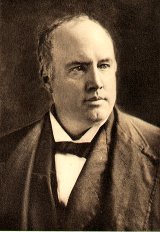
Kicking off the series is an old friend, Robert G. Ingersoll. This is from his “A Lay Sermon“.  Ingersoll was famous in his time (the latter 19th century) for his talents as an orator, speaking on religious skepticism, Shakespeare,  politics, and the human condition in general.

RobertGIngersoll

“The first thing a man wants to know and be sure of is when he has got enough. Most people imagine that the rich are in heaven, but, as a rule, it is only a gilded hell. There is not a man in the city of New York with genius enough, with brains enough, to own five millions of dollars. Why? The money will own him. He becomes the key to a safe. That money will get him up at daylight; that money will separate him from his friends; that money will fill his heart with fear; that money will rob his days of sunshine and his nights of pleasant dreams. He cannot own it. He becomes the property of that money. And he goes right on making more. What for? He does not know. It becomes a kind of insanity. No one is happier in a palace than in a cabin. I love to see a log house. It is associated in my mind always with pure, unalloyed happiness. It is the only house in the world that looks as though it had no mortgage on it. It looks as if you could spend there long, tranquil autumn days; the air filled with serenity; no trouble, no thoughts about notes, about interest — nothing of the kind; just breathing free air, watching the hollyhocks, listening to the birds and to the music of the spring that comes like a poem from the earth.”


Posted in quotations | Tagged , , , | Leave a comment

Top Ten Books That Make Ya Smile

Today’s TTT is….books that make us smile!

10. David Liss.  A writer of political & business thrillers, often set in the age of discovery,  Liss’ sense of humor snared me

“You have my word as a gentleman.”
“You are no gentleman!”
“Then you have my word as a scoundrel, which, I know, opens up a rather confusing paradox that I have neither the time nor inclination to disentangle.”

From The Whiskey Rebels, a novel set during the early American republic.

9. Mary Roach. Between the taboo topics and her dry delivery, Roach’s unique science-journalism books never fail to amuse.
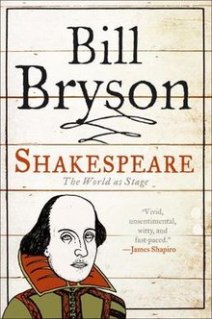
8. Bill Bryson. Although many of his travel books are grumpy and unpleasant, his book on Australia was a riot.

7. Ready Player One, Ernest Cline.   RPO hits a sweet spot for me. I smile not because it’s funny, but because it’s cool. It’s awesome. It’s fun.

6. Night of the Living Trekkies,  Kevin David Anderson.  Where to begin with this one?  A zombie outbreak has happened at a Star Trek convention, and the main character’s name is Jim Pike.

5. In the City of Bikes: The Story of the Amsterdam Cyclist,  Pete Jordan.  It’s not a funny book, but it makes me smile with bliss.  I may be stuck driving to work and driving to the grocery store and driving for every darn-thing-else,  but somewhere in this planet there are people who can bike for everything they need,  and they don’t need helmets and lycra to do it because their city was built for people and not machines.  There’s bliss and ease  in the world, and that makes me smile.
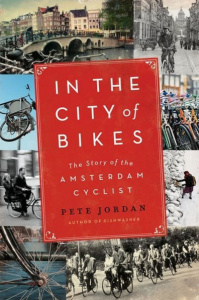
4. Bernard Cornwell –   Sharpe & Saxon Stories

There’s a reason Cornwell is my second-most read author, ever. The man is good — good at creating believable historic settings, good at creating characters and relationships that draw readers in, good at getting the blood rushing with speeches and actions — but  good, too, at provoking belly-laughs.

“You did what, Sharpe? A duel? Don’t you know dueling is illegal in the army?”
“I never said anything about a duel, General. I just offered to beat the hell out of him right here and now, but he seemed to have other things on his mind.”

3. Harry Potter and the Prisoner of Azkaban, J.K. Rowling

The world of Harry Potter is enchanted by humor as well as magic, especially when Gred and Forge are around.  The two moments that stand out most for me are the twins teasing Harry during Chamber of Secrets (“Make way for the Heir of Slytherin! Seriously evil wizard coming through!”)  and the Marauder’s Map insulting Snape when he tried to compel it to reveal its secrets.

“Harry — I think I’ve just understood something! I’ve got to go to the library!”
And she sprinted away, up the stairs.
“What does she understand?” said Harry distractedly, still looking around, trying to tell where the voice had come from.
“Loads more than I do,” said Ron, shaking his head.
“But why’s she got to go to the library?”
“Because that’s what Hermione does,” said Ron, shrugging. “When in doubt, go to the library.”

2. Max Shulman.   I encountered Shulman in 2003, via The Many Loves of Dobie Gillis, and was so enamored of that work that I later read much more Shulman. While nothing after that really lived up to the first encounter,  what I liked about Shulman was made perfect in P.G. Wodehouse’s stories.
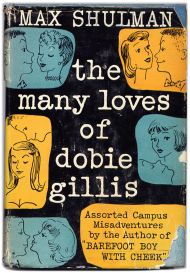
“What major are you most interested in?”
“What’s the easiest?” I said.
“Home economics,” he said.
“What’s the next easiest?” I said.
“It’s between sociology and library science,” he said. “To my certain knowledge nobody has ever flunked either.”
“Which one got the most girls in it?” I asked.

(From I Was a Teenage Dwarf)

1. P.G. Wodehouse.   You don’t know how funny English can be if you haven’t read Wodehouse.    A few from Right Ho, Jeeves! : 

“And yet, if he wants this female to be his wife, he’s got to say so, what? I mean, only civil to mention it.”
“Precisely, sir.”

“In this  life, you can choose between two courses. You can either shut yourself up in a country house and stare into tanks, or you can be a dasher with the sex. You can’t do both.”

“Well, Gussie.”
“Hullo, Bertie.”
“What ho.”
“What ho.”
These civilities included, I felt the moment had come to touch delicately on the past.

“I’m not saying I don’t love the little blighter,” he said, obviously moved. “I love her passionately. But that doesn’t alter the fact that I consider that what she needs most in this world is a swift kick in the pants.”
A Wooster could scarcely pass this. “Tuppy, old man!”
“It’s no good saying ‘Tuppy, old man!’”
“Well, I do say ‘Tuppy, old man!’. Your tone shocks me. One raises the eyebrows.

“I can never forget Augustus, but my love for him is dead. I will be your wife.”
Well, one has to be civil.
“Right ho,” I said. “Thanks awfully.”

Posted in General | 13 Comments

Related Videos: Losing an Enemy

A few months ago I read Losing an Enemy, written by Trita Parsi on the Joint Plan of Action, also known as “The Iran Deal”.     I just discovered a ten-minute clip from Parsi in a TED talk reviewing the history between  Iran and Israel, arguing that their contemporary poor relationship  — and Iran’s relationship with the DC — should be viewed not in ideological terms, but in geopolitical ones.

Posted in General | Tagged , , | 2 Comments

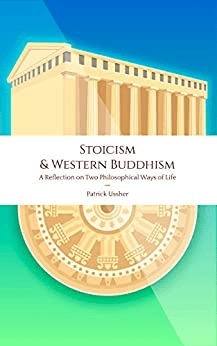
Stoicism and Western Buddhism

Stoicism and Western Buddhism: A Reflection on Two Philosophical Ways of Life
© 2018 Patrick Ussher
88 pages

stoic

We read philosophy in order to live philosophy.

In Stoicism and Western Buddhism, Patrick Ussher explores the kindred beliefs and practices of these two philosophies, and argues that their similarity is not an accident. Modern Stoicism and western Buddhism are custom builds; their teachers and students drop what they dislike and emphasize what they do, and a common goal, mindfulness,  drives modern expressions of much older thought.    In consequence, modern Stoicism and western Buddhism are both rather unlike their traditional antecedents,  and very close to one another.  That these traditions have been so hand-tailored to western countries is not a cause for distress, Ussher writes;  evolution and cultural adaptation  are the norm for philosophies of life.  He then surveys the full extent of Stoicism and western Buddhism’s commonalities, and ends by suggesting what they can learn from the other.

Those who have read even an overview of Buddhism as a world religion will know it originated in India, then spread widely across southeast Asia,  absorbing elements of the local cultures and developing into several schools. The core idea of Buddhism is that all beings are trapped in a cycle dominated by suffering, created by our own desires, and that to escape this cycle we must accept the four noble truths and follow the eight-fold path.  Those who fail to learn the lesson are doomed to repeat it, forever being reincarnated and forced to endure the travails of life in perpetuity.    Teachers of western Buddhist philosophy, however,  focus chiefly on the practical boons of Buddhist habits —  their immediate returns,  not the escape to Nirvana.  Their students are very unlikely to have read original Buddhist texts, instead drawing  their studies from western Buddhist writers: Thicht Nhat Hanh,  Stephen Batchelor, and Jack Kornfield are all considered, and are all purposely fine-tuning Buddhism for a western audience which is increasingly nonreligious.  Similarly, Stoicism —  based on conforming oneself to a rational order of the universe emanating from God —   is being  tailored to work sans Zeus, its teachers again focusing on the everyday boons of the Porch’s practice. Although the original Stoic authors are still very much read by students (Marcus Aurelius and Epictetus, chiefly),  there is growing pile of books by modern Stoic authors which might supplant the original texts, eventually.

Both philosophies, as expressed for modern audiences,   give their students a way to live well despite the harsh reality we are born into.  Both recognize that we often create or exacerbate our suffering by dwelling on what we want —  and wanting isn’t simply about greed, lust, or envy, but can be as simple as our frustration that things do not happen the way we wish them to.  Our idea didn’t succeed,  our object d’amor loved another —  that fool in front of us was driving slow and now we have to sit through the redlight.  Both philosophies call for letting go of this wanting, and for accepting what we have and finding a productive way to work with it. There are differences in Buddhist and Stoic mindfulness,  as Stoicism’s is more like mental hygiene (letting go of troublesome thoughts) and western Buddhism’s meditation calls for intense immersion in the moment.  Ethically, the two philosophies have an identical cosmopolitan  basis, urging students to view their fellow H. sapiens as brothers and sisters, members of one body.  Western Buddhism is more activist-oriented, Ussher notes,  as its students are urged to go out and do good, rather  simply respond to what happens with grace. In both, this call to help ones brothers balances the inward-focusing tendency of the philosophy.

Although this book is quite small, I appreciated getting a proper introduction to some of the commonalities between Stoicism and Buddhism, being a member of a facebook group that often discusses the common ground between them, as well as Epicureanism.  I may later read Buddhist and Stoic Wisdom, which appears to be a longer evaluation of the same topic.


Posted in Reviews | Tagged , , | 3 Comments

Waco: A Survivor’s Story

A Place Called Waco: A Survivor’s Story
© 1999 David Thibodeau
381 pages

waco

On April 19th, 1993, the arrogance of power was made obvious when scores of people were killed in a outstandingly incompetent, if not deliberately malicious, attempt to serve an arrest warrant.  “Killed” is rather a sterile word, of course,  considering what it encompassed:   the adults and children tortured and blinded by CS gas,  crushed by tanks and debris, and finally consumed by fire.   Although most of the survivors were put on trial and imprisoned,  one —  aspiring musician who found in David Koresh a friend, mentor, and inspiration  — was able to evade their interest, recover from his burns, and begin to speak on behalf of those voices which were silenced.

I’ve read accounts of Waco before, but never from someone who lived in Mount Carmel during its final days.   Although there are less impassioned accounts out there (Tabor’s & Reavis’),  A Place Called Waco  recommends itself, being one of the few survivor accounts out there. Thibodeau’s is a unique case given that he was nonreligious when he first encountered Koresh at a music shop in Los Angeles.  His absorption into the Mt. Carmel community , an esoteric sect of Seventh Day Adventists, mystified his parents and himself.  What drew him there was David Koresh, himself an aspiring musician — one who wanted to combine his religious message with the music. Koresh’s education was minimal,  but his gift for creating a compelling narrative out of bits and pieces of the Bible and applying them to contemporary goings-on  drew to him even religious scholars from Britain.  Thibodeau had no interest in deities and negative interest in the Bible, but when Koresh spoke, it was spellbinding.   Koresh had an innate verve that he brought to his music and his religious teachings,   a unique gift for making them his own. Although he’d followed Koresh to Waco mostly for the music, Thibodeau found life in the Mt. Carmel community oddly bracing:    its restrictions gave him structure in his life for the first time, and he was proud to have embraced its challenges and curved his own appetites.

There was the discord, though.  By the time Thibodeau had figured out the relationships between Koresh and the various women and children in the compound (Koresh  mandating celibacy among his students, save for those women, married or no, who God had told him to make babies with..including teenagers),  he’d bonded to many members of the group,   and his attachment to Koresh and one of his wives in particular dulled his criticism of Koresh’s teen brides.  Beyond that, Thibodeau’s account throws new light onto the everyday lives of the community: I was surprised to learn that not only did Koresh and other frequently move between Los Angeles and Waco before the siege,  but even during the siege people filtered in and out.  The Carmel complex was under constant construction throughout Thibodeau’s time there, and working on it was how Thibodeau earned his keep. The community  generated income through an autoshop and the gun trade, though it was the latter that drew the fire of the state upon them, as the ATF believed they were modifying semi-automatics  into full automatics.  This was perfectly legal — so long as the resulting firearms were registered. Thibodeau maintains that no one in the community had the technical expertise to make said modifications,  that the ATF had no evidence whatsoever for believing the Carmel community would have sold unregistered automatics even if they could make them, and that the ATF & FBI’s actions were undertaken out of paranoia and religious persecution.

Thibodeau’s account of the siege and final day are rough. It used to be difficult for me to believe that the state could act with such brutality to its own citizens, but now I accept it as a matter of course.  The same was true for Thibodeau, and he was further demoralized  when he realized how hostile so much of the nation was to him and the other survivors.   The Mt. Carmel community had pleaded for the press…but as Thibodeau reflects,  the press had been their worse enemy,   giving the federal forces a stage to perform for, and making the government’s suspicions into the mob concensus. The only communities who cared about what happened to the Mt. Carmel community  were those Thibodeau didn’t particularly like —  Patriot groups and militias.  Although he didn’t like them, especially after the first anniversary commemoration of the Waco massacre was commercialized by groups selling anti-government lit,   they would at least listen — and  speaking about the disaster and trying to make sense of it gave Thibodeux a renewed sense of purpose, a way forward in his life.

Although one has to be careful with witness accounts,  Thiboeau’s unique perspective and accessible style make this account worth evaluating. I saw no contradictions between it and more objective histories like those of Tabor and Reavis,  though Thibadeau is understandably more defensive of the community than others.  Originally published as A Place Called Waco, the book has been republished as Waco: A Survivor’s Story, complete with a cover drawn from a miniseries that Thibodeau contributed to.  It is superb drama and awful for one’s blood pressure.


Posted in Reviews | Tagged , , , | 5 Comments

(Not) the Top Ten Authors I’ve Read Most

This week’s TTT, bloggers are sharing the top ten authors they’ve read the most books by….but my top ten won’t have changed too much since the last time we did this in ’15 (lots of kid-lit heavyweights), so I’m going to  go beyond the likes of Asimov (70+) and Cornwell (49) to review the next tier of my most-read authors.   The numbers come from Goodreads.

  1. C.S. Lewis, 17 entries.  I’ve become increasingly fond of “Jack” since 2015,  first seduced by his Narnia books, and then by Surprised by Joy  He’s become a reading habit since, although I often don’t post reviews for his works because I’m still chewing on them. (The Screwtape Letters, The Weight of Glory, The Abolition of Man, and On Other Worlds are all Lewis titles I’ve read but not reviewed.)
  2. David Mack, Destroyer of Worlds. 17 entries.  Mack wrote Star Trek: Destiny,  easily the most generally-lauded Trek trilogy out there.  He’s also done other high-profile books, like the epic end to the Mirror, Mirror series.

  3. Robert Harris, 14 entries  I don’t know of a historical fiction writer whose work is more varied.Roman history? Cold War thrillers? Contemporary British politics?  French conspiracies? Stock market A.I. run amock? Post-apocalyptic neo-medieval?  Whatever your pleasure, Harris has you sorted.
  4. Wendell Berry, 14 entries.   I have such affection for this gentle Kentucky farmer I hesitate to start talking about him, lest I write a paper! Between his yearnful Port https://readingfreely.com/wp-content/uploads/2014/01/7e973-butididnotlovetroy.jpgWilliam novels and his numerous essay collections on agriculture, culture, and society,   I’ve read quite a bit of him and hope to read still more.
  5. Will and Aerial Durant, 13 titles.  These two would hold the record for Sheer Number of Pages Read, since their Story of Civilization books pegged a thousand pages on the regular.
  6. Bill Bryson, 13 titles.   Eh, you all know Bryson, author of many grumpy travel guides and far more amusing general-interest books.sagan
  7. Carl Sagan, 10 titles.   Sagan is my favorite science author (no one tell Isaac),  and whenever I’m low I’ll listen to recordings of him talking.
  8. Christopher L. Bennett. 10 titles.Another prolific Trek writer, Bennett’s books are science-rich. He was my first favorite author of the Relaunch era, but Mack overcame my loyalty.    However!  Bennett carries the distinction of being the only Trek author who I’ve read their own original works for.
  9. Rick Riordan. Author of several fantasy series whose books all have the same plot. A chaos monster is going to destroy the universe in two weeks on the solstice/equinox and a trio of teenage demigods is our only hope. Can they fight off monsters and adolescent drama to win?  (Yes, but it won’t matter because there’s always another chaos monster.) This story comes in Greek, Roman, Egyptian, and Norse flavors, and I read 10 iterations of it.  I like them, honest!
  10.  At nine titles,  I’ve a four-way tie between Michael Crichton,  J.K. Rowling, C.S. Forester, and Kurt Vonnegut.    Four fairly different authors, to say the least!


Still the king!

Posted in General | 20 Comments

Clutter Free

Clutter Free: Quick and Easy Steps to Simplifying Your Space
© 2015 Kathi Lipp
226 pages

clutter
“Enough is a beautiful thing.”

Reading books about decluttering is much easier than actually doing it, which is probably why I’ve read so many over the years.  Despite its brevity,  it’s one of the more useful books on minimalism, simple living, etc that I’ve read because of Lipp’s emphasis on habits that enable clutter to build up and overtake our lives. Clutter, as defined by Lipp, is anything in our homes that we do not love or use.  Part of Lipp’s intent is for the reader to evaluate their lives and the items they live with and decide what really matters. Letting go of items also means letting go of misguided attachments to the past;  items purchased in the pursuit of a new hobby five years ago, for instance, but never touched. People don’t like to admit their own mistakes, or to let go of the people they thought they were, or might become.  In addition to tactical counters to clutter — designating definite Places for items to go, and creating a daily routine for keeping things in their place — Lipp encourages the reader to look beyond cleaning and to think about their lifestyles, too.  She’s close friends with several women in her neighborhood, and in the interests of frugality they’ve taken to lending each other tools and supplies so that each of them has access to a greater pool of resources. I appreciated Lipp’s emphasis on the spirit-taxing effects of clutter, the constant stress that a life beset with mess creates.

Some highlights:

When you save everything, you can find nothing.

Organizational systems are to cluttered homes what credit cards are to debt. Credit cards tell you there is still more money, even though your bank account says no. Organizational systems tell us there is still more space, when our house cries “No!”

But another thing we must recognize about clutter is that it’s active. Even if it’s just sitting there on a shelf or buried in a box, clutter is actively working in our lives. It makes us feel unsettled. Clutter never lets you rest. It is constantly talking to you and letting you know that things are wrong and there will be no peace until you tend to the mess. You cannot enjoy any activity—time with your family and friends, reading, exercising, anything, because clutter is telling you, “Pay attention to me!”

You can spend a lot of money, time, and energy on something, and it can still be OK to admit that it’s over.

I needed a better set of clutter questions to help me get unburied from the piles of stuff that were taking over my home. Better questions like these: 1. Do I currently use it? 2. Do I really love it? 3. Would I buy it again? These three questions? They have become the clarifying lenses I see all my possessions through, and they help me quickly and unemotionally clear the clutter from my life.

Posted in Reviews | Tagged | 8 Comments