“Love”

“Love is the only bow on Life’s dark cloud. It is the morning and the evening star. It shines upon the babe, and sheds its radiance on the quiet tomb. It is the mother of art, inspirer of poet, patriot and philosopher. It is the air and light of every heart – builder of every home, kindler of every fire on every hearth. It was the first to dream of immortality. It fills the world with melody – for music is the voice of love. Love is the magician, the enchanter, that changes worthless things to Joy, and makes royal kings and queens of common clay. It is the perfume of that wondrous flower, the heart, and without that sacred passion, that divine swoon, we are less than beasts; but with it, earth is heaven, and we are gods.”

Robert G. Ingersoll was a famous orator of the 19th century, delivering lectures on religion, history, literature, etc. He is chiefly remembered today for his speeches against religion, but I took to him as a lay philosopher, a quintessential American who somehow fused the best of the 18th and 20th centuries together, preaching about love and liberty while firing broadsides against monarchy, superstition, etc. Back in 2010 I posted a brief biography about him online; a year before that I also posted a far more flowery tribute to him. I woke up with this quotation in my head, the old favorite brought to mind by Valentine’s Day.

Posted in quotations | Tagged | Leave a comment

Yesterday’s News: Carnegie & Brexit circa 1902

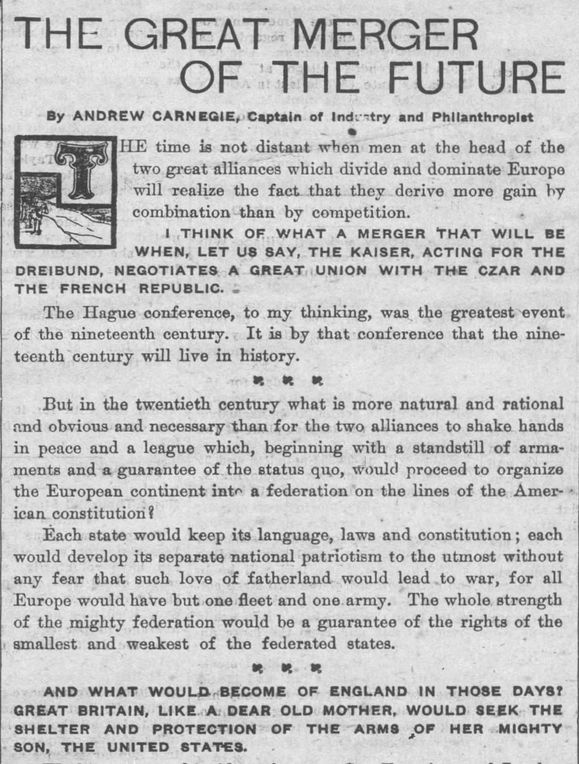
Inspired by The Network, I’ve been perusing my local paper’s older archives and looking for mentions of Signor Marconi. I thought it might be interesting to see how his invention was received at the time. I was amused to find this huffy piece:

Whoopsie! On the same page was an interesting piece contributed by non other than Andrew Carnegie, who calls for a general European merger. Interestingly, the Scottish emigre doesn’t consider Great Britain a likely participant, writing that it should instead seek the companionship of its daughter-nation:

Posted in General | Tagged | 6 Comments

The Network

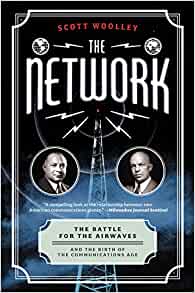
The Network: The Battle for the Airwaves and the Birth of the Communications Age
© 2015 Scottt Woolley
280 pages

Few things fascinate me as much as cities in the United States and Europe, circa 1880 – 1930: they were being remade year by year, as unprecedented new technologies arrived on scene and were incorporated into the urban fabric, radically changing society as they became less novelties and more infrastructure. Telecommunications were part of that story, and more than any other novelty of the industrial city, they are still quickly changing us today: every year makes the digital world more expansive, intrusive, and impactful. Its story begins with a hopeful Italian named Marconi, who narrowly missed death by choosing to sail to America not on the Titanic, but the Lustiania — and concludes with the first forays of the telecom industry into satellites. The Network is less about how radio revolutionized society, however, focusing instead on the legal and political fights that the telecom industry had to endure while rising from primitive telegraphs to the space age.

The Network is dominated by not by Marconi, as expected, but someone I’d never heard off, an immigrant named David Sarnoff. Like Pan Am’s Juan Trippe, he built the radio-tv telecommunications industry around himself, presiding over it from its infancy to maturity though his involvement with Marconi, the Radio Corporation of America, NBC, and other firms. The transition from wireless telegraphy to radio, and all that followed, was not an easy one: in the 1910s, a state of the art wireless set was impossible to build legally because the ideal device would incorporate mechanisms from multiple patent-holders. The government ‘helped’ here during the Great War by building ideal devices anyway, forcing patentholders into a pool at gunpoint. Whatever aid given to the industry by war was reversed by the FCC’s presumptuous, panicky kneecapping of the nascent FM industry: believing an increasing period of solar activity would cripple FM sets by causing interference, the FCC dictated narrow ranges for new FM sets and transmitting restrictions that forced stations to grow in adverse conditions. (The predicted solar activity had no discernible effect.) It wouldn’t be the first time the FCC nearly smothered the future here. In addition to the legal battles, Woolley also communicates a little of the technical evolution of telecommunications , but virtually nothing of radio’s cultural mark. The narrative also jumps decade to decade so that we experience milestones, but not the in-between; I often felt a little disoriented after each jump, since the industr(ies) would grow significantly in the interim.

Although the book wasn’t quite what I was looking for, I still learned quite a bit: although I knew that telephony had grown into divergent but related industries (radio, tv, internet, etc), I didn’t realize how interconnected they were even once they’d established themselves: RCA’s “radio” shows were relayed via AT&T’s phone lines to other stations to create national networks, even after FM transmittal would have allowed for more powerful direct broadcasting; this was one reason Sarnoff was keenly interested in using satellites to bounce radio signals from transmitting stations to receiving stations,so to bypass the forced reliance on its telecom rival’s infrastructure. In the future I’ll be looking for Hello, Everybody! The Dawn of the Radio Age; it may be more of what I’m looking for.

Related:
Empires of Light: Edison, Tesla, Westinghouse, and the Race to Electrify the World, Jill Jones. Again a history of patent wars and technical innovation, less attention on changing society.
The Victorian Internet, Tom Standage. On telecom’s granddaddy, telegraphy.

Posted in history, Reviews | Tagged , , , , , | 8 Comments

The Bird Way

The Bird Way: A New Look at How Birds Talk, Work, Play, Parent, and Think
© 2020 Jennifer Ackerman
368 pages

When reading an introduction to a book on anthropology, one can’t help but be impressed by the variety of human cultures: we have all found many ways to be human.  After reading The Bird Way,  I can only say the same thing about our avian neighbors.  Many generalizations about birds prove to only be true about populations that  have been previously studied; when a variety of species across the world are examined, birds show off a staggering variety of behaviors and abilities. Here,  Jennifer Ackerman examines avian intelligence,  childrearing, courtship, communication, and  play. 

Why do birds sing?   Most reading this might answer that male birds sing to advertise themselves and defend their territory – and this is, in fact, typical behavior for many birds in the temperate zones of the northern hemisphere.  But in other regions like the tropics, female birds sing with gusto – and that realization has made temperate aviologists backtrack and listen more carefully to their familiar roosts, where – having put aside the idea that singing is purely about territory and sex,  the quieter, more infrequent voice of temperate ladybirds is suddenly obvious.   The realization that assumptions about birds have been based on a small subset of birds familiar to western scientists sets the stage for the book, which reviews the wide array of bird gifts and tactics.   

The review of behavior is fascinating in itself,  which is why animal documentaries are such a hit in general – but Ackerman goes beyond to write on what these behaviors tell us about bird species. We learn that Australia is a hotbed of novel bird behavior, for instance, and is regarded by scientists as the origin point for birdsong itself. We learn of varied behavior that comes not just from biological differences, but cultural ones – for young birds learn their songs from their parents, and older birds can learn new ways to exploit available food sources, and pass it on to others. Birds in general, not just corvids, are quite clever – and surprisingly playful. Perhaps playful experimentation is how they familiarize themselves with the world, and learn how to change things to their advantage. Ackerman reviews some truly  surprising information, pointing out how some birds who use brushfires to hunt by purposely spreading the fires to flush out fresh quarry. In the examples cited, the species in question picked up burning sticks from the fire zone, flew to an area beyond the firebreak created by firemen, an let the sticks go to create fresh blazes.  Many birds remember what happens in their environment and apparently plan accordingly, and their senses often surpass our own. What looks like a bizarre jumping-up-and-down habit to us is, in a bird’s eye, an artful somersault that uses sound and vision in sythensis to mesmerize an object d’amor.  Human eyes can’t perceive either the speed of the acrobatics, or the ultraviolet change in coloration as the bird performs its act.  Bird language’ complexity is also often hidden from human hears,  so rapid-fire that we miss the nuances.           

Of all the bird books I’ve read in the last year, The Bird Way  is by far the strongest. I’m now more than a little curious about Ackerman’s previous work, The Genius of Birds.

Related:
The Thing with Feathers, Noah Strycker
Becoming Wild: How Animal Cultures Raise Families, Create Beauty, and Achieve Peace, Carl Safina
What the Robin Knows: How Birds Reveal the Secrets of the Natural World, Jon Young          

Posted in Reviews, science | Tagged , | 8 Comments

Top Ten PC Games I Love

Today’s top ten is a “love” freebie, so I’m going to leave the reservation entirely and do…favorite PC games.  PC gaming  is my most timesinky hobby beyond reading,  its chief competitor and hindrance.

thesims
Sim-me in his ‘apartment’.   20 years later I actually have that Jack Vettriano portrait, as well as the Sinatra poster. No saxophone, though.

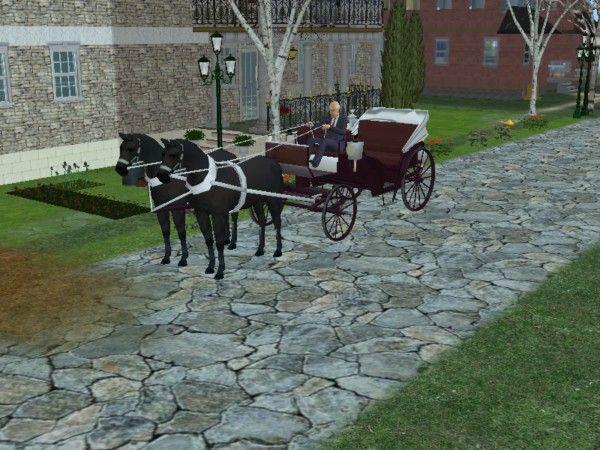
The Sims, by which I include most of its PC iterations.  I bought the original game on release, and it generously fed my imagination; I played The Sims 2 nearly every week from autumn 2004 to spring 2018, when it was finally supplanted by The Sims 4.  These games have been a playground for me —  especially The Sims 2, which I’d modded so extensively that one of my neighborhoods was a weird medieval-western fusion that grew out of a peak oil premise.
queensbluff2
You thought I was kidding.

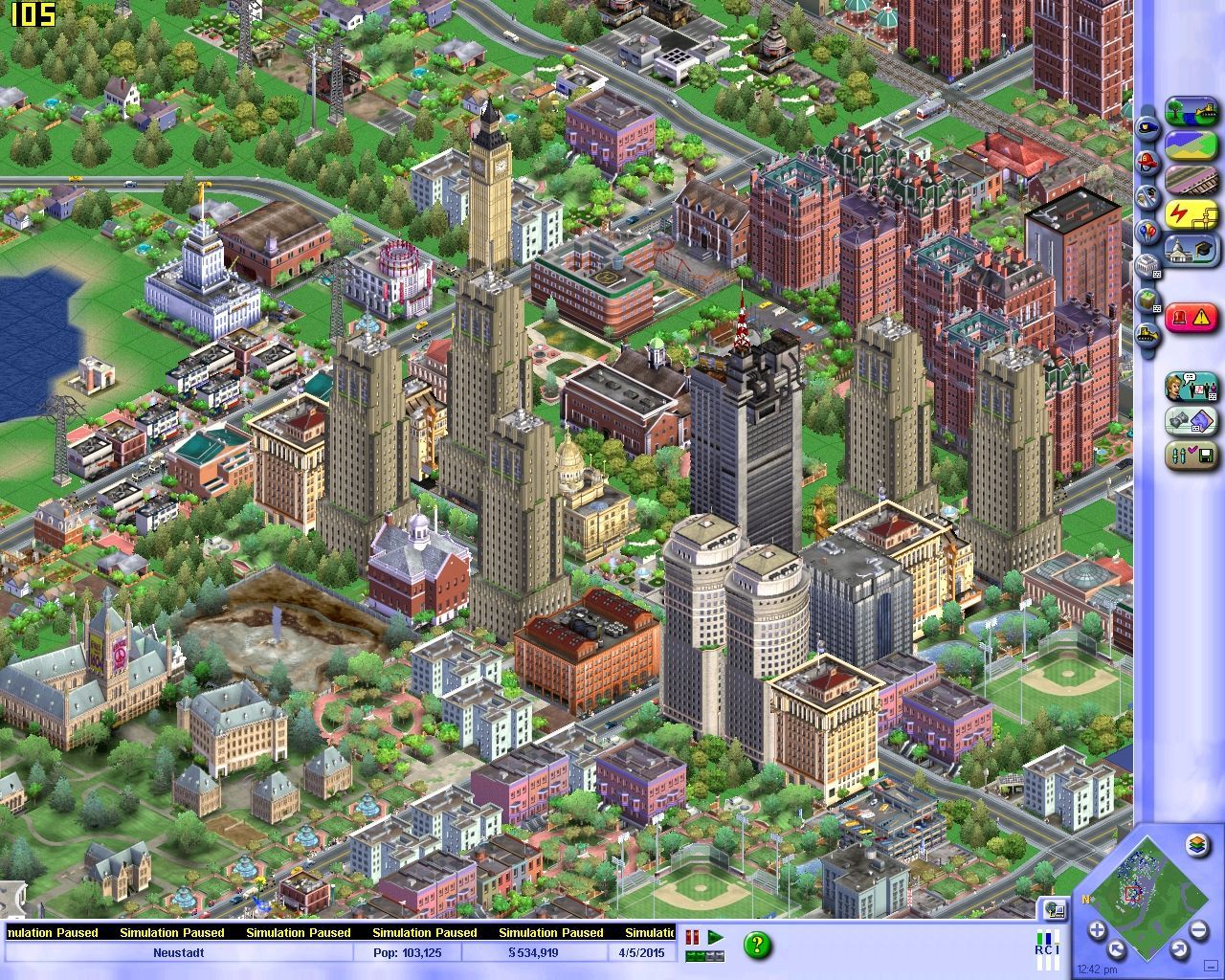
neustadt

SimCity 3000.    This series was my introduction to PC gaming, period, and is probably why I read books on garbage and electrical infrastructure.  I loved its music and integration of ‘politics’, using citizen petitioners and lobbyists to ask the mayor to enact some agenda or another. It was unnecessary, but made the gameworld feel more real.
A Walk Downown

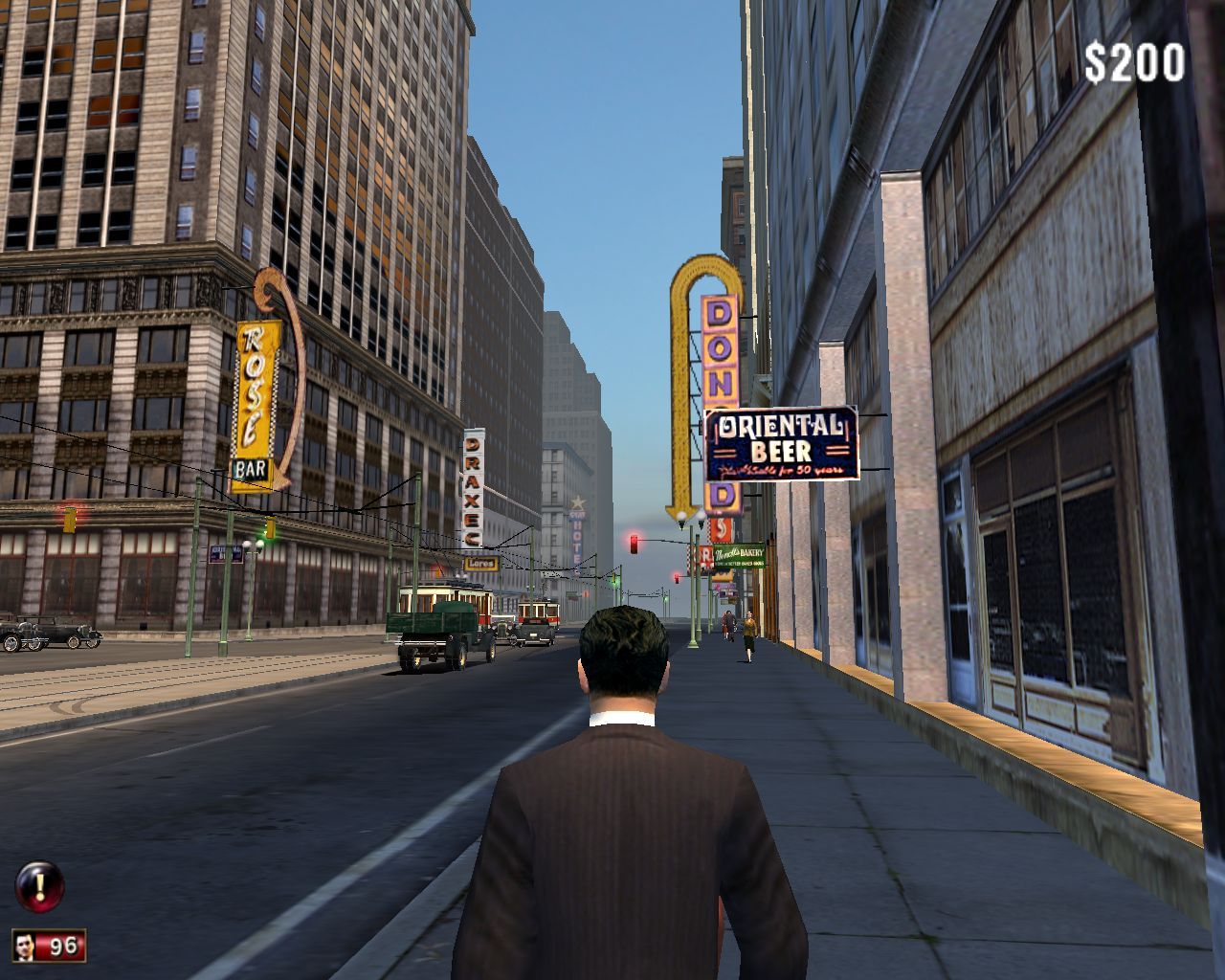
Mafia:    Before RDR2, my fictional world of choice was 1930s Lost Heaven,  an American metropolis with functioning el-lines, trolleys, and draw bridges.   Its story followed a young cab driver, Thomas Angelo, who inadvertently became involved in a mob war and was forced to choose sides,  becoming a footsoldier for the Salieri family.   The game’s atmosphere, wonderful music, and compelling story left me feeling wounded in the end when my character was betrayed by a close friend.  Mafia 2 was fun, but never lived up to the original for me.

Star Trek Elite Force:   My first FPS,  which legitimately scared me the first time I played it. You really don’t want to look around the corner and see Borg drones coming at you.  I spent many summer nights staying up late playing this online,   being shot by strangers and liberally using explosives to make up for my 56K connection while yakking about the newest episode of Voyager. This game led me to join a gaming clan, StarFleet,  and help lead its Armada division.   Speaking of..
armsaa

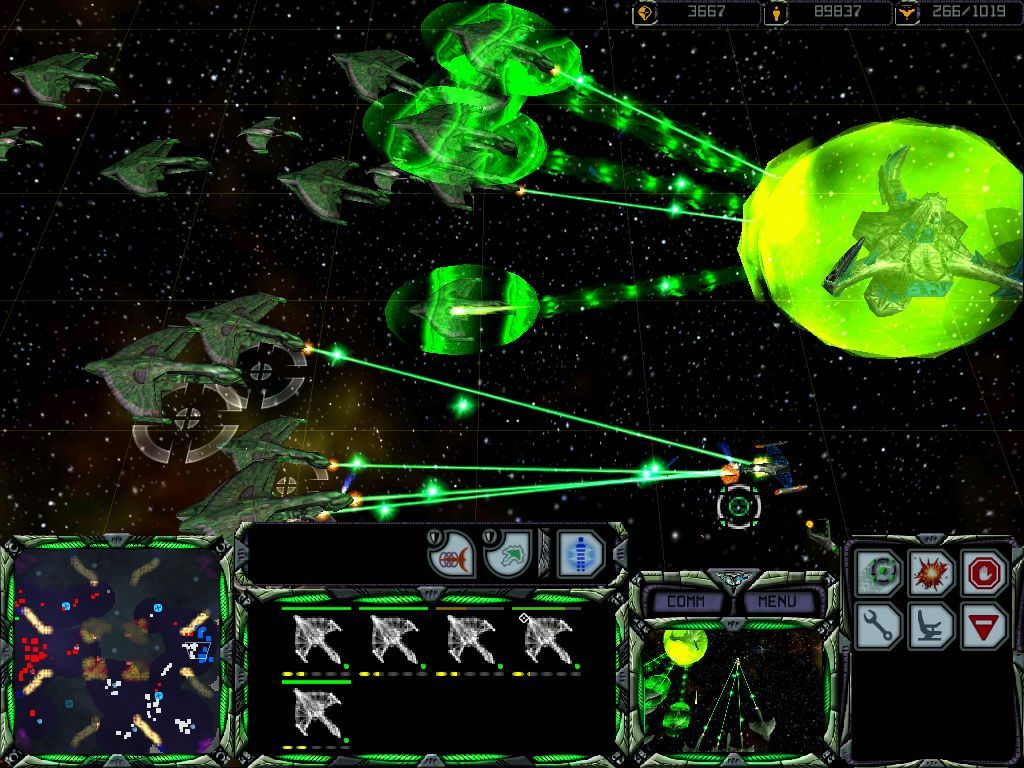
Star Trek Armada.   Possibly my first RTS?  That or Age of Kings.  Armada allowed for four genuinely unique factions,  with admirable sound design far superior to its sequel, Armada 2 — which also ruined faction balance by making  2/3s of its included races effectively the same, and the Borg weren’t that much different.
bag

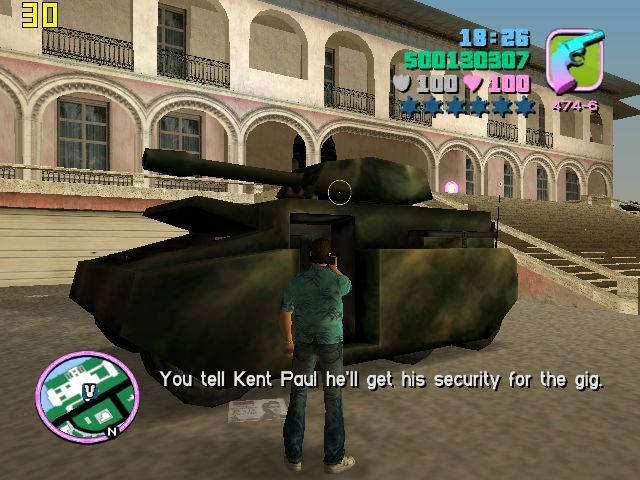
GTA Vice City. The first GTA game I ever owned, and the one that introduced me to the wonder of eighties music.   Maybe it’s the sunshine or the retro appeal, but Vice City remains my favorite.  It’s based on 1980s Miami, and the main character has a story something like Tony Montana’s,  but there are other preferences to period movies. The lawyer comes from Carlito’s Way, for instance.  Oddly enough, most of my playtime in Vice City has arguably come from listening to podcasts while doing taxi missions.
civ3

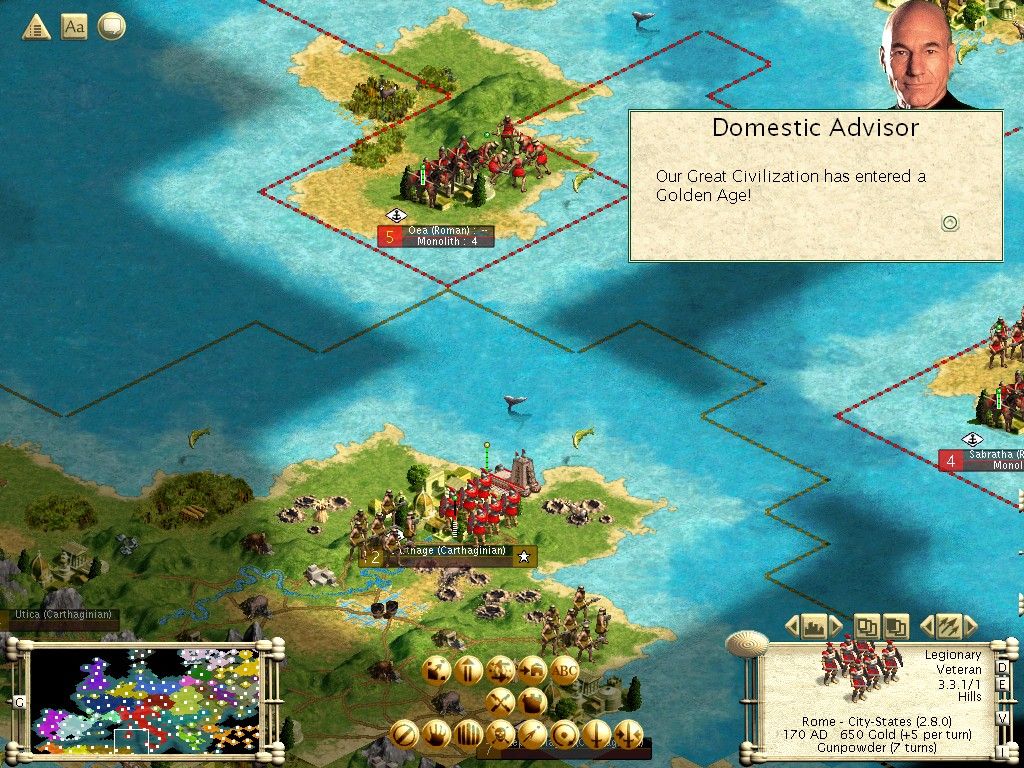
Civilization III.    As a history geek,  I took a surprisingly long time to get into the Civ series, and Civ3 was my first — and still the one I return to again and again.   If you can’t tell from the screenshot above, I heavily modded my game. I’ve never gotten “into” any of the sequels, but I think Civ 6 might get me if I could just give it the time it deserves. I love its design (more homey than Civ 5’s faux-realism), but good lord does it have a lot under the hood,  game mechanics wise.
On Top of the World

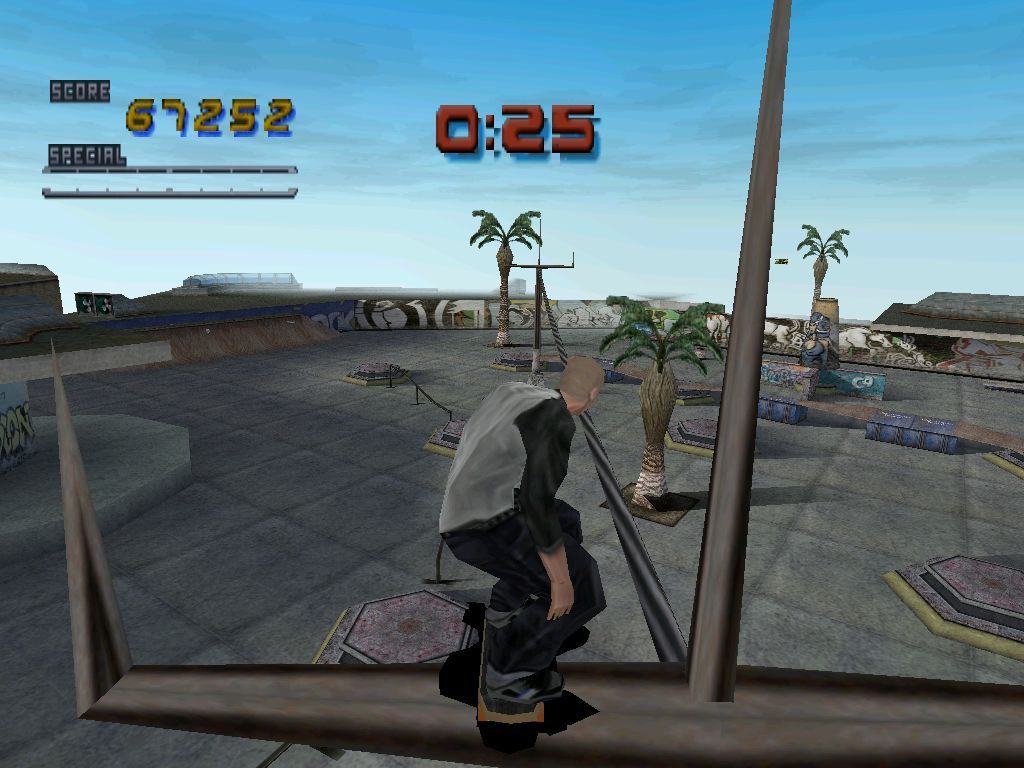
Tony Hawk’s Pro Skater 2.   I played a demo of this obsessively until I could play the main game, and despite not having a gamepad I managed to do quite well, contorting my figures into bizarre positions to pull off tricks.   It’s the only sports game I’ve ever played and enjoyed in my 20+ years of PC gaming.
beingbuilt

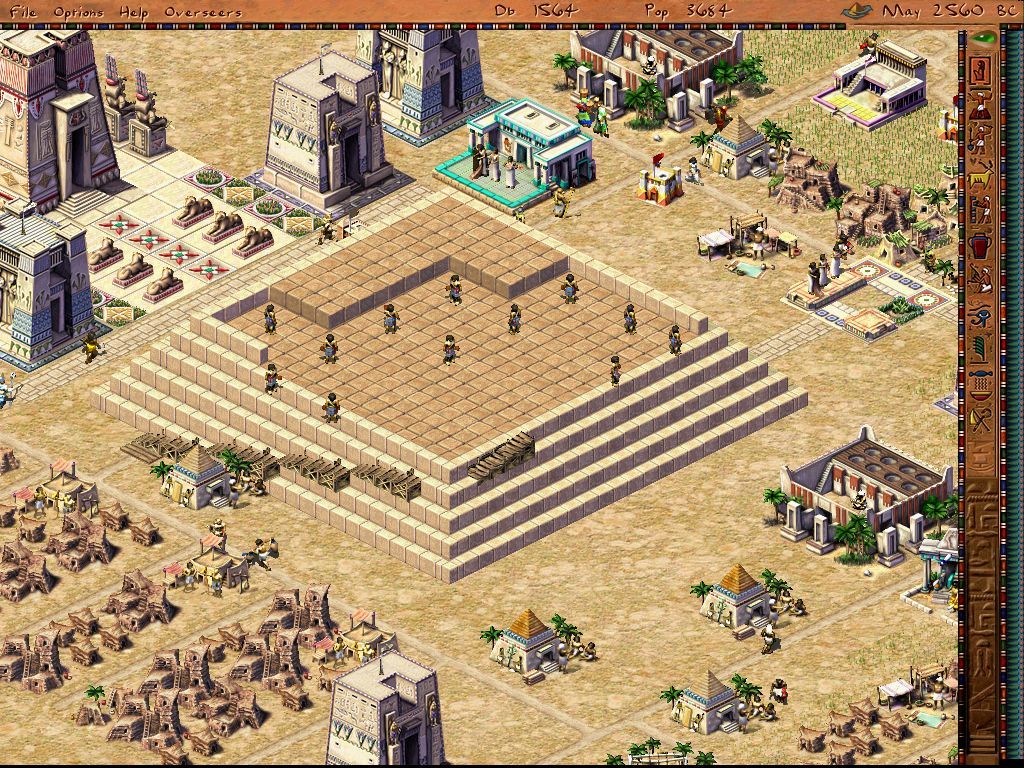
Pharaoh.  My first Impressions city-builder, and still my favorite, Pharaoh taught me the joy of managing historic supply chains,   trying to fine-tune my cities so that the wheat from my fields went to the granaries and the straw went to the brickworks along with clay, so I could build pyramids and the like.  Lots of micromanagement and stress, great music.
enterprize

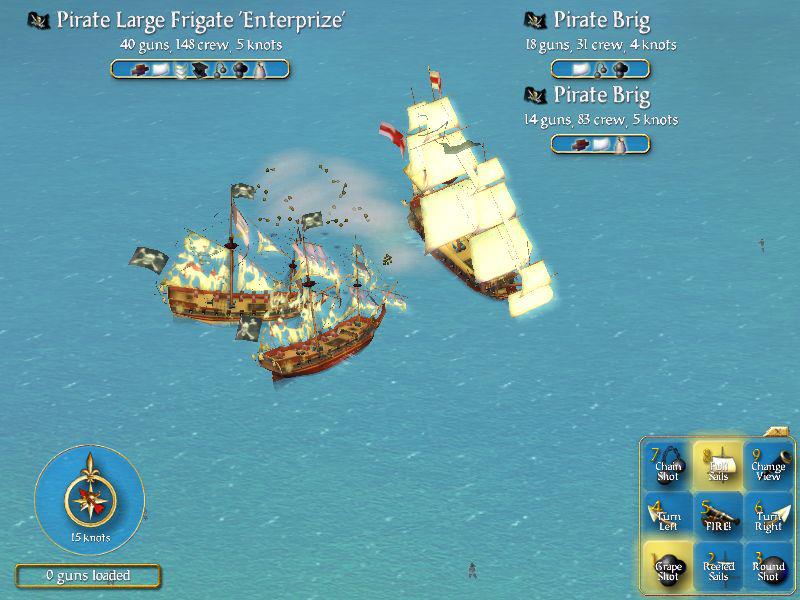
Sid Meier’s Pirates. Yarrrr!    This game single-handedly taught me Caribbean geography.   What are ye in the mood for, sailor?   Cruise the sparkling waters of the Caribbean,   taking ships as ye please — or dance with the guv’nor’s fetching daughter after ye’ve landed an army and sacked the palace!   Or maybe it’s bounty-hunting and treasure-seeking ye be after? It’s all here!  Pirates remains one of my “something to play while listening to  podcasts” games.

Note:  If I were making a list of top ten video games, I’d drop two items and include Pokemon (I played gens 1- 3) and of course Red Dead Redemption 2.    RDR2, for what it’s worth, would lasso its way into the top three, for my absolute delight in it is matched only by a few other games.

Posted in General | 9 Comments

The Miracle of New Orleans

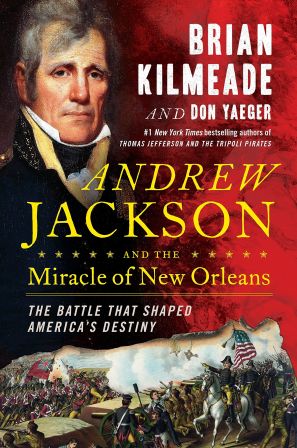
Andrew Jackson and the Miracle of New Orleans
2017 Brian Kilmeade
256 pages

I know precious little about the war of 1812, saved that it involved the United States invading Canada, D.C. being burned, and….something about New Orleans? That ….something is the subject of The Miracle of New Orleans, a pop-history book celebrating Andrew Jackson’s improbable victory defending that city from a British invasion. Kilmeade also reviews Jackson’s role in the Creek war, which began his military career and influenced his thinking as he rose to prominence in the early Republic. Stronger in substance than Washington’s Secret Six, and delivered with no less flash, The Miracle of New Orleans‘s mix of biography and history make the battle’s importance better known.

I’ve never been a fan of Andrew Jackson; populism, like fire, both draws and worries me — and from what I’ve read elsewhere, Jackson’s regard for the rule of law was problematic. Miracle of New Orleans introduced me to Jackson before he came to power, though, when he was struggling to make a name for himself. Made an orphan by the British during the revolution, Jackson burned for vengeance against them — and his first foray into military leadership during the Creek war made further opportunities available to him. Although Jackson is booed and hissed at today for his role in Indian removal, Miracle of New Orleans provides context that complicates summary judgement. Jackson, like many in the States, was hardened against the Creeks after hearing about the massacre of New Orleans, especially given the Redsticks’ potential threat if they worked more closely with European powers who wanted to keep the young upstart nation in its place. Jackson was especially concerned about the threat Great Britain posed; the Brits already disputed American possession of Louisiana, claiming as they did that that territory (and New Orleans, key to the entire Mississippi river) belonged to Spain, and had never been France’s to sell. If the Brits attacked New Orleans to ‘secure’ it, not only would those living between the Mississippi river and the Appalachians have their lifeline cut, but expansion across the river would be impossible.

Once the war broke out, aggravated by the British and French both harassing American shipping and conscripting American sailors into their armies, Jackson’s was one of the loudest voices urging DC to worry about the west. He was also one of the few, since DC was more interested in launching a failed invasion of Canada, and passively watching the eastern seaboard. Congress’ dithering saw Jackson march from Nashville into Louisiana (not an easy feat in the early 19th century) on his own credit and resources, and then receive orders to disband the volunteers, seize their arms, and go back east. Jackson earned the devotion of his men by keeping them together as they retreated, and it wouldn’t be the first time he proved himself a genuine leader of men, one who men gave their service to rather than demanding it as his due. After frustrating later British attempts to use Mobile and Pensacola as invasion points, Jackson waited for the British at New Orleans and planned the battle nursing a useless arm and abdominal pain that kept him doubled over. Although outnumbered and outclassed by the opposing army, Jackson’s skillful use of the terrain, audacity, and British blunders allowed him to deliver an outstanding victory to the American people. A war that had already officially ended in an ignominious stalemate now carried the aura of a triumph.

As its title hints, The Miracle of New Orleans is not dry, sober history; Kilmeade writes for a lay audience and keeps things personable and exciting. Miracle appears more adequately documented than did Washington’s Secret Six, and it squares with what I’ve read of the Creek war to date. Both the battle itself and the context in which it fit are given their due, and there’s no denying Kilmeade brings to life an often forgotten episode of history. I’m hesitant to recommend a history by a tv personality (I’m a terrible snob that way), but it presented much more than I’d expected. I’m hopeful that a more formal history of the War of 1812 will give me a better base of understanding, though.

Posted in history | Tagged , , , , , , | 9 Comments

Selections from Beyond Tenebrae

For Marx, man is at heart economic. For Darwin, man is biological. For Freud, man is psychological. Each of these things is true. But man—a complexity and mystery even to himself—is all of these things and so much more.

True education seeks wisdom, not mere knowledge or technical skill. It does not believe in shaping the person for the here and now, but for the eternal.

Conservatism, [Kirkl argued, did not mean “stand pat-ism.” It meant conserving what is dignified, humane, good, and beautiful. It meant searching for timeless truths and making them palatable for each generation. It meant defending that which the world all too often forgets.

By engaging the minds and ideas of the past, the student [of the liberal arts] becomes liberated from immersion in or enslavement to the things of this world—the things of the immediate moment, problem, or generation. A liberal education thus inspires its students. “A crassly modern education, over weighted with economics, may educate us to be good clerks; only a curriculum in the broad humanities can educate us to be good human beings,” Peter Viereck wrote in the late 1940s. “By harmonizing head and heart, Apollo and Dionysus, the Athenian classics train the complete man rather than the fragmentary man.”

The conservative, therefore, never views history as progressive but as revelatory. That is, history reveals when and where the virtues have become manifest, and where the vices have predominated. With human nature as a constant, mankind neither becomes better nor becomes worse. He merely restrains or not, creates or not, embraces the virtues or does not. In his highest capacity, man embraces the greatest virtue, love—the willingness to surrender himself for the good of another.

Politics at best sustains a community, protecting it from immediate disorders, but rarely can it do more than restrain the evil within man. When politics attempts to shape, it almost always fails, creating distortions in human persons and communities.

In the words of Bell: “the whole cult of comfort is petty, ignoble, unworthy of human nature, absurd.” To chase it, he argued, is to chase the unnatural. Rather than elevating us, it will ultimately only degrade. Rather than embracing our humanity, we will sink into subhumanity. We will circle the abyss without even knowing that our footing is insecure.

As Lewis wrote: “Friendship is the greatest of worldly goods. Certainly to me it is the chief happiness of life. If I had to give a piece of advice to a young man about a place to live, I think I should say, ‘sacrifice almost everything to live where you can be near your friends.’”

“Books, [Sister Madleva Wolff] noted more seriously and with love, “are my friends. Here they are again, shelf upon shelf, the poets from Beowulf and Langland to Eliot and Millay and Daniel Berrigan on the left of the fireplace, the mystics on the right. Lead me not into digression or we shall never emerge from this room.”

“That’s where all of us are standing now, he thought. On the fat kindling of past sins. And some of them are mine. Mine, Adam’s, Herod’s, Judas’s, Hannegan’s, mine. Everybody’s. Always culminates in the colossus of the State, somehow, drawing about itself the mantle of godhood, being struck down by wrath of Heaven.” (Canticle for Leibowitz)

Our true loyalties, as Cicero and those (like Kirk) who followed him argued, are with all of humanity, from Adam to the last living man. Our real citizenship resides elsewhere, and we are merely sojourners in the here and now. Indeed, it must be stressed vehemently that the very essence of the humanities exists to promote what is essentially human, not accidentally so.

Posted in General, quotations, Religion and Philosophy | 2 Comments

2021: January Review

Last year I began posting monthly ‘face the verdict’-type posts to keep track of my TBR. I’m going to try making that a more general month-in-review post that also takes care of un-reviewed works, and keeps track of my challenge goals at the same time. In general, January went a…weird way. I usually start the year off with a shotgun burst of topics, as if a year’s worth of variety had to be compressed into one month, but this year January was dominated by southern history and lit.

Challenge Progress:

Science Survey: Two books read, two categories (Flora & Fauna, Biology) filled. Looking good so far. The Survey consists of twelve books read in twelve different categories (biology, anthropology, physics, geology, etc).

Classics Club Strikes Back: Three books down is a promising start!

Climbing Mount Doom: I read one title from the TBR, Alabama: Making of an American State. Two’s the goal, so slightly behind here.

“More Southern Lit”. With eight titles of southern lit or southern history, I’d say I’m doing well on this particular goal.

The Unreviewed:

Mama’s Last Hug by Frans de Waal was either my last read of 2020 or my first read of 2021; I remain deeply conflicted as to how to count it because I only read the last chapter on January 1st! The book itself varied from fascinating to tedious; fascinating when de Waal used animal emotions to reflect on our understanding of emotions in general, tedious when he tried to use animal experiments to argue for political points. There were some choice quotes, too:

“Politicians sell themselves as public servants, participating in modern democracy only to fix the economy or improve education. Servant is obvious double-speak. Does anyone truly believe that they join in that mudslinging for our sake? This is why it is so refreshing to work with chimpanzees: they are the honest politicians we all long for.”  

“We may not be in full control of our emotions, but we aren’t their slaves, either. This is why you should never say ‘my emotions took over’ as an  excuse for something stupid you did, because you let your emotions take over. Getting emotional has a voluntary side. You let yourself fall in love with the wrong person, you let yourself hate certain others, you allowed greed to cloud your judgment or imagination to feed your jealousy.  Emotions are never ‘just’ emotions, and they are never fully automated. Perhaps the greatest misunderstanding of emotions is that they are the opposition of cognition.” 

Some Assembly Required by Neil Shubin is a biology work I’ve been reading slowly off and on. As with his Your Inner Fish, it primarily looks for insights into the past development of life based on genes. The most memorable chapter for me came early on, when Shubin pointed out that structures with an obvious, perceived purpose were co-opted from earlier uses: lungs beginning as air bladders for fish, for instance. Shubin also drives home the lesson that the way genes are expressed and regulated is more important than the genes themselves: genes are less static lego bricks composing us and more members of an orchestra, following the music but able to improvise.

Beyond Tenebrae: Christian Humanism in the Twilight of the West, Brad Birzer. Review to be posted as soon as I think up an introduction that is not an essay-long history of the word humanism.

Battle for the Southern Frontier: The Creek War and the War of 1812, Mike Bunn and Clay Williams. I’ve been visiting sites relating to the Creek war in Alabama and read this for context. Although it serves ably for an introductory survey, being slim and readable, it was light on documentation. Andy Jackson cuts a loud figure towards the end, and I wonder if Jim Kirk’s (“The word is no. I am therefore going anyway”) was inspired by him. At one point, after being expressly told not to attack Pensacola, for fear of arousing Spain’s ire, Jackson attacked seized it anyway to prevent the British from using it to invade from the south. More to come on Jackson, I think. I have a more substantial book, John K. Mahone’s War of 1812, on order: it was recommended to me as the first book to examine the ties between the titular war and the Creek conflict.

Posted in General | Tagged , , | 10 Comments

Wisdom Wednesday: On Living and Working Amid Madness

ariseandwork

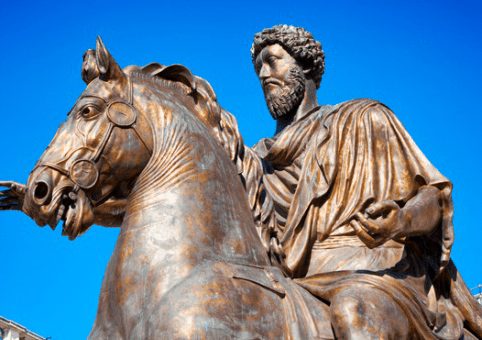
“When you wake up in the morning, tell yourself: the people I deal with today will be meddling, ungrateful, arrogant, dishonest, jealous and surly. They are like this because they can’t tell good from evil. But I have seen the beauty of good, and the ugliness of evil, and have recognized that the wrongdoer has a nature related to my own – not of the same blood and birth, but the same mind, and possessing a share of the divine. And so none of them can hurt me. No one can implicate me in ugliness. Nor can I feel angry at my relative, or hate him. We were born to work together like feet, hands and eyes, like the two rows of teeth, upper and lower. To obstruct each other is unnatural. To feel anger at someone, to turn your back on him: these are unnatural.”

Marcus Aurelius, Meditations.

Related:
Wisdom Wednesday: Rise and Shine
Marcus Aurelius: A Life, Frank Lynn
The Meditations, Marcus Aurelius. That link is to The Emperor’s Handbook, a modern-English translation.

Posted in quotations | Tagged , | Leave a comment

Then and now

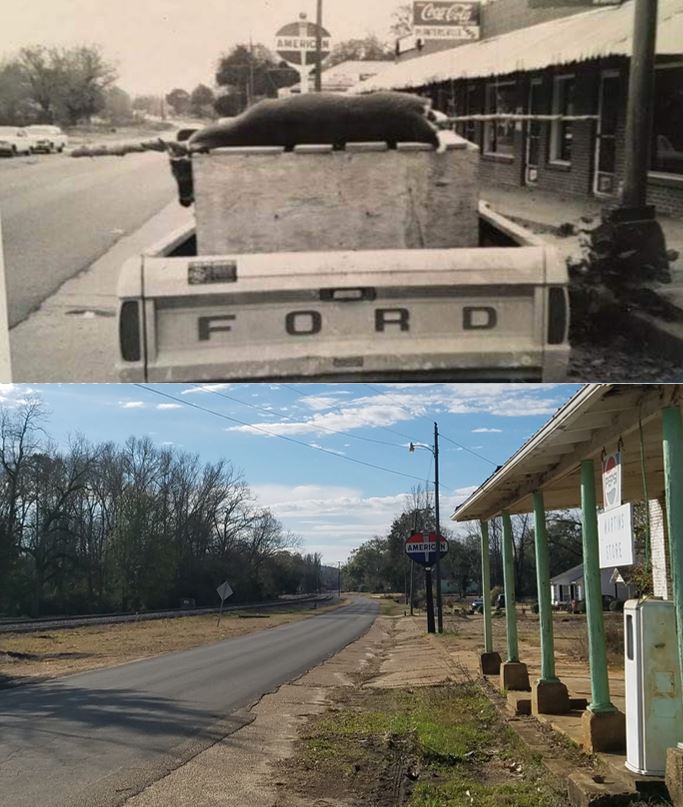
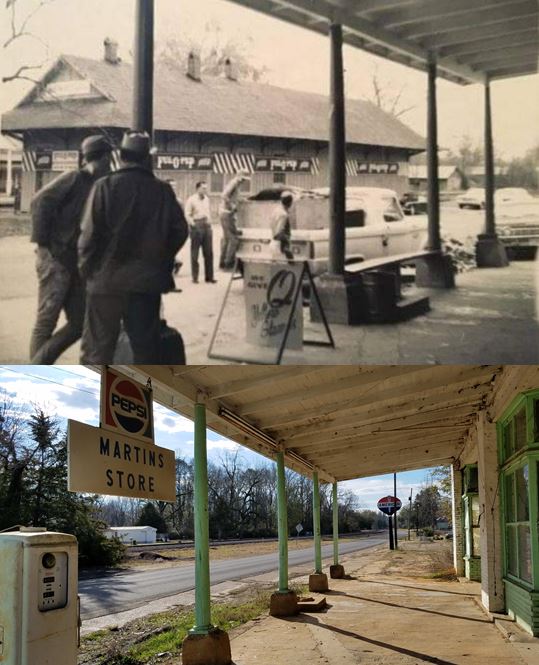
“Know where this is?” someone asked, and showed me their phone. I had to stare in fasciantion. I knew that “AMERICAN” sign, all right. I’d driven by it enough times on my way to high school on those long morning drives up to north Dallas County.

Although I assumed Plantersville’s main street had been livelier in earlier times, I didn’t appreciate how genuinely ‘townlike’ it was until I saw this shot. For my entire life, Plantersville has consisted of a combined gas station & general store. Fun fact: this grassy area above is where I once terrified my driver’s ed teacher by accidentally drifting off the road. And yes, that’s a deer on a stick. It presumably inspired both of these shots.

There is absolutely no trace of the depot remaining these days, and that pump was selling gas for $0.75 per gallon when it stopped service.

Posted in General | Tagged | 4 Comments