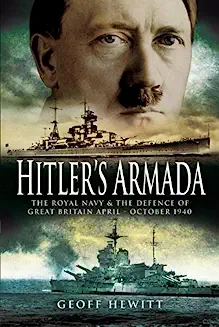
Summer 1940. Britain stands alone, its ally France having lain down her sword and surrendered to the German blitzkrieg, which has already consumed Norway, the Low Countries, and half of Poland. Hitler, anxious to focus his attention and arms against his superior in mass murder Joseph Stalin, would love if Britain would stand down. If they won’t — if, as Churchill maintains, this is nothing less than a war for Christian civilization and English honor demands she fight for the freedom of Europe from the poor painter’s ambition — ‘if necessary for years, if necessary, alone‘ — then she must be made to. Her cities must be bombed, her ships bringing food and supplies sunk, and — possibly — her land invaded. The last is considerably ambitious, and extraordinarily difficult — so much so that Hitler, never known for prudence, accepted the impracticality in the autumn of that same year . After reading Hitler’s Armada, one can fully understand the reasons why, as Geoff Hewitt undertakes a detailed analysis of the available British and German naval & air forces, and argues that the Royal Navy, not the Royal Air Force, constituted the chief obstacle against invasion, both for its success in so compromising the German surface navy and for the brutal way it would surely annihilate Germany’s hastily-thrown together invasion fleet. Hewitt reviews the types of ships and aircraft available to both Britain and Germany, and points out that the Luftwaffe’s ability to effectively dispatch the Royal Navy at sea was limited, with no torpedo bombers (the most effective anti-ship air weapon) to speak of. Dive-bombers were potent, but not so much against moving targets. In addition, the German navy was very poorly equipped to attempt a land invasion in the best of circumstances, with clumsy barges (half unpowered!) rather than the made-for-purpose landing craft employed in Overlord. Against turbulent seas and the might of the Royal Navy, even Hitler’s arrogance had to bow to the reality that the sceptered isle would be too tough a nut for him to crack in 1940, and that Britain’s defenses would only grow stronger in future. This is an extremely detailed and welcome work, bout it may scare off readers who are accustomed to more casual/less analytical histories like those of Stephen Ambrose, etc. I’m more convinced by Hewitt’s analysis of the German navy’s limits (the proposed landing plan and logistics were absurdly amateur when compared to Overlord’s) than his stance on the Luftwaffe’s anti-sea capacities.
Well, dear readers, it’s April first, and that means ’tis time to Read of England. RoE is an annual tradition at Reading Freely, starting with an annual nod to English history in 2010 before growing into a month set aside for nothing but English history, English literature, etc. Originally, this was to set aside time to dig into Dickens and Austen during my first Classics Club run in 2015.
So! What are the potentials for this year? Let’s see….Dan Jones, a medieval historian, is trying his hand at historical fiction with a tale of the Hundred Years War, so expect that to make an appearance. I’ve books on the Royal Navy at Trafalgar and amid the Battle of Britain at the ready, a title on prehistoric Britain, several classics that might fit the bill (Paradise Lost, Rebecca, Mansfield Park), a Romans-vs-Druids brawl from Simon Scarrow, a look at British soldiers in the American War of Independence, a history of the Victorians, a book on the friendship between Johnson and Boswell, a history of the Royal Society, annnnnd a book about Britain’s agents in the Confederacy during the Civil War. Truly, it’s an array of opportunities the sun can’t very well set on.
I’ll also be listening to The History of English Podcast, which I started last night and am enjoying. This podcast has been ongoing for eleven years, begins with the proto-IndoEuropean language, and moves forward from there. It’s currently made it all the way to…1588.
A fourth of the year has gone by already! If January was SCIENCE MONTH!!! and February was as Southern as fried green tomatoes, then March was a month for the ol’ to be read pile. I’ve got a few unreviewed books listed below and will see if I can’t post something for them tomorrow.
Lent: The Lost Gospel of Judas Iscariot. Of no spiritual value, of course, but it was interesting to read. The Romance of Religion, Fr. Dwight Longenecker. An expansion of Lewis’ view of Christianity Paul Among the People, Sarah Ruden. A re-appreciation of how counterculture Paul’s writings were in the world of the early Roman empire. Liturgy of the Ordinary, Tish Harrison Warren. A sacramental approach to the mundane.
The Big Reads I began reading the Shahnameh and continued moving along in the essays and Epistles of the Jewish Annontated New Testament.
Classics Club Purgatorio, Dante. Translator Anthony Esolen. Began reading The Shahnameh.
I think I’ve managed to avoid doing any ‘short rounds’ posts this year, but three months in the streak ends. It’s not my fault, I swear. It’s the books.
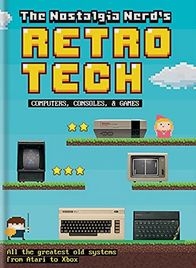
First up is The Nostalgia Nerd’s Retro Tech, a mostly-graphic look at fifty computers and gaming devices from the United States, Britain, and Japan beginning with the Magnavox Odyssey and moving through to the Xbox, with some additional comments at the end on PC gaming and handhelds in general. This is a coffee-table book for aging gamers and tech nerds, I suppose: it’s largely graphic, with photos of the devices in question (including profile shots), a brief write-up on the machine’s source, potential, and reception, and then three featured games: a ‘must see’, a ‘must play’, and a ‘must avoid’. If you fall in its niche, I suppose it’s a fun book to have around:I can imagine guests coming over, rifling through it, and yelping, “Wow! Elite! I haven’t seen that game since I was a kid!”. The write-up on each machine is adequate, but given the amount of tech covered, not substantial, and the mix of machines is a little odd. The focus is on gaming machines, especially consoles, but multiuse computers like the Apple II and the ZX Spectrum appear — at first. The Macintosh and IBM PC and all that followed are no-shows. At the end, the author writes that handheld consoles and the PC market deserved their own books, and given that the Nerd has subsequently published a book on retro-gadget history, he may have such works in mind. I think this volume would appeal more to people (late Boomers to early Millenials, chiefly) who grew up with these machines and remember things like the Nintendo/Sega platform war more vividly. In my case, I only ever used Gameboys until I moved to PC gaming, so I never had a dog in the fight. I did learn a few things from this, though, like that Atari had a series of machines and not just “The Atari”.
Next up is Sarah Dry’s Waters of the World, which I have been poking through for the better part of two months. It’s a hard book to summarize, let alone review, because it tackles so much: beginning with attempts to understand glacial movement, Dry develops a story of how scientists from varying backgrounds have struggled to understand the enormous and entangled natural forces operating on Earth — we see meteorology giving rise to climatology, and then dive into the connections between climate and the oceans. Fluid dynamics and trying to understand what constitutes the oceans and makes them behave the way they do constitutes much of the latter half of the book. It should have been compelling, fascinating ,but the more it moved into discussing models the more I struggled to stay interested. I like the premise of the book — a mix of adventure and scientific enterprise, like The Ice at the End of the World, but I just couldn’t get in to it the way I do with most pop-science reads. Science survey slot: Geology & Oceanography, and especially appropriate because it took on both.
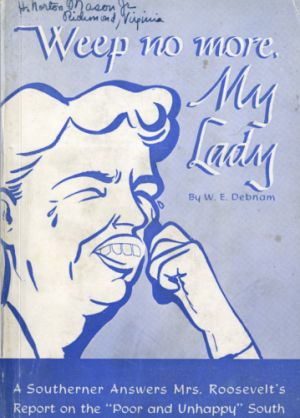
Lastly was an odd little book I spotted in a Little Free Library called Weep No More, My Lady, written by W.B. Debnam, a Carolina journalist, in response to Eleanor Roosevelt’s patronizing mentions of the South in her My Day column as a poor and unhappy place. It was published in 1950. Although the author opens with a defense of Roosevelt from her critics, who claim that she only has a place of prominence because she was married to one of ‘our greatest presidents’, the cover art and the author’s final comments hint that this defense is something of a ruse. Franklin Roosevelt was enormously popular in the south, in part because of programs like the TVA, but Eleanor’s civil rights boosterism was received altogether differently in areas that had just reasserted the dominance of the old plantation elite at the turn of the 20th century, only a few decades prior, disenfranchising blacks and poor whites. The book opens with the inarguable proposition that poverty existed everywhere in the United States, and then goes on to argue that it was worse in the north because of congested, filthy conditions — opposed to the more dispersed rural poverty, in which struggling tenant farmers might linger in debt but at least had clean air and no bullying organized crime. Shifting gears, Debnam points to the fact that the South’s poverty was new, born of of the Federal army’s wholescale destruction of its cities, farms, and men — and the Southerner quotes after-action reports from men like Sherman to illustrate the scale of the destruction they wrought, even in the last months of the war when it was clear the South’s bid for independence was lost and when such destruction was more gratuitous than anything else. The author continues with by pointing to the mercantilist exploitation of the South’s resources after the war during reconstruction. At the last, though, the author reveals the intentions of the book, when he accuses Roosevelt of hypocrisy for continuing to inveigh against segregation in the South while she practiced it within the White House, replacing a mixed-race kitchen staff with an all-black staff on the grounds that a group worked better together when its members were all from the same culture. I’ve not heard this before and would need to look into it further: Doris Kearns Goodwin may have mentioned it in her history of the Roosevelt White House. At any rate, once this line of thought appears, it makes the book appear to be less a defense of the South (and a celebration of its economic recovery) and more a masked admonition that the government stop meddling on the basis that its prior interventions in the area have led to starvation and poverty. Comparing the Federal army’s desolation of the Southland to ending segregation would have been a stretch in 1950, let alone today.
Today’s blogging challenge from Long & Short Reviews is ‘Favorite Nonfiction Book’, which is…er, problematic. I read over a hundred nonfiction books a year, and have done since I started keeping a book log in mid-2007. which means I’ve read over fourteen hundred nonfiction titles since January 1st, 2008. The last time I took I long look at my nonfiction favorites was in 2019, when I posted a list of fifty favorites from 2010 – 2019. Using my first recap (“Five Years of Reading”, May 2012), the 2020 post, and my last two annual wrapups, I present…. the Arch List, my favorite nonfiction from May 2007 until this very moment! Most of it is firm (Death and Life and Consolations aren’t going anywhere ever), but there are there are a few I debated. It’s twelve instead of ten for….let’s say religious reasons. It’s not because I couldn’t prune to ten. Nossir.
When through fiery trials thy pathway shall lie, My grace, all sufficient, shall be thy supply; The flame shall not hurt thee; I only design Thy dross to consume, and thy gold to refine (“How Firm a Foundation”)
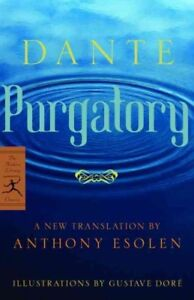
Seven years ago I descended into hell with Dante and his guide, Virgil, and after that arduous descent into a valley of desolation and misery, I have spent this Lent on the rise – climbing Mount Purgatory, that sheer ascension with trails that straighten those who remained bent on Earth, but who were not so low as to sink into Hell. As Dante traveled with Virgil, so did I travel with Anthony Esolen, a man with a magisterial command of classical western literature, whose appendices and notes make this an invaluable translation of the original. If the suffering in the Inferno was punitive, forcing the damned to bear the final consequence of their actions — not only ultimate alienation from God, but the full force of the sins themselves — the suffering on Mount Purgatory is redemptive. The slothful run, for instance, to shed their habits of indifference and inactivity to that which matters, and the prideful carry stones and contemplate beautiful sculptures depicting humility. The lower, more serious levels (closer to hell!) are for those who committed sins of the soul, and the higher for those who merely indulged in sins of the flesh like gluttony. This is a wondrous work, saturated with beauty and cosmology, and the star-filled air is frequently filled with song and prayer as pilgrims make their way upward towards paradise. Dante and the reader are immersed in drama of the cosmos at all times, the stars illumining his path and carrying mythic importance. Some of this has a direct connection to the stars we see above, but there are other wonders in the sky that Dante witnesses which remain invisible to we mortals: other times, there is an expansion of what we see, so that the Seven Sisters constellation also represents apostles of the church. We’re not just stargazing and listening to songs of the penitent, though, as the poem is filled with debate and discussion: Dante learns about the origins of Hell’s pit and purgatory’s slopes, and about the causes of sin on Earth — stemming from misdirected love, as Rod Dreher elaborated on in his How Dante Can Save Your Life. We love the wrong things, or love good things the wrong way, making idols of ourselves, of others. As with his translation of Inferno, Esolen here translates Dante into blank verse, prioritizing Dante’s original meanings at the cost of rhymes — though not at the cost of rhythm. The text is split, with the Italian original on the left page and Esolen’s translation on the right: in addition to direct footnotes important for understanding some of Dante’s allusions, Esolen also includes an ample notes section, as well as appendices that connect Dante’s writing to medieval theology and compare it against other lyric poetry at the time. His footnotes are especially useful, because Dante’s poem is itself saturated with allusion, often oblique — not so much Italian politics this time, as we saw in Inferno, but in the western mythos , from classical to Christian, including always-salient medieval astrology. This is a beautiful work and a superb translation.
Our journey continues beginning on Palm Sunday and continuing into Eastertide with Paradiso!
From Waters of the World, by Sarah Dry, on glaciology, geology metereology, and climatology…so far.
Only with the leveraging power of certain technologies was British rule in India even thinkable. Much has been made of the importance of railways, telegraphs, and steamships in drawing the Empire together across time and space. Just as essential but often overlooked were the tools of bureaucracy itself. These took the form of central offices where information could be gathered, sorted, and acted upon. Such offices were the nodes of the great imperial network. They reached their apotheosis in London, but were necessarily to be found also in Calcutta, in Simla, and in remote field stations from which telegraphic messages were sent and received. In these small and well-organized spaces, a few workers with the ability to move information around with as little friction as possible could contribute to the governing of millions of subjects of the crown.
“The age of Freud, the Existential Self, the Therapeutic Self, the Confessional Self, the Performing Self, the age of the memoir, the Me Generation, the Culture of Narcissism — life has become more mentalized, more inward, more directed toward the gratification of personal desire. The collapse of the family and the preponderance of people living alone are aspects of this trend: tragically, so is the shocking frequency of violence, even of mass murder, in public places. We live more in our own heads than any society has at any time, and for some people now the only reality that exists is the one inside their heads.”
Against the Machine: Being Human in the Age of the Electronic Mob, Lee Spiegel
The Wit and Wisdom of Gandhi is a book better judged by its cover than its title, for the title makes it sound like a collection of jokes and sage observations from a retiring politician or has-been media personality, rather than a collection of writings from one of the 20th century’s most influential religious and political figures. There’s no idle whimsy here, only Gandhi writing at his most intense and serious. Its ideal audience is a reader who knows of Gandhi and is curious about his work, but can’t find or hasn’t the ambition for a larger volume like The Story of my Experiments with Truth.
The collection opens with excerpts on Gandhi’s religious writings, as he expresses his own sense of universalism – that God is present to varying degrees of all of humanity’s imperfect religions, and that Hinduism remains his mainstay because of its ability to assimilate the good from other traditions. From here, the collection shifts to applications of his religious beliefs, particularly nonviolence and noncooperation with evil. Given that Gandhi is known for creating and leading nonviolent protests against British policies in South Africa, and then the British presence in India, this portion takes up most of the book, but there are some interesting little remarks praising the very Empire he’s resisting, as well as observations about the rise of the Soviets. This is an idea little collection for someone who has heard of Gandhi and wants to read more into his thinking.
Kindle Highlights:
A man who aspires after [Truth] cannot afford to keep out of any field of life, That is why my devotion to Truth has drawn me into the field of politics; and I can say without the slightest hesitation, and yet in all humility, that those who say that religion has nothing to do with politics do not know what religion means.
I do not like the word tolerance…. Tolerance may imply a gratuitous assumption of the inferiority of other faiths to one’s own, whereas ahimsa teaches us to entertain the same respect for the religious faiths of others as we accord to our own, thus admitting the imperfections of the latter.
We do not need to proselytize either by our speech or by our writing. We can only do so really with our lives. Let our lives be open books for all to study.
Manliness consists in making circumstances subservient to ourselves.
Evil in itself is sterile. It is self-destructive; it exists and flourishes thorough the implication of good that is in it.
Man’s estate is one of probation. During that period he is played upon by evil forces, as well as good, He is ever prey to temptations. He has to prove his manliness by resisting and fighting temptations. He is no warrior who fights outside foes of his imagination, and is powerless to lift his little finger against the innumerable foes within, or what is worse, mistakes them for friends.
To observe morality is to attain mastery over our mind and our passions.
Truth is not to be found by anybody who has not got an abundant sense of humility. If you would swim on the bosom of the ocean of Truth you must reduce yourself to zero.
Performance of one’s duty should be independent of public opinion…. One is bound to act according to what appears to oneself to be right, even though it may appear wrong to others…. If a man fails to follow the light within for fear of public opinion, or any other similar reason, he would never be able to know right from wrong, and in the end lose all sense of distinction between the two.
Europeans themselves will have to remodel their outlook, if they are not to perish under the weight of the comforts to which they are becoming slaves.
That there is no connection between the means and the end is a great mistake. Through that mistake even men who have been considered religious have committed grievous crimes…. The means may be likened to a seed, the end to a tree; and there is just the same inviolable connection between the means and the end as there is between the seed and the tree.
Non-cooperation with evil is as much a duty as is cooperation with good.
Hatred injures the hater, never the hated.
I discovered that the British Empire had certain ideals with which I have fallen in love, and one of those ideals is that every subject of the British Empire has the freest scope possible for his energies and honor, and whatever he thinks is due to his conscience. I think that this is true of the British Empire as it is not true of any other government. I feel, as you here perhaps know, that I am no lover of any government, and I have more than once said that that government is best which governs least; and I have found that it is possible for me to be governed least under the British Empire. Hence my loyalty to the British Empire. An Englishman never respects you till you stand up to him. Then he begins to like you.
Bolshevism is the necessary result of modern materialistic civilization. Its insensate worship of matter has given rise to a school which has been brought up to look upon materialistic advancement as the goal and which has lost all touch with the final things of life.
I have no hesitation in saying that the Bolshevik regime, in its present from, cannot last long. For … nothing enduring can be built on violence.
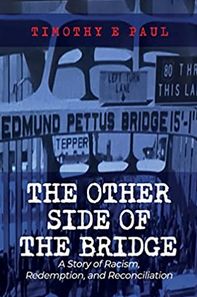
This is one of the stranger books I imagine I’ll read this year. Its title, setting, and opening disclaimer make the reader suspect that it’s a story set in 1965, perhaps viewing the political activism within the Selma from the perspective of someone who resisted it. Instead, it’s proves to be a quick story of two planned assassinations coinciding with the 30th anniversary of the Selma to Montgomery march, and neither of the then-visiting president Clinton. Instead, one intended assassination is of a black preacher who urges letting go of hate and embracing forgiveness; the other is from another black preacher, but a race-hustling demagogue. The action kicks off with the race-hustler, whom I’ll call RH, arranging to have two black men killed and left hanging from a tree in Old Cahawba, complete with a burning cross. The object is to stir up rage among the tourists swarming into town to listen to Clinton make mouth-sounds by faking a Klan hate crime. RH also wants to knock off the other fellow, Mr. Peace and Love, because RH is just an all-around baddie. RH is targeted himself by a dying and broken man named Tee who blames racial divison for the decline of Selma, and blames RH himself as a principle fomenter of said division. Ignoring the rather obvious fact that shooting RH will just make him a martyr, he aims to give RH the Kennedy treatment by using an abandoned building (the Teppers building)’s open windows. Tee will not win ‘most sympathetic protagonist of the year’, as his pain and inner conflict are released in verbal aggression against others. This being a novella, the story proceeds and wraps up very quickly, with little time for any rising drama or believable character development. There are plot twists, though. As as Selmian, I enjoyed the setting from someone who’s obviously familiar with the town, but found it a largely uninteresting read — save for the author’s claim that this was based on true events he was told about. Pardon my Old English, but like hell. Clinton visited for the 35th anniversary, not the 30th, and there was no violence associated with either one. The SS had Broad and Water Avenues completely locked down, to the degree that some people still complain about how difficult it was to live or work anywhere within eyeshot of the bridge that weekend. There just wasn’t enough story here, and what did happen wasn’t believable. I’m also unsure of the point: book’s description and blurbs make it sound like a story of racial healing through Christ, but that only appears at the very end where it’s more like a unexpected and not suitable garnish.






 Reading Freely