Summer reading (Top Ten Tuesday)

Summertime, and the livin’s easy…the asphalt’s melting,  and sunstroke is nigh…

The summer is a good time for reading, because if you’re outside in the Alabama heat you’re going to boil in your own sweat. Seriously, this is not a good time to visit us.  If you have a hankering to see the Deep South, wait until October. It’ll still be warm, but you can go outside without drawing up a will.  In the summer time I venture outside ever so briefly in the mornings, then hide inside for most of the day listening to the air conditioner spend money. Inside it’s a time for reading, and this summer I have quite a few books waiting to be devoured..

1. Gulp, Mary Roach

I love Mary Roach. You have to have a good sense of humor to carry a surname like Roach, and boy does she ever have one — and she combines it with popular science writing to produce fascinating books with names like Bonk: The Curious Coupling of Science and Sex and Stiff: the Curious Lifes of Human Cadavers.

2. An Edible History of Humanity, Tom Standage

Last summer I read A History of the World in Six Glasses, which looked at agriculture through beer,  mercantilism through tea, and  industrial consumerism through Coca-Cola, among others. Definitely light history, but I’m looking forward to this, which I assume takes a similar tack. Related is Michael Pollan’s Cooked, which I am definitely interested in. I don’t know if my library will acquire it, though, so it may be a while before I pick up a used copy.

3.Starship Troopers, Robert Heinlein

I’ve yet to read Heinlein, and this is supposedly his most controversial work, mixing SF with political philosophy.

4.  Independence Day celebratory set
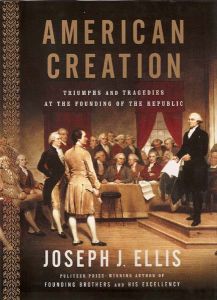
Each year it is my custom to honor the Fourth of July with a reading touching the American Revolution. This year I’m planning to tackle a biography of Alexander Hamilton (by Rob Chernow) to start off with.

5. Bastille Day tribute

The French revolution transformed a continent and the world, and it’s worth commemorating for the glory of “La Marseillaise” alone.  I like to explore French culture in general around July 14th, and last year I got a bit carried away by it. I had Edith Piaf singing in my head clear into November, I’ll tell you. I don’t rightly know what I’ll be reading just yet: French Kids Eat Everything  would be a way to build on Bringing up Bebe and French Women Don’t Get Fat,  and I’ve heard good things about The Discovery of France: A Historical Geography.

7. Satisfaction Guaranteed: The Making of the American Mass Market by Susan Strasser
Susan Strasser’s a fantastic social historian of America, and I’ve been anticipating this one for a while. I may read it in the same week as I finally read Affluenza: the All-Consuming Epidemic, but that may be a bit much. Oh, and then there’s Consumed: How Markets Corrupt Children, Infantilize Adults, and Swallow Citizens Whole…

…hm. Reading three books on consumerism seems problematic.  But one is history, one is more philosophical, and the other is more political, so…I have to read all three, just to get the whole picture. maybe I should throw in Hooked: Buddhist Writings on Greed, Desire, and the Urge to Consume, too. That would…round things out nicely.

Once I’ve read all four I won’t be as much a consumer afterward, I promise!

8. Hannah Coulter or A Place on Earth, Wendell Berry

I’m not particular as to which, but I just finished Jayber Crow and found it to be one of the most intensely moving novels I’ve ever read. There aren’t too many other books I’d put in the same neighborhood — Big Rock Candy Mountain and Once an Eagle, maybe — but I definitely want to read more Berry.

9. Your Inner Fish, Neil Shubin
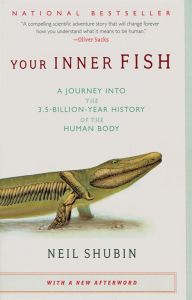
I misplaced this one for a little bit, but it’s returned to me.

10. Lost Christianities, Bart Ehrman
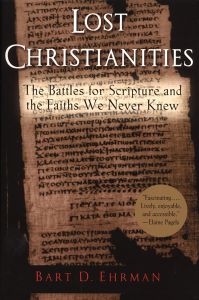
Or something similar…it’s been a while since I did any religious history.

Posted in General | Tagged | 9 Comments

Kindles and Consumption

Earlier in the week I installed Kindle for the PC onto my computer, the second step of mine on the dark side that will eventually end in my possessing – gasp – a gadget.  I’m thinking about it seriously, not only for practical reasons (my library now lends e-books) but because of the variety of titles which are electronic only. Some are quite cheap, and they don’t take up any space on my sagging, groaning shelves. So…I will probably have an electronic device within the next couple of years, and considering how much business I already do with Amazon, it will presumably be a Kindle of some kind. What kind, I don’t know:  I had been planning on going with a basic model until I realized to download library books I’d have to hook the Kindle into a PC.  The library’s training Kindle has an internet browser,  so I’ve been spoiled on the ease-of-use.  Part of me is slightly mesmerized by the idea of the Kindle Fire – ooh, it can do so many things! – and another part of me is repulsed by the being mesmerized bit.

Yesterday I stood for ten minutes in front of two “ActiveWear” shirts. One was a shiny Nike, one was a not-so-shiny other brand.  I wanted the Nike; it looked better and felt better, but it had that Swoosh on the chest and if I’m going to advertise someone I insist they pay me for the privilege, not the other way around.  The clincher was that it cost twice as much as the off-brand. In the end, I ended up questioning: why am I even looking at these shirts?  Not because I  need another running shirt, when I have a drawer full of boring cotton t-shirts I used for the same purpose, but because these were Real Running Shirts, made with fancy-smancy materials that magic away sweat. I ended up buying neither at all, and the experience makes me doubt my increasing interest in the Kindle family, especially the lure of the Fire.  Again I ask myself: what am I ultimately looking for? A small, portable device that can store e-books.  The browser might be nice,  but do I need it? And do I need a device that can do computery-things? Not…really. Frankly,  considering that I just purchased a cell phone for emergency purposes, I might have been best off looking for a phone with a wide screen, wireless access, and the ability to use Kindle/Adobe Digital Editions applications. I assumed, though, that such  phones were only offered with monthly contracts and data plans, so I didn’t look very far into that. I just bought a tracphone that lets me buy minutes and then work through them at my leisure.

Aside from these thoughts, it’s been a quiet week: not because I’m not reading, but because I’m in the middle of an 832 page biography on Alexander Hamilton, which will kick off my Fourth of July tribute. There are some smaller titles I also have an interest in, but The History of Money will take priority considering that it’s an interlibrary loan book and they’re so very attached to it that they sent along a note: item may not be renewed.

Posted in General | 6 Comments

This Week at the Library: Star Wars, bikes, and evil farms

Fool’s Bargain, Timothy Zahn
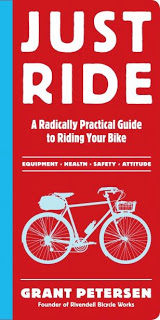
Just Ride, Grant Peterson
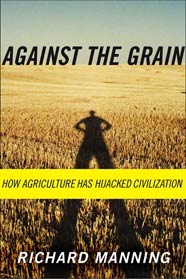
Against the Grain, Richard Manning

This week my  local library began officially offering electronic books via membership in a regional e-book collective.  Although I much prefer real books (see my printed-book snobbery? “real books”, I said), I’ve been checking titles out and reading them on my computer to practice with the software…since I’ll soon be explaining to people how to use it.  My first read was a Star Wars novella by Timothy Zahn called Fool’s Bargain. Set sometime after the destruction of the empire and starring a squad of stormtroopers who are loyal to “The Empire of the Hand”, it follows them as they attempt to capture a warlord in a secret underground hideout. The tension comes from their having to recruit allies on the ground…possibly treacherous ones. It’s more a short story than anything else, but I enjoyed it.

My second e-read through this system is one of the rare nonfiction titles available through our consortium, and it’s called Just Ride.  As you might guess from the cover, its subject is bicycling. The author is a cycling advocate, and believes that the United States bicycling culture has for too long been dominated by the racing scene, which sees bikes as Serious Business, demanding special pedals, special shoes with clips for the special pedals, special clothes, hi-tech gadgets, and hours upon hours of grueling practice. Nonsense! Phooey! Quatsch! Baloney! says he. Bikes are fun. Bikes take you places. Explore that more.  After introductions in which he grumbles about this or that aspect of race culture,  most of the book consists of simple advice on how to get the most out of cycling. Wear street clothes;  ride anytime you like, just for fun, no matter how little a distance;  rig your bike with practical accessories, like baskets; don’t try to turn a bicycle into a weight-loss machine. He also provides day-to-day maintenance tips along with actual cycling advice, as with the chapter on how to drift in turning. Just Ride was a fun read, and if you’re on facebook there is a “Slow Bicycle” group dedicated to ideas like the author’s.

In terms of ‘real’ reading, May was a fairly fat month. I’m not sure why, but that was also true last year: after a quiet April, May exploded.  It helped that a lot of the reads were on the shorter side, with some energetic authors, especially Jim Kunstler and Joel Salatin. I’m apparently doing a series on food at the moment; something about the explosion of color in the produce isle in late spring brings out my inner foodie. I’ve just finished Against the Grain: How Agriculture Hijacked Civilization, which isn’t quite what I was expecting. The author’s primary contention is that agriculture isn’t about producing food, it’s about the accumulation of wealth. Considering the health disparities between hunter-gatherers, who had a broad diet, and agriculturalists who subsisted on  grains (leading to malnutrition, stunted growth, and early death), early agriculture didn’t feed people fully so much as it  kept workers alive so they could continue working to enrich the plantation owners. Also, monocultures and processed foods suck. These were the author’s chief contentions, but they weren’t developed in any thorough, systematic way; the book was more a collection of musings than an argument.  A recurring theme was that of sensualism; in the author’s view, agriculture keeps us from experiencing life fully, both because hunting enlivens the senses in a way that farming and buying food don’t, and because farming is a dull, monotonous, body-killing lifestyle that only succeeded through imperialism, both military and ecological. 

My next read in that neighborhood may be Diet for a Hot Planet, but after the last couple of months I’m in the mood for something light, fun, and comforting, so I think I’ll try a Wendell Berry novel. Also, seeing as the Fourth of July is less than a month away, I’m beginning to think of what my  celebratory reading will be. I’m currently considering a biography of George Washington by Joseph Ellis, whose work I like, and a biography of Alexander Hamilton by Ron Chernow, which was reccommended to me as an antidote to all of the anti-Hamiltonian views I was exposed to in my John Adams obsession last year.

In the post this week I received three books: Glimpses of World History, by Jawaharlal Nehru, the first president of India;  The Story of my Experiments with Truth, by Mohandas Gandhi, and An Edible History of Humanity by Tom Standage. Actually, that may be my light-and-fun read.  A confession:  while most of my books come from libraries or used stores online, whenever I drive to the “big city” of Montgomery, I stop in at a Books-A-Million to look at the magazines.  Somehow in the bible belt they manage to sell magazines as scurrilous as Free Inquiry, and even offer magazines for obscure hobbies like model train collecting. (Not that I’ve bought one, I just see it when I’m getting my own copies of Trains and Classic Trains and…well, you get the picture.)   Invariably I am harassed by the clerk who wants me to buy one of those membership cards, in which you pay $20 and then get discounts on books and shipping. Well, the clerk at the BAM! I tend to go to the most is very persuasive, and a couple of months ago I finally broke down and bought one of the things. (I was in a good mood: I’d been to the zoo and to a most excellent play, a performance of “Around the World in 80 Days”).  Early this week I decided to go to the BAM website to see there were any opportunities for recouping my $20 investment, and so help me if they weren’t offering a copy of a book on my to-read-eventually list (Edible History) in the online bargain bin, for such a low price that I’d pay more to borrow it through interlibrary loan.  Assuming I saved something like $3 for shipping (I would have never gone for express were it not “Free”), I figure the card’s real cost is now $17. I suppose if I bought more, I could recoup more of that, but that’s exactly what they want me to do, so I’m just going to see if I can earn that $17 back on bargain books that I would have paid $3 for interlibrary loan shipping anyway.

Posted in Reviews | Tagged , , , , , , , | 1 Comment

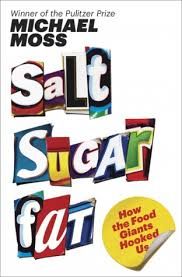
Salt, Sugar, Fat

Salt, Sugar, Fat: How the Food Giants Hooked Us
© 2013 Michael Moss
480 pages


Between the fresh produce, meat, and dairy sections that ring the perimeter of the average supermarket,  millions of unique foodstuffs are offered and advertised. But their apparent variety is a lie, for the bulk of these food products are nothing more than combinations of  three additives: salt, sugar, and fat. In this book named after the unholy trinity,  author Michael Moss  offers a history of how these additives came to dominate so much of the American, and now global, diet, one which also examines the nutritional consequences of each. Its combination of dietary science, history, marketing, and politics signals out a few products in particular (Lunchables take a beating) and pose the question: if the creators of these products avoid eating them, why shouldn’t we?

I developed an avid interest in this topic after my doctor urged me to reduce my salt intake, a bit of advice that led to me avoiding supermarket interiors in general, preparing most of my meals from fresh produce and meat. Avoiding salt meant avoiding almost everything else, from obvious junk food like potato chips to ‘health’ food like cereal and canned vegetables.  I started losing four pounds a week, eventually a little over 120 after four months. The lesson that processed foods are a health catastrophe, evidenced in the book, needs no further development for me, but Salt, Sugar, and Fat was doubly interesting for given so much attention to how these foods were marketed. Although companies like Coca-Cola whine about consumer choice when government entities attempt to regulate them with a view towards improving the public’s health, their self-serving defense of free choice is given the lie by their deliberate attempts to cultivate cravings for their specific products,  both through advertising saturation and by adding ingredients which light up the pleasure centers of our brain and compel us to see more, even at our own demise. Can a nicotine addict really say his continuing purchase of cigarettes is one made freely?  The 20th century has turned this trio of elements, each healthy in the right proportions, into narcotics. (Fittingly, many of the food companies featured in the book are owned by a tobacco company, Phillip Morris.)

But these companies — General Mills,, Kraft, Pepsi, and others — depend on these additives for more than enticing customers to come back again and again.  They need food that can stay on the shelves for weeks and months, surviving trips across the  globe on ship and truck,  and taste and feel exactly the same way time after time.  That means preservatives like salt and sugars, and it also means denaturing the foods so they don’t go and rot, and then applying more stable fat to make sure no taste is lost.  Salt, sugar, and fat not only alter the taste of foods: they change their appearances and how they feel in our mouths. Moss is given the opportunity to try name-brand products offered without the additives, and never records a positive experience: one might as well be eating soggy cardboard for all the pleasures these ‘foods’ bring.   In the light of such experiences, one can’t help but agree with Michael Pollan, who refuses to call things like Cheez-Its  food, and who instead refers to them as edible, food-like products.   If these items taste so abhorrent without the inclusion of ingredients harmful to our health in these amounts, why exactly are we eating them?

While the  aggressive marketing of these goods and their physically addicting nature is largely to blame, it helps that they’re convenient and  cheap, far cheaper than ‘real’ food.  Although on the whole Salt, Sugar, and Fat is a robust book, it misses a step when Moss tries to work out the solution: he never mentions the subsidies that allow additives like high-fructose corn syrup (featured in the Sugar section) to be so cheap on the shelves to the consumer, and thus more enticing to parents with a tight budget than bunches of red-leaf lettuce and broccoli. Considering that Moss spends time demonstrating how parts of the national government are at odds with one another — one urging us to consume more of the same product to help “American farmers”, while another urges us to consume less for health reasons — it would have fitted in there nicely. Another answer to the mystery of our eating trash is the magic of branding: Naomi Klein’s excellent No Logo demonstrated how certain companies have gotten rich not by producing quality products, but by effectively mystifying people, by associating their products with good feelings, popularity, or wealth, and the importance of brand loyalty pops up several times through this text.

Salt, Sugar, and Fat  makes a powerful case against processed foods, one which those with an interest in health (or marketing) will find fascinating.

Related:
Fast Food Nation, Eric Schlosser
Why We Get Sick, Nesse and Williams
American Mania: When More Isn’t Enough, Peter Whybrow
No Logo, Naomi Klein
In Defense of Food, Michael Pollan

Mmm, dopamine!

Posted in history, Reviews | Tagged , , , , , , , , , , , | 1 Comment

Brilliant Harry Potter fanfiction

Last while I heard a fanfiction series, “Harry Potter and the Methods of Rationality“, mentioned on a podcast. In it, Harry is raised not by the abusive and smallminded Dursleys, but by a scientist, and thought to think critically. For him, the world is run by rules, and they can be sussed out by observation and experimentation. You might think that getting a letter from Hogwarts inviting him to a school of witchcraft and wizardry meant an end to that, but it isn’t: instead, he realizes that the fundamental rules of the universe must be different than current thinking. And so he decides to figure out the rules. Not only is the quest is side-shakingly funny, but the characterization and writing are captivating so far. Harry is strides the thin line between madness and insanity, and his ambition to conquer the magical world with science is interpreted by some as the sign that he might well be the next Dark Lord,  a position the reader might well sympathize with given his penchant for hanging around Draco Malfoy.  The story as written so far is a charming combination of the familiar — an eccentric Dumbledore, the stern McGonnagal, the fun of exploring an entirely new world — with  intriguing twists.  Harry and Draco’s first meeting, for instance, begins in conflict, but ends with them being intrigued by the other instead of loathing him. Their tête-à-têtes are perversely interesting.  While the author gives parts of Rowling’s world much more depth — the three “other” houses, Quirrel, Malfoy, and Hermione so far — other parts are ignored completely (Quidditch) or taken down a peg (Gryffindor). The characters are also a bit more self-aware and make sly references to gaming culture (“Fine, I’ll put my quest items in my inventory“) and literature (wherein Dumbledore quotes Gandalf, with a twinkle in his eye and reveals that Mugglborn students insist on giving him copies of the Lord of the Rings trilogy.

If you’ve a mind for some good laughs, interesting conversations, and some tantalizing development of characters of the Harry Potter universe, do look it up…but be revised, it’s hard to stop reading.

“In any case, Mr. Potter, you have not answered my original question,” said Professor Quirrell finally. “What is your ambition?”
“Oh,” said Harry. “Um..” He organized his thoughts. “To understand everything important there is to know about the universe, apply that knowledge to become omnipotent, and use that power to rewrite reality because I have some objections to the way it works now.”
There was a slight pause.
“Forgive me if this is a stupid question, Mr. Potter,” said Professor Quirrell, “but are you sure you did not just confess to wanting to be a Dark Lord?”
“That’s only if you use your power for evil,” explained Harry. “If you use the power for good, you’re a Light Lord.”
“I see,” Professor Quirrell said. He tapped his other cheek with a finger. “I suppose I can work with that. But Mr. Potter, while the scope of your ambition is worthy of Salazar himself, how exactly do you propose to go about it? Is step one to become a great fighting wizard, or Head Unspeakable, or Minister of Magic, or -”
“Step one is to become a scientist.”
Professor Quirrell was looking at Harry as if he’d just turned into a cat.
“A scientist,” Professor Quirrell said after a while.
Harry nodded.
“A scientist?” repeated Professor Quirrell.
“Yes,” Harry said. “I shall achieve my objectives through the power… of Science!”

Posted in Reviews | Tagged , , , | 5 Comments

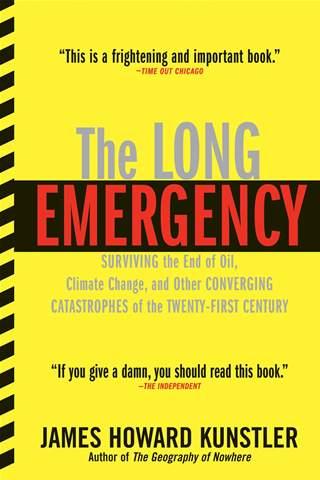
The Long Emergency

The Long Emergency: Surviving the End of Oil, Climate Change, and Other Converging Catastrophes of the Twenty-First Century
© 2005 James Howard Kunstler
336 pages

Well, we’re in for it. Such is the lesson of The Long Emergency, which predicts that the end of the 21st century will resemble the end of the 18th far more than the 20th. In it, author James Howard Kunstler posits that the systems that run our society are about to run out of the very fuel that  keeps them going. Oil is about to peak, leading to global disruption, resource wars, the total collapse of civilization, and all manner of unpleasantness. And that’s before climate change wreaks havoc.

But last week The Atlantic ran an article that said we’ll never run out of oil! It even had a smiley face! Surely a smiley face couldn’t be wrong?  Perhaps it’s true that we’ll never wring the Earth completely dry of its sticky, black goodness — but without a steady stream of oil to keep the global economy well-fed and lubricated, like any machine with moving parts it will seize up and die long before the last drop has been siphoned. We don’t just use oil to get ourselves hither and yon — we use petroleum for everything.  Your refrigerator and pantry are stocked with oil, not food — from the pesticides to the tractors to the transfer trucks and ships that got the food (along with virtually ever other consumer good) to your door,  every morsel you eat is dripping with petrol.  They’re literally covered in it, given the amount of petroleum-derived plastic wrapping that so many of the goods in the grocery come in. The entire system of globalization depends on oil to keep commerce flowing.

People have been predicting peak oil since the 1970s, but Kunstler’s argument that we’re approaching the critical mark begs some consideration given how intensively the wealthiest entities on Earth are combing the globe for any trace of anything that be converted to oil. Demand for petroleum products is ever-increasing as billions more in the developing world demand cars and shrinkwrapped food, the blessings of civilization. We’re already experiencing diminishing returns, working hard to obtain the oil that used to come out of the ground all on its own, and the more energy we put in to extract oil, the more expensive the product will be. Considering that we’re been reduced to smashing rocks to look for fuel, the fact that we’re increasingly desperate for energy can’t be overlooked.
.
Unfortunately for us, there are no real energy alternatives. Natural gas is finite as well, and its price is already rising;  biofuels and hydrogen are energy losers, and even renewables like solar and wind depend on oil for their parts and manufacture. Nuclear energy and electrified rail lines are our best bet, in Kunstler’s view, but even that is limited by  the fact that a cheap-oil economy produces what they’re made of .  Instead, Kunstler predicts catastrophe: contraction, not growth, will define the world to come (contraction referring not only to the amount of economic activity, not only to traffic, but to the human population as well; Kunstler expects a massive die-off though he never dwells on such morbidity).  Kunstler predicts that local agriculture will soon become the only viable kind, that cities placed on waterways will suddenly reexperience their golden ages,  that much of our energy will soon be provided by animals and humans.  Writing chiefly for Americans (who, thanks to car-centric urban policy, are going to be up peak oil creek without a paddle), Kunstler divides the country into different cultural and environmental areas and speculates on how they might adapt to the world to come, the world made by hand. The “Old Union, all but the southern  of the original 13 colonies, are best poised for survival: the topography is well suited to water mills,  there are many cities built to a traditional walkable pattern, and the people don’t have a history of going outside the law to settle disputes….unlike the South, which will be taken over by crazy religious militias driven to madness by the summer heat once the air conditioners quit. The Pacific Northwest may cope, but it all depends on how much abuse they take from the refugee hordes swarming in from California, for the southwest and “old west” are doomed.

It’s a daunting picture, one I first heard painted five years ago when Kunstler gave a lecture on ‘the long emergency’ at my university. I’ve since heard elements within it constantly, through regular listening of Kunstler’s podcast and reading his articles online. Yet I’d never read the book properly until now, and I rather expected something World Altering.  I must have read The Geography of Nowhere  over ten times in the three years I’ve owned it: it delivers.   Perhaps the impact of Long Emergency was lessened for me because I’ve been hearing its arguments consistently for the last five years and take part of them for granted.  I suppose it doen’t hurt that the book is edging on dated now, Kunstler issued an update in the form of Too Much Magic, released last year, in which he declared that we can’t just rely on  throwing money around or technology magicking up a solution, where he uses fracking as an example of both.  As far as presenting the case for peak oil, Rising Powers, Shrinking Planet  does a better job of presenting data and exploring global consequences. What that book misses, though, is Kunstler’s prose and scathing commentary, which for me are a ball to read.  Kunstler steadfastly maintains what Americans lack, most of all, is a “coherent narrative” about what has happened to us, and this he spins here, with a story of how cheap energy allowed for high levels of entropy to manifest themselves in our system, increasing the nation’s fragility.  Kunstler’s chief weakness is his enthusiasm for urgent predictions that never quite come true: here, Kunstler predicts peak oil by 2008, and that hasn’t quite happened. The only room for uncertainty he gives is that we may not know we’ve peaked until after the fact.  

Although not as potent as The Geography of Nowhere, The Long Emergency carries sting enough to merit the attention of Americans concerned about the country’s future.


Posted in Reviews | Tagged , , , , , , , , , | 3 Comments

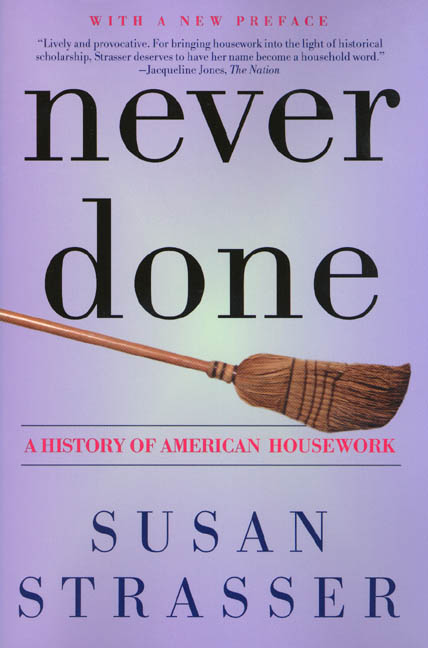
Never Done

Never Done: A History of American Housework
© 1982 Susan Strasser
365 pages

Every time I turn around there’s something else to do
Cook a meal or mend a sock or sweep a floor or two…
(“Gonna Be an Engineer”, Peggy Seeger)
Never Done: A History of American Houswork is a history of the American home, focusing on the work done within it, one which demonstrates how households became centers of consumption, instead of production.  It’s a marvelously meaty work, divided into sections that not only show how chores evolved, but other elements within the household – like the now abandoned practice of taking in boarders.  But more than a history of the home, it’s the story of American housewives, whose labors used to provide material value, not just aesthetic comfort;  their  chores carried meaning beyond keeping the carpet free of dust and the dishwasher full.  

            Those who complain about the chore of laundry today – “Put the clothes into the washer! Take them out! Put them into the dryer! Take them out!! When will it ever end?” are, in a word, wimps.  Maintaining a household’s laundry- – clothes, towels, sheets – used to entail an entire week of labor, beginning with extended soaks before laborious hand-washing period, which included a separate ‘bluing’ phase to preserve the whiteness of said sheets. And at the same time, mother laundress would be cooking full meals from scratch, often tending a fire to do – and depending on where she lived, usually fetching entire tubs of water per day to do the washing, cooking, and cleaning with. And the cleaning! Cleaning meant more than washing the dishes and dusting the tables. Cooking with fire or oil meant soot, and processing food from scratch produced grease, and this soot and grease got everywhere; little wonder spring cleaning was seen with such dread. And at the same time, household materials had to be produced – preserves for the winter, candles for the night, clothes for the children. And we complain about vacuuming!

            Such labors were eased first by fundamental innovations – the introduction of indoor plumbing,  gas lines, and electricity – and then by convenience appliances (washing machines, which in their first stages still required an awful lot of work)  gadgets (which did most of the work) and still later by completely processed goods (ready-made meals, disposable utensils) that took the work out of it completely.  After having witnessed the demands of household labor prior to the late 19th century, the appearance of such aides is welcome….but the avalanche of consumer goods that appears in the final chapters gives one pause.  As industry left the home – as the services that ran it became things to be purchased –   the home and housework lost its meaning;  decaying into chores,. Strasser covers the response of women to this, the attempt to elevate Home Economics to the status of business and industry by making it more ‘efficient’’ – but ultimately, the home was abandoned as women chose instead to pursue careers, and in fact had to help pay for all the new services and products they were being acculturated to expect. After growing up on canned biscuits, after all, who wants to start making dough by hand? 

            Although our lives have plainly become easier, there’s a certain wistfulness to the author’s writing; in some of the interviews, mothers express regret over some of the way their lives have changed. One in particular misses the time she spent with her kids washing dishes after supper; such moments of togetherness are increasingly hard to find, and emphasized the importance of the family taking care of one another’s needs; a childhood chore like keeping one’s bedroom straightened doesn’t make that connection.  Strasser is more distinctly uncomfortable with the reduction of wives and mothers – of people in general – into consumers, something she presumably explores further in Satisfaction Guaranteed, and touched on  in Waste and Want.

            Never Done was Strasser’s first work, and it’s quite an introduction. It’s slightly more academic than Waste and Want, but considering how broad an audience Waste and Want was written for, that’s not saying much: this is still very lively, closer to narrative history than textbook — and yet it’s carrying as much information as a text, covering virtually everything that happens within its walls.  This is wonderful social and domestic history.


Posted in history, Reviews | Tagged , , , , , , , | Leave a comment

Teaser Tuesday (28 May): Sugar, Sugar

First, the food companies themselves are hooked on salt, sugar, and fat. Their relentless drive to achieve the greatest allure for the lowest possible cost has drawn them, inexorably, to these three ingredients time and time again. Sugar not only sweetens, it replaces more costly ingredients — like tomatoes in ketchup — to add bulk and texture. For little added expense a variety of fats can be slipped into food formulas to stimulate overeating and improve mouthfeel. And salt, barely more expensive than water, has miraculous powers to boost the appeal of processed food.

P. xxviii – xxix, Salt, Sugar, Fat: How the Food Giants Hooked Us.

I just started this today, and upon seeing these words in the introduction they seemed worth sharing. I’ve become something of a pure-foods guy in recent years, though I do have a weakness for peanut butter and graham crackers. So far this book is making a decision to abandon processed foods completely look more and more attractive.

Posted in General | Tagged | Leave a comment

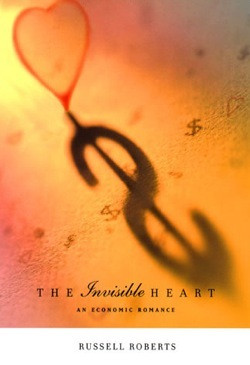
The Invisible Heart

The Invisible Heart: An Economic Romance
© 2001 Russ Roberts
282 pages


The Invisible Heart is an oddly sweet argument introduction to the thinking behind classically liberal economics, taking the form of a dialogue between one Sam Gordon, an economics professor, and Laura Silver, an idealistic English instructor who has just begun working at the same private school as Sam. The two hit it off immediately, even though Laura thinks economists are soulless cretins obsessed with money at the expense of the noble expressions of the human spirit, like art and safety regulations. Sam is a lonely, embattled man, and he wants desperately to be understood by Laura, who — despite not sharing Sam’s  views — finds his earnest passion fascinating.  And so as a year transpires, the two chance to meet time and again; first accidentally, and then as their friendship develops, deliberately. Their relationship is fed by argument, for the book is an extensive argument for libertarianism.

Laura is, by virtually everyone’s meter, a liberal:  she’s very much concerned about the poor and oppressed. She believes firmly in safety regulations, minimum-wage laws, environmental protections — the state exists to right the wrongs created by capitalism, to curb the abuses of the free market. Sam, in contrast, is a “classical” liberal who believes the freer the market, the freer the people. He takes Adam Smith’s notion of an invisible hand at work in the marketplace for granted: let the market work, and things will sort themselves out. Companies that produce bad products will go out of business; businesses that don’t pay well enough won’t be able to find workers.

Although Sam’s view is partially pragmatic –letting things flow naturally is considerably easier than trying to engineer everything —  he’s also driven by principle. People shouldn’t meddle with the lives of others, and they certainly shouldn’t try to justify their interference by using the state to do the meddling. Sure, seatbelts are a great idea — but making it illegal not to wear a seatbelt is an abominable one.  What right does the government have to tell people how they may or may not use their own property?  Sam also points out that meddling always has unintended consequences: when the Baptist ban drinking on Sundays, the moralists may cheer — but so do the bootleggers, because now they can charge a premium for hooch that day. By the same token, when the state mandates the use of scrubbers to clean factory emissions,  the manufacturers of those scrubbers give a cheer.* Why not simply fine companies that emit noxious fumes and let that be an incentive for them to find their own best way of eliminating emissions, rather than forcing them to buy a particular product, and thus enrich only a few?  Spread the wealth around — embrace competition.  Environmental protection, incidentally, is the one area where Gordon isn’t so much a free marketeer, but still manifestly libertarian. He believes firmly in personal responsibility, which is why he wears seat belts but hates the idea of making other people wear theirs. But whereas a driver choosing comfort over safety only endangers his own life, a company dumping waste into a river or into the air hurts everyone. They should take care of their own messes — but care should be taken in making them do it, as with the scrubbers example.

It’s hard not to like Sam, even if you disagree with him, as Laura does. He’s a nice guy; like Laura, he wants a better world, but unlike he thinks he should be brought about in an organic way — that it should emerge from the bottom-up, from the marketplace, rather than being forcibly constructed by states, from the top down.  His arguments sometimes seem counter-intuitive;  he defies expectations. Although an economist primarily concerned with self-interest, Sam isn’t himself particularly focused on wealth. One of his arguments with Laura is over the question: are teachers underpaid? Sam thinks not. Yes, their salary is considerably less than most others, but they’re compensated in different ways. They have the summers off, for instance, the work becomes easier with time, and they have the chronic joy of seeing “lightbulbs come on in students’ heads”. If they were truly underpaid, the school would be unable to find people to fill the positions. Besides, he says; it’s so much easier to be content with what you have.   Epicurean simplicity isn’t what I would expect from an advocate of capitalism, the ethos of which seems to be MORE!

Although I, like Laura, don’t quite agree with all of Sam’s arguments, it’s difficult not to find his earnestness compelling. His principles are outstanding, but it’s easy to argue for the free market when you are protected from the fray. The Invisible Heart‘s author, Russ Roberts, is essentially Sam Gordon: a genuinely nice and fantastically interesting fellow who teaches economics, though at the university level. How can a university economist, safely ensconced in an ‘ivory tower’, feel comfortable telling people struggling to get by on a minimum wage that said minimum is a bad idea, as it prices those willing to work less out of the market?  And it’s easy to say that a factory that didn’t pay enough won’t find workers, but that’s preposterous: when unemployment is high and people are desperate for food, they will accept despicable conditions because they have no other options. There isn’t competition for employment in a one-factory town.

And yet despite these reservations, The Invisible Heart stirs me. I wish I’d purchased it instead of borrowing it through the interlibrary loan system, because it’s one I’m going to want to revisit. If you want your assumptions questioned, if you want your mind to be provoked into thought by someone who disagrees with you but who is so nice about it that you feel more invigorated  by the challenge than insulted, this is a book to read.  Although about economics, the ‘dismal science’, Invisible Heart is anything but dismal, freely using poetry, literature, and philosophy to explore the meaning of life.

* For a more real-world example:  I couldn’t help but think of reading about a politician who advocated mandatory drug testing who turned out to be bankrolled by the manufacturers of the testing supplies. Baptists and bootleggers…

Related:
EconTalk, the author’s podcast.

Posted in Reviews | Tagged , , , , , , | 2 Comments

A Chain of Thunder

A Chain of Thunder
© 2013 Jeff Shaara


‘Twas at the Seige of Vicksburg,
Of Vicksburg, of Vicksburg,
‘Twas at the Seige of Vicksburg,
When the Parrott shells were whistlin’ through the air…

July 4th, 1863 was an unfortunate day for the Confederate States of America. Even as Robert E. Lee limped away from the three-day Battle of Gettysburg, where some of his finest, long-victorious troops were butchered and turned away,  General John Pemberton was preparing to surrender the City of Vicksburg to Ulysses S. Grant. With it, the Mississippi river would be controlled entirely by the Federal army, and the western rebelling states cut off from the rest of the south.  Chain of Thunder is the story of the battles and the siege that led to that surrender, the story of the fall of Vicksburg as told through the generals and soldiers of both armies…and usually for for Shaara, through the eyes of a civilian woman. The follow-up to Blaze of Glory, which covered Shiloh, it’s second in Jeff Shaara’s new Civil War trilogy, covering the western theater.

Although I generally expect a good tale from Shaara, a novel about Vicksburg gave me pause; how exciting can reading about one army waiting for a city to grow tired of starving be?  After a slow start, though, Chain of Thunder proves a worthy sequel.  The book is not entirely about the siege; Shaara covers both armies as they maneuver and fight in a series of skirmishes around Mississippi, as the Federal army moves doggedly toward Vicksburg and the Confederates try time and again to thwart their progress. The skirmishes are all one-sided, in part because the rebels are cursed by a divided command:  Pemberton, commanding on the ground, is subjected to opposing orders from Jefferson Davis and General Johnson, Pemberton’s superior.  But whereas Jefferson has given Pemberton a general order (“Defend Vicksburg at all costs”) and leaves the decision up to him how to do it, Johnson insists on trying to command the battle from long-distant Tennessee. Not only does Pemberton have to figure out whose orders to obey, but his own subordinates have opinions of their own, and by golly if Pemberton isn’t going to do what they think is best, they’ll take their troops and go home.  Pemberton had the misfortune to be born a Yankee, and is thus regarded by all of the characters as suspect. His wife may be a southern belle, and he may claim to be fighting for her honor and defense, but the only people south of the Mason-Dixon who believe him are her and Jefferson Davis.

Once the rebels are pushed back to Vicksburg itself, the tempo changes; the city is a fortress, and not even Grant can take it.  He thus digs in for a siege while anxiously looking behind him in case Johnson wanders in with another army. Pemberton’s only hope is the possible arrival of Johnson, and it is that hope that prompts him to try to endure the siege. The action doesn’t disappear during these long weeks of waiting:  in addition to scenes from the home front through a young society lady turned nurse (think of an orphaned Scarlett O’Hara, but considerably more pleasant), readers are treated to a duel of sharpshooters. Chain of Thunder is less dominated by combat than Blaze of Glory; instead, Shaara follows up on the stories of his characters as introduced in the Shiloh novel; the conflict between Johnson, Pemberton, and Davis, for instance, and the evolution of William Sherman’s total-war thinking. The book defends the characters of both Pemberton (dismissed as an faithless incompetent) and Grant (regarded as a sometimes drunkard) while making a few attacks of its own, like unexpected swipe at the modern anti-vaccine movement.  I found it rather enjoyable on the whole.


Oh, well will we remember
Remember, remember,
Tough mule meat, June sans November,
And the minie-balls that whistled through the air!


(“Twas at the Siege of Vicksburg”, ACW song performed by Bobby Horton.)

Related:
The Most Glorious Fourth

Posted in historical fiction, Reviews | Tagged , , , | Leave a comment