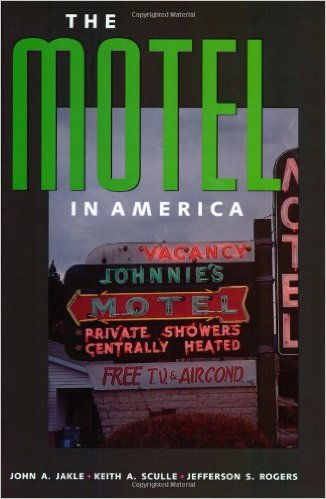
Memorial Day

Memorial Day
© 2004 Vince Flynn
407 pages

“And if they manage to get this thing into Washington and end up killing the leaders of America, Great Britain, and Russia?”
Rapp shrugged. “At least there won’t be any more ambivalence about the war on terror.”

Suspicious activity from some shady financial institutions hints that something big is about to hit the United States, and an investigation — followed by a black ops abduction job in Pakistan — reveals the scheme. On Memorial Day, as the entire US government gathers with the leaders of Great Britain and Russia to christen a new World War 2 monument,  militant jihadists intend to set off nuclear explosions along the eastern seaboard, beginning with D.C.  Only Mitch Rapp, an assassin in the employ of the CIA, stands in their way.

Memorial Day is an early War on Terror action thriller that has little patience for those who view the Patriot Act as a threat to civil liberties, and features a main character who abducts jihadists not only from Pakistan, but from the Justice Department’s own holding cells.  He has no compunction against shooting terrorists to coerce confessions from their brain-besplattered comrades, or slipping a man a drug to make him terrified, then repeatedly holding him underwater.   At least no one can say he murders in cold blood, because Rapp spends the entire book enraged. He’s at war not only with every AK47-wielding beard in the middle east, but his own government, riven with softies. If he’s not yelling or shooting at jihadists and politicians, he is on his way to do one of the two.

Memorial Day is an action movie in book form. The main character stands out because of his sheer bloodlust (he almost doesn’t care if D.C. is turned into a radioactive crater, because it means the entire Arabian peninsula will be glass shortly thereafter), but no one else is worth paying attention to.  If a character emerges who is sympathetic, they are immediately killed off — like the poor Mexican truck driver who was hired to haul a trailer into Atlanta,  never knowing that the mysterious trailer held an unstable radioactive core that was slowly poisoning him.  All he wanted to do was make it home in time for his son’s baseball game. Why do you hate baseball, terrorists?  The villains are, as you might aspect from a book written so early after the 9/11 attacks, complete caricatures of the “They hate us for our freedoms” variety.   They’re seriously in the United States because its teenage girls wandering about in malls in skimpy outfits are dragging the world into a cesspit of moral decadence.  Seems like fighting moral decadence in Riyadh would be easier on the gas. (The suggestion that the terrorists object to D.C.’s foreign policy is dismissed as blaming rape victims.)  

In terms of sheer action, Memorial Day works very well:  it opens with Chinooks deploying company of rangers in Pakistan, and later there’s action on the high seas as various agencies try to intercept container ships, and towards the end we have car chases and even a boat chase.  Flynn reveals several interesting technical details, like D.C.’s plan for continuity of government in the event of an attack, and the existence of a large Soviet nuclear testing range in Kazakhstan, where duds are literally just abandoned in the desert for any lunatic with a deathwish to dig up.  (A New Jersey-sized field in Kazakhstan actually exists, but from what I’ve read, various international agencies  were secretly cleaning the site all throughout the 2000s,  with all detritus secured by 2012.)   While the villains are wholly uninteresting, Flynn does admit for a little blowback: one of the attackers was formerly used by the CIA to fight the Russians invading Afghanistan,  He also doesn’t regard Saudi Arabia and Pakistan as reliable allies in the war of terror because the Saudis are in fact financing some of the extremist groups.

Memorial Day is a fun action thriller, though not a seriously interesting geopolitical one.

Related:
The Last Patriot, Brad Thor.  A blend of this and The Da Vinco Code. Very silly.

Posted in Reviews | Tagged , , | 2 Comments

All the Shah’s Men

All the Shah’s Men: An American Coup and the Roots of Middle East Terror
© 2003 Stephen Kinzler
272 pages

On one  dismal  night in 1953,  a conspiracy destroyed both Iranian democracy and American honor.  At the dawn of the 1950s, Iran was struggling to free itself from British domination, a  precursor to the bloody colonial revolutions that would mark the mid-20th century.   Despite being a product of colonial rebellion itself, the United States would betray its own history and one of amiable relations with Iran to  assert itself on the world stage.  All the Shah’s Men is an admirably executed mix of espionage, history, and politics,  brimming with passion.

Iran arrived at the 20th century in a sorry state;  ruled by monarchs who were either corrupt or incompetent, it fell under the influence of both Russia and Britain, whose great game of tug-of-war used Iran as the rope, plundering its resources. While Russia would collapse into civil war in 1917, Britain proved a far more formidable opponent, securing a long-term monopoly over the harvesting of Iranian oil and natural gas, and virtually taking over the country in the 1940s during World War 2.  For fifty years, Iran’s mineral wealth was literally siphoned out and shipped away:   Iranians were denied the opportunity to learn and master the industry,  granted only menial labor and a token share of the profits.

The forced abdication of the shah in 1943 meant that the Iranian parliament and its democratic offices were free to grow in legitimacy and authority. Increasingly, the parties running for office called for an end to British imperialism in Iran, and one Mohammad Mossadegh was particularly famous for his attack on the Anglo-Iranian Oil Company.  He called for better working conditions for laborers, the inclusion of Iranians in the engineering and administrative aspects of the oil business, and a more equitable division of profits between the British company and Iran.  Britain would have none of it.

Mossadegh achieved office several times championing the cause of an independent Iran as the Truman administration gave way to Eisenhower’s.  The change of American leadership was important, for while the British government wanted to take action in Iran, it wanted American support, in part because of D.C’s previous help in securing Iran against German interests.  Truman had no interest whatsoever in going to bat for British petroleum, but Eisenhower had witnessed the fall of China to Communism and the unraveling of Korea, and — with help from Winston Churchill, no stranger to mideast debacles —  he was sweettalked into seeing red in Iran.   There would be no Persian Mao, not on Ike’s watch.    While Britain considered and dismissed the idea of simply invading Iran, this was decided to be more trouble than it was worth. Far better to take the country from within, by using the lingering authority of the shah’s successor-prince to dismiss Mossadegh, and back him with the Iranian and Allied militaries as need be.

Although the coup initially seemed to be failing disastrously — arrests of conspirators were made, followed by the fleeing of the shah  to Iraq — the American man on the ground was able to turn things around. Kermit Roosevelt was the son of Teddy Roosevelt,  one of the first American executives to dream of the United States having a ‘place in the sun’, stretching its wings across the globe.  Using the economic depression that followed Britain’s economic war against Iran, Roosevelt  stirred up dissent and paid people to form an anti-Mossadegh mob that would march on the man’s house.  He was arrested, his  government fell, the shah returned, and– well, things just went downhill from there. Emboldened by outside support, the shah grew ever more tyrannical against his own people, until he was ousted by a religiously authoritative regime that was hostile to Mossadegh for its own reasons.

  
All the Shah’s Men succeeds brilliantly in part because of the connections Kinzler draws to broader Iranian history. The Iranians had thrown off another resource monopoly sixty years before,  and in the process they established a constitutional government. While weak against the traditional authority of the shah, and his control of the military,  it steadily acquired its own moral authority — increasingly seen as more legitimate than the shah, who was a creature of the outside world, forcing its designs on Iran, from control of Iranian resources to the forced adoption of Western suits and hats.   Mossadegh’s championing of Iranian independence was not merely freedom from outside manipulation, but freedom from the unjust and arbitrary rule of the shah.  The coup didn’t simply topple Mossadegh’s government: it and Anglo-American support  of the shah thereafter sabotaged and reversed the trend toward Iranian self-government.

The coup not only derailed Iran’ development as a democratic and humane society, but has caused no end of trouble for both Britain and the United States, mostly the Americans who did the dirty work.  When the shah was ousted in 1979 and sought refuge in the United States, Iranians who remembered 1953 thought they were about to re-witness history. Hadn’t the shah fled  before, only to be returned under the aegis of the Americans?   Such was the spark of the hostage crisis, leading to decades of hostility and cold fury between the powers in which Iran and the west continue to wage war against one another’s interests;  in Iran’s case, this has taken the form of funding terrorist organizations.

All the Shah’s Men is one of the more outstanding books I’ve ever read; though  principally about the conspiracy,  Kinzler does a terrific job in explaining the historical context.  But the book doesn’t read like a lecture; at times it has the feel of investigative journalism or a spy thriller. Kinzler isn’t just summarizing news articles, but relies on interviews with those who remember Mossadegh, for whom the man is a memory of a time when Iran’s destiny seemed its own to make, when the law was being strengthened as a redoubt against arbitrary authority instead of being used to execute it.

Related:

Posted in Reviews | Tagged , , , , , | Leave a comment

The Grid

The Grid
© 1995 Phillip Kerr
447 pages

Some modern architecture might make you want to kill yourself. Other modern architecture might try to kill you directly. The Yu Corporation’s newest project in Los Angeles, derisively called “The Gridiron” by everyone except for its starchitect, is an example of the latter. The Grid is the pinnacle of not only the kind of architectural brilliance it takes to make viewers wish fervently for a good disaster to remove the eyesore, but of integrated computer technology. It is the world’s first wholly “smart” building, in which every supporting system of the building — even the physical structure of the building itself — is controlled by a computer. It is a technocrat’s greatest hope: people can’t even use the elevators or enter doors without being authorized by the computer as having legitimate business within the building. And if they try to attend to their own ‘personal’ business — using the restroom, for instance — their leavings are automatically scrutinized, subjected to not only a drug test but health screenings. A system this complex is bound to go wrong, and it does: with less than a week to go before the grand opening, people start dying. At first it seems like a rash of bad accidents, but then the characters realize the building itself is trying to kill them — but why? Did a deranged ex-employee sabotage its programming, or has it developed intelligence and decided to remove its internal carbon-unit infestation?

For someone accustomed to Kerr’s historical mysteries set in Germany, this is startling different work. In terms of literary craftsmanship, Kerr has grown by leaps and bounds since penning this. Much of the dialogue is forced, like canned lines from a television show. The increasing tension itself carries the novel forward, as the true source behind the mysterious deaths is revealed. Of interest to modern readers is the technology, which — astonishingly — within our grasp if not already achieved today. No one can read this today without thinking of the rising “internet of things”, although we have more to fear from outside sources hijacking those devices and using them against us than we have of our house trying to kill us. Readers from the 1990s may remember the Sandra Bullock movie, The Net: at times, the book has that feel, of the building being an entity that can do anything — even interfacing with a police department’s internal network and suspending two officers to keep them trapped in the building — and the futurism has the occasional short-sighted pockmark, like the fact that people use film cameras despite living in a world of holograms. The increasingly frequent trips inside the ‘building’s brain grew tedious because of their weirdness, but on the whole I enjoyed this. It’s not stellar, but still topical. Too bad Kerr has never tried to revisit techno-thrillers — I’d like to see what a more experienced hand produces.

Related:
The Fear Index, Robert Harris

Posted in Reviews | 6 Comments

The Persians

The Persians: Ancient, Mediaeval, and Modern Iran
© 2009 Homa Katouzian
452 pages


Come, let us sit upon the ground and tell sad stories of the death of kings. It’ll take a while, because there’s been a lot of them.The Persians: Ancient, Mediaeval, and Modern Iran is a sweeping  political history of Persia, and of the modern Islamic Republic of Iran. The author quotes a Persian proverb which asks — six months from now, who alive? Who dead?  —  and argues that Persian history is established proof of the thin line between arbitrary authority and chaos. While technically  a survey, its density and focus on a list of rulers rather than the general trends within Persian history makes it a formidable challenge to the beginning student.

The Persians is largely modern, reaching the 20th century in less than two hundred pages.  What follows beforehand is essentially a long list of men killing men.  It’s nearly biblical – just replace “begat” with “who was killed by”, and you’ll get an idea. Oh, there’s some variety; sometimes the potentates settle for blinding one another instead of killing, which does get passé, and some Turkic and Mongolian fellows are offed, too.   Although Persia looms in the background of western history, invading Greece and lopping off Roman consuls’ heads, even marching on Jerusalem,   those episodes of strength seem to be the exception rather than the rule.   The tediously recorded butchery may actually be intentional, for the author’s main contention is that arbitrary tyrants have been the norm of Persian history, and that not until the 20th century has any work been put into creating a state beyond the will of one man, in forming a civil society that checks the ambitions of a solitary tyrant.

Even once the text moves to the 20th century and becomes more fulsomely detailed and varied, it’s still a little odd in what it dwells on. The author mentions, for instance ,that the 1953 coup has been studied in detail, and so…he bypasses it. If you didn’t know that coup was executed by Britain and America to shore up their client-king’s absolute authority over the the Iranian people, too bad. If you’re in the dark, you’re staying there, because one minute Mossadegh is in power and the next he’s in prison. Trends within Iran which bear significant fruit, like the  development of the Shiite clergy,  are barely present, or are  like the poetry buried under the mounds of executed kings.

That’s not to say there isn’t material of interest in here. I didn’t realize that Alexander the Great is actually claimed by the Persians as one of their own, a half-Persian lord who appears in the Shahnameh, a massive work of legendary history.  The Great War and World War 2 take on a different light from Iranian eyes: because Britain and Russia spent the late 19th and early 20th century playing tug-of-war with an increasingly frayed Iran,  Iranians admired and sympathized with the Germans in both conflicts. The closer the author draws toward the present day, the more communicative he is about Iranian culture in general:  in the final hundred pages there is a good section on the evolving role of women in Iranian society, which — while not as good during the Shah’s forced modernization — is not as bad as it was in the early 1980s.  

While there’s no shortage of useful information to be mined here, beginners should probably look for something less mountainous and less dry.

Related:

Posted in history, Reviews | Tagged , , , , | Leave a comment

8.4

8.4.
© 1995 Peter Hernon
393 pages

San Andreas? You want a real earthquake, son, you come to Tennessee.  In America’s heartland lies a currently-quiescent fault, the New Madrid Seismic Zone. In the early 19th century a series of three massive earthquakes  rolled the Mississippi River region, the most powerful quakes recorded in American history.  In 8.4., it happens again…..but instead of scaring the coon-skin caps off of hunters and making the cows go crazy in the frontier, it devastates cities. It doesn’t just give them a bad day, knocking the electricity offline and collapsing interstate bridges: it levels the area, with a preliminary death toll of over a hundred thousand.

The novel is a genuine science fiction tale, as most of the viewpoint characters are seismologists who are frantically trying to figure out what’s happening; as they argue between themselves and attempt to convince the authorities that the worst is yet to come, the reader is treated to not only explanations of tectonic geology,  but graphics that give some idea of what is happening below — illustrating the different kinds of faults, for instance.  Key to the drama is the fact that New Madrid activity doesn’t consist of one big quake with minor aftershocks, but that its powerful tectonic activity erupts in clusters.   The characters spend most of the book in mortal danger: if they’re not fleeing the consequences of the quakes, like floods in Kentucky after a dam collapses, or urban riots as people raid stores for supplies, they’re actively courting it by  crossing rivers transacted by the faults, rappelling into open breaks in the Earth’s surface, or probing deep into abandoned mines to collect data.    There’s even a little outbreak of civil war at the end, when the President decides the best thing to do is stick an A-bomb in the Earth’s innards and blow it up, and the Kentucky governor realizes the White House is out of its ever-lovin’ mind.

8.4 leads with science, and follows with disaster-movie thrills. The endgame is bonkers, frankly, but maybe it’s hard to sell 20th century readers on the idea that not everything can be solutioned or bombed away.

Related:
Supervolcano: Eruption, Harry Turtledove.

Posted in Reviews, science fiction | Tagged , | 2 Comments

In God’s Path

In God’s Path: the Arab Conquests and the Creation of an Islamic Empire
© 2015 Robert Hoyland
303 pages

A Roman author referred to the Roman and Persian empires as the two eyes of the world — but they didn’t see the Arabs coming. In the span of a hundred years, a people from the desert wastes between Egypt and Mesopotamia had traveled from Spain to the Indus, bringing together a diversity of nations under one banner and laying waste to empires. History texts usually present a map of expansion as the sudden creation and explosive growth of Islam, but Hoyland argues that’s premature.  Instead, he examines the Arab conquests as…the Arab conquests, in which Islam is first the means of an alliance between Arab tribes that allows them to sack two ailing realms, and then is the means of forging their own empire that transcended tribal bounds.  Instead of merely attributing the Arab spring into empire as one motivated by religious zeal, Hoyland examines the Arabs as actors on the historic stage, and dwells on their political skill.

The result is a history that overturns elementary assumptions.  For instance, conquest and conversion were two completely different processes: even a province absolutely integral to the nascent Islamic civilization, Persia, was not majority-Muslim until the 14th century.  (Islamic provincial governors were by no means eager to force conversion:  non-Muslims were taxed by the government.) By preserving the structure of the societies they were conquering — relying on Christian and Persian scribes, civil officers, etc to retain their roles —  and offering completely secular benefits for joining the Arabs on their globetrotting campaigns, what began as a local city-state quickened into a global phenomenon.  Eventually, the religion of the Arabs, who had become the ruling class, would become the religion of a multitude, evolving along the way. Towards the end Hoyland dips into religious history,  reflecting on how the century of war, mixed defeats and triumphs, and the assimilation of various cultures shaped it. For instance,  he views the bar against images as a way for the Arabs to distinguish themselves against the decadent empires they had supplanted, but especially against the Romans, whose Constantinople twice defeats sieges here.   While there were some brief spots in the strictly historical narrative that rivaled Numbers for being a list of names and places without story to them, Hoyland’s insightful commentary more than makes for it, This is a history that illustrates not only the beginning of the Islamic world, but shows some of the shared machinery of empires in general. For a book on conquests, there’s comparatively little about the actual execution of battles; for that, a source like Crawford’s War of the Three Gods might prove a complement.

Related:

Posted in history, Reviews | Tagged , , , , , , , | Leave a comment

Science: the Index

This list includes most of the science books I’ve read since 2007, omitting  titles that received only scant mention.

Brane and Brane! What is Brane?!- Cosmology and Astrophysics*

The Milky Way: Local Astronomy

Space: the Final Frontier

Third Rock from the Sun: Geology and Planetary Science

Weather and Climate

Chemistry and Physics

Flora and Fauna

Biology

Anthropology, Archaeology, and Paleontology:

Neurology and Psychology

History of Science


Thinking Scientifically

Misc

* I actually use this as a shelf label on Goodreads. I live in hope that anyone will recognize it. Ten years, no luck so far.

Posted in science | Tagged , | 6 Comments

D’oh!

Posted in General | 3 Comments

The Planets

The Planets
© 2003 Dava Sobel
288 pages

Like Lives of the Planets, Sobel’s The Planets is a flyby through the solar system. The inclusion of the Sun and Moon give this a classical feel, since those bodies were considered by the Greeks to be wanderers as well. This is most likely intentional, because Sobel steeps her descriptions of the planets’ exploration in the language of mythology and poetry, sometimes to a distracting level. A discussion of Holst’s suite, “The Planets”, is also included; although Sobel mentions a growing fascination with the scientific understanding of the solar system, the music was mostly inspired by the planets’ astrological import. Astrology also features heavily in one chapter, which will raise some hackles — it did mine. Mythology and poetry can be used for literary effect, but astronomy fought too long and too hard to escape its mooney-eyed cousin to sudden be thrown back into relations again. For the lay person, there is actual content here, just not a great deal — don’t expect tables of comparative volume, or probe photographs. There’s discussion of Venus’s greenhouse effect, of course, and Mars’ past life as a livable planet, and the curious relationship between Mercury’s rotation and revolution. Some of the information is delivered in…well, let’s say unconventional ways. In the chapter on Mars, for instance, the reader is given a lecture by a rock on its life history. This book is interesting if limited; for someone who has expressed mild curiosity about the lives of planets, sure — give it go. There’s lot of poetry and history to ease you into the waters before being surprised with ruminating on Jupiter’s cloud activity. The seriously interested reader has probably encountered the majority of the usual information before, however, and considered its datedness would probably be better off elsewhere.

Posted in Reviews, science | Tagged , | 3 Comments

The Deep: Extraordinary Creatures of the Abyss

The Deep: the Extraordinary Creatures of the Abyss
253 pages
© 2007 Claire Nouvian

I’ve been enjoying a gallery book devoted to the extraordinary creatures of the deep sea these past two weeks.  Edited by Claire Nouvian, The Deep collects  some of the best photography produced by the study of the ocean floor in the last decade, along with pieces by marine biologists and geologists commenting on the submarine ecosystem.  The sheer abundance of life on the surface of the Earth boggles the mind, but more than 90% of the planet’s estimated biomass is within the oceans.  The Deep is first and foremost a collection of photographs, presented in full-page or two-page spreads.  They are a marvel; while some creatures have vaguely familiar shapes, resembling weird fish or weird octupi, the majority are…sights into themselves.  Some are transparent, others string themselves with organic lights, putting bacteria to work.  They exist in a world without light. While some only live in the deep seasonally, ascending to warmer and brighter waters when there’s more food for the taking, others never leave the seafloor. Some feast on the remains of the upper level of the ocean, like the vast carcasses of whales; others life off of chemicals seeping from the sea floor or being expelled.    New species are constantly being discovered here, and many do not even have names; they exist as images that astound the mind with their alienness.  What a treasure Earth is!

Posted in Reviews, science | Tagged , , , , | 5 Comments