The Faith Healers

© 1987  James Randi
328 pages

Recently I chanced to watch a lecture by “The Amazing” James Randi, a professional magician who, in the 1980s,  began investigating paranormal racketeers — and exposing them.   As someone who used people’s assumptions to amuse them, Randi took offense at those who trafficked in cheap tricks to make people believe they really possessed supernatural abilities.    Hucksters weren’t limited to spoon-bending Israelis or contemptible  women named Sylvia Brown, though:   there were also the shellacked-haired  preachers, who with unctious manners charmed and wheedled money out of millions of poor, infirm,  aged, and desperate people  — claiming God was talking in their ear, telling them about these people’s fears and needs,  and offering healing for a little ol’ donation.

Randi refers to these men as the Faith Healers, although  some distinction should be made between the merchants of false hopes on television who he takes on here, and the tradition of faith healing which is common in some Christian sects,  especially Pentecostalism.    The difference between them is that the latter are sincere, more often than not;    I grew up in the Pentecostal church and left it in late 2005,  and at least three times a week (for most of my life) I saw people who would go up to have their infirmities prayed over by  other church members or their preacher, all of whom sincerely believed that laying on of hands and praying would help  — if it were God’s will and they had faith.   The Faith Healers of Randi’s book, however, are  cynical con artists.    Randi investigated as many of the major grifters he could — Peter Popoff and W.V. Grant have especially large sections —  and not only does he expose the tricks these men used to pretend, but he discovers even their faith is fraudulent.

What are some of the tricks of the trade?    The ambitious faith healer should avoid praying for people with physically obvious problems, like missing limbs:    convincing the faithful is a mind game only possible when their maladies are inside, where  feelings of euphoria can overwhelm the discomfort or pain for a while.  Heart problems  and cancer are excellent candidates for faith-healing. (Just don’t urge the person you’ve “healed” to run up and down the aisles. One person documented here was told to do that by the preacher and immediately collapsed.)    Healing the blind is  easily possible, so long as they’re only legally blind and the audience doesn’t know that: do the prayer shtick, ask them how many fingers you’re holding, and voila!     You can announce to the radio-listening world that you’ve thrown away their dark glasses and white stick when they never carried them to begin with!   Several preachers here use the tactic of having people who didn’t need wheel chairs to begin with sit in them during the service, and they were then commanded to rise and walk.  Oooh, ahh, such miracles. The wheelchairs were owned or rented by the preacher.

But what about the faith healer’s “psychic” abilities,  their being informed by the “Word of Knowledge”? How did faith healers working a room know so much about people  — their names, their maladies?  Well, those people told them. Not the preachers themselves,but their staff. Maybe they talked to a volunteer as they were finding their seat, who recorded the information and passed it on; maybe they filled out a prayer card that was also sent to the back.  Some preachers would memorize the information through mnemonic tools; others, like Popoff, were lazy and just had their wives feed them the information through an in-ear transmitter.   Others were cold readers, or just held mass meetings and did the shotgun approach. (“Someone is being healed of stomach cancer RIGHT NOW! There’s a Helen in the balcony with a thyroid condition — God is touching that RIGHT NOW!” etc).

Randi has previously impressed me as a lecturer —  interesting, amusing, and warm — but his investigation here  impresses on its own. Randi and his staff attended numerous services,  tracked down people who had gone or who were healed and talked with them; they interviewed past and present members of the preachers’ staffs; they donned false uniforms and infiltrated the buildings where healing crusades were being held, so they could  see what was going on backstage; and  they even took home trash bags to sort through them. All this bears fruit — the discovery of radio transmissions, the finding of crib sheets used by the preachers to find their “high value targets”,   and  the revelation of some interviewees that the “preachers” often have a stage persona wholly different from their real one, and Grants’ Christianity seemed to be limited to his performances.

The most incredible thing about the Faith Healers is that no matter how many people go away dissatisfied from their services, how many people go bankrupt feeding these parasitical pretenders with “love offerings”, how often they are exposed as frauds,  how obviously profit-driven they are…..people still keep coming back.  One of Randi’s interviewees suggests that people want to be fooled. They know it’s a fake,but they want to believe.   Randi also reflects on the limits of medical knowledge, and how ominous diseases like cancer that seem beyond a cure are at least countered with hope from the profit-seeking prophets– if only for a little while.     For his humane approach to understanding the victims, and his dogged attack on their predators, Randi’s work deserves high praise indeed.
Posted in history, Reviews | Tagged | 4 Comments

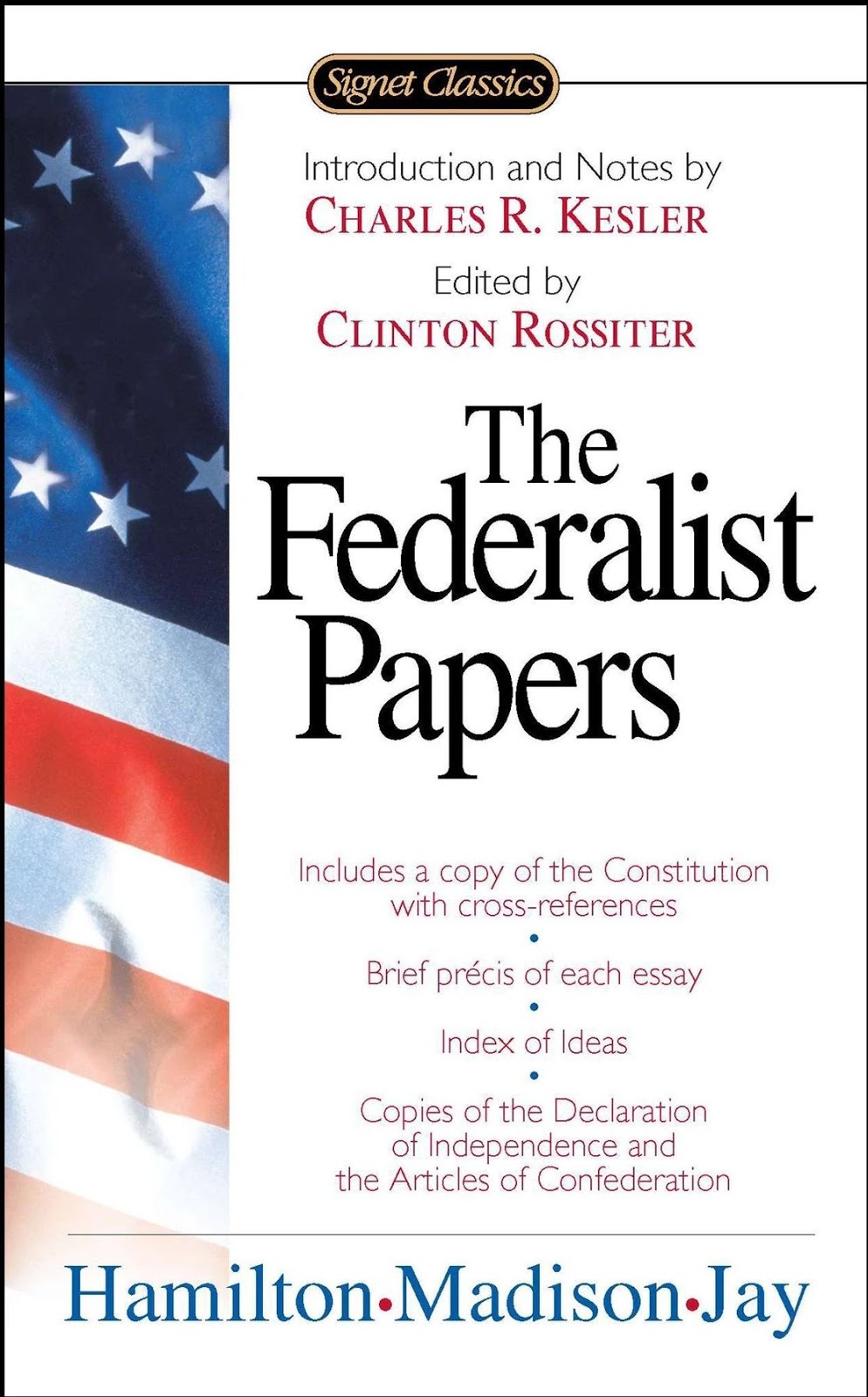
The Federalist Papers


“It has been frequently remarked that it seems to have been reserved to the people of this country, by their conduct and example, to decide the important question, whether societies of men are really capable or not of establishing good government from reflection and choice, or whether they are forever destined to depend for their political constitutions on accident and force.”

In September 1787, delegates from throughout the thirteen States gathered for the purposes of amending the Articles of Confederation,  They emerged not with an amended confederation, but with a new Constitution altogether.     Each State was called to ratify the document, resulting in heated debates, and several anonymous framers of the Constitution contributed to the debate in New York by writing a series of letters explaining the whys and wherefores.   The letters are generally thought of as being penned by Alexander Hamilton, James Madison, and John Jay, with  Hamilton penning a majority of them.   The papers remain popular today in certain circles which contend they explain the Founders’ intent when creating the Constitution.   That’s not quite accurate, of course; the framers hotly argued between themselves and were still arguing after the constitution was offered to the public;  these gentlemen writers represent one voice in half the argument.  Even so,   from a historical point of view, I wanted to read the papers to encounter their voices for myself.

The authors begin by arguing first for some kind of American union at all, rather than a continuing existence as  thirteen separate States,  or a future of multiple republics competing against one another.  The thirteen states have fought a war together and signed treaties together; they share a common language, a common heritage, and North America east of the Appalachians seems made for unity,  with uniform good soil, many rivers linking the states, and a coastline with extensive harborages.   From this more sentimental argument, they then argue that a union, particularly a stronger one, make sense for reasons of security and commerce.   The states divided might war with one another, raising tariffs against their brethren; they could form small republics and bully their neighbors, or be manipulated by outside powers  to the disadvantage of all Americans.   Americans would squander their wealth by maintaining armies to defend themselves against one another, on fortresses. In a Union, however, they could benefit from a common market, uniform currency, and coordinated economic activity against outside threats. He often looks to the example of the United Kingdom, pointing out the many wars between England and Scotland prior to union.

All this is argued in the first fifteen articles, after which point Hamilton and company say bluntly: the Articles of Confederation aren’t up to the job.   They then examine similar failure points in other confederations (the authors always refer to the government of the States as a confederacy), and reflect on the essential roles of any proposed government before – almost halfway at, at #39 in my collection —   addressing the Constitution itself.  What follows from there are answers to general arguments against the Constitution from those who feared it created an all-too powerful central state, and then specific arguments based on suspected future abuses of the various branches of government.

The papers are dense, especially when the authors get into the weeds of the roles and checks of the government in the final thirty. However, there is immense value, particularly for Americans, in taking on this collection.  There are gems of wisdom buried in the legal reflections, and the protracted arguments reveal how much the Constitution was a child of compromise and pragmatism.  One important argument for them is that the Constitution creates a stronger union, yes, but its government is not a consolidation: it is a Federal one,  splitting sovereignty between the national government and the States; the states in fact are members of the government, directly appointing Senators. (This is no longer the case;   senators are now elected, and are so removed from State interests that they needn’t even be residents of the state they allegedly represent!)

From hindsight, the papers are almost amusing in some of their arguments: Hamilton is baffled why people would fear overreach from the national  government. Why,  so few things will be left to its purview? By the main,  most people will still only be effected by their local and State governments; the federal entity would be mostly focused on big thing, like foreign policy and  inter-state disputes.   (They are similarly puzzled as to why State governments would fear the national government, when so much of the power remains in the States’ hands.)  The  Legislature is also viewed as the branch of government most likely to go mad with power;,  which is quite a change when most of the bloated mass of government in DC are officially operated under the Executive branch.  So small was the national government prior to 1789 that it was expected to fund itself entirely on import duties!

In reading the papers, I could not help but again be impressed by the substance of the writers and their rivals.  Before radio, television, and the internet reduced elections to sordid popularity contests,   those who sought public office did so through considered public debate, of which the papers were a part.   Would we today tolerate a politician who began reviewing the history of the Netherlands, the Greek city states, and the Holy Roman Empire to add background to the idea he was proposing to you?  This work leads me with a greater respect for the problem before Americans in 1787, and a greater appreciation for the document which emerged from the convention. Although the Constitution has been much abused over the years, especially in the 20th century and beyond,  both the consideration that went into it, and the product itself should be cherished.

If anyone is curious,   I put the notes I was keeping into a public Google Docs file.  As you can see, I lost steam in the last leg!


Posted in history, Reviews | Tagged , , , | 11 Comments

Spark

https://readingfreely.com/wp-content/uploads/2019/09/1a276-three.jpg
© 2008
308 pages

Are you fat? Exercise! Are you  stressed? Depressed? Exercise! Do you have ADHD? Exercise!  Do you fear dementia? Exercise!  Do you want to learn more, and more quickly? Exercise! Do you struggle with an addiction to drugs  or alcohol? Exercise!  Do you want to recover from your periods faster? Exercise! Exercise!  Exercise! Six times a week, preferably, alternating short intense days and long, milder ones.  Exercise! At least thirty minutes a day!  Lift weights, but make sure you keep your heart at 60% of its max: cardio is better! Exercise!

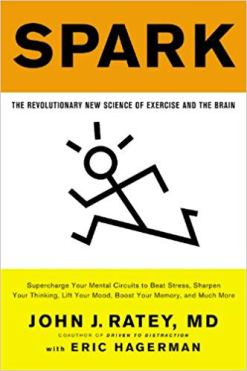
Spark: The Revolutionary New Science of Exercise and the Brain is an easy book to summarize and a hard book to review, because  it’s just the same lesson over and over again in different topics:  our brains were made for movement.  I’ve long known that my own mind was more active when I was on the move — I’d spend hours jumping on a trampoline in my backyard as a kid and thinking up stories involving my action figures, stories I could never quite recapture if I was just sitting down playing with them —   so the first chapter on how exercise  promotes learning didn’t surprise me at all.  The author is a psychiatrist who, over the years, has found a prescription for exercise to be an invaluable part of his  toolkit. In each chapter, he discusses how exercise has made a pronounced effect on individuals in his practice, or in others.   With each, he covers the effects of exercise — what is happening in the brain to help in this instance — and shares the studies which have helped us understand what is happening.   While in most cases the exercised brain’s contributions involve biochemical changes within the brain itself, sometimes  these changes are also a stepping stone that allow patients to break negative cycles of stress, depression, and chemical addiction.

Although a bit repetitive,  Spark is promising.    And with that, so ends Health Week 2019!   Now, on to Herodotus!


Posted in history, Reviews, science | Tagged , , | 2 Comments

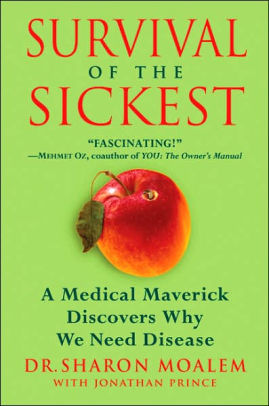
Survival of the Sickest

© 2008 Sharon Moalem
267 pages

Ask the man on the street about evolution, and assuming he doesn’t connect it to Pokemon, he’ll probably identify it as something that happened long ago.   But creation is never finished, either underground where tectonic plates grind against one another, producing mountains, or above where endless forms most beautiful prowling around continue to change.    We know this well from medicine,  because the attempt to conquer a given disease is often frustrated by the sheer pace at which a given bacteria population can adapt. But what if some illnesses continue to be pervasive because it’s beneficial to us?  Such is  the argument advanced by Sharon Moalem in this, one of the most interesting biology books I’ve read in a while.

How can being susceptible to a disease help us? Diseases are often debilitating, sometimes confining the affected to bed –  not exactly a place to take one’s stand in the eternal struggle for existence.   But suppose a trait that warped cells ever so slightly – a bad thing, on the face of it —  had the effect of preventing an invasive parasite from being able to use those cells, damning it to a death as soon as it had gotten a look around your circulatory system?  So it is that sickle cell anemia, which only occurs when two people with those warped cells have a baby, persists in Africa and other places where malaria is common. More people survive malarial attacks than die from it because they’re in possession of those slightly warped cells. (Sickle-cell anemia results when two people with the affected cells have a child, and their child’s cells are so altered they slow the flow of blood.)  Another sickness, in which cells horde iron to the point of poisoning their own bodies, is a similar adaptation against malarial infections….but unlike with sickle-cell anemia, those with hemochromatosis can find relief from their internal oxidation by donating blood.   These genes persist because,  given the odds,  they’re more likely to help persons carrying them than to hurt them.

After exploring other cases like this, including  a speculative argument that the European propensity for diabetes is an adaptation to the northern climes during the last glacial period,  Moahem shifts an even more fascinating topic: methlyation,  or the processed by which traits expressed by your genes can be turned off and on, or otherwise modulated, because of factors in the environment, both prenatal and postnatal.   We encounter mammals who give birth to different colored offspring depending on how much light the mother is exposed to —  allowing her to bear white babies in winter, when snow is on the ground, and  brown ones during the summer.  Human mothers’  environments also change them: when on a starvation diet, or when eating mostly nutrient-poor junk food,   they give birth to small babies that grow up with horders’ metabolisms.   Why this has happened is fairly easy to guess:  children born in times of famine need to hold on to every scrap of spare glucose they can.  Towards the end, Moalem shifts a little off topic to examine other environmental effects on our genes and their expressions, sharing the argument of some that human beings have been partially shaped by a maritime environment,  driving our hairlessness and bipidalism.

Survival of the Sickest has been on my to-read list for many years now,  and I’m extremely glad to have finally sat down and taken it on.     It’s in the same vein as Randolph Nesse’s Good Reasons for Bad Feelings and Why We Get Sick, the former of which I plan on reading before too long.

Health Week will wrap up with Spark:  The Revolutionary New Science of Exercise and the Brain,   on Monday.

health

Posted in history, Reviews, science | Tagged , , | 6 Comments

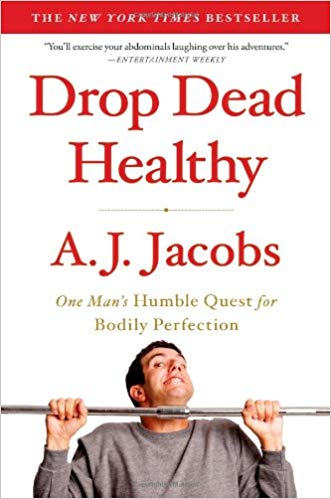
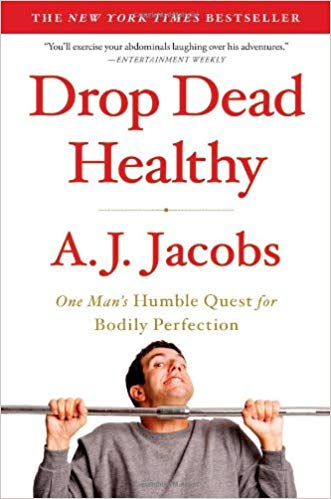
Drop Dead Healthy

Drop Dead Healthy: One Man’s Quest for Bodily Perfection
© 2016 A.J. Jacobs
416 pages

A.J. Jacobs, a writer for Esquire, has previously taken on year-long efforts to improve his mind and his spirit. Now, in Drop Dead Healthy, he takes on his body. It’s time to take the health advice he’s been given: all of it.  At once.

From that comic premise grows a book about a man trying to make sense of what it means to be healthy.  Although he takes on a number of daily disciplines,  there are also monthly obsessions as he targets a particular area of his life in a given month. For instance,  early on he decides to take steps to reduce the amount of noise pollution (and subsequent hearing loss and background stress) in his life by wearing a pair of noise-cancelling headphones.   Some obsessions will have a lasting effect on his two-year health project: for instance, after  he becomes aware of the health problems caused by too much sitting down, he builds a standing desk for himself….centered around his treadmill.  The rest of the book is written from the treadmill, and he walks nearly 2,000 miles in the process.  All of his desk work takes place on the move, like he’s a character in The West Wing.      The laundry list of daily activities includes sensible items, like getting so much exercise or eating so much fiber, but it also includes…quirky habits, like singing, or memorization.  (Singing lowers stress, and memorization increases brain function.)

Although it often sounds absurd, Jacobs’ humorous approach only sweetens the medicine: Jacobs does research and shares his layman’s analysis with health-conscious readers.   There’s a lot of health advice out there, and some of it is contradictory: take the great diet schism between  the “plant” and “meat” crowds: Jacobs isn’t referring to  vegetarians versus omnivores,  but rather between the carb-based diet advocates who marginalize meat,  and the carb-cutting advocates who make bacon a minor deity and regard potatoes as the very devil.    Jacobs dives into the literature for each, examining the arguments for both sides, and then chooses which approach, or blend thereof, seems most reasonable and evidence-based.  There’s also the fact that…well, nutrition is like economics:  there are no solutions, just trade offs. A food that contributes to your health in one way may detract from it another; ditto for behaviors. You can spend time with your family, which is good;  but you’ll have to endure a lot of noise, which is bad.    He’s unafraid to experiment with groups or behaviors that would have otherwise struck him as very odd, like the women who scream self-empowering things during their aerobics, or the guys who insist that one must run barefoot through the meadows and woods throwing boulders and moving logs to really exercise the way humans were intended to move.  And he pole-dances. (He’s bad at it.)

I’ve previously thoroughly enjoyed Jacobs’ efforts to read the entire Encyclopedia Britannica, and to follow every rule in the Bible as best he could, and found the latter surprisingly thoughtful considering Jacobs’  secular status. This, too, is thoughtful, but it’s also meant to be a little playful.   Jacobs ends with several appendices with advice on what to eat,   what kind of exercises are useful, how to stay in motion, etc.

Health Week will continue with Survival of the Sickest and Spark,  the latter of which came in via interlibary loan late in the week.  And then it’s on to Herodotus!


health


Posted in history, Reviews | Tagged , , | 3 Comments

How we communicated on 9/11

“Pagers, Pay Phones, and Dial Up: How We Communicated on 9/11“

I largely avoided social media and the internet yesterday because of the significance of the day. It wasn’t anything pious, a deliberate remembrance;  but I knew what the topic would be, and I just wanted to turn the volume down, so to speak. Today, however, I spotted an article on how we shared the news, circa 2001, and it struck my interest. As I processed the news all day in school,  I distinctly remember worrying about whether the Internet would still be working.   It was, as I remember reading the news online (not something I usually wasted valuable internet time on) and talking about the news at 3DO’s forums, which were the center of my internet existence then.     The article has an insightful conclusion, in which the author suggests that an event like 9/11, if experienced through today’s social media, would not have the same unitive effect, as people would be absorbed by their private experiences of the news,  gleaned from their own various sources (facebook, reddit, 4chan,  twitter, etc),  instead of drawn together.

Quotes:

“The attacks of September 11 might have been the first global catastrophe experienced in real time by hundreds of millions of people around the world. The first footage came almost immediately, from WNYW-TV Fox 5 on its morning show Good Day New York. CNN had a live feed trained on the Twin Towers at 8:49, barely three minutes after the first plane hit.”  […]

“Over the next hour, President Bush was rushed aboard Air Force One, which rocketed into the sky, a move that protected him yet ultimately compromised his access to information. Back then, the president’s plane had no satellite or cable TV nor access to email, so the plane relied on the equivalent of old rabbit-ear TV antennas to pick up local TV coverage as it flew over the southeastern United States. As Fleischer told me, “It put us in a very different spot than most Americans that day. People around the world were riveted to their television sets. We had it intermittently on Air Force One … When you’re in the air, you’re cut off.”

Sonya Ross, the AP reporter in the presidential press pool on 9/11, recalls, “We didn’t know where we were going, but they must’ve been circling, because we kept watching the local feed of a Florida station going in and out. That was our tiny window into the outside world.”

Think about that: For much of the day, those aboard Air Force One with the President of the United States were less informed than the average American sitting at home watching CNN.”

And most startling:
“Eighteen years ago, 9/11 split our lives—dividing the world into before and after. It’s hard not to wonder, given all that has come since and the tools, apps, and social media that have grown to dominate our culture, whether today we wouldn’t simply fit even an event at the scale of 9/11 into our existing routines and rituals. Whether, rather than uniting together in a national moment, we would all put ourselves at the center of the story instead. It seems likely that today we would turn not to one another for comfort, to grieve as a nation, but instead each burrow even deeper into our now ever-present phones, scrolling, clicking, liking, and emoji-ing as the tragedy unfolded.”

Posted in history | 2 Comments

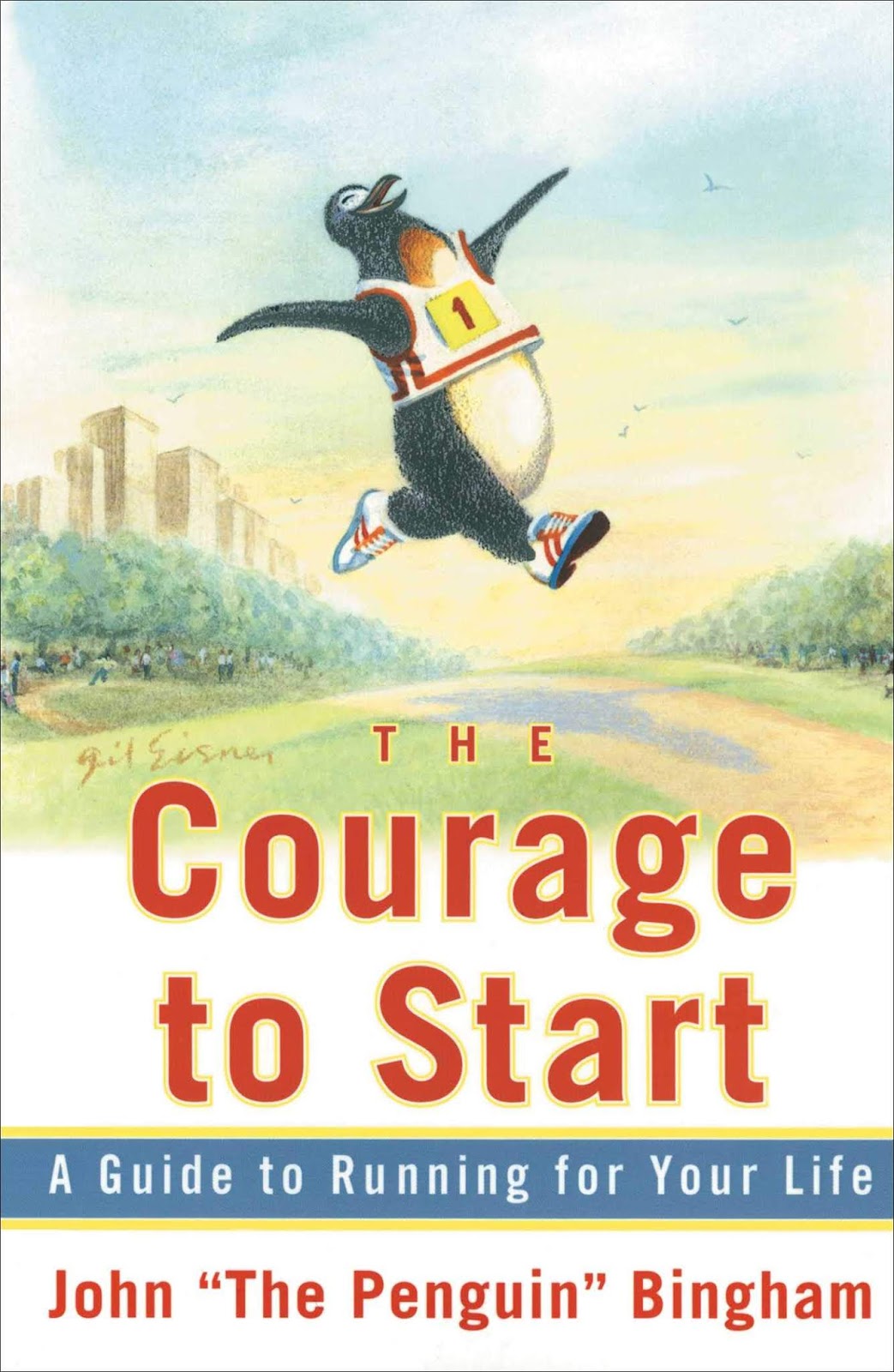
The Courage to Start

The Courage to Start: A Guide to Running For Your Life
© 1999 John Bingham
208 pages

John Bingham loved running as a kid. He wasn’t any good at it – he flailed his arms and wouldn’t impress any stopwatch-yielding kindergarten teachers with his time – but he found it an innate pleasure.  Every advancing year in elementary school, however, made him increasingly self-conscious about his physical limitations, to the point that he stopped running altogether.  He focused on his music, preferring to take part in physical activities only vicariously, by watching athletes on tv. As  the years passed and his waist grew wider, he occasionally gave thought to running again —  until one day he stood in his garage and just did.  For 20 seconds. The next day he did it again, for a little longer, and the next – until before long, he was running marathons alongside his librarian-wife, who also began running for moral support but soon surpassed even him in passion and strength.

When I bought The Courage to Start, it was under the impression that it was about his journey from an obese couch potato to a mostly-healthy runner, but that isn’t accurate at all.  Bingham doesn’t mention weight loss, and his only mention of diet and nutrition is when he mentions that starting a running habit made him shift to thinking of food in utilitarian terms: as fuel rather than a source of fun, relaxation, or comfort.   The Courage to Start is purely about running – what you need to get started,   what preconceptions you’ll need to ignore to continue, and what joy it can bring to your life.  Bingham’s message is simple: if you want to run, run.    Don’t worry about the fact that you can’t go further than the edge of your driveway without your lungs mutinying:    just do it again once they’re rested.   Bingham’s discovery was that his body responded to movement: the more he did it, the better he got.   He  provides a nine-week schedule for newbies from the couch to regular running status, but it only suggests “movement”, and Bingham suggests that readers do a mix of walking and running that feels right to them.   (The Beginning Runner’s Handbook has a more detailed schedule to guide walkers into running.)     The latter part of the book is taken up with racing and the fruits thereof –   the courage to endure.

Is The Courage to Start for you? Well, if you’re on the fence about running and you want to start but lack the nudge, then it will probably do the trick. If you’re simply considering it, probably not: Bingham’s book strikes me as written to someone who already has the bug. Aside from the chapter on what to look for in running shoes, there’s not a lot of hard advice;  Courage is more a work of encouragement than education.


health

Posted in history, Reviews | Tagged , | 1 Comment

A purloined book survey

I’m shamelessly stealing this from Cyberkitten!
What is your average monthly budget for books?

Officially, my entertainment budget allots $20 for books.  It is usually exceeded a little bit. $30 would be fairer, but I’ve decided to place myself under an Amazon/Steam interdict until Christmas.
What’s the most you’ve ever spent in a bookstore?
I have technically spent $50 in a bookstore, but that was spending gift cards. Mostly in bookstores (BooksAMillion is the one I frequent), I drink coffee and look at new arrivals, taking pictures of ones I like until I find used copies of them.  I DO buy Star Trek books and the odd magazine, though.  Whenever I find an indie bookstore on vacation, I try to find a book to buy in support.

Are you willing to pay full price for a brand-new release or wait until there’s a sale?

I almost ALWAYS buy books used or on sale because I’m a self-proclaimed Cheap Bastard.   There are exceptions, however:   I will preorder a Kindle book if the price is right ($12 or under) for certain authors or series.   I’ve preordered all of the Firefly novels, for instance.
Would you rather buy one new book or several less expense used copies?

Depends entirely on the book. I’d be drawn to spending money on several used ones unless the new book in question was from a great author on a great subject.

What do you think is a reasonable price for a hardback, a paperback or an e-book?

I can’t justify spending more than $12 on an ebook, or over $20 for real books even new. I mostly buy used or take advantage of Kindle sales.
Is a signed book worth more to you? How about a 1st Edition?

A signature would only matter if I had obtained it personally, in some exchange with the author, and then mostly to strengthen the memory.

What is your most valuable book?

Probably my copy of Glimpses of World History by Jawaharlal Nehru.  Used copies were selling for $80 – $150 for years, and then someone offered one for $25 and I snatched it up.  I just did a price check and looks like a re-print has pushed down prices, but at the time…

Would you pay more for a different cover or a specific edition of a book that you like better?

Probably not, although I will spring for an original cover if a reprint has been marred by a television drama’s actors.

What physical characteristics does a good quality book have?

Heft, paper thickness, paper texture,  font choice.

If you won the Lottery what bookish things would you be spending on?

If I won the lottery I’d buy land deep in the country where my house couldn’t be seen from a public road. I’d probably build a house centered around a library/reading room with relatively small areas on either side of it.  I’m into simple living, so my actual living quarters wouldn’t need much.

Posted in history | 6 Comments

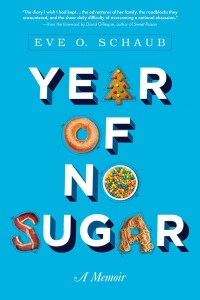
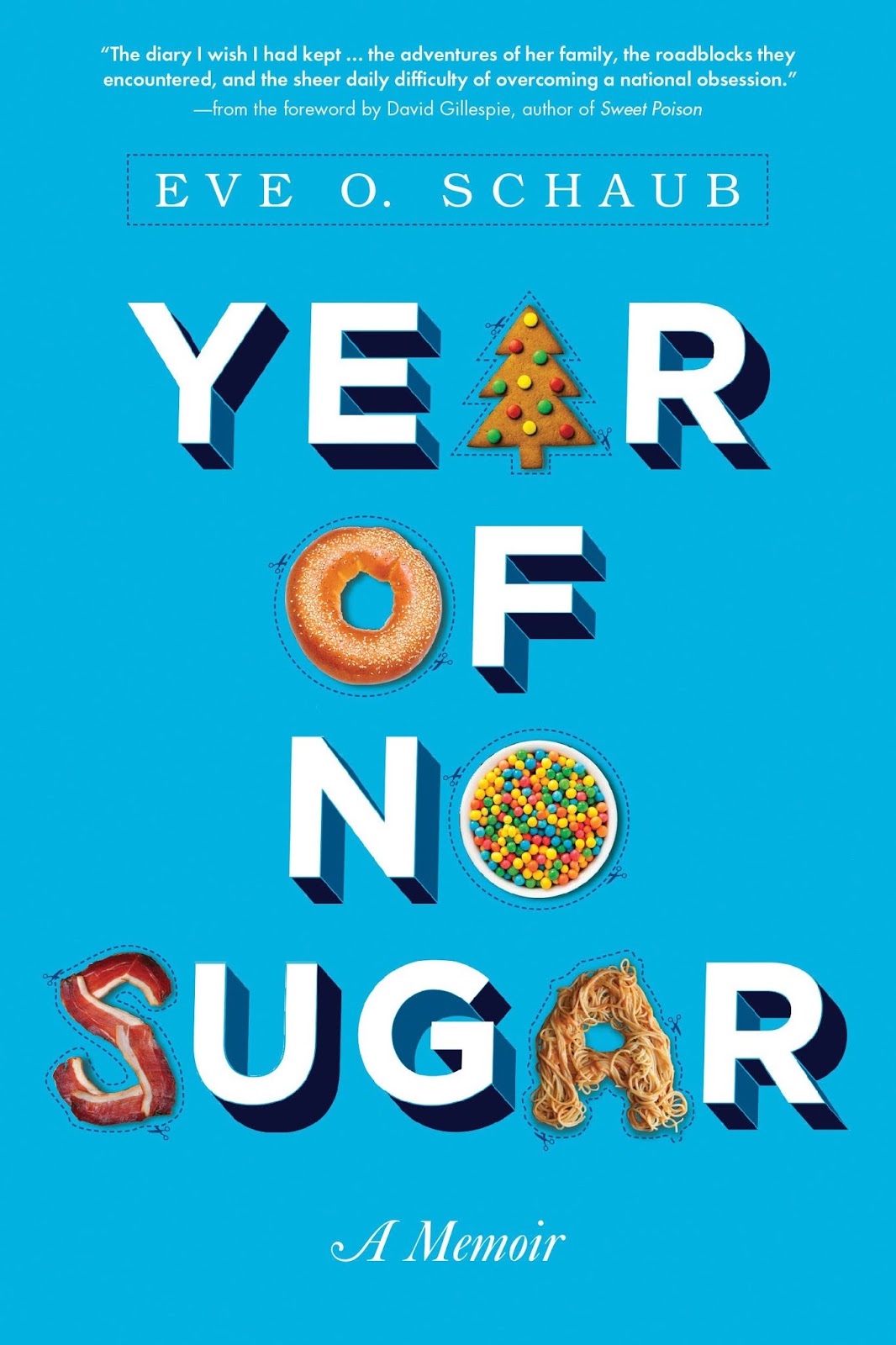
Year of No Sugar

Year of No Sugar
pub. 2014 Eve O. Schaub
320 pages

one

Eva Schaub’s life was changed at a birthday party for children, when a conversation with a fellow mom  made her aware of something called “corn syrup”,  Being the curious sort,  she looked into it and discovered to her further confusion that corn syrup was in seemingly everything from the salad dressing to the bread aisle. Still worse, when she ventured online, she found there were medical researchers arguing that the constituent element of corn syrup, fructose, had such a destructive effect on  the human body that it should be regarded as a poison.  In the spirit of science,  Eve and her health-conscious husband decided that they and heir children would live a year without sugar — just to see if it were possible.  From that beginning, however,  another story matures, one about a family’s changing relationship with food.

Schaub begins her post-sugar reflection with a brief recap of the science that led her to this decision.  Fructose seemingly does nothing positive for the body; it does not satisfy hunger pangs,  and the part of our body that will interact with it is the  liver – which handles like a poison. The fatty agents produced by the liver in the process derail the body’s ability to use insulin effectively, setting heavy consumers on a path towards obesity and diabetes. And then there’s cancer…

If high amounts of fructose were like nicotine, they’d be easy to avoid.  Fructose, however, is in seeming everything that wasn’t just hunted or gathered.  In the beginning, Schaub is forced to nearly empty her kitchen and pantry to get the added sugar out.   As the year progresses, Schaub and her family learn different ways of adjusting;  frozen bananas run through a juicer, for instance,  are readily acceptable as an ice cream substitute.    Although holidays and birthdays were extraordinarily difficult, the family muddled through with the use of once-a-month  dessert cheats, and the continuing discovering of substitutes like dextrose for baking. (Dextrose is a sugar, chemically speaking,, but it doesn’t have the destructive effects of fructose;  the Schaubs weren’t low-carbing, they were just avoiding a particular kind of sugar that damage human bodies.)

The real substance of the book is the Schaubs’ evolving relationship with food.  They begin in ignorance, despite being health nuts, they knew nothing about the ubiquity of sugar in their food, even the supposed healthy stuff like bread and salads. Early on they were forced to become hyperaware of what was in everything they ate, to the despair of waiters who were forced to look up the nutritional info for every dish the Schaubs were considering.  Making their own meals at home – and thinking about how they could improvise around the need for sugar in baking or jams —  made the Schaubs, even the youngest daughter just beginning school, active participants in the choosing and creation of their food.  Food was no longer a consumer good, but a product made by hand. Even after the year ended, in the final reflection, Schaub believes that will not change.  Even though they began tolerating a little more sugar on the challenge’s completion – a weekly desert, a guilt-free imbibing of salad —  they had lost the taste for overly sweet things,  and their daughters’ discovered love for cooking would not disappear.

Year of No Sugar is entertaining, and for those who have never encountered the arguments against sugar,  it may serve well as an elevator version that shifts to a memoir about thinking more deeply about food.    Although those interested in the science that makes fructose problematic would be better consulting The Case Against Sugar or Lustig’s own Sweet Poison,  Schaub’s story will find a definite audience among those who enjoy the works of Michael Pollan, say, or Joel Salatin  — who are disturbed by their relationship with food and wish to change it.


Related:
Why We Get Fat;  Good Calories, Bad Calories; The Case Against Sugar. Gary Taubes
In Defense of Food, Michael Pollan
.The Telegraph (UK) also has an article drawing on Lustig’s original “Bitter Truth” lecture. 
“Sugar: The Bitter Truth”, Robert Lustig. Working on 9 million views.
Salt, Sugar, Fat: How the Food Giants Hooked Us, Michael Moss


health

Posted in history, Reviews | Tagged , | 12 Comments

Health Week 2019

health

Welcome to Health Week!    I haven’t done anything like this before, but lately I’ve been focusing a lot on personal cross-training, as well as trying intermittent fasting with an eye of breaking through an old plateau,  and so diet and fitness have been on my mind.  The library is also partnering with a local hospital and the University of Alabama at Birmingham to do a “Medical Matters” lecture series from now until December.  Some purchases and loans all came in around the same time, so  I figure why not make a theme out of it?  It’s well in keeping with RF’s theme of the flourishing life, which can’t ignore our physical well-being.

First up will be The Year of No Sugar, followed by (in an order TBD): Spark: The Revolutionary  New Science of Exercise and the Brain; Survival of the Sickest: The Surprising Connection Between Diseases and Longevity;  The Courage to Start, the diary of a man who jogged his way out of obesity – starting with a lope down his driveway; and  the presumably hysterical Drop Dead Healthy by A.J. Jacobs, who before has read the entirety of the Encyclopedia Britannica and followed every rule in the Bible over the course of a year.

This kicks off today and ends….whenever I finish the five books!   I don’t expect to be able to read all of them before next Saturday:  the Jacobs book may not even arrive next week. (Earliest due day is 11 Sept, latest projected is 18 Sept.)   I’ll swing as they’re thrown.


Posted in General, history | Tagged | 6 Comments