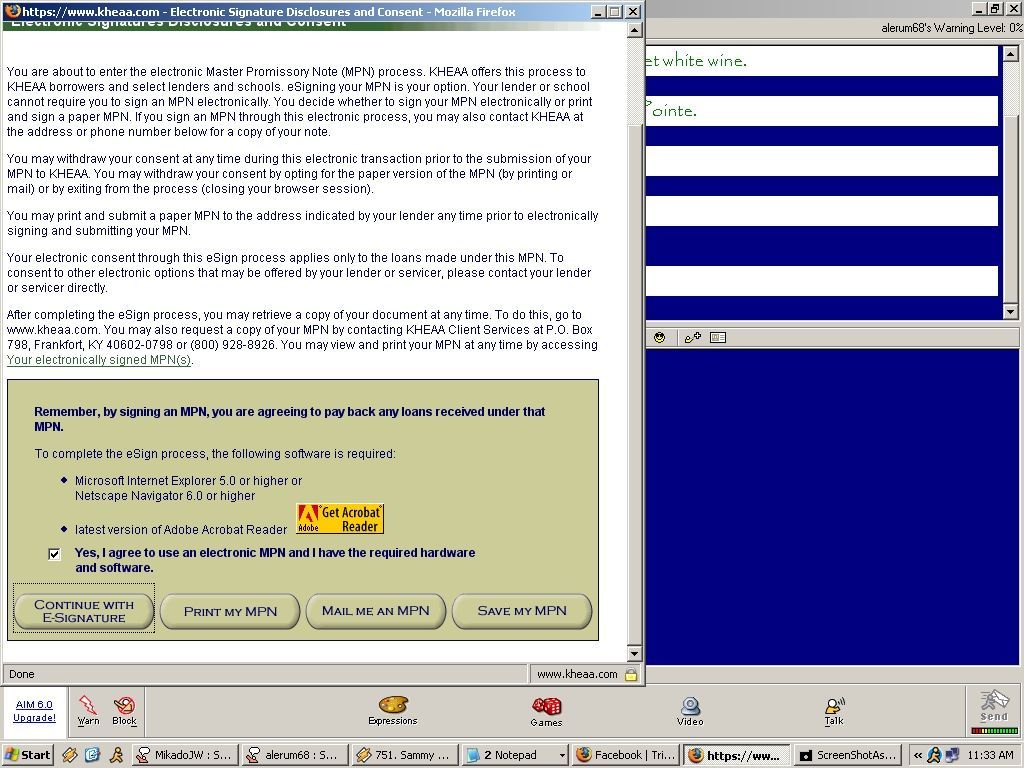
The Ice at the End of the World

© 2019  Jon Gertner
418 pages
ice

My reading journeys have taken me to Greenland recently, but instead of reading more about the Viking settlements there,  I wanted to read about another tribe:   the explorers and scientists who willingly endured months of supremely hostile terrain for both glory and science.   The Ice at the End of the World is one half history of Greenland’s early exploration, one half chronicle of its role as a site for constant scientific investigation.  The latter is particularly important given the poles’ roles in regulating our global climate – and their testimony, buried in ice, as to how much has changed and how quickly.

At first, they came only to see if it was possible for a man to cross the ice. Human settlement in Greenland, even among the Inuit who are well accustomed to its severities, is limited to the coastal fringes.  When explorers like Peary and Wegener landed in Greenland and began preparing for their expeditions – learning as much as they could from the Intuit, who had centuries of accumulated knowledge for how to move and survive in daunting near-polar conditions – their native hosts could only think them lunatics for  wanting to trespass into the wastes haunted only by gods and death.    The early expeditions first accomplished simply getting across the great ice in the midst of Greenland without perishing; later ones would push north in an effort to determine the  land’s boundaries.  Did the ice go ever north, linking with the north pole? Or were there limits?

Although scientific research was conducted in these early jaunts – explosives were  used to set off seismographs and monitor how long it took the sound waves to radiate down to bedrock before rebounding to the surface again —   intense efforts to map the thickness of the ice sped up after World War 2,  in part because of  advance of air traffic infrastructure into Greenland during the war, and in part because of the United States’ sudden strategic interest in the area.  Greenland may have been useful during the war for protecting shipping traffic, but in the next war, against the Soviet Union – it would be vital.   The north may very well be the front lines, and bases couldn’t be built without really understanding the science of the ice sheets  — how they moved, settled, grew.  So began Project Century,  which combined science and military aspirations: the United States’ fondest hope was to base nuclear weapons in Greenland in case the Cold War became an active conflict.    This project would result in extensive ice core samples being taken and analyzed.

Ice at the End of the World begins with journeys of physical exploration, of men trekking the interior of hitherto-unseen ice sheets….but page by page, it transitions slowly into a journey of mental exploration, of men and then women searching for answers, and finding them. They realize that Greenland’s ice cores carried the history of past temperatures with them,  because different isotypes of oxygen appear at differing frequencies at greater or lower temperatures. That ice told a story – one that challenged the idea that climatic shifts were bound to be slow and gradual. They could be, in fact,  fast and disastrous – and  that was true not only of the past, but of the future.  Could global civilization survive a shock imposed by some of the radical climate shifts they’d seen in the ice?

We’re still working on the answer to that one. In an age of growing awareness regarding our role in atmospheric instability,  some people believe we’re doomed, that Earth will become unlivable. Others simply believe we’ll watch cities like Miami became new Atlantises (Atlantii?), but otherwise adapt.

What is known is that The Ice at the End of the World is a terrific read, combining the best parts of an adventure novel – the exploration of the unknown, the endurance of hard ship, the celebration of ingenious adaptations to severity  — with  a history of a paleoclimatology, and the dawning of one of our age’s most talked-about scientific issues.
Posted in Reviews | Tagged , , , | 6 Comments

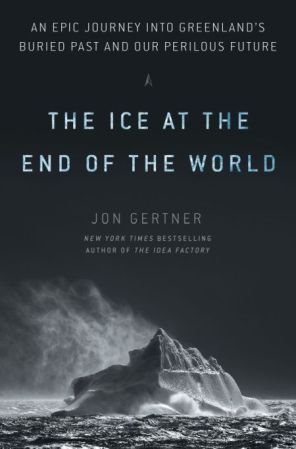
IRL

irl
© 2014 Cory Doctorow & Jen Wang
192 pages

I happened to see Cory Doctorow’s name on the cover of this graphic novel, and had to take a look.  The plot is heavily based on a short story of Doctorow’s,  although it’s been too long since I read the story I have in mind to know for sure how closely they follow one another.   According to ComicsAlliance, Jen Wang adapted the novel from Doctorow, although he’s still directly involved in the book, with an introduction that encourages young readers to get interested in the world of behavioral economics.   But enough of that, on to the story!

We begin with Anda, a girl with poor self esteem issues, whose school is visited by a woman who wants to build a girls-only gaming clan on the story’s resident MMO, “Coarsegold”.   Anda finds the idea of a gaming clan interesting, and tries it out. She flourishes, developing a friendship with a fellow clan member and growing in skills and confidence – the latter, even offline!   When Anda and her sister-in-arms are offered an opportunity to make real money by killing the avatars of players involved in gold farming – that is, doing lots of low level work to gain experience and items that are sold for real money through ebay and such–   she chances to meet an English-speaking player whose knowledge of the game impresses her. She learns that he is a kid just like her, but instead of being in school, he works 12+ hours a day  in the game, developing characters to be sold by his boss.  Inspired by her father’s firm going  on strike for increased health benefits, Anda does research into China’s local labor laws and urges her friend to do the same. It doesn’t work out quiiiiite the way she expects.

In the end, things work out: this is a YA novel, after all, and the point of it – going on Doctorow’s introduction – is to show how easy organizing for a purpose can be, and to encourage kids to do the same for causes they’re interested in instead of waiting until they’re adults.   We’ve certainly seen that happening with the recent  climate parade.  The art style is interesting; I’ve only read one graphic novel before (V for Vendetta),  and this one blended real life and online life seamlessly; in one panel Anda is her frumpy sweater-wearing meat self, in another she’s an Amazon warrior with a mane of fiery red hair.    Because of the online setting, we get treated to fantastical scenes – humans fighting monsters and such – with bits of GUI imposed on them, like health bars. And, in a nod to the short story being published in 2004, the monitors shown are all hulking CRTs instead of flatscreens.

Doctorow has expanded on the gold farming as exploited labor theme in another full-length novel, For the Win, and I  may get around to reading it. In the meantime, though, this was…fun. Definitely out of my usual reading zone!


Posted in Reviews | Tagged , , , | 1 Comment

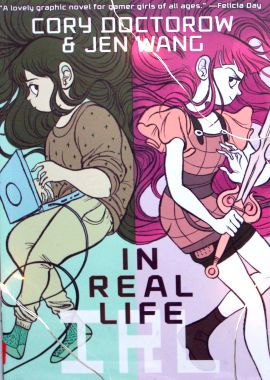
Needful Things

Needful Things
© 1992 Stephen King
940 pages

needful

A new shop has come to Castle Rock, one with a curious name: NEEDFUL THINGS. Its wares appear to run the gamut from cheap antiques to one-of-a-kind oddities. Even in a small town like the Rock, however, everyone seems to find a special something there, just the ticket for what they need. An embezzling politician in debt finds a toy that predicts horse races; a child finds the one card that will complete his 1952 Brooklyn Dodgers baseball card collection; a man who sorely misses his father finds an exact duplicate of the old man’s fishing reel. But it’s true, you know: the things you own end up owning you. And in the case of those items sold from Needful Things, they own you body and soul. Opening in early October, Needful Things is a thrilling novel from Stephen King chronicling the descent of a town into absolute mayhem when a literal merchant of death sets up shop.

When I first heard of this novel, its premise intrigued me, reminding me a bit of that early Twilight Zone episode in which a peddler sells people items they’ll need….in the future. But there is a great gulf between that kindly peddler and the owner of Needful Things, one Leland Gaunt. Even if a reader had never heard of Stephen King and didn’t realize they were bound for horror, Gaunt’s early characterization makes it obvious that something is very, very wrong. The kindly, wise shopkeeper seems to be able to put solitary shoppers into a bullying trance, and the items his victims regard as so precious are seen by others as cheap trash. Still more, Gaunt seems to acquire a power over his shoppers, bidding them to do little favors, pull little pranks. But what begins as a seemingly innocent, if mischievous, errand, may put the town on a course to utter chaos.

Needful Things builds as a novel, stewing all throughout the first half: both King and Gaunt work their magic, the author creating a map of the town’s people and their relationships with one another, the latter seeding his needful things among the populace at bargain prices and slowly getting the pot ready to boil. On Columbus Day, the action starts, and from there readers follow the town as it spirals out of control into a total bloodbath. The book certainly succeeds as a thriller, in part because of the light King puts human nature in. When Gaunt’s victims first see the items, they’re always shrouded in the promise of goodness: a drunk sees something that reminds him of his youth, and thinks if he can have it, he can take inspiration from it to start his life back over – to walk away from the bottle. But the promise is never quite fulfilled, and most of Gaunt’s customers are so obsessive and protective of their preciouseses that they never even use them, only obsess over them and keep them under lock and key. In the end, all are driven to madness. Desire and appetite are never satisfied here, only fed and engorged. I tired of the chronic carnage of the last two hundred pages, but the first two acts’ slow boil had me hooked too firmly to care at that point.

Posted in Reviews | Tagged , | 4 Comments

Before and After “Break Up With Your Phone”: A Mindfulness Exercise

Wednesday, October 2 2019 

I’m about to read How to Break Up With Your Phone, and as an exercise in mindfulness,  I wanted to share my thoughts both before and after.

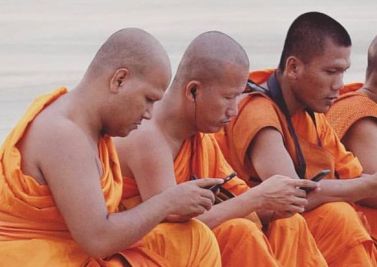
cellmonks

I believe I have a healthy relationship with my phone. Yes, we go everywhere together; my phone is invariably on my person or sitting on my worktable, but my phone mostly exists as an e-reader.  My phone’s size is perfect for one-handed reading, and  I love being able to carry a substantial library of titles in my pocket.  I also use my phone for taking photos (I was a shutterbug when it involved 27-shot rolls of film)  or keeping my pace at the gym. As I’m not one for texting or instant messaging on the phone (I prefer a keyboard for my  chatting), the only time-wasting app on my phone is “reddit is fun”.     Wary of becoming an addict, I deliberately avoid using my phone in company (and never while eating out with someone),  and keep it parked on the desk when I am sleeping to avoid reading/browsing in bed.   I keep the ringer and notification sounds off most of the time,   and squelch what app notifications I can.

And now, to read the book and see if it brings anything I’m not aware of to mind!

Saturday, October 12 2019

type

When I  read How to Break Up With Your Phone, I finished the book feeling pleased with myself.   I, apparently,  didn’t have a problem!  Social media has nearly no presence on my phone; if it’s in my hand, chances are I’m reading or calling someone. A few more days of thinking about it, though, followed by a video on one man’s attempt to be a digital minimalist, made me aware that my preening was premature.  Specifically,  recently I watched a video by Matt D’Avella on his and his wife’s attempt to live a week as digital minimalists, using four rules:    no phones in bed,   only one session of checking email per day,  only thirty minutes of social media use per day,  and streaming media (Youtube, Netflix, Spotify, etc), only on one day.   The instant horror I had at the idea of only checking my email once a day — I keep a tab open whenever I’m at the computer, or only streaming once a week, was itself an alert as the source of my own addictions.  I wasn’t completely oblivious to them, particularly my YouTube habit,  but D’Avella’s approach really throws light on them.

While I’m not going to take on D’Avella’s own rules, I do want to try a…limited version of them, like  checking my email only at two or three appointed times during the day (with morning coffee, after lunch, and  after supper);  limiting my reddit/facebook time to a common hour per day,   and limiting my Youtube watching to….well, let’s do the other things first.   If I can do intermittent fasting successfully —     about to hit the two month mark on that —  I can fast from reddit!


Posted in General | 5 Comments

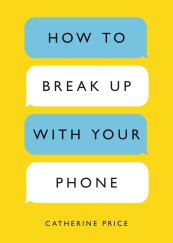
How To Break Up With Your Phone

How To Break Up With Your Phone
© 2018 Catherine Price
192 pages

adios

In just over a decade, smartphones have become ubiquitous and transformative. But for all the ease they add to our lives,   smartphones also have an inherent capacity to be abused. In How To Break Up With Your Phone,  Catherine Price  shares various psychological studies from the last decade covering wireless devices’  effects on memory, attention,  social skills, and users’ mental states, before offering a thirty day plan for phasing out some of the worst smartphone abuses and arriving at a more healthy relationship with our phones.

In the first half of her work,   Price draws on both formal studies and more popular works (The Shallows, for instance) to probe the more problematic aspects of global civilizations’ ubiquitous phone use.  In addition to the aforementioned coverage of memory, social skills, and mental health, she also argues that phones are addictive by design,   their constant stream of feedback and notifications keeping us wired, like gamblers fixated on a slot machine. It’s the unpredictability that’s irresistible: we don’t know if someone will have liked our most recent photos, or upvoted our snarky comment on reddit,  but there’s always that chance, that hope.  The addiction is made worse through its practical justification: smartphones, unlike gambling devices, are incredibly useful machines for communication, information, and entertainment.

Having served as a one-woman intervention for you and your devices,  Price offers a path out: a thirty day program in which the concerned reader tries one practice every day that will ease them out of their smartphone addiction,  downshifting to a healthier relationship with gadgets.  These include an initial period where the mindful reader is encouraged to install an app that will monitor how many times a day their phone is picked up, and how long the screen stays active, just to gauge their own habits.  Simply being aware of behavior often helps to curb excesses of it:  if we could see ourselves growing heated in an argument, or gorging on a plate of food,  or losing an entire hour cruising a facebook timeline, we’d be far more likely to pull back from the behavior.  She goes on to challenge the reader to think about the apps on our phones, and to sort them into different categories; some  apps, “junk food” apps  like mindless games, she encourages the reader to simply uninstall.  One of the practices introduced within the month is that of meditation,  which is not surprising given the general mindful emphasis of the work.

Although fairly brief, How To Break Up With Your Cellphone is definitely an eye-opener. I’m familiar with some of the research Price included here, but there were more studies which I wasn’t aware of it.   I don’t think the problem ends with our cellphones, however  — although they are the fast road to digital addiction, the same issues can occur on a computer just as easily.   Prior to reading this book, I  reflected on my own phone use, and while reading it I realized the parts that I resonated with most were so much about the phone, but about social media and email.


Posted in Reviews | Tagged , | 6 Comments

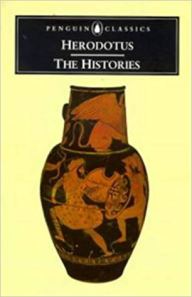
The Histories of Herodotus

herodotus

One doesn’t study history for very long, at least in the West,  before running into Herodotus.  I’ve meant to read him for years,  given his reputation as one of the earliest, if not the earliest,  historian —  that is, someone who kept a chronicle not for a mythic or state purpose, but purely so it would not be lost.   Having trekked through a thousand pages of ancient history with Herodotus,  traveling around the Mediterranean and hearing stories from the mundane to the grotesque, I’m tempted to think of Herodotus as some kind of cultural conservationist.  He repeats anything he hears, but not with careless credibility. His declared intent is to preserve and pass on what he hears, so that the “customs of the Greeks and others will not be forgotten”.    Although Herodotus does assert inaccuracies as fact (“Ethiopians and Indians have black semen”, for instance),  most of the time he cautions his reader: “I don’t believe this, but I was told it”, or “If you find this credible, may you find use of it”,  and so on.     Herodotus is more thoughtful than his reputation belies.   In Egypt, for instance, he offers to the reader his idea that the entire area was at one time underwater, given how often sea shells and other artifacts have been found far inland, as well as many salt deposits; he is also struck by the temple to Heracles in Egypt, which is obviously far older than the stories of Hercules in Greek.    The chief obstacle to reading the histories is the amount of content and the matter-of-fact way it’s often presented, with  Herodotus simply listing things he’s learned, explaining different customs. It’s a mix, to me, of interesting and sleep-inducing observations.  Learning that the Scythians created clothing and equipment out of human skin  (I really hope that was just slander) is one thing; the details of how so-and-so became king of a city I’ve never heard of and will doubtlessly never heard of again…..is another.

I’m going to take the same approach I did with The Canterbury Tales and share a few of the more interesting claims.

  •  The Egyptians had a taboo regarding pigs, and would not touch them.  Swineherds could only marry other swineherds. However!  At the festival of the full moon, pigs were permissible to be slaughtered and eaten.   Interestingly, the Egyptians also practiced circumcision!   One wonders how the stories of the Israelites fit into this, given their own genital circumcision and pig taboo.
  • Cows in Egypt were revered, and Egyptians would not kiss Greeks on the mouth or even eat from Greek plates for fear they were tainted with beef.
  • Prior to the Greek invasion of Troy that offended Persia, there as a lot of wife-kidnapping going on.  But, Herodotus adds,  the women probably asked for it.
  • One queen of Persia had herself entombed above a gate into the city, with an inscription that gold was inside her tomb for any future king who needed it, but they must only open it if they were desperate.   Darius opened it, only to find the queen’s body and a note: if you hadn’t been so greedy, you would have never defiled my tomb!
  • The Babylonians had no doctors ,but instead would  deposit the sick in the marketplace,  where everyone would pass by, ask about their ailment, and offer advice.


Again, this is all just according to Herodotus, so…take it with a bushel, peck, or similarly antiquated measure of salt.


Posted in history, Reviews | Tagged , , | 5 Comments

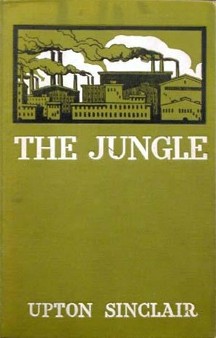
The Jungle

The Jungle
© 1906 Upton Sinclair
475 pages

jungle

Welcome to The Jungle, but we don’t have fun and games. We have despair, ruin, and death.    The Jungle begins as the story of the Rudkus-Lukoszaite family, who have arrived in America from Lithuania, very hopeful about building a new life for themselves. One of their countrymen owns a prospering shop, and they — leaving the farms of eastern Europe behind — hope to do likewise.     They are directed into the sinkhole of Chicago, Packingtown, where most immigrants are directed, and in that expanse of animal-processing plants, saloons, and shantys, they and their dreams go to die.  In 30-odd chapters we  see a strong, proud man crushed and chewed beyond recognition, until by the final chapters he is barely there at all — but we’ll get to that.

The Jungle is famous, or rather infamous, for inspiring more expansive regulation of the food industry in the early 20th century, despite that not being its intention. The novel was written as a serialized story/tract (published in the socialist Appeal to Reason)  by Upton Sinclair,  with the aim of  stirring up outrage and sympathy with the inhumanity of industrial poverty. Sinclair wanted readers to see the endless line of animals waiting for every little bit of them to be processed, and the endless supply of immigrants who would work for pennies,  who were used up and left to die by the same industry, were one in the same. Instead, people saw the early bits  depicting people falling into vats and being rendered into lard, or  cutting up every sickly animal or moldy bit of meat for use a sausage, and ignored everything else.

“Everything else” is….grim. Depressing. Grisly. Take your pick.   Jurgis and his family begin strong, proud, and hopeful; Jurgis’ response to any dilemma, any challenge, is simple: “I will work harder!”  But after a few bad financial choices, the family is placed on the brink of ruin and stays there, occasionally drifting into dire and deathly straits before bobbing up again, like some ghastly corpse in the water.  Early on, Jurgis is resolved that his wife and the youngsters will not work, but circumstances force otherwise, and soon it’s all they can do to keep off starvation.  Things really fall apart when Jurgis is injured and confined to bed for two months; when he returns, weak and haggard, he struggles to make a way for himself again, and any progress he makes is invariably disrupted by his own temper or outside tragedy.

In the beginning, The Jungle is utterly effective at winning the reader’s sympathy for proud Jurgis and his increasingly desperate family, but then,  in the last third,  the story….disappears.  Jurgis changes, and then he’s just a mute background piece, listening to speeches and  conversations between people designed to invoke a conversion to socialism. The novel ends with a cry to take Chicago, and….well, what of Jurgis? The sad remnants of his family?   We don’t know, and that’s annoying.  Ayn Rand’s novels may have also been author tracts, but at least they gave us resolution.

I enjoyed The Jungle far more than I thought I would, given my aversion to authoritarian systems like socialism,    and am glad I took it on.

Related:
Critical appraisal of novel from the Foundation for Economic Education

Posted in history, Reviews | Tagged , , , | 15 Comments

FREEEEEEEDOOOOOOMMMMM!

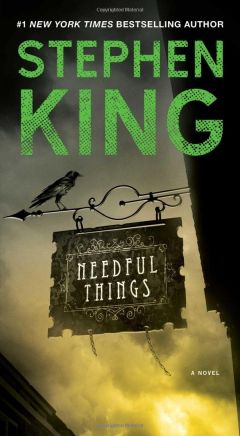
This has nothing to do with reading, but last night I celebrated a huge milestone. My student loans are….no more! Vanquished!

Signing my master promissory note in summer 2007,  preparing to go to college:

Making the final-final payment of $0.16 cents, because my final payment of $1,004 seconds prior hadn’t taken into account all of the interest, last night.


Posted in history | 12 Comments

The Sea Wolves

odin© 2014 Lars Brownsworth
300 pages

“Deliver us, Lord, from the hands of the Northmen!”    While that exact prayer may be apocryphal,  the sentiment certainly resounded in communities from Ireland to Cordoba to Constantinople.  In two of the final centuries of the first millennium,  raiders, traders, and explorers from Scandinavia ranged far and wide, ravaging the wealth of great and small and creating new states and civilizations in the mix.   The Sea Wolves is a fulsome  narrative history of the activities and impact of the Viking era,  which sees the  reader visit the first discovery of Greenland as well as the beginnings of Russia.  

I’ve previously enjoyed Brownsworth’s narrative history of Eastern Rome (Lost to the West), which I discovered via his podcast on the same subject.  Brownsworth visits each area of Viking activity in turn – raiding, trading, and exploring – before  the final sections of the book which cover the growth of Russia as well as the creation of strong kingdoms  in Denmark, Sweden, and Norway that  put an end to many of the old ways.  As I’m familiar with the Viking attacks in Britain and western Europe, I was most  captivated here by the Swedish exploration of eastern Europe, pushing down the rivers as far south as Constantinople.  Vikings who settled in Kiev — called the “Rus” — would ally and war against both the Khazars and Eastern Rome, and established the seed of Russia.  Brownsworth also covers the journeys to the fringe of North America, as well as raids in southern Iberia. I was particularly fascinated to learn that Constantinople hired both Vikings and Anglo-Saxons as an elite guard, and that these soldiers left their runic marks on the classical world by scratching graffiti in landmarks like St. Sophie’s  in Constantinople.  Brownsworth also stresses the role of Viking women when he can, and that’s more often that one might expect.   Believe me when I say his occasional female subjects are just as terrifying as the men who make a game of throwing captured babies into the air and then trying to “catch” them with spearpoints.

Despite the brutality and widespread chaos created by the Viking period, Brownsworth argues in the end that their destruction was often creative.  In pushing Charlemagne’s Franks, they forced an unwieldy empire to collapse into several much-better consolidated states.  They indirectly  hastened the creation of a united England by destroying the other kingdoms, leaving Wessex to be foundation for a new country under the sterling leadership of men like Alfred the Great…and the not-so-sterling leadership of one of his great-grandsons, who abandoned the country to run off to Normandy.  And of course, they created Russia, with much cultural infusion from Eastern Rome.

Of the few Viking books I’ve read, this is easily the most memorable, and it has me itching to read more about the Normans,  Sicily,  and King Alfred!


Posted in history, Reviews | Tagged , , , , , , | 3 Comments

Tick, tick, tick

It’s October 1,  meaning only three months remain  in 2019 to meet my reading goals.  How am I doing? 

Classics Club:
I am slightly ahead of  schedule, despite at one point being a month and a half behind.  However,  the Final Boss level – two big Russians —  still awaits me, so no resting on one’s laurels!   

TBR of Doom:
I’ve read 7 books from the Stack of Doom this year, which is on track for my minimum goal  (10) and slightly behind for my hoped-for goal (12). I have also acquired many books this year, however, so the idea of progress is arguable. (Mostly they were library discards!)

Science Survey 2019
I have four categories left to fill (Flora and Fauna;  Local Astronomy;  Anthropology; Weather and Climate)  and none are particularly worrisome, as I already have books selected for them.   I’ve also already secured some reads for Survey 2020, so everything is in order here!

Books Read
This is not an official goal or anything, but 150 is usually an easy annual goal for me, one I usually pass in the fall. That….has not happened this year, though 150 by December 30 shouldn’t be a problem. I blame Red Dead Redemption 2 and the Classics.  


All in all, I’d give myself a solid A-.  

Posted in General, history | 2 Comments