The Bright Blue Sky

© 1983 Max Hennessy
250 pages
brightblue

High above was a layer of stratus, ice-white so that the sky seemed full of light, and Dicken knew against it they were silhouetted perfectly, a wonderful target for the ground gunners.

Dicken Quinney didn’t enter the war for politics or glory — he just wanted to fly.    Dangerous as it was, once he’d experienced soaring above the clouds, he couldn’t tear himself away from it. From France to Italy,  “Dick” gets his chance here,  facing the Hun, imperfect machines, and malicious COs alike.   He begins as a lowly artillery observer before trying his luck in the Royal Flying Corps,  where he flies against Germany’s best in some of England’s worst  — not until the very end of the book is he flying a decent ‘bus’, in fact. What gets him through is sheer luck and a bit of skill.

Bright Blue Sky is principally a work of aerial combat,  with some character drama (and development) thrown in.  Hennessey’s work is definitely not wish fulfillment:   “Dickie” makes the most of what he has, flying canvas crates while Germans in proper planes are massacring his brother airmen.  He also has little luck, romantically,  though despite this he’s an object of jealousy from the aptly-named Diplock, a sniveling toadie who did get the girl — and the promotion —  but apparently feels worlds insecure in both.   Other memorable characters include Zoe (a liberated wrench wench), and Willie Hatto, a poor Irish nobleman who cheers up any scene he’s in.  Most appreciated is Hennessey’s visit to the often ignored Italo-Austrian front.  The author seems to have numerous air-and-sea series scattered among the world wars, I imagine I’ll be reading him again.

Some of my Kindle highlights:

“Just in front of the shell hole were abandoned packs, rifles and shovels, and unspeakable bodies from the previous winter, black, damp, and decomposing, together with a dead mule, disemboweled by a shell, a man sitting with his back to it, bolt upright but headless. Nauseated, he turned away to find himself staring into the single dead eye of the forward observation officer, and at the moment he decided he didn’t like trench warfare. ”

“For the most part, the future didn’t exist, because the war stretched in a bloody blur across it, leaving a curious sense of emptiness and want.”

“‘They’re very pretty’, Zoe said, fingering the wings on Dicken’s tunic. ‘And I see you’ve got another medal, too. What’s that for?’
‘Saving Willie Hatto’s life.’   She touched the ribbons.
‘I thought that was for saving Willie Hatto’s life.’
‘This one’s for saving it again.’
‘It sounds like a put-up job to me. What does he do? Go around getting himself into trouble so that you can drag him out?'”

“[Hatto] held up the bottle. ‘Have a go?”   Dicken shook his head.
‘No thanks’ he said, ‘We thought you were dead and we’ve had too much already.’
‘Because you thought I was dead? Dear old fruits, what a jolly decent thing to do!'”
 

Posted in historical fiction, Reviews | Tagged , , , , | 6 Comments

The Weather Machine

The Weather Machine: How We See Into the Future
©  2019 Andrew Blum
224 pages

weathermachine

How do we know what the forecast will be?  Well, we don’t — yesterday my chances of afternoon rain were supposedly minimal, and yet by the end of it there  I was, delivering books under an umbrella!   But forecasts are much better than they used to be, to the point that a six-day forecast today is about as good as a two-day forecast thirty years ago.   How is that possible?     In The Weather Machine, Andrew Blum offers a quick history of how the ‘weather machine’ —  a network of observers, scientists,  sensors, and computers across the globe — came to be, beginning with one Norwegian’s theories about the physics of weather.  It’s not nearly as comprehensive as Tubes, in which Blum traced the physical infrastructure of the internet,  and there’s more emphasis on the model than the metal bones of it all,  but it has more than enough interest to merit the $2 sale price I picked it up for.

We begin with a discussion of the telegraph, which made the idea of the weather machine possible: for the first time, it was possible to receive instant information about the weather conditions throughout the world, and from these assembled pieces, discern patterns.  Observation is only part of the equation, however: key to creating a working weather forecast was a model about how the atmosphere created weather.   Enter the mathematicians, and things get complicated indeed. The physical infrastructure continued to develop,  spurred by war: Blum notes that we learned to see the entire Earth through means that were created to destroy it.   One of the more interesting examples of this is that during World War 2,  Germany made several meteorological innovations because of its being cut off from Allied weather information — creating remote  devices and planting one in Canada that would autonomously absorb and relay information about temperature, wind, etc — to  its weather service for forecasting purposes.   Bear in mind, of course, that during wars, the weather is a vital piece of the puzzle, especially  where shipping and air operations were concerned.

The Weather Machine is a fun little piece — not a systematic overview of how a forecast is generated, but one that covers enough of the pieces for a reader to go away suitably impressed by the vast concert of ground observers, satellites, and data crunchers.

Related:
Isaac’s Storm: A Man, A Time, and the Deadliest Hurricane in History, Erik Larson.   While this is chiefly about the Galveston hurricane of 1900, it featured a lot of background information on the growth of the Weather Bureau.

Posted in Reviews, science | Tagged , , | 4 Comments

An English shield-maiden and England’s army

Time for two mini-reviews!

makings

First up, The Making of the British Army.   Retired brigadier Allan Mallinson  traces the history of Britain’s army to the creation of the New Model Army during the English civil war. Unlike armies of old, the New Model Army was a professional, standing one; it wasn’t a feudal rabble, an emergency militia rudely armed with farm implements and dispersed as soon as danger was over.   After the roundheads  were defeated and cheerful corruption replaced by dour, humorless corruption, the army found a peaceable purpose for itself as the keepers of public order. Although frequently challenged by fiscal tightening,  England’s rise as an influencer on the continent  — and then the world —  gave it steady work, despite being overshadowed by the Navy.    Although Making is technically a military history, it’s not  a chronicle of battles. Instead, the focus is on the British army as an organization;    certain battles are highlighted for  bringing prominent leaders to the fore,  or  developing Britain’s military philosophy.    I found it quite the education, and not just about the British army!  Whenever I encounter lancers in the 19th century, I invariably used to think of them as medieval anarchornism that Europe hadn’t gotten around to disbanding yet. I had no idea that lances actually made a comeback once infantry began going without armor ! That’s what happens when most of one’s military interest involves either swords and shields, or airplanes:   a great deal in the middle is overlooked entirely.


roe5
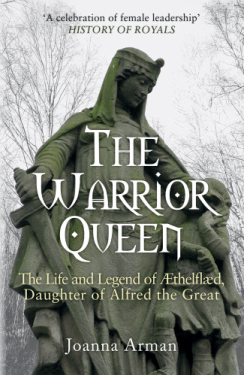
Although there are not many facts to work with, Arman has created a very readable and balanced story of Æthelflæd’s extraordinary life. Resources on her more famous father, Alfred the Great, are hard to come by themselves, so you can imagine how scarce materials are regarding his daughter — who, though accomplished, led a much less prominent kingdom than Wessex. Arman does her utmost to glean a story about Æthelflæd’s life by reading between the the lines of other sources — guessing at what her education might have been through comparison with similar subjects, for instance, and consulting other histories and literary works for allusions to her. I was particularly taken with Arman’s frequent gentle reminders to readers that there’s a great deal believed about the modern period which is misleading, if not downright erroneous. The world was not regarded as flat, and women did not sit at home darning their husband’s tights: in the medieval household, regardless of social position, husbands and wives were two oxen at the same plow — both working together. Æthelflæd’s novelty was as ruling as queen in her own right, well after her husband had perished, and training her daughter to succeed her. Arman also notes Æthelflæd’s military activity, although she notes three other examples of prominent military females in the medieval period — and none were Joan of Arc. While this narrative is more about Æthelflæd’s times, rather than a detailed account of her life, it has much of interest.

Posted in history, Reviews | Tagged , , , , | 3 Comments

Quarantine Gaming

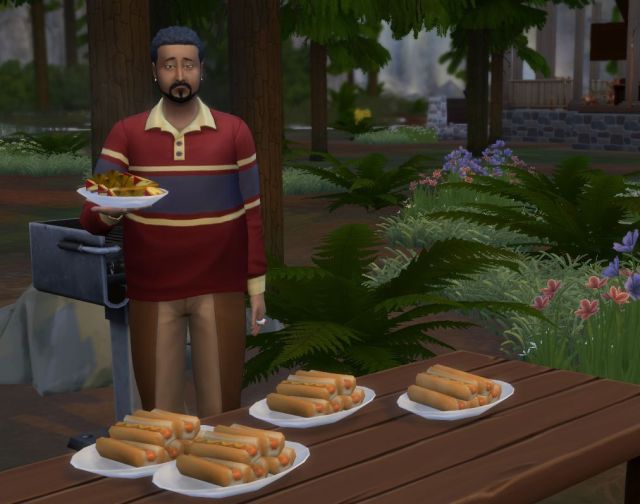
I’ve been gaming a bit more in the last month or so as a result of La Corona, so I thought I’d share a few screenshots…..because I can. wastoldtocookI was told to cook. No one told me when to stop.

women

Ladies, I know there’s a rule that you have to go to the bathroom together, but this is a bit…silly. (And no, I didn’t pick out any of these clothes, especially that godawful yellow work uniform assigned to poor Anna.)

yikes

Bored? Who, me? Why do you ask?

Red Dead Redemption 2_20200412181017

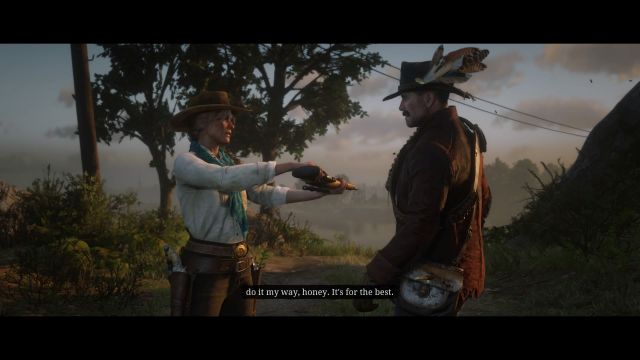
This game is so freakin’ adorable sometimes.

Red Dead Redemption 2_20200417181649

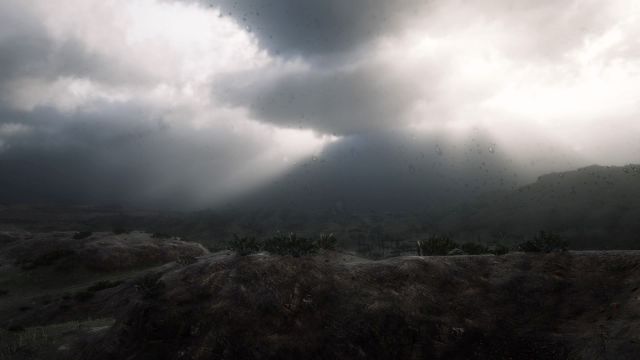
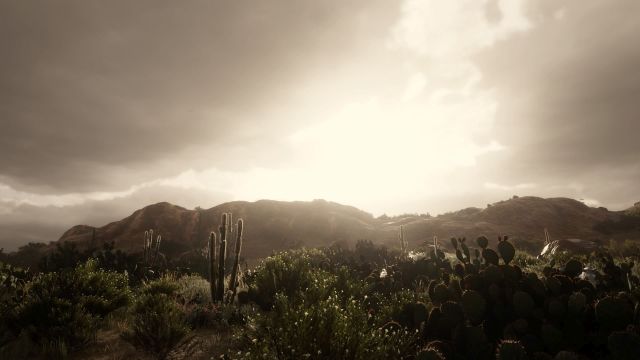
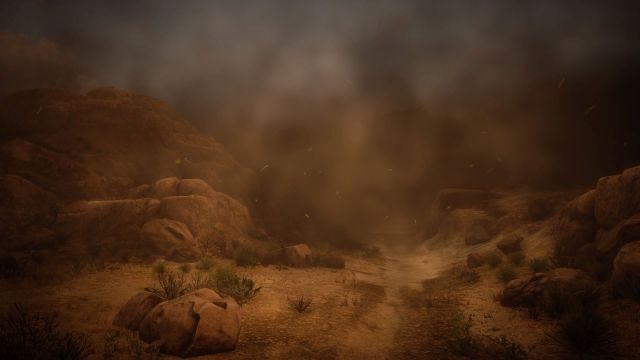
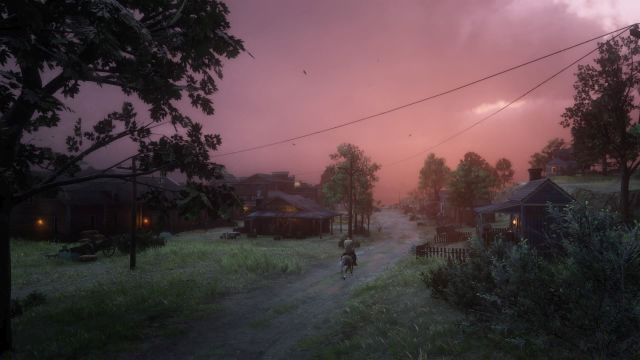
During a desert storm…

Red Dead Redemption 2_20200417181925

And after!  What a beaut this game is.

Red Dead Redemption 2_20200417221458

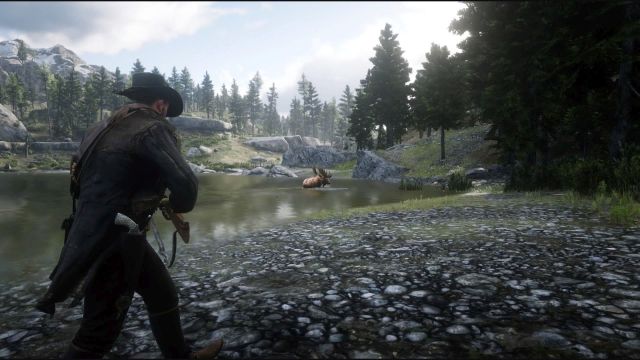
One quiet morning I was sneaking around the lake, hunting for beaver. I was surprised by a moose — and horrified, because I didn’t have anything to bag it with. I was only carrying my small-game rifle, wholly inadequate to taking a moose, especially if I wanted to preserve the pelt. Fortunately,  Mr. Moose was a bit thick, and struggled to get out of the lake, giving me time to call my horse and fetch my poison arrows. I was able to claim its luscious fur for my future wardrobe needs.

Red Dead Redemption 2_20200417180220

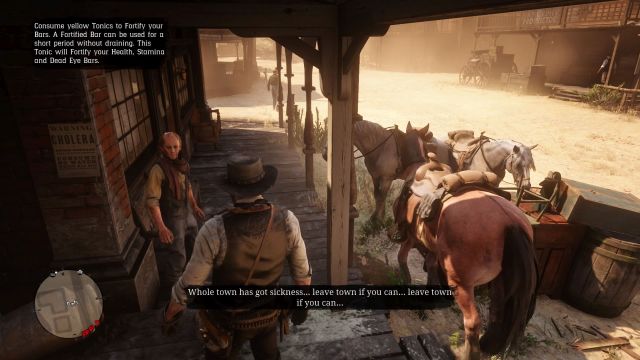
Um…I thought I was playing this to get away from the pandemic.

Red Dead Redemption 2_20200417185740

Beautiful, right? Now imagine bullets coming out of that, with no way of knowing who’s  shooting at you! That happened to me tonight. I was able to retreat to higher ground, and once the storm passed…..revenge.

Red Dead Redemption 2_20200417220452

You know, game, you don’t need to be this gobsmackingly pretty all the time.

Red Dead Redemption 2_20200416200010

Sick air, brah.

Red Dead Redemption 2_20200413194706

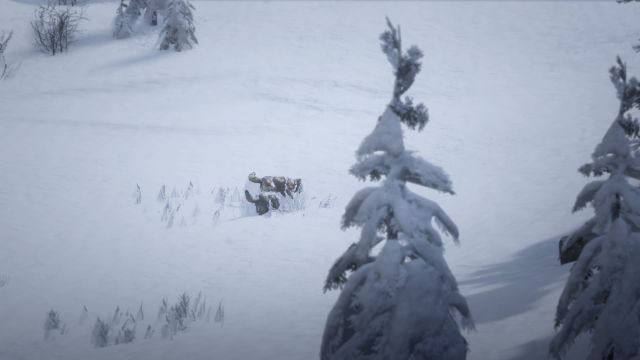
One of the more mesmerizing things about RDR2 is that animal behavior is programmed into the game — so it’s possible to see wolves playing,  bucks fighting,  bears  hunting, etc.  While hunting I happened to hear wolves playing.


Posted in General | Tagged , , | 3 Comments

Corona Diary #5

pandemicbiblioteca
Library service, corona style!

Sunday, all news of pandemics disappeared as we in Alabama looked to the darkening skies and wondered what Easter night would bring.  It was nine years ago that an April outburst of tornadoes killed over three hundred people, over half of whom were Alabamians,   and like most residents I wondered what tomorrow might bring.  I went to bed fully dressed in case I needed to wake and run (the worst activity was forecast from 11 pm  to 3 am),  with lanterns at the ready.  Today, however, the skies are blue again, and aside from a few fallen trees we in Alabama have escaped the sadder news of our neighbors in Mississippi and Georgia.   When I began surveying the Monday morning news with my coffee,  I was surprised at the amount of corona optimism I saw, too — NYC pondering what circumstances it might reopen, California predicting a peak this week,   doctors talking about that we should do next time instead of talking about what’s left to do now.

Work goes on at the library. We’ve continued to tweak our system;  we’re now using a couple of tables (that shot was from last week) for document/book deposit and pickup,  and demand has proven steady despite the awkwardness.  We’re hoping to start phasing in normalcy in May, but that all depends on what the news brings us in the next two weeks.

Book-wise…I’m plugging away at The Making of the British Army, and am in the midst of the Peninsular War at present.

Here’s hoping we’ll all be out and about sooner rather than later!

Posted in General | Tagged | 6 Comments

The White Horse King

© 2009 Benjamin Merkle
272 pages

roe1

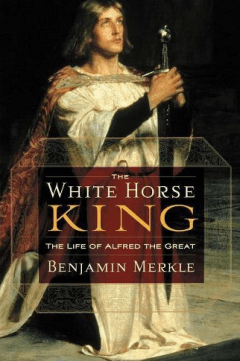
It reads like the best of high-stakes adventure stories: a young,  conscientious king watches as his neighbors fail to unite to the creeping threat of the Norsemen, and fall in their time, one by by one. Surrounded by the savage warriors from the sea, betrayed by his own lords,  he and his few supporters flee to the marshlands – there to wage guerilla war against the pagans,  until at last on a feast day of the Church he rallied an army and stuck for Wessex’s  redemption – and laid the foundation for England.

I read that story in Bernard Cornwell’s early Saxon Stories books, and I astonished to later  learn that it really happened. The Saxon kings of Britain usually get short shrift by historians of Great Britain, who prefer to begin with William the Bastard,  but there are many lives worth celebrating from those days, and Alfred’s is chief among them.  The White Horse King strikes me as mythical history – not because it’s untrue,  but because Alfred is thoroughly lionized (or equinized, in this case),  his struggle connected to an eerie image of a horse written in chalk in the English countryside,  and on his shoulders  put the beginnings of England.  We see him here not just laying the groundwork for surviving future Viking invasions – the network of fortified towns, for instance – but the groundwork for England itself, in aggressively promoting education and the establishment of the common law.  The

loved reading this history —  I’m very partial to narrative history, and this one especially sings.  That said….its author is a classicist, not an historian,  and as much as I like narrative histories I respect my training enough to know that the reality was probably a bit messier.

Posted in history, Reviews | Tagged , , | 2 Comments

The Beast

The Beast: Riding the Rails and Dodging Narcos on the Migrant Trail
© 2014
224 pages

This is the third of three reviews I needed to publish before the English material can roll. And now, Rule Britannia!


labestia

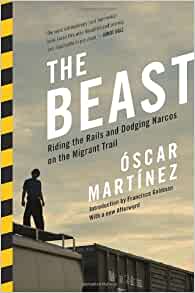
The news cycle of  late spring 2018 was marked, in the United States, by constant discussion of The Migrant Caravan,    which judging by the nightly news consisted of an invading column of Central Americans intent on shoving their way into the United States, toppling fences and frustrating policy through sheer bulk of numbers.  They were fleeing the violence of their homes, the newscasters explained, and joining together for safety in numbers.   Not until reading The Beast did I appreciate the motives driving such clumping together. Although ‘la bestia refers to the trains that migrants often ride atop of on their northward journey,  after reading Oscar Martinez’ book one might as well regard the beast as human nature itself.    This is a story of constant cruelty, treachery, and violence,   filled with such human misery that I paused my reading of it for a few weeks to avoid.   

Although Martinez’ stories range all over Mexico and Central America —  in crowded cities, open plazas, hidden trails in densely wooded hills, through fields and factories —  the reader is never far from the drug trade.  The narcos’ hold on  not just cities but whole areas of the region is pervasive and inescapable.  The strongest of the cartels are not merely interested in monopolizing the trade of drugs in their area;  they dominate the entire spectrum of criminal activity,  from theft and prostitution to  off-the-books cabs, and demand  ‘taxes’ from much of the population.  The penalty for defying the cartels are as you might expect: beatings, torture, and death.   Little wonder people flee their realm. 

Those who journey northward, however,  exchange one trouble for a sea of others. Migrants can be expected to be kidnapped (used as ransom or slave labor), raped,  and robbed of virtually everything.  There is no relief from the authorities, as even those who are not directly in the pocket of one cartel or another are corrupt in their own rights, happy to use their power to get a little something for themselves – whether that be a few hundred pesos or use of a woman for a few minutes.  There are many who try to genuinely help migrants,  offering them food and advice on the least dangerous routes —  but  there are also those who are thieves in Samaritan’s clothing, who offer to guide migrants to safety but instead deliver them into the hands of narcos – for use as slave labor,  ransom,etc.   The trains, which are inherently dangerous to access – frequently destroying life and limb of those who jump aboard and misjudge their leaps —   are also attacked by narcos, their passengers shaken down or kidnapped.   As the ‘war on terror’ and the drug war continue to tighten US border security,  more and more migrants are funneled into fewer paths – and all those paths are controlled by the cartels. 

The Beast makes for harrowing reading. Those of us in the United States need to know what’s happening south of us, so that our response – be it humanitarian or security-minded  —  is at least informed by something other than the borderline hysteria ginned up by the media.     Martinez’ A History of Violence focuses on the violence itself being fled, but the abuse visited on migrants at their every step,  only occasionally  tempered by charitable people and individuals,  suggests that we should at the very least not treat them worse than those they flee.


Posted in Reviews | Tagged , , , | 1 Comment

Bonaparte’s Sons

Bonaparte’s Sons
© 1998 Richard Howard
400 pages

This is the second (of three) posts published during Read of England which have nothing to do with England. I’m trying to get them out of the way before the English stuff starts rolling in!

bonaparte

“‘We will win’, Bonaparte said. […] ‘Do you not feel it, Bessieres? Destiny. I know we will win as surely as if God Himself had told me.'”

France trembles on the edge of an abyss. Her society has been thrown into complete disarray by the mass violence of the revolution;  a new cabal of rulers has merely replaced the Bourbons,  both in power and in the contempt the public holds for them; and her armies are ever-smaller, penniless, and starving.   Even the dregs of the prisons are being scraped up and put into service for the defense of the nation.   But from Corsica comes a shot in the arm – a man who knows how to lead,  and better still – how to win.  With Bonaparte at the helm,  and rapists and thieves in the ranks, the French army sets out to  deliver a blow against the Hapsburgs in Italy.   One man in Napoleon’s army, Alain Lausard, has lost everything to the ‘republic’  — and yet  still he fights, and will make his mark. 

Having greedily devoured so many tales of Horatio Hornblower and Richard Sharpe,   I was excited to learn of another series of Napoleonic fiction. This one has the added interest of telling the stories of the French cavalry,  and author Richard Howard sweetens the pot by making his main characters a controversial bunch. They’re all prisoners;  Lausard is merely  a political captive, the last survivor of an aristocratic family butchered by the revolution – but among his new brothers in arms he can count criminals of far worse repute,  and their infighting is constant. Howard takes us through their training before skirmishes with the Austrians  erupt, and from there we hear rumors of a gold-laden baggage train that will keep Lausard and his men on the run even after they rout the Austrian army.   It wasn’t until the ending, however – where one despicable act of treachery is gloriously turned against its Judas – that I really warmed to Lausard, whose personality is overwhelmed by his need to hide his aristocratic past from the rest of his troop. Lausard especially shines when his commanding officer is injured after one skirmish and replaced by a man so odious his name might as well be Frag-Me-Now.  Rather than risk a court-martial by directly  opposing him,   Lausaurd  broadcasts his contempt  with veiled put-downs.   Imagine an officer worse than Sir Henry Simmerson from the Sharpe movies.

Although I can’t continue in this series immediately (April being my month for English lit and history, after all),  I look forward to the next book, which sees Napoleon invade Egypt.  


Posted in historical fiction, Reviews | Tagged , , | 2 Comments

Drastic Measures

Star Trek Discovery: Drastic Measures
© 2018 Dayton Ward
400 pages


lorca


The deliberate murder of four thousand people, half the colony’s population, began with an act of mercy.   Refugees were given a new home in the sparsely settled world of Tarsus IV, more than doubling its population….but their arrival inadvertently introduced a toxic fungus to the ecosystem,  utterly destroying  all agriculture and corrupting most unsealed foodstuffs. The worst was yet to come. Commander Gabriel Lorca,  chief of the small Starfleet outpost on the colony,  had his very faith in humanity shaken by Governor Kodos’  cold-blooded decision  to kill four thousand people in order to allow the remaining four thousand to survive on half-rations until help could arrive. The slaughter was made still worse by its pointlessness: early relief came with a mission led by Captain Phillipa Georgiou.   Starfleet’s officers and a few colonial survivors, under active attack as the villainous governor tries to make his escape,   have their work cut out for them. Dayton Ward’s own work,  creating a  Discovery  story that links to the original series, was similarly challenging – but both he and his creations prevail.

Although I was slow to warm to Star Trek Discovery,  by the end of its first season  I was binging episodes,  taken in by its characters and the connections being made to the regular Trekverse.   For similar reasons Drastic Measures  drew my attention: not only was it by one of the authors of the teriffic Vanguard series, Dayton Ward, but it starred two of my favorite DSC characters (Captains Lorca and Georgiou) and featured a connection to one of the first TOS episodes I ever watched, “The Conscience of the King”, in which a Shakespearean actor is exposed as the infamous tyrant, Kodos the Executioner – and Kirk’s life is at risk as one of the few people who could positively identify him.  Although Ward’s connections to the original episode are firm (Kirk supplies the security team hunting Kodos with digital imagery),   the DSC characters take center place here.

Lorca’s character in DSC has a bit of a secret, as those who’ve watched it know,  so this book offers a special treat in giving us a a glimpse at the…’other’ Lorca, shall we say?  I don’t want to spoil anything for future viewers of DSC, but  he’s recognizable here  —    absolutely driven, this time by having lost a loved one to Kodos, and having unwittingly viewed her execution on colonial broadcasts live.  He struggles between a desire for justice and one of revenge, and at some points his colleague Georgiou —   commanding a relief ship sent to the colony —  serves as his conscience.  Speaking of, considering how quickly she perishes in DSC’s run, I was glad to see her ‘return’ — and in a happier way than spotting her mirror-universe counterpart at the end of DSC-1.   The novel is chiefly one of combat fiction, as Kodos’s followers  execute crippling attacks against the city and the first responders or Starfleet, and are then hunted into the mountains by Lorca and company as Georgiou and her cohorts prevent an aerial escape.  The dynamic between Lorca and Georgiou, and the tension in their approaches – pragmatism and idealism – is developed throughout.

Although I have plenty of real Trek books to finish before I start any more DSC novels, I will probably try The Enterprise War, which follows Captain Pike and the Enterprise during the events of DSC-1.

Posted in Reviews | Tagged , , | Leave a comment

We’ll Meet Again


“While we have faced challenges before, this one is different. This time, we join with all nations, across the globe, in a common endeavor — using the great advances of science, and our instinctive compassion to heal. We will succeed, and that success will belong to every one of us. We should take comfort that while we may have more still to endure, better days will return. We will be with our friends again; we will be with our families again. We will meet again.”

I’m not one to be interested in the social goings-on of the royal family,   but with the British PM hospitalized and the entire world in the grasps of  the pandemic,   I had to give an hear to what the Queen had to say.   Worth a listen!

Posted in General | Tagged | 1 Comment