The Evolution of My Reading (borrowed)

Borrowed from Cyberkitten who likewise got it from Bookolive.

When did you get into reading?
I literally grew up reading; my parents barred television from the home, something I hated then but am very thankful for now.

Was it something you always liked since school or did your love of book develop over the years?

 I can’t remember a time when I wasn’t closely associated with books. As a kid I’d bring them to family functions to read while the adults did their thing (Christmas and Thanksgiving especially, since we would be at my grandparents’ house literally all day). Now that  I use my phone for a lot of reading, I’m literally never away from a book.

Have you always been a voracious reader?
I read books by the pile as a kid, making weekly trips to the library, and read with the same gluttonous appetite now – but there was a period in high school when I didn’t read quite as much. I still read heavily, far more than most, but it was fiction (Roswell, California Diaries, Star Trek)  and history for the most part.  It wasn’t in 2006 that my nonfiction interests really widened.

Who/What influenced your interest in reading?
My parents, obviously; not only did they eliminate the competition, but everyone in my family read for pleasure – and we all still do.  A few of my elementary school teachers were passionate about reading for pleasure, introducing our class to Roald Dahl and R.L. Stine.

What was the first favourite book or series you remember? What are some of your favourite books as a child?

I adored Beverly Cleary’s  Beezus and Henry series, as well as the Boxcar Children. More contemporaneity, I was nut about the Goosebumps series.  My favorite early novel would have been Jack London’s Call of the Wild.

Did you like non-fiction when you were a kid?

Yep!  Most of it was history and nature, but I also liked learning about the Greek myths.

What’s your favourite childhood reading memory?

Reading Redwall in a wooded glen behind my house; this was a pleasure I had to earn, because the glen was separated from me by a swamp that I had to find a way to ford.  I was able to take advantage of shallow spots, supplementing them with cinder blocks and 2x4s ‘borrowed’ from a lot that was being developed, to establish a path out there.


Where you ever not a reader/had a major reading slump? How did you get out of it?

Getting into computers and the Internet in the late 1990s and early 2000s dampened my reading quite a bit. The break between community college and university compelled me to look for nonfiction to scratch my learning itch, and I’ve been doing that since.

How did you get into non-fiction reading?

As a kid, just innate curiosity.  As an adult, leaving community college and then having a crisis-of-belief in which I had to rebuild my worldview from scratch prompted me to begin reading a wider variety of nonfiction (science, philosophy, economics, etc).  I’m fourteen years into that project!

What was the first non-fiction book you remember that cemented your love for the genre?

The first nonfiction book I remember absolutely loving  was Albert Marrin’s The Airman’s War, read around ninth grade. I still have my  high school library’s copy of that, because I lost it, paid for it, found it, and realized…mm, I’d rather have it, thanks. 

How has your reading evolved as you’ve gotten older?

It’s gotten more varied, I’d think, and more purposeful. I don’t just read for idle curiosity now — sometimes a question will bug me, and I’ll read multiple authors debating multiple aspects of the questions, trying to understand it.

How do you think reading has shaped you as an individual?

You might as well ask how speaking English or growing up American has shaped me;  reading was  and continues to be so formative I couldn’t possible separate “me” from the reading experiences.

What does reading mean to you in your life?

It’s….everything?  I rely on books for not just entertainment and education, but for insight as to how I can structure my thinking and life.

What’s one of your life long reading goals?

To finish off Mount Doom, I suppose. I don’t know if it will happen.

Posted in General | Tagged | 2 Comments

September 2021

Science Survey

C’est fini! With How Emotions are Made I completed my twelve categories, finishing early for the first time since I instituted the Survey back in 2017. I’ll continue to read science titles, of course.

Classics Club Strikes Back:
The Moon is Down, John Steinbeck
A Day in the Life of Ivan Denisovich, Aleksandr Solzhenitsyn

Climbing Mount Doom
How Emotions are Made (purchased….2018)
A Guide to the Good Life, Cicero (purchased 2014)
The Right Stuff, Tom Wolfe (purchased June 2021)

The Unreviewed:
The Right Stuff, Tom Wolfe. This book is an absolute legend, inspiring numerous men and women to pursue their dreams at NASA, and serving as the basis for one of my favorite movies. I’ve rewatched the movie so many times, in fact, that I found it difficult to keep track of where I was in this book — the movie followed the narrative extremely closely.
Blackout, Candace Owens. Review in progress.
A Guide to the Good Life, Cicero. Review in the works.

How Emotions are Made….I really don’t want to dismiss this one with a paragraph. It may take me three years and multiple re-reads (like Happy City), but its day will come.

Unread Purchases:
The Rise of Athens, Anthony Averitt. I may use this for a series I’m contemplating (“A World of Cities”) or it may just be read by itself. I previously read Averitt’s biography of Cicero back in 2009.

Plans for October:

October should be….fun. Science fiction, a little German literature, and perhaps a gothic novel to round out a month steeped in the fantastic, imaginative, and sometimes horrific. We’ll also be hitting a real world horror story: Chernobyl.

Posted in General | Tagged | 2 Comments

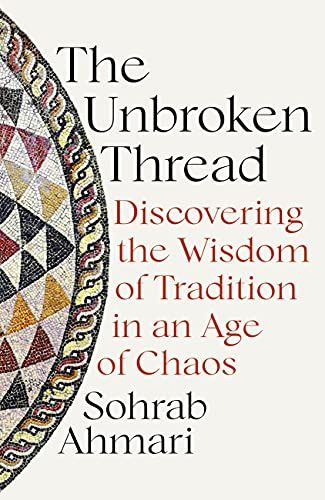
Sohrab Ahmari and the Unbroken Thread

Sohrab Ahmari fled Iran for the West, rejoicing in its freedoms alongside his wife, a Chinese national who had also found relief from the relentless tyranny of her own country. As they formed a family and looked to the future, though, they could see that new dangers awaited their young son. They could see the danger manifest in the lives of their peers, people whose appetites who knew no limit, whose characters were never given a shape or direction, who squandered their youths in license and faced their middle years with nothing but compulsive habits and cynicism. They looked for wisdom and stability — and they found it in the deep well of western tradition.

In From Fire, by Water, Ahmari reflects on how he came to the West from Iran, arriving first a hardened leftist but opening, as the years progressed, to the startling prospect that perhaps he didn’t know everything. Although he’d embraced American culture while in Iran as a way to rebel against the mullahs, whom he’d grown to hate along with their religion and the very idea of God — he was disheartened by the fact that most Americans were not the uber-cool intellectual liberals he’d admired from afar, but often ordinary people more interested in football and fishing than ideology. Ahmari’s budding cynicism and love for reading led him deeper into existentialist thinkers and the postmodern left, but at the same time his real-world observations were making him question the validity of those beliefs. He’d had a disappointing experience with the Workers Alliance organization he’d joined to fight for the sake of the proletariat in America, and his time as an elementary school teacher forced him to rethink, when he saw the affects of relativism made visible in the chaos of his students’ lives. His own internal house was nothing to admire, absorbed as he was by the party culture, and in his many mornings of hangover misery, he longed for something else. Ahmari was especially inspired by a fellow teacher, an Israeli who frequently challenged Ahmari’s assumptions in both beliefs and values. Expanding his studies beyond the philosophers of nihilism, Ahmari began to understand that the ideas he’d prized as modern were in fact very old, merely now dressed up in new clothes, and that they’d led people and civilizations into darkness time and again. He rebelled, he looked for clarity, and his rejection would ultimately bring him to the Catholic church. Although Ahmari’s recollection of how he came to the Church is a bit rushed — beginning with a casual read of the Gospel of Mark, and captivating his being in full when he witnessed the Eucharist for the first time — given that it transpired over nearly a decade, this story of an honest young man coming to grips with himself proved absolutely fascinating to me, in part because Ahmari and I had very similar journeys, unfolding around the same time.

Having learned the value of the Western tradition, Ahmari becomes in The Unbroken Thread its advocate. In every chapter, a different personality tackles a question of universal import — questions addressing God, the meaning of the cosmos and of death, considerations of what we owe one another and ourselves — sometimes in debate with another. Although Ahmari’s guests include many a saint or religious philosopher (C.S. Lewis and Augustine both feature here), the discussion brings in luminaries from other traditions (Confucius), and avowed secularists, including a pair of Marxist anthropologists and Andrea Dworkin. Ahmari opens with more metaphysical questions — how do you justify your life, and is God reasonable — and then shifts more to practical applications, exploring the aspects of life that tradition once more broadly informed. One chapter examines the idea of sabbaths and fasts, for instance, and another tackles the immutable if often ignored power of sex; a final chapter addresses Death, and the need to face it rather than waste our lives in fear and flight from it. As much as I appreciate Ahmari’s perspective, his prescriptions often veer into the territory of state-imposed morality — an astonishing development given his background and hatred for the mullahs. While The Unbroken Thread provides much to think about for the inner-minded reader, any inch ceded to Caesar is one too much.

Posted in General | Tagged , , , | 2 Comments

Top Ten Freebie: Ten 2021 Adds to my Goodreads Wanna Read Shelf

This week’s TTT is a freebie, so I chose to look back on some of the books added to my Godoreads wanna-read list.

America and Iran: A History, 1720 to the Present, John Ghazvinian. Something of a perennial interest of mine.

Creatures of Empire: How Domestic Animals Transformed Early America, Virginia DeJohn. Animals and pioneer America? Can’t lose!

The Code Breaker: Jennifer Doudna, Gene Editing, and the Future of the Human Race, Walter Isaacson. CRISPR is simultaneously exciting and dreadfully creepy. I’d like to think we’ll do great things with it, but …er, based on what we’ve done with the internet, it’ll probably just turn into a way for trendsetters to have purple or pink skin as fashion dictates.

Unsettled: What Climate Science Tells Us, What It Doesn’t, and Why It Matters
, Steven Koonin.

Surveillance Valley: The Secret Military History of the Internet, Yasha Levine.

Religion of the Apostles: Orthodox Christianity in the First Century, Stephen de Young

The Sopranos Sessions, Matt Seitz. The Sopranos was the most impressive (if bloodiest) bit of televison drama I’d ever witnessed prior to Breaking Bad, and I remain fascinated by its storytelling craftmanship. This is a look behind the scenes….


The Forest Passage, Ernest Juenger. I can only quote from Amazon:

“[Jünger] explores the possibility of resistance: how the independent thinker can withstand and oppose the power of the omnipresent state. No matter how extensive the technologies of surveillance become, the forest can shelter the rebel, and the rebel can strike back against tyranny. Jünger’s manifesto is a defense of freedom against the pressure to conform to political manipulation and artificial consensus”

Never more timely than now. Recommended to me by a friend of the blog.


Sid Meier’s Memoir! A Life in Computer Games, Sid Meier. Meier’s name is affixed to some of my very favorite games (Civilization III, Gettysburg!, and Railroads, just for starters).

Tyranny Comes Home: The Domestic Fate of US Militarism, Christopher Coyne. The police state is sure to grow even worse now that DC is aggressively trying to target ‘internal enemies’, by which it means anyone with any politics outside the impotent state-serving establishment.

A Pope and a President, Paul Kengor. On the relationship between President Reagan and Pope John Paul II, particularly their shared crusade against global communism.

Posted in General | Tagged | 6 Comments

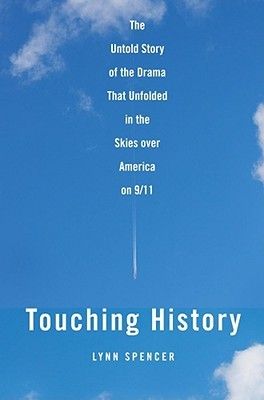
Touching History

Touching History: The Untold Story of the Drama that Unfolded in the Skies Over America on 9/11
©2008 Lynn Spencer
320 pages

“It looks like the World Trade Center is on fire?”
“That was a Boeing 757 we think just flew into the building.”
“….are you s- you’re not kidding, are ya?
“No sir, I’m not kidding.”
“Oh, shit.”
“Yes, sir.”

When the brilliant blue skies over the continental United States became a place of confusion, dread, loss, and death, it was the men and women of air traffic control who knew it first – and when everyone else had begun to etch Tuesday, September 11 into the history books,  for the men of the Air Force the day’s work was just getting started.  Touching History  tells the story of 9/11  through the eyes and ears of air traffic control.  Written by a pilot,  it offers a rare perspective and level of detail unavailable elsewhere. Although its amount of technical detail might frustrate the most casual of readers, for others that same detail is an open door into the increidbly crucial role played by air traffic control – not just on that day, but every day. 

Touching History draws on three pools of witnesses; the air traffic controllers themselves; pilots, aviation administrators, and others connected to the airlines;  and the US military, who scrambled to defend American cities in a way they hadn’t needed since the darkest days of the Cold War.   We experience through them the day as it happened – the first inklings that something was amiss when American 11 suddenly stopped responding, and even more strangely turned off its transponder — the scattered reports that came in from hijacked airlines,  phone calls whose information took precious minutes to percolate into place,  confused reports as authorities realized there were multiple atypical hijackings happening simultaneously – and then the horror as  airliners were turned into missiles. Bit by bit,  the military’s airmen take a greater and greater role in the narrative – as the airlines do their damndest to get every plane in the sky on the ground, safely,  NORAD and various levels of air defense were trying to get their men up, establishing command of the air in large metros with possible targets. 

Experiencing 9/11 in this way is most unusual; most sources put us on the ground, close to the flames, smoke, and destruction. The immediate and sensational overwhelm us.  Here, though, the horror is more removed and abstracted, but the overall effect is greater  as the scope of the challenge is realized.  Somehow, some party has taken control over multiple airplanes at once. How are they doing it?  How many more potential missiles are up there? When will it end? The book makes plain how utterly unprecedented the events of the day were: hijackings had happened before, but they followed a pattern. Nothing today fit that pattern. Even if terrorists were taking over planes, how were they making the pilots steer into buildings? Even with a gun to his head, no pilot would willingly allow his craft to to take life on the ground. Although ultimately there were only four planes – unless there were five – NORAD and the airlines actively believed several other planes had been hijacked, and one flight was grounded in the belief that it was carrying a bomb. The day became saturated with fear – fighters  dogged civilian airliners, and air crews recruited passengers to help them stand guard outside the cockpit.   Spencer also shares information no one reading a traditional 9/11 history would get – like the strong possibility of a fifth target. United 23, a planned morning flight, was delayed by the initial news and later canceled.  Left behind in its unclaimed baggage were “al-Queda documents and box cutters”, very likely belonging to four Arab passengers who, sitting together in first class, had quickly vanished into the crowd when it became obvious they weren’t going anywhere.  

Touching History is one of the better 9/11 histories out there, in a class with The Only Plane in the Sky and The Looming Tower. While its level of detail into air defense and flight control operations might scare some, for me that additional look into air infrastructure made it all the more appealing.

Posted in history, Reviews | Tagged , , , , | 1 Comment

American Contempt for Liberty

American Contempt for Liberty
© 2015 Walter Williams
432 pages

“If the Grand Dragon of the Ku Klux Klan wanted to sabotage black academic excellence, he could not find a more effective means to do so than the government school system in most cities.”

American Contempt for Liberty caught my eye immediately, for its title alone, for I’ve had a growing suspicion that the failure of the American republic lies not only in the ever-expanding state, but in the populace that feeds it, and its subjects’ eagerness to bully one another – an eagerness  never more clearly on display in 2020, where we took  turns bullying each other for wearing or not wearing a mask – and are charging ahead into a brave new world of segregation.  This collection of essays is drawn from Williams’ columns throughout the 2010s.    Although the articles within given sections  are highly repetitive (sharing the same topic, quoting the same statistics, and reusing phrases),   the collection as a whole proved to be more of interest than I expected. The titular theme is chiefly dealt with in the first two sections, on politics and the Constitution,   and thereafter Williams writes more broadly on topics like race and education, topics which are closely linked in his thinking.  The last section covers the environment, health, and international goings- on including an article on how sugar subsidies indirectly sabotage the long-term health of Americans.  

Chiefly of interest to me were Williams’ pieces on race and education. As someone who came of age in the days of Jim Crow, Williams is outraged about how educational and political culture continues to fail his fellow blacks.  Pointing to the marked relative failure of black students compared to whites, hispanics, etc,  Williams puts his finger on several possible reasons, beginning with a noxious paternalism which excuses disruptive behavior in classrooms and schools as simply part of ‘black culture’, and does not push black students academically, allowing them to languish with  middle-school writing & reading skills even late into college.  Perhaps more importantly,  Williams points to the disintegration of the black family from the mid-20th century as an underminer  of long-term success,  academic and otherwise. Williams suggests that self-appointed black leaders  do their communities a disservice by studiously overlooking this factor, and endemic black-on-black violence,  as they continue   blaming everything on racism.  Williams has increasingly little use for the offerings of contemporary education even outside their connection with race, however, as he details rife corruption within high schools and the college system repeatedly, almost taking pleasure in how widespread the rot is. 

Given my own contempt for the state, it’s hardly surprising that I enjoyed this collection, especially for Williams’ thorough savaging of the ‘education’ sector. If you have never read Williams before, I would suggest not trying all of this in one go, given the frequent re-use of datasets. Although I read this title in 2020, I shelved the review (given its similarities to Thomas Sowell’s Is Reality Optional, another collection of essays in the conservative-libertarian realm) and forgot about it until recently, when I read a pair of books by two emerging black conservatives. Those are forthcoming.


Posted in Politics and Civic Interest, Reviews, Society and Culture | Tagged , , , , | 6 Comments

Selected quotes from Anti-Politics

“Power and authority, as substitutes for performance and rational thought, are the specters that haunt the world today. They are the ghosts of awed and superstitious yesterdays. And politics is their familiar. Politics, throughout time, has been an institutionalized denial of man’s ability to survive through the exclusive employment of all his own powers for his own welfare. And politics, throughout time, has existed solely through the resources that it has been able to plunder from the creative and productive people whom it has, in the name of many causes and moralities, denied the exclusive employment of all their own powers for their own welfare. ” – KARL HESS

That we should obey laws whether good or bad is a new-fangled notion. There was no such thing in former days. The people disregarded those laws that they did not like and suffered the penalties for their breach. It is contrary to our manhood if we obey laws repugnant to our conscience. Such teaching is opposed to religion and means slavery. If the Government were to ask us to go about without any clothing, should we do so? If I were a passive resister, I would say to them that I would have nothing to do with their law. But we have so forgotten ourselves and become so compliant that we do not mind any degrading law. […] If man will only realize that it is unmanly to obey laws that are unjust, no man’s tyranny will enslave him further. This is the key to self-rule or home-rule. – GANDHI

From its very inception Anarchism and its greatest teachers have maintained that it is not the abuse of power which corrupts everybody, the best more often than the worst men; it is the thing itself, namely power which is evil and which take the very spirit and revolutionary fighting strength out of everybody who wields power. – EMMA GOLDMAN

Can means inconsistent with an end ever achieve that end? Can violence obtain peace, can slavery obtain freedom, can plunder protect against theft? The statist who pursues war, conscription and taxation answers yes. The libertarian responds no. Then why will an abolitionist anarchist pursue political means to abolish the political process? The end of the libertarian is a voluntary society where the market has replaced the government, where economics functions without politics. The purpose of politics is the maintenance, extension and controlling of the State — power. The market lies not on the road to power but on the road away. – SAMUEL E KONKIN III

Civil disobedience is based on a commitment to conscience. In other words, one who practice[s] civil disobedience is obedient to what he considers a higher law. And there comes a time when a moral man can’t obey a law which his conscience tells him is unjust. And I tell you this morning, my friends, that history has moved on, and great moments have often come forth because there were those individuals, in every age and every generation, who were willing to say “I will be obedient to a higher law.” These men were saying “I must be disobedient to a king in order to be obedient to the King.” – MARTIN LUTHER KING JR

Posted in Politics and Civic Interest, quotations, Religion and Philosophy | Tagged , | Leave a comment

Anti-Politics

Anti-Politics: A Collection of Agorist Essays
© 2021 ed. Sal Mayweather
165 pages

What is a more effective way of protecting your privacy rights: Giving your money to Bill Weld or downloading Tor?”

If you’re still waiting for your masters for permission to live after nearly two years of “two weeks to flatten the curve”, don’t bother reading further. This isn’t your kind of book, and it won’t be your kind of review. Sal Mayweather is principally writing to political libertarians, those who believe in using existing parties, particularly the Libertarian Party, to effect positive change (reduced government, an end to state bullying, interventionism, etc). He marshals a host of allies to bid his reader — stop. It’s pointless. Any energy poured into the existing system is energy lost, energy that could have been used to subvert the system and create real change, instead. Mayweather, as host of the Agorist Podcast, contributes some of his own writings here, and leans heavily on Samuel E. Konkin III, whose theories on agorism and countereconomics organized anti-political thought in the 1960s, but his contributors include writers as diverse as Emma Goldman, Henry David Thoreau, and Gandhi. The ultimate lesson: don’t vote, do.

Although this agorist/voluntaryist/ant-political view has been making regular orbits in my thinking since at least 2019, it took the last year and a half of collective insanity for my remnant of faith in civil society to be destroyed completely. The world has taken a dark turn, somehow becoming infinitely less humane than it already was, a turn initiated by governments but continually fueled by the masses’ docility. Napoleon said that religion was excellent stuff for keeping common folk quiet, but politics is even better — politics keeps people agitated against one another, and the ritual of voting makes them think they’re going to change things even as the state goes its own way regardless. No election in the history of American elections has reversed the growth of government; at times it has slowed, and at times its energy has been been ineptly used, but by and large it grows.

The issue is not that the power of the government is being used incorrectly, Mayweather and other authors write; the issue is that such power exists. Even if someone wants it for good reasons, it will still corrupt them; they mean to be good masters, but they mean to be masters. It is power over others, the will to dominate others, that is the issue, and libertarians and anarchists cannot be taken seriously for wanting to destroy the devil with the devil’s own tools. Beyond arguing that seeking power is immoral in principle, and self-defeating in practice, Mayweather and others also point to how much more effective countereconomics, direct action, civil disobedience, and the like are. Even against the Nazis, civil disobedience was proven to work, as evidenced by the Rosenstrasse triumph, in which a mass protest of German wives forced Hitler and Goebbels to release the wives’ Jewish husbands from a deportment staging area — saving their lives. Oppressive states always generate a counter-economy through their abuses: in Iran, for instance, media that is officially banned once passed from hand to hand via cassette tapes; now it moves through USB drives. In our modern time, Mayweather asks, who broke the hotel and taxi monopolies — was it voting, or was it the free actions of creative visionaries who gave consumers options (AirBnB, Uber, Lyft, etc) around the law-cushioned corporations? What prompted the state to finally begin yielding on the drug war? Was it lobbyists, or widespread disobedience? Hope lies in action, not following the state’s script.

These are not new ideas; Mayweather opens with an Enlightenment-era summary condemnation of the state that’s worth reading just for its language, and moves to our present age through authors like Henry David Thoreau, Emma Goldman, Gandhi, and Martin Luther King Jr. I was particularly please to see Gandhi, for its was his commitment to nonviolence that made me recognize that coercion is immoral even when conducted by the government. Although the book is chiefly an argument against political participation, it also presents occasional ideas for building a counter-economy — working under the table, dropping out of the money economy by becoming more self-sufficient, shifting to cryptocurrency, etc. In 2021, there’s never been a better time to become ungovernable.

Related:
I Must Speak Out: The Best of The Voluntaryist
, ed. Carl Watner
Countereconomics: From the Back Alleys to the Stars, Samuel E. Konkin III
Alongside Night,
J. Neil Schulman
VONU: A Strategy for Self-Liberation, Shane Ratcliff
#agora, Anonymous. An agorist novel that mixes Konkin’s counter-econ thought with VONU ideas.

Posted in Politics and Civic Interest, Reviews | Tagged , , , , , | 8 Comments

Random, because trolleys

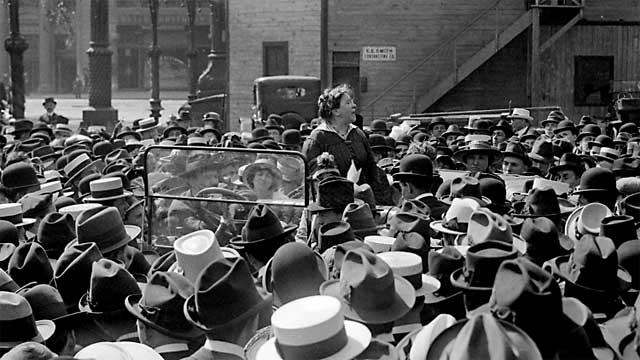
Today I spotted a tourist bus from Montgomery parked outside the library in such a way that I was reminded of a postcard from over a century ago.

Posted in General | Tagged | 2 Comments

Selections from The Unbroken Thread

“The great benefit to be derived from reading pre-modern authors is to come to realise that after all we [moderns] might have been mistaken.” – C.F.J. Martin 

[C.S. Lewis] argued that instinct, science’s go-to answer to our central question, just isn’t enough. For one thing, we have many instincts, and they “are at war.” The instinct to preserve our own lives battles with the instinct to protect our loved ones and communities. Which, Lewis asked, should we listen to? 

If God left an imprint of rationality in every mind, and if human reasoning is analogous to the divine Logos, then the Christian philosopher must be prepared, Aquinas thought, to seek and to accept truth wherever it may lie, including among representatives of rival religions and worldviews. 

“Nothing is as hard to suppress as the will to be a slave to one’s own pettiness. Gallantly, ceaselessly, quietly, man must fight for inner liberty. Inner liberty depends upon being exempt from domination of things as well as from domination of people. There are many who have acquired a high degree of political and social liberty, but only very few are not enslaved to things. This is our constant problem—how to live with people and remain free, how to live with things and remain independent. “ – Abraham Joshua Heschel 

Privatized rites are perfectly suited to thoroughly privatized societies like ours. But then is it any wonder that one in ten Baby Boomers is aging without any family members around? Or that one in five millennials has no friends?61 That racial and class antagonism are at a fever pitch, fueling the rise of angry identity politics and backlash movements? Where can the isolated and privatized modern subject begin to access true liminality and communitas, to appreciate the humankindness of his fellows? Where can we participate in a visible principle of unity and fellowship that transcends social and political divisions? Could it be that our angry online politics, with their ritual shaming and confession, simulate some aspects of traditional liturgies—only without the authentic redemption and community-building of the genuine articles? 

Jesus rejected hatred. It was not because he lacked the vitality or the strength. It was not because he lacked the incentive. Jesus rejected hatred because he saw that hatred meant death to the mind, death to the spirit, death to communion with his Father. He affirmed life; and hatred was the great denial. 

[…] the notion that we can’t know, much less legislate, humanity’s highest end is itself a metaphysical, even spiritual claim, and it stands at the heart of the modern project. Its god is the unbound self. And the worship of such a god will inevitably have political consequences: vast accumulations of capital, much of it concentrated in very few hands; a ceaselessly disruptive culture offering kaleidoscopic lifestyles; a heavily armed commercial empire. These are the conditions fueling popular discontent across the developed world in our century. And, all else being equal, this predicament would have been familiar to Augustine. 

Conspiracy theorists make a killing in our marketplace of ideas. The loudest, most outrageous voices are rewarded. We don’t know whom to believe. Yet few wonder if the habitual distrust for authority bred by liberalism has anything to do with any of this. 

We like to tell ourselves that thinking for yourself and questioning authority will make Oskar Schindlers out of all of us. But if we discard all the old, inconvenient authorities that restrained the beastly side of our natures, isn’t it more likely that we will end up becoming beastly people? 

We know that most people sway, feather-like, to the prevailing winds of news and social media, fashion and faddism, public and “expert” opinion, P.R. and propaganda. Large corporations especially, want nothing more than for our minds to be independent—that is, unmoored from absolute, unbendable moral authorities that might challenge corporate agendas. And how much the better for the powers-that-be if pliant consumers and docile workers fancy themselves rebels and radicals. 

The general tendency of modern life is to defeat or circumvent the inconvenient material realities standing between us and our desires. 

Posted in quotations, Religion and Philosophy | Tagged , , | 4 Comments