Touching History

Touching History: The Untold Story of the Drama that Unfolded in the Skies Over America on 9/11
©2008 Lynn Spencer
320 pages
When the brilliant blue skies over the continental United States became a place of confusion, dread, loss, and death, it was the men and women of air traffic control who knew it first – and when everyone else had begun to etch Tuesday, September 11 into the history books,  for the men of the Air Force the day’s work was just getting started.  Touching History  tells the story of 9/11  through the eyes and ears of air traffic control.  Written by a pilot,  it offers a rare perspective and level of detail unavailable elsewhere. Although its amount of technical detail might frustrate the most casual of readers, for others that same detail is an open door into the increidbly crucial role played by air traffic control – not just on that day, but every day. 

Touching History draws on three pools of witnesses; the air traffic controllers themselves; pilots, aviation administrators, and others connected to the airlines;  and the US military, who scrambled to defend American cities in a way they hadn’t needed since the darkest days of the Cold War.   We experience through them the day as it happened – the first inklings that something was amiss when American 11 suddenly stopped responding, and even more strangely turned off its transponder — the scattered reports that came in from hijacked airlines,  phone calls whose information took precious minutes to percolate into place,  confused reports as authorities realized there were multiple atypical hijackings happening simultaneously – and then the horror as  airliners were turned into missiles. Bit by bit,  the military’s airmen take a greater and greater role in the narrative – as the airlines do their damndest to get every plane in the sky on the ground, safely,  NORAD and various levels of air defense were trying to get their men up, establishing command of the air in large metros with possible targets. 

Experiencing 9/11 in this way is most unusual; most sources put us on the ground, close to the flames, smoke, and destruction. The immediate and sensational overwhelm us.  Here, though, the horror is more removed and abstracted, but the overall effect is greater  as the scope of the challenge is realized.  Somehow, some party has taken control over multiple airplanes at once. How are they doing it?  How many more potential missiles are up there? When will it end? The book makes plain how utterly unprecedented the events of the day were: hijackings had happened before, but they followed a pattern. Nothing today fit that pattern. Even if terrorists were taking over planes, how were they making the pilots steer into buildings? Even with a gun to his head, no pilot would willingly allow his craft to to take life on the ground. Although ultimately there were only four planes – unless there were five – NORAD and the airlines actively believed several other planes had been hijacked, and one flight was grounded in the belief that it was carrying a bomb. The day became saturated with fear – fighters  dogged civilian airliners, and air crews recruited passengers to help them stand guard outside the cockpit.   Spencer also shares information no one reading a traditional 9/11 history would get – like the strong possibility of a fifth target. United 23, a planned morning flight, was delayed by the initial news and later canceled.  Left behind in its unclaimed baggage were “al-Queda documents and box cutters”, very likely belonging to four Arab passengers who, sitting together in first class, had quickly vanished into the crowd when it became obvious they weren’t going anywhere.  

Touching History is one of the better 9/11 histories out there, in a class with The Only Plane in the Sky and The Looming Tower. While its level of detail into air defense and flight control operations might scare some, for me that additional look into air infrastructure made it all the more appealing.

Posted in history, Reviews | Tagged , , , , | 1 Comment

American Contempt for Liberty

American Contempt for Liberty
© 2015 Walter Williams
432 pages

“If the Grand Dragon of the Ku Klux Klan wanted to sabotage black academic excellence, he could not find a more effective means to do so than the government school system in most cities.”

American Contempt for Liberty caught my eye immediately, for its title alone, for I’ve had a growing suspicion that the failure of the American republic lies not only in the ever-expanding state, but in the populace that feeds it, and its subjects’ eagerness to bully one another – an eagerness  never more clearly on display in 2020, where we took  turns bullying each other for wearing or not wearing a mask – and are charging ahead into a brave new world of segregation.  This collection of essays is drawn from Williams’ columns throughout the 2010s.    Although the articles within given sections  are highly repetitive (sharing the same topic, quoting the same statistics, and reusing phrases),   the collection as a whole proved to be more of interest than I expected. The titular theme is chiefly dealt with in the first two sections, on politics and the Constitution,   and thereafter Williams writes more broadly on topics like race and education, topics which are closely linked in his thinking.  The last section covers the environment, health, and international goings- on including an article on how sugar subsidies indirectly sabotage the long-term health of Americans.  

Chiefly of interest to me were Williams’ pieces on race and education. As someone who came of age in the days of Jim Crow, Williams is outraged about how educational and political culture continues to fail his fellow blacks.  Pointing to the marked relative failure of black students compared to whites, hispanics, etc,  Williams puts his finger on several possible reasons, beginning with a noxious paternalism which excuses disruptive behavior in classrooms and schools as simply part of ‘black culture’, and does not push black students academically, allowing them to languish with  middle-school writing & reading skills even late into college.  Perhaps more importantly,  Williams points to the disintegration of the black family from the mid-20th century as an underminer  of long-term success,  academic and otherwise. Williams suggests that self-appointed black leaders  do their communities a disservice by studiously overlooking this factor, and endemic black-on-black violence,  as they continue   blaming everything on racism.  Williams has increasingly little use for the offerings of contemporary education even outside their connection with race, however, as he details rife corruption within high schools and the college system repeatedly, almost taking pleasure in how widespread the rot is. 

Given my own contempt for the state, it’s hardly surprising that I enjoyed this collection, especially for Williams’ thorough savaging of the ‘education’ sector. If you have never read Williams before, I would suggest not trying all of this in one go, given the frequent re-use of datasets. Although I read this title in 2020, I shelved the review (given its similarities to Thomas Sowell’s Is Reality Optional, another collection of essays in the conservative-libertarian realm) and forgot about it until recently, when I read a pair of books by two emerging black conservatives. Those are forthcoming.


Posted in Politics and Civic Interest, Reviews, Society and Culture | Tagged , , , , | 6 Comments

Selected quotes from Anti-Politics

“Power and authority, as substitutes for performance and rational thought, are the specters that haunt the world today. They are the ghosts of awed and superstitious yesterdays. And politics is their familiar. Politics, throughout time, has been an institutionalized denial of man’s ability to survive through the exclusive employment of all his own powers for his own welfare. And politics, throughout time, has existed solely through the resources that it has been able to plunder from the creative and productive people whom it has, in the name of many causes and moralities, denied the exclusive employment of all their own powers for their own welfare. ” – KARL HESS

That we should obey laws whether good or bad is a new-fangled notion. There was no such thing in former days. The people disregarded those laws that they did not like and suffered the penalties for their breach. It is contrary to our manhood if we obey laws repugnant to our conscience. Such teaching is opposed to religion and means slavery. If the Government were to ask us to go about without any clothing, should we do so? If I were a passive resister, I would say to them that I would have nothing to do with their law. But we have so forgotten ourselves and become so compliant that we do not mind any degrading law. […] If man will only realize that it is unmanly to obey laws that are unjust, no man’s tyranny will enslave him further. This is the key to self-rule or home-rule. – GANDHI

From its very inception Anarchism and its greatest teachers have maintained that it is not the abuse of power which corrupts everybody, the best more often than the worst men; it is the thing itself, namely power which is evil and which take the very spirit and revolutionary fighting strength out of everybody who wields power. – EMMA GOLDMAN

Can means inconsistent with an end ever achieve that end? Can violence obtain peace, can slavery obtain freedom, can plunder protect against theft? The statist who pursues war, conscription and taxation answers yes. The libertarian responds no. Then why will an abolitionist anarchist pursue political means to abolish the political process? The end of the libertarian is a voluntary society where the market has replaced the government, where economics functions without politics. The purpose of politics is the maintenance, extension and controlling of the State — power. The market lies not on the road to power but on the road away. – SAMUEL E KONKIN III

Civil disobedience is based on a commitment to conscience. In other words, one who practice[s] civil disobedience is obedient to what he considers a higher law. And there comes a time when a moral man can’t obey a law which his conscience tells him is unjust. And I tell you this morning, my friends, that history has moved on, and great moments have often come forth because there were those individuals, in every age and every generation, who were willing to say “I will be obedient to a higher law.” These men were saying “I must be disobedient to a king in order to be obedient to the King.” – MARTIN LUTHER KING JR

Posted in Politics and Civic Interest, quotations, Religion and Philosophy | Tagged , | Leave a comment

Anti-Politics

Anti-Politics: A Collection of Agorist Essays
© 2021 ed. Sal Mayweather
165 pages

What is a more effective way of protecting your privacy rights: Giving your money to Bill Weld or downloading Tor?”

If you’re still waiting for your masters for permission to live after nearly two years of “two weeks to flatten the curve”, don’t bother reading further. This isn’t your kind of book, and it won’t be your kind of review. Sal Mayweather is principally writing to political libertarians, those who believe in using existing parties, particularly the Libertarian Party, to effect positive change (reduced government, an end to state bullying, interventionism, etc). He marshals a host of allies to bid his reader — stop. It’s pointless. Any energy poured into the existing system is energy lost, energy that could have been used to subvert the system and create real change, instead. Mayweather, as host of the Agorist Podcast, contributes some of his own writings here, and leans heavily on Samuel E. Konkin III, whose theories on agorism and countereconomics organized anti-political thought in the 1960s, but his contributors include writers as diverse as Emma Goldman, Henry David Thoreau, and Gandhi. The ultimate lesson: don’t vote, do.

Although this agorist/voluntaryist/ant-political view has been making regular orbits in my thinking since at least 2019, it took the last year and a half of collective insanity for my remnant of faith in civil society to be destroyed completely. The world has taken a dark turn, somehow becoming infinitely less humane than it already was, a turn initiated by governments but continually fueled by the masses’ docility. Napoleon said that religion was excellent stuff for keeping common folk quiet, but politics is even better — politics keeps people agitated against one another, and the ritual of voting makes them think they’re going to change things even as the state goes its own way regardless. No election in the history of American elections has reversed the growth of government; at times it has slowed, and at times its energy has been been ineptly used, but by and large it grows.

The issue is not that the power of the government is being used incorrectly, Mayweather and other authors write; the issue is that such power exists. Even if someone wants it for good reasons, it will still corrupt them; they mean to be good masters, but they mean to be masters. It is power over others, the will to dominate others, that is the issue, and libertarians and anarchists cannot be taken seriously for wanting to destroy the devil with the devil’s own tools. Beyond arguing that seeking power is immoral in principle, and self-defeating in practice, Mayweather and others also point to how much more effective countereconomics, direct action, civil disobedience, and the like are. Even against the Nazis, civil disobedience was proven to work, as evidenced by the Rosenstrasse triumph, in which a mass protest of German wives forced Hitler and Goebbels to release the wives’ Jewish husbands from a deportment staging area — saving their lives. Oppressive states always generate a counter-economy through their abuses: in Iran, for instance, media that is officially banned once passed from hand to hand via cassette tapes; now it moves through USB drives. In our modern time, Mayweather asks, who broke the hotel and taxi monopolies — was it voting, or was it the free actions of creative visionaries who gave consumers options (AirBnB, Uber, Lyft, etc) around the law-cushioned corporations? What prompted the state to finally begin yielding on the drug war? Was it lobbyists, or widespread disobedience? Hope lies in action, not following the state’s script.

These are not new ideas; Mayweather opens with an Enlightenment-era summary condemnation of the state that’s worth reading just for its language, and moves to our present age through authors like Henry David Thoreau, Emma Goldman, Gandhi, and Martin Luther King Jr. I was particularly please to see Gandhi, for its was his commitment to nonviolence that made me recognize that coercion is immoral even when conducted by the government. Although the book is chiefly an argument against political participation, it also presents occasional ideas for building a counter-economy — working under the table, dropping out of the money economy by becoming more self-sufficient, shifting to cryptocurrency, etc. In 2021, there’s never been a better time to become ungovernable.

Related:
I Must Speak Out: The Best of The Voluntaryist
, ed. Carl Watner
Countereconomics: From the Back Alleys to the Stars, Samuel E. Konkin III
Alongside Night,
J. Neil Schulman
VONU: A Strategy for Self-Liberation, Shane Ratcliff
#agora, Anonymous. An agorist novel that mixes Konkin’s counter-econ thought with VONU ideas.

Posted in Politics and Civic Interest, Reviews | Tagged , , , , , | 8 Comments

Random, because trolleys

Today I spotted a tourist bus from Montgomery parked outside the library in such a way that I was reminded of a postcard from over a century ago.

Posted in General | Tagged | 2 Comments

Selections from The Unbroken Thread

“The great benefit to be derived from reading pre-modern authors is to come to realise that after all we [moderns] might have been mistaken.” – C.F.J. Martin 

[C.S. Lewis] argued that instinct, science’s go-to answer to our central question, just isn’t enough. For one thing, we have many instincts, and they “are at war.” The instinct to preserve our own lives battles with the instinct to protect our loved ones and communities. Which, Lewis asked, should we listen to? 

If God left an imprint of rationality in every mind, and if human reasoning is analogous to the divine Logos, then the Christian philosopher must be prepared, Aquinas thought, to seek and to accept truth wherever it may lie, including among representatives of rival religions and worldviews. 

“Nothing is as hard to suppress as the will to be a slave to one’s own pettiness. Gallantly, ceaselessly, quietly, man must fight for inner liberty. Inner liberty depends upon being exempt from domination of things as well as from domination of people. There are many who have acquired a high degree of political and social liberty, but only very few are not enslaved to things. This is our constant problem—how to live with people and remain free, how to live with things and remain independent. “ – Abraham Joshua Heschel 

Privatized rites are perfectly suited to thoroughly privatized societies like ours. But then is it any wonder that one in ten Baby Boomers is aging without any family members around? Or that one in five millennials has no friends?61 That racial and class antagonism are at a fever pitch, fueling the rise of angry identity politics and backlash movements? Where can the isolated and privatized modern subject begin to access true liminality and communitas, to appreciate the humankindness of his fellows? Where can we participate in a visible principle of unity and fellowship that transcends social and political divisions? Could it be that our angry online politics, with their ritual shaming and confession, simulate some aspects of traditional liturgies—only without the authentic redemption and community-building of the genuine articles? 

Jesus rejected hatred. It was not because he lacked the vitality or the strength. It was not because he lacked the incentive. Jesus rejected hatred because he saw that hatred meant death to the mind, death to the spirit, death to communion with his Father. He affirmed life; and hatred was the great denial. 

[…] the notion that we can’t know, much less legislate, humanity’s highest end is itself a metaphysical, even spiritual claim, and it stands at the heart of the modern project. Its god is the unbound self. And the worship of such a god will inevitably have political consequences: vast accumulations of capital, much of it concentrated in very few hands; a ceaselessly disruptive culture offering kaleidoscopic lifestyles; a heavily armed commercial empire. These are the conditions fueling popular discontent across the developed world in our century. And, all else being equal, this predicament would have been familiar to Augustine. 

Conspiracy theorists make a killing in our marketplace of ideas. The loudest, most outrageous voices are rewarded. We don’t know whom to believe. Yet few wonder if the habitual distrust for authority bred by liberalism has anything to do with any of this. 

We like to tell ourselves that thinking for yourself and questioning authority will make Oskar Schindlers out of all of us. But if we discard all the old, inconvenient authorities that restrained the beastly side of our natures, isn’t it more likely that we will end up becoming beastly people? 

We know that most people sway, feather-like, to the prevailing winds of news and social media, fashion and faddism, public and “expert” opinion, P.R. and propaganda. Large corporations especially, want nothing more than for our minds to be independent—that is, unmoored from absolute, unbendable moral authorities that might challenge corporate agendas. And how much the better for the powers-that-be if pliant consumers and docile workers fancy themselves rebels and radicals. 

The general tendency of modern life is to defeat or circumvent the inconvenient material realities standing between us and our desires. 

Posted in quotations, Religion and Philosophy | Tagged , , | 4 Comments

Revolutionary Ride

Revolutionary Ride: On the Road to find the Real Iran
© 2017 Lois Pryce
304 pages

There’s 106 miles to Qom, we’ve got a full tank of benzin, half a pack of pistachios, it’s sunny out, and I’m wearing a hijab. Bezan berim!

It was a note from a stranger that took her to Iran, a request from a Habib of Shiraz that she one day visit his home city, to meet the Iran that is not mentioned on the news.  Although the idea of visiting a state where western visitors are often imprisoned as spies wasn’t immediately attractive,  the timing seemed propitious: President Rouhani was then meeting with the United Nations, and the JCPOA was taking shape.  So,  donning a hijab over her hair and hopping aboard the Trans-Orient Express,  Lois headed for a nation that proved to be as complex as it did ancient, there to meet extraordinary people, see a landscape which has inspired poetry for centuries, and tell the state police to f- off.  

Because in recent years Iran’s state department has limited Anglo-American travels to guided tours,  Pyrce unwittingly became one of the last few Britons to ever travel the nation independently. Pyrce brought to her exploration a gung-ho spirit, cheerfully  setting forth despite her unfamiliarity with not only the Persian language, but its alphabet.  This forced her to seek the aide of those around her, who proved more than willing.  Though not knowing what to expect of Iran once she arrived – what would they make of this foreign woman driving an illicit motorbike by herself all over the place? —  Pyrce found herself welcomed, if not with open arms (touching makes the supreme leader cry), with welcome smiles and embarrassing hospitality. The Iranian people’s warmth toward visitors, as recorded in other travel memoirs, is especially well on display here, as Pyrce is treated to meals and given rooms in households over her protestations. Those welcoming her are not just disaffected liberals, young dissidents or old rebels;  they include the conservative and respectable as well as the hip or humble.  

Iran, Pyrce found, is a land of contradictions, too complex for easy summation. Even the individual people she encountered were often unpredictable – the leg-less general, a severe-looking survivor of the Imposed War (Iranians’ name for Iraq’s invasion of Iran that consumed much of a decade), who nevertheless sang to her with a sparkle in his eye, or a young secularist who never the less had a mystic’s appreciation for his heritage.   No one Pyrce broke bread or  quaffed an illicit drink with had a kind word to say about the Islamic Republic;  many waxed nostalgic over the memory of the Shah, whose abuses of power inspired both a revolution and the hostage crisis of ‘79 – ‘81. Most, however, found ways to make life in the regime tolerable: after decades of various prohibitions, there exists a thriving countereconomy,  of  covert satellite TV installers,  suppliers of ardent spirits and forbidden DVDs,  and so on. Although the mullahs’ bullying control over the people has earned them rage and contempt,  Pyce learns that its enforcers are often actively involved in the import of goods that the mullahs have banned – a tidy “baptists and bootleggers” racket. The sanctions imposed by the outside world  may stress and ruin ordinary families, but the government’s agents make a pretty penny through the resultant smuggling.  

Virtually all of Pryce’s experiences in Iran (about a month and a half of motorbiking)  were positive, save some run-ins with government toughs who wanted to throw their weight around;  Pryce’s instincts as to who she could trust or avoid were generally accurate,  though she did  have a bad encounter with one meth-addled man on a lonely highway between Isfahan and Shiraz.   Pryce’s journeys around Persia take us to the great commercial centers of the Safavid age, to the teeming and chaotic capital of Tehran, and to the ancient imperial seat of power, Persepolis. Enroute Pryce touches on various parts of Iranian history and culture – the role of Shiism and Iran’s embrace of its focus on martyrdom;  the checkered legacy of the Shah, and Iran’s troubled history with the west, particularly England and America. The book is thereful doubly useful for those who know nothing of Iran; for me, her  dialogue with so many people was a welcome reminder of our common humanity, despite the differences of culture and the conflicts promoted  by politicians. When states divide people, it is up to the ordinary man and woman to reach through barriers and find the us in the other.  
 
Related
Neither East nor West, Christine Bird. Another account of a woman traveling solo throughout Iran, this time in the 1990s;   the Islamic Republic  enjoys more tepid support here than in Pyrce’s time.  Bird, as well as Niall Doherty and Pyrce, confirms how warm Iranians are to visitors.  

Posted in Reviews | Tagged , , | 1 Comment

Eagles at War

Eagles of Rome: Eagles at War
© 2015 Ben Kane
448 pages

Cast from solid gold, and larger than a man could hold in both hands, the eagle was depicted lying forward on its breast. A golden wreath encircled its almost-touching wings, which were raised straight up behind its body. Its open beak and piercing stare gave off a real sense of arrogance. I know my purpose, and what I represent, it seemed to say. Do you, Tullus? Will you follow me, even unto death? Will you protect me at all costs?

Augustus is years from dying, but his Empire’s hopes in greater Germany have a much shorter life expectancy. Summer is ending, and a tenth of his army will soon be making their way to winter quarters. Lying in wait, drawn together by a charismatic Roman officer of German loyalty, are some twenty thousand warriors of diverse tribes. In only a matter of weeks, they will deliver to the Roman Empire its greatest defeat in a thousand-year history. Eagles at War is the magnificent rendering of that battle, which somehow succeeds brilliantly despite its viewpoint characters being not the victors, but the subjects of a confusing massacre.

The principal characters of Eagles at War are Tullus, a centurion; Varus, the likeable if doomed-to-disgrace governor; and of course, Arminius, a German auxiliary who has served Rome for years but only as the prelude to orchestrating her ruin in Germania. Kane portrays all three men as honorable and admirable; Varus here is not an idiot, but a man who enjoyed what he thought was a genuine friendship with a long-serving equestrian, German thought he might be. Tullus is more wary of Arminius, but ultimately he is only a centurion: without evidence, Varus will never accept his doubts of such a friend of Rome, honored by Augustus himself. Arminius, who disappears as a viewpoint character after he becomes the Enemy, must in the first half of the novel thread carefully — finding ways to meet with his allies and arrange the details of the great ambush, while not arousing suspicious. As compelling as the spy drama is, Kane surpasses himself with the extensive portrayal of ambush itself, unfolding across several days as the bedraggled Roman army, strung out, bogged down in mud, and constantly harrassed by the howling, wild Germans, fights an increasingly desperate battle — not for victory, but merely for survival.

I am most impressed with Kane, particularly enjoying his extensive notes at the end that reveal the extent to which he integrated real places and found artifacts into the story, and will be continuing in this series and others by the author. Solid characters, excellent worldbuilding, and effective writing have me hooked.

Related but not remotely comparble:
Give Me Back my Legions, Harry Turtledove. An attempt at the same.

Posted in historical fiction, Reviews | Tagged , , | 6 Comments

Of anthropology, Solzhenitsyn, and a return to the gulag archipelago

If I’ve been quiet as of late, I’ve been bedridden with a severe sinus infection, one that came with headaches so severe that I couldn’t even use my four days off of work to read. Yesterday was the first day in nearly a week I was able to seriously attend to a book! To mark my return to the land of the living, two mini-reviews…

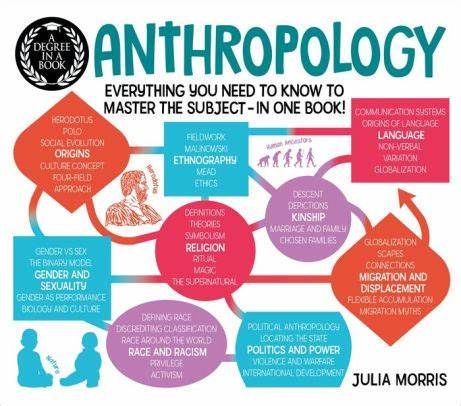
First up, Anthropology: A Degree in a Book, which I read for NetGalleys. My posted review follows:

For those interested in the history of anthropology, the development of its thought, and the areas of most salient interest today, A Degree in a Book: Anthropology recommends itself. It is far more thorough than other books aimed at the layman, like Anthropology for Dummies:: following a general history of the field, the book addresses particularly salient areas of study within anthropology in turn. Each section stresses key concepts and contributors within the field, and the book itself is visually attractive, and never tedious — provided, of course, one is interested in the subject. Even for the non-enthusiast, however, Anthropology is extremely useful, given its careful breakdowns of the subjects and highlighting of those key concepts; a student anxious about reviewing the fundamentals would find this a welcome resource.

“A convict’s thoughts are no freer than he is: they come back to the same place, worry over the same thing continually. “

I like anthropology in general, but I probably should have given that one more thought before I requested it — there’s only so much one can say about a quasi-textbook and not sound like a marketer. Of more personal interest was Aleksandr Solzhenitsyn’s One Day in the Life of Ivan Denisovich. Having read The Gulag Archipelago, I wondered if this might not be overkill; what can one day’s experience in the gulag be like, compared to the decades of suffering and abuse that Solzhenitsyn documented so heroically in the Gulag Archipelago? Yet Ivan Denisovich was Solzhenitsyn’s original attempt to communicate the horrors he’d experienced, and I wanted to see if anything was covered in miniature that we lose when panning out to survey the decades. As its title indicates, the novel simply tells the story of one day in the life of a prisoner, a man who was first captured by the Germans but who then escaped, only to be accused of being a German spy. For this ‘crime’, he was sentenced to a tenner, toiling in a work camp in a gang of mostly-innocents (except for one Moldavian spy), putting his skills as a mason to work. Denisovich and his comrades in suffering are not merely prisoners; they are effectively slaves, bossed around every waking moment of the day with the exception of small slivers at meal time. The prisoners, zeks, are subjected to constant humiliation and suspicion by their overseers — turned out of bed for random counts, forced to strip in the winter to be searched, etc. Their lives are full of misery, and yet — Denisovich goes to bed counting himself a lucky man, at least in the day we spend with him; he avoided being thrown into ‘the hole’, or losing wages being sick; he found a piece of steel he could mold into a tool or utensil at some point, and hid it away without being exposed; he managed to get soup that had some substance to it, instead of simply being water. In the harsh conditions of the gulag, his expectations for what counted as ‘good day’ had shrunk dramatically –and so too his contentment. Shored up by an inner dignity, Denisovich never begs for more or bemoans his fate; he simply makes the most of what he has and goes to bed a contented man — a prisoner, but free in his own way.

Reading Ivan Denisovich threw more light onto the inner being of Solzhenitsyn for me, making a biography I read of him a few months back make more sense in retrospect. Joseph Pearce’s Solzhenitsyn: A Soul in Exile is a unique biography of Solzhenitsyn, its author given the rare opportunity of interviewing the man in the flesh, after he had returned to a Russia between Gorbachev and Putin. Pearce and Solzhenitsyn were drawn together through their mutual love of GK Chesteron, and Pearce believes it was his promise to focus on Solzhenitsyn’s spiritual grounding that convinced the somewhat reclusive author to give him a chance. Solzhenitsyn was not born a critic of the Soviet state; as a young man, he freely joined the Soviet army, and was even approached with the offer of joining the NKVD, the predecessor of the KGB. Some mysterious reservation kept Solzhenitsyn from saying aye, and later on a slight criticism of Stalin was enough to land the young soldier in the gulag system. There, the errant soldier grew in the course of eight years into a philosopher and an implacable critic of the Soviet state. who turned his talents to not only condemning the evils  of the Soviet government, but to defending the best in humanity and his own Russian heritage.  

In prison,  Solzhenitsyn realized how little possessions have to do with a good life, and even out of it he maintained a very simple domicile — keeping in mind, perhaps, Ivan Denisovich’s observation that “The belly is an ungrateful wretch; it never remembers past favors, it always wants more tomorrow.” Solzhenitsyn became deeply religious during his prison years despite his upbringing, and it was that which informed his critique of the his prison years despite his upbringing, and it was that which informed his critique of the materialism that dominated both the socialist  east and the more open, capitalist west.  When the Soviet Union collapsed,  Solzhenitsyn was vindicated – but not especially delighted at the result, given Russians’ wholesale embrace of the worst of the west, its crime and gaudy consumerism. To Solzhenitsyn, western materialism and Soviet materialism were two halves of the same coin; both ignored the inner life of man to feed only his appetites. Those appetites, however, would not be satiated: no one ever consumed their way to lasting contentment. Solzhenitsyn thus urged Russians to think deeply about how to use this opportunity to re-order society, drawing on its own traditions and other democratic thought. He put forth a vision very similar to the distributism of GKC and Hillaire Belloc, with links to E.F. Schumacher’s small is beautiful and Swiss political organization.  (Pearce was converted to Catholicism after becoming enamored of GKC and Belloc’s socio-economic thinking.) Reading Ivan Deniscovich and experiencing the absolute poverty in which Solzhenitsyn lived for eight years made me better appreciate his turn towards a simple life in the decades that followed his freedom.

Coming this week….I still need to collect my thoughts on How Emotions are Made and The Unbroken Thread, which cover emotions and tradition, respectively; I’m mostly done with a novel set during the Germano-Roman grapple…(er, the Roman empire one, not the Nazis-in-post-Mussolini-Italy-one), as well as a couple of books on contemporary American politics. I’m still planning on focusing mostly on TBR and classics this month, with a couple of NetGalley titles thrown in.

Oh, and during my illness I mostly watched Barbaren. It’s a lot of fun if you’re into Latin and German. (And….stabbing.)
Posted in Classics and Literary, Reviews, science | Tagged , , , , , | 5 Comments

9/11/2001

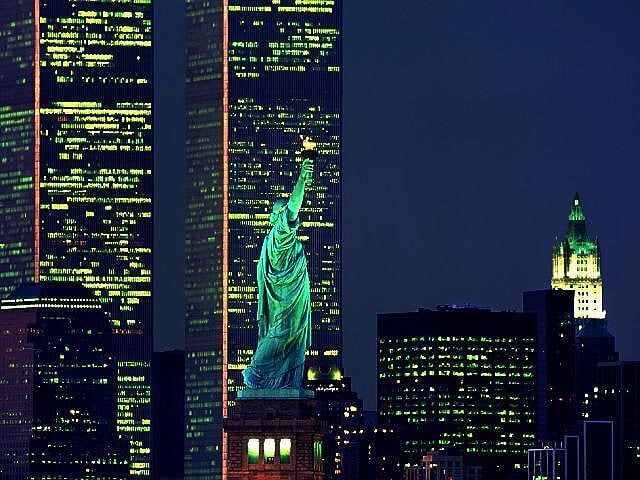
It’s the twentieth anniversary of an attack upon the United States, the details and legacy you’re already familiar with. If you weren’t, I’m sure there’s no shortage of offerings today. Rather than dwell on the mistakes of the past, I’d like to share some photos celebrating the WTC — the buildings, while never aesthetically pleasing, have gained a retrospective beauty now that they’re gone, and my sadness at having never gotten to see them in all their physicality manifests itself in my tendency to collect any photograph I can find of them, particularly of the interior. I take no credit for any of these — I’ve squirreled them away across the span of 20 years, so citing sources is impossible.

Interior shot from “Windows on the World” restaurant.
Absolutely mundane, but these are the kind of shots I keep looking for — the ones that show the little details. This is a floor where people transiting from the lower levels to the upper (or the reverse) switched elevators. I found this shot in another collection identified as “Skylobby Floor 78”. There were apparently at least three stages of elevators to pass through to make the full transit, which probably complicated escape efforts both in ’93 and ’01.

If you’re interested, there are some videos on YouTube displaying other people’s collections. I’m including one below as an example.

There’s all kinds of interesting footage online:

“When the complex planned by the engineers is completed, we will have run about 600 miles of cable, made about 3 million connections, and delivered the whole thing to New York, working like a supercomputer. “
Posted in General | Tagged , | 4 Comments