Books books books

Between the nonfunctional hospital wifi and the only decent television programs being overtaken by baseball, most of my entertainment last week was good ol’ fashioned books.
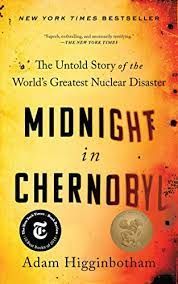
Midnight at Chernobyl popped onto my radar after I watched the excellent HBO series Chernobyl, and proved most impressive. This comprehensive history of the Chernobyl tragedy begins with a history of nuclear power which skilfully lays the groundwork for explaining why one of the stars of the Soviet power program malfunctioned so dramatically. No word can describe the author’s research better than exhaustive; it consumed nearly a decade, and features interviews from numerous former employees of the plant. Although there were systematic problems with Soviet industry — shoddy manufacturing quality, for instance, which would hasten the reactor’s failure — the key problem was several design flaws which exacerbated one anther’s failings, put into action by a safety test so badly executed that its instigators were given criminal sentences after the fact. As bad as Chernobyl was, it could have been far, far worse if not for the heroic efforts of men on the ground, who exposed themselves to lethal, even torturous amounts, of radiation to stop the disaster from compounding on itself. The ‘liquidators’ are also honored here. If you have any interest in the Chernobyl event at all, absolutely give this consideration. Fans of the show will be surprised to learn that its heroes and villains were not exactly accurate; Dyatlov, the show’s obvious baddie (language), is a far more sympathetic figure in the book — no less a cantankerous supervisor, but one who took pride in his work, who was not abusive, and who did his best to work with his men to figure out what had happened.
Following this, I took on Good Reasons for Bad Feelings, which I was optimistic about from the start and was not disappointed by. Its author, Randolph Nesse, had previously written Why We Get Sick: The New Science of Darwinian Medicine, which examined our bodies’ history and the consequences of natural selection on illness. The work made me aware that many ‘symptoms’ of sicknesses are often our body’s attempt to fight off infection, and that by focusing treatment on symptoms only we effectively undermine our return to health. Judging by this book, his original introduction to that line of thinking was his attempt to understand mental illness through the lens of natural history. Although he ends with chapters on how mismatches between our evolved environment and modernity creates mental problems (just as he did for physical ailments in Why We Get Sick), the meat of the book consists of research into how our natural instincts can misfire and create mental distress, particularly our social drives. I may say more on it later when I can re-read it and draw up notes; I only had time to throw some books into a bag last week, and my Chromebook is long dead.
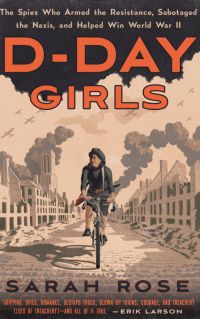
.D-Day Girls: The Spies Who Armed the Resistance, Sabotaged the Nazis, and Helped Win the Second World War was a fascinating look into how the Allies infiltrated France with female agents, delivering them by paradrop or boat, and tasked them with finding French allies and building a network of resistance that would make it possible for a third-rail attack at the opening stages of D-Day. The invasion of Europe was a staggering effort years in the making; not only did men need to be trained, equipment conceived and manufactured to overcome the Nazi coastal defenses, and all this preparation kept from a very well organized German intelligence network, but groundwork had to be laid. What did the beaches look like? Were there reliable French citizens who could be enlisted in an Allied-guided effort to hinder Nazi consolidation of power in France, but more importantly to strike at the right hour to disable transportation and communication networks across occupied France when the landings commenced? Interestingly, many of the Brits’ initial agents were French women who had emigrated to the UK, either because they’d married Britons or because they were fleeing the Nazis. Women were chosen not only because men were particularly needed in combat situations, but because they were less suspicious, viewed as less of a potential threat by the Nazis. In the occupation years they recruited allies, distributed weapons, passed on intelligence, and did what they could to sabotage the Nazis when the time was right. The story itself was superb, but its structure was wanting; Rose goes back and forth from D-Day to the landings of the agents, and I found this more confusing than not.

Northhanger Abbey is my fourth Jane Austen novel, and by far the easiest. It has the fewest characters of any Austen novel I’ve yet read, and because Austen was only beginning to write when she composed its story, its humor is a bit more obvious than in her other novels. As a bibliophile, I especially enjoyed Northanger’s self-awareness; the narrator refers to Catherine as her heroine several times, and the main character and her friends are obsessed with novels, particularly The Mysteries of Udolpho. One even keeps a booklist! Most of the novel is the usual Austen fare — relationship drama, as Catherine is crushing on Henry Tinley, who is amusing but keeps disppearing, and her new BFF Isabella and Catherine’s brother are sweet on one another, but bound for trouble. Meanwhile, Isabella’s sister John pines for Catherine, and is incredibly oblivious to his ‘permanent friend zone’ status. (There’s an entire page of John attempting to turn Catherine’s gentle “Down, boy”s into come-ons, only to be shot down again. It’s funny in a sad, absolutely-been-there kind of way.) What Northanger is most known for is Catherine being so besotted with gothic novels that when she’s invited by Henry to hang out with his family, she infuses their mysterious manor with literary drama and convinces herself that Henry’s pop murdered his wife — among other things. This aspect of the novel provided humor in its own right, but didn’t dominate the novel the way I’d expected; Catherine’s visit to the Abbey occurs rather late in the story, when relationship drama is already collapsing toward the end.

If you’re tired of reading, I’m sorry but there’s more.

An Astronaut’s Guide to Life on Earth by Chris Hadfield is an atypical astronaut memoir, in that it’s less a biography and more of a self-help book. Although the author does recount his career in NASA, and provides stories about life working space and on the ground, they’re more meant to illustrate principles that he learned throughout his life, principles that others can utilize in their own lives to be more productive and fulfilled. It’s essentially Back to Earth, but….a lot better. However….I’ve read so many astronaut books since July that I didn’t love this one as much as I would have in other circumstances.

One welcome bit of humor last week was Mary Roach’s Fuzz, an usual work for her in that it doesn’t focus on some area of interest that’s taboo, like death or sex or the digestive system. Fuzz is hard to categorize, actually, as it focuses on how humans respond when nature transgresses human laws. How do people determine if someone was killed by a cougar or by someone who wanted to frame a cougar, for instance, or cope with pick-pocketing blackmailing macaques? Roach is usually a science humorist, but this is more about the intersection of law and nature. Greatly amusing, and very unusual for Roach in that it’s not vulgar in the least.

Believe it or not, I read two more books last week, and one of them was 800 pages. I am not going to write off Greg Iles in a paragraph, though. The other outstanding is a Star Trek novel, The Enterprise War, which I’d prefer to give an independent review because Captain Pike deserves it.

Posted in history, Reviews, science | Tagged , , , , , , , , , , , , , , | 15 Comments

View from Room 327

Annnnnnnnnnnd I’m out! Free! Very much walking wounded, very much in possession of a radically altered life — but I’m out, out in the air and under the sun, free to walk without a beeping, hissing IV bag following me, free to take a Tylenol without waiting for an hour for the doctor’s permission. I’m back behind a keyboard and it feels so good.

I read quite a bit when I was inside, but I’ll share some thoughts on that a little later. For now I wanted to provide an update for those of you who have been following my scattered updates here. The hospital’s wifi didn’t work, and my LTE connection failed on Friday, so I’ve been offline for several days now — hence my radio silence more recently.

I knew back as early as 2017 that my kidneys were not as healthy as other people’s; at the suggestion of my doctor, I had an ultrasound that indicated they were only operating about half as effectively as they should for a person of my age. The nephrologist speculated that they’d been damaged when I was morbidly obese (a status that ended in late 2011), and that provided my blood pressure stayed at a healthy level, I should still be able to enjoy a healthy, normal life; kidneys are fairly resilient, he said.

In recent months, and particularly in the last month, my health had fallen dramatically. I am am active, energetic guy with a gym membership who despite knees and ankles damaged by obesity, moves faster than virtually everyone else in Wal-Mart. Because I have personal experience with obesity and hypertension, I maintain a fairly healthy diet, with few indulgences — my ardent love for Mexican food being one of them. Despite this, however, I seemed to be falling apart — with crippling sinus headaches, chronic restless legs that destroyed any chance of sleep, forcing me to shamble through days on 3-4 hours of ersatz rest, obtained through sleeping pills. I was having frequent, inexplicable vomiting episodes — inexplicable because I never felt any stomach distress, and more often than not that I had these episodes when I was still in my early-morning fasting state. Multiple people commented that I was abnormally pale, and I felt as though I was freezing most every place I went; despite the high temperatures outside, I couldn’t make it through the work day without wearing a sweater.

I finally admitted that I needed to see the doctor; the restless legs were chronic, torturing me throughout the day and night, and I didn’t want to become dependent on sleeping pills. Maybe he could prescribe something like Requip — I didn’t want to take it,but….I had to. Something had to change, because my status in September was unsustainable. I was becoming a wreck.

My bloodwork alarmed my physician, who said my creatinine levels were twelve times their acceptable limit. He referred me to a specialist, a nephrologist, and on last Monday she looked at me and said, “You need to be in a hospital. Now. This afternoon.” I had an hour to to go home and pack a bag, which I did in a daze; I paid off my bills for the month, not thinking I’d be in the hospital for a long time but knowing I would miss my usual Friday financial reckoning. I made a few calls, saw a few people, and admitted myself to the hospital.

It was good that I did. Many of my body’s mineral counts were critically low; the doctors informed me that I was a seizure risk. They originally thought that one of my blood pressure pills had effectively starved my kidneys to death over the last decade, pushing me to drink more and urinate far more than necessary, bleeding myself of needed minerals. After an IV cured my hyponeutremia, though, my kindey function continued to decline. The doctors were confused. I didn’t have diabetes; my hypertension was well under control; I hadn’t been abusing any substances that would tend to destroy kidneys. Why were they failing?

That is…still unknown. I am an “Interesting” case, but one whose damage frustrates attempts to assay it. My kidneys proved too small and wasted to sample safely, so a biopsy was cancelled. I’m being referred to specialists at UAB, and in the meantime will be taking dialysis three times a week in the early mornings. Although I was horrified at that prospect — I saw what dialysis did to my grandfather — the outstanding nurses at Vaughan Regional talked me through my fears, and turned my dialysis sessions into periods to be looked forward to and even missed — I daresay the clinic I’ll be attending from now on does not have so many angels among its staff. Dialysis has a delayed effect on me, with the sudden weary sleepiness striking two to three hours later. Initially it also did strange things to my head, making me have near-hallucinations when I closed my eyes. I seem to be adjusting to it, though.

Life has suddenly become more challenging, but I will take it one day at a time. That’s all I can do. I will make the most of it. I now have nine dedicated reading hours in every week, and even if I am not able to work I will put the time to productive use by obtaining my IT certifications. I am optimistic that I will continue to be able to work, however.

Thank you all for your support, prayers, and kindly wishes in the last week. It’s been a humbling time for me, and I hope this strange twist in my life’s plot will give me a newfound appreciation for all the people in my life, and indeed for my life itself.

~ Stephen

Posted in General | 21 Comments

update

Hi, all. I am still in the hospital, typing on a phone and limited to an LTE connection. I have acute and chronic kidney failure, and when I was rushed in on Monday, was a seizure risk. I’m on an IV now, and this week the doctors have ruled out one thing after another. My kidneys are pulling a Padme and dying for no reason. I am a mystery, my problems scaring off some. I have been reading, and may even finish DDay Girls. Although i am likely to be a patient for a long time to come , I hope to be able to leave the hospital next week. At least I can them find a laptop for future hospitalizations.

Posted in General | 14 Comments

in hospital

I am in a hospital for renal issues unexpectedly. Will be a few days. Finished Chernobyl…very good. Working on Good reasons for bad feelings. Promising. Need to buy laptop, not a phone typer. 😉

Posted in General | 13 Comments

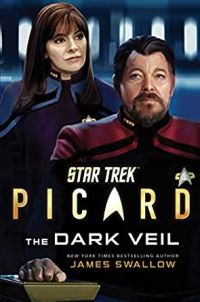
STish: The Dark Veil

Star Trek Picard: The Dark Veil
© 2021 James Swallow
336 pages

“Those are Tal Shiar enforcer cruisers,” said Vale. “We must have really pissed them off to get that much attention.”
“What can I say? It’s a gift,” the captain deadpanned

When the USS Titan arrives at the Jazari homeworld to return one of their last serving members in Starfleet, they find something of a surprise waiting for them. The planet itself is physically reduced, as if plundered for a massive engineering project — and in orbit, the project itself. A massive colony ship, it carries the entire population of the Jazari people: the neighborhood has gone downhill, thank you, and they’re moving. A catastrophe aboard their vessel draws in both the aide of USS Titan and a Romulan starship lurking across the border, and it seems a rare opportunity for the Federation and Empire to build bridges in the light of the present…unpleasantness (what with Starfleet volunteering to help Romuluans evacuate their doomed star system and then backing out after some androids go postal on Mars, destroying the rescue fleet). However, not everyone aboard the Othryxs supports its commanders’ diplomatic overture. In short order everyone is in peril, and Riker subject to a Romulan tribunal.

As much as I dislike AbramsTrek, KurzTrek, whatever — as long as some of the old Treklit authors are attempting to make something of its miserable premises I’ll give them the old college try. The Dark Veil is proof to me that the talent can still show out, particularly Swallow’s development of the tenative relationship between Captain Riker and his Romulan counterpart, Medaka. Both are at odds with their respective governments on how to handle the other; Riker, like Picard, is woefully disappointed in Starfleet for giving up the Romulan rescue effort (the Grumpy Vulcans are apparently incapable of evacuating themselves, despite their intelligence agency running around with its own ships), and thinks that the conspiracy theories blaming them for the Martian attack are ludicrous. Medaka, for his own part, believes the Federation had the best of intentions, but has allowed fear to take command. He and Riker establish a rapport that allows them to aide the colony ship, but circumstances beyond their control and a Desperate Secret destabilize the situation, ultimately leading to the usual Trek firefight — an outnumbered Titan using the environment and sideways tactics to protect the colony ship against the sudden aggressiveness.

I continue to hold that the premise of Picard is ridiculous, contradictory, and overly bleak. However, Swallow does a good job spinning some of its dross into a captivating story with a genuinely novel society at the heart of it. There are no virtually no connections to the “real” USS Titan series, aside from the re-use of First Officer Christine Vale: she’s something of an anomaly, being the first Treklit character I’ve seen make the jump into the new books.

QUOTE:

Silence fell across the room, and in that moment, they were just two captains, two fathers and husbands, two men caught between the bounds of orders and their own codes of honor. Each of them knew that there were larger forces at work around them, political pressures and military strategies being decided on by others light-years distant. But they were the ones on the edge of all this. Riker and the Titan, Medaka and the Othrys, they were lone outposts of their people on a deep and unforgiving ocean. It would be up to them to do better than those distant leaders, and to find common ground where they could. The alternatives led only toward darkness.

Posted in Reviews | Tagged , | Leave a comment

Mephisto

Mephisto
© 1936 Klaus Mann
272 pages

I was fortunate, in my time at the University, to have a class with my favorite professor every semester that I was there; he had an enormous command of late 19th century and early 20th century Europe, and knew how to skillfully incorporate novels into the teaching experience to give us a true taste of the culture and ideas being discussed. Such was how I encountered Mephisto, the story of a German actor who sold his soul to the Devil — in this case, the Nazi party — to realize his dreams of success upon the stage. It’s a chilling story of how low we can sink, how much we can bend our ideals, how easy it is to rationalize horrors away.

We are introduced to Hendrik Hoefgen as the apple of Hermann Goering’s eye. At the Fat Man’s birthday party, Hoefgen nearly rivals his patron for laud and attention. Newly made head of the State Theatre, Hoefgen has come a long way since his days as a struggling actor in Hamburg. Mann quickly takes us back to those days of the 1920s, when Hendrik had to fight to get his stage name rendered in the papers correctly, when he counted Communists as his dearest friends, fumed against the bourgeois and the bosses, and planned a Revolutionary Theatre. How much of what he talked about he really believed, who can say — but time and again Hendrik chose pragmatism before idealism. Better to have his career on a solid footing before he started tweaking the noses of his benefactors by preaching revolution! Hoefgen’s ascent into stardom begins when he marries the daughter of a prominent man whose connections allow Hoefgen to promote himself more easily; abandoning his friends in Hamburg for Berlin, Hoefgen so throws himself into his work that he misses entirely the fall of the nation to the Nazis. When he realizes the background of the theater has changed, the consumate actor Hoefgen merely shrugs and adapts himself to it. Pursuing the affection of one of Goering’s intimates, he uses her to affect a pardon for himself for his youthful silly ideas and, reprising the Mephisto role that earned him his initial fame, seals his place in the favor of the Nazi hierarchy. It’s only when one of his longtime friends is imprisoned and killed that Hoefgen sudden realizes he’s become the monster he once accused others of being.

Mephisto is not merely a warning about how quickly ambition can unseat the desire for virtue — not that Hoefgen ever had any genuine desire for the latter, as I strongly suspect that his political ideals were merely another expression of his vanity, but full of historical interest. Hoefgen’s life is so closely modeled on that of Gustaf Gründgens’ that it was banned in Germany for libel until 1981. When I first read Mephisto, I was altogether confused by the Nazis’ economics — like most, I had the made-for-tv notion that fascism was ‘right wing tyranny’, as opposed to communism’s ‘left wing tyranny’. It was their embrace of socialism (for the benefit of the Nation/Race rather than the Proletariat) that allowed Hoefgen and others to introduce a few subtle alterations into their pontificating and move seamlessly from Communists to Nazi — after all, they could still speak dismissively of the capitalists and liberals, they just needed to throw in a few jibes about the Jews and refrain from dismissing the Nazis as jumped-up thugs and all was right with the world. However illuminating Mephisto is for understanding the times, though, it’s far more important as a study in character…or the lack thereof. It is Hoefgen’s inconstancy that gives him material success and spiritual doom.

A similar modern story produced in cinematic form is the Viggo Mortenson and Jason Isaacs film Good about a man whose train of moral compromises takes him to a place darker than he could ever imagine.

Posted in Reviews | Tagged , , , , , , , | 4 Comments

The Evolution of My Reading (borrowed)

Borrowed from Cyberkitten who likewise got it from Bookolive.

When did you get into reading?
I literally grew up reading; my parents barred television from the home, something I hated then but am very thankful for now.

Was it something you always liked since school or did your love of book develop over the years?

 I can’t remember a time when I wasn’t closely associated with books. As a kid I’d bring them to family functions to read while the adults did their thing (Christmas and Thanksgiving especially, since we would be at my grandparents’ house literally all day). Now that  I use my phone for a lot of reading, I’m literally never away from a book.

Have you always been a voracious reader?
I read books by the pile as a kid, making weekly trips to the library, and read with the same gluttonous appetite now – but there was a period in high school when I didn’t read quite as much. I still read heavily, far more than most, but it was fiction (Roswell, California Diaries, Star Trek)  and history for the most part.  It wasn’t in 2006 that my nonfiction interests really widened.

Who/What influenced your interest in reading?
My parents, obviously; not only did they eliminate the competition, but everyone in my family read for pleasure – and we all still do.  A few of my elementary school teachers were passionate about reading for pleasure, introducing our class to Roald Dahl and R.L. Stine.

What was the first favourite book or series you remember? What are some of your favourite books as a child?

I adored Beverly Cleary’s  Beezus and Henry series, as well as the Boxcar Children. More contemporaneity, I was nut about the Goosebumps series.  My favorite early novel would have been Jack London’s Call of the Wild.

Did you like non-fiction when you were a kid?

Yep!  Most of it was history and nature, but I also liked learning about the Greek myths.

What’s your favourite childhood reading memory?

Reading Redwall in a wooded glen behind my house; this was a pleasure I had to earn, because the glen was separated from me by a swamp that I had to find a way to ford.  I was able to take advantage of shallow spots, supplementing them with cinder blocks and 2x4s ‘borrowed’ from a lot that was being developed, to establish a path out there.


Where you ever not a reader/had a major reading slump? How did you get out of it?

Getting into computers and the Internet in the late 1990s and early 2000s dampened my reading quite a bit. The break between community college and university compelled me to look for nonfiction to scratch my learning itch, and I’ve been doing that since.

How did you get into non-fiction reading?

As a kid, just innate curiosity.  As an adult, leaving community college and then having a crisis-of-belief in which I had to rebuild my worldview from scratch prompted me to begin reading a wider variety of nonfiction (science, philosophy, economics, etc).  I’m fourteen years into that project!

What was the first non-fiction book you remember that cemented your love for the genre?

The first nonfiction book I remember absolutely loving  was Albert Marrin’s The Airman’s War, read around ninth grade. I still have my  high school library’s copy of that, because I lost it, paid for it, found it, and realized…mm, I’d rather have it, thanks. 

How has your reading evolved as you’ve gotten older?

It’s gotten more varied, I’d think, and more purposeful. I don’t just read for idle curiosity now — sometimes a question will bug me, and I’ll read multiple authors debating multiple aspects of the questions, trying to understand it.

How do you think reading has shaped you as an individual?

You might as well ask how speaking English or growing up American has shaped me;  reading was  and continues to be so formative I couldn’t possible separate “me” from the reading experiences.

What does reading mean to you in your life?

It’s….everything?  I rely on books for not just entertainment and education, but for insight as to how I can structure my thinking and life.

What’s one of your life long reading goals?

To finish off Mount Doom, I suppose. I don’t know if it will happen.

Posted in General | Tagged | 2 Comments

September 2021

Science Survey

C’est fini! With How Emotions are Made I completed my twelve categories, finishing early for the first time since I instituted the Survey back in 2017. I’ll continue to read science titles, of course.

Classics Club Strikes Back:
The Moon is Down, John Steinbeck
A Day in the Life of Ivan Denisovich, Aleksandr Solzhenitsyn

Climbing Mount Doom
How Emotions are Made (purchased….2018)
A Guide to the Good Life, Cicero (purchased 2014)
The Right Stuff, Tom Wolfe (purchased June 2021)

The Unreviewed:
The Right Stuff, Tom Wolfe. This book is an absolute legend, inspiring numerous men and women to pursue their dreams at NASA, and serving as the basis for one of my favorite movies. I’ve rewatched the movie so many times, in fact, that I found it difficult to keep track of where I was in this book — the movie followed the narrative extremely closely.
Blackout, Candace Owens. Review in progress.
A Guide to the Good Life, Cicero. Review in the works.

How Emotions are Made….I really don’t want to dismiss this one with a paragraph. It may take me three years and multiple re-reads (like Happy City), but its day will come.

Unread Purchases:
The Rise of Athens, Anthony Averitt. I may use this for a series I’m contemplating (“A World of Cities”) or it may just be read by itself. I previously read Averitt’s biography of Cicero back in 2009.

Plans for October:

October should be….fun. Science fiction, a little German literature, and perhaps a gothic novel to round out a month steeped in the fantastic, imaginative, and sometimes horrific. We’ll also be hitting a real world horror story: Chernobyl.

Posted in General | Tagged | 2 Comments

Sohrab Ahmari and the Unbroken Thread

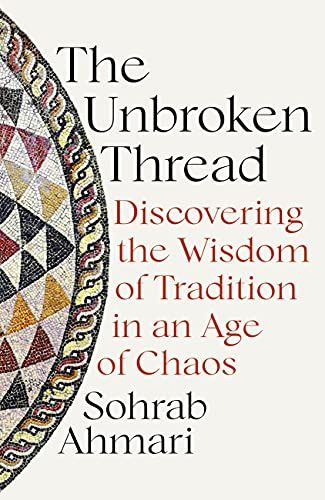
Sohrab Ahmari fled Iran for the West, rejoicing in its freedoms alongside his wife, a Chinese national who had also found relief from the relentless tyranny of her own country. As they formed a family and looked to the future, though, they could see that new dangers awaited their young son. They could see the danger manifest in the lives of their peers, people whose appetites who knew no limit, whose characters were never given a shape or direction, who squandered their youths in license and faced their middle years with nothing but compulsive habits and cynicism. They looked for wisdom and stability — and they found it in the deep well of western tradition.

In From Fire, by Water, Ahmari reflects on how he came to the West from Iran, arriving first a hardened leftist but opening, as the years progressed, to the startling prospect that perhaps he didn’t know everything. Although he’d embraced American culture while in Iran as a way to rebel against the mullahs, whom he’d grown to hate along with their religion and the very idea of God — he was disheartened by the fact that most Americans were not the uber-cool intellectual liberals he’d admired from afar, but often ordinary people more interested in football and fishing than ideology. Ahmari’s budding cynicism and love for reading led him deeper into existentialist thinkers and the postmodern left, but at the same time his real-world observations were making him question the validity of those beliefs. He’d had a disappointing experience with the Workers Alliance organization he’d joined to fight for the sake of the proletariat in America, and his time as an elementary school teacher forced him to rethink, when he saw the affects of relativism made visible in the chaos of his students’ lives. His own internal house was nothing to admire, absorbed as he was by the party culture, and in his many mornings of hangover misery, he longed for something else. Ahmari was especially inspired by a fellow teacher, an Israeli who frequently challenged Ahmari’s assumptions in both beliefs and values. Expanding his studies beyond the philosophers of nihilism, Ahmari began to understand that the ideas he’d prized as modern were in fact very old, merely now dressed up in new clothes, and that they’d led people and civilizations into darkness time and again. He rebelled, he looked for clarity, and his rejection would ultimately bring him to the Catholic church. Although Ahmari’s recollection of how he came to the Church is a bit rushed — beginning with a casual read of the Gospel of Mark, and captivating his being in full when he witnessed the Eucharist for the first time — given that it transpired over nearly a decade, this story of an honest young man coming to grips with himself proved absolutely fascinating to me, in part because Ahmari and I had very similar journeys, unfolding around the same time.

Having learned the value of the Western tradition, Ahmari becomes in The Unbroken Thread its advocate. In every chapter, a different personality tackles a question of universal import — questions addressing God, the meaning of the cosmos and of death, considerations of what we owe one another and ourselves — sometimes in debate with another. Although Ahmari’s guests include many a saint or religious philosopher (C.S. Lewis and Augustine both feature here), the discussion brings in luminaries from other traditions (Confucius), and avowed secularists, including a pair of Marxist anthropologists and Andrea Dworkin. Ahmari opens with more metaphysical questions — how do you justify your life, and is God reasonable — and then shifts more to practical applications, exploring the aspects of life that tradition once more broadly informed. One chapter examines the idea of sabbaths and fasts, for instance, and another tackles the immutable if often ignored power of sex; a final chapter addresses Death, and the need to face it rather than waste our lives in fear and flight from it. As much as I appreciate Ahmari’s perspective, his prescriptions often veer into the territory of state-imposed morality — an astonishing development given his background and hatred for the mullahs. While The Unbroken Thread provides much to think about for the inner-minded reader, any inch ceded to Caesar is one too much.

Posted in General | Tagged , , , | 2 Comments

Top Ten Freebie: Ten 2021 Adds to my Goodreads Wanna Read Shelf

This week’s TTT is a freebie, so I chose to look back on some of the books added to my Godoreads wanna-read list.

America and Iran: A History, 1720 to the Present, John Ghazvinian. Something of a perennial interest of mine.

Creatures of Empire: How Domestic Animals Transformed Early America, Virginia DeJohn. Animals and pioneer America? Can’t lose!

The Code Breaker: Jennifer Doudna, Gene Editing, and the Future of the Human Race, Walter Isaacson. CRISPR is simultaneously exciting and dreadfully creepy. I’d like to think we’ll do great things with it, but …er, based on what we’ve done with the internet, it’ll probably just turn into a way for trendsetters to have purple or pink skin as fashion dictates.

Unsettled: What Climate Science Tells Us, What It Doesn’t, and Why It Matters
, Steven Koonin.

Surveillance Valley: The Secret Military History of the Internet, Yasha Levine.

Religion of the Apostles: Orthodox Christianity in the First Century, Stephen de Young

The Sopranos Sessions, Matt Seitz. The Sopranos was the most impressive (if bloodiest) bit of televison drama I’d ever witnessed prior to Breaking Bad, and I remain fascinated by its storytelling craftmanship. This is a look behind the scenes….


The Forest Passage, Ernest Juenger. I can only quote from Amazon:

[Jünger] explores the possibility of resistance: how the independent thinker can withstand and oppose the power of the omnipresent state. No matter how extensive the technologies of surveillance become, the forest can shelter the rebel, and the rebel can strike back against tyranny. Jünger’s manifesto is a defense of freedom against the pressure to conform to political manipulation and artificial consensus”

Never more timely than now. Recommended to me by a friend of the blog.


Sid Meier’s Memoir! A Life in Computer Games, Sid Meier. Meier’s name is affixed to some of my very favorite games (Civilization III, Gettysburg!, and Railroads, just for starters).

Tyranny Comes Home: The Domestic Fate of US Militarism, Christopher Coyne. The police state is sure to grow even worse now that DC is aggressively trying to target ‘internal enemies’, by which it means anyone with any politics outside the impotent state-serving establishment.

A Pope and a President, Paul Kengor. On the relationship between President Reagan and Pope John Paul II, particularly their shared crusade against global communism.

Posted in General | Tagged | 6 Comments