
What’s this? Another year gone? Well, on to the books!

Most of my reading fell into the above categories, the remainder being small fry like fantasy, Star Trek, and world affairs. Most of my reading was nonfiction, no surprise there – 62% if you want the cold hard number. A slight majority of my books were e-books rather than physical, and an even slighter majority of them were borrowed instead of purchased.
Starting out I had several goals – to restart the Classics Club with fifty fresh titles; to read more southern history and literature, and to make progress on my TBR pile. I’d say I did well on all three; the continuing existence of TBR pile is mostly my friends’ fault. They keep giving me books, the villains! The Classics Club Strikes Back is off to a good start, with 20 titles read, and a respectable distribution across the categories I chose, the exception being Classic Science Fiction, I most favored One Day in the Life of Ivan Denisovich, not only for its illustration of how abysmal life in the Soviet Union was, but for its message that a man could still triumph over the dehumanizing nature of the prison camp.
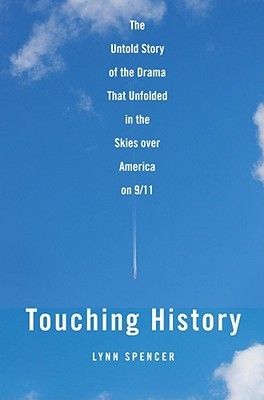
History made its usual showing, though science was right on its tail for most of the year. There’s no shortage of excellence here; Midnight in Chernobyl and Touching History: 9/11 in the Skies both come to mind, as does Liza Picard’s Victorian London. The latter drove me to buy several books by Picard, which will feature in 2022’s Read of England.
Science had, on the surface, a strong year, with twenty titles read. When I looked back at my reading, though, I was dismayed to find that I hadn’t posted many proper reviews at all, instead relegating virtually all my science reviews after February to mini-reviews, presenting them in twos and threes. My favorites were Good Reasons for Bad Feelings and How Emotions are Made, though The Storytelling Animal was another strong contender.
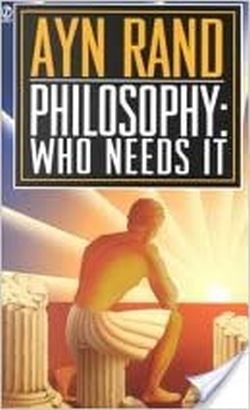
Religion and Philosophy had a good, if….weird, year. I attempted to read all of Ayn Rand’s nonfiction (two volumes remain), finding her more interesting than expected, and a welcome rebuttal against the mobbishness that’s dominated 2020 and 2021. My favorite reads in this area, though, were Brad Birzers’ Beyond Tenebrae, and Seeking Christendom, both reviewing Christian humanism and literature connected to it.
In Science Fiction and Technical Thrillers, there were numerous hits. Project Hail Mary was arguably the best, but The Warehouse showed a future we’re not too far away from now. Doctorow’s Attack Surface was a welcome continuation of his Little Brother series. I was in a serious dystopian mood during the summer, thanks in part to how insane organizations, governments, communities, and private companies have been in the last year. It’s been a strange period of collective madness, of institutionalized hypochondria.
Historical Fiction, which typically puts in a strong showing, faltered a bit this year. I continued with a few familiar authors (Cornwell, Collard) and began exploring Ben Kane’s works, which proved very promising. His Eagles at War was a superb depiction of Rome’s defeat by the Germans; only the surprise return of Richard Sharpe in Sharpe’s Assassin gave it any competition.
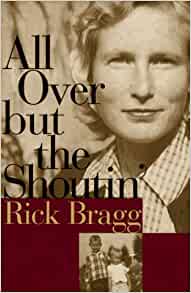
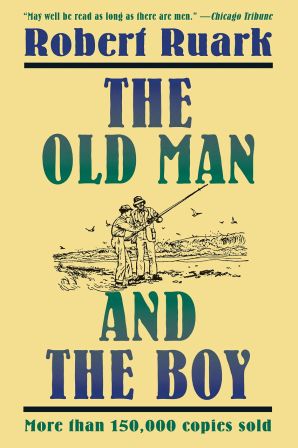
Southern Fiction, which debutes in the end-year review this year, has Robert Ruark and Rick Bragg in serious competition; as much as Bragg’s writing moves me, though, I love The Old Man and the Boy’s combination of outdoors adventure and the unique moment in time it captured (1920s-30s Carolina). I read five Bragg books, enjoying his family trilogy the best — and its middle volume, Ava’s Man, particularly.
One fun thing I did this year was Space Camp, in which I read numerous astronaut memoirs. Of these, my favorite was Spaceman by Mike Massimino, followed by Eileen Collin’s Through the Glass Ceiling to the Stars.
What’s next?
So, what’s coming in 2022? ….much the same as came in 2021, to be honest. I’ve done legwork for several themes of varying lengths (weekly, monthly, and year-long), but haven’t locked in anything at present: in consideration are a month devoted to the medieval epoch, a year-long series with a traveling spotlight on cities that dominated or epitomized a particular era (think caliph-era Baghdad, renaissance Venice, Victorian London, etc), and revisits of my past Mideast and Asian reading focuses. I’m leery of launching into a project that will require getting access to a bunch of books, though, when I live with the draining presence of my TBR pile. I want so much to be rid of it, and yet friends keep giving me books — so that despite the dozens of TBR titles I tackled in 2021, the mount is as substantial as ever. What will definitely happen is the usual:
Science Survey:
– BASE GOAL: 12 books, one for each category
– SECONDARY GOAL: 20 books in total
– SPECIFIC TARGETS: Science books in my TBR stack include DNA is Not Destiny, This is Your Brain on Music, and The Moral Animal.
The Classics Club Strikes Back, Year II
– BASE GOAL: 10 books
– SECONDARY GOAL: 15 books
Readin’ Dixie
– BASE GOAL: One book a month in southern literature or history
– SECONDARY GOAL: An average of two books a month in southern literature or history
– SPECIFIC TARGETS: Finish reading available Rick Bragg works, try Pat Conroy
Climbing Mount Doom
– BASE GOAL: Confront at least one TBR book a week with the aim of reading or discarding it.
– SPECIFIC TARGET: Level Mount Doom.
Thanks for reading, and happy New Year!



 Reading Freely