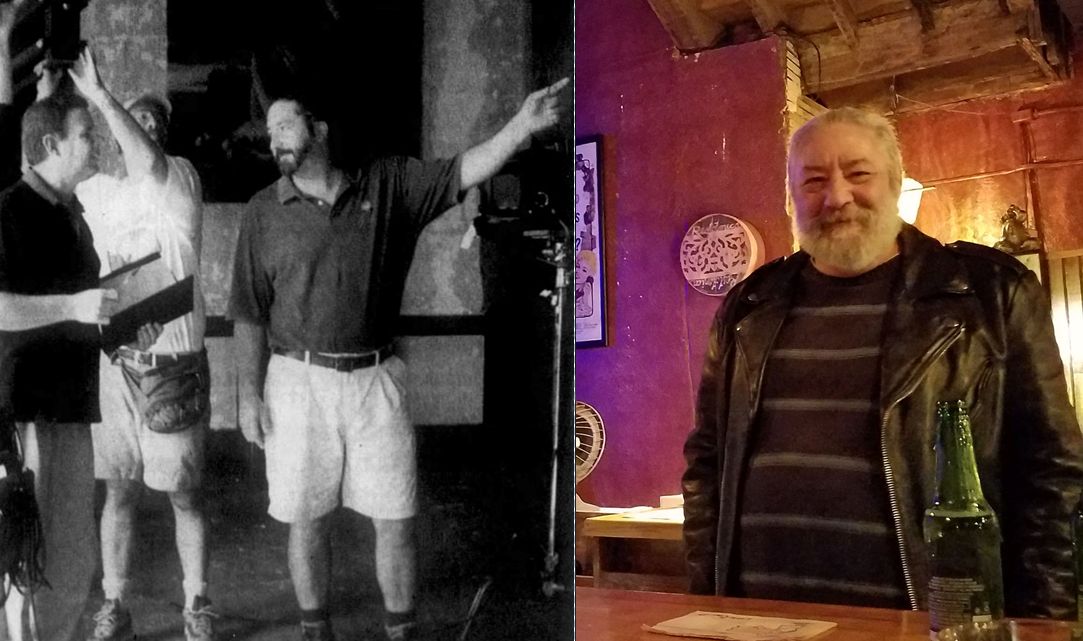
A friend of mine died this morning. He’d lived in Selma for twenty years and devoted that time to not only restoring the Harmony Club– a Jewish social club from the turn of the last century that had been dormant for a half-century — but to trying his damndest to revive Water Avenue along Selma’s waterfront. He doggedly kept his block clean, he hosted restaurants and bars in his building, and he maintained a weekend sidewalk salon (of which I was a regular member) for years. He knew architecture and the value of Place. He was a passionate artist, a unique mind, and a genuine character. His death leaves his friends and Selma all the worse.
Photo credit: Rural Southwest Alabama. This is an older photo. These days the truck out front is white….
Tribute from a mutual friend:
I’ve never been more happy that this video exists. Rest in peace, Dave. May your castle in the sky be one in need of restoration, with room for your unique tastes to be put to work.
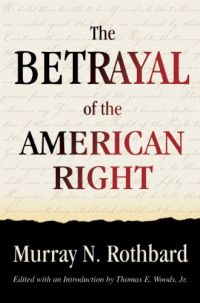
When I began exploring politics and forging my own ideas, I steered leftward out of hatred for the war on terror and Bush’s burgeoning police state. I soon discovered, however, that not only were most progressives more partisan than principled (the antiwar/civil liberties crowd vanished into thin air when Obama continued Bush’s same policies), but that there had existed and still existed, conservative resistance and outcry against the war state. Murray Rothbard offers a history of how the Old Right, typified by its contempt for the establishment and its full-throated support of individualism, was fractured and corrupted into neocons, typified by their embrace of the corporate-military complex. Unpublished until after Rothbard’s death, Betrayal is at the same time a history of modern Individualist-Libertarian thought, and an intellectual biography of Rothbard, who came of age during World War 2, formed unique alliances with the left, and kept the torch of liberty alight during the darkest years of the 1950s. Rothbard’s review of political thought and literature throughout the early 20th century turns convention on its head, and makes for compelling reading.
Rothbard’s narrative begins in the late 19th century, when DC’s nascent imperialism in the Philippines and Cuba, and the growing influence of corporate titans on its policies, inspired resistance from right and left alike, who defended the individual and looked askance at government collusion with the powers of big business. There were no shortage of stalwart voices active in this time: H.L. Mencken, Lysander Spooner, and Albert Jay Nock’s works feature prominently. They scoffed at the mob, argued that the state was guilty of breaking the laws it claimed to enforce, and cried foul whenever tycoons attempted to put the government to work for them. The downfall began with the Great War, as some left-individualists were attracted by Wilson’s crusade for ‘democracy’ (nevermind the fact that the hypocrite Wilson was imprisoning war protestors), and was made permanent by the arrival of the New Deal. Although individualists made some common cause with the powers of business then — including Hoover, who was once decried as a cartelist but who was now attacking FDR — the onset of war saw that momentary alliance destroyed immediately, as Eastern money saw in the growing military-industrial complex their income for life. Increasingly isolated, dismissed as Hitlerites if they dared criticize DC, individualists of this time were no less active: John T. Flynn wrote a prescient work amid World War 2, for instance, called As We Go Marching, which posited that the United States had become a militarized, imperialist state in its mission to destroy Hitler, and that after the war it would seek to surpass Great Britain in being a global hegemon. Flynn was prophetic: DC immediately assumed responsibility for all of creation, seeking out the Red Menace to destroy — throwing away money and then later the lives of young men across the world, most notably in Korea and Vietnam. In this time of perpetual war and McCarthyism came William F. Buckley and the National Review, which completed the work of persuading those with individualist sympathies that the threat posed by Moscow should override their concerns about the growth of the state and its effect on individual liberty — and if it didn’t, they were no-good god-hating commies.
Rothbard’s recounts this not as a historian who can only see in the rearview, but as someone who was an active participant. Coming of age in the late forties and fifties, he was invigorated by New York’s holding of anarchist-libertarian literature, attended lectures from Mises, and worked in numerous organizations defending individualism, attacking the state’s usurpation, and advancing economic education. When an entire body of thought disappeared, reduced to a superficial part of Buckley’s new Conservatism, Inc, Rothbard sought out allies on the left. While the likes of SDS proved too self-destructive for that to last, the experience made him rethink the spectrum of political thought: he concludes the book by arguing that if the individual-libertarian position is an extreme left position, then Buckley and Kirk’s throne-and-altar conservatism is an extreme right position, and socialism is a muddled in-between, aspiring for emancipation from the state but embracing its worst practices and doomed by its internal contradictions. Rothbard also throws Russell Kirk into the Buckley camp, which is a disservice to Kirk given his deep distrust of the war state and loathing of ideology. Having read a fair bit of Kirk, I don’t think Rothbard had more than a cursory appreciation of his work. Although the history of the right’s full takeover by the neo-con movement of Cheney and Bush is only complete up to the 1970s, Rothbard’s personal participation in so many of the events gives this book an unexpected perspective.
This Tuesday, we’re looking at authors who we discovered in 2021 and will be reading more of!
Robert Ruark. A contributor to Field and Stream for decades, Ruark was an accomplished hunter, fisherman, and outdoorsman. His Old Man and the Boy recollects his childhood growing up mentored by his grandfather, who taught him not only how to live off the land, but how to do it responsibly — as a good steward, and not a reckless consumer who destroyed what he loved.
F. Van Wynck Mason. An author of historical fiction, I read a Revolutionary War-era piece of his starring a Quaker woman whose dead Brit boyfriend put her in the family way. I have several more works by him and plan on continuing.
Sue Ward. Her social history of Victorian London lured me into buying several other books by her on London’s history.
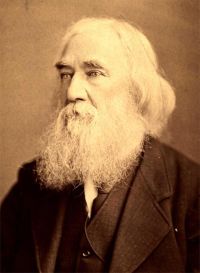
Lysander Spooner. His No Treason argues the case for anarchism, but Spooner wasn’t just another theorist: he actively rebelled against the government by creating a letter-delivery service to resist the state’s postal arm (they read your mail for free and deliver it for a fee) .
Ben Kane. Another author of historical fiction, particularly classical-era novels. I was very impressed with his Eagles at War.
Jason Riley. The author of a book on policy blowback (Please Stop Helping Us), he’s also written a biography of Thomas Sowell, economist, social critic, and standard-bearer of black conservatism.
Ayn Rand. I began reading Rand’s fiction years ago, but 2021 marked my entry into her nonfiction. I’m two volumes away from finishing her published nonfiction, the outstanding titles being The Romantic Manifesto and Capitalism: The Unknown Ideal.
W. Somerset Maugham. Maugham’s Razor’s Edge was one of my favorite novels of 2021, and I’m eager to see what else he’s writen.
This week has seen the fall of two TBR titles that double as my first science reads for 2022.
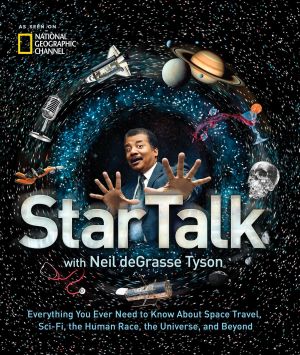
StarTalk Radio is a podcast hosted by Neil deGrasse Tyson, and features interviews with prominent scientists, policy makers, etc, along with a rotating panel of guest hosts who are described as comedians*. StarTalk draws on the shows, particularly the “Cosmic Queries” segments devoted to listener questions, to offer a smattering of information on both astronomy and Earth science. Each chapter is based on an episode of the show, and uses listener questions as a jumping-off point into a broader subject. It’s very much a coffee table book, largely proportioned and very visually-appealing. Text-wise, it’s very busy, with multiple sidebars and quotes per page surrounding a paragraph of two of the actual narrative. The section subjects run all over the place and leave the domain of science towards the end, with chapters on futuristic speculation. This is a great book to look at and glean quick information from, but it’s not a satisfying read.
* Tastes vary, but I find most of the comedians to be more inane than entertaining.
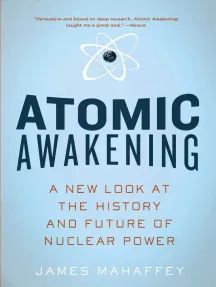
Regular readers here know that I regard nuclear energy as the practical approach to move beyond the fossil fuel economy, given its ability to provide a steady base load that does not depend on fickle things like wind and cloud cover. I purchased Atomic Awakening back in 2016 to learn more about the nuclear power industry. Although the cover describes it as being about the past and future of nuclear energy, this is thoroughly a history, first of science and then of technological enterprise. The book’s first third is devoted to the line of studies that began with the mysteries of X-rays, and then revealed radioactivity and the structure of the atom, before shifting to the United States’ full-steam-ahead effort to weaponize the atom before Germany could. Following the close of World War 2, the author then shifts to the growth of atomic power in the postwar era, from military applications (nuclear submarines, attempts at a nuclear airplane), civilian development (nuclear energy and wildly irresponsible construction proposals) and the origin of radiotherapy, as well as speculation about nuclear-powered spacecraft. Although the author is a nuclear proponent, he doesn’t shy away from covering nuclear accidents (both in the labs and in application, with sections on the Demon Core that killed two scientists in two separate incidents, and the accidents at Windscale, Three Mile Island, and Chernobyl). His coverage of modern reactors is surprisingly nonexistant, aside from commenting that rising concerns about peak oil and climate change have prompted a resurrection of interest in expanding the nuclear contribution to nations’ power grids. Unfortunately, the Fukushima affair (despite its lack of injuries or deaths) has had another chilling effect, for a reason that the author comments on in his text: appearances matter more than substance. Although I wanted more information on the likes of molten salt reactors, Atomic Awakening proved incredibly interesting given the variety of applications it reviewed for nuclear power.
Related: A Bright Future, an argument for nuclear energy as a keystone of combating climate change Command and Control, Eric Schlosser. A history of accidents involving nuclear weaponry.
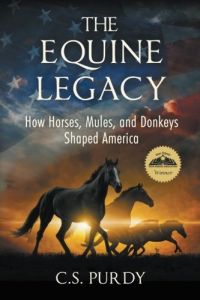
I began the year by returning to a favorite subject of mine: horses! The Equine Legacy is a history of not only horses in America, but donkeys and mules, from the Age of Discovery to just after the Great War. Having read works likeThe Horse at Work and The Horse and the City, I was familiar with the wide uses of horses in industry, agriculture, and transportation. The information on mules and donkeys was fresh, though, and I was interested to find out how much of America’s early mule population owed its life to George Washington, who first created a distinct donkey breed (the American Mammoth Jackstock) and then engaged his prize specimens as studs to create particularly strong work mules throughout the States. Mules were particularly valuable in mines, as they weren’t as nervous as horses and were intelligent enough to be trained in behaviors that allowed them to survive the mine’s dangerous conditions. The author comments on the terrible losses horses suffered during the Civil War (over a million were killed or died from disease/overwork), and even offers a chapter on horses’ engagement with canals.
One of my longstanding ambitions has been to buy land in the country, with no neighbors save deer and far from the noise of highways and boomboxes. That’s not something that will happen anytime soon, given my current medical challenge, but I was actively working towards it last year before I became sick: it’s the reason I’d started a side job. I know so little about the practicalities and background requirements for investing in land, though, so I decided to do a little background reading. The Country Property Buyer’s Guide is extremely functional, with large sections on the vagaries of rural financing, and the importance of understanding one’s septic and water systems. There’s some smaller chapters on being a good rural neighbor (i.e. don’t let your cows and dogs roam all over other people’s property), but most of the content was on the practical/technical side, which recommends it.
Lastly, I read a Kindle Unlimited title called Alabama Footprints Exploration: Lost and Forgotten Stories, which proved to be excerpts from older histories, chiefly Albert J. Pickett’s 1851 History of Alabama and Incidentally of Georgia and Mississippi from the Earliest Period. The author sometimes compares the facts of the retellings against other narratives, but this isn’t a critical evaluation of the original narrative, just a passing-on of it in more accessible language. Enjoyable enough; it’s part of a series and I may continue in it as time allows, but TBR takes priority.
I’m currently plowing through The Real Anthony Fauci, giving The Oil Kings the odd despairing look, and just starting a TBR/science twofer.
In 2016, John Grisham introduced readers to the fictional Board of Judicial Conduct, a political organization in Florida providing oversight for Florida’s judges, fining them for showing up to work drunk or talking about current cases at Rotary Club meetings. The Whistler had an interesting premise, involving a corrupt judge in bed with a criminal organization, skimming money from an Indian casino, and John Grisham apparently liked his main character a lot more than I did, because he wrote a sequel. An anxious young woman approaches the BJC with the fruits of her own investigation, two decades in the making: one of their sitting judges is a serial killer, and she’s scared that she may become his next target if she goes to the police. What follows is fairly typical Grisham fare these days, with a tolerable-at-best main character, lots of nondescript dialogue, numerous very convenient plot developments, and an unsatisfying ending Even the serial killer was boring, armed as he was with a NCIS-esque Magic Computer that can do anything, and only the bizarre antics of his accuser (who begins mailing him poems, taunting him) which result in her being kidnapped add any drama. The Pelican Brief it ain’t, but if you’re stuck at the doctor’s office or on an airplane, it will keep you from having to watch the TV, so that’s…..something.
Today we’re yakking about recent additions to our book collections.
The Judge’s List, John Grisham. This legal thriller about a homicidal judge was given to me as a Christmas present. The fact that I haven’t already read it testifies to how unexcited I am about Grisham these days…
American Sherlock: Murders, Forensics, and the Birth of American CSI. Kate Winkler Dawson. This was on sale at some point in November/December and I thought it might make an interesting science read.
Life in the Confederate Army, William Watson. A Scotsman joins the rebel cause and offers a memoir. Of obvious appeal given the author’s status as a quasi-outsider. I’m always curious about the divided loyalties of immigrants to the rebel and union causes.
Reading the Bible Again for the First Time, Marcus Borg. Chosen for a book club I’m a member of as our first-quarter read. I’ve read Borg before (a biography of Jesus) and expect this to be interesting.
Shotguns and Stagecoaches: The Men Who Rode for Wells Fargo, John Boessennecker. I’m really looking forward to this one. It’s meant to be for an American history series in June-July, but don’t bet on my fighting temptation that long..
Pioneer Priests and Makeshift Altars: A History of Catholicism in the Thirteen Colonies, Fr. Charles Connor I’ve been planning to read this one for years, and intend to use it in June-July.
The Dirty Life: A Memoir of Food, Farming, and Love. Bit of an impulse buy…it was quoted in a history of horses and mules I’m meandering through and attracted my attention.
Beauteous Truth: Faith, Reason, and Literature. Joseph Pearce. On the pursuit of the good, the true, and the beautiful — and their relationship to one another.
Unmasked: Inside Antifa’s Radical Plan to Destroy Democracy, Andy Ngo. I first heard of Ngo when I saw a clip of some blackbloc bottom-feeders attacking a random Asian man (who was one of their supporters) on suspicion of being Andy Ngo. Intrigued, I looked up Ngo and he proved to be one of the few voices spotlighting the unchecked violence and laughable hypocrisy of this organization, which behaves exactly like the SA/SS goons of old who it purports to be against. They’re as far from Hitler as Stalin, which is to say — not far at all.
The Real Anthony Fauci: Bill Gates, Big Pharma, and the Global War on Democracy and Public Health, Robert F. Kennedy Jr.. This is a new release selling for $3, and considering that the corporate media tried to memory-hole it, I figured it must be worth reading.
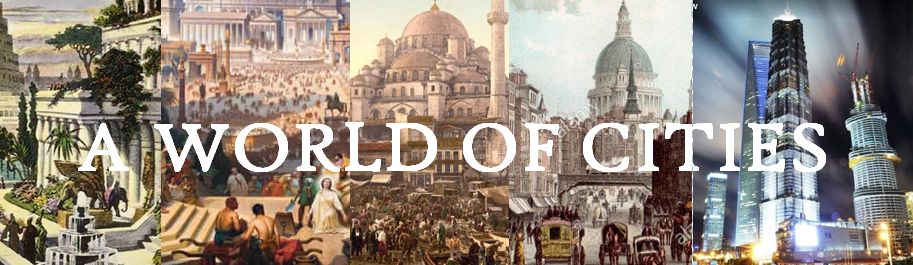
I’m posting this largely for planning purposes. (I’d made the header at some point last year….bit of a shame not to use it!). I have a few titles already in hand for this, and hope to pursue it further in the year. The cities empaneled above are Babylon, Athens, Istanbul, London, and Guangzhou (I think). I would have searched for either Guangzhou or Shanghai to reference China’s exploding metropolitan habit.
Civilization as the Story of Cities
Books on cities in general
The Challenge of Making a City
Books on modern urbanismand infrastructure
Cities in History
Histories of specific cities, especially as they defined, dominated, or epitomized an era in history
Late last year I re-read Jack Donovan’s The Way of Men, written for identifying what it means to be a man, and what men need and want. Donovan argues that men are largely driven by the need for the respect of men who we are united to by a common purpose. The way of men is the way of the gang — small groups of men defining and protecting the tribe’s boundaries, driving away or destroying its enemies, joining together in larger parties to take down quarry or raid other tribes. This is what men were made for: it is the mandate expressed in our bones, and it guides the way we regard one another, consciously or no. The evolutionary orientation of men toward the gang and its mission — the hunt, the fight, the watch — establishes four virtues at the heart of man: Strength, Courage, Honour, and Mastery. These are not virtues possessed by men alone, but they define men, and are how we gauge one another. No woman is thought less of for not having bulging biceps, or from backing down from a fight; men would be. Girls mature into women simply by the dictates of genes, but men must work and fight for a place in the ranks, to be regarded as a man among men. After exploring each virtue in full, Donovan further argues that the modern world is incompatible with the expression of these traits — it no longer values men or our purpose — and urges men to form their own gangs and reject being a passive consumer. Instead, embrace the struggle of reality, and do it with men who you can respect and trust. It’s a bit as thought Tyler Durden wrote a book, with the same mix of insight and zeal.
“While the job description for men undeniably changes according to time, place and culture, the primal gang virtue that unifies them all is ‘being able to carry your own weight'”.
Their version of a good man is isolated from his peers, emotional, effectively impotent, easy to manage, and tactically inept. A man who is more concerned with being a good man than being good at being a man makes a very well-behaved slave.
Men must have some work to do that’s worth doing, some sense of meaningful action. It is not enough to be busy. It is not enough to be fed and clothed given shelter and safety in exchange for self-determination. Men are not ants or bees or hamsters. You can’t just set up a plastic habitat and call it good enough. Men need to feel connected to a group of men, to have a sense of their place in it. They need a sense of identity that can’t be bought at the mall.
Forming gangs and potentially wrecking things is not exactly the constructive mandate and life-defining purpose a man would hope for. It’s Good to be A Man offers a Biblical argument that parallels Donovan’s to some degree, in effect sanctifying his thoughts and others by making them inform a Christian approach to masculinity rather than Donovan’s pagan* one. The authors here argue that man is made for Dominion, and that patriarchy is inevitable: men are compelled by their nature to compete for rule, so the only question is : what kind of men will prevail? The authors draw heavily on the Creation account in Genesis, and argue that men are mission-oriented — created for the purpose of dressing and keeping the garden. Women are a complement to the mission, and not the mission itself: living for romance, they write, is a fool’s game, one which will inevitably ruin the relationships initiated. To idolize a romantic partner is to miss their status as a Person, and to expect them to complete us or make us happy is to place the weight of the worlds onto the shoulders of a single individual. This is both unjust and unwise: the more a man relies on a woman to validate his masculinity, the needier he becomes, and the less attractive a partner. Hence the authors’ repeated advice: pursuit excellence, not women. We find completion through determining God’s mission for us, and living it out. The authors felt compelled to write because 21st century men are completely lost — not just in the religious sense, but lost as men. Family culture and the skills it once propagated have largely evaporated, making most men directionless and often incompetent — forced to rely on youtube for instructions on how to change a tire or knot their tie. They emphasize, too, the importance of male relationship, writing on the need for male mentors and brothers to support one’s growth. Jordan Peterson may be an excellent guide, but in-person accountability is necessary for lasting maturity. This book proved to draw from far more varied sources than I’d expected, quoting everything fromThe Church Impotent to No More Mr Nice Guy. Related titles would be Leaving Boyhood Behind (to be reviewed in May alongside Defending Boyhood),The Catholic Gentleman (Sam Guzman) and Be a Man! by Larry Richards. These are about Catholic masculinity as opposed to Foster and Tennant’s more protestant approach, but the underlying theology is compatible.
A few quotes: We are the ones now living in burning Jerusalem, and we are the ones who must rebuild the walls. We are the ones who must overcome the evil patriarchs of our day, whether in the deep state or the media-industrial complex. We are the ones who must refuse to be turned aside to their will by deception and gaslighting, refuse to be numbed by their offers of cheap pleasure, and refuse to be cowed by their intimidation and oppression.
Whenever there is an unbalanced emphasis on one virtue, it can become a vice. This happens simply because each virtue must be applied in another. Wisdom without the strength to put it into action is worthless. Strength without wise application is destructive. Workmanship without wisdom is toil and futility, and so on.
Do not be harnessed, pacified, or destroyed; rather, build yourself up, and start working to exercise dominion over yourself and your world. Everything else will follow from that.
*I don’t mean “pagan” as in “secular”, I mean pagan as pagan. Donovan regards masculinity as essentially religious, and he has a particular devotion for Odin and Zeus. He’s a fascinating author, often disturbing but never boring.







 Reading Freely