Teaser Tuesday because it is in fact Tuesday and not Monday

I love three-day weekends, but boy do they throw the ol’ internal kenning of time and space off. Today’s top ten Tuesday prompt was ‘things that make me NOT want to read a book’, and I can’t think of much. If it’s a romance, a political campaign book, an exhaustive encyclopedia of paint glazes — then yeah, I probably won’t be reading it. Otherwise my stacks are a potpourri of subjects from parking lots to poop to philosophy.

From Plato, Not Prozac! which after fifteen years I’ve broken down and bought a used copy of:

Philosophical counseling is, in the words of my Canadian Colleague Peter March, “therapy for the sane”. To my mind, that includes just about all of us. Unfortunately, too much of psychology and psychiatry have been aimed at “disease-ifying” (that is, medicalizing) everyone and everything in sight, looking to diagnose each person who walks in the door and find what syndrome or disorder could be the cause of their problems.”

From The Unpersuadables: Enemies with the Enemies of Science:

Behind us, the genuine German was becoming worried that the Polish restaurant would have no space for our party. ‘We have no reservation?’ he said. ‘There are twelve of us!’ ‘I shouldn’t worry,’ said the posh Englishman. ‘The Poles are used to being invaded.’

It is as if the mind of the schizophrenic is suffering from an excess of stories. This, I have come to suspect, is not a coincidence. We humans are creatures of story. And the story of story begins in the unconscious.

I will try to remember, though, that as right as I can sometimes feel, there is always the chance that I am wrong. And that happiness lies in humility: in forgiving others, and in forgiving myself. We are creatures of illusion. We are made out of stories. From the heretics to the Skeptics, we are all lost in our own neural tjukurpas, our own secret worlds. We are just ordinary heroes fighting phantom Goliaths, doing our best in the service of truth when the only thing that we really know are the pulses.

Posted in General | Tagged , | 2 Comments

Meditating while the world burns

I recently asked BingAI to review the works of Marcus Aurelius, Epictetus, Seneca, and Musonius Rufus for me, and then roleplay as a Stoic sage. We then had an interesting conversation on Stoicism, Epicureanism, Buddhism, Taoism, and human flourishing. Then, I asked it to depict a Greco-Roman philosopher sitting in the pose of the Buddha. I tinkered with that prompt a few times, ending with one of said philosopher sitting at night in front of a fire. This one caught my eye because of the fire and apparent ruins in the background. Although this is generated by AI, it’s a reminder that all material things end, but wisdom and virtue endure. (Just…don’t look at his fingers and toes.)

“Death smiles at us all, but all a man can do is smile back.” – Marcus Aurelius
Posted in General | Tagged , | 10 Comments

In the air and across the Cosmos

This month’s science reading served up two surprises, both pleasant.

When I arrived at university and joined the Astronomy Club, which met once a month to aim a giant telescope at the skies and gasp as we saw Saturn’s rings or two blobs of gold and purple emerge from what previously had been a single point of white light, I was surprised to find it operated under the auspices of the math department. In retrospect, that was remarkably stupid of me, since (as this book reminds) astronomy and math are joined at the hip. Our distant forebears studied the skies and realized there were patterns — patterns they could use to track time, to guide planting. Math enabled civilizations like the Greeks to begin constructing an idea of what the world and the cosmos were like, determining the Earth’s spheroid shape long before sailing ships and satellites Math and patterns have continued to allow humans to see what is there before we had any other tools, and Stewart reviews with us how math led us to the theory of universal gravitation, exposed the presence of planets and smaller bodies beyond our optical range, and revealed the presence of dark matter. Much more readable than expected. and an enjoyable review of one of humanity’s best tools for discerning the order of the Cosmos.

Next up was Air: The Restless Shaper of Our World, by William Bryant Logan. I expected this to be something like 18 Miles: The Epic Drama of Our Atmosphere and Weather, but it’s much more of a delightful grab-back. There are indeed sections on weather and climate — how air, unevenly heated and moisturized, is driven into circulation and creates terrifying and wondrous weather across the world — but Logan looks more broadly into how air serves the world, not only by giving animals and plants stuff to breath, but by constituting the platform through which creatures great and small live and move and have their being — giving fungi a way to get around, drawing animals together with pheromones, and filling the world with beauty in the form of birdsong. I love a science book that makes me feel like a kid again, drinking greedily at the inexhaustible fount of wonder that is the natural world, and Logan does that. Even more interestingly, though, he writes with a poet’s quill, using the discussion of natural phenomenon to drift into other discussions. The chapter on pheromones, for instance, turns into a muse on love and living within its mystery. Logan has two other books which I was already interested in (Dirt and Oak), but the varied pleasures of Air mean I’m definitely pursing more of his work.

Next up: Johnny Reb and (hopefully) completing the science survey with consciousness and clean thinking.

Posted in Reviews, science | Tagged , , , , , | 4 Comments

Favorite YouTube Videos

This week’s prompt from Long and Short Reviews is…..favorite youtube videos. I can’t tell you how many hours of YouTube I’ve watched since 2007. Google probably could, but I think I’d rather not know. I had a painstaking list of ten of my favorite videos since 2007, but 8 of them wouldn’t play embedded, so I’m limiting myself to The Favorite and a bonus. The Favorite is a PSA parody and is…well, adorable.

I just wanted to play. I never thought I’D be ‘It’!

This is the oldest video I’ve known and loved on YT. You may have cooties….and not even know it. Fun fact, all the kids in this video are old enough to drink and probably have six g’s in college loan debt by now.

And a bonus, since one of the other videos actually works embedded:

What do you think? Hehehehehe! Woooo!

One of my favorites — the young Mozart taking a piece by the court musician, Salieri, and improvising with it on the fly. It’s not accurate to the facts, but I love hearing Mozart elaborating on the piece on the fly. Masterful acting. I think I’ve seen other versions of this video, but the core is the same. First watched five or so years ago. If your attention span has been destroyed by the internet, the improv bit begins at the three minute mark.

Posted in General | Tagged | 5 Comments

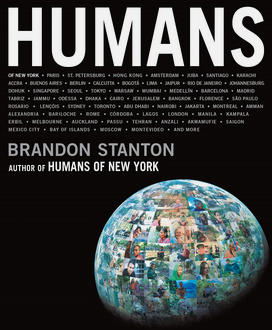
Humans

© 2020 Brandon Stanton
451 pages

Published after the success of Humans of New York, here Brandon Stanton expand his range and deepens his connectivity with the people whose lives he shares in a single photo. In Humans of New York, readers were presented with an array of New Yorkers whose face or dress or energy caught Stanton’s eye. These were supplemented with a caption that combined with the photo to tell a story. In Humans, Stanton shifts into a more studied and intimate approach, asking people about their challenges and suffering and then incorporating that conversation along with the pictures to hit the reader with both barrels. Humans has an international scope, with many interviews coming from various parts of subsaharan Africa, the Middle East and Central Asia, and an outlier or two in Europe and Latin America. Oddly, all of his American interviews are still from New York. Because of Stanton’s starter question — suffering — this collection isn’t overflowing with the warm fuzzies. It’s not a depressing book, but it is a maturer one, demonstrating that joy and triumph are only possible through suffering and hardship. There’s a lot of pathos here — people surviving genocide and living after more intimate losses. Stanton frequently pairs photos and stories: one woman reflects on her abortion, another on how grateful she was that she didn’t pursue one. We meet people who find deepest meaning in their connections with their family and tradition, and others who had to forge their own path. One man leaves his job and falls into poverty, regretting his spontaneity — but another leaves and finds bliss. I enjoyed this, but readers who start it should know that it’s more emotionally demanding and challenging than the of New York original — but in that challenge we are treated to stories of resilience , redemption, and profound meaning.

Kindle Highlights

Honestly, anger is just very addictive. You want to feel angry when you’re suffering. It gives you adrenaline. It gets your endorphins going. It’s a release. It’s a substitute for what you’re missing.

I’m too young to start nuclear disposal because it’s dangerous and I don’t have the proper gloves. But I do recycle and keep plants on my balcony.

I just finished my first year of college. I expected it to be like a nineties movie where I’d sit under trees, read books, and meet a nice boy who’d show me his yacht. But I’m not a good protagonist. My life would be a terrible movie.

Some of my customers ask me: ‘Why don’t you expand your shop? Why don’t you turn it into a café, and start selling Coca-Cola?’ Because that means more staff. More wages. More taxes. More responsibility. I don’t want to weigh myself down. I want to be free. It’s a long time in the ground, my friend.

There’s a line from a Russian poem. It says: ‘We love just once in a lifetime. And spend the rest of our lives looking for something similar.’ I’ve had other girlfriends after Oksana. But I don’t remember their birthday. Oksana’s birthday was July 29.

I’ve fallen in love with literature. I try to read for one or two hours every day. I only have one life to live. But in books I can live one thousand lives.

The quickest way to find a person’s expertise is by learning their struggle. What they’ve battled. What they’ve carried with them the longest. Because it’s what they’ve thought about the most.

I used to be a corporate attorney for Coca-Cola. I worked eighty hours a week. Then one day I asked my boss for a single Friday off and he said no. So I left my dog with my brother and flew to Europe. That was ten years ago. It’s been super——– chill.

Truth feels heavy. It has gravity. It’s usually not floating on the surface.

Adults don’t have an actual life. You can’t go outside. You don’t get to hang out with friends very much. Maybe text a little, but that’s it. You just wake up, get ready for work, then work, then maybe watch a little TV, then go to bed. All of it seems depressing. But apparently everyone has to do it.

My brother shot himself last November. He always viewed himself as my superior. He’d never come to my door when he visited. He’d always wait in the car for me to come out. He had more money, more lovers, more everything. But he was always searching for more. He was never satisfied. My brother was a character. He was a successful character, but he was a character. And that character ended up eating him.

I think you have only one duty in life. You stand up and you go.

My ex-wife got the real estate. And I got my peace.

Posted in General, Reviews | Tagged | 2 Comments

Tuesday things

Welcome to Tuesday! Today’s teaser comes from Air: The Restless Shaper of Our World, and the Top Ten Tuesday topic is “Things That Automatically Make Me Want to Buy a Book“.

[…]it was Darwin who taught us to think in this way. His travels aboard the Beagle confirmed his hunch that the world is not an aggregate of stable individuals, but a network of processes out of which individuals arise and into which they return. The world is a concert that brings forth its own instruments.”

pg. 33, Air: The Restless Shaper of Our World. William Bryant Logan

And now, top ten things that make me want to buy a book. I’m going to try to avoid rehashing the “Top Ten Authors on Autobuy” too much!

(1) Certain authors, like Bernard Cornwell (historical fiction), Anthony Esolen (society, culture, Catholicism), Wendell Berry (culture, farming, rural/household economics), Robert Harris (historical fiction), Joseph Pearce (literature & Catholicism), etc.

(2) Certain narrators. Did Wil Wheaton or Roger Clark perform the narration? Then I’m game to listen.

(3) Authors’ recommendations. I finally dove into Lord of the Rings and P.G. Wodehouse because one of my very favorite authors, Isaac Asimov, mentioned them frequently. Similarly, there are authors who draw on or mention a book, and the weight of my regard for them means automatically taking a look at the book itself.

(4) Good podcast conversations about a book. I listen to podcasts regularly, and some of my favorite books have come because I heard their authors in an extended back-and-forth on something like EconTalk — The Green Metropolis, for instance.

(5) Setting. Near-future science fiction? Count me interested. Medieval Europe? Let me at `em. Dixie or the Southwest? I want to know about it.

(6) Good workmanship on the book itself — especially graceful, classy fonts and deckled-edged pages.

(7) A recommendation from a friend. A lot of books I’ve read over the years here have come from IRL or digital friends — or, people who just dropped by! One of my favorite books, indeed one of my favorite authors, came from someone randomly commenting that if I liked Walden and Civil Disobedience, I’d enjoy Ed Abbey. Boy, was that an understatement.

(8) Promising blurbs. If an author I respect offers a book blurb, or better yet writes the introduction, I’m definitely taking a long and considered look.

(9) If it’s unusual. This applies more for random bookstore finds, but there are some books that are so uncommon — not in terms of how many used copies are online, but just odd or unexpected — that I have to take a chance on it.

(10) Subject. This is extremely broad, so I’ll use it to finish the list. There are a lot of topics I have a strong academic interest in, like World War 2 aviation, or understanding human behavior through the lens of evolutionary biology & psychology. As a citizen, I’m frequently drawn to books that help me understand how we might create a better society together — reading books on transportation and infrastructure, for instance, or how urban planning can induce or stifle human flourishing. Most keenly, though, I’m attracted to books that offer some piercing insight into why things are why they are, or expose something important about modernity that we might be blind to. I’m most drawn to books that defend the human and the humane against modernity, consumerism, and self-worship.

Posted in Reviews | Tagged , | 8 Comments

Humans of New York

Humans of New York
© 2013 Brandon Stanton
304 pages

If you ever needed proof that a picture is worth a thousand words, consider one shot near the end of this volume. The scene is a New York city street. A young man — a tall, strapping Marine in full dress uniform — and his tearful mother stand close together, staring at something off-camera. The caption? 9/11/2011. There is a story in that shot that we can guess at, of a father who fell, of another young man who is now following his father’s footsteps in the wars that followed from that date ten years before. Humans of New York is saturated with stories like that, but most of them are more joyful than tragic. The book opens with the photographer/editor’s own story, of how he left his job as a daytrader and began a photographic tour of the United States, where he quickly felt irresistibly drawn to the people who filled urban landscapes rather than the landscapes themselves. These photos, originally posted to his facebook group, developed a life and following of their own. The collection here shows off New York’s enormous diversity, spotlighting little babies offering toothless smiles and old men offering advice. Stanton’s eye gravitates toward ‘characters’ — people who dress or move in eccentric fashion, or who have a story to tell. Each photo has a caption, most of which add significantly to the story — and testifying to Stanton’s ever watchful eye as a photographer, as he often caught moments that were utterly fleeting. Every single one of these photos is striking in some way — often for the fashion and hairstyles, or for the setting, but more often than not for the people — caught in their feelings. Stanton sometimes took candid shots, but many of these are the result of people he’d stopped on the street and talked to, and ‘posed’ in some way — not just physically, but emotionally. In one shot, for instance, he asked a young dancer to put all of his energy into the greatest move ever, and that intensity is captured here. It’s a beautiful volume, a human mosaic full of beauty, creativity, and passion.

This video reminds me of the book.

There are no ordinary people. You have never talked to a mere mortal. Nations, cultures, arts, civilizations – these are mortal, and their life is to ours as the life of a gnat. But it is immortals whom we joke with, work with, marry, snub and exploit – immortal horrors or everlasting splendors. This does not mean that we are to be perpetually solemn. We must play. But our merriment must be of that kind (and it is, in fact, the merriest kind) which exists between people who have, from the outset, taken each other seriously – no flippancy, no superiority, no presumption.

CS Lewis, The Weight of Glory
Posted in Reviews, Society and Culture | Tagged , | Leave a comment

Log Cabin Pioneers

Log Cabin Pioneers: Stories, Songs, and Sayings
© 2001 Wayne Erbson
184 pages

Few things are more evocative of the American frontier than a log cabin. This isn’t a new thing, either: log cabins entered American iconography as early as the 1840s, when a presidential candidate was mocked for his supposedly modest background and weaponized it in response, incorporating a humble cabin  into his campaign literature to advertise his simple frontier virtues of hard work, self-sufficiency, and ingenuity. Despite growing up in sunny southern California, Wayne Erbson dreamt of living in a log cabin one day – and despite the odds, he and his wife found one for sale, in relatively good condition (minus the collapsing porch & steps). He opens Log Cabin Pioneers with an account of how such structures were originally built, pairing this with his story of restoring the old Crawford place, and building an outhouse on the property in a suitable spot. From here, Erbeson expands into frontier culture, particularly music: he has an avid interest in folk music, both traditional and modern, knowing everything from melodies that drifted over from Britain, to the songbook of the Industrial Workers of the World. Erbson laments the fall of music, which was once the province of everyone but which has become a product to be consumed, often alone.  From here we move into the labor of cooking in the frontier, with included recipes, and finally into general lore — ranging from stories about how to learn to play the fiddle from the devil, to how to forecast the weather. You may argue amongst yourselves as to where these fall between traditional knowledge and simple superstition. Almost every page has a little frontier saying on it, though what some of them mean I can only imagine. “More ways to kill a dog than choke it with biscuits”? I’m guessing that’s kin to “there’s more than one way to skin a cat”.   If you fall in this book’s niche audience — those interested in the culture of the early 19th century pioneers — you’ll find no shortage of interesting little tidbits and funny stories.  I can only end with the insightful words of Honest Abe himself, who offered as a blurb on the back of this book — “For those of you who like this kind of a book, this is the kind of book you will like.” That certainly sold me on it!  

Related:
Count Those Buzzards!, Kathryn Tucker Windham. A collection of Alabama folklore. Very small, more of a booklet with ambition.
Everyday Life in Early America, David Freeman Hawke. A social history of Americans during early colonization.

Posted in history, Reviews | Tagged , , , , , , | 1 Comment

Bing Reccommends me Books

“A vaporwave illustration of an IBM computer with a simple face smiling at a human male and handing him a book to read through the screen”

I made Bing consider all of my reviews from 2007 forward and then asked it to recommend me some books. This took some doing, because it kept giving me lists that were mostly books I’ve already read,, but after repeated attempts over two week I’ve been able to glean ten original titles. On my most successful approach, I asked Bing first to check out the blog and identify the author’s biggest interests, and then recommend books on those interests. My “About” page was a bit of a cheatsheet for bing, I think. I’ve bolded the ones I’d heard of before and already interested in. When I tried the same trick for fiction, all I got back was classics, nothing I hadn’t heard of . However, last week I asked it for a list of near-future SF titles and found a few authors I’m definitely eyeballing.

The Age of Surveillance Capitalism, Shoshana Zuboff

The Madness of Crowds, Douglas Murray

The Myth of the Rational Voter, Bryan Caplan

The World Beyond Your Head, Matthew Crawford

The Culture of Narcissism, Christopher Lasch

Democracy: The God that Failed, Hans-Hermann Hoppe

Man’s Search for Meaning, Viktor Frankl

The End of Nature, Bill McKibben

The Overspent American, Juliet Schor

The Tyranny of Experts, William Easterly

Posted in General | 3 Comments

Tales from the Deadball Era

Tales from the Deadball Era: Ty Cobb, Home Run Baker, Shoeless Joe Jackson, and the Wildest Times in Baseball History
© 2014 Mark S. Halfon, narrated by Michael Butler Murray
240 pages | Audible 8 hrs 4 minutes

George Carlin once mocked baseball in one of his sketches, comparing its urbaneness with the ‘technological struggle’ of football. He couldn’t make such a sketch a hundred years before, because baseball as we know it was very different — technically professional, in that players were receiving pay and signed to contracts and the like, but far more combative, with players and fans accosting one another and often the umpire, leading to serious injuries and at least one death. Violence was more accepted as part of play, with spiked cleats giving basemen a reason to dread runners sliding at them. It wasn’t quite as bad as the old practice of tagging runners out by hitting them with a thrown baseball, but player-on-player injuries were not uncommon. A lot of rules moderating the sport did not yet exist, so fielders had considerable license to modify balls to make them unpredictable and even difficult to see — and the same ball might be used for the duration of the game, being replaced only if it was knocked out of the park. Already soft to begin with, when a misshapen ball soaked in tobacco spit and covered in dirt careened toward the plate, it had a better chance of becoming a ‘beanball’ and smacking the batter than it did making it into the outfield. The difficult nature of these balls meant that players played ‘inside’ baseball, working the infield and batting not for power but for strategy — the object was to make contact and get men on base, not to swing for the fences, so there was more bunting than we see today. Frankly, this kind of game sounds more interesting, but the grand slams that followed in the wake of Ruth and rules that reduced the amount of ball-tampering and irregular pitching proved to be popular with spectators. Violence and drunkenness were common, but so was gambling — and the cheating that followed in its wake, as pro ball players who felt shortchanged by their owners (and whose attempts at striking were always undermined) were susceptible to playing a weaker game in return for a few thousand under the table. There are a lot of big personalities here, including Ty Cobb — who Halfon is kinder to than others, detailing how the southerner was endlessly hazed by his Yankee teammates, so much to the point that he started carrying a handgun for protection. The book ends with an appraisal of the Black Sox scandal, which Halfon argues was not at all unusual for its time, and the fact that it became such a public outrage was more helpful to baseball than not, leading to increased scrutiny and better oversight to sharply reduced corruption from gambling. At any rate, following the passage of Prohibition, the gangsters bankrolling such corruption would soon have other mischief to keep them busy. If you’re a fan of baseball, this was tremendously entertaining, with a lot of strong characters at play and insight into an era where the game was very different.

Related:
The Glory of their Times: The Story of Early Baseball, Told by the Men who Played It, ed. Thomas Ritter
How Baseball Happened, Thomas Gilbert

Posted in history, Reviews | Tagged , , , , , | Leave a comment