The World’s Largest Man

When Harrison Scott Key was young, his father opted to uproot the family from Memphis and moved to an old farmstead out in the country – -the reason being, a boy needed to grow up outdoors doing things. Harrison did indeed growing up doing those things — attacking the dirt with a shovel in a pretense of farming, sitting in the woods freezing and sneakily reading a book while he was meant to be watching for deer with an intent of obtaining supper — but always felt a bit uncomfortable doing it, like he’d slipped the left boot onto his right foot. He’d rather be grocery shopping with his mom, honestly; that was the kind of hunt he excelled at. The Largest Man in the World is Key’s memoir of growing up as someone who didn’t quite understand his father, and who was not himself understood; the memoir follows him into his own adulthood, as he became a father to girls and developed a newfound appreciation for his own father’s befuddlement. Rod Dreher, a writer from Louisiana, referred to Key’s book as “the greatest, funniest, and tenderest evocations of Southern culture that ever was”, and while I won’t go that far (Rick Bragg and Sean Dietrich, anyone?), this book did keep me laughing all day. Part of it is his frequent absurd exaggerations, which nonetheless capture the peculiarities of growing up in the south; any story worth tellin’ is worth exaggeratin’, as they day. As a teenager listening to the patter around the family table, I often wish I had a recorder to capture the unique way deep-country people talked; not the accents, but the expressions and cadence. That’s also part of the magic here, especially at the beginning. Although the book is definitely funny, it’s not a ‘comic’ book in the way of Lewis Gizzard or someone similar; Key deals with serious themes like racism, people trying to understand one another, and marital issues as well. The latter were hard to read about knowing that Key has recently published a book called How to Stay Married, in which (with his wife’s permission) he reflects on the long night of the soul he and his wife went through after he discovered that she was having an affair.

This funny thing happens when people ask where I’m from, especially when I’m at academic conferences, where people are so often from uninteresting places. “Mississippi,” I say. “Oh, wow!” they say. I can tell they’ve never seen a real live racist before, or at the very least someone who’s related to a racist, or has seen one in the wild. It’s exciting for them. They want to tweet it. They want to write a memoir about it.

For my tenth birthday, Pop presented me with a Remington 12-gauge pump. “This gun right here can kill a grown man,” he said, which made it sound like we’d been trying to kill grown men for many years without success.

I do believe in the power of Jesus and rifles, but to keep things interesting, I also believe in the power of NPR and the scientific method. It is not easy explaining all this to educated people at cocktail parties, so instead I tell them that it was basically just like Faulkner described it, meaning that my state is too impoverished to afford punctuation, that I have seen children go without a comma for years, that I’ve seen some families save their whole lives for a semicolon.

Boredom, I knew, was a dangerous thing. For some children, it led to experiments with sex, and drugs, and alcohol, and lighting one another on fire, sometimes with the alcohol. For some of us, the never-ending rural ennui led to destructive habits with literature.

I enjoy talking about hunting about as much as I enjoy talking about new technologies in women’s hosiery, but I have very few subjects that I can discuss with my father, and those subjects are: Football, Weather, Money, Children, Children Today, Beating Children Today, and Hunting.

The camp house was no gentleman’s hideaway. It was a double-wide trailer, dog pens, a grand old Confederate flag that looked like it had been chewed by aphids and a pack of abused coyotes, the smell of old blood and rotting carcasses; it might have been a kind of romantic hideaway, if you had kidnapped your lover and planned on turning her hide into a lamp.

Out there, the beauty and the violence were all mixed up. Like the time I saw the many-pointed buck swimming across the Coldwater River one January day, perhaps the most sublime scene I have ever witnessed, and how my cousin steered his boat that way so he could stab it in the neck with a knife. It would not have been my first inclination to engage the creature in such brutal gang warfare, but then, I assumed that this was what you did in Mississippi, perhaps because there were so few actual gangs.

It was pretty clear that fights were over dignity and honor and women, and since I had no dignity or honor or women, I felt safe. Nobody had any reason to want to hit me. Then I learned that some people will hit you for no reason at all.

Mom came staggering up from a darkened corridor. “You done had a cigarette,” Pop said. “I can smell it.” “Kiss my butt,” she said. “It’d be a lot to kiss,” Pop said. These were my role models.

n the eighties, when the prevailing wisdom was that American cities were full of gangs, drugs, homeless people who raped joggers, joggers who raped the homeless, and Satanists who sat around sacrificing children and playing Dungeons & Dragons, the narrative of many a film was “moving out to the country” to get away from all the danger. But we knew what the movies did not: that the country was much worse. We had no Satanists, but we did have tractors and hay balers, which I am pretty sure killed more children during that same period than Satan ever could.

My wife was a riddle. I think all women are. Men are not riddles, even the smart ones. We are independent clauses, such as: “I like meat.” “Water feel good.” But a woman is a sentence eighty yards long with no commas, a cryptogram, a Finnegans Wake, and a man is holding the book, and he is trying to read it, and he is confused. “Women are funny,” Pop said, on the phone. “They sure are,” I said.

Posted in Reviews | Tagged , , , , , , | 2 Comments

Neo Cab

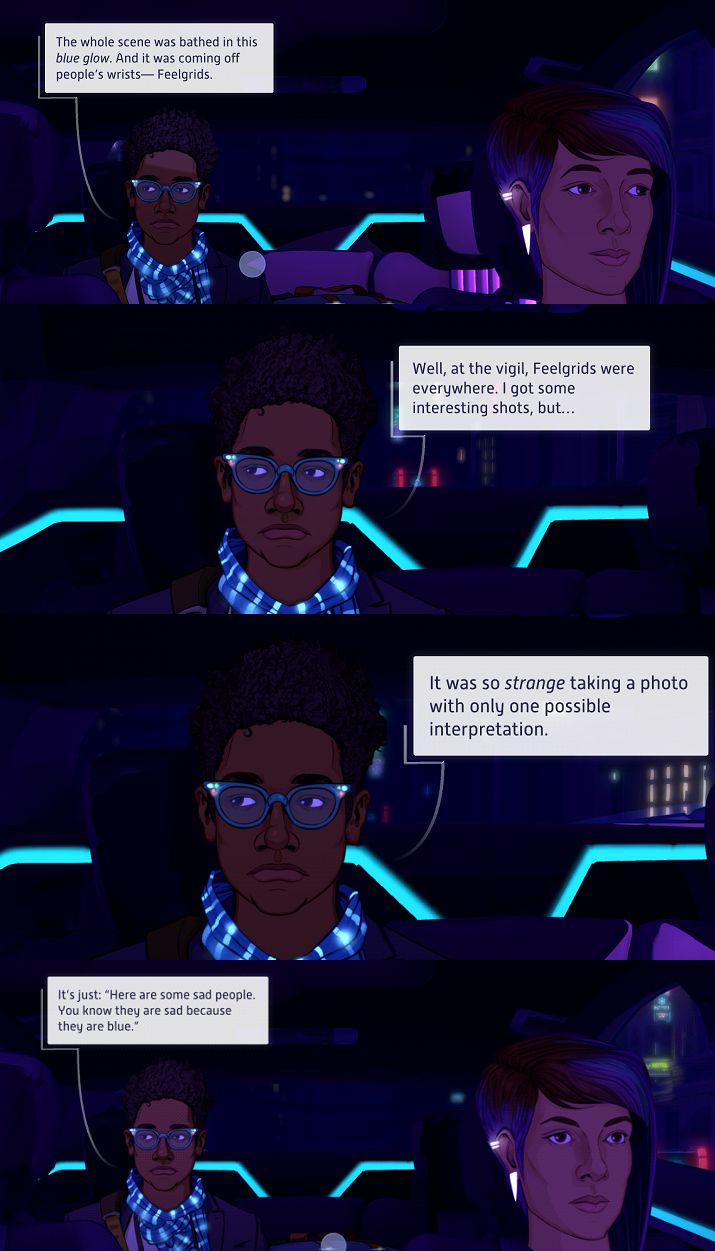
This is going to be an unusual review, because Neo Cab isn’t a book. It’s a visual novel that people experience as a video game, a novel set in a dystopia that touches on so many topics — corporatocracy, the multiverse, free will, the way social media reduces people to shallow performance artists — that as soon as I finished, I began replaying it to see what characters and threads I’d missed on my first run. The setup is simple: we open on a gig cab driver named Lina approaching the city of Los Ojos from the countryside, reflecting on the change she’s about to make in her life. An old friend of hers named Savvy, who she had a fight with some time in the past and has not seen since, has just invited Lina to stay with her in the city, and it seems like an opportunity not only to restore their friendship but to make a little coin. Almost immediately, though, Savvy disappears, and as Lina desperately works the streets in her cab trying to earn money to meet the necessities — energy for her car, a place to sleep for the night — she also begins asking questions, trying to figure out what Savvy was involved with and what might’ve happened. The story is nonlinear, evolving as the character chooses different fares for the night, and has different conversations with passengers. They’re a capricious lot, and even fares who seem to like Lina may leave her a three-star review or worse if the conversation doesn’t go a way that pleases them — but conversations that please the fare don’t necessarily bring Lina any closer to the truth. I haven’t re-played the game enough to know if reaching a resolution is inevitable, but in every instance I’ve tried the clues start turning up soon enough. I was personally surprised by how absorbing the story and the characters were: I honestly felt invested in what happened in their fates. The environment is very cyberpunk, of course, from the neon-saturated city to the soundtrack — and the main story is about a group of activists trying to take on a huge corporate behemoth. Lina will get involved with this as she tries to find out what’s happened with Savvy, though their relationship is more important to the exact ending one gets than the player’s decisions to take on Capra. This isn’t Tech Support Error Unknown where the player’s role as a tech troubleshooter makes them choose between hacktivists, the corporation, and the police. There’s also the disturbing amount of bio-tech and human augmentation, from people having holoscreen surrounding their heads to one girl living in a mechsuit to protect her from the elements. Although the ending is a little rushed, between the writing and the aesthetics Neo Cab is unforgettable and cool.

Posted in Reviews | Tagged , , , | 4 Comments

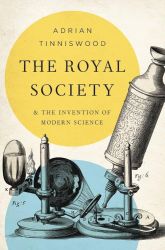
The Royal Society

Over ten years ago I devoured a history of science series by Ray Spangenburg and Diane Kit Moser that played a large part establishing my basic adult understanding of science. While reading it, I was particularly fascinated by the role that the Royal Society played in the scientific revolution, and it has remained an object of interest ever since. The Royal Society is a very brief history of the titular institution, from its beginnings as an informal gathering of ‘natural philosophers’ and continuing to the present day. Its quite readable, but lamentably short: scarcely over a hundred and twenty pages, in fact, because there’s a hefty appendix with biographies of some of the Society’s more notable Fellows. The Society’s early decades are easily the most interesting, given the period of science they capture: this was an era where amateurs could make significant contributions to scientific fields, when polymaths and generalists predominated instead of hyper-specialists. The best minds of Europe were beginning to unravel some of the most fundamental secrets of nature, laying the foundation for the industrial revolution, modernity, and the conquest of humanity by its own devices. The Society was part of this, publishing papers and funding expeditions across the world — or, badgering ship captains to bring them something interesting. Although some women had connections to the society, presenting lectures and even receiving medals, not until after 1945 when corporations and the like were banned from discriminating on the basis of six were women admitted as Fellows of the society. Although I enjoyed this as a light history of the Society, Bill Bryson’s edited collection of essays on the Society’s influence, Seeing Further, is more substantive.

Posted in history, Reviews, science | Tagged , , , | 2 Comments

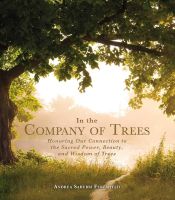
In the Company of Trees

In the Company of Trees is a little volume of photos and reflections on trees, a pleasant mixture of science and cultural writing peppered with arboreal quotes — though not, curiously, the classic “I think that I shall never see / a poem as lovely as a tree”. (That verse is partially appropriated for the title of one section, though.) A piece on the life of the strangler fig tree is followed by a history of Christmas trees, for instance, and connected by a bit of German verse hailing the trueness of Tannenbäume. The photos are often gorgeous, and despite having read full-length monographs on trees and forests, I still learned a few things: I’d never heard of the Wollemi evergreen, for instance, an ancient species considered a living fossil and now being actively propagated, nor of fig stranglers. The trees that feature here hail from every part of the globe, including Antarctica, which was once subtropical. This is a coffee-table kind of book, attractive and easy to dip in and out of. Those who want a hardier read would most enjoy Peter Wohlleben’s The Hidden Life of Trees, one of my favorite science books ever.

Posted in Reviews, science | Tagged , , , | Leave a comment

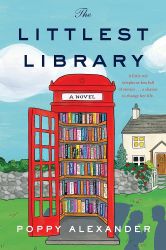
The Littlest Library

Such is my mood for cozy village novels featuring libraries and bookstores that I read this even knowing it was a romance. And I liked it. Granted, it’s set in a cozy rural village in Devon and features a librarian, so even with the romance bit it’s playing straight to my tastes — and frankly, the romance bits aren’t that much numerous than I’ve found in Bernard Cornwell’s Sharpe books. Instead of happening among battles and political plots, though, they emerge amid exciting village politics, like whether the red phone box should house a little library or a defibrillator machine. As the plot opens, our lead Jess Metcalfe is a librarian who has just lost her job and is planning on fleeing the house that reminds her all too much of her recently deceased grandmother, the woman who raised her. On a drive she takes a left turn and finds herself in a quaint but slightly decaying little village and is immediately distracted by a similarly quaint-but-decaying cottage within, and the grumpy guy with broad shoulders who lives next door and has an oh-so-adowable-and-precocious daughter. No points for guessing where the plot goes from there! Jess buys the cottage and discovers that she’s now responsible for the red phone box on the property, and decides to turn it into a little lending library that proves to be a newfound nucleus for the village to rally around, finding joy in arguing about books instead of slowly drowning themselves in wine. There are various little drama-strings that get all tied up at the end, so this is basically a Hallmark movie in a book — but frankly, right on the heels of a few grim SF reads, it was just what the doctor ordered.

Highlights:

“I haven’t accidentally moved into one of those Agatha Christie sets, where the body count climbs relentlessly but there’s always cucumber sandwiches for tea?”

“I appreciate there’s a lot of ‘accidentally getting pregnant,’ and I just want to reassure you we’ve worked out what causes it now, what with Rak being a doctor and all.”

Coming up: The Royal Society, air conditioners, this and that…

Posted in Reviews | Tagged , , , | 1 Comment

The Downloaded

In the 26th century, two groups of humans are awakening. The first are a group of scientists who think they’re on a spaceship headed toward Proxima Centauri, there to begin Earth’s first colony. The second are criminals who were part of a experiment: a la DS9’s “Hard Time”, they’d serve their prison sentences virtually, living decades in their heads while only a short time passed for realsies. Both parties have their bodies frozen and their consciousnesses stored on a Quantum Computer. Only…..something’s gone wrong, for both parties, and instead of finding themselves colonizing space or going home to see their loved ones, both groups wake up in an Earth lab hundreds of years in the future where the only known living humans are Mennonites. Too bad they’re going to die because in addition to the civilization-ending Whatsit that happened, there’s a-coming a planet-busting asteroid known as Brimstone, so the humans’ only hope is to board the hundreds-of-years-old spaceship and get the hell out of Dodge. The result is a mixed bag, an audio drama with a solid ensemble cast and sound effects that is quite enjoyable to listen to when the voice actors aren’t being brought down by the author’s uninteresting political insertions (lecturing people on covid face-diapers? Really?) and the thoroughly depressing storyline. The mix of ‘interesting premise’ and ‘insufferable author’ is consistent with his Hominids trilogy, the first of which I liked well enough, but found just obnoxious enough not to bother continuing with — and that was before I’d completed my transition from ‘increasingly dispirited progressive’ into ‘thoroughly cranky libertarian’. If you’re really into Brendan Fraser and like audiodramas, this will probably be enjoyable, but I can’t imagine trying to finish the book without the strengths added by the cast.

And now, a Fraser-related palate-cleanser:

Ah-ah! Eee-eee! Tooki-tooki!
Posted in Reviews, science fiction | Tagged , , | 6 Comments

Tuesday Teasing

I was starting to get the feeling there was a lot Sloane hadn’t told me. Blood pressure cuffs. Enchiladas. Tall, strange men who weren’t her fiancé. This was turning into a very intriguing book club.

The Lonely Hearts Book Club, Lucy Gilmore

Irish folk songs, as far as I can tell, have mainly to do with drinking, pretty girls, missing your homeland, beating up British soldiers, and taking somebody else’s things.

The Lies of Our Time, Anthony Esolen

Turkeys have been known to attack and seriously injure grown men, and once, down by the road, one of them attacked our dog (a dog who was no longer living when I began to feed deer), as we learned when we heard her screaming as if she’d been hit by a car. We ran to her aid and found her cowering under some bushes. In a nearby tree a big tom turkey was looking down at her with his feathers all fluffed.

The Hidden Life of Deer, Elizabeth Marshall Thomas
Posted in General | Tagged , | 1 Comment

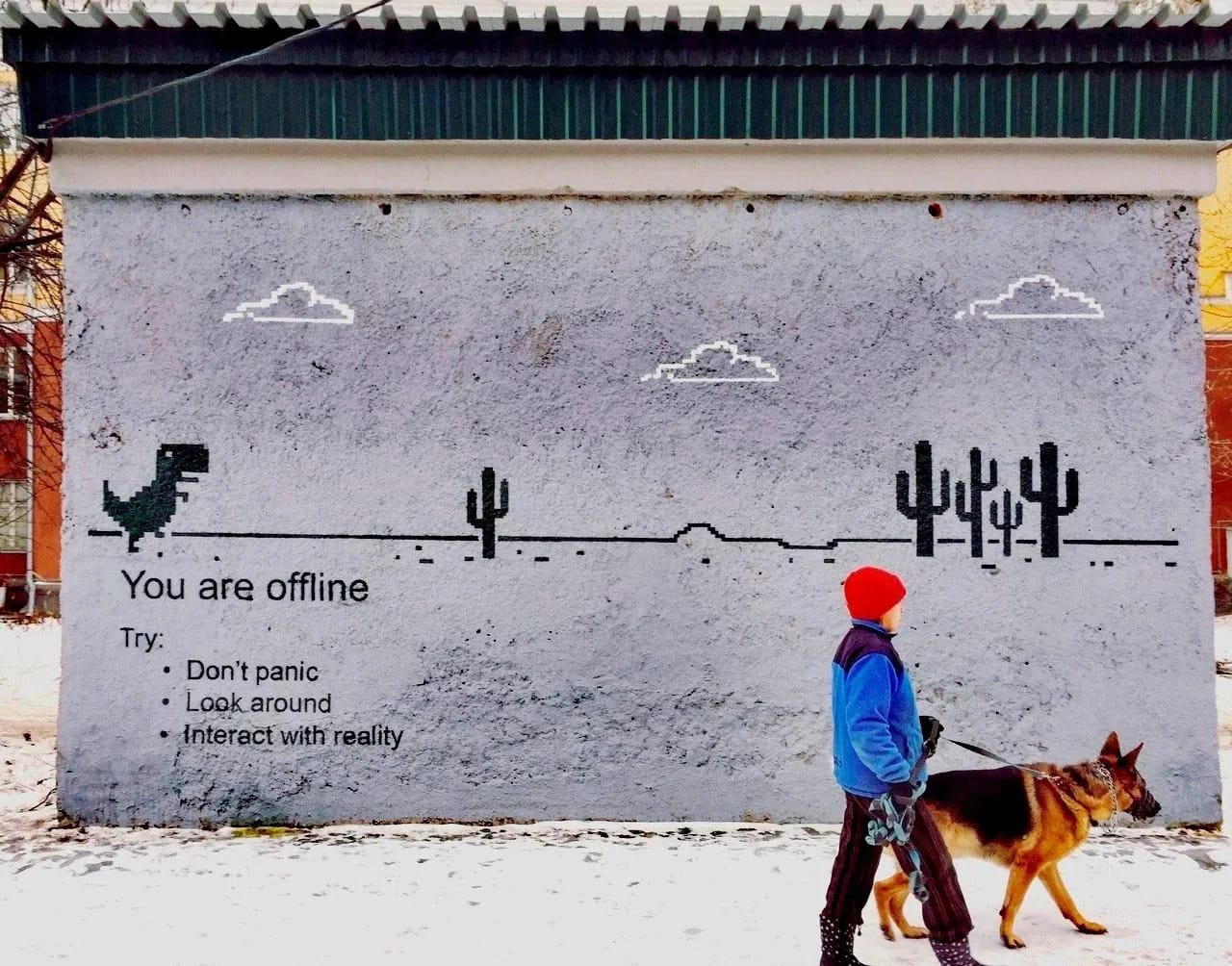
404

Posted in General | Tagged , | 2 Comments

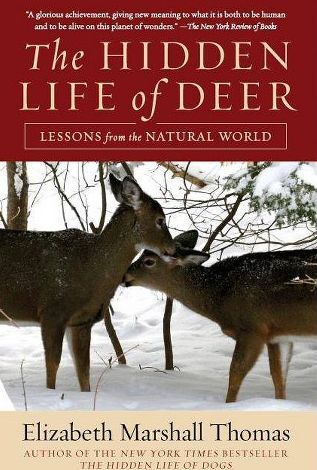
The Hidden Life of Deer

There’s a buck mounted in my living room, but it’s not a head: it’s a large photograph of one standing at a stream in the woods, dawn light softly illuminating the morning mist. I find deer, second to horses, utterly beautiful creatures – -at least, provided they aren’t standing alongside the road on dark winter nights, threatening to bolt at a moment’s notice and destroy whatever vehicle is passing along. Elizabeth Marshall Thomas shares that admiration for deer, and makes a habit of feeding the population that lives in the New Hampshire woods near her house. Her interest in them, though, goes beyond merely giving them something to eat in exchange for the joy of watching them as she might a group of hummingbirds: instead, she’s intently curious about them, a genuine student who pokes through their winter stools to gauge their health, and yearns to know the land as intimately as they do. She identifies four distinct groups in the population around her, which she labels Alpha, Beta, Epsilon, and Tau, and most of her study is on social dynamics: the four groups all have interior hierarchies, with clearly dominant females who guide the feeding. Curiously, lower-class females in a group will stop eating and move with the group as soon as the dominant female decides it’s time to move on, even if they haven’t had their fill. Amusingly, though, some lower-status deer will use alarm signals to spook the group into hiding so they can scarf some food down before joining their mates: I’ve read of similar behavior among primates who use predator alarms to frighten their troopmates away from choice fruit. Thomas’ observations aren’t strictly organized the way Leonard Rue’s Whitetail Savvy was (the only book on deer behavior I can find that’s not hunting-oriented) , but she covers the basics: how deer change through the seasons, their methods of communicating, etc. The back half of the book is less about deer and more general nature observations. Thomas identifies as a tree-hugger, and her approach is a quirky mix of serious scientific approaches (poring through scat) and references to Gaia ‘setting forth a path’ and ‘telling deer’ what to do. I enjoyed the volume as a reflection on nature, but for more serious content Rue is still the go-to source — and he’s referred to consistently.

Related:
Giant Whitetails and Whitetail Savvy. The first is bowhunting stories; the second is a more comprehensive study of deer intelligence, behavior, etc.

Posted in Reviews, science | Tagged , | 2 Comments

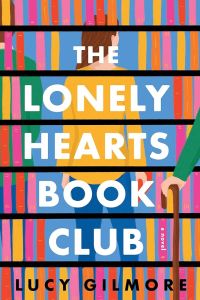
The Lonely Hearts Book Club

This world was a terrible place. It gave you people to love and then took them away before you stopped loving them. It made you mean and angry and cruel to those who needed you most. It ground you down until it was all
you could do to get through the day. But most of all, it tried to convince you that you were alone in your suffering.

Sloane is a librarian in her late twenties, idly drifting into a contented if wholly nondescript and unsatisfying life. One of the few things she genuinely looks forward to are visits by an old crank, Arthur, a verbose curmudgeon whose erudite insults and cantankerous attitude frighten most of the library staff. Sloane gives back as good as she gets, and the sparring brings a little excitement into her day: he’s also one of the few people who genuinely says what’s on his mind, and as someone who lives within a shell of politeness, surrounded by people who are similarly polite and artificial, it’s a breath of fresh air, however artic. Then, Arthur begins failing to show up, and a concerned Sloane investigates. She will find him bedridden and attended to by nurses, having endured a recent fall, and invite herself further into his life. Despite his protests, the old man not only tolerates but enjoys her company, and around these two will grow a little collection of drifting souls who bond over their arguments with books and searches for something else in their lives — including Arthur’s estranged grandson, his neighbor who is struggling with her own daughter, and one of Sloane’s coworkers.  The result is an utterly sweet story of friendships blooming, lives changed, and love manifesting itself beyond romance.

I instantly love curmudgeons, the more cantankerous the better: I want to be one when I grow up, and am constantly practicing my harrumphing and scowling at everything from cellphones to what passes for slang among the Z-types. Naturally, then, I took to Arthur and Sloane’s curious friendship from the start, and it only got better once Arthur’s curious neighbor entered the picture. Each of the book club’s members are struggling with different life issues: Mateo, for instance, is stuck living in the shadow of his mother; Arthur’s neighbor has a daughter who regards her contemptuously and is planning on moving across the country with her father; and of course Sloane is trying to ignore the fact that as comfortable as her life could be with her fiance, it would also be empty. She is drawn to Arthur for the same reason that some people find clay inexplicably tasty: he provides something she is missing. His shocking perspective, wakes her up to her own life,  dispelling the cozy cloud of empty comfort that had steadily grown around her. Each of the characters plays a part in the growth of the other. What I liked most about the book, beyond its crank and the people who turned his home into a book club, was how Gilbert explores different aspects of love beyond romance and eros: indeed, all the different aspects of love that the Greeks had words for (agape, eros, storge, filia, and even xenia) are present here as Gilbert explores bonds of all kinds, and even mocks the way romance is overemphasized — through Arthur, of course. This is especially interesting and amusing given that Gilmore appears to be an author of ‘contemporary romance’.

I wasn’t looking for a “Valentine’s Day” book, but this one found me and I loved it. I must say, nonfiction is going to have to get its pants on and get moving this year if it wants to maintain its usual dominance..

Posted in Reviews | Tagged , | 2 Comments