Zero Days

Jack and her husband, Gabe, are professional security analysts — pen-testers, red-teamers. Their job is to test the security measures of companies, both digital and physical, to find weaknesses. After one case goes a little sideways and Jack is briefly arrested, she arrives home exhausted to find her husband brutally murdered. Calling for the police, she finds herself again in the station being questioned, but increasingly believes the cops are trying to pin the deed on her. She’s had an acrimonious relationship with them ever since dating one of their number and discovering him to be a controlling psychopath: for months after she dumped him she was subject to frequent traffic stops and no-knock raids. Weighing the odds, Jack bolts.

In a way, she grimly reflects, this would be easier if she had brutally murdered her husband, because she would have had a plan in place. Cash, clothes, supply stashes. As it is now, she’s a woman without a phone or cash, trying to navigate a technocratic and increasingly unhuman world. She’s armed with her wits and deep experience in getting around physical barriers and subtly manipulating strangers into helping her, though. After a frantic race back home, she uses her infil skills to access the house from the back, where she spots the evidence of a break-in that the Metro people missed in their easy-option decision to get the wife. Unfortunately in her departure — the cops arrive to begin searching the house and formally arrest her — Jack is injured. Over the next week, Jack is constantly being hunted for by the cops while at the same time she’s trying to figure out why someone would have murdered her dear husband. There are clues: a missing hard drive at home, the arrival of a life insurance policy for her husband with someone else’ phone number on it. Jack finds some shelter with her sister and her and Gabe’s mutual friend Cole, but given the amount of heat she’s drawing, she can’t stay long — and as her investigation continues, as she begins growing weaker from the injury that’s getting infected while she’s desperately trying to find the truth and evade the cops, her searches attract the attention of the party responsible for this drama to begin with.

Given my interests in IT & cybersecurity, I enjoyed this far more than I expected to when I was only a quarter in. Ware included a lot of really petty and intricate details that slowed the narrative down, but this began getting useful when Jack’s investigation begins to grow. Far as as I can tell, this is the first of Ware’s books to have a strong technical-thriller compotent, (The IT Girl was a red herring) and this could be an education in the social engineering side of cybersecurity for casual readers. At one point, Jack needs to review the strange life-insurance policy’s account details to see if Gabe really took out the policy: she uses social media stalking and a series of impersonations and spoofs to get into the building and pull up account details, where a serious twist for the reader is in store. This is an area of cybersecurity that absolutely fascinates me, but it’s useful for everyone to know about given the amount of profile cloning that goes on, and the many ways we accidentally volunteer information to threat actors — from sharing and showing too much on social media (check your privacy settings!) to engaging in useful but dumb-risky moves like leaving passwords around in open view. (One character in this appeared to have a modicum of wariness: she hid her passwords in a Rolodex file, under a nondescript name.) The small details became increasingly useful, like Jack noticing that four keys in a pad were more worn than others, allowing her to simply begin cycling through the 16 available combinations. For lay readers, this offers a look into a very accessible side of information security and defense that requires little technical knowledge at all, unlike the very technical exploits used in Mark Russonovich’s tech-thrillers.

I’ll definitely be trying Ware again, though I realize the rest of her works don’t touch on computer goodness like this.

Related:
The “Little Brother” series, including Little Brother and Homeland, followed by Attack Surface. All involve heavy amounts of cyber/computer activity.
Mark Russonovich’s Zero Day and Trojan Horse, two cybersecurity thrillers written by a programmer
There is No Cloud and Cloud Judgement, thrillers with a strong cybersecurity element — though not nearly as technical as Russonovich.

Posted in Reviews | Tagged , , , , | 6 Comments

Top Ten Tuesday: Summer readin’, have me a blast

Summer readin’, happening so fast….today’s TTT is top ten books on our summer TBR list! If that title got a song stuck in your head, I’m sorry/not sorry. But first, the tease!

“Once, men turned their thinking over to machines in the hope that this
would set them free. But that only permitted other men with machines to
enslave them.”

“The mind commands the body and it obeys. The mind orders itself and meets resistance.”

(Dune, Frank Herbert)

“You are in a small lobby,” I said to Gabe in a robotic voice. “Corridors lead to the north, east, and west. To the south of you is a lift. In the distance is a tall, gleaming white tower. No, wait, that last part’s from Colossal Cave Adventure.”
“Drop USB device,” Gabe said, and I laughed.
“A, that’s three words. And B, I’ve already done that. As you’d know if you’d managed to hack the CCTV system. So—which corridor?” (Zero Days, Ruth Ware)

(1) Dune by Frank Herbert. This has been on my list for a while, and after reading a version of the story in graphic novels, I’m ready to tackle the original itself. Should finish this week.

(2) Anxious Generation, Johnathan Haidt. A preorder that arrived in April, addressing mental illness in Gen Z.

(3) Zero Days, Ruth Ware. A cybersecurity thriller I’m currently reading alongside Dune. A woman is framed for the violent death of her husband. Finding Ware a little too petty detail-y (I don’t care what brand of phone your characters use) but will read anything that involves computers.

(4) Scarcity Brain, Michael Easter. On the psychology of desire, compulsion, addiction, etc. (I…hope.It’s a library book and honestly I’ll put anything brain-related on hold.)

(5) Star Trek: The Higher Frontier, Christopher L. Bennett. The plot sounds generic, but as a rule I’ll read anything written by Bennett, David Mack, or Greg Cox. Speaking of —

(6) Star Trek: Lost to Eternity, Greg Cox. The TOS maestro is at it again, but this won’t be released until the end of July.

(7) Dune: The Duke of Caladan, Brian Herbert and Kevin Anderson. I’m only halfway through Dune but Duke Leto is someone I want to know more about.

(8) Jumpnauts, Hao Jingfang. Chinese SF! Read a tease and enjoyed it.

(9) Breaking Bread with the Dead: A Reader’s Guide to a More Tranquil Mind, Alan Jacobs. I’ve been nibbling at this for ages — really should just sit down with it. But I just finished Mythos, which I’ve been listening to on and off since…2021….

(10) Star Trek: Firewall. I dislike ST Picard, but I love me some David Mack and Seven of Nine. This is a bridge novel that explains how Seven changed from her ST Voyager self to just being plain ol’ Jeri Ryan in ST PIC. Not that being Jeri Ryan is a bad thing, but when I watch her in PIC I don’t see the Seven I liked so much in VOY.

For those who that title did not trigger an earworm, here:

Posted in General | Tagged , | 32 Comments

Happy father’s day ft. one of my favorite videos on YouTube

Today is Father’s Day in the United States, and to celebrate I’d like to share a father and son duet from Johnny and Nick Clegg. Johnny Clegg was a groundbreaking musician who, in apartheid South Africa, creating several illegal mixed-race bands in the 1980s. I encountered his music via George of the Jungle (I watched the credits for the first time ever because I wanted to know who did that song) and was able to explore it via limew- um, The Internet in the 2000s. One of his pieces was sung for his little boy, Jesse. Now, Jesse has followed his father’s footsteps and is a singer himself, and right before Johnny died of cancer they did a duet together. Since I’ve been following Johnny for twenty years, it’s one of the most beautiful things on youtube in my opinion.

Posted in General | Tagged , | Leave a comment

The spice must flow: Dune, the Graphic Novel(s)

Purists may give me the stink-eye, but when I spotted these in our new acquisitions in the children’s department, I snatched them right up. I aim to read Dune this year, and I figured a graphic novel version might break the ice, so to speak. I’ve done similar with other works: watching a movie version of Sense and Sensibility to get me through the novel, and reading The Aeneid for Boys and Girls before reading the epic poem, listening to an oral version of the Epic of Gilgamesh before reading the text. Because I haven’t read the Real Novel yet, I can’t speak to how faithfully they adapt Herbert’s work. Given that the adapters are Herbert’s son and another novelist who has collaborated with The Son of Herbert on Dune novels, though, my guess is they’re as faithful as fans could desire.

Volume I introduces us to the main story: in some distant star empire, the Emperor has abruptly given the House Atreides, led by Duke Leto, the desert planet Arrakiss. This world barren and hostile to life but contains ‘spice’, which is apparently very valuable. (We learn why as the book develops.) This is not the boon it seems, because the planet was previously under the dominion of Atreides’ rival, the House Harkonnes, and they’re evidently not the Queensbury Rules types. No one from Atreides is excited about leaving their world to live in a desert fortress surrounded by massive sand worms with suitable appetites, and living in a place ridden with booby traps and schemes. To make matters more complicated, there’s a level of anticipation that’s somewhere in the metaphysical realm — there’s talk of prophecy and of a figure referred to as the mahdi or messiah, and some of that anticipation is around the Duke Leto’s own son, Paul. In volume I, we witness Atreides’ assume control of their new realm and begin taking their bearings, but then Harkonnes’ schemes go into effect.

Volume II begins with young Paul and his mother the Lady Jessica trapped in the desert, a place where no human should want to be. Not only is it so inhospitable that humans have to wear special suits so as not to have their body moisture wicked away, but dangerous life-forms are as common as water is not. Betrayed, Paul and Jessica seek help from the “Fremen”, the indigenous humans of Arakkis who have adapted themselves to its hostile climes. Although the Fremen are initially wary, they’re impressed by Paul and Jessica’s cunning survival so far, and the two are able to win the regard of the tribe and earn a place among them. Connected to the mythology of the books, though, there are larger roles to be assumed, and the book ends with quite the cliffhanger.

When I started reading Dune last year, I felt a bit overwhelmed with the odd vocabulary and the fact that I was being dropped into the middle of things without any of that convenient Star Wars type prelude that catches readers up on the taxation of trade routes and such. Here, although those still applied, they were a lot easier to digest — possibly because of visual cues, possibly through repetition. I was pulled into the story easily here, and enjoyed the art style which plays a lot with the lighting and tone. The characters are all sdistiguishable, and in the larger crowd scenes there’s a good bit of variety. The art is most striking in big action scenes, especially during sandworm attacks, does a good job of conveying the vastness and harshness of Arakkis. Although the third and concluding volume of this is coming up in July, I’m going to try tackling the book again before this, and I’m excited about finally getting to see the Dune movie released a few years ago.

Posted in Reviews, science fiction | Tagged , , , , , | 33 Comments

Tiger Chair

War. War never changes. Oh, the execution of it changes — spears become rifles, scouts on fast horses are replaced by drones and mining photos for GPS data — but the horror of it remains, as does certain truths like the difficulties inherent in asymmetrical warfare. China laughed at DC for virtually destroying itself in the Forever War, the mideast quagmire that consumed its men, material, and goodwill across the world for over twenty years — but now it’s created its own mess by invading the United States. Now it hasn’t even moved past the Rockies, and Los Angeles is the center of an insurgency draining China’s men and material away. Tiger Chair is a short story that takes the form of a letter written by a suicidal soldier who has been part of the invasion since the beginning — landing in the first wave, back before the Americans figured out how to disrupt the deadly drone swarms that killed so many of the defenders– who now believes the cause is lost. He desperately wants for the Party to acknowledge the facts and end this debacle before China repeats DC’s mistake and commits to a fool’s errand in which sons grow up to fight alongside their fathers. The war is already destroying its soldiers even of the battlefield, as demoralized they’re beginning soft mutinies by sabotaging their own equipment and injuring themselves to escape duty. Through the narrator’s mournful recollection of the war’s history, we explore different future military technologies, and how they are being thwarted by unpredictable means, generated by a creativity born of desperation. Some of these are uniquely tied to Los Angeles and the Hollywood background, with vocal training and prosthetics being used to frustrate social tracking and control mechanisms the Party is attempting to employ. Another element that Brooks explores is cultural differences and their consequences for occupation: the narrator is aghast at how ferociously Chinese-Americans are resisting their liberating brothers, finding their defiance both reprehensible and demoralizing, and addresses his frustration that the PLA’s heavy top-down control and overreliance on AI are preventing field officers from making creative snap decisions — and the Americans are using this to their advantage, using protocol against the invading army. Although this is a short piece (50 pages), I was fascinated by the tech being employed and thought the premise extremely interesting. It appears that a Party invasion of Taiwan turned into World War Three, with a general Asian front and some action in Africa as well. Brooks wrote World War Z. Available on KU.

Highlights:

Why can’t we learn from America’s mistakes? Americans have. They’ve used the blood of their fallen to write an entirely new rule book for warfare. And rule one is as old as Vietnam: simplicity can defeat technology.

We coerced the fickle Hollywood “in crowd” to turn their backs on their former hero, the Dalai Lama. We manipulated movies—and moviemakers—to portray us only in a positive light. I still think about my information operations course at Shijiazhuang, when Professor Tan showed us the 1984 movie Red Dawn and explained that, for the 2012 remake, the cowardly, moneygrubbing producers changed America’s new invaders from us to the North Koreans. I’ll never forget Tan’s words: “Our greatest weapon is their own greed.”

To follow doctrine is to spread the blame, but bucking it means owning the consequences. Can you see why no mid-grade or even senior officer has ever stood up to Jiang Ziya? Can you see why today turned out the way it did?

Our men are the greatest human beings our country has ever produced: smart, brave, and stronger than I’ll ever be. I let eight of them die today, and I don’t know how to help the survivors carry the loss.

Did our generation’s Deng attack Taiwan to distract us from the plague and recession and all the unrest they were causing? Is history repeating itself on two levels? Doesn’t our escalation into another world war mirror the beginning of the first one? A local spat that spun out of control? And didn’t that war stop only when soldiers turned on the leaders who started it?

Which serves our country more? Fighting its war, or fighting to stop it?

Posted in Reviews, science fiction | Tagged , , , , , | 6 Comments

Top Ten Bookish Wishes

Today’s a day for sharing the books we’d really love to own. But first, teases!

Pondering the implications of a red-hot cowpat landing on my head, I felt a surge of unease and retraced my steps. I hadn’t gone far when a massive discharge from this crater assailed the spot where I had been standing. Before there was time to reflect, an explosion from another crater propelled rocks high overhead, which buzzed as they picked up speed on descent. Feeling increasingly like a target in a shooting gallery, I called it a day and hiked back to the village. (Mountains of Fire: The Menace, Meaning, and Magic of Volcanos)

But if you decide to read further, please know that I wouldn’t put you in such a precarious predicament if I didn’t feel it was absolutely necessary. This is not an impulsive act. For months I’ve struggled with the decision to write about what’s really happening over here. Scrolling back through our digital correspondence, I can still see the invisible gaps, the moments where I wanted to include so much more, and I remember why I talked myself out of it. (Tiger Chair, Max Brooks)

“The point they’re making,” Mosscap said, pointing a metal finger at the screen, “is that complex intelligence and self-awareness arise out of an external need. A social need, an environmental need, whichever. Something pushed those creatures into needing to be more clever.” Its eyes glowed more brightly. “So, what sort of need pushed us robots into
waking up?” Dex opened their mouth, then closed it.
“Can I go pee before we have this conversation?” (Prayer for the Crown-Shy, Becky Chambers)

For the list, I’m going to look at recent additions to my Goodreads want-to-read-list which is now, worryingly, over 200 titles.

Huh. I’ve actually read the last three titles on it. That’s a…good sign, I think.

(1) The Situation Room: The Inside Story of Presidents in Crisis, George Stephanopoulous.

(2) Magic Pill: The Extraordinary Benefits and Disturbing Risks of the New Weight Loss Drugs, Johann Hari. I’m on the “lifestyle, not maintenance meds” approach to healthcare but am curious.

(3) The Year of Living Constitutionally, A.J. Jacobs. Given that the Constitution was intended to apply to the national government, not the States and certainly not to individuals, this makes my radar only because I’ve enjoyed A.J. Jacobs’ other experiments so much.

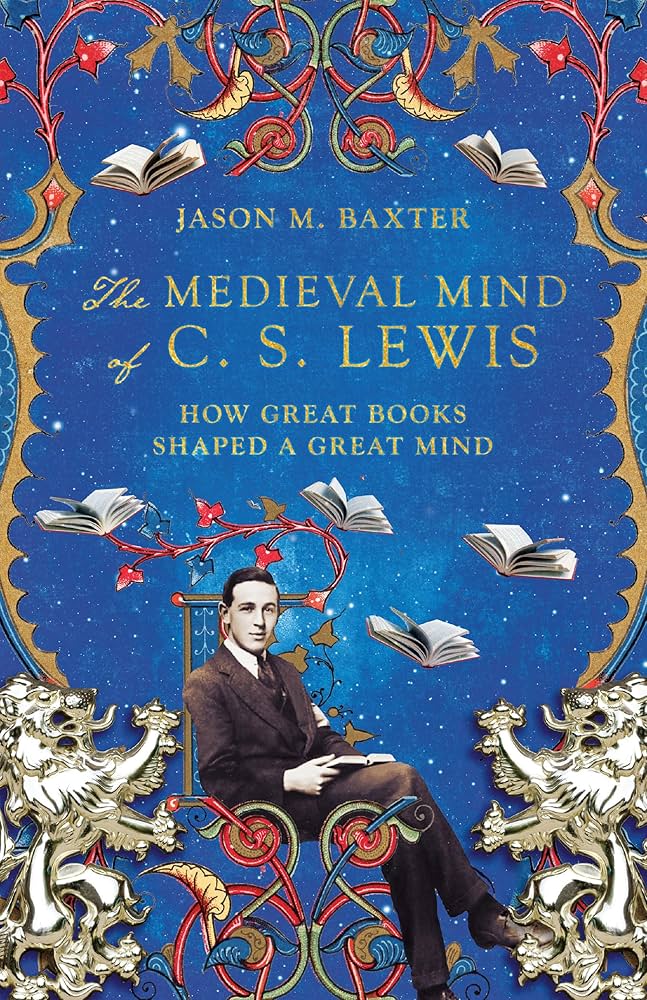
(4) Becoming C.S. Lewis: A Biography of Young Jack. Harry Lee Poe.

(5) Camino Ghosts, John Grisham. Although Grisham has gotten very lazy the last twenty years, the Camino Island setting is an interesting diversion. I’ve been in the area it was inspired by (Amelia Island, near Jacksonville & St. Augustine), so I have an especial interest in his books set there.

(6) Life on the Rocks: Building a Future for Coral Reefs, Juli Berwald

(7) The Anxious Generation: How the Great Rewiring of Childhood is Causing an Epidemic of MEntal Illness, Johnathan Haidt. One of my favorite authors on a topic I’ve been concerned about since touchphones became a thing. I still remember being disturbed at a deep level by an article in Newsweek or something similar fifteen years ago that featured a picture of a toddler completely absorbed by a tablet.

(8) The Enchantments of Mammon: How Capitalism Became the Religion of Modernity, Eugene McCarraher, because I’m a really awkward libertarian who actively dislikes consumerism & materialism.

(9) Most Blessed of the Patriarchs: Thomas Jefferson and the Empire of the Imagination, Annette Gordon-Reed

(10) Reading Dangerously: The Subversive Power of Literature, Azar Nafisi. This one hasn’t technically made my Goodreds TBR list because I only heard about it yesterday, but I’ve read most of her previous work save for that Nabokov title that was just translated last year.

Posted in Reviews | Tagged , | 20 Comments

AI Book Art Game Results (and alter-images!)

Last week I posted fifteen AI-generated images created by prompts inspired by books. Davida Chazan of the Chocolate Lady’s Book Blog won with nine correct guesses!

(1) The Picture of Dorian Gray, Oscar Wilde. Pretty much everyone got this one.

“Rum thing, Jeeves, I seem to have gotten myself in the soup again!”
“You do have a singular talent for it, sir..”

(2) Any Jeeves & Wooster story. Props to Cyberkitten, who alone guessed this one! There’s no story about Bertie falling into a well: the general idea in the picture is that a butler is helping his young ward out of a problem he’s got himself into!

“And he piled upon the whale’s white hump, the sum of all the rage and hate felt by his whole race. If his chest had been a cannon, he would have shot his heart upon it….”

(3) Moby-Dick, or The Whale, Herman Melville. This one was so obvious. I should have done something like a man shooting his heart on a harpoon or something. Everybody got it.

(4) Lord of the Flies. The conch may have been overkill. Everyone got it.

(5) A Thousand and One Tales / Arabian Nights, etc. I asked Bing for a medieval Persian couple sitting in a richly appointed room, with the woman being very animated telling stories. I asked for pictures above her head drawn from stories, like dragons and castles. I was thinking of the way The Sims 4 depicts kids or adults using their imagination, but Bing went a different direction. Pretty much everyone got this one as well.

(6) Gone with the Wind, which again, most everyone got.

(7) The Canterbury Tales! I asked for a group of medieval people, ranging from peasants to nuns to knights, walking together through a rural countryside of wheat and cattle. They were supposed to be talking and listening to one another. Bing supplied….a lot of cows.

(8) John Steinbeck’s The Pearl. A little abstract, but I asked for a Mexican fisherman having his home destroyed by a big black sphere. (I wasn’t getting good results with pearl.) The best guess for this one came from Marian, who had Steinbeck vibes.

“Magic 8 Ball, will my Pearl of the World fetch a good price at the market?”
Magic Pearl: OUTLOOK NOT SO GOOD

(9) The Time Machine, H.G. Wells. A bit misleading in that The Traveler went forward, not back in time, but I’d hoped the steampunk “time machine” and the nattily dressed Traveler would do the trick.

“Huh, I didn’t know H.G. Wells wrote King Kong…”

(10) A Connecticut Yankee in King Arthur’s Court. I asked for a revolutionary war soldier (“Yankee”) standing in a medieval courtyard in front of a king and wizard, and pointing at a sun in eclipse. In Twain’s novel, the the Yankee’s knowledge of eclipse dates allowed him to escape being executed.

(11) The Odyessey. Odysseus, still in his disguise, is confronting Penelope. In the story, she mentions his bed being removed and he declares that impossible because the bedpost was a living tree trunk — hence the important detail of the tree limbs.

(12) Before the Coffee Gets Cold. Key details: sad woman in white dress reading a book with coffee. This one had two successful guesses, from Davida Chazan and WordsandPeace.

(13) The Great Divorce. C.S. Lewis. My prompt was supposed to be for a wide shot, with a grey sad city on the left, and a happy golden city on a mountain on the far right. Below the mountain there was supposed to be a bus stop with people arguing. I didn’t think anyone would get this one, so props to WordsandPeace and Marian for seeing it!

I…don’t know that this is any better.

(14) Tom Sawyer. Tom and Becky Thatcher are exploring the cave.

(15) This was meant to be Neuromancer. I even told Bing to make the sky the color of a tv set to a dead channel. Congrats to Cyberkitten for being the only participant to spot this one, which was evidently very confusable with Ready Player One. I probably should have played with the prompt some more, but the Sprawl is a difficult concept to capture. Of course, I had CK in mind when I included this one, heh. Let’s try again:

Posted in General | Tagged , | 9 Comments

A Prayer for the Crown-Shy

Last week I finished A Prayer for the Crown-Shy, the second in the Monk and Robot duology. In the first book, A Psalm for the Wild-Built, we were introduced to the Monk, Dex, who journeyed into the wilderness looking for purpose. Dex found instead a robot, Mosscap, whose kind withdrew from human society centuries ago but now wanting to find out how the humans were getting on. Our travelers made an agreement: Mosscap would guide Dex to a ruined monastery that the latter felt drawn to, and in turn Dex would be Mosscap’s guide into human civilization. Crown Shy continues that story, following the two as they travel through various human communities and try to answer Mosscap’s question: What do humans need? This is a question Dex is still personally dealing with, grasping for purpose but finding nothing beyond this unexpected friendship and tour of the human lands. The philosophical conversation begun in the last novel continues here, with some brief looks into what human society is like. We are introduced to the currency of ‘pebs’, which reminded me strongly of the ‘obs’ of The Great Explosion: they’re not monetary units, but a way of quantifying and tracking how much a given person is contributing to those around them. The currency is thus fundamentally community-oriented. When Dex visits family, we see that open polyamory is the norm, which I personally doubt would be stable over the long term — there’s a reason it is vanishingly rare in human history. Although I enjoyed the characters and world of this book as much as the previous title, it was something of a disappointment because our look into human societies was so brief. It did teach me the word crown-shy, though, which describes the way trees limit their canopy growth so as not to crowd into their neighbors. Given the ecological aim of these novels — the way they’re depicting a human society that’s settled into smaller and sustainable ways of being — it was an appropriate image!

Posted in Reviews, science fiction | Tagged , , | 8 Comments

The Lives of the Stoics

Some seventeen years ago I discovered The Meditations of Marcus Aurelius and the Discourses and Handbook of Epictetus. Neither men meant to publish these: the first was a private diary that was publically shared after the Emperor’s death, the second two were produced by a follower of Epictetus who converted his notes taken during discussions and lectures into more formal texts. That followers and admirers of these men went to these efforts to pass on their principles and teachings says much about the quality of the men and what they professed. In Lives of the Stoics, we meet both men again, but in the context of their community, as this series of biographical sketches also tracks the evolution of Stoicism from its beginnings with Zeno and Chrysippus, with a focus on individual virtue, to its growth as a publically-minded philosophy as advocated by Seneca and embodied by Marcus Aurelius. I’ve previously read Holiday and have avoided him since, regarding him as the Joel Osteen of Stoicism. This book appeared in my library’s bookstore, though, and given my interest in learning about Stoics beyond those I’ve read books by, I decided to give it a try. Although there’s still a life-coach vibe here, and Holiday plays to the reader’s existing pretensions rather than challenging them, I enjoyed this more than anticipated — in large part because so many of the names were unfamiliar to me, despite having read broadly into Stoic writings.

Lives of the Stoics follows the model of Plutarch’s Lives, offering a brief biography of each man (and one lone woman) and stressing the lessons to be learned from them. Because the biographies are meant to be inspiring — presenting us with a standard to attain to — there’s a background level of narrative flourish, shall we say, that turns stories into facts and casts each man in as warm and favorable a light to the reader as possible. As mentioned in the introduction, the first half of the book nicely demonstrates Stoicism’s early evolution from one focused on an individual becoming a sage, to a philosophy that also emphasized man’s inbuilt responsibility and integration with his community, —oikeiôsis, or as Wendell Berry might put it, “membership”. The version of Stoicism that Holiday preaches here, via the biographies, is a simplified one that emphasizes the dichtomy of control, alongside individual integrity and duty. The latter two are interwined, as a great many of the figures in this book’s second half are executed by Nero for refusing to go along with his programs. They include, at long last, Seneca — who entered public service as a tutor to young Nero, who was distracted by his study of philosophy by worldly responsibilities and riches, who withdrew from them only to still find himself marked for death by the emperor. Another man here who does not cut so fine a figure is Cicero, who studied Stoicism and whose writings help convey it to succeeding generations, but who never fully took its lessons to heart and stood silently by as Caesar destroyed what was left of the old Republic. The men (and woman) in this group were very much a community, with few isolated individuals: in the beginning, there’s a steady progression of teachers who train their successors, and in latter half we realize Rome was swimming in Stoics, from slaves like Epictetus to men so connected with the Judeo-Claudian line that Nero exiled and then killed them to prevent challenges to his regime. These men knew each other, were part of one another’s lives: Musonius Rufus followed one fellow Stoic into exile, for instance, and another killed by Nero was an associate of Seneca’s — and Seneca’s writings in the library of Nero’s secretary may have exposed Epictetus to Stoicism, while Hadrian and Rusticus’ interest in Epictetus exposed Marcus Aurelius. Holiday tries hard to connect the lessons of these men to examples that contemporary readers might be more familiar with — using a quote from East of Eden to illustrate Cleanthes’ appreciation of manual labor, for instance, or comparing Seneca and a modern general who served a president he didn’t especially like, but felt needed his contribution.

While I wouldn’t recommend this for someone looking to be exposed to Stoicism, if one is already interested in and familiar with its core concepts, then Lives shows us how philosophy may look in practice — from men and women making choices out of principle, not self-interest, to their enduring hardship and staring death squarely in the face, laughing at poverty and approbation at the same time. I enjoyed meeting this range of characters, especially those who I’ve read but know nothing of (Rufus), or simply ‘spending time’ with men like Cicero, whom I like despite their weaknesses. As a longtime student of the Porch, I was fascinated by some of the figures in its early history, whose lives and thinking had more overlap with the Epicureans and Cynics than the more sharply defined Stoicism of later years.

Coming up: I’m beginning a NetGalley ARC called Lawless Republic: Cicero and the Fall of Rome, as well as continuing in a book on volcanos. Review for A Prayer for the Crown Shy is also coming.

Quotes:

Perhaps [Epictetus] so landed with Marcus Aurelius because they were both dealt hard hands by fate. It is a striking contrast, an emperor and a slave sharing and following the same philosophy, the latter figure greatly influencing the latter, but it is not a contradiction — nor would it have seemed odd to the ancients. It’s only in our modern reactionary, divisive focus on ‘privilege’ that we have forgotten how much we all have in common as human beings, how we all stand equally naked and defenseless against fate whether we possess worldly power or not.

Related:
Marcus Aurelius: A Life, Frank McLynn
The Emperor’s Handbook, Stephen Mitchell. A modern-English translation of the Meditations. Hays’ is best, but I’ve never reviewed it here.
The Art of Living, Sharon Lebell. An interpretation of Epictetus’ teachings.
Dicourses and Enchridrion, Epictetus.
How to Live, a modern-language adaptation of Musonius’ Rufus’ lectures.
Dialogues and Essays, Seneca
Letters from a Stoic, Seneca
The Spiritual Teachings of Marcus Aurelius, quotes and commentary on the philosopher-king

Posted in Religion and Philosophy, Reviews | Tagged , , , , , , | 3 Comments

Crown-shy

Mosscap pointed. “Crown shyness is so striking, don’t you think?” Dex had no idea what Mosscap meant. “Sorry, what’s striking?”
“Stop,” Mosscap said. “Look.”
Dex sighed, but they hit the brakes, put their feet on the paving below, and looked up. Mosscap continued to point, tracing lines in the air. “Look at the treetops,” it said. “What do you notice?”
“Uh,” Dex said. They frowned, not knowing what Mosscap was getting at. There were branches, obviously, and leaves, and … “Oh. Oh, they’re…” They fell quiet as their perspective of the surrounding landscape shifted in a way they’d never unsee.

Despite their number and close proximity, none of the treetops were touching one another. It was as though someone had taken an eraser and run it cleanly through the canopy, transforming each tree into its own small island contained within a definitive border of blue sky. The effect reminded Dex of puzzle pieces laid out on the table, each in their own place yet still unconnected. It wasn’t that the trees were unhealthy or their foliage sparse. On the contrary, every tree was lush and full, bursting with green life. Yet somehow, in the absence of contact, they knew exactly where to stop growing outward so that they might give their neighbors space to thrive.

“How…” Dex began to ask.
“No one knows,” Mosscap said. “At least, not to my knowledge. Some say it’s to minimize competition. Others think it’s to prevent the spread of disease. But as to how the trees know when to hold themselves back, I don’t know. It’s a mystery.”

Posted in quotations | 1 Comment