Riding Rockets

Riding Rockets: the Outrageous Tales of a Space Shuttle Astronaut
© 2007 Mike Mullane
400 pages
Mike Mullane is a shuttle astronaut with a penis fixation. Although Riding Rockets is ostensibly about the opening decades of the space shuttle era in NASA,  it could be titled the Cosmic Adventures of Mike and his Member. If he doesn’t mention his genitalia more times than he uses the acronym “NASA”, he at least makes a valiant effort. His is an astronaut memoir of an altogether different kind than say, Jim Lovell’s, or Deke Slayton’s.  This is not a heroic tale of people achieving the impossible:it is instead the story of a man-child and his bros in space. He is juvenile, inappropriate, and obsessed with himself — but someone who has an interesting story to tell, one that sometimes verges on thoughtful,  if you can endure his boorishness.

Riding Rockets gave me fits, being an uncomfortable read: Mullane has all the tact of a dog in heat, and writes almost confrontationally. His emotions are ever on his sleeves, and he dares anyone to challenge him. (“Come at me, bro!”) His story is entertaining, and even touching — there were times when I shook with laughter, and moments wherein I put the book away to put some distance myself and Mullane’s emotions, like his despair at his friends’ death following the Challenger explosion. Part of the appeal in reading the memoirs of astronauts is that they’ve seen Earth and humanity in a way the overwhelming majority of us haven’t. A photo of Earthrise cannot have the same profound effect on people as actually being there, hanging in the black of space and seeing the Earth — the stage for every human drama, the sum of our experienced lives — shrinking below, the entirety of our existence reduced to a finite thing that can be left behind. Mullane can write beautifully, but instead he makes a lot of penis jokes, and those moments of author-reader connection were always broken by  wanting to recoil from his personality.

Despite the sometimes beauty of his words, and  his insights, Mullane is, candidly, a jackass.  The image that comes to mind is that of a drunk teenager invading a bar,  perhaps one who has just finished the greatest high school football game of his life and can’t wait to impress his audience with it — but is oblivious to the fact that he is in the company of grown adults who find his posturing and immense self-satisfaction wholly obnoxious.  He identifies himself early on, and somewhat proudly,  as being in a state of a Arrested Development, along with most of the astronaut corps.  Having cheerfully written off his ability to function as a mature, considerate, and thoughtful human beings, he spends most of the book acting instead like a jackass — ogling women, devoting paragraphs to how rockin’ the bods of some of his female colleagues were; endlessly complaining and opining about everyone who thought or acted differently from himself, and of course, chatting merrily away about his penis.  Inexplicably, he forgot to mention said organ in the index. It was certainly mentioned enough times to merit inclusion there.  Charming he isn’t, although his attempts at civilized behavior are almost comic.  After dismissing civilian astronauts for being a bunch of pantywaisted granola-eating libtards — in contradistinction to the solid, right-thinking, manly-man military pilots — Mullane reflects on their performance throughout the shuttle missions and concludes, “Hey, those guys  did have a pair. Not bad!”

I couldn’t be impressed by Mullane. Behind the cocky grin and the swagger are thoughtful eyes and a mind that can deliver stirringly poetic tributes and reflections to friends, love, and the beauty of life , but these occasions are few and far between, diamonds in a rough possibly too broad to justify digging in.   There aren’t many astronaut memoirs about the shuttle program, but I’m planning on reading the other I’ve found (Sky Walking, Tom Jones)  to see if readers interested in that era of NASA’s history have to be content with this story of adolescents in space.
Posted in Reviews | Tagged , , , , , | 7 Comments

The Humans Who Went Extinct

The Humans Who Went Extinct: Why Neanderthals Died Out and We Survived
© 2010 Clive Finlayson
256 pages

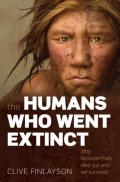
Whatever happened to the Neanderthals? Did Homo sapiens drive our beefy cousins into extinction in the first of many exercises in genocide as we spread across the planet? Poppycock, suggests Clive Finlayson, to whom such a suggestion is the very height of hubris. His The Humans Who Went Extinct paints of a picture of generations of climate change hitting the planet like a rolling barrage, stressing increasingly marginal bands of hominids — humans and Neanderthals alike. Eventually the Neanderthals succumbed; the difference between the species, Finlayson writes, is that human populations were lucky enough to be in areas where they could adapt to the unpredictable environment. 

I’ve never had a problem with the Humans Are Homicidal Maniacs theory as applied to Neanderthal death, because we have a proven track record in that regard. Name a living species, and we’ve probably driven most of their extended family into extinction. Finlayson thinks the idea is rubbish, and while he’s at it he also doesn’t cotton to the idea of humans being responsible for other mass extinctions, like the mammoths. No, the malefactor was climate change, and climate change alone. Neanderthals weren’t the slow, stupid brutes that people like to fancy themselves as having killed off in a feat demonstrating superior ability and intelligence: they were bigger-brained than we were, using tools and creating art just as we did. And their kill sites demonstrate that they were an adaptable and agile species to boot, devouring tricky prey like rabbits and birds.

Finlayson’s work is very much inspired by Guns, Germs, and Steel, which he refers to repeatedly: his last substantive chapter leads directly into Diamond’s work, which demonstrated the importance of geography in human affairs. In Humans Who Went Extinct, geography and climate are the main actors. He relies both on traditional archaeological evidence and genetic tracking to put forth his case, but the overweening emphasis climate change seemed a bit much for me. I can accept human populations being marginal and strained, but surely we bear some responsibility? In those instances where Sapiens and Neanderthals shared the same area, I find it hard to imagine the two living in peace.  Part of the difficulty for me in accepting Finlayson’s arguments wholly is that the evidence is hard to come by, relying in part on inference. The scope of the question also poses a problem for anyone looking for definitive Answer: the drama of extinction played out on a a stage that encompassed most of the “old world”, and thousands of years. My biggest beef with Finlayson is  his dismissal of our having any role in killing off any of the ice age fauna, though that’s only a sidenote and he may have been referring only to the European species.

The Humans Who Went Extinct gives readers curious about the world early humans lived in something to chew over. Its view of that world as being turbulent and hostile, one that we were lucky to survive in, let alone conquer, is definitely one to consider, as is his depiction of the Neanderthals as people quite like us who had the misfortune of being in the wrong spots of the globe at the wrong time, whose population bottlenecks resulted in extinction.

Posted in Reviews, science | Tagged , , , , , | 1 Comment

This Week at the Library (20 December)

Well, the week is winding down, and with it, the year. I’ve recently finished both The Great Railroad Revolution and The Humans Who Went Extinct, so comments for those are in progress.  And what will I be reading this week, this last week of 2012?  At the moment I have Riding Rockets by Mike Mullane, which is a memoir of his years as a space shuttle astronaut.  I also checked out Union Pacific, by Zane Grey, which is a western that I checked out mostly because it’s about trains, and I’ll be exploring The Road to Serfdom by F.A. Hayek. I say ‘exploring’ because I want toget a feel for his writing style. I’ve heard a few quotations from him which have piqued my interest, like the phrase “the pretence of knowledge”, and the below tidbit…

 “We are ready to accept almost any explanation of the present crisis of our civilization except one: that the present state of the world may be the result of genuine error on our own part and that the pursuit of some of our most cherished ideals has apparently produced results utterly different from those which we expected.”

I should confess that what interested me in him was…a rap-battle between himself and another economist, John Maynard Keynes. Oh, but the internet has such strange and wonderful things in it. There’s another video of the two actor-economists rapping in front of a conference hosted by…The Economist. 

Posted in Reviews | Leave a comment

All Fall Down

 Supervolcano: All Fall Down
© 2012 Harry Turtledove
416 pages
 
 
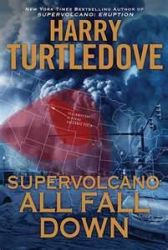
YellowstoneNational Park is gone, replaced by a vast caldera that still ripples the air with its heat. The momentous eruption covered North America’s great-growing heartland in ash, ruining harvests for years to come, and vented enough dust into the atmosphere to begin a new ice age. In Supervolcano: Eruption, Harry Turtledove began a trilogy exploring the aftermath of such an enormous eruption, using the dysfunctional Ferguson family and their associates to tell the tale. The original novel was shaky at best, relying more on its premise than anything else, but All Fall Down is an improvement.
 
All Fall Down builds on the world the eruption began to create – a colder world, with abbreviated growing seasons and snow that never seems to stop. Characterization has improved from Eruption, or rather the characters have: the Fergusons tended toward the obnoxious before the earth-shattering kaboom, but having to adapt to increasingly adverse circumstances has improved their dispositions. They , and the world in which they live, are adapting; this is especially obvious in the case of the Ferguson boy trapped in Maine, who before the fun began was touring in a garage band. With the entire northern hemisphere experiencing eight months of winter and four months of bad skiing, the Federal government has largely abandoned Maine. There, characters live close to the land. No more do they ship in salads from California and shrimp from Thailand: now they hunt moose and squirrel, and subsist on whatever crops can survive the new local conditions. In California, Colin Ferguson – a no-nonsense cop whose steely resolve and willingness to make adjustments makes him a solid central character – bicycles to work, even if he is the #2 cop in the city. He’s also willing to turn a machine gun on the Los Angles Police Department if they try to pinch his department’s tanker of gasoline. Desperate times breed strong men and iron-handed measures. Colin’s daughter Vanessa continues her caustic reign of terror, but the Ferguson crew is supplemented by a mysterious guerilla-turned-freedom fighter from Serbia and an endearingly odd political leader who embraces anachronity in his dress and speech.
 The novel spans anywhere from three to five years, judging by the fact that a woman gives birth to a child who is asking annoying questions by novel’s end, and in that timeframe Turtledove’s new world becomes much more like Jim Kunstler’s peak-oil world featured in his World Made by Hand Novels and less like our own. This slow transformation takes place in the background, against which characters pursue their own private stories – a serial killer for the lieutenant, escape from the purgatory of Kansas for Vanessa. As with the first novel, the premise and how that shapes the characters’ lives is more interesting than their private lives, with the exceptions of those characters who live outside of California.
 
Unfortunately, the same basic weakness of Eruption is present here, as well. Turtledove’s novels have a big background happening with his characters trying to live out their lives against it, but the gradual transformation of the climate doesn’t move the plot, and neither do the characters’ little stories. The man in Maine whom CNN calls a virtual dictator has the potential to create a more energetic story, but so far he’s only functioned as a wry commentator. And of course, there’s the usual editing problem — Turtledove stumbled upon a metaphor he likes between the two books, “screwing to the wall”, and he used it with great gusto here. He does seem to be curbing his habit of repeatedly describing the same characters: here, only Colin’s dry humor is used in this way. For the most part, Turtledove demonstrates his characters’ personalities rather than describes them, which is refreshing after reading for the hundredth time that Sam Carsen burns easily or Ludmila Gorbunova is a good child of the Soviet Revolution and has no use for priests.*
 
Although All Fall Down was entertaining enough that I don’t regret reading, I can’t say I’d purchase it. It is a step forward in the right direction, and the general premise still holds fascination for me.
 
* To be fair, though, I remember Turtledove’s characters when other novelists’ creations have long been forgotten, so perhaps there’s a method in his madness. The trivia I can tell you about people who don’t exist…!

Posted in Reviews, science fiction | Tagged , , | Leave a comment

1493

1493: Uncovering the New World that Columbus Created
© 2011 Charles C. Mann
690 pages

Although Christopher Columbus’s reputation as an intrepid explorer doesn’t withstand historical scrutiny,  Charles C. Mann believes Columbus has a legacy still worth honoring. No, he didn’t prove the world to be flat — that’s a myth peculiar to American schoolrooms — and his attempt to establish that the world was smaller than conventional wisdom held would have failed were it not for the existence of the Americas. But Columbus made the world smaller, through his actions — for he not only ‘discovered’ the new world, he aggressively promoted interactions between it and the old. What began as the Colombian Exchange, we now call globalization — and its effects have been profound from the start. Such is the story of 1493.

Throughout most of recorded history, the economies of large polities tended to be self-contained spheres.  The economies of the Roman and Chinese empires, for instance, were largely separate  aside from a trickle of activity along the silk road.  The modern age is marked, however, by a world economy. No sector of the Earth, no community however small, conducts business in a market smaller than the entire globe. This dense interconnectivity is made possible by both by powerful transportation, in the form of fast-moving planes, ships, and delivery trucks, and the near-instantaneous telecommunications networks. It began, however, with enormous trade galleons tying Spain to central America, and its holdings there to  China. The influx of so much silver into China’s markets played havoc with its economy, leading to decades of instability. Crops from the Americas became staples of the global food market, allowing for a prolonged population boom in China and alleviating famine in Ireland, at least until the new crop the Irish came to depend upon, the potato, was hit by blight. The habitat of both plants and animals spread wildly, and it wasn’t just large fauna like pigs and horses that found new ground:  bacterial populations flourished, and with them disease. In 1491, Mann detailed how the human landscape of the Americas was laid waste by the arrival of European diseases like smallpox; here, another population, that of the west-coast Africans, is reduced to slavery because of their resistance to malaria.

People tend to like histories of themselves, of great people doing great things — but this is a material history, very much in the vein of Guns, Germs, and Steels, one which demonstrates how human history is often driven by outside factors — here, by access to resources and the economic changes they allow. Although humans are active as agents, initiating the changes, the outcome is never what they expect: the effect is rather like Odysseus’ sailors opening up the bag of wind and being blown wildly off course.

 Mann’s history of early globalization covers the changes being wrought across the globe, missing only the mideast. Though dense, Mann is quite the storyteller, at least until the final leg of the story when he wanders into the rubber plantations of South America and the story loses some steam, getting lost for a while charting the growth of communities of runaway slaves in the jungles. The  work isn’t as tightly focused in its latter half as in the first, but Mann does tend toward the informal, combining standard narrative with merry anecdotes from his first-hand explorations of the subject. Early on, he spends three pages detailing how he investigated a word Columbus used, eventually concluding that yes, he did mean exactly what we think he meant. The investigation is interesting to a word-nerd like myself, and amusing for its irrelevancy, but it’s an example of the way he tends to wander off.

1491 was for me, the book of the year in 2010. Earlier in the summer,  when I looked back over the past five years and reflected on the stand-outs, it ranked among them. Its sequel is strong — it puts up a good fight — but it’s not quite in the same class.   Even so, I’d recommend it to those interested in the economic impact of the age of discovery, especially if they like rubber-tree plantations.

Posted in Reviews | Tagged , , , , , , , , , , , | 3 Comments

Cattle

Cattle: an Informal Social History
© 2001 Laurie Winn Carlson
321 pages

Consider…the cow. A humble creature, its dopey expression reveals no vast intelligence, and its barrel of a body gives it virtually no athletic ability, but it is remarkable if nothing else for its extensive influence on the human race. Throughout our long history with cattle, we have used them for much more than food — and they have used us, in turn. Laurie Winn Carlson holds cattle in high esteem, and her history of cows and people is rich and wide-ranging, if sometimes romanticized.

Although most people would associate cows with beef, or food in general (dairy milk being the source of cheese and butter), the various kinds of domesticated cattle have also served as labor and medical factories; the first vaccines were taken from the lymph of cows, and are named in tribute of the cow, the Latin for which is vacca. Although it’s nice of the cows to give us a cure for smallpox, it’s the least they could do considering the disease migrated from them in the first place.  The story of cows and people is one of give and take, each side contributing to and detracting from the other’s well-being,  but until recently it has been a mutually advantageous alliance. Since the industrial era, however, the relationship has become decidedly exploitative, with cattle being reduced from beings that we related to into machines that we create, use, and discard at our own convenience.  People have become detached in general from the sources of  our food, but Carlson is especially concerned about the marginalization of cattle.


  Although Carlson sometimes gets carried away in her devotion to cows , as in early on when she attributes the development of law to the complexities of life arising from keeping cattle, Cattle is a fascinating book in part because of how much ground it covers, addressing anthropology, evolution, economics, medicine, and food just for starters, with  the main course being history.   There are definite weaknesses (repeating “facts” that should have been scrutinized more) and some curious omissions (nothing is mentioned of CAFO feedlots), but this is a unique book. Other books I’ve looked at cover only the food aspect of cattle culture, not their role in the everyday life of pre-industrial people.  Cattle isn’t a beefsteak of a book, but it’s a good burger at least.

Posted in Reviews | Tagged , , , , , , | 2 Comments

Teaser Tuesday + This Week at the Library (11 December)

“The Sun King used to entertain his guests by giving them rides on the Roulette, a kind of roller coaster built in the garden of his chateau at Marly, near Verailles, in 1691. It was a carved and gilded carriage on wheels that thundered down an eight-hundred-foot wooden track into a valley and, thanks to its momentum, up the other side — much to the amusement of the king’s bewigged guests.”

p. 4, The Great Railroad Revolution. Christian Wolmar.

Last week, I finished Charles C. Mann’s 1493 and a social history of cows, both of which would have been reviewed over the weekend had I not spent it going to three Christmas parties. (Well, one was a Hanukkah breakfast…) I’d started The Age of Voltaire with the intention of reading at least one more chapter of the Story of Civilization before civilization ends in ten days (I jest, of course, but it’s been a while since I’ve read one), but then…I found out that my library has a copy of Christian Wolmar’s newest work, The Great Railroad  Revolution, which covers the intersection of the railroads and America’s past and future. And to think the day before I ordered a book on the history of steam transportation. So, trains first, then Voltaire. I’m also intending to finish The Humans Who Went Extinct. I’d managed to find it, but now I’ve lost it again. Tricky Neanderthals..

Posted in Reviews | 4 Comments

The Eternal Tide

Star Trek Voyager: the Eternal Tide
© 2012 Kirsten Beyer
388 pages          

Only Kathryn Janeway can save reality, imperiled by the physical manifestation of Chaos itself. At least, that’s what “Junior”, the scion of the mostly-omnipotent and thoroughly mischievous Q, thinks.  It’s just  not that Jane way is a demigod: all Starfleet captains are. But something she did in an alternate timeline defeated chaos, and Q Jr. is hoping she can figure what that something is. Unfortunately for him, she’s dead, having perished at the dawn of the last great Borg War when she was assimilated before being blown to smithereens. Fortunately for him, he’s a Q, so restoring her to life isn’t that hard of a trick.  But even for a Q,  life’s not that easy. The Eternal Tide witnesses the return of Captain Kate*, the culmination of Fleet Commander Afsarah Eden’s mysterious-past storyline,  the Q Continuum invading Voyager in force, and  the near-obliteration of life as we know it, all inextricably connected.

Kirsten Beyer has turned the Voyager relaunch into an enterprise far more critically successful than its onscreen edition,  reviving it. Here, it’s Janeway that she brings to life — to the mixed delight and vehemence of fans.  Since the return of Spock in the third Star Trek movie, fans have complained that death has lost its sting in the Trek universe:  while Joe Redshirt may be dead for good, the major characters always have a way to return. Data, for instance, dumped his entire memory into B4 shortly before engaging in his own attempt at a heroic death. Janeway’s salvation is the Q Continuum, who showed up shortly before she started the mission that led to her assimilation and “death” and warned her not to do it.  She did it anyway, and then something astonishing happened: her death became a “fixed moment in time”. In Q-terms, this means that in every universe, in all but one timeline,  Kathryn Janeway dies at the same exact moment. Clearly something is afoot, and Q Jr intends to find out what it is. He has a personal interest in sorting out the mystery, because for some reason, he can’t look into the future beyond a certain date. Doe that mean the universe simply ends?…or just himself or the Q?

Although this is the book of Janeway’s return — it has her on the cover,  after all — it isn’t about Captain Kate, Wonder Woman in Uniform.  Afsarah Eden, commander of the Federation fleet exploring the Delta Quadrant and looking for signs of the supposedly-vanished Borg,  plays a part even more crucial. Eden has a past shrouded even mystery: even she doesn’t remember her early childhood, and in Children of the Storm  she made a discovery that overturned what little she thought she did. Here, the plot thickens. Her past and the future of the Q Continuum are bound together. The story eventually sheds light on the origins of the Q, which is what fans may remember The Eternal Tide for after the furor of Janeway’s return to the living is over.  Although the Chaos-Monster-Thing plot took time to grow on me, once the little storylines (Eden’s exploration of her past, Q Jr’s investigation of oblivion) coalesce,  all comes together splendidly.   There were multiple fascinating ways the story could have been resolved, but Beyer’s choice was a nice nod to the abiding spirit of Star Trek, a belief in the power of the human spirit.

As usual, the writing is a pleasure. Characterization is, as ever, a strong suit:  I still can’t get over how cocky Tom Paris has become a responsible first officer and devoted family man, and a source of pride to  Captain Chakotay, when for most of Voyager’s run they were at each other’s throats. Beyer first impressed me by making Chakotay likable, and a relationship between him and Janeway palatable.  Janeway’s return would obviously have the greatest effect on him, rivaled possibly only by that of Seven of Nine’s, whose own response is touching given her tendency to not emote.

The Eternal Tide thus tells a story that is big enough not to be overshadowed by the return of a major character from death, and it’s told with all the skill relaunch readers have come to expect from Beyer.

*Technically it’s Vice Admiral Janeway, but “Cap’n Kate” has so much more consonative appeal.

Posted in Reviews | Tagged , , , | Leave a comment

Teaser Tuesday (4 December)

They sat and continued to stare at each other, in a precious stolen moment of pure happiness. Finally, Kathryn said, “You do realize the universe is tearing itself to shreds around us?”

p. 251, Star Trek Voyager: the Eternal Tide. Kirsten Beyer.

“So we’re facing something that appears to have the potential to destroy not only the lives of every being now in existence, but also the lives of at least two theoretically immortal beings,” Cambridge said, “And you and this Junior are convinced that another version of Voyager encountered the same problem and somehow eliminated this threat?”
“We’re pretty good,” Chakotay offered semi-seriously. 

p. 262, The Eternal Tide. Kirsten Beyer.

Posted in General | Tagged | Leave a comment

This Week at the Library (30 November)

This past week I read A South Divided, by David Downing, which covers  the same ground  in part as David Williams’ Bitterly Divided, in that it examines the importance of southerners who worked against the confederacy. But whereas Williams argued that the Confederacy’s loss in the American Civil War was primarily one of popular support, not of combat operations, Downing’s history is less pointed: he doesn’t cut to the quick like Williams, but chooses individual cases in different categories (a southerner who became a leading Union officer, a slave who ran away and took a steamship with him, a given band of anti-confederates fighting from a particular swamp, a county which refused to secede from the Union) to explore the different reasons southerners had for resisting or fighting against the Confederacy.  Although his narrative is missing the teeth of Williams’, Downing is an English professor, not an historian, and what he delivers is admirable: a book which tells another side of the Civil War, one rich in human interest. His work is superb for illustrating Bitterly Divided, expanding on the untold towards of the southern fight against the confederacy, but by itself it lacks the critical substance.

I also finished Charles C. Mann’s 1493, which enthralled me for the most part. It seemed to lose vigor after the first four hundred pages, but I’ll be giving full comments in a few days.  I hadn’t intended to read it so soon, but The Humans Who Went Extinct has gone missing on me. I have far too many cases and piles of books that a given work might disappear into when I absent-mindedly set it down…

I’ll be trying to find that, and in the meantime I’m doing my annual Christmastime Harry Potter re-read. On the serious side, I’ve got Cattle: An Informal Social History, by Laurie Winn Carlson.

Posted in Reviews | Tagged , , | Leave a comment