The Best of 2012

Previous Wrap-Ups: 2007 | 2008 | 2009 | 2010 | 2011

            Another year has come and gone, and once again it’s time to reflect upon the previous years’ reading. 2012 was a banner year for reading, with a flabbergastingly excellent array of books. It was nonfiction’s comeback year, as I pursued my private challenge of reading more in science, and read extensively in the area of “civic awareness”, learning more about transportation, energy, waste maintenance, and other systems which we all depend upon.  I was a little carried away by my French-themed reading centered on Bastille Day, and one of my Independence Day selections ignited a mild John Adams fixation, but one dwarfed by a resurgent interest in human space flight kicked off by my watching From the Earth to the Moon.


Historical Fiction
Bernard Cornwell was again a mainstay, though the King Arthur trilogy which I read in the fall blew Sharpe away; The Enemy of God in particular stood out.  Cornwell is easy to heap praise on, but that went beyond my usual, already-elevated expectations.  However, I also discovered the historical fiction of David Liss, (The Coffee Trader)  who does business thrillers set in the early industrial area, at a time when the global market was just beginning to be unified and societies were becoming increasingly complex. 
Science
For years I’ve been saying, “I’ve gotta read more science”. I can call that goal a triumph. The Ghosts of Evolution and The Wild Life of Our Bodies were the most impressive of the lot, with Why We Get Fat and The Sun’s Heartbeat also being impressive. And of course, there were the human spaceflight books, the most notable of which was Andrew Chaikan’s A Man on the Moon, which inspired From the Earth to the Moon.
Science Fiction
 This hasn’t been a big year for science fiction, but even in a good year Lucifer’s Hammer would have led the pack. In that, an asteroid smacks the Earth and causes earthquakes, flooding, and other kinds of natural-disaster merriment, leading to the prompt collapse of civilization and good times for all. 
Star Trek
I didn’t stay as active in Trek literature as I wanted to, most of my reading being nonfiction, but I did read quite a few new releases as well as a couple of older titles. David R. George III’s Typhon Pact duology was the knockout,  however brilliantly-written Christopher Bennett’s Department of Temporal Investigations books were.  Two of Peter David’s Q books — Q-in-Law and Q-Squared were easily the best of Trek books outside of new releases.
Fantasy
 Here again I must mention the Arthur Trilogy. Sure, I mentioned in in historical fiction, but there were fantastical elements here, and frankly it’s a series worth mentioning twice. I also continued in the Heroes of Olympus series by Rick Riordan, which I’m rather liking given the new Roman take on the gods.
Religion and Philosophy
 The exemplars this year were Seneca’s Letters and Dialogues, parts of which I’ve read repeatedly throughout the year, and Bart Ehrman’s Jesus: Apocalyptic Prophet of the New Millennium.  Busyness saw a review of that one slip through the cracks, but I intend on re-reading it next year.
History
Ah, my mainstay.  I’ll remember 2012 for being the year I found Joseph Ellis, most of whose books on the American Revolution I read during the summer — save his biography of George Washington, which I purposely saved for 2013’s Independence Day reading. I especially liked Founding Brothers,   Some of my historical reads intertwined with civics and society, but on the ‘pure’ history side..
  • John Adams, David McCullough
  • A Man on the Moon, Andrew Chaikan
  • A People’s History of the Civil War/  Bitterly Divided: the South’s Inner Civil War, David Williams
  • Salt: a World History, Mark Kurlansky
  • Blood, Iron, and Steel, Christian Wolmar
  • If Walls Could Talk, Lucy Worsley

Civics and Society

As mentioned, a lot of my reading this year connected to a ‘civic awareness’ theme, one that grew out of my longstanding interest in urbanism. The books I read in this area combined science, history, technology, and social criticism. They were the cream of the crop, many the kind of books that made permanent inroads in my mind.  When I composed a “top ten” list,  they took six spots.

  • Bowling Alone: the Decline and Revival of American Community, Robert Putnam
  • Asphalt Nation, Jane Holtz Keay
  • Fast Food Nation, Eric Schlosser
  • Suburban Nation, Andres Duany, Elizabeth Plater-Zybeck et. al
  • Consuming Kids, Susan Linn
  • The Great Good Place, Ray Towneley
  • The Green Metropolis, David Owen

These listed were the best, but I can’t go without mentioning Waste and Want: A Social History of Trash.

What will 2013 bring? Well, I’ve not yet exhausted Bernard Cornwell’s Sharpe series, and he has another medieval work about to be released which I’m sure to jump on. I’ll be keeping up with Trek literature, of course. I anticipate continuing my civics and society theme, and in particular finishing Jane Jacob’s The Life and Death of Great American Cities, which I began reading last spring, until I fell off the horse and became fascinated by books on trash and toilets. Even only halfway in, though, Jacobs’ work has profoundly altered my worldview. 


I’ve opted to take down my embarrassingly bloated book wishlist with an “upcoming reads” section, which will only list at maximum 25 titles. The idea is the same, but I’ll be including only titles I’m very much interested in. 

Posted in General | Tagged , | 2 Comments

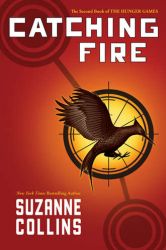
Catching Fire

Catching Fire
© Suzanne Collins 2009
391 pages

 When Katniss Everdeen stepped foot into the arena of the 74th Hunger Games, she didn’t expect to leave alive,  let alone a victorious symbol of rebellion and hope against tyranny. She defied the odds and the rules, but she won all the same; there’s no business like show business. Now they want her back for more.
In Katniss’ world,  a depraved Capitol forces twelve subordinate districts of the nation to each send two of their young people to compete in gladiator games to the death. Perhaps the greatest comfort of having won the games is exemption from having to compete again…but when the 75th anniversary of the games’ being instituted rolls around, the powers that be decide to prove to their subjects that “even the mightiest” are no match for the power of the state. For the 75th games, the competitors will be drawn exclusively from the ranks from past victors…which is unfortunate for Katniss, because she’s the only female victor from her district. The leader of the Capitol, President Snow, sees Katniss as nothing but trouble…and as she prepares to fight for her life once again, she sees these games as a deliberate attempt to kill her without anyone being the wiser. Fortunately for Katniss, Capitol isn’t the only power with secret plans.

Though initially dismayed by the plot – Katniss having to survive the games again? – the games are a bigger story’s  ignition point, bringing a sea of tension to a rolling boil, and matters get decidedly interesting. Even if the plot were a rehash of the first, it might still be worth reading. This year’s contestants aren’t all  teenagers: most of the victors were adults, slowed and damaged by the years, and some are addled or elderly. Katniss may be a prime target, but she’s also young and still wired for action from the last Hunger Games. Still, nothing goes as expected.

The Hunger Games trilogy continues to provide a fast, unpredictable, and thrilling read, with characters that fascinate. It suffers only mildly from being the bridge between The Hunger Games and Mockingjay. Character drama plays a larger role here, but it’s not tiresome: Gale, Peeta, and Katniss have all put in their time as characters already, so they’re allowed to fret over some romantic tension…but even so, they’re all three bigger character than that, and each in turn swallows their stress and goes back to doing what needs to be done in the larger scheme of things — resisting the Capitol.

I cannot wait for more.

Posted in Reviews | Leave a comment

Reeds to Reals: The Hunger Games (No Spoilers)

In the not-too-distant future, civilization as we know it is long-vanished, replaced by a sprawling empire centered on North America that murders children for sport. To punish its twelve constituent districts for past rebellion, the government  of Capitol forces them to each send two children to participate in a multiweek struggle of wilderness survival and combat to the death –the Hunger Games. It is a perverse punishment that not only destroys the lives of young people, but makes their last harrowing hours into a source of entertainment when the drama is televised and made mandatory viewing, so that the people under Capitol’s yoke can “celebrate” the forever end of rebellion. But when Katniss Everdeen volunteers for the games to save her sister from dying in the arena, the days of submission are over…because Katniss doesn’t do submission well.

I was quite taken with The Hunger Games, which I read at the tail end of December, and its jump to the big screen is an impressive success, particularly visually:  the Capitol uses aesthetic styles that illustrate their inhumanity, like Soviet Union-esque brutalism, and the trite artificiality of the Capitol citizens themselves — their obsession with prettiness, the way they get caught up in the pomp and excitement of the games while ignoring the fact that they’re entertaining themselves by watching children die – is perfectly loathsome, as is their make-up.  A dramatized filming of the Hunger Games is problematic, however: although people viewing the movie aren’t celebrating the deaths of children, we are still entertaining ourselves through the onscreen depiction of the same. The film almost avoids this, however: the bloodiest deaths happen to older actors who wouldn’t look out of place being skewered on the beaches of Troy or some other sword-and-sandal epic. The death with the greatest potential for being obscene is handled as discretely as possible, with a cutaway and then a return to the saddening consequence.

In the books, Katniss tells the story, and her narration adds details and flavor that are sometimes missed in the on-screen version,  where action carries the day. There are added scenes, however, that tell the story Katniss gave in the books, and these work especially well given that they featured President Snow, who is a more prominent character in Catching Fire.  Other than this, the only real injustice given to the book was the appearance of Thresh: in the book, he and Katniss have a poignant connection, whereas here they merely brush by one another, and he’s barely more than an extra. Their moment together, bonding over the death of another character, and the consequences of that bond, were one of my favorite parts of the book and I count the movie as worse for having discarded that.

Definitely worthwhile for a Hunger Games fan.

Posted in Reviews | Tagged , | 2 Comments

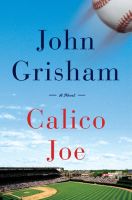
Calico Joe

Calico Joe
© 2012 John Grisham
208 pages

It’s not every day that dear old dad tries to murder your childhood hero, but such a thing happened to Paul Tracy. His dad was Warren Tracy, an abusive drunk playing for the Mets and rapidly pitching himself out of a job. His hero? Joe Castle, from Calico Rock, Arkansas, a man who had never struck out. A phenomenon behind the plate, “Calico Joe” was the greatest rookie to play the game…until the young, legendary hitter met the angry, bitter pitcher who wanted to teach the young squirt some manners. Hence, violence.  What happened between the two ruined both of their careers and drove Paul to avoid America’s game for the next thirty years. But now, with Warren on his deathbed, Paul hopes to effect his reclamation…by arranging a meeting between the two aging players.

John Grisham has dabbled in sports books before, to some success; inevitably for a southern writer, previous forays into the athletic fields were football books. Here he writes on the baseball diamond, and has produced in Calico Joe a short and syrupy sweet novel heavy on character drama rather than plot twists. I read it just after Christmas, and its theme of redemption and forgiveness fit the mood; this is a fast-flying tale that’s more of a extended short story than a meaty novel.

Posted in Reviews | Tagged , | 1 Comment

2012 Cumulative Reading List

Below is the past year’s reading, updated for the last time yesterday morning..expect the annual end of the year wrap up today or tomorrow.

Books in bold print are superior favorites.

— January — 
1. Bowling Alone: the Collapse and Revival of American Community, Robert D. Putnam
2. The Son of Neptune, Rick Riordan (Fiction)
3. Sharpe’s Honour, Bernard Cornwell  (Fiction)
4. The Positronic Man, Isaac Asimov (Fiction)
5. How the Mind Works, Steven Pinker
6. The Throne of Fire, Rick Riordan (Fiction)
7. The Misunderstood Jew: the Church and the Scandal of the Jewish Jesus, Amy-Jill Levine
8. Supervolcano: Eruption, Harry Turtledove (Fiction)
9. The Oceans, Ellen J. Prager and Sylvia A. Earle
10. At Home: A Short History of Private Life, Bill Bryson
11. Star Wars: Choices of One, Timothy Zahn (Fiction)
12. If Walls Could Talk: An Intimate History of the Home, Lucy Worsley
13. Death from the Skies! These Are the Ways the World Will End…, Phil Plait
14. Do One Green Thing, Mandy Pennybacker
15. Siddhartha, Hermann Hesse
16. Reporter, Alvin Benn

— February —
17. Star Wars: Outbound Flight, Timothy Zahn (Fiction)
18. Journey to the Center of the Earth, Jules Verne (Fiction)
19. Desert Solitaire, Edward Abbey
20. The Ingredients, Phillip Ball
21. Asphalt Nation: How the Automobile Took Over America and How We Can Take It Back, Jane Holtz Kay
22. Lucifer’s Hammer, Larry Niven and Jerry Pournelle (Fiction)
23. The Age of Louis XIV, Will and Ariel Durant
24. Sharpe’s Regiment, Bernard Cornwell (Fiction)
25. Anatomy of a Murder, Robert Travers (Fiction)
26. The Plot Against America, Philip Roth (Fiction)
27. A Time to Kill,  John Grisham  (Fiction)

— March —
28. Superfreakonomics, Steven B. Levitt and Stephen Dubner
29. A Brief History of Thought, Luc Ferry
30. The Firm, John Grisham  (Fiction)
31. Runaway Jury, John Grisham (Fiction)
32. The Ascent of Money, Niall Ferguson
33. Is It Just Me? Whoopie Goldberg
34. Founding Rivals: Madison vs Monroe, Chris DeRose
35. The Obamas, Jodi Kantor
36. Death of Kings, Bernard Cornwell  (Fiction)
37. I Didn’t Ask to be Born, Bill Cosby
38. Star Trek Voyager: Children of the Storm, Kirsten Beyer  (Fiction)
39. Life Ascending: the Ten Great Inventions of Evolution, Nick Lane

— April —
40. Blood, Iron, and Gold: How Railroads Transformed the World, Christian Wolmar
41. Salt: A World History, Mark Kurlansky
42. Nickle and Dimed: On (Not) Getting By in America, Barbara Ehrenreich
43. A Conspiracy of Paper, David Liss  (Fiction)
44. Bait and Switch: The (Futile) Search of the American Dream, Barbara Ehrenreich
45. Fast Food Nation: The Dark Side of the All-American Meal, Eric Schlosser
46. It’s a Sprawl World After All: the Human Cost of Unplanned Growth, Douglas E. Morris
47. Fablehaven, Brandon Mull  (Fiction)
48. The Coffee Trader, David Liss  (Fiction)

–May–
49. Star Trek: Department of Temporal Investigations, Christopher L. Bennett (Fiction)
50. Star Trek DS9: Worlds of Deep Space Nine Volume II, The Dominion and Ferenginar  (Fiction)
51. The Early Asimov, Isaac Asimov  (Fiction)
51. Suburban Nation: the Rise of Sprawl and the Decline of the American Dream, Andres Duany, Elizabeth Plater-Zyberk, and Jeff Speck
52. Catching Fire: How Cooking Made us Human, Richard Wrangham
53. Star Trek DS9: Hollow Men, Una McCormack  (Fiction)
54. Reefer Madness, Eric Schlosser
55. The Wal-Mart Effect, Charles Fishman
56. The Shallows: What the Internet is Doing To Our Brains, Nicholas Carr
57. Consuming Kids: The Hostile Takeover of Childhood, Jennifer Linn
58. Traffic: Why We Drive the Way We Do (And What it Says About Us), Tom Vanderbilt
59. A History of the World in Six Glasses, Tom Standage
60. Cheap: The High Cost of Discount Culture, Ellen Ruppel Shell
61. So Sexy So Soon: The New Sexualized Childhood and What Parents Can Do to Protect Their Kids, Diane E. Levin and Jean Kilbourne
62. Why We Get Sick: the New Science of Darwinian Medicine, Randolph M. Nesse and George C. Williams

–June–
63. Why We Get Fat: and What To Do About It, Gary Taubes
64. The Witch of Hebron, James Howard Kunstler (Fiction)
65. A Blaze of Glory, Jeff Shaara (Fiction)
66. Cinderella Ate My Daughter! Dispatches from the Front Lines of the New Girlie-Girl Culture, Peggy Orenstein
67. Hot, Flat, and Crowded: Why America Needs a Green Revolution, Tom Friedman
68. Rebel, Bernard Cornwell
69. The Great Good Place: Cafés, Coffee Shops, Bookstores, Bars, Hair Salons and Other Hangouts at the Heart of a Community, Ray Oldenburg
70. Something from the Oven: Reinventing Dinner in the 1950s, Laura Shapiro
71. The Green Metropolis: Why Living Smarter, Living Closer, and Driving Less are the Keys to Sustainability, David Owen
72. The Great Stagnation: How America Ate All the Low-Hanging Fruit of Modern History, Got Sick, and Will (Eventually) Feel Better, Tyler Cowen
73. Founding Brothers: the Revolutionary Generation, Joseph Lewis 

–July–
74. Our Sacred Honor, William J. Bennett  
75. Bringing up Bébé, Pamela Druckerman 
76. The Good Citizen, Robert Bellah, Cornel West, et. al 
77. A People’s History of the Civil War, David Williams
78. French Lessons: Adventures with Knife, Fork, and Corkscrew, Peter Mayle 
79. French Women Don’t Get Fat,  Mireille Guiliano 
80. The Age of Napoleon, Alistair Horne
81. Sixty Million Frenchmen Can’t Be Wrong, Jean-Benoit Nadeau and Julie Barlow
82. Star Trek TNG: Q-in-Law, Peter David
83. Star Trek TNG: Ship of the Line, Diane Carey
84. Star Trek DS9: Station Rage, Diane Carey
85. The Ghosts of Evolution: Nonsense Fruit, Missing Partners, and Other Ecological Anachronisms, Connie Barlow
86. First Family: Abigail and John Adams, Joseph Ellis
87. The Artificial River: the Erie Canal and the Paradox of Progress, 1817-1862, Carol Sherriff

 denotes Independence Day reading.
 denotes Bastille Day reading.

–August–
88. Lost Moon: the Perilous Voyage of Apollo 13, Jim Lovell and Jeffrey Kluger
89. John Adams, David McCullough
90. Coup d’Etat, Harry Turtledove
91. The Wild Life of Our Bodies, Rob Dunn
92. Bad Astronomy, Phil Plait
93. A Man on the Moon, Neil Chaiken
94. Q-Squared, Peter David
95. The Family Corleone, Ed Falco
96. The Tell-Tale Brain, V.S. Ramachandran
97. They Eat Puppies, Don’t They? Christopher Buckley
98. Consuming Power: A Social History of American Energies, David Nye
99. Star Trek DTI: Forgotten History, Christopher L. Bennett
100. Dialogues and Essays, Seneca
101. Star Trek Typhon Pact: Plagues of Night, David R. George III

–September —
102. The Most Glorious Fourth:  Vicksburg and Gettysburg, July 4th 1863, Duane Schutlz
103. Star Trek Typhon Pact: Raise the Dawn, David R. George III
104. Summer of my German Soldier, Bette Green
105. Empire of Illusion: the End of Literacy and Triumph of Spectacle, Chris Hedges
106. No Logo, Naomi Klein
107. The Sun’s Heartbeat, Bob Berman
108. Moon Shot: the Inside Story of America’s Race to the Moon, Alan Shephard and Deke Slayton
110. Mudhouse Sabbath, Lauren Winner
111. The Numerati, Stephen Baker
112. The Conundrum: How Scientific Innovation, Increased Efficiency, and Good Intentions Can Make Our Energy and Climate Problems Worse, David Owen
113. Hamlet’s Blackberry: Building a Good Life in the Digital Age, William Powers
114. Germany: Unraveling an Enigma, Greg Nees 
115. Waste and Want: A Social History of Trash, Susan Strasser
116. Salvation on Sand Mountain, Dennis Covington

— October —
117. Gone Tomorrow: the Hidden Life of Garbage, Helen Rogers
118. Guyland: the Perilous World Where Boys Become Men, Michael Kimmel
119. The Lolita Effect: the Media Sexualization of Young Girls and What We Can Do About It, M. Gigi Durham
120. Fantastic Voyage, Isaac Asimov
121. The Twelfth Imam, Joel Rosenberg
122. Thoughts on Building Strong Towns, Charles Mahrohn
123. The Tehran Initiative, Joel Rosenberg
124. The Winter King: A Novel of Arthur, Bernard Cornwell
125. Going Up the River: Travels in a Prison Nation, Joseph Hallman
126. Enemy of God: A Novel of Arthur, Bernard Cornwell
127. Flushed! How the Plumber Saved Civilization, W. Hodden Carter
128. Bitterly Divided: the South’s Inner Civil War, David Williams
129. Ask Click and Clack: Answers from Car Talk, Tom and Ray Magliozzi
130. Jesus: Apocalyptic Prophet of the New Millenium, Bart Ehrman

–November–
131. The Mark of Athena, Rick Riordan
132. Excalibur: A Novel of Arthur, Bernard Cornwell
133. Watching the English: the Hidden Rules of English Behaviour, Kate Fox 
134. Notes from a Small Island, Bill Bryson 
135. The Long Earth; Terry Pratchett and Stephen Baxter
136. Twilight of the Mammoths: Ice Age Extinctions and the Rewilding of America, Paul S. Martin
137. Space Chronicles: Facing the Ultimate Frontier, Neil deGrasse Tyson
138. A South Divided: Portraits of Dissent in the Confederacy, David Downing
139. Hominids (Neanderthal Parallax), Robert J. Sawyer
140. 1493: Uncovering the New World Columbus Created, Charles C. Mann

— December —
141. Star Trek Voyager: the Eternal Tide, Kirsten Beyer
142. Cattle: An Informal Social History, Laurie Winn Carlson
143. Supervolcano: All Fall Down, Harry Turtledove
144. The Great Railroad Revolution, Christian Wolmar
145. The Humans Who Went Extinct, Clive Finlayson
146. Riding Rockets, Mike Mullane
147. The Racketeer, John Grisham
148. The Hunger Games, Suzanne Collins
149. The Road to Serfdom, F.A. Hayek
150. Twilight, Stephenie Meyer

Posted in General | Tagged | 1 Comment

Sparkly Hayek

Yesterday I finished my last read for 2012, which was…Twilight. Yes, the sparkly-vampires-playing-baseball book. I read it as a joke. It turned out to be a rather mean joke on myself, because it consisted of 400 pages of two lovesick teenagers emoting over one another — “Oh, Edward!” / “I can barely restrain myself from jumping your bones!” — 30 pages of suspenseful action, and then ten more pages of emoting.  I read the book out of curiosity; though familiar with some of the criticisms levied against it (like it condoning sketchy behavior),  I prefer seeing things for myself.  But this was…bad. Worse than Angels and Demons, and even worse than Left Behind. Things happened in Left Behind.  This is such a very large book of gush, of lingering descriptions about Edward’s chest, and embarrassing displays of intense emotion that aren’t in the least believable and scream wish fulfillment.  And I’m told — by a fan of the books — that the sequel is even less eventful.

Wow.  
So, I will not be reading the rest of the series, unless I do something awful and need to atone for it. 
Shortly before that, I finished The Road to Serfdom by F.A. Hayek, a work of economic and political philosophy which is sharply critical of any government involvement in economics and argues for classical liberalism, for free markets and an emphasis on individual rights and responsibilities. The book consists of a series of essays which elaborate on the problems of planned economies. I must confess to somewhat liking Hayek, even if I find most of his ideas objectionable, because his writing is almost fussy in its exactness, and his general spirit one of humility and prudence rather than sneering dismissal. I find him at his most convincing when writing on the the limits of our knowledge, of how problematic our attempting to  manage from the top down, something as complicated as an economy, is…largely because unintended consequences, ‘blowback’, is a topic I can’t seem to get away from these days.  His flat denial that no checks need to be made to curb the power of economically successfully companies, to break monopolies, strike me as risible, and there’s always something entertaining to me about an intellectual safe and well-fed in an academic job writing on the virtues of market forces that effect the lives of working folk far more than him….entertaining in the way the insect on the leaf  alleging that there is too much life among his hungry brethren in the dust is entertaining, if I might borrow from A Christmas Carol.  
I did enjoy the book, though, and suspect I may be grappling with Hayek again in the future..
.
Posted in Reviews | Tagged , , , , , , | 4 Comments

The Great Railroad Revolution

The Great Railroad Revolution: A History of Trains in America
© 2012 Christian Wolmar
448 pages

The United States’ history is one written with novelty: born in the dawn of the industrial age,  America was a blank slate for technologies with the potential to transform societies – technologies like the railroad. Rail historian Christian Wolmar sees the history of railroads and the United Statesas inextricably bound to one another: they came of age and rose to power together. Their mutual ascendancy is the source of The Great Railroad Revolution, a marvelous history of both.

The story of trains begins not in the United States, but in England, where cars on rails pulled by horses were used to transport coal relatively short distances. Early in the course of the industrial revolution, however, a series of inventions allowed for the complicated and powerful system of the railroads to be born. The United States’ need for efficient inland transportation made it an early adopter of the rails, and as the young nation pushed west it did so under the puffing smoke and whistle of a steam engine. In Blood, Iron, and Steel, Wolmar demonstrated how important the rails were to economic development and expansion. Here, he’s able to drive home the same lessons, but at the same time give more coverage to smaller topics. He devotes a chapter to the rails’ role in the Civil War, for instance, and argues for his belief that they allowed the conflict to metastasize from a small dust-up into a continent-wide brawl that consumed the lives of millions, by giving both governments the technology they needed to shift massive armies across regions and keep them supplied with food and ammunition. In “Rails of All Kinds”, he covers trolleys, which were the first form of public transportation, and even the short-lived interurban lines, which were electric trains connecting cities short distances apart. Although a rail advocate, Wolmar doesn’t shy away from the negative aspects of the railroads’ legacy like the abuse of power that companies held over farmers in the midwest, who lived so far from population centers that they were dependent on the railroads to get their goods to market.

Americans have a curious relationship with railroad companies, Wolmar writes, describing it as an affair that began passionately and ended with enthusiastic rejection. The book’s final quarter tracks the decline of the railroads as a reaction against their abuses and subsidized competition from the automobile. The decline wasn’t inevitable, but Wolmar sees the rail companies as hampered by the baggage of their own history. In spite of their rapid decline, though, the American system is still one of the largest,and the best means of moving freight across the company. His conclusion urges Amtak to adapt to changing circumstances and give up the thought of long-distance passenger transport, which he views as a waste of their precious resources. Far better to play to the rails’ strength, which is freight and regional passenger transportation.

The ending is mildly disappointing: in this age of rising oil prices and the contraction of automobile-dominated suburban sprawl, the rail lines’s future seems more promising than just freight delivery. Even so, this is a delightful history of the railroads in the United States, one that demonstrates that their fall to the cars wasn’t a foregone conclusion.

Selected Bibliography:

The Transportation Revolution, George Rogers Taylor
 All Aboard: the Railroad in American Life, George H. Douglas
Passage to Union: how the Railroads Transformed American Life, Sarah Gordon
Enterprise Denied, Albro Martin
Railroads Triumphant, Albro Martin
Urban Mass Transit, Robert C Post
The Electric Urban Railways, George Hilton and John F. Due
Urban Mass Transit, Transport or Suburbia: Beyond the Automobile Age, Paul Mees

Posted in history, Reviews | Tagged , , , , , | Leave a comment

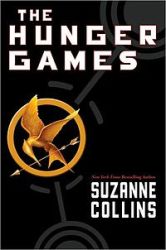
The Hunger Games

The Hunger Games

© 2008 Suzanne Collins
 378 pages           

 Once every year,  two teenagers are chosen at random to represent their region in a nation-wide game….the Hunger Games. But they’re not competing in track and field or spiking volleyballs to earn metals:  they’re fighting to the death. And you thought high school sucked.
The Hunger Games is the first in a science-fiction trilogy set in a dystopia future wherein the United Statesis gone, replaced by a country known as Panem. Its central city, Capitol, is rich beyond measure, and rules with an iron hand twelve outlying districts, all impoverished. There used to be thirteen districts, but when it rebelled against the state the insurrection was brutally put down…and to ensure that no other district bucked the reins again, Panem instituted the Hunger Games, forcing two kids from every district to compete against one another, fighting one another until only one survives.
Katniss Everdeen is a voluntary contender in the games, fighting so that her young sister Primrose doesn’t have to. She is, in effect, taking a death sentence: the odds are long that she will prevail among the 24, because other, wealthier districts train their children for the yearly games and see them as a place to earn wealth and glory.  Katniss’ home, District 12, is a poor mining area: they see the games for what they are, the murder of children for the glorification of a malevolent state. But Katniss is up to Capitol’s challenge. Orphaned by her father and functionally abandoned by her mother,  she shouldered the burden of  responsibility for herself and her sister, defying the laws to hunt secretly in the woods bordering her district and bringing home food for her family . It takes courage to live outside the law, but Katniss is determined to survive. That, and the survival skills she’s learned pacing the woodlands in search of prey,  are her best hope.

The Hunger Games is not a happy story. It is brutal and intense, both in terms of action and the emotional turmoil readers joining Katniss will go through. The physical challenge is daunting enough:  Katniss is not only compelled to fight against 23 other teenagers abandoned in the woods, having to provide her own shelter and food, but the Capitol authorities, the “Gamemakers”, constantly imperil the contestants,  altering the weather and sending monsters to harry the tributes. The young people create alliances to survive, but temporary physical advantages carry their price: it’s a lot more difficult to kill a friend, and a lot easier to be killed by someone you regard as an ally.

Happy it isn’t, but The Hunger Games proved more compelling than I expected it to be. Katniss is an indomitable central character, feisty and self-reliant. She never whines, and though she has vulnerabilities she doesn’t waste time dwelling on them.Other characters, like the mysterious Rue and the brooding Peeta, prove able additions to the cast. She’s easy to root for, even when forced to make difficult decisions. And happily for a teen novel, there’s not a lot of dwelling on romance — although it does factor in, and will become more important in the sequel.  

This is essentially a story about courageous young people in harrowing circumstances, attempting to survive not only ‘the slings and arrows of outrageous fortune’, but the Capitol’s attempt to destroy their own sense of humanity. It’s a fast, thrilling read, peopled by strong characters whose maturity gives the lie to the conflation of adolescence and silliness. 

           
Posted in Reviews, science fiction | Tagged , , , , , , | 4 Comments

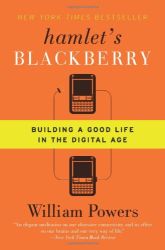
Hamlet’s Blackberry

Hamlet’s Blackberry: Building a Good Life in the Digital Age
© 2011 William Powers
288 pages

Getting online used to require sitting in front of a computer terminal and waiting for it to dial in, oh so slowly. It was a choice to connect, one which required effort. But now the online world has expanded to encompass the real: we are constantly connected to it, and virtually nothing happens outside its context. If the online world is the web, we are flies trapped in its silken strings. We have not lost our mobility, however, but our peace of mind – and a certain richness of experience.  But the internet is new yet, and our powerlessness is only temporary. We may yet adapt, and in Hamlet’s Blackberry, William Powers attempts to channel the wisdom of generations past, who likewise witnessed technological revolutions in the way they interacted with one another and information.

  After an opening section that elaborates on the problems of hyperconnectivity, Powers turns to philosophy as the guide to the good life.  This is not the philosophy of academics, the impotent discussions on how many Ideal Forms can dance on the head of a pin in Plato’s cave: this is philosophy as it was once practiced: an inquiry into life.  To keep our head, we must live consciously, and this is emphasized throughout. Powers begins (naturally) with Socrates, who with his companion Phaedrus seeks respite from the noise and business of the city by going for a walk into the wild.  Although putting distance between ourselves and distractions sounds nice, today it’s not necessarily practical: we’ve integrated digital connectivity into so much of the world that even wildernesses have wi-fi hot spots. More helpful is the second chapter, set in Rome, where Seneca’s Stoicism is touted as the key to a steady mind, and his practice of letter-writing as a means of focusing amid the clamor of the city. In Elizabethean England, Hamlet uses an erasable pad to organize his thoughts – overwhelmed by all of the information he and the world were beginning to experience during the scientific revolution. Benjamin Franklin is tapped as a mentor for self-growth, and in 19th century New England,  Henry David Thoreau illustrates the value of establishing the home, at least, as a refuge. Last and possibly least-recognized is Marshall McLuhan, who led the way in analyzing how technology changes mental culture, and who here prompts readers to consider how much the use of a particular technology is going to expose them to unwanted distractions.  To end, Powers examines ways he has pushed back against chronic connectivity in his own life, establishing ‘internet sabbaths’ where he and his family stay disconnected throughout the weekend. The result, he found, was astonishingly liberating and restful.

Powers’ work is essentially moderate; he advocates that people adapt to new technologies, instead of being dominated by them (as are most people these days) or simply rejecting them, as is my tendency.  The premise of the work isn’t quite accurate (Thoreau and McLuhan are the only ones responding deliberately to a new technology), but Hamlet’s Blackberry is useful just for challenging the general attitude toward connectivity, namely that More is Better.  Powers emphasizes the quality of experience, and  his guides are largely helpful in pointing out ways to increase that quality. Definitely of interest to most readers.

Posted in Reviews | Tagged , , , , , | 2 Comments

The Racketeer

The Racketeer
© 2012 John Grisham
340 pages

Malcolm Bannister is a largely unsuccessful lawyer who was imprisoned by an overly aggressive government prosecutor when he accidentally turned  his law firm into a shell company for a shady crook who needed to launder a lot of money.  Two years in a minimum-security prison camp are sufficient to turn him from a struggling bungler into a mastermind, and the tangled web of deception he weaves begins when Bannister approaches the FBI with information that can help them solve the execution-style murder of a federal judge. Although at first the plot seems straightforward — Bannister turns state’s evidence and is then ostensibly pursued by the man whom he helpd indict’s friends — by novel’s midpoint Bannister reveals himself to be an unreliable narrator, whose machinations and ultimate motive are as confusing to the reader as they are to his victims. It’s as if upon pulling the first rabbit out of his hat, Bannister was so impressed with himself that he kept doing it — “And another! And another! And another!”  The resulting frenzy and self-congratulatory antics quickly grew tiresome. The Racketeer is somewhat reminiscent of The Partner, in that the main character is in the middle of an extensive and extremely complicated con that will make him very rich, but unlike him in that instead of wanting to be left alone,  Bannister goes out of his way to entrap people and  cackle at his brilliance. I hoped earnestly that things would go awry, but every part of his plan falls into place in this light-action ‘thriller’  loaded with unsympathetic characters, leading to a smug conclusion that made me wonder if I could get the receipt for this book and return it.

I’ll let the author’s note speak for itself..

“Almost nothing in the previous 340-odd pages is based on reality. Research, hardly a priority, was rarely called upon. Accuracy was not deemed crucial. Long paragraphs of fiction were used to avoid looking up facts.”

The Racketeer has earned the distinction of being my least-favorite Grisham novel among all of his adult fiction.  It has the merit of an interesting cover, though. I do like hats.

Posted in Reviews | Tagged | Leave a comment