Selma 1965

Selma 1965: the March that Changed the South
© 1974, 1985, 2015 Chuck Fager
257 pages (2nd edition),

Last weekend, my hometown suddenly became host to two presidents, a hundred members of Congress, and enough people to see it swell over ten times in size.The event was the 50th anniversary of the Selma march. In 1965 over half the population of my hometown couldn’t vote; its black populace. Though guaranteed suffrage by the US Constitution,  local registrars threw up impediments in the form of extensive literacy tests and limited registration times to keep the vote restricted. Although  these tests limited poor blacks and whites alike, the effects were especially manifest in the black community: less than 1% of the same were registered to vote. The greatest obstacle in the face of full citizenship, local voting-rights activists thought, was not the scheming of the elite or even the lack of concern of the city’s white population: it was the utter resignation of the city’s poor blacks, who seemed to have given up hope.  With the aim of inspiring the same, local voting rights leaders, working with national organizations like the Students Nonviolent Coordinating Committee, invited Martin Luther King, Jr. to add his energy and talent to the campaign. That invitation put Selma at the center of a national crisis on Sunday,  March 7th, when King’s strategy of provoking responses drew the wrath of the Alabama State Troopers onto a peaceful mob marching towards Montgomery.   Weeks later, another far larger march crossed the bridge and trekked three days to the Capitol, and among its numbers was young Chuck Fager. His history of the Selma movement covers the road from despair to jubilation in a manner respectful of the fact that Selmians, black and white alike, had found their city as the site of the American nation’s final attempt to work out its salvation from a history of racial strife.

King, following the dictium of Gandhi that the function of a civil resister is to provoke a response,  launched a series of actions designed to thwart being ignored.  The status quo would be strained, the establishment would be pushed, and either it would give way or fight back in such a way that the sin within could not help but be exposed. A series of increasingly aggressive displays, including night marches on the courthouse, followed.  City leaders fumbled for an appropriate response; they knew pushback was exactly what King wanted, but something had to be done. Nothing good would come of mobs wandering about at night.  Under such stress, rationality proved a poor opponent for human nature; thoughtful indecision gave way to the unfortunate authority invested in Sheriff Jim Clark. Clark was a swaggering lawman whose bellicosity was such that the Council was attempting to divert away his power into a new public safety manager, but in that late winter of  ’64-’65, he still had his teeth — and he knew how to respond to any challenge, with the baton.

On March 7th, the growing movement within Selma began what was to be a march to Montgomery to plead for the Governor to intercede. It didn’t matter that the registrar’s office and the city council were making timid attempts to appease the movement; this was a drive gaining power, and only sweeping changes would satisfy.  Across the bridge, in Selmont, were waiting a formation of Alabama State Troopers, and a roughneck posse led by the the sheriff. What followed was war, pure and simple. While King had wanted to expose the violence inherent in the system, he awoke the violence inherent in the human animal at war. When the six hundred marchers were ordered to turn back and refused, horror was released. There were no peace officers subduing unruly subjects that day, only Mongols in police uniforms,  striking into the mass with the ferocity of a warband and routing them. Not content to simply turn back the march,  the State’s troopers chased the gas-stricken crowed across the bridge and into the city, block after block, hunting down and beating any man, woman, or child on the street around the movement’s epicenter within the projects, Brown Chapel.

The horror of that day is remembered  as Bloody Sunday, but it is what followed afterward that makes it one of the pivotal movements in American history. The black people of Selma were beaten, but not broken, by the State’s retaliation. King and other leaders upped the ante, calling for ministers and volunteers throughout the nation to join them.  And they came, by the hundreds. Fager places particular importance on the swelling numbers of white ‘outside agitators’ who joined Selma’s black community in fighting for full voting rights:  taking their perspective, Fager writes that the black populace was astonished and moved by so much white support. Here at last was hope that racism  need not forever exist.  Eventually they marched again, though it took several weeks: an immediate attempt on March 9 (“Turnaround Tuesday”) was stopped by the State troopers again, but by March 26th the Federal government had moved. It couldn’t help but do so:  scenes from March 7 had been broadcast throughout the country which was now demanding action. With National Guard troops  present and the eyes of the nation upon them, King led a third march across the bridge, this time to Montgomery.

Selma 1965 succeeds wonderfully in bringing together two dramas; the struggle of the city’s poorer classes to claim the franchise that was their right, under the law, and the culmination of the national Civil Rights movement, being its last and best publicized campaign. Although it began as a local movement, and King aside was being maintained by Selma’s own black leaders, after Bloody Sunday it became the object of national attention. Crowds formed in other American cities to ‘march with Selma’, and three of the four people who lost their lives in connection with the Selma campaign were out-of-state visitors who answered King’s call. Some were accidents —  While transporting protesters and supplies,Viola Liuzzo  had the luck to encounter a carload of Kluckers from Birmingham, who seized the opportunity to shoot her down. Other casualties included Jonathan Daniels, a seminarian who defended a young girl from an aggressive lawman in Haynvesville, and another young man named Jimmie Lee Jackson in Marion who shielded his grandmother from the constable’s bullets. Only James Reeb died in Selma those dark hours; another clergyman,  he took a wrong turn and was beaten in the streets outside a roughneck bar.  These deaths increased the tensity, and slowly control trickled out of the hands of local governance and into federal courts.

The original version of this work was a triumph, I think, an impassioned history of the Selma march which managed to be fair to its citizens, whose own failures were not extraordinary and who certainly did not ask to become the poster children for racial hatred. The city fathers were just as contemptuous of the Kluckers following King to stir up trouble their way as they were of him stirring up trouble his way.  They were raised in a tradition that was wrong; the bridge forced them to own up to the injustices. Fager notes in his original version that the progress that followed the violence was extraordinary. The additional sections added for the 50th anniversary, however, are not not nearly as strong, dedicated as they are to the noisy fight between  two lawyers and a special interest  group over the placement of a Civil War bust in a cemetery that can only be seen if you go looking for it. It’s an ugly fight on the margins, one the city’s people are utterly sick of seeing publicized regardless of skin color. This was certainly a worthy read for me, connecting stories I’ve heard since childhood into a coheisve hole, and filling my home’s streets with historical actors.

Related:
A Power No Government Can Supress, The Zinn Reader; Howard Zinn

Posted in history, Politics and Civic Interest, Reviews | Tagged , , , , , , | 4 Comments

The Iron Web

The Iron Web
© 2009 Larken Rose
363 pages


All Jessica wanted to do to celebrate her 19th birthday was go camping and test out her skills navigating with a GPS. At no point during the celebration did she want to include her passenger plane getting shot down from the sky and crashing in the middle of a war zone. But that’s life. Her new home, Graveston, is the site of a Waco-style standoff between the Federal government and what the news is calling an anarchist cult.  Jessica is nursed back to life by a kindly priest living in the no-man’s land between the lines, but to her perplexity he doesn’t seem to be too alarmed at the nearness of the terrorists. Nor, for that matter, do his amiable neighbors. When a Humvee crashes through the wall and dumps a bunch of ATF agents, guns a-blazing,  she realizes why. Her rescuers are the terrorists! She’s not the only one in for a surprise, however: when one of the Federal agents left behind in the raid becomes captured by the ‘cult’, he too is taken aback by the lack of evil villainy.  These people don’t seem to be concocting any nefarious schemes; they’re not building bombs, robbing banks, or planning the assassinations attributed to them by the media. Some of them are even pacifists! Something is rotten in the state of Arizona.
The Iron Web is a  philosophical argument doubling as a thriller. At its heart is the titular iron web, which is less a terrorist organization and more a symbol of self-ownership and voluntary association.  The book is peppered with conflicts between people and the will of the state, establishing tension that leads to good arguments. Argument constitutes the meat of the book, in fact, though it’s no extended lecture;  conversations occupy the intermittent quiet moments between the agents’ assaults on the besieged community, of which Jessica and the ATF agent Jason find themselves unwitting members.  Although  the people they met hold to various and sometimes completing political philosophies (there are Constitutionalists, anarchists, and hippies are among their number),  all agree to the same principle: no person has ownership over another.  The ‘web’ is a visual representation of how people’s lives are knit together through voluntary exchanges; in the story, the symbol is displayed by persons interested in dealing with one another off the books, creating an underground economy independent of the state. No bombing campaign could frighten the US government more than such subversiveness! Another viewpoint character named Betsy, an executive assistant attached to a senator about to be inaugurated as president, offers still more room for tension: the closer the senator gets to assuming political power, the more manipulative and abusive he reveals himself, and Betsy starts to question just who it is she’s been following. He won on a campaign of fighting terrorism at home, but his plans for the future involve the effective abolition of free speech. Her disillusionment with the president-elect rises as the ‘terrorists’ are pushed to their breaking point, but this would be no thriller were the ending predictable. Just as the Iron Web is not a terrorist organization, so to are other appearances deceiving.
 
What makes The Iron Web work so well as a novel is that its  ultimate villains are, in effect, the reader. The ATF agents persecuting the Iron Web are not out to perpetuate a police state and push around the weak; they sincerely believe themselves to be the champion of law, order, and justice. Jason becomes the Web’s confederate, but he could have just as easily killed them at the state’s bidding had he not been injured in an earlier attempt to subdue them. What altered was his awareness, and Larken’s aim is to shift the readers’.  Blame is laid, V-like, at the foot of the American people who have allowed the state to become God, who tolerate its invasion of every aspect of their lives, to allow its violence to become the norm. Not the violence of the ATF’s campaign against the Iron Web, its pushing them further and further into the woods, burning their homes and shooting them down one by one. Confrontations like these are out of the ordinary. What’s most insidious is the mundane tyranny of the state’s agents that people encounter virtually every day — creepy TSA agents, petty cops,  corrupt politicians, and exacting IRS officials.  The ‘leader’ of the Iron Web community, and Rose himself, urges those who believe in self-ownership to practice what they preach, and own up to the responsibility that comes with that ownership: resist. Few readers are likely to adopt, whole-cloth, the author’s radicially individualist philosophy, but this is a book whose challenges are less preachy than fun.  I’ve read it twice this year, and the ending was just as astonishing the second time around.   This is absolutely reccommended.
 
 
Related:
V for Vendetta
Posted in Politics and Civic Interest, Reviews | Tagged , , , , , , | 1 Comment

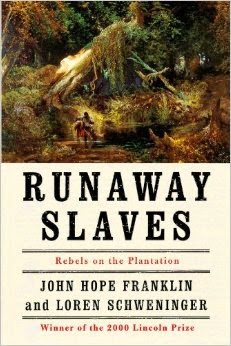
Runaway Slaves

Runaway Slaves: Rebels on the Plantation
© 2000 John Hope Franklin, Loren Schweninger
480 pages


Easily the most horrible aspect of American history, is the institution of slavery.  Indentured servitude had been a historical norm for centuries before, of course,  usually the mark of war, but in America it was paired with racial ideology to become utter evil.  Although it eventually perished in 1865 at the hands of the 13th amendment, those whose lives it claimed were not necessarily willing to wait for freedom to be granted;  instead, they took it. In Runaway Slaves, historians John Hope Franklin and Loren Schweninger establish how chronic absenteeism and escape were throughout the slave states, revealing the institution’s gross unnaturalness and complete incompatibility with the human spirit.

Precious few people in the 21st century need to be convinced that slavery was wretched, and the few who maintain that it was a necessary evil, or that its abuses were exaggerated out of proportion, would do well to confront Runaway Slaves, presenting as it does not only one human story after another about men, women, and even children resisting tyranny over their lives, and ‘voting with their feet’ by  escaping into the wild, but statistical evidence that reveals how persistent a problem runaways were.  Readers might expect the abused to flee, and so they did, but here too are stories of slaves who were treated ‘well’ — plantation pets, like the few Jefferson kept in his mansion and doted on.  Even when provided with an allowance, comfortable quarters,  and easy work, slaves still persisted in running off from time to time ,to the utter bewilderment of owners who concluded that some Africans were simply born mad.  The runaways were not simply driven by some principled insistence that they ought to be free;  the most common motive cited here is reunification with family.  Of course, the data is incomplete; many runaways simply disappeared into history, and their motives and stories will never be told. Most did not attempt to to transverse the entire country to make into a free state, or Canada; instead, Franklin and Schweninger report, they either lingered around the edges of plantations (to be close to family, or help them escape), or migrated to a large city like Baltimore or New Orleans, where they could lose themselves in the masses that included substantial populations of free blacks. Because the data the authors work with spans most of the 19th century, readers will also appreciate slavery evolving as an institution;   legal terms of servitude that expire give way to perpetual bondage, and captured African tribesmen still bearing the tattoos and piercings of their tribe’s customs become the fathers of generations born into slavery, knowing nothing else.

Runaway Slaves is a solid piece of historical writing, providing human faces to the many thousands gone,  turning a multitude once viewed as a factor of production into lives who must be reckoned.  As soul-wearying as it can be to realize how many lives were wasted away in bondage, there is also room for hope in the fact that resistance was never absent from the scene. Regardless of beatings or bread and circuses, men are, and of a right ought to be, Free.

Posted in history, Reviews | Tagged , , , , , , | Leave a comment

@ War

@ War: The Rise of the Military-Internet Complex
© 2014 Shane Harris
288 pages

In the 21st century, intelligence and war are no longer the domain of pipe-smoking spooks hiding behind newspapers, and uniformed soldiers on the march. When so much of a nation’s livelihood rides on computer networks – both internal ones, allowing massive systems to be controlled from a central office , or an external connection to the internet at large – protecting those systems from harm is as important today as protecting factories and bridges was for the powers of World War 2.  @ waris a quick review of  new vulnerabilities and opportunities exposed by the digital age, an unsettling account  of power on the rise. Attacking networks offers new means to conventional ends (stealing plans for military technology remotely, for instance), as well as new ends altogether, like using viruses to shut down energy networks or cause financial market crashes.Additionally,  cyber warfare has changed the nature of the powers involved: while few powers would take the risk of sending a strike team into a foreign country to engage in widespread sabotage during times of peace, the ethereal domain of the internet allows for powers within China to continually engage in skullduggery against US companies. The same are also engaging in skullduggery right back, which is another interesting facet. Mention the privatization of war, and paid mercenaries like Blackwater come to mind – but this is warfare of another kind.  Private digital security firms, in fact, are sometimes more feisty than the state’s own, biting back with next-gen tools. Not that the two are necessarily competing; as Edward Snowden revealed, connections between private companies like Google and AT&T and the government are commonplace now. Google works with the NSA to help increase its own security, and telecommunications companies build in backdoors to their machines and software that give the government easy access for listening in. Cyberwar may be a less bloody domain of martial conflict, but the power accretion in the hands of both governments and corporations is no less dreadful. 

Related:

Posted in General | Tagged , , , , , | 3 Comments

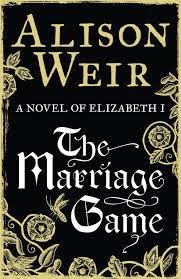
The Marriage Game

 The Marriage Game
©  2015 Alison Weir
416 pages

            In Greek mythology,  the gods punished Tantalus by subjecting him to perpetual hunger, made worse by the fact that food and drink were both seemingly close at hand.His every attempt to drink the water he stood in or to pluck fruit from the limbs hanging low with bounty above him, was thwarted; the objects of his desire both moved away from his touch.  The Marriage Game tantalizes readers in much the same fashion, being the story of how Queen Elizabeth kept half the royal princes of Europe, and one longsuffering English noble, on the string for two decades.  Although touching on diplomacy and war throughout Elizabeth’s reign (diplomacy and marriage being interconnected affairs in Tudor days), The Marriage Game is chiefly a tale of emotional manipulation and self-torture.

   Among the requirements for  peace and stability in premodern Europe was a unbroken line of succession among the monarchy. If a king died without a clear heir, competing claimants could ruin a nation with civil war. Such was Henry VIII’s urgency to make sure he had an incontrovertible successor that he went through six wives trying to find one who could given him a son who lived. Elizabeth faced the same dilemma to a greater degree, being the offspring of a suspect marriage: she needed a source of legitimacy more than anything. Why, in days steeped in tradition and with so much at stake, did Elizabeth avoid the marriage bed?  Possible motives are teased out through the novel, among them a skepticism of marriage borne of seeing her father’s collection of beheaded and divorced wives,  the fear that husbands and sons would be threats to her supremacy, and the fact that the possibility of marriage was an excellent diplomatic tool. So long as the princes of Europe thought Elizabeth might marry into one of their families, they were less disposed to threaten war — useful, given that Elizabeth’s precariousness, the questionably-legitimate ruler of a state divorced from the Catholic faith of all of Europe. If she actually married into those families, all would be lost: England would be entangled into France and the Holy Roman Empire’s innumerable conflicts, or worse yet into the brewing religious wars that would set fire to the blood of England’s own bloodthirsty radicals and reactionaries. But if she could only make them think they had a shot,  England might safely navigate the rocks and shoals of 16th century Europe.

    Leading on the aristocracy is one thing, leading on herself and a subject she evidently loved — along with the reader — quite another. A variety of European princes try to woo Elizabeth’s hand; French princes, Spanish kings, a Holy Roman archduke, some Swedish fellow — but none stood a chance against her own “Eyes”, her Master of Horse, her Robert Dudley. Friends since childhood, and heavy-petting companions, Robert and ‘Bess’ spend the entire novel being miserable over one another. They are in love, regardless of how many people they lead on, but this is one relationship doomed from having its happily ever after.  They are enraptured by one another, yet never find fulfillment; Elizabeth is forever dancing away, either because the country would riot at a queen marrying a lower-born noble whose parents were condemned as rebels, or because it’s too diplomatically useful to be courted as a wedding prize, or because she is intimidated by the very act of consummation. Regardless of the reasons, it’s utterly exasperating, because the same scenes reenact themselves throughout: Elizabeth and Robert get close, vow marriage, Elizabeth says ‘Just wait next year’,  expects Robert to support in council her plans for blowing off this European noble to woo that European noble,  then gets huffy when he  glances at women who aren’t royal teases. Two decades this goes on, as he gets fat and tired and she gets toothless and wrinkled.   (And then they die.)  Even when Elizabeth’s councilors have given up hope of her marrying European royalty, and grown to appreciate her rascal-at-court, she vacillates.  If it weren’t based in part on a true story, who on Earth would subject themselves to 300 pages of two people wanting nothing more to be the other’s everything, not letting themselves do it, and then dying, buried with more regrets than flowers?

Although The Marriage Game can be enjoyed,   Elizabeth and Dudley are pathetic in the truest sense of the word, and Elizabeth borders on manipulative. Unfortunately,  aside from some slight mentions of diplomacy (hard to skip the Spanish Armada) and a few token mentions of religion (also hard to skip the Pope giving the OK for Elizabeth to be forcibly removed from office), the entirety of the book is taken up with Elizabeth’s romance. It is virtually the only thing anyone is concerned with in the novel. Even when the Armada sets off, it seems to be predicated on the Spanish giving up on an Elizabethan romance.  Elizabeth was a woman worthy of awe, and an admirable monarch, but the Bess of this work is a vain, manipulative princess who allows life to waste away with control games. It’s a sad story, and an unfortunate sequel to Weir’s charming  The Lady Elizabeth.

Posted in historical fiction, Reviews | Tagged , , , | 3 Comments

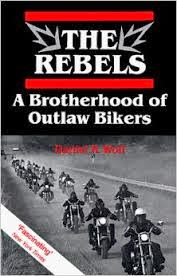
The Rebels: A Brotherhood of Outlaw Bikers

The Rebels: A Brotherhood of Outlaw Bikers
© 2000 Daniel Wolf
372 pages

Ever wonder what  it’s like to ride with a biker gang? They held a certain fascination for Daniel Wolf, who decided to turn a local gang into an anthropological study.  The idea of an outlaw biker gang allowing an college student to hang around them, let alone record their actions during a three-year study, is apparently not as dangerous as you would think. Perhaps there’s something special about Canadian gangs, or the Rebels in particular, for one of their members listed his occupation as an IBM Technician/Bouncer. A world where computer geeks double as bar muscle is surely worth getting to know. Unlike other exposes of outlaw biking (Under and Alone, say),  The Rebels isn’t out to point the finger at bikers and take them down for their dastardly deeps. For an ‘outlaw’ biker gang, the Rebels here seem oddly peaceable; though professedly devoted to living beyond the pale, their crimes seem limited to bar brawls and smoking marijuana.  Wolf writes out of curiosity and genuine interest, not condemnation; he wants to know why this subculture holds the attraction for the men it does, and how it works. Although various chapters examine practical aspects of club life, in essence this is a book about relationships, of men relating to one another and the world at large. Wolf sees the gang as the members’ way of creating a meaningful tribe in a world shot through with alienation. Although these groups define themselves by their lawless, internally they’re quite cohesive, bound by club charters that control their behavior for the good of the unit as a whole. The Rebels, for instance, are forbidden from using hard drugs that would draw unwanted heat on the group, and made to keep their motorbikes in working order and in use for most of the riding season.  (Not biking results in fines and eventually expulsion.)   The brotherhood becomes a tribe unto itself, the polity that \claims most of the bikers’ innate clannish instincts. The loyalties of square civilians are infinitely divided, except in times of war; we are attached to abstract notions of states and provinces, as well as numerous institutions like our bar buddies, Rotary clubs,  and church. For the rebels, abstracts fall away:  effectively isolated from mainstream society by their embrace of the ‘outlaw’ ethos,  the gang is allowed to become The Tribe. The most successful clubs, Wolf notes, are those that restrict themselves to under thirty members; beyond that, the men’s ability to be significant actors within the clan is diminished.   At the heart of the Rebels is an itch to be plugged in fully to life, to be engaged with it, not pacing like a caged rat;  their greatest compliment is that a brother is ‘righteous’,  completely genuine.  Although dated by this point (the research was done in the early 1990s, and the Rebels have seen been absorbed by larger gangs), The Rebels is a standout — not as an inquiry into criminal organizations, but as a study of what tribal man yearns for and will insist on building even if it denied him.

Related:
Under and Alone, William Queen

Posted in Reviews | Tagged , , , | 1 Comment

Whiskey Sour

Whiskey Sour: A Jack Daniels Mystery
 © 2004 J.A. Konrath
288 pages

Somewhere in the city of Chicago is a sexual sadist, and it’s Jack Daniels’s task to bring him down. Jacqueline Daniels is your standard world-weary detective, tough as nails and married to the job. A member of the city’s Violent Crime Units, she certainly doesn’t have the time to maintain a marriage outside the job. Even when she plays pool for recreation, it’s against a fella she once arrested — and when she tries to date, well!  Things go awry, boyfriends wind up hostages with collapsed lungs. Such is the case when Jack becomes a sociopath’s fixation, his great and worthy opponent. The sicko calls himself the Gingerbread Man, and he’s a meticulous  S.O.B. who leaves nary a breadcrumb behind — except when he wants to lead cops into an ambush. Whiskey Sour is the first in a series of detective thrillers with similarly inspired names (Fuzzy Naval, for instance), appropriate given hardboiled detectives’ penchant for nursing stiff drinks. One might be required after reading this, for while dashedly effective as a thriller, delivering one-two punches of laughs and retches of horror,  the author’s style of alternating between the detective’s point of view and the psycho’s leaves one feeling sick to the stomach.  There are the familiar stocks of detective fiction (cynical lead, bumbling bureaucrats, informants and bent cops) as well as some of the most gruesome scenes from our own headlines. Entertaining? Utterly — but with a little too much dwelling on the obscene and gratuitous for me.

Posted in Reviews | Tagged , | 3 Comments

I Am Malala

I Am Malala: How One Girl Stood Up for Education and Changed the World
© 2014 Malala Yousafzai
240 pages

     In 2012, Islamic fundamentalists shot a girl in the face for refusing to be cowed by their forceful attempt to impose regressive mores on her village. Malala Youfsayzi then became an international celebrity, honored by the leaders of nations and even awarded the Nobel Peace Prize. I Am Malala is her autobiography,  and like the girl, utterly earnest and encouraging. Raised in a small Pakistani village, Malala’s politically engaged father  raised her to speak her mind. She was one of her school’s most diligent students, often its top-ranked. When the Taliban began moving into her area, however, that changed, and starting with the enthusiastic reaction of people to the radio preaching of a self-appointed imam who urged  a return to more puritanical mores. At first, he appealed to only the fringes, but after an earthquake leveled much of the region, it was billed as God’s wrath and became the impetus for a larger following.  Like Anne Frank, she and her family are persecuted by malicious powers, her plight ignored by the Pakistani government; but also like Frank, she never gives into despair despite waking up in a strange land, her body hooked up to bizarre machines, her family utterly absent.  I Am Malala covers her young career as a political activist, first as a student simply sending anonymous briefs to the BBC, and now as a woman on the cusp of adulthood.  I Am Malala offers a glimpse into the life of a region only familar to the US offices bombing it with drones, and delivers a sense of how it feels for one’s town to be taken over by armed lunacy.  This definitely of interest for those who need a sense that good still fights for itself in the world.
Posted in Politics and Civic Interest, Reviews | Tagged , , , , | Leave a comment

The Internet Police

The Internet Police: How Crime Went Online (and the Cops Followed)
© 2014 Nate Anderson
 310 pages

 Not since the steam engine has the world been so utterly transformed than by the Internet. Originally a military network, it is now infrastructure, undergirding modern life to a degree only surpassed by electricity.The internet is not just a physical construct of tubes and boxes; it is a social world unto itself, one created by its users.  Like every aspect of society, the internet has its dark alleys,  Mos Eisley-like havens of villainy. The Internet Police takes readers on a ridealong into those alleys, exploring the world of internet crime — and internet policing.

The Internet Police opens with a chapter on the difficulties of imposing order in the first place. In the first chapter,  the author shares the joint scheme of an enterprising cyberlibertarian, Sean Hastings, and a presumably lunanical bootleg radioman turned king of his own private island, Roy Bates. The latter took over an English gun platform from WW2, declared it his personal fiefdom, and defended it with a shotgun before settling down to eake out a living taxing seagulls and the like. The former, who decided what the world needed was a secure place where servers could host the materials respectable governments banned (like online casinos and pirating), proposed renting space in the platform.  The thing was virtually inaccessible (har har), but could connect to British web infrastructure fairly easily. The adventure didn’t work out terribly well, however, as Bates had an itching for respectability and a penchant for being dictatorial, neither of which allowed him to coexist with the pirate-haven for too long.

After concluding from the collapse of HavenCo that even a freeform place like the web needs law and order, Anderson reveals how the same has been enacted, despite the internet serving for both an extension of preexisting crime and the opportunity for new ones. Take sexual harrassment, for instance, which has been liberated from bars and dimly-lit parking garages. Computer mics and cameras,  some integral to the machines themselves, can be converted into the eyes and ears of tech-savvy voyeurs.  Readers may be familiar with trojan-horse style malware that uses seemingly innocuous bits of software, downloaded unsuspectingly through email or updates, which then  install and activate programs that can record keystrokes or open the machine up for remote control. Malicious use is not limited to petty lechers;  Collection agencies may use the software to obtain photographs of an unpaid-for computer in use, but their agents — proving that all power in human hands is liable to be abused —  are recorded here using it to leer at and blackmail customers who were caught in a state of nature before the camera. Police officers using the same means succumb to the same ends.

While collections companies and perverts may invade others’ computers with the primitive justification, “Who’s gonna stop me?”, the police are an altogether different story.  In an ideal world, they are to be accountable to the public and its law. Part of The Internet Police is a history of the myriad of ways the government has attempted to rein in the internet first through laws that allow for what is still called “wiretapping”, despite the fact that it now consists more of  integrating police software with internet service providers’ to scrutinize information being sent and received from a given IP address.  Governments also strong-arm telecommunications companies,  forcefully suggesting that they build in ‘backdoors’ to their devices and networks to allow Uncle Sam or the Crown to easily find out what a given gadget is up to.  The NSA specializes in such backdoors.  Courts as well as the police can be used to take down ‘criminals’, although here Anderson’s review is limited to the seemingly endless attempts by music companies to prosecute consumers for file-sharing.  Unlike going after the programs themselves (Napster being the most famous, with Limewire and Kazaa other heavyweights), these campaigns rendered only a lot of bad publicity.

While there’s a lot of digital crime not mentioned here (pirated video games and DRM, identity theft), The Internet Police is a fast read and one that opens up a fascinating peek into how the internet is continuing to reshape the world we live in.  Opening with the utterly bizaare story of Sealand and serving up legal thrillers in miniature, it entertains while serving as a heads up as to how vulnerable we are using unsecured systems.

Related:
New York Times article, “Spyware vs Spyware: Nate Hood’s Internet Police“
Der Spiegel article (English), “Shopping for Spy Gear“
CBS is about to air a cybercrimes show that has my interest: CSI: Cyber.

Posted in Reviews | Tagged , , , , , , , | 4 Comments

The Kindness Diaries

The Kindness Diaries
© 2014  Leo Logothetis
288 pages

                        Is it possible to travel the world just on the kindness of strangers? Leo Logothetis was inspired to find out after reading Che Guevara’s account of touring South America by motorbike. Well, almost; The Kindness Diaries follows Leo from Los Angeles to New York,  Spain to Turkey, and – after an airplane jump to India – down through Southeast Asia.   Taking nothing for his journey, Leo’s every move is dependent on the kindness of others, from his starting tank of gas in L.A, to every meal and every night’s shelter.  He does this not because he is personally poor and wants to see the world, but because depending on others opens his and the strangers’ lives to one another. He tells them his story; they tell him his. Along the way he meets with both good luck and bad – Indians adored his yellow motorbike, as one was the hero of a Bollywood film, whereas the Vietnamese government refused to allow anyone to enter the country with an object they could not carry. (One-ton bikes are notoriously difficult to tote by hand.)   This is a book with the impress of a TV show, a highlight reel in text. Like modern reality shows, there’s a twist: Leo not only throws himself on the mercy of strangers and talks about the meaning of life with them, but he returns ordinary kindnesses with extraordinary ones.  Throughout his trip, Leo changes lives by meeting  people’s needs – giving a farmer a cow, a struggling rickshaw driver his own rent-free cab, free water filtration systems for a village in India, and so on.  It’s nice, but between that and people exchanging their secrets of life (with aphorisms like“Live in the moment”),  sometimes it felt like a saccharine gimmick. I think that’s more of a jaded reader problem, though — even with a film crew following him
 
Related:
The Man who Cycled the World, Mark Beaumont
Into Thick Air,  Jim Mauser

Both are of the see the world, be helped by strangers,  discover yourself, and be filmed doing it genre.

Posted in Reviews | Tagged , , , | Leave a comment