An Edible History of Humanity

An Edible History of Humanity
© 2010 Tom Standage
288 pages


Tom Standage offers a course in human history set at the dinner table, beginning with agriculture and moving swiftly to the green revolution.  His A History of the World in Six Glasses  used given beverages to exemplify a historical epoch; beer covered agriculture,  wine the classical era, and so on through to consumerism’s Coca-Cola.  An Edible History of Humanity isn’t quite as tidy, but whereas most of his beverages were recreational drinks,  food is serious business.  Beginning with civilization and agriculture, Standage explores various theories as to why man settled down and began domesticating so many species. From there he moves to exploring how the European obsession with spices led to the discovery of the new world, and the nigh-subjugation of the old.  The bounty of the new world allowed for substantial population growth, even before the scientific and industrial revolutions; in fact, Standage contends, industrialism was a consequence of the boom allowed for by the increasingly diverse range of foodstuffs available to people throughout the world.  Man’s search for food security is the Edible History’s main point, and it’s a hard point to oversell  Although not quite as cohesive as Six Glasses,  I thoroughly enjoyed both the author’s usual lively writing and the way it informed my understanding of topics like the Napoleonic wars.

Related:
Against the Grain,  Richard Manning
Salt: A World History, Mark Kurlansky
A Splendid Exchange: A History of World Trade
Posted in history, Reviews | Tagged , , , | 1 Comment

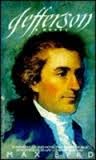
Jefferson

Jefferson: A Novel
© 1998 William Brant
448 pages

In  the late 1780s,  William Short put pen to paper to create a biography of his boss and mentor, Thomas Jefferson. Then serving as ambassador to France, Jefferson was already a seasoned American politician, having previously been in the Congress that declared independence, and shortly thereafter held office as Virginia’s governor. That biography is a novel going in two directions;   the main thread follows Jefferson’s social life in France during the 1780s,  with interruptions by Short to tell Jefferson’s story from boyhood to his travels abroad.  The text is heavy with dialogue; the major activity is talking before dinner, or during it, or after it —  and the expressions seem drawn mostly from Jefferson’s letters. Because the storyteller is Jefferson’s protégé, is a tale largely sympathetic to the quiet man whose presence looms so large over his friends and American history; Short puts several stories about Jefferson to rest, offering his own interpretation of events.  It’s a strange novel, one that doesn’t so much go somewhere as give readers a chance to spend dinner after dinner with Jefferson,  coming to know his mind and the stories of his life. Other personalities like John Adams (a man of “granite flecked with sugar”), Ben Franklin,  and the Marquis de LaFayette are regular companions. The heavy but agile use of Jefferson’s actual writings, and the abundance of historical characters, make it a book worth reading for anyone passionate about the Revolution and its lingering meaning. Like American Sphinx, it’s more of a study in character, but this time from a more intimate angle — face to face over a course of French fare. 

Posted in historical fiction, Reviews | Tagged , , , , , | Leave a comment

Uncle Tom’s Cabin

Uncle Tom’s Cabin; or, Life Among the Lowly
© 1852 Harriet Beecher Stowe        
 500 pages

Written as an indignant response to the 1850 Fugitive Slave Law, Uncle Tom’s Cabin shook the American landscape in the mid-19th century as few other novels could. A sounding condemnation of slavery, popular conception holds it responsible for fomenting a more strident attitude against slavery in the north and giving the Republican Party its great foothold in American history.  Still controversial today for not living up to 21st century mores, Uncle Tom’s Cabin remains a beautiful morality play.

I entered Uncle Tom’s Cabin with reservation, thinking it a propaganda piece considering that the author never journeyed into the south herself. Admittedly, it was propaganda the south had coming, but I’m not much for polemics whether they come in nonfiction or fiction. Uncle Tom’s Cabin, however, is far more nuanced than I expected.  The story begins when two slaves, Harry and Tom, who are sold by their reluctant owner when his gambling debts erase all his other alternatives. Harry’s mother is horrified to learn that her handsome young son will be separated from her, and flees with him north, across icy rivers hoping to find sanctuary in Canada.  The other, Tom, realizes that if he runs, more slaves will be sold and separated from their families to make up for the loss.  In what will become a recurring pattern, Tom sacrifices his own wellbeing for the sake of others, and is sold ‘down the river’. Removed from Kentucky’s comparatively lenient slavering practices, Tom soon finds himself in the deep south, subject to the worst of human nature. Though it is tempered by meeting people of goodness and mercy, what truly sustains Tom is his Christian faith.  Uncle Tom’s Cabin is at the same time an abolitionist argument and a work of Christian evangelism. The two for Stowe are one and the same. Just as Tom urges one fellow slave or master after another to admit to their sin’s slavery  and subject themselves to Christ, Stowe urges her countrymen to admit to slavery’s sin and embrace emancipation and colonization.

Stowe’s attack on slavery plays on both reason and the emotions. Throughout the novel, characters are cold-bloodedly separated from their loved ones, including mothers and small children, if the profit motive dictates, and the slave traders are as calculating as can be,  thinking about their slaves as nothing but cattle. Various characters against slavery, and others defend it.  Stowe is fairer to the south than expected; her novel’s most loathsome character is a northerner with a plantation, and  the two other white slaveholders who receive the most attention are utterly decent. Northerners are hypocritical idealists who don’t realize the sin of slavery is on their hands as well.  This harshness is presumably less to soften the blow against the South than it is to prick the northern conscience and call it to action.

 Although its now-dated language and attitudes toward slaves no doubt annoy the modern mind, Uncle Tom’s Cabin rises beyond such petty complaints. This is a story of redemption, of how a man can be bound in body, but not in spirit; degraded by law, but not in person. Just as Harry’s mom Eliza  Eliza finds defense for her body in flight and arms, Tom finds defense for his spirit in acts of love;  ultimately he becomes a Christ figure – certainly for characters within the text, and perhaps Stowe hoped, for the American people as well. It’s an outstandingly beautiful novel.

Posted in Reviews, Society and Culture | Tagged , , , , , , | Leave a comment

This week at the library: …we’ll find out together

Dear readers:

It turned out, despite their normally up-to-the-minute-correct website, that my university library was not open today, which means for the first time a long while, I have no idea what I’m going to read next. My local library doesn’t carry a lot of French history, so finding something for my usual Bastille Day reading is going to be a stretch.  I’ll continue with my journey through American literature, which I’m enjoying far too much, and look to the to be read list. Next up will be Fighting Traffic, I think.

This past week, of course, was taken up with readings related to Independence Day; there’s one I’ve not mentioned here yet, a novel featuring Thomas Jefferson. It ends with the French revolution, so a more fitting lead-in to that reading I could not ask for.  The American series isn’t complete yet, because I’m still waiting on The Men Who Lost America. It was lost in the mail, so another copy is being sent.

Quotable

“Fear nothing, George, for therefore are we sent into the world. If we would not meet trouble for a good cause, we were not worthy of our name.”

Uncle Tom’s Cabin, Harriet Beecher Stowe

Society in every state is a blessing, but government even in its best state is but a necessary evil; in its worst state an intolerable one; for when we suffer, or are exposed to the same miseries BY A GOVERNMENT, which we might expect in a country WITHOUT GOVERNMENT, our calamity is heightened by reflecting that we furnish the means by which we suffer. Government, like dress, is the badge of lost innocence; the palaces of kings are built on the ruins of the bowers of paradise.

Common Sense, Tom Paine.

“You want to send Jim and me back to be whipped and tortured, and ground down under the heels of them that you call masters; and your laws will bear you out in it — more shame for you and them! But you haven’t got us. We don’t own your laws; we don’t own your country; we stand here as free, under God’s sky, as you are; and, by the great God that made us, we’ll fight for our liberty ’till we die.”

p. 224, Uncle Tom’s Cabin

Posted in quotations, Reviews | Tagged , | Leave a comment

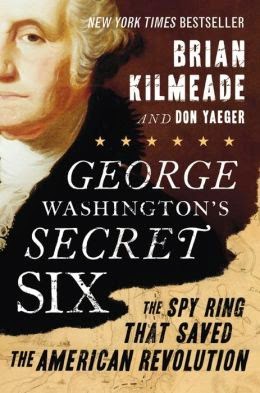
George Washington’s Secret Six

George Washington’s Secret Six
© 2013 Brian Kilmead
257 pages

Wars are not won by soldiers alone. In the shadows are those silently gathering information, sometimes at great risks to themselves,  to give the nation’s leaders an edge over the foe — or to prevent the foe’s own shadowy talents from doing likewise. George Washington’s Secret Six is a flashy history of a civilian intelligence ring operating throughout the revolutionary war, a ring that invented by necessity many of the tactics still faithfully and productively employed by intelligence agencies today — and a ring that accomplished more in the dark than the young nation’s struggling army did on the battlefield. It’s an area of history which is getting increasing attention these days, but The Secret Six is as its title indicates intended for a popular audience; it’s quite casual history, full of energy and fanciful storytelling — including scenes with dialogue. Given that the book is centered on New York, and that George Washington spends its entirety brooding over reports from the spies that give him little hope for taking the city, the full title seems something of an overreach. Despite the fact that the ring was created to help Washington free New York City from the British, however, they keep turning up information of interest outside that limited theater, like a plot to undermine American currency through counterfeiting.  These episodes link  the spy ring to a war that otherwise seems to be taking place in a place far, far away.  Though limited in scope, and distressingly sparing in cites sources,  the heroism undertaken by the merchants and common men and women is well worth being introduced to, as is their cleverness.  It remains of interest despite being very light history.

Posted in history, Reviews | Tagged , , , , , | 2 Comments

Common Sense

Common Sense
© 1776 Tom Paine

After the battles of Lexington and Concord that scotched any idea of peaceful reconciliation between Britain and its former colonies, but before the Declaration of Independence that stared the colonies on their march toward united nationhood,  rabble-rouser Tom Paine penned a now famous pamphlet intended  to fire up support for the glorious cause.  It’s an ambitious little book, containing an argument  for independence , a review of America’s material ability to take on the greatest power in the world, and a rebuttal of arguments for reconciliation, targeted mostly against Quakers.  While not as oft-quoted as “The Crisis”,  he argues powerfully and leaves no doubt as to why it might have been so explosive at the time.

Paine’s bone to pick with royal governance stems not merely from the fact that they are abusive, or incapable of effective administration considering the distance between Parliament and North America, a distance bridged only by months of sea travel; he is against monarchy [b]in principle[/b],  which is presumably why its publication was so dramatic.  He asks the reader to examine the origin of kings — not a one of them fell from heaven. William of Normandy who fathered the English line was merely a successful French brigand; did his triumph on the battlefield suddenly imbue him with divine right? And even if it did, isn’t it patently obvious that virtue is never inherited? What good king hasn’t been followed by an execrable sons like Commodus?

The only real government is autonomous and here Paine’s condemnation retains more value beyond historical consideration. While no one today argues for the divine right of kings, kings are still among us — clothing themselves not in royal purple, but in republican brown or the humble uniform of military service. They are presidents and chairman, not imperators, but regardless of their language they still set their sights ahove the heights of the clouds and seek to rule people ‘for their own good’.  While the king and parliament may make their case in tradition, Paine argues as a man of the enlightenment, looking toward the future and arguing to self-interest:  as long as America remains tethered to Britain, its trade and people will suffer every time the monarchies of Europe go to war, as is their wont. Far better to declare independence and then make a killing in trade while the the kings drag one another to hell.

A short, fiery piece, Common Sense merits its place in America’s revolutionary imagination.

Posted in Politics and Civic Interest, Reviews | Tagged , , , , , | 3 Comments

The American Tory

The American Tory
© 1972 ed. Morten Borden, Penn Borden
141 pages

American colonists yearning for independence from Britain called themselves Patriots, not in opposition against the not-yet-arrived royal army, but to set their cause against that of the Loyalists. Not all colonists supported separation from Britain; even in the steamy summer of 1776, with war already waging, some congressmen were reluctant to shove away any hope of reconciliation with the mother country. They were bristling against their rights offended as Englishmen, were they not?  The American Tory collects the reactions and thoughts of loyalists during the revolutionary period to the turmoil happening around them, as well as accounts of how they were treated by the revolutionaries, and how they and the patriots regarded one another.

‘Tory’ first described the defenders of the king’s cause during the English Civil War, and is sometimes used as a byword for conservative. In the United States, ‘tory’ seems have been hurled at loyalists with particular hatred. Good, then, that they be given a chance to speak. This is exclusively a collection of excerpts from letters, speeches, assembly minutes, and official proclamations from the period, including two essays comprising histories of the revolution from the patriot and loyalist views. The collection offers a look into the myriad reasons that loyalists gave for staying true; ardent devotion to England,  fear of revolution driving everything to ruin,  and an abiding distrust of those agitating for separation. The Congress made a lot of noise about violated rights, but what if their real motives were more base? What if Adams and Washington simply wanted to create grander names for themselves than peace and cooperation allowed for?  And where did those rights come from, after all, if not the English law, embodied in the person of George III?

Although the patriots liked to dismiss the loyalists as fainthearted and timid, too afraid to make a progressive leap into the future, the abuse many endured for their abiding convictions puts the lie to that. The far easier course would have been the sunshine patriotism Tom Paine grumbled about in The Crisis.  There is pragmatic sense in the tories’ belief that rights depended on the application of force — rights unobserved have no functional existence–  and the able bedrock of the law —  but who wants to depend on the state for the defense of their rights?  The United States still avers to live by natural rights, but do the actions of its government live up to that? Certainly not, and nor did the king and his parliament’s.  The struggle between a people’s rights and their government’s desires is never over, and the strife between the tories and patriots was less a battle between good and evil and more the ancestor of our own debates today.   There is much value in this little book, not only for giving the loyalists a nuanced opinion, but in showing how similarly their passions were expressed.  Both sides used the same language, referring to the respective opposition as a junta, and both taking stands in defense of liberty. The tories saw liberty threatened by disorder and wars; the patriots, by a peace accomplished at the price of subservience; both feared the others’ banditti

Such realizations are helpful now, as in any time, to realize how people are more often linked than their passion will allow them to admit. There is still room for civility, here evidenced by one Tory expressing his admiration of George Washington and hoping, if he is defeated, it is a noble defeat, one worthy of the man.   This is in short a fascinating and profoundly helpful work for those seeking to understand the revolution and its causes.

Posted in history, Politics and Civic Interest, Reviews | Tagged , , , , , , | 2 Comments

The Adventures of Tom Sawyer

The Adventures of Tom Sawyer
© 1876 Mark Twain
202 pages

            There is truly no better time to revisit The Adventures of Tom Sawyerthan the summer, with its long, languid days bringing back memories of childhood liberty from school, and the mischievous episodes used  to fill them.  Tom Sawyer is the history of a boy, told by an aging boy – Mark Twain – whose own fond recollections of boyhood are obvious.  Tom is the quintessential boy;  wild, clever,  with a head full of adventures. The importance of memorizing  Bible verses may be lost on him, as is the value of whitewashing a fence – but he is not dull or lazy. How could he be when he spends days hard at work digging for treasure, or playing out The Tale of Robin Hood with his friends, delivering dialogue word-for-word from the book by memory?  Tom may struggle at being civilized,  but he has his own values to live up to. For all his youthful mischief, Tom is hard at play, practicing to be a man; he yearns to be the adventurous pirate, the gallant knight winning the favor of his lady love. In Tom’s case, such practice is fruitful, for his pursuit of pretend adventure will lead him headlong into actual danger when he and his friend Huck  witness a murder. In the months that follow, Tom must live up to the nobility he practiced to truly rescue damsels in distress, to truly defeat a dastardly villain, and win the prize for all his derring-do – genuine pirate treasure!  Could there be a better book for boys?
Posted in General | Tagged , , , , , , , , | 3 Comments

The American Classics

Readers may have noticed in recent weeks American literature appearing with more frequency than usual on a blog that is dominated by nonfiction. This is not an accident; a few weeks ago I arranged a course of reading for myself to rediscover, or perhaps discover anew, the American soul. I say discover anew because though I’m familiar with many of the books’ reputations, I’ve never really encountered them.  It’s high time I learned my country’s stories.   The list that follows contains ten items from the course, but the ‘complete’ list is longer and unknown to me, as it it will grow and shrink as I travel onward.

1. The Adventures of Huckleberry Finn, Mark Twain
2. Uncle Tom’s Cabin, Harriet Beecher Stowe
3. Moby-Dick, Herman Melville
4. Little Women, Louisa May Alcott
5. The Red Badge of Courage, Stephen Crane
6. Up from Slavery, Booker T. Washington
7. The Jungle, Upton Sinclair
8.  White Fang, Jack London
9.  Farewell to Arms, Ernest Hemingway
10. Invisible Man, Ralph Ellison

Before these I read The Legend of Sleepy Hollow, The Legend of Rip Van Winkle,  The Last of the Mohicans, The Scarlet Letter,  A Narrative of the Life of Frederick Douglass, and The Adventures of Tom Sawyer.  I’ve been trying to work chronologically,  though Twain skipped a few places in line because I’ve wanted to read Huck Finn for the longest and wouldn’t do it before re-reading Tom Sawyer.  My hope is to gain a fuller appreciation of American history, with all of its meaning, through the literature its troubles and hopes produced.

Posted in General | Tagged , | 3 Comments

This week at the library: the Spirit of ’76

Greetings, dear readers!

It’s been a busy week for me, reading-wise, because work at the library has been slow. Oprah and Brad Pitt have been wandering around town filming for a movie,  and a lot of our usual patrons and traffic were diverted by a week of movie-making. I have had a great many hours to fill with nothing to fill with with, so I’ve been investigating the merits of Gutenberg.org on behalf of our patrons and doing some reading.   Most importantly, I  knocked off Good Natured, so that’s another from the to-be-read list, which is getting smaller by the week.

Early on I finally managed whacking through The Last of the Mohicans, which stymied me several times as a child and theatened to do it again, but I was bound and determined to finish the darned thing. It’s an early American frontier novel, the prototypical western, set in the French and Indian War (known in Europe as the Seven Years War). Two young women have decided to join their father at the front, which is questionably wise, and have to get there by trucking through the wilderness, filled with natural hazards and malevolent Indian politics.  They are lead by a white man raised by Indians through various spots of peril  until finally they reach some safety, despite having lost half their party. I liked the action scenes, but the dialogue — grief. The crushing, mysterious wilderness of the colonial frontier has nothing on the thicket of words Cooper throws at the reader — the occasional conversations in French were more comprehensible than his English at times.

I also encountered but did not read fully in part White Trash, which turned out to be a collection of essays on race and class. Some of the articles were engaging and promising, and others absolutely odious. One was so execrable — featuring a young researcher who decided to live as “White Trash Girl” as an art project, pretending that her acting as vulgar as possible was a celebration of the common man,.  One interesting note about this collection is that the authors ground themselves in the academic left; it’s very odd to see the Frankfurt School brought out to bear on ‘queer trailer culture’.   Jim Goad used class distinctions in his Redneck Manifesto, but his had an authentic edge to it while these authors are simply trying too hard to be serious.

This week I will be focusing on the remainder of my Independence Day reading,  and then at the weekend perhaps take on another of the TBR books.

Quotable

“Yes, yes, I have heard that a young gentleman of vast riches, from one of the provinces far south, has got the place. He is over young, too, to hold such rank, and to be put above men whose heads are beginning to bleach; and yet they say he is a soldier in his knowledge, and a gallant gentleman!”
“Whatever he may be, or however he may be qualified for his rank, he now speaks to you and, of course, can be no enemy to dread.”
The Last of the Mohicans


“Like the Biami, apes do not need reflective surfaces to gain self-awareness. They are used to watching themselves in the social mirror; the spectators’ eyes.”
p. 71, Good Natured


“A real patriot can seldom or ever speak popular language. A false one will never suffer himself to speak anything else.”   Governor William Franklin, letter urging New Jersey legislature to seek reconciliation with Britain, 1776.
p. 23,  The American Tory.

The old moral order, however imperfect it may have een, at least moved toward the virtues by way of the passions. If men were self-concerned,  that order tried to expand the the scope of self-concern to include others, rather than commanding men to cease being concerned with themselves. To attempt the latter is both tyrannical and ineffective.”
p. 129, The Closing of the American Mind

To Be Read Takedown Challenge

Antifragile, Nassim Nicholas Taleb
The Vikings, Robert Ferguson (6/7/14)                                       
Power, Inc; David Rothkopf (6/14/14)
An Edible History of Humanity, Tom Standage
Small-Mart Revolution, Michael Shuman
The World Until Yesterday, Jared Diamond (5/29/14)
Fighting Traffic: the Dawn of the Motor Age in the American City, Peter Norton
Earth, Richard Fortey
Good Natured, Frans de Waal (6/27/14)
Galileo’s Finger, Peter Atkins
Posted in quotations, Reviews | Tagged , , , , , | 2 Comments