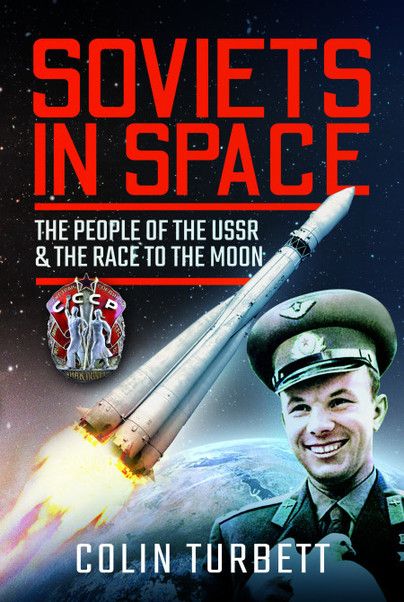
Soviets…..in Space

Soviets in Space: The People of the USSR and the Race to the Moon
© 2021 Colin Turbett
232 pages
Our path will be legendary in the marches of tomorrow’s years
Everyone will be like Gagarin, everyone will be like Titov
Glory to the ones who look forward!
Glory to the ones who march forward!
Our path is from the past to the present future!
Our path is from the present to the coming years!

In 1959, Soviet Russia shocked the world, and especially its rival the United States, by launching an artificial satellite into orbit. Sputnik-I’s monotone beeping was the starting gun of the space race, a competition the United States would begin to take far more seriously – as it would the threat of its rival across the oceans. But while the powers in DC viewed the Soviet Union’s space  program as an obvious military threat, Turbett argues that the Soviet Union longed for peace and pursued the space program to demonstrate what men united under a common ideal, working together,  could accomplish.    Although Turbett gives the Soviet Union in general, and both Stalin and Kruschev in particular, more pacific intentions than their records suggest, Soviets in Space  is a rare look into the Russian space program that offers extensive cultural background info which connects the drive to the cosmos with Soviet aspirations closer to Earth.

The book begins by attempting to channel the mindset of the average Russian, molded by a generation of Soviet culture – their exhaustion by war, their pride in having beaten back the Wehrmacht, their optimism in creating a new society despite its bloody flaws. (The author does not dismiss the gulags, the purges, etc – but they aren’t dwelt upon, and the best of intentions is often assumed, even when acknowledging Stalin’s effective annexation of eastern Europe.)  Following a history of the entire Cold War, which Turbett posits owed entirely to western inflation of the Soviet threat, forcing Stalin and his successors to focus on defensive & counter-offensive capabilities,   we shift back to the fifties, and the  efforts of Soviet and American authorities to put German rocketery to work. The Russians had more experience with weaponizing rocketry during World War,  having  tinkered with rocket-propelled explosives and exploring the possibilities of rocket-driven aircraft.  Despite this, Turbett argues that the Russians saw the space rivalry not as a military competition, but a cultural one – one that could prove the peaceful aims and superior  methods of the Soviet command economy. Turbett connects the public promotion of the drive for the Moon with similarly grand programs that unfolded in the fifties and sixties, the Virgin Lands attempt to double Soviet agricultural production and the Baikal-Amur Mainline, a transcontinental railroad running across permafrost and near the Chinese border. (The BAM would not be completed and fully open until…..1991, just in time for the Communist party to be declared illegal and the Soviet Union dissolve into history.) Although these projects were all financially problematic given their massive scope and marginal returns, the three together tell a story, Turbett writes: the Russian people honestly believed they were building the future.

I’ve only encountered the Russian program in bits and pieces (Two Sides of the Moon, Alexei Leonov’s memoir co-written with David Scott, being the only substantial Soviet account I’ve tried), so this is my first time encountering a lot of this content. I suspect, however, that even if I read other volumes focused on the Soviet space program, this one will stand out for its tone, which is as charitable but not blind to faults, and its welcome study of how the space program shaped Soviet culture, from consumer collectibles to music. My meeting the figures in the Soviet program — not just Gagarin and Koralev, but those who died, like Komarov — was long overdue, and I’m grateful to Turbetts for having provided this tribute to their memory.

I believe, friends, that rocket caravans
Will rush us forward from star to star
On the dusty paths of distant planets
Our footsteps will remain
Posted in history, Reviews | Tagged , , , , | 4 Comments

The Lost Outlaw

The Lost Outlaw
© 2019 Paul Fraser Collard
361 pages

And now there was no one else left to fight them. No one except one exhausted Englishman who did not know when he was beaten.

For the better part of a year, Jack Lark has been drifting across the war-worn South, working small jobs as he needs and generally avoiding society. For most of his adult life, he’s been a soldier, albeit one sometimes for hire — having served in the French Foreign Legion, as well as foreign powers the world over, like an Indian prince. Most recently he came to the United States to deliver a letter for a fallen friend, and found his homeland’s daughter country engaged in its own fracas, with its bitter feud already nearing three years old. The North’s naval blockade of Southern trade has created something of an opportunity for Jack, though, a job helping to escort a wagon train of cotton worth its weight in gold to the Mexican town of Matamoros. Standing between him and a year’s fortune are the Texas cavalry, which has a tendency to engage in independent taxation of trade routes; rival smugglers, who want a monopoly; Mexican bandits; and the French army, presently attempting to conquer Mexico to make the Empire gran again. It’s….going to be a bloodbath, full of treachery and deceit across a wind-whipped sun-baked landscape.

The Lost Outlaw is ninth in the Jack Lark series, and it’s…darker than ever, with an already thoroughly dispirited Jack being constantly betrayed and put in danger, and surviving through wit, luck, and the occasional act of honor made by someone who isn’t him. These are vanishingly rare because the trope of the lawless, bloody west is being delivered to full effect here, with Jack embroiled in one desperate grapple after another. Although I’ve enjoyed this series enormously so far, and was especially drawn to this one because of the setting, here the constant stream of treachery, near-death, and by-the-skin-of-his-teeth salvation wore me out, frankly. I was relieved when Collard introduced some characters who weren’t total scumbags. The book had its moments, though; Jack mentoring a young man in desperate straits, and the constant comedy provided by Jack wandering through southern Texas and Mexico and asking his chums if they had any tea.

Unrelated, but because I had the song lodged in my head the entire time I was reading this:

I am living still…

Posted in historical fiction, Reviews | Tagged , , , , | 2 Comments

Of Chemie, Cosmos, and Climate

What’s Eating the Cosmos tackles some of the big questions in modern cosmology, beginning with the basics — how do we know what’s out there? Where is it, what is it made of? — and continuing onward to the more changing questions, those which stretch the limits of our imagination. Although Davies is dealing with heady topics, including the plausibility of time travel, the evaluation of the universe’s fate, and even why we have matter at all. Although I can’t pretend to fully understand all of the subjects discussed — relativity and quantum mechanics are demanding topics, to say the least — Davies’ writing is lucid, using clear illustrations, and provides an outline education that allows the reader to come away with a sense of having a better idea of the shape and fate of the universe.

Hurricane Lizards and Plastic Squid  caught my eye immediately, not only for its title but for its subject: climate change biology.  Although  humans have the ability to escape within our heads and pretend things which are happening aren’t, really,   plants and other animals live much closer to Earth and cannot remove themselves from facts. When faced with the threat of climate change, they must either move, adapt, or die.   I have previously read of how some plants and animals have adapted to intense environmental challenges created by human activity (Unnatural Selection),  was eager to dive into this one.  Given the complexities of global ecosystems,  it’s not surprising to learn that altered circumstances are throwing things into disarray: one potentially disastrous trend is inducing mismatches between plant blooms and the re-emergence of their pollinators.  The struggle for survival is not a recent development, though, and  both flora and fauna alike are altering themselves to survive: starfish are withering in the warming waters of the Eastern seaboard, but now able to expand into northern waters once too frigid for their tolerance.  At least a quarter of the Earth’s animal population is actively on the move, changing its ranges, and possibly up to 80% of populations are in flux. Plants, too, are getting in on the action – trees moving their ranges uphill, or dandelions altering their leave shapes.  Although  the weirding effect is potentially catastrophic, it’s also an exciting if unnerving time to be a biologist, given the extraordinary display of plasticity we now have the opportunity to witness. 

Chemistry for Breakfast brought another interesting title to the table, authored  by the most compelling chemistry teacher in media since Walter White.  Mai Thi-Nyugen Kim’s night gig is YouTube star, however, not meth kingpin, and she has a very popular channel called “maiLab”  that offers science-ed videos in German. Nguyen-Kim recounts a day in the life of a chemist, using the day’s events to deliver an introduction to the basics of die Chemie.  The personal, narrative style succeeds brilliantly and  offers side-lessons into the grueling workday of a doctoral candidate.  As Nguyen-Kim guides readers through the basics of chemistry – the classic atomic model, the interactions of valence electrons,  the differing kinds of bonds, etc – she also offers practical at-home experiments to illustrate the lessons being offered.  I’ve never encountered a chemistry book this readable before, and was disappointed to find that her YouTube channel (which I’d intended to dive into) only had German content.  Nguyen-Kim’s passion for the subject and clarity in delivering its principles makes her first book a valuable one for readers who want to retain some basic appreciation of both the spirit of science and the study of what matter is and how it changes.  

I’m including a video from maiLab below to give you an idea of her personality. Those who don’t speak German can turn on close captioning, and via settings turn on auto-translate. Google does an impressive job of on-the-fly English captions!

Posted in Reviews, science | Tagged , , , , , , , | Leave a comment

I have found the Most Interesting Thing On YouTube

Imagine listening to a book which has strengthened minds for centuries — Marcus Aurelius’ Meditations — not as a dry narrative, but as a performance, a motivational mixtape with impassioned delivery, with a beat. I encountered “Self Control”, taken from Aurelius’ tribute to his adopted father and mentor Antonius Pious, a few weeks back and have found it ideal for walks and workouts. It’s part of the above album, which includes Books I and II of the Meditations. I hope this project continues, because it’s astonishingly creative.

His attitude to the gods -no superstitiousness
His attitude to men — no demagoguery
No currying favor, no pandering
Always sober, always steady
Never vulgar or a prey to fads

Hard work and persistence
Self control, always cheerful
Strength, perseverance, self control

Posted in General | Tagged | 1 Comment

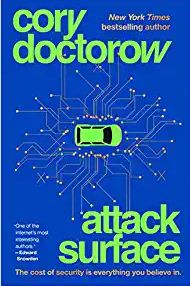
Attack Surface

Attack Surface
© 2020 Cory Doctorow
385 pages

When the Bay Bridge blew up, Masha wanted to catch the guys that did it. That desire for justice and revenge brought her to employment with the Department of Homeland Security, and still later a private security contractor busily creating tools and methods to make every bit of digital communication happening between targets open to collection, analysis, and manipulation. But before she knew it, Masha and her coworkers were enabling some of the worst governments in history to harass and destroy those who would protest for their rights. As her conscience begins making itself known, Masha struggles to find a way to absolve her guilt — by passing on tips for opsec to the resistance, for instance. But no man or woman can serve two masters, and ultimately Masha has to choose. Attack Surface is very nearly a great novel of redemption; as it stands, it is merely a cool one, a good one.

When I first read Little Brother, the novel that created the storyline that Attack Surface is set in, I thought: this is cool as hell. Doctorow combined the excitement of a “man vs the police state” novel with modern cybersecurity tools from his main character that apply equally in our world; the novels are educational thrillers, calling the reader to start covering their digital tales from corporate and government surveillance. Attack Surface is thoroughly in that line, but this time we’re on the other side — viewing citizens from the perspective of the hunter-coder, who spends their time figuring out what thread of our lives they can invent a tool to grab hold of, what they can expose and use to achieve their goals of total control. We see this world through Masha, a lamentably insecure young woman who admires the Fierce Strong Women she works for, even if one of them does remind her of Ilsa, She-Wolf of the SS; she admires their strength, even though it comes from the expense of others, and no doubt enjoys the high she gets from seeing other’s lives unfold before her, opened at her bidding through tools of her own creations. Ultimately, that high is no match for the self doubt, the conviction that she’s helping evil — and one wonders where Masha would be without her friend Tanisha, a professional activist who constantly calls Masha on her compromises.

As stirring as Masha’s interior struggle is, her insecurity makes her an incredibly difficult person to enjoy spending time with — unfortunate, because she’s the only viewpoint character. She is constantly miserable, unless she’s drunk or power-tripping, and she lives her life in constant judgement of others, including her friends. It may be purposeful characterization, or just Doctorow’s own harpyness; it’s been too long since I read any of his other fiction to say with confidence. Masha’s ‘good’ friends aren’t any more enjoyable to hang around with: they’re all woke ideologues, and political posturing dominates their time when hipster fashion and food trends cease to amuse them; none of them seem to enjoy anything, beyond complaining and marching in the streets against the cops. Now, as obnoxious libertarian, I’m no stranger to idealistic conviction or raging against the state : I do it devotedly, but it doesn’t consume my life the way it does for these characters. Frankly, the entire book seems to be full of anhedonics.

Often cool, often obnoxious: Attack Surface is a strange mix of the sweet and sour. However, it does have the reccommendation of Edward Snowden, so — if in doubt, give it a whirl.

Related:
Little Brother, Homeland; Doctorow. The previous books in this ‘series’, though this is a standalone.
No Place to Hide, Glenn Greenwald
Permanent Record, Edward Snowden.

He had been living a double life: Snowden the tech helped build the security state, and Ed the user valued his privacy to the point of using Tor for regular browsing. Now, increasingly, Ed couldn’t countenance the realities of the work he’d been doing. At first he tried to rebel by simply spreading the word about the need for protecting privacy, in general, or by giving people the tools and knowledge to bypass surveillance in countries hostile to free expression, like Iranians subjected to the role of the ayatollahs, he eventually decided that the most effective way of fighting back was to reveal what was being built.

From my review of Permanent Record, Edward Snowden
Posted in Reviews | Tagged , , , , , | 5 Comments

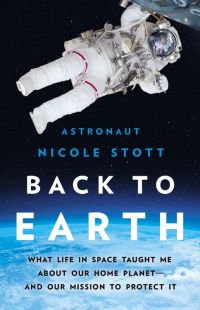
Back to Earth

Back to Earth: What Life in Space Taught Me About Our Home Planet and our Mission to Protect It
© 2021 Nicola Stott
304 pages

A staple of astronaut memoirs is the attempt to communicate the near-religious experience of seeing the Earth from space for the first time, a moment which no picture (authors like Massimino aver) can really capture.  Earth appears both beyond momentous and achingly vulnerable,  its billions of human lives protected only by the thinnest whisp of an atmosphere. Nicola Scott makes the implications of that fragile image her theme, musing on lessons that her work in NASA, and particularly her time abroad the shuttles and the station, have taught her.  

Across three shuttle missions and two ISS expeditions, Stott has lived well over a hundred days in space. Life aboard the Station, where only a thin skin of metal protected Stott and her crewmates from death, where their resources were scarce and closely monitored, and everyone out of necessity shouldered responsibility for their common fate, made her doubly aware of the importance of stewardship once back to Earth. Stott’s memoir of her time in space is unusual in that it lacks the usual forward-driving narrative, the strictly biographical arc. Instead, she focuses on her mission of raising awareness about the dangers of climate change, and of encouraging those who are resigned to despair to take up the sword again and get in the fight. “Focus”, however, is something of a misstatement; the book is organized into seven principles that she’s developed in the course of her life. These are not strictly rooted in climate change or disaster response, and on the whole are fairly general: “Stay grounded”, “Make haste slowly”, “Live as crew, not passengers”. Each receives a series of reflections drawn from Stott’s life, so despite the lack of an overt biographical focus, the reader who is interested in Stott’s background will pick up details as they progress — including the fact that her father was an amateur pilot who built his own airplanes.

Stott doesn’t launch into a thorough argument about Co2’s effects or human culpability, but instead touches on widespread talking points ranging from the greenhouse effect to water scarcity, while at the same time offering a defense of ISS activity against claims from critics that the money could be spent better elsewhere. The lessons themselves are nice enough, but not penetrating or compelling. While I admire her passion and professional accomplishments, the book left me wanting. I still enjoyed reading it, for her brief stories about the people she’d worked with, her hushed wonder at seeing the Earth from space, and so on, but it never seized my imagination or made me think more deeply or differently about its content.

Posted in General | Tagged , , , , , | 2 Comments

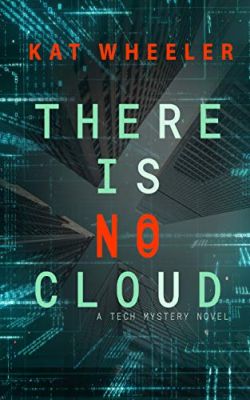
There Is No Cloud

There Is No Cloud
© 2021 Kat Wheeler
189 pages

Okay, Google,  I’d like to set up a Routine. When I am murdered alone in my office, please call the police, unlock the door, and turn off the coffee pot.   Matt Rodriguez is the inventor of the HomeTechHub,  a network-integrated device with an inbuilt AI which can control any smart device in its same network – from lights to window shades.   It’s made Matt and his partners  ludicrously rich, but all the automation in the world didn’t stop someone from swiping their way into the building, sneaking into his office, and whacking him with an old fashioned crowbar.  Detective Will Justus is assigned to investigate the murder, while simultaneously Cam, a  bourbon-sipping saleswoman turned with a question bugging her is poking into a defective Hub to find out why it’s not playing nice with the network. What she discovers will risk forcing her to share a fate with the hub’s creator. There is No Cloud does double duty as a murder mystery and a tech-thriller,  centered on the amount of information digital assistants and smart devices can corral about their users.  

Despite the apparent creepiness of a mic’d-up device sitting in one’s home, passively listening our every word and sending it off to Amazon or Google, over half of Americans regularly use a voice assistant —  through their phones, if nothing else, using them for everyday tasks like shopping, calendars, and media interaction. There is No Cloud  focuses on how vulnerable we can be if these devices are compromised – or deliberately used against us, to chilling effect. Although I’m a little skeptical of the book’s  over-powered Home Tech Hubs (which integrate with any  third-party smarttech, and once on the network have Total Access to anything that on the same network,  permissions or encryption be damned). There Is No Cloud succeeds in creating a story based on the potential for abuse inherent in these devices.  and each main character’s private investigation ultimately brings them together, looking for the truth.  Although it’s fairly obvious from the start that the cases are connected, the question is how – was Matt murdered for creating spyware, was  he being spied on and just coincidentally murdered, or was it something else?   The reader is kept fairly well teased  as to whether the solution will be a personal grudge or a matter of business, and a strong pair of markedly different main characters maintains personal interest in the story.

There is No Cloud is a very promising start for a new author!

Related:
The Silent Intelligence: The Internet of Things

Posted in Reviews | Tagged , , | 3 Comments

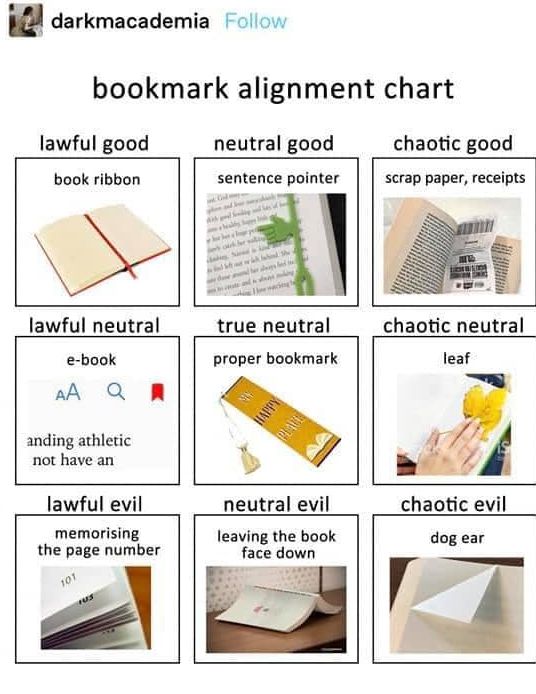
More evil than I thought

I’ve personally never been able to retain bookmarks, even the fancy ones friends have sent me from faraway places like South Korea.

Posted in General | Tagged , | 4 Comments

Of Mars, Antarctica, and the human condition

Mars is a cold tease, an object of immediate interest to anyone who believes humanity needs to continue to venture outward.  It’s neither so hostile or so far from us to preclude manned missions entirely,  and it has its own resources that could, with a bit of planning and savvy, be used to support an expedition. Still, Mars: A Natural History is as close as you or I will ever get to Mars:   not only does Simon Borden take us through its past, told through the features of its landscape, but he uses bursts of a second-person narrative to put us on the surface of Mars itself, both in the past and present, to as though we were literally exploring the red tunes.  Borden’s  talent for description, already developed through his primary vocation as a science fiction author, is well on display here, both in the analysis of Mars’ geological features, and in the narrative imaginings that take us there as future and past explorers.  

Why can’t we all just…get along?  But we do. Our bodies are forged in cooperation, writes Nichola Raihani:   we are the creation of cells that banded together,  strengthened by outside prokaryotes who we put to work as mitochondria.  Our cells create organs, tissues, and structures, culminating in an individual, who then cooperates with still others to form a massive global society of people sitting and staring at their phones.  Humans are uniquely cooperative, frequently coming together en masse to help out perfect strangers — behavior unobserved in any other species, where altruistic behavior is limited to one’s immediate family circle. Nevertheless, we’re still fairly fluid about expanding or reining in the circle of those we care about; a wide-scale disaster can elicit both solidarity (volunteer search efforts, blood banks, etc) and selfishness (supply hoarding). I thought her analysis of the role of cooperation in human evolution and society to be a mixed bag; her observation that cooperation and competition are usually conjoined (we cooperate most often to compete against others or a mutual obstacle) was noteworthy, for instance, but understanding menopause as a cooperative action (grandmothers shutting down their own systems to prioritize her children’s child rearing efforts within the same household) was needlessly subtle compared to Jared Diamond’s more straightforward speculation that menopause is a way for the female body to protect itself against increasingly more dangerous pregnancies, and to focus resources on existing children or grandchildren. Raihani’s own speculation depended on a pervasive mother/daughter-in-law dynamic and potential power struggle. On the whole, The Social Instinct is full of interest, and I especially appreciated its expansive cell-to-societies survey, but I found some of its claims more dubious than others.

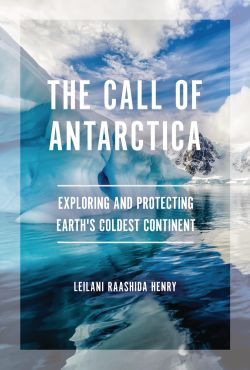
The Call of Antarctica introduces younger readers to the lure of Earth’s most remote continent,  which despite its withering severity has attracted explorers for over two centuries. The title alternates between history and an introduction to Antarctica’s unique climate, including the threats posed to it by human behavior, and prominently features the career of George W.  Gibbs Jr, a black man who joined several Antarctica expeditions and whose journal is quoted throughout the text, offering a first-hand look into early exploration.  Gibbs’ story is unusual in that despite the era (the 1940s), he was regarded among the expedition members as one of their own, and went on to serve in the US Navy during World War 2, earning a series of medals for his steadfast service there. The photographs included in the book are well-chosen to convey the continent’s savage beauty, and though this is written for younger readers, I still found a few surprises in store – like the existence of dry valleys,  areas locked off from the ice by mountains and which see less precipitation than any place on Earth.   Although the book’s mix of biography and natural exploration is sometimes distracting, I appreciated learning Gibbs’ story.  (On an interesting note: the author is a direct descendant of Gibbs, allowing for a generous amount of Gibbs’ personal photos to be used.)

Note: All three of the above were NetGalley advance reading copies, provided to me by the publisher with no expectations other than a review.

Still more science to come — including climate change-induced evolution, the chemistry of everyday life, and the stars in their courses. (And believe it or not, I still have astronaut books…)

Posted in Reviews, science | Tagged , , , , , , | 4 Comments

Broadcast

Broadcast
© 2017 Liam Brown
288 pages

Most people, if approached by a corporation and asked for permission to plant a microchip in their brainstem, would say “Nope” and back away from the crazy man. But David Callow isn’t most people: he’s a famous for being famous YouTuber whose main asset is a pretty face, and his time in the spotlight is beginning to fade. Becoming the star of a revolutionary new show and broadcasting Himself, Unfiltered! seems just the ticket for reigniting his career and avoiding the pitfalls of has-beendom. Lost on David in his anxiety to stay hip are the terms and conditions he eagerly signs on to, and by the time he realizes there’s more to the experiment than enhancing his stardom, he’s absolutely lost.Broadcast is a chilling look into the possible future of neurotechnology, and a not-too-subtle critique of social media’s effects on our mind.

David is easily the shallowest, most self-absorbed character I’ve ever endured in fiction — and I’m fairly certain that this is done on purpose. A youtuber and ‘influencer’, he spends most of his time snapping shots of himself and offering insipid thoughts about the meaning of life. His decision to take part in the experiment is not the result of a careful examination, or a purposeful interest in advancing neurotechnology; it is instead the reaction of a weak, vain main who fills his nights with booze and MDMA and shudders at the thought of losing his status as a celebrity. Were it not for for the sheer interest in the story itself — the possibilities of the Mindcast technology, and the knowing reader’s speculation that something horrible is going to happen, we just don’t know what it is yet — he would not be worth reading about. As the story progresses, however, as David begins to realize the awfulness of having his every thought exposed to the world, when people avoid him for fear of what he’ll think about him, when he becomes a total victim of his own solipsism — one can’t help but feel sorry for him. The vanity falls away, replaced by fear, isolation, panic. The technology can do far more than was told to him, and he is powerless to remove it — he is nothing but the unwitting prisoner of his own mind and the corporation that effectively controls it.

Broadcast is short, but effective in drawing the reader into this story that begins with an obnoxious dolt, and ends in existential dread, rendered especially salient by the reader being just as anxious as the subject.

Posted in General, Reviews | Tagged , , , | 8 Comments