The Rebel Killer

The Rebel Killer
© 2019 Paul Fraser Collard
432 pages

Jack Lark is a defeated man. Soul-scarred after the campaign in northern Italy, he came to the United States desiring nothing but to deliver a letter from a mortally wounded comrade to his parents. He arrived in America as the South made its bid for independence, and accepted a job within the Union army as a bodyguard to a rich but foolish scion of a Boston family. Hated by his Irish ‘comrades’, Lark thought nothing of leaving the Union army following the defeat at Bull Run — and, in the woods, he found a new love and a new purpose — until Confederate raiders savagely destroyed every hope he had for a light beyond fighting, leaving his woman hanging from a tree. Now, beaten, shot, and without a home in the world, Jack Lark desires only one thing: Revenge.

Jack’s path to vengeance will ultimately take him ten miles north of Corinth, Mississippi, where the Union and Confederate armies will create the greatest two-day bloodbath yet seen in the Americas — though battles to come will exceed the butcher’s bill of Shiloh. The Rebel Killer covers nearly a year (July 1861 – April 1862) in which Lark is captured by Confederates, escapes wearing a stolen uniform, and makes his way across the South to find the raider who killed his love, seeking refuge with a family of freeholders during the wintry months before witnessing the battle around Fort Donelson and finally Shiloh. As with The True Soldier, The Rebel Killer focuses more on Jack’s character than battle. Although he’s heavily engaged throughout the novel, in small fights and epic battles, Jack is completely disconnected from the conflict: from his time spent with both Union and Southern soldiers, he sees little reason to villainize either side: regardless of their governments, the Union soldiers by and large want to preserve the best hope of liberty on the planet by keeping the Union intact: the southerners, most of whom don’t own slaves and jeer at the idea that they’re fighting to keep rich man’s property, insist that they’re simply defending themselves against an outside invasion of the government. Lark judges the fracas between brothers as a sad waste, and the idealism that inspires these men to war on one another throws his own motives for fighting — money and revenge, lately — into shame. Jack is a creature of darkness, excelling only in lies and violence, and his every attempt to find some other life for himself is always destroyed — but time and again, he finds some meager thread to hang on to. Here, befriending another young woman — a southern lass making her way across the country to find her husband — provides him moral pushback. Both Martha and her father urge Jack to consider a life beyond revenge.

Although I was disappointed at first by the generic villainy of the raider, Jack’s struggle with his conscience through the novel makes for a compelling read, especially when joined with the constant action and occasional humor that Collard provides. I appreciated some of the quirks of history that Collard wove into the narrative, like young soldiers before the battle decorating themselves with violets so the Yankees wouldn’t shoot him: that anecdote has come up in several Shiloh histories.

He felt the burn of frustration. He had dared to think of a different future, one where new skills would replace the ones he had learnt on the killing fields of battle. Yet he had just been pissing into the wind. Fate would not be denied. He was not destined to become a pioneer, a farmer, a father or even a husband. He was what he had always been: an impostor in a world that did not want him to succeed. He wanted to howl as the anger built inside him. Ahead the men moved forward slowly, covering the pair with their weapons. He watched them come, his eyes taking it all in as he started to plan. He would not get the new future he had begun to crave. But that did not mean he would accept his fate meekly. He would do the only thing he knew how to do; the only thing that he had ever found a talent for. He would fight.

The Rebel Killer, Paul Fraser Collard

Posted in historical fiction, Reviews | Tagged , , | 3 Comments

The Fox from his Lair

The Fox from his Lair
Original pub. year unknown, Kindle edition © 2020
220 pages

In the wake of a disastrous training exercise, bodies are washing up on the shores of England. If intelligence from one of those bodies falls into German hands, the Allies’ hopes for opening the second front may be washed up as well. In The Fox from his Lair, Max Hennessy delivers a rare departure from his stock-in-trade, giving us a murder mystery set during the days leading up to WW2. A pair of officers in American and British intelligence put aside their mutual annoyance and track down an dangerous German spy — a chameleon with a half-score of identities and certain knowledge of D-Day’s logistics. If he’s able to convey his information across the channel, the invasion could meet certain ruin and doom Europe for years.

I started reading Hennessey last year, for his World War 1 aviation novels; he proved to have a host of series set during the World Wars, but the ones I tried all followed a pattern: we meet a young man immediately before the war, follow him through trials and tribulations in the conflict, see him struggle and rise in the ranks as the conflict goes. There’s also usually a psychological element, from a fickle girl at home to dying friends at the front. The Fox from his Lair utterly departs from that general line of plot, though: instead, having our two detectives frantically chasing a very resourceful spy as the Allied armies prepare to invade Festung Europa. It’s…a funny sort of mystery, though, because it’s mostly a chase, and the two detectives actually join the invasion just so they can search the ranks. Hennessy indicates in the forward that this is based on a true event, but it borders on the absurd: two intelligence officers on Omaha beach, asking soldiers who have landed in hell and are fighting their way up to the beaches if they’ve seen this chap?

Although the mystery-chase itself is a little disappointing, being mostly running around, Hennessy immerses the reader in the details of southern England, May-June ’44: one can feel the tension as an enormous machine is set in motion, charging forward into the darkness of history yet unwritten, with a thousand things that could go wrong just waiting to happen. Hennessy startles me time and again with details about the war years I’ve missed before — like the existence of German “E-boats”, fast torpedo boats that proved a deadly threat despite their size. If you’re wanting an unusual mystery, this may be the ticket: I guarantee it’s the only mystery to ever culminate on Omaha Beach!

Posted in Reviews | Tagged , , | 2 Comments

Read of England, 2021!

Bang upon the big drum, crash upon the cymbals — it’s April 1st, and time to Read of England. This is an annual tradition at ReadingFreely in which I devote the month’s reading to English literature and English history. I’ve a fresh box of Earl Grey and no shortage of prospects , from Classic Club entries (Jane Austen, anymore?) to revisiting some favorite writers of historical fiction, to Old Faithful: history. There may also be a book on English literary personalities, and perhaps a dragon or two. Why not? Some hints of what’s to come….

Captains Courageous, the story of a young boy forced to become a man at sea. The Sea Wolf, about an effete young man who makes the same journey after being rescued at sea, sounds as though it may have been inspired by Kipling. We’ll see how similar they are!

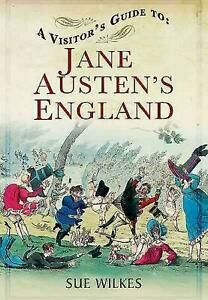
A Visitor’s Guide to Jane Austen’s England. I almost got this and A Visitors Guide to Georgian England as a pair, but I missed the sale on the latter. Next time!

Two brothers saved from the hangman’s noose go to France to fight for their king.

“Last night I dreamt I was at Manderly again”, and that’s all I know. I think there’s a dead wife haunting the place?

Posted in General | 2 Comments

2021: March Review

Challenge Progress:

Science Survey:


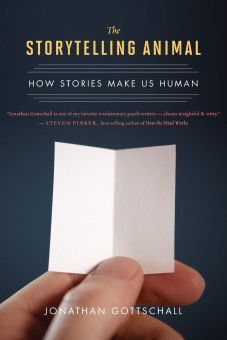
The Storytelling Animal, Johnathan Gottschall (Anthropology & Archaeology)
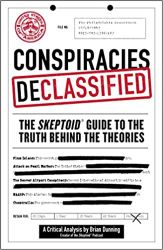
Conspiracies Declassified, Brian Dunning. (Thinking Scientifically)

That’s now 5/12 categories filled.


Classics Club Strikes Back:

Davita’s Harp, Chaim Potok. We are now 5/50.


Climbing Mount Doom:

Jesus, Son of Man by Kahlil Gibran;
Ironies of Faith: the Laughter at the Heart of Christian Literature, Anthony Esolen


Southern History/Literature:

Travels with Foxfire.

The Unreviewed

The Hardest Job in the World took a look at the 20th century presidency, analyzing how it had grown far beyond its original expectations and taken on so many burdens that the office is wholly unworkable. John Dickerson reviews the enormous divide between the qualities voters look for in a candidate and the qualities needed to actually execute the office. Few presidents realize how much of the job is taken up with foreign policy, and the demanding skills that takes. The book deserves a proper review but it’s been a busy month.

Ironies of Faith: The Laughter at the Heart of Christian Literature, Anthony Esolen. Esolen conducts a survey of Christian literature — that is, literature created by Christian cultures, not just books like Pilgrim’s Progress — and examines irony as expressed in the authors’ handling of time, love, power, and the role of children. Esolen’s review includes items by Shakespeare, Dostoevsky, Tolkien, and more. It begs a re-read, because as much as I enjoyed plumbing literature for prevailing themes, I’m not sure if I grasp the idea of irony as used in the book.

WTF Evolution?! & The Big Book of Autocorrect Fails. Both small books written for comedic value: one shares photos of animals with absurd features or habits, the other collects screenshots in which an autocorrect substitute made a statement far more inappropriate or hilarious than intended. I read these from someone’s library while dog & cat sitting.

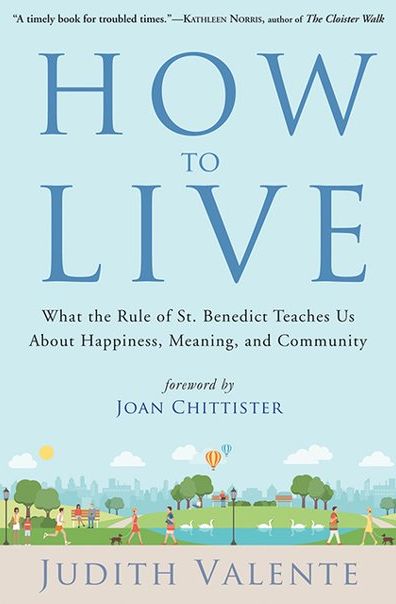
How to Live: What the Rule of St. Benedict Teaches Us About Happiness, Meaning, and Community. I’m aiming for an Easter review for this one — only appropriate.

The Newly Bought:


“No new purchases except for Read of England!”, I said. Hah.

For all the Tea in China: How England Stole the World’s Favorite Drink and Changed History, Sarah Rose
A Visitor’s Guide to Jane Austen’s England, Sue Wilkes
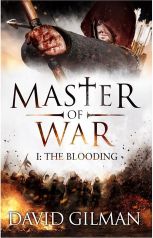
The Rebel Killer & The Lost Outlaw, Paul Fraser Collard. Continuing the Jack Lark series..
His Majesty’s Dragon, Naomi Novik. The Napoleonic wars….with dragons.
The Fox from his Lair, Max Hennessey
Enemies: A History of the FBI, Tim Weiner.
My Name is Asher Lev, Chaim Potok. Classics Club entry, but it will wait until May — RoE takes precedence.
Be a Man! Becoming the Man God Inspired You to Be, Fr. Larry Richards. Inspired by Pope Francis declaring 2021 the Year of St. Joseph, who is held as a model of masculinity. Fr. Richards is an energetic and entertaining speaker.
How to Live: What the Rule of St. Benedict Teaches us About Happiness, Meaning, and Community, Judith Valente
A History of Violence in Soviet Russia, Alexander Yakolev. This one was on sale for $1.
D-Day Girls: The Spies Who Armed the Resistance, Sabotaged the Nazis, and Helped Win World War 2, Sarah Rose. Someone had a used copy in very good condition for $2, so why not? I’m planning for a WW2 week later in the summer.

Back to the ol’ “No new books” promise for me.

Posted in General | Tagged , , | 2 Comments

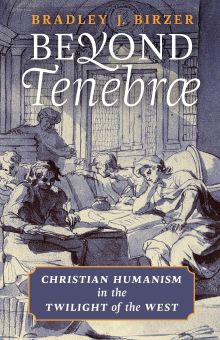
Beyond Tenebrae

Beyond Tenebrae: Christian Humanism in the Twilight of the West
© 2019 Brad Birzer
258 pages


Most people, including myself until a few years ago, would describe humanism as a worldview championing the possibility of, and the need for, humans living moral, meaningful lives through and for wholly natural reasons. The word itself, though, has an older and broader meaning, and it’s that which Birzer addresses in Beyond Tenebrae. His Christian humanism is not secular humanism with a soft spot for Jesus, but rather a continuation of the medieval tradition (studia humanitas) — itself fusing Christianity and classical wisdom — that emphasized pursuing the edification of the individual and the polis through the study of the liberal arts (poetry, history, philosophy, etc) .In Beyond Tenebrae, Birzer comments briefly on the state of the west, before sharing reflections on the life and work of those who have lit up the darkness in their time. We live in a crumbling house whose beauty is marred by graffiti, its maintenance neglected by children too absorbed by their solipsistic screens to acknowledge anything besides themselves can exist, and Birzer hopes the example of these remarkable men and women from the past will encourage the reader to pick up the torch and carry on — or perhaps encourage those who feel it’s all hopeless to continue.

Although one expects from the arcane title and subject that Beyond Tenebrae would be heady, that’s not the case at all. Birzer offers the book as tribute to literary friends, authors who have fed his soul and strengthened his mind. As such, it can be conversational — but Birzer is chatty even when he’s lecturing, and his earnest pleasure in talking about these men and women and chewing over their ideas is why he’s one of my favorite people to listen to. The men and women saluted here include the expected (Russell Kirk & Aleksandr Solzhenitsyn) as well as more than a few surprises (…Margaret Atwood?) and names known only to scholars. These people did not share an ideology; they were, Birzer comments, all unique individuals, and some were outright characters despite their frequent disdain for Individualism as an ethos. Put them in a room together and one would probably have to look for the exit given the table-pounding arguing that would ensue. They were, however, bound together by the common pursuit of the good, the true, and the beautiful — and they all considered themselves nothing but links in a chain, bringing the past forward and promoting its wisdom to those who would make the future. Frequently, Birzer’s subjects are responding to the work of the other, as when Solzhenitsyn comments on Nicholas Berdyaez’ principled defiance of the Soviet state. We are here invited to eavesdrop on the Great Conversation.

The title of the book merits some looking-over: Tenebrae refers to the three days of Holy Week , beginning with Maundy Thursday, in which the lights of the altar are successfully dimmed until nothing remains but the darkness of Holy Saturday. It is in that growing darkness that we find ourselves today, Birzer writes. It is a darkness which has been growing for centuries, deepening every decade and never more rapidly than the 20th century. The catholicity of the human experience (catholic as in universal) was being fragmented: specialists studied aspects of human life, but never man in full. Man was being reduced to a thing to be managed by a totalitarian order, language and beauty and personality bulldozed over for the equivalent of parking lots: flat, grey, grim. Tolkien and Lewis both worked the passion of Christendom into their literature, creating the worlds of Middle-Earth and Narnia to illustrate the inner ogres the west faced, and the heroism needed to triumph over them. Many of the subjects themselves realized that they needed to organize and coordinate to better resist the growing tide: they needed to work together to rebuild the Republic of Letters. There were no institutions which could do it for them, least of all the inheritors of the humanist tradition, the Universities. No university today has ‘universal’ man at its heart: the holistic, classical program which began eroding away in the 19th century is almost wholly gone, save in islands like St. John’s, Hillsdale, and a few other places which make a classical education their aim. Instead, the universities produce ever-more arcane and sometimes absurd specializations, and their end products live so firmly in their minds that they’ve lost all touch with reality.

Birzer connects Christian humanism to the conservative tradition — that’s the conservatism of Burke and Kirk, not the bomb & bribe antics of the republican party — because it is the humanist tradition which they seek to conserve; that tradition holds the Permanent Things that Kirk wrote about. Happily, though, Beyond Tenebrae isn’t simply a collection of biographies of people brooding over virtue; instead, Birzer’s extensive reading of his subjects’ works allows him to bring both varied perspectives and and more unexpected merits to the table. A reader dimly familiar with Russell Kirk would expect to find him saluted here for his writings on culture and governance, but Birzer instead focuses on his anti-war writings, as Kirk believed the United States’ permanent war state was steadily eroding its character as a republican nation. (Bill Kauffman would agree.)

Beyond Tenebrae is a must-read for those who read the classics for their insight and edification, as Birzer’s reflection on Christian humanism reveals why the classics have their enduring appeal. For the serious classics reader, Birzer’s book is a extensive visitation and chat with friends, who share with us their wisdom, humor, and unique perspectives. I’ve continued to revisit it in the weeks since I first read it, and suspect I will continue to do so for some time to come. Don’t be surprised to see it a top-ten entry in December!

Related:
Literary Converts: Spiritual Inspiration in a World of Unbelief, Joseph Pearce
The Fellowship: The Literary Lives of the Inklings, Phillip & Carol Zaleski

Posted in Classics and Literary, Religion and Philosophy, Reviews | Tagged , , , | 4 Comments

Wisdom for your Wednesday: To fall but rise again

For Lent I”ve been reading How to Live: What the Rule of St. Benedict Teaches us About Happiness, Meaning, and Community. I’d like to share some quotations from it.

“The spiritual life is this,” a monastic elder from the Egyptian desert once said, “I rise and I fall. I rise and I fall.”

“[The desert monks] discovered ways to leaven our natural tendencies toward anger, self-absorption, greed, depression, unhealthy appetites, and obsessions. They did this not by repressing those tendencies, but by recognizing we are not our thoughts and we are not our feelings. We can redirect our thoughts and feelings into constructive actions. Doing this allows us to confront life’s inevitable turbulence with equanimity.”

“I find it helps to see life as being like a book,” Cave said. “A book is bound by its covers … so our lives are bounded by birth and death.” He continued by saying that the characters in a book know no horizons. They are not afraid of reaching the last chapter, because they only know the moments that make up their story. We humans who are characters in life “need not worry how long our story is, if it’s a comic strip or an epic,” Cave said. “The only thing that matters is that it’s a good story.”

When I find myself slipping into ego-driven anger once again, it’s time to remind myself that the source of my anger isn’t outside of me. It’s within. It’s my own bruised self-image, acting like a child who’s been denied a second helping of ice cream. Except anger isn’t the ice cream. It’s the arsenic. Humility becomes a lens that helps me recognize the damage my rages do to me and those around me. It compels me to feed my better angels, not the angry wolves inside me.

Posted in quotations | Tagged | 5 Comments

Ten Winningest Titles

Five years ago I created a list called “Titles that Win”, not for Top Ten Tuesday but because I was inspired by How I Killed Pluto and Why It Had it Coming. Today’s TT on our favorite ‘titles’ offers a chance to revisit and update that list, with entries from the last five years replacing a few on the previous one.

How I Killed Pluto and Why it Had it Coming, Mike Brown
Death from the Skies!, Phil Plait
Cinderella Ate My Daughter, Peggy Orenstein
They Eat Puppies, Don’t They? Christopher Buckley


The Naked Lady Who Stood on Her Head, Gary Small

Hey, Mom, Can I Ride My Bike Across America?, John Siegal Boettner
Gang Leader for a Day, Sudhir Venkatesh
How To Destroy the Imagination of Your Child, Anthony Esolen


Prepare to Meet Thy Doom: And Other Gaming Stories, David Kushner
Don’t Hurt People and Don’t Take Their Stuff, Matt Kibbe

Posted in General | Tagged | 9 Comments

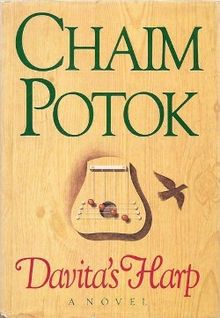
Davita’s Harp

Davita’s Harp
© 1985 Chaim Potok
384 pages


Are you a Jew?  Ilana Davita Chandel  gets that question a lot. It’s lobbed at her from Irish and Italian street toughs, and from inquisitive neighbors who see  her swimming on the Sabbath.  Is she a Jew?  Her mother was raised Orthodox, but she left that behind when she embraced Communism and married the exiled son of a timber magnate, a secular goy.  Ilana’s home was absent of religion, save her parents’ devotion to socialism, and their Talmudic study of Engels & Marx —  so what did it matter that her mom’s ancestry made her a Jew?   Davita’s Harp is a coming-of-age story in which a young Jewish girl on the cusp of entering the teen years tries to find what matters. My third Chaim Potok read, it proved just as thoughtful as  The Chosen and its sequel.  

Illana is a girl caught between worlds:  early 20th century New York is a balkanized collection of ethnic neighborhoods,  where an innocent walk down the street can get the unsuspecting traveler shaken down or beaten up if their last name is Italian instead of Irish, or Polish instead of Italian. In her own neighborhood, too, Ilana is stared at:   she’s Jewish, but she doesn’t know any of the stories. She doesn’t keep kosher, and has no idea what Shabbos is. What kind of Jew is she?  Illana’s mind proves her salvation: she turns to books to find the answers to questions that people shake their heads in wonderment that she’d ask.   In this she is inspired by her parents, who yearn for a better world and devote themselves to it, studying and working constantly. They offer support to a fellow traveler, a mystic storyteller named Jakob Daw who has come to America to raise money in support of republican Spain.   Iberia is embroiled in civil war between  various factions of socialists, anarchists, and traditionalists, and that war will haunt Ilana’s life and destroy her parents’ and Jakob’s secular faith.  

I found Davita’s Harp of great interest, not only because Ilana’s status as a perpetual outsider, but because of her parents’ passion and tortured break from the creed that gave them meaning. Their devotion to realizing the revolution is unquestionable, as they devote much of their off time to studying arguments and theory and teaching others or helping raise money for the cause of labor. But in Spain,  Ilana’s father and Jakob see what happens in a revolution: those who grasp for power over others  move to destroy anyone who stands in their way,  including fellow leftists.  While her parents and “Uncle Jakob” are consumed by their work for socialism, a joint effort that they will dispiritedly abandon,  Ilana’s curiosity about the faith of her fathers – or rather, the childhood faith of her mom – sees her more and more involved in the Jewish community around her,  though her inquisitive mind makes her as much a challenge to Orthodoxy as Reuven Malter was. Her mom doesn’t like this, but she doesn’t oppose her daughter’s curiosity, and when hope is lost Illana is not alone in listening to the ancient story of their people.

Posted in Classics and Literary, Reviews | Tagged , , , , , | 8 Comments

After action report: Central Alabama Twisters 3/17/2021

Yesterday at eleven o’clock I was sitting in a sunny courtyard, enjoying coffee with friends. An hour later I was in the library’s tornado-shelter room, trying to keep people from wandering out into the open hallway to look at the funnel sighting across the river. An hour after that, the library and many other city & county offices were closed and evacuated. I’ve never been so close to tornado activity, and had I been home, I would have been closer still: a house in my neighborhood was destroyed by a fallen tree, and just down the road a cousin of mine lost her vehicles, shed, and part of her home to multiple treefalls.

May be an image of sky and tree

We survived ten hours of tornado sightings — I lost track of how many different rotating systems roared through the county yesterday — and can now see the sun again. Fortunately, the worst hit us early, in the light of day: despite initially being under a watch until 3 am, the danger was deemed over by midnight. Remarkably, despite the damage in my area, I never lost power or internet access. I had extra water & batteries for my lamps, and a bag packed in case I needed to pass the night at a friend’s house (there are multiple trees that can fall and smoosh me), and felt “ready”: I realized, though, that I couldn’t find my cellphone battery pack that I purchased back in late 2019, after a storm system knocked out power to my area for most of a day. I’ll have to find that one and buy a second backup, having now experienced the truth behind the expression “Two is one and one is none”. According to the news, the fury of the early storms sapped energy from the atmosphere and prevented the evening systems from getting out of hand,but there’s still a lot of damage, affecting many of the same counties that Zeta rolled through a few months ago. We were all bracing ourselves for something like the April 2011 outbreak that killed hundreds, but thankfully that did not happen.

Well, with the threat of death from the skies over for now, back to life!

Posted in General | 10 Comments

Conspiracies and other stories that make us human

Early last week I read Brian Dunning’s Conspiracies Declassified: The Skeptoid Guide to the Truth Behind the Theories. I used to listen to Skeptoid over a decade ago, enjoying Dunning’s research into the facts behind popular theories and unsolved mysteries. I was left disappointed by Dunning’s attempt to distill that research into book form, though, because Conspiracies Declassified consists of straightforward debunking, with a concluding section on conspiracies which turned out to be true. Most of the subjects will be familiar to ordinary reader, as they include the likes of the Roswell incident, Area 51, Flat Earthism, vaccine denial, 9/11 truthers, and so on. There are also more esoteric theories included, like a reddit claim that Finland doesn’t exist. Dunning’s takedown of these topics is pointed to the point of dismissiveness, and it has the sense of preaching to the choir even moreso than the awkward and redundantly-titled 50 Popular Beliefs People Believe are True. It doesn’t diminish my enjoyment of the Skeptoid podcast over the years, but the book is too brusque and void of footnotes to sway those who might be on the fence about its topics.

More interesting by far was Johnathan Gottschall‘s The Storytelling Animal. Gottschall has the fascinating specialization of ‘literature and evolution’, and I stumbled on his book on sale when Suspicious Minds prompted me to wonder if there was a book written on humanity’s obsession with story. There was and I could have it for $1.99. It was fate, obviously. In The Storytelling Animal, Gottschall argues that humanity is to Story as fish are to water: it’s not only in our nature to constantly tell stories, we are formed by stories. A compelling narrative doesn’t just grip our mind in the figurative sense: the same areas lighting up in our brains if we were to experience the events in novels light up as we read them. This mirror-neuron effect not only allows us to sympathize with people socially as we relate different experiences, but allows the brain to ‘practice’ feelings. ‘Practice’ is also one strong contender for why we have dreams: dreams about threats, fears, and dangers and the challenge to overcome them predominate in observed species. Although we rarely remember the overt happenings in dreams, it is believed that the rehearsals of doom allow our brain to prepare itself for things that might happen, so we are not completely unhinged by the unexpected. Moving beyond neurology, story is central to religious and political order. On its subject alone, this book had the potential to be one of my favorite books of the year, but Gottschall only offers readers a taste of his other academic work: it’s as though we were treated to a bite of a prize dish and then had it taken away. Presumably this is because it’s written to a lay audience, but there are also some more substantive issues, like an internal contradiction: after dismissing claims throughout the years that fiction can be corrosive, Gottschall in a later chapter touts fiction’s ability to alter culture by habituating the reading mind to other norms. If culture can be altered, it can be altered for good or ill — and though we have improved in craft in recent years, our stories have definitely become far more putrid, saturated with graphic violence and often bordering on the pornographic. Although this book was disappointing given its potential, the premise is so broadly appealing I still say it’s very much worth reading.

Posted in Reviews, science | Tagged , , , , | 6 Comments