Overlord | Victory in the Pacific

Many years ago when the world was new, the Twin Towers stood over Manhattan, and Europe was just starting to adopt the euro, I discovered a trilogy of books in my high school library about World War 2. They formed the basis of my knowledge of World War 2 and have, through repeated readings, merged into one composite tale. I was recently itching to re-visit them, so I hunted down copies of the two volumes I didn’t have.

In Overlord, Marrin combines details with narrative storytelling to deliver a sense of the importance of the mission of D-Day, the insane amount of prep work and logistics required to support it, and of course the outstanding courage of the men who broke through the walls of Hitler’s “Fortress Europe”. We learn about the extreme measures adopted to prevent the Nazis from learning about the plan, and take a look at pre-D-Day Britain, which suddenly had to host thousands of young Yanks and provide parking for an unbelievable amount of war material — planes, trains, and automobiles. (Yes, trains. The Allies anticipated the Germans destroying existing rail stock and were bringing their own, long with improvised harbors.) Once the action starts, Marrin covers everyone — the paratroopers, the glider crews, the men on the beaches. There are ample photos, though the quality is wanting. For a younger reader who wants an overview of how important D-Day was and how it was accomplished — and needs interesting details like Patton’s decoy army — Overlord remains a terrific read if you can find it.
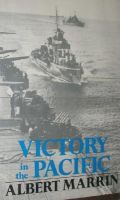
Marrin’s story-like narrative with immersive details, and side explanations as needed make Victory in the Pacific especially valuable to those who know little about the conflict. This particular volume, in addition to including the expected (the story of the war, recollections of Marines doing the hard fighting in Tarawa, Iwo Jima, etc, small biographies of major military leaders) also explains how the machines involved in the war worked: there are illustrations of battleships’ firing anatomy, and of submarines’ double hulls along with information as to how their crews initiated dives and returned to the surface. There’s much color here, too — sailors’ songs and funny anecdotes that leaven the seriousness of the Navy/Marine mission to end the Japanese Empire’s dominion over the Pacific. One of my favorites was Marrin’s inclusion of a story about a Marine who, after his company had been briefed on how full their target island was full of venomous critters and nasty predators and the like, inquired — “Why don’t we just let the Japs keep it?” What I most remember about Marrin is his combination of technical details and emotional heft — so that we not only know how the machinery of war worked, but we get some sense of what it was like to be immersed in the war — to be bored, terrified, tortured by heat and pests, or ecstatic to hear the big guns of the US Navy driving away the enemy that relentlessly bombarded your camp.

My favorite in this series, of course, is The Airman’s War — but it merits its own post. (Also, I’ve misplaced it in my library. I took it out to read it, laid it down somewhere, and now it’s hiding.)
Posted in history, Reviews | Tagged , , , , , | 6 Comments

Confessions of a Recovering Engineer

Confessions of a Recovering Engineer: Transportation for a Strong Town
© 2021 Chuck Marohn
272 pages

Chuck Marohn is a licensed engineer and urban planner who, in 2008,  began sharing his concerns that the current approach to both building and financing the American urban landscape was disastrous.  His one-man blog became a national organization devoted to educating and inspiring citizens, civic leaders,  developers, and engineers to create better places and Strong Towns.   Prompting his profession to do better was a vocation that grew not only out of Marohn’s concern for the world his daughters would navigate and live in as they grew older, but professional shame. As a young engineer, he built bad places and did it with pride, knowing he was following The Standards as laid out in the engineering manuals.  Confessions of a Recovering Engineer  attacks Those Standards, the overweening confidence the profession has in them, the domineering way in which they are applied, and the results this has had – not just on our urban form, but in fostering social problems like the disconnect between law enforcement and the communities they’re meant to be serving.   Although as first glance a book on engineering  and social ills might strike the lay reader as potentially too technical to be of interest, Marohn writes as a citizen to fellow citizen, and his subject concerns virtually anyone living in the United States or in places with comparable design, like Canada.

Confessions opens with the tragic story of a young woman and her family who were struck by a drunk driver while crossing  Springfield’s State Street  in the middle of a large block.  The family were crossing mid-block and the driver moving at highway speed for the same reasons:  the sheer scale of the block meant that walking through the rainy night to the next intersection with kids in tow was impractical to say the least, and that same scale allowed the driver to achieve highway speeds despite being in an urban environment where pedestrian and crosstraffic activity were common.  It has become the norm in American urbanism for suburban streets to be built with the same principles that guide highway construction: wide lanes, gentle curves, broad clearances on either side so that cars that go off the road have space to recover without immediately striking trees, people, bike racks, and those other things people insist on cluttering cities up with.   But highways and city streets are two very different forms, Marohn argues: a highway is a road,  which is valuable  for its ability to connect two or more places.  A street is a platform for human and economic activity.  Roads and streets are symbiotic,  allowing for valuable places to grow and connect to other valuable places,  making each the better.   The great error engineers have done is attempting to create street-road hybrids, what Marohn calls “stroads”:  they are ubiquitous in the United States, and each looks much the same,  partially inspiring Jim Kunstler’s The Geography of Nowhere.   Stroads, Marohn writes, are the futon of traffic infrastructure:   they attempt to serve two functions at once and serve neither adequately.   A stroad like State Street is so dominated by cars moving in aggressive spurts that the cultural and economic activity the dominates pedestrian environments like downtown Sante Fe or St Augustine  are diminished – but the amount of crosstraffic and pedestrian activity also inhibits the free flow of traffic along the road, meaning that the vehicles are in a hurry to go nowhere quickly. They rage from light to light in a manner that might be comic if this environment didn’t foster accidents so effectively.  Even more of a tragic comedy is the way we build spaces that encourage speed, realize people are speeding, and then spend more money adding speedbumps to slow people down.

Marohn argues that urban engineers have lost sight of the reason we engineer in the first place: it is not for the structure, but for whom the structure serves.  Engineers raised on the gospel of creating wealth through road connections assume that the highway standards of roads should be applied everywhere; they prioritize the fast and ‘safe’ flow of traffic regardless of what it does to the human habitats that roads flow through, ignoring  the fact that those same human habitats invariably make their roads slower and more dangerous.   Most of the danger stems from the sheer unpredictability  of the urban environment mixed with the speed of traffic, but there are other complications. One particularly salient example when Marohn was writing was that the scale of urban development in the United States has forced law enforcement to become a motorized, isolated, and spread-out body: instead of beat cops walking neighborhoods and establishing relationships with those they protect,   we have created an urban form that makes the only interaction cops have with most people to be the traffic stop – a notoriously dangerous scenario that both cops and many citizens fear, where petty infractions like broken taillights can spiral into violence when both parties assume the worst of the other. Because the design of cities facilitates — encourages — speed, nearly everyone does it, and officers exercise a broad amount of discretion as to who they pull over and who they don’t, greatly increasing the use of profiling. Profiling can be useful, but it can undermine public trust in the police force. Marohn then shifts to examining prospects for  improving transportation within cities: he urges city officials to convert stroads into either proper roads or proper streets,  and focus on incremental growth instead of massive projects. He also reviews various options for the transportation future, from the practical (walkable cities, bicycles) to the faddish (autonomous electronic vehicles). The good news is that change is possible: State Street is being actively fixed, and Strong Towns recently posted an article on seven other stroads that have been converted to more humane streets.

Confessions is solid reading for citizens who are concerned about dysfunctional, ugly, and dehumanizing urban design. Marohn writes earnestly and largely manages to convey the details of problems without overwhelming lay readers with technical information. Given that I’ve followed Marohn since he was just a dude with a blog, I was eager to read this — and happy to recommend it to others.

Related:
Thoughts on Building Strong Towns, Chuck Marohn
It’s a Sprawl World After all: The Human Costs of Unplanned Growth, Doug Morris
Walkable Cities, Jeff Speck
Happy City, Charles Montgomery
The Geography of Nowhere: The Rise and Fall of America’s Manmade Landscape, Jim Kunstler
Strong Towns blog
Strong Towns podcasts
Right of Way: Race, Class, and the Silent Epidemic of Pedestrian Deaths in America, Angie Schmitt
Curbing Traffic: The Human Case for Fewer Cars, Chris and Melissa Brunlett

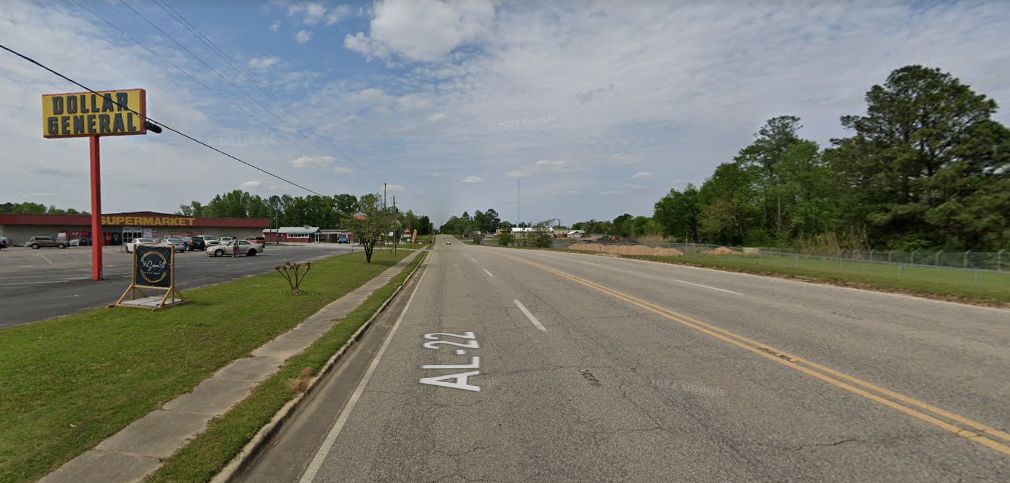
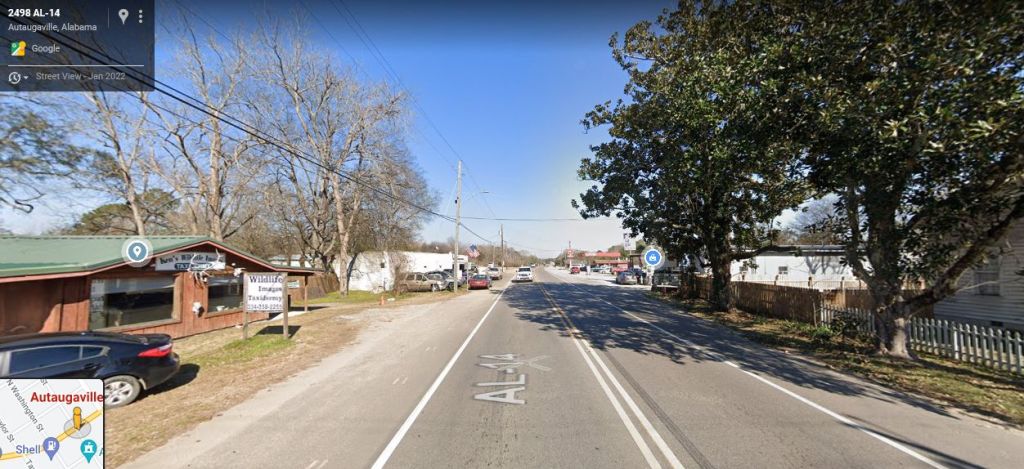
A practical example of what Marohn is writing about in regards to design can be found in comparing two cities both 20 minutes from me. Both are on an Alabama state highway, and both change the speed limit within their borders from the highway speed of 55 MPH to 30 MPH. In one, the speed limit is observed by most of the traffic, and even those who exceed it don’t do so by much. In the other, the speed limit is universally ignored unless there’s a police officer near by. I’ll leave you to guess which is which.

Autaugaville, Alabama
Maplesville, Alabama
Posted in Politics and Civic Interest, Reviews | Tagged , , , , , | 1 Comment

Alabama’s Amazon

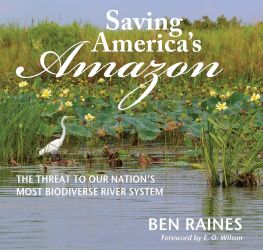
Saving America’s Amazon: Our Most Biodiverse River System is Under Siege
© 2020 Ben Raines
200 pages

The Mobile river delta is one of the most biologically diverse places on Earth, but few know and still fewer appreciate this: for thousands of years, Alabama has served as a haven for many species found nowhere else, kept warm and rainy by generous sunshine and Gulf breezes. In the last century, though, and especially more recently, Alabama’s record-number of natural species has been rivaled by a record number of extinctions: dams, logging, and industrial development have been disrupting species migrations, destroying habitats, and poisoning broad areas. Ben Raines, E.O. Wilson, and others have suggested that Alabama is at a crossroads: either Alabamians began taking stewardship of this incredible treasure more seriously, or it will be lost. The scope of the problem is significant: speaking as an Alabamian who delights in exploring the state’s wild places and reading books about science and nature, even I was unaware of how unique the Mobile delta is until reading an article in the NY Times a few years ago. Raines’ gift for photography is employed to good effect here, with shots of staggering beauty showing off both the landscape and the unique I hope that Raines and other’s activism will help turn the tide, but his argument here would have been better served had he not frequently used ‘conservative’ as a bad word: given that his intended audience is Alabamians, demeaning the reader probably won’t help. If pictures are worth a thousand words, though, those included here will more than make up for Raines’ failure to read the room and convince readers that the Delta is a jewel worth cherishing and protecting.

Posted in Reviews, science | Tagged , , , , | Leave a comment

The Politically Incorrect Guide to American History

The Politically Incorrect Guide to American History
© 2004 Thomas E. Woods
290 pages

I don’t remember when I first began to break from believing the Standard View of American history, the view promoted in the textbooks paid for by the State and supporting its ambitions perfectly. Perhaps it was stumbling upon Howard Zinn’s A People’s History of American Empire. Although I’m now just as dubious about Zinn’s narrative of American history as those printed in DC-approved textbooks,   it was useful in breaking ground for me, allowing me to consider views that didn’t have the imperial imprimatur. Woods doesn’t create a libertarian version of A People’s History here; instead, he focuses on controversial aspects  in American history,   even if other decades are equally target-rich. (Ah, the things that could be said about Nixon’s many economic sins and the oil crisis of the seventies…)    Despite being a dissident in good standing for nearly fifteen years,  and being a regular listener of Woods’ podcast for the last eight or so*,   he still managed to deliver surprises. This is also one of the least abrasive and belligerent Politically Incorrect guides I’ve read, which made it more enjoyable to read, and more likely that I’d pass it on.  There appears to be a huge amount of overlap between this and Woods’ 33 Questions about American History You’re Not Supposed to Ask, though, so if you’ve read one the other is probably redundant. 

The book is strongest in the beginning,  because there’s a smooth progression and the chapters are united by a common theme. Woods opens with the colonial period, stressing  the distinct characters of the colonial groups (puritans, patricians, and plebes, essentially)  and uses this to point out the colonies’ fierce jealousy of one another and their independent natures.  This leads naturally into the war for independence, and the struggles following to create a workable constitution that respected both the desires of the States for  self-rule, and the need for a larger union to serve the States’ common interests more effectively.  Even after the Constitution was adopted, Woods points out,   sectional competition still existed, particularly on economic lines. Tariffs that supported the North burdened the South, for instance, and the  economic masters of the northeast and south continually competed against one another for political power. This, more than moral ardour or commitment to the American ideal of liberty,    motivated the North’s attempt to restrict the expansion of slavery, and economic factors also influenced the North’s refusal to let the Southern states go:  if the North insisted on noxious tariffs, the South could turn to Europe as its primary trading partner. David Williams, no libertarian,  argued much the same in his People’s History of the Civil War.     The grappling between each set of economic masters mattered little to the common soldier, of course   most southerners owned no slaves and resisted the bluebellies for the same reason their forefathers fought the redcoats – independence and defense against invasion. 


From here, the history is more episodic:  Woods examines the push west, for instance, pointing out the inefficiency and corruption that followed when DC began giving railroad companies land grants, and defends Rockefeller and Carnegie against smears that they were robber-barons.  The early 20th century  offers plenty of grounds for commentary:   Wilson’s hypocrisy and malice during the Great War are dealt with extensively: his  lying to Americans to push his country into combat, and  treating the blockade of Britain as a moral outrage while ignoring Britain’s harsher blockade of Germany, not to mention insisting that American ships should be able to sally through an active war zone without any risk whatsoever, when the Brits were known to fly false flags and use civilian ships like the Lusitania to move munitions.  (Howard Zinn, again no libertarian, also points this out in his People’s History of American Empire.)  Woods then debunks Hoover’s reputation as someone who “did nothing”: in fact, Hoover began the government intervention in the crisis of 1929 – 1930,  expanded and made more malignant by Roosevelt, that made what should have been an ordinary economic hiccough into a prolonged Depression. (It’s not an accident that the first economic disruption after the Federal Reserve was created was also the worst: nothing good happens when self-appointed wannabe technocrats start trying to manage something as organic and complex as an economy.)  Roosevelt, as you might  imagine, gets a solid thrashing beginning with the New Deal and continuing with his dragging the United States into World War 2 and bullying the opposition by pulling radio licenses and siccing the FBI goon squads on dissenters.  (The FBI,  minions of empire since their inception!)   The post-WW2 period is more scattered:  Woods  examines  the legacy of the  Civil Rights period, including the patent racism that affirmative action embodies,  attacks Reagan’s reputation as a small-government kind of guy, and points to  the disastrous foreign policy escapades of the 1990s, which would inflame anti-American sentiment in the mideast and end in horror in 2001.

All told, this was an entertaining and interesting romp through American history. Aside from the early colonial period, I was familiar with most of the content already. Woods skipped over some potentially interesting bits in American history, like the rise of the labor movement and the aforementioned mistakes of the 1970s, but he was no doubt restricted for space: the Politically Incorrect guides I’ve seen are fairly uniform regarding the size and formatting of the books. I’m most interested in his argument that relations between the early colonists and the native populations were more diverse and peaceful than understood — particularly the claims that some tribes invited European settlement to create buffers and allies between themselves and other tribes, and that the popular story that natives had no conception of selling land is an absolute lie. That merits further digging. In addition to this book being far more professional in tone than many in the PIG series, it has the added attraction of featuring criticism against both ‘liberals’ and ‘conservatives’, given Woods’ libertarian sympathies.

* The Tom Woods Show, which is a half-hour daily with subjects spanning history, economics, literature, and progressive rock.  The show introduced me to the work of Scott Horton and Brad Birzer, among others. I’ve been listening to it since 2013 or so.

Posted in history, Reviews | Tagged , , , , , | 3 Comments

Persuasion

Persuasion
© 1817 Jane Austen
249 pages

Persuasion is the story of a young couple broken apart by the young woman (Anne’s) family convincing her that her beau doesn’t have enough money or social standing to be a good match for her. After Anne’s foolish father squanders the family’s resources on trying to meet society’s expectations, they’re forced to rent out the family home to an admiral and his family. Said family includes…..the jilted beau, Captain Wentworth, who re-enters Anne’s social scene. After first studiously avoiding the other, the erstwhile lovers are forced to talk after the Captain’s new belle injures herself acting foolishly, and the old flame (never lost) flares up yet again. This time, though, said captain has money and social standing, so everyone is A-OK with the union and they all live happily ever after. Of the five Austen novels I’ve read, this is both the snobbiest and the most dangerous to live in, since there’s enough widows and widowers to make a drinking game out of. I think I’d find the novel more interesting if the ending hadn’t effectively legitimated Anne’s family’s snobbery: what if they were reunited and the Captain’s fortunes hadn’t improved, had indeed worsened, but Anne decided her affection and love for his character meant more than his meager funds and humble social status? That said, Austen does mock the snobbery, most obviously through her father — a man who has to quit his family home because he can’t bear to rein in his spending for fear of losing status, who distracts himself from his financial woes by poring over the equivalent of the Social Register. I enjoyed it well enough, but the ending was obvious from reading the back of the book: unlike Northanger Abbey, there was never any ambiguity.

Posted in Classics and Literary, Reviews | Tagged , , , , , , | 6 Comments

Marine Combat Correspondent

Marine Combat Correspondent: World War 2 in the Pacific
© 1999 Sam Stavisky
344 pages

Sam Stavisky was a reporter for the Washington Post on December 7th, 1941, when he and the world bore witness to Japan’s bloody ambition to rule the Pacific. On December 8th, he attempted to join the Army to do his part against the German and Japanese empires.  Both the Army and Navy looked at Sam’s thick glasses and short stature and shook their heads, and the earnest reporter though he’d have to sit the war out – but then heard that the Marines were actively looking for journalists to send in the field. They would be real Marines,  but with a special sub-mission:   creating human-interest stories about the boys in the field to send to their folks at home, and recording for the public the stories of their sacrifice and gallantry.   Sam was soon on his way to the Pacific,  sometimes in combat and sometimes following rumors and whispers to find the real story. 

The Combat Correspondent program was completely new, with only six members at its creation:  most unit commanders had no idea what to do with their CCs, and employed them in underwhelming positions like clerks.  Sam was lucky enough to be assigned to someone more receptive, who essentially made him a roving reporter in the Pacific.  Although occasionally reeled in and assigned somewhere,  for the most part he was able to move from site to site on his own volition,  hitching rides on LSTs and following stories as he heard about them. Stories about Navy screwups or battles gone wrong wouldn’t make the censors, but Stavisky presents them here decades after the fact. Most of the stories included are about valor and resourcefulness, all censor-friendly. (Oddly, censors refused to forward one of Stavisky’s stories about an airman who surpassed Eddie Rickenbacker’s record for downed enemy fighters.)  Although often under fire (the Pacific in 1942 / 1943 didn’t have any ‘safe spaces’),   most of the combat recorded here is other people’s:  Stavisky isn’t involved in any first-wave invasions, but he does have to defend himself more than a few times and even serves as the tail gunner  in an airstrike on a Japanese supply depot. When I first encountered this book as a kid, I’d only ever read general, top-down accounts of World War 2 that were very sanitized.  Stavisky introduced me to the war as soldiers experienced it –  of desperate hours lying in mud under fire, singing bawdy songs and pinching supplies from Army depots,  of moving from camp to camp  and watching the skies above, wondering when Vals and Bettys might descend.  Re-reading it for the first time in at least sixteen years made me realize how many visceral details I’ve retained from this: the little rhymes Marines created to go long with the bugle calls (“Who’s going ashore? Who’s going ashore? Who’s got the price for a two-bit whore?”), the image of steaks served with soft-fried eggs, and of course the constant spectre of Sam’s D.I. floating in his head, admonishing him to “Cover yer ass!” whenever he’s tempted to get some shut-eye without first digging out his foxhole, or prudence is otherwise demanded.

This is a book wrapped up in nostalgia for me: were I reading it for the first time, I think I might be disappointed that Stavisky is always on the margins of major combat exercises, never directly involved the way Gene Sledge was. Still, I’d recommend it to anyone who wants to experience the Pacific front first hand, and get a taste for the many varied acts of perseverance and courage that made victory possible.

Posted in history, Reviews | Tagged , , , , , | 3 Comments

August 2022 in Review

It’s…er, been a while since I did a monthly update.

Science Survey

Doing well! The science survey for 22 is completed,  with sixteen titles fulfilling my twelve categories. I’d like to finish the year with at least 20 science titles, so we’re not done quite yet. Interestingly, this is the first year I haven’t tweaked the categories, though I am thinking about it seriously.  I want to include Oceanography in the future, but I haven’t decided if it will coexist with Geology, or  kick Thinking Scientifically out to join the second-string “Wildcard” squad. 

Added this month:
The Hacking of the American Mind, Robert Lustig (Psychology/Neurology/Cognition)
Unsettled: What Climate Science Tells Us, What It Doesn’t, and Why it Matters, Steve Koonin (Climate/Weather). Review in the works. I’m trying to look at Koonin’s sources to figure out how on the level he is.
Ocean Anatomy. Julia Rothman (Geology & Oceanography). This is a mostly-graphic introduction to the world’s oceans and their inhabitants. Presumably intended for younger readers, it nontheless had fair bit of information that was new to me, and the illustrations were charming.
Is This Wi-Fi Organic? A Guide to Spotting Misleading Science Online, Dave Farina (Thinking Scientifically)

Reading Dixie

Yeaaaah, this is…not a thing this year.  I still intend to read the rest of my library’s Rick Bragg holdings, but Pat Conroy will wait until 2023, I think.

Classics Club

I’ve read two books in eight months, which is somewhat less than ideal, shall we say? In the spring I read Gone with the Wind (timed it with tornado season because I love tempting fate), and more recently I finished The Hitchhiker’s Guide to the Galaxy.   To the few who don’t know its story, it’s about a fellow named Arthur Dent who is rescued from the destruction of Earth to make room for a space-highway by virtue of his buddy Ford Prefect, who as it turns out is an alien with a gift for hitchhiking. Absurd adventures ensue. I enjoyed it enormously at the beginning, but the longer it goes on the more my brain transforms into this chap:

I like silly — readers know how much I love P.G. Wodehouse and Lemony Snicket — but the end drifts into inanity for me.

Climbing Mount Doom:

Since March, I’ve read 13 of my TBR titles. A lot of them were ebooks, though, so the Pile of Doom that lives on my headboard bookcase has not diminished dramatically.  

New Acquisitions
I bought two science books that will be very appropriate for October,  shall we say, so – no spoilers.  I also purchased two books I read in high school: Disaster! by Dan Kurzman is a history of the San Francisco earthquake and fire; it was my introduction to the subject and one I remember fondly, so I want to revisit it. I may use it for a trilogy of books on early-20th century San Francisco, including another re-read favorite (Good Life in Hard Times) and Herbert Ashbury’s history of the SF underworld, The Barbary Coast.  The second buy was Sam Stavinsky’s Marine Combat Correspondent,   a memoir of a Post reporter turned Marine.  I’d never read a war memoir before finding this in Walmart back in 1999 or so,  and it led me to other memoirs like William Manchester’s Goodbye, Darkness. (That, in turn, led me to his The Glory and the Dream, a 1400-page history of the United States from 1932 – 1972. I read this as a ninth or tenth grader. Needless to say I was a strange child.)   Marine was one of the key books (along with Albert Marrin’s The Airman’s War) that formed my early knowledge of WW2. I’m nearly done with my re-read of it, so look for it soon.

Posted in General | Tagged , , | 7 Comments

Is This Wi-Fi Organic?

Is This Wi-Fi Organic? A Guide to Spotting Misleading Science Online
© 2021 Dave Farina
254 pages

In The Demon-Haunted World, Carl Sagan warned readers: “We live in a society exquisitely dependent on science and technology in which hardly anyone knows anything about science and technology.” Dave Farina has made it his life’s mission to remedy such wholesale ignorance, hosting a youtube channel in which he addresses popular misconceptions about the natural world. He adds to his work with Is This Wi-Fi Organic, in which primers on physics, biochemistry, and energy precede and inform take-downs of various spurious claims. Farina focuses on those with a direct bearing on human health (diet and medicine), though after the two-thirds mark he moves to the area of the obnoxious-but-not-dangerous category, the likes of astrology and such. Farina takes serious issue with the “nature good, artificial bad” conceit so ubiquitous in our culture, frequently reminding readers that nature can be capricious and destructive as easily as it can be beneficial. The author’s experience as an online educator is definitely on display here, with clear explanations and helpful illustrations; there’s also a good dash of humor, sometimes snark, when he’s addressing particularly ludicrous claims. The book is most helpful in constantly keeping readers tied to the foundation: we begin with chemistry and physics, and even as Farina builds on that to explain how cells work, or muscle tissue is created, he continually reminds readers of these processes’ ultimate electrochemical origins. Is This Wi-Fi Organic is both educational and fun, but it has its quirks. Farina’s passion for creating a scientifically literate populace is admirable but leads him to a naive technotriumphalism at times — championing a command economy and cold fusion, for instance. Farina might be served looking at a history or economics book once in a while. Despite this, I think the book is helpful as an introduction to the basic goings-on of the natural world and ourselves, especially if paired with something like A Survival Guide to the Misinformation Age, which focused more on skills on interpreting graphs, parsing statistics, etc.

Related:
The Skeptic’s Guide to the Universe: How to Know What’s Really Real in a World Increasingly Full of Fake, Steven Novella et. al. From the hosts of “The Skeptics Guide to the Universe“, a skeptical/science/geek podcast I’ve been listening to since 2006.
The Demon-Haunted World: Science as a Candle in the Dark, Carl Sagan
A Survival Guide to the Misinformation Age, David Helfand
50 Popular Beliefs that People Believe are True, Guy Harrison

Posted in Reviews, science | Tagged , , , , | 5 Comments

The Hacking of the American Mind

The Hacking of the American Mind: The Science Behind the Corporate Takeover of Our Bodies and Brains
© 2017 Robert Lustig
352 pages

Robert Lustig is an endocrinologist who gained public recognition when he delivered a lecture entitled “Sugar: the Bitter Truth”, which exposed the opioid-like effects of sugar, its saturation in the American diet, and how fructose in action resembles a toxin. I don’t remember how the timing of my watching that worked with my switching to a low-processed foods diet and subsequently losing nearly two hundred pounds, but in my subsequent health reading to understand my experiences, I began learning about metabolic syndrome, insulin resistance, and other factors that connected to Lustig’s arguments perfectly. His The Hacking of the American Mind continues his campaign against the ubiquity and deleterious effects of sugar, but broadens it to a general attack on how corporate America (except for the medical and pharmaceutical giants who only want us to be healthy, naturally) conflate pleasure and happiness, using brain chemistry to addict us to the pursuit of their products, despite the attending health costs of depression, obesity, etc. Hacking is at once wholly promising and disappointing: promising because of the importance and ambition of its subject, and disappointing for the breezy and casual style in which it is treated.

Lustig opens by differentiating between pleasure and lasting happiness,  first drawing on the observations of philosophers before switching to his own specialty.  Although wisdom traditions across the world have recognized the futility of pursuing pleasure to achieve happiness (even the Epicureans, who defined pleasure as the only good, nonetheless promoted voluntary simplicity to avoid the hedonic treadmill trap), Lustig argues that we now know the neurology underlying the pleasure/happiness distinction.  One is derived wholly from dopamine, and the other from serotonin.   Although dopamine rushes can be intense, they are  also short-lived and provide diminishing returns: to  protect the participating neural connections, the body downregulates their sensitivity. The result is that people who want to replicate the same high have to indulge in the originating behavior all the more, creating a cycle of addiction and depression.   Anything that triggers dopamine rushes can thus become addictive: food, sex,  gambling, video games, etc — and if it’s actively promoted through advertising, dopamine rewards are involved. This has become a progressive problem in industrialized nations, because dopamine triggers are increasingly cheap to come by,   allowing people to self-sabotage their mental health in the pursuit of pleasure – and physical health problems quickly follow. This is especially the case with Lustig’s bête noire, sugar:  here he recapitulates his argument against sugar, especially fructose. Although Lustig addresses other common sources of addiction and misery, particularly smartphone usage and opiods, he returns to sugar repeatedly: this is understandable given Lustig’s profession, how destructive fructose is to insulin regulation, and how ubiquitous sugar is in the American food supply. As Michael Moss documented in Salt, Sugar, Fat, sugar is abundant even in food products that aren’t ‘sweet’; it’s commonly used as a preservative and a bulkifier. Lustig’s prescription is to “connect, contribute, cope, and cook” — rapidly dialing down our consumption of social media, taking tech sabbaths and spending real time with in-the-flesh people, finding ways to volunteer and help in our local communities, and hitting multiple birds with one spatula by learning to cook. Not only will shifting to fresh foods eliminate much of the processed rubbish from our diets, but it’s a technical skill that delivers satisfaction and is a convenient way to bring people together. Few things rival the company of good friends around a dinner table, that’s for certain.

Hacking was a must-read for me because it addresses so many important issues to mental and physical health: metabolic syndrome, consumerism, and their common fuel of addiction. As much as I wanted to love the book, though, and hasten to recommend it, it’s riven with problems. Lustig is an inconsistent author, at times so breezy and quick with pop culture references as to undermine what should be a sober and earnest call to arms, and at others employing so convoluted a sentence structure that a reader has to circle the block a few times to parse what’s being said. The casualness is far more pervasive, though, which diminished the book’s credibility — especially when it marks not just style, but treatment of subjects outside biochemistry. There are outright mistakes (referring to Obamacare as something that had been done away with, referring to Trump as the first populist president, mischaracterizing agape as religious zeal) and a general cavalierness even within his stronger beat. For instance, when remarking on how cigarettes were once promoted as a curative for obesity, he treats this merely as addiction transference despite nicotine’s known effect as an appetite suppressant. As much as I loved the topic and respected Lustig’s goal (and agreed with his prescription, limited as it was), the book read as messy. It wasn’t the forceful, clear argument that the author delivered in his original “Sugar” lecture, and that the subject merited. Even so, it’s worth your time if you, like me, are concerned about how the western way of eating, and the compulsive nature of consumption (of stuff, of The News, etc), destroy people’s health.

Related:
Salt, Sugar, Fat: How the Food Giants Tricked Us, Michael Moss
Drunk Flies and Stoned Dolphins: A Trip Through the World of Animal Intoxication, One R. Pagan
Affluenza: The All-Consuming Epidemic, various
The Year of No Sugar, Eve Schaub
The Obesity Code, Jason Fung
Spark: Exercise and the Brain, Jason Ratey
Dreamland: The True Tale of America’s Opiod Epidemic, Sam Quinones
Why We Get Fat, Gary Taubes
American Mania: When More Isn’t Enough, Peter Whybrow

Posted in Reviews, science | Tagged , , , , , | 4 Comments

Ten Years of the Classics Club

The Classics Club recently celebrated its 10-year anniversary, and posed some questions to its readers. I began participating in 2015, wrapping up my first list in 2020 and starting a new one weeks later. My original plan with the Classics Club Strikes Back (my second list) was to knock it out in three years. A year and a half into CCSB, I’ve read 21 books, so it’s still possible. Given my lack of progress this year (I’ve read one title), I’ll have to come out swinging in 2023.

The Questions

When did you join the Classics Club? 

September 2015.

What is the best classic book you’ve read for the club so far? Why?

Solzhenitsyn’s Gulag Archipelago  comes to mind. It’s an amazing blend of eye-opening history, insight into human nature, and wholesale condemnation of the communist state.


What is the first classic you ever read?

As part of the Classics Club, Emma; in general, The Call of the Wild.


Which classic book inspired you the most?

It’s not from my CC lists, but Thoreau’s Walden was part of the reason I began pursuing simple living and minimalism.


What is the most challenging one you’ve ever read, or tried to read?

From this list, Catch-22; it took me four times. In high school, I tried and failed (quickly) to read Faulker’s Sound and Fury.


Favourite movie adaptation of a classic? Least favorite?
Gotta go with Gone with the Wind for a favorite; I haven’t seen many others, but I have assurances from multiple parties that the new Persuasion is terrible.


Which classic character most reminds you of yourself?

Ivan Ilyich, because we both have/had serious kidney issues. :p


Has there been a classic title you expected to dislike and ended up loving? Respecting? Appreciating?

I expected to read The Jungle with a scowl on my face the entire time, but Sinclair delivered a compelling story, for the most part — until Jurgis disappears as a character to become nothing but the passive listener of lectures on politics and economics.


Classic/s you are DEFINITELY GOING TO MAKE HAPPEN next year?

Er, the ones I don’t get to this year. I’ll say Plutarch’s Heroes because it’s very unlikely (unless I suddenly get in a Greco-Roman mood) that I’ll get to them in 2022.


Favorite memory with a classic and/or your favourite memory with The Classics Club?

Finishing War and Peace and reveling in my ability to brag about having read it. Gulag Archipelago is larger and Brothers Karamazov more complex, but they don’t have the same cachet as Tolstoy, for whatever reason.

Posted in General | Tagged , | 4 Comments