Thinking about women authors

A few years back, out of a matter of curiosity, I  went through my data on books-read since May 2007 and determined that nearly 80% of my reading came from male authors. This is not something that bothers me, since men predominate the genres and subjects I tend to read,  but when there was a flurry of chatter this week about International Women’s Day, I began thinking about women authors I’ve read and re-visited – and I found that they were mostly authors I’d read as a kid! 

Top row: Beverly Cleary, Gertrude Chandler Warner, K.A. Applegate, S.E. Hinton
Bottom Row: Ann M. Martin, S.D. Perry, Amelia Atwater-Rhodes, and Anita Amirrezvani

Beverly Cleary and Gertrude Chandler Warner were my first ‘favorite authors’, as I devoured the Henry Huggins/Beezus books as well as the Boxcar Children series. In middle school,   Melinda Metz’s  Roswell High,   K.A. Applegate’s Animorphs, and S.E. Hinton’s  Oklahoma novels  were constantly in my pockets, in my backpack, or in my hand.  Those merged into high school, where I also found Ann M. Martin’s California Diaries series, the characters and stories of which are still close to my heart and mind, and discovered the remarkable urban fantasy of Amelia Atwater-Rhodes. (Her In the Forests of the Night is much battered from many readings over the years!). S.D. Perry became a longrunning favorite in the early 2000s because of her Deep Space Nine titles that initiated the Star Trek Relaunch.

In adulthood, though……there’s just not many pickings! J.K. Rowling, of course, whose Harry Potter books I first found in college and have subsequently read and re-read. Anita Amirrezvani’s books are like nothing I’ve read, but she’s not particularly active. Mary Roach (pop science on taboo topics), Alison Weir (medieval English history/biography), Rose George (um…shipping, sanitation, and blood so far) and Susan Strasser (garbage, consumerism) are three of the few female nonfiction authors I find consistently interesting, though Juliet Schor (consumerism, work) is one whose works I want to explore more. Over time I think Liza Picard’s social histories will make her a favorite.

Although reading more female authors is not a ‘goal’ of mine (I read according to my interests, not to check off a yay-me-I-do-diversity scorecard), it’s interesting to realize that I read females far more as a kid than now. I suppose it’s a natural effect of growing up: as we hit the teens and our bodies and interests begin differentiating more, the ways we relate to authors and the stories they tell changes. I don’t know that I would have found California Diaries, for instance, if I hadn’t entered the series with its sole male character, Ducky. If Maggie or Amalia had been the first books I saw, for instance, I probably wouldn’t have given the series much thought, having little-to-no interest in a preppie girl being moody because her dad ignores her, or in another girl’s dating woes. However, having encountered them in Ducky, and then Sunny, I developed an attachment to the characters, and was then more interested in reading about their lives.
Posted in General | Tagged | 3 Comments

Betrayer and Betrayed

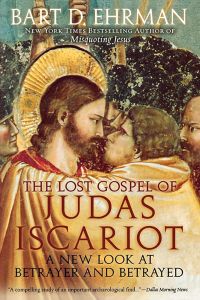
The Lost Gospel of Judas Iscariot: A New Look at Betrayer and Betrayed
© 2006 Bart Ehrman
198 pages

In the 1970s a small collection of previously unknown texts surfaced, one of which (“The Gospel of Judas”) was of great interest to scholars specializing in Coptic texts, gnostic texts, and early Christianity.   I read what’s survived of the text years ago, via Elaine Pagels’ Reading Judas,  and so wasn’t particularly interested in this title – reading it at the urging of a friend who has the theology of an Episcopalian but secretly delights in presenting  books like this to his Baptist Sunday school class.  The gist of the Judas text is that Judas was Jesus’ closest friend who alone perceived the truth about him being a divine creature from another plane, and did him a great service by instigating the arrest that led to Jesus’ death and escape from our world after he’d fulfilled his earthly mission. There’s more to it, but it’s all hateful and dreary gnosticism.   Ehrman reviews the turbulent history of how the text came to be found and travel through the antiquities underground;  reviews the treatment of Judas in the various Gospels, Acts, Epistles, and succeeding Christian literature;    places it within the context of the Gnostic movement, and  concludes by arguing that Judas  and Jesus are both best understood through the light of Jewish Apocalypticism. He later expanded that into Jesus: Apocalyptic Prophet of the New Millennium.  Having previously read Reading Judas and his apocalyptic argument, this was old hat for me, but I was intrigued by the fact that there’s debate currently over whether Gnosticism is purely a Christian heresy, or if it existed independently and some of its practitioners  became Christian and created a fusion. 

Posted in Religion and Philosophy, Reviews | Tagged , , , , | 5 Comments

The Other Side of the Bay

The Other Side of the Bay
© 2014 Sean Dietrich
177 pages

There’s a broken down  truck in the woods holding three men,  two drunk brothers and a passed-out football has-been.   By morning, the truck will be discovered in perfect working condition, and the has-been found to be dead in the drunk tank at the sheriff’s office. The Other Side of the Bay ranks among the most interesting of Dietrich’s works that I’ve yet tried, in part because of its unusual structure; it weaves back and forth between past and present, which run increasingly close together as the tale emerges,  and in the world of small, rural towns,  these two are not far apart:  as Faulkner commented, the past is never dead; it is not even past.  The continuity of this rural community is a strength and a theme of this story of two lonely men, a father and son who are  heartbroken by the loss of the woman who bound their lives together. Bringing them together again is a mystery in the back woods, one that will create a further mystery when the man being held overnight doesn’t wake up in the morning.    As Dietrich tells the story of Jimmy working through the mystery, attempting to figure out what happened and what the demands of justice are in this case,   we experience his past,  forever hovering in his mind – especially scenes of his father’s long service as the sheriff, a position Jimmy now inherits.   Fans of The Incredible Winston Browne will see a precursor of that other Panhandle lawman here,    as both Jimmy and his father are not merely hunters of speeders and ne’er do wells,  but community fixtures,  offering strength in wise counsel and steady presence rather than swaggering and boasting. It’s a strength born of suffering, as the reader shall see.    Although the book deals with serious themes – loss and revenge –  it also offers the comfortable escape of a small-town setting,  complete with quirky characters ribbing one another even as they join together in serious work like investigating a murder. Winston Browne was a better-organized book, but I thought Dietrich’s unusual structure ultimately effective in demonstrating the living presence of the past in the South, especially its smaller towns where all are bound together by shared memories.

Kindle Highlights:

“I hope they don’t have anything to do with Holbrook’s misfortune and untimely death.”
“Misfortune and untimely death?” I said. “What are you, Walt Whitman?”

“I’m supposed to be hunting right this very moment.”
“Is that what you call hunting?” Hooty said. “I thought it was called getting drunk in a cabin.”
“It is,” Billy said. “But to our wives, it’s called hunting.”

Investigation for my daddy meant riding around town during the dinner hours, stopping at folk’s houses, cordially inviting men out onto their porches, right in the middle of supper. “You have a good chance of getting a man to talk if he’s got his kids nearby.” My daddy would say as he walked up to someone’s porch. “Children have a way of reminding grown men of what’s right and wrong.”

“She’s at least twenty years younger than you,” I said thinking of Billy’s saintly wife, Francis. “Besides, I don’t think young Willa is in the market for a forty-five-year-old, beer-drinking, beardless Santa Claus.”

I realized that Daddy wasn’t telling his story to me at all, he was telling it to himself. He was revisiting something special. I just happened to be standing there, witnessing a moment that he kept locked away in his box of memories. It was the place inside him where that rural boy with the homemade slingshot still lived.

“The way I sees it,” Daddy said. “Sometimes evil infects a man like a disease. The disease eats him up inside, consuming his organs, weaving its way into his bones. Then it crawls up to his head and gets all in his mind. Before you know it, the man starts to froth at the mouth like a rabid dog, raising the hair on his neck, baring his teeth. You look into his eyes, and you can tell he ain’t even in his body no more, just the disease.”

Posted in Reviews | Tagged , , , , , | Leave a comment

I SAY, Jeeves. Rather alarming, what?

Since it’s early March, I’m doing my April/Read of England planning, including a draft of the “Reading of England, 20__!” post I publish on the first. I’d written up a very brief intro paragraph in the style of Bertie Wooster, and then with a bit of whimsy I wondered if Bing could do it. I’ve been impressed by its ability to tell me the weather in the style of Foghorn Leghorn, and to tell me the day’s headline news as though Jane Curtin and Gilda Radner were doing a “Weekend Update” sketch about it.

The purple is my instructions, the white is my response. Amusingly, both my intro paragraph and Bing’s started with “What ho!”, though mine is “What ho, readers all!”.

Posted in General | 2 Comments

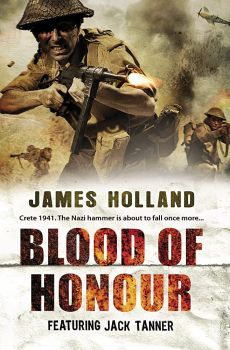
Blood of Honour

Blood of Honour
© 2011 James Holland
384 pages

It’s May 1941, and it looks like the good guys may actually win one for once.   British troops have arrived in Crete to defend it against an anticipated German invasion,   making it safely despite harassment from the Luftwaffe,   and the locals and Brits are working closely together to ensure that Jerry will find stiff resistance when he drops in.    Drop in he did, by the thousands –  German troops invading from the skies, and butchered from the ground.   However impressive their training,   lightly armed paratroopers are a poor match for entrenched positions and thousands of riflemen.  It turns out, though, that choppy communications and poor leadership can wring defeat from the jaws of victory.    In Blood of Honour, Jack Tanner returns as a CSM to defend the people of Crete,   and despite a series of sterling victories (including the liberation of  supplies from the Germans,  liberal use of high explosives to ruin the invaders’ day, and the theft of a Greek woman’s heart),  he’s dismayed to find the British high command once again eying the back door for a retreat after   inaction allows the Germans to capture an airfield and bring in more heavily equipped reinforcements. After reading three of Holland’s novels, I’m starting to realize he likes his formula:  start with Jack,  give him an officer who makes his job more difficult by being jealous/incompetent/malicious/ineffectual,   and top it off with an Evil German officer who is not only Totally Evil,but also takes being frustrated by Jack personally.  Season with dynamite and 1940s slang as desired.  I wouldn’t recommend reading a bunch of these back to back (I’m saving the other two in the series for April), but as far as period-accurate action adventure go, these novels are a blast. This one is luring me into reading more about the invasion of Crete, which I’ve never given any attention to in the past. Holland has written quite a few nonfiction titles, so I’m going to see if there’s any overlap.

Posted in historical fiction, Reviews | Tagged , , , , , | 3 Comments

Teaser Tuesday: Heroes and villains

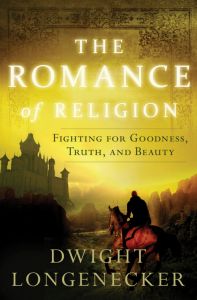
Today’s tease comes from The Romance of Religion by Dwight Longenecker. Reviews/comments for it, The Reactionary Mind, and Blood of Honour to come this week..

The truly romantic warrior sees the evil in the world and wants to fight it, but first of all he sees the evil in himself and wants to fight it. He realizes that he cannot hope to change the world if he cannot change himself. The truly righteous warrior, therefore, is not a person who knows he is right but a person who knows he is wrong. The righteous warrior realizes he is a hypocrite. He knows that in a dark corner of his own life, he is just as capable of monstrous crimes as the worst of humanity. In other words, the righteous warrior may be full of confidence, but he is also full of humility.

However, with his strength every romantic hero carries a weakness; he nurses a wound and aches with some tragic flaw. The way he treats his weakness distinguishes him from the villain. The villain is never a total monster. He is a hero gone wrong. He is a romantic hero who has given in to the dark side of the force. The villain has ceased to fight against evil—most importantly, he has ceased to fight against the evil within himself. He is a villain because he has no self-doubt. He has forgotten that he has a flaw; indeed, what should be his aching wound has become the defining characteristic of the villain. At some point he stopped fighting the darkness within and so became one with the darkness without. Because the villain refused to dominate his dark side, it has dominated him.

Posted in General | Tagged , | Leave a comment

The Bookworm Tag

Borrowed from Marian, and remixed a little bit with more borrowing from The Edge of the Precipice. If you like the questions, climb aboard and remove/add your own!

1.  If you had to go into the witness protection program, and they gave you the option of moving inside a book, where would you like to go?

Oh, easy. The Awakening of Miss Prim, in which the main character takes the post of librarian in an idyllic little village where society is arranged along distributist lines, where  everyone has their own home and small business, works just enough to take care of their needs, and spends the rest of the time cycling, drinking tea,  puttering about in gardens, and discussing  the classics and philosophy. 

2.  Have you ever claimed to have read a book you actually hadn’t read?

I claim to have read Hunchback of Notre Dame when I read an abridged version of it. I will atone for my sin eventually. 

3.  What author have you read the most books by?

Isaac Asimov (a hundred, at least, from fiction to nonfiction), followed by Bernard Cornwell

4.  Do you ever buy fun bookish merch like mugs, shirts, artwork, etc?

No,  though I do enjoy looking at them. 

5.  Do you usually read only one book at a time, or do you have several going at once?

I usually have at least two, a ‘serious’ read and a fun read.  This isn’t as simple as fiction or nonfiction, because the ‘fun’ read for me might be a book on transportation.

6.  Are you a mood reader, or do you plan out your reads?

Yes. 

7.  If you could meet the author of your favorite book and ask them one question, what would you ask them?

“Can I live on your farm, Mr. Berry?” 

8.  Have you ever tried a new food or drink because you read about it in a book or story?

“Scotch and soda for a dying man!” was Thomas Trumbull’s usual greeting when he arrived a meetings of the Black Widowers in Asimov’s mystery series of the same name, and it’s why one of the first drinks I ever tried was Scotch. 

9.  Have you ever named a pet after a book character?

Yep! My first dog, Barkley (from Sesame Street, which I read books of) and my current dog Idgie (Fried Green Tomatoes)

10.  What book are you reading right now?

Finishing Fr. Dwight Longenecker’s Romance of Religion, steadily working on Sarah Dry’s Waters of the World, on  our air and oceans. 

11. If you could spend a day with your favorite author, what would you do with them?

Wendell Berry would just want to work, and if I chose Bill Kauffman we’d just sit in a bar and tell stories all day,   so I’m going to go with Tony Esolen and a visit to a classical art museum where hopefully he will begin lecturing and bringing the artists’ dreams alive with his words. 

12. What is the longest book you’ve ever read, and did you like it?

The Gulag Archipelago, approximately two thousand pages across its three volumes. If we’re not counting multi-volume books, then War and Peace followed by The Age of Faith (Will Durant).     I loved Gulag & Durant, and enjoyed War and Peace

13. Have you ever cried over a fictional death scene, and if so, which one(s)?

The Pigman,  in The Pigman. I remember vividly as the first book that made a dramatic impact on my emotions.    Since we’re being more broad about ‘fiction’, though, the best example would be that of Arthur Morgan in Red Dead Redemption 2.      I’ve played it numerous times and it’s never lost its impact. 

Posted in General | Tagged | 5 Comments

Favorite subjects…

Today’s Wednesday writing prompt from Long and Short Reviews is: what is your favorite subject?

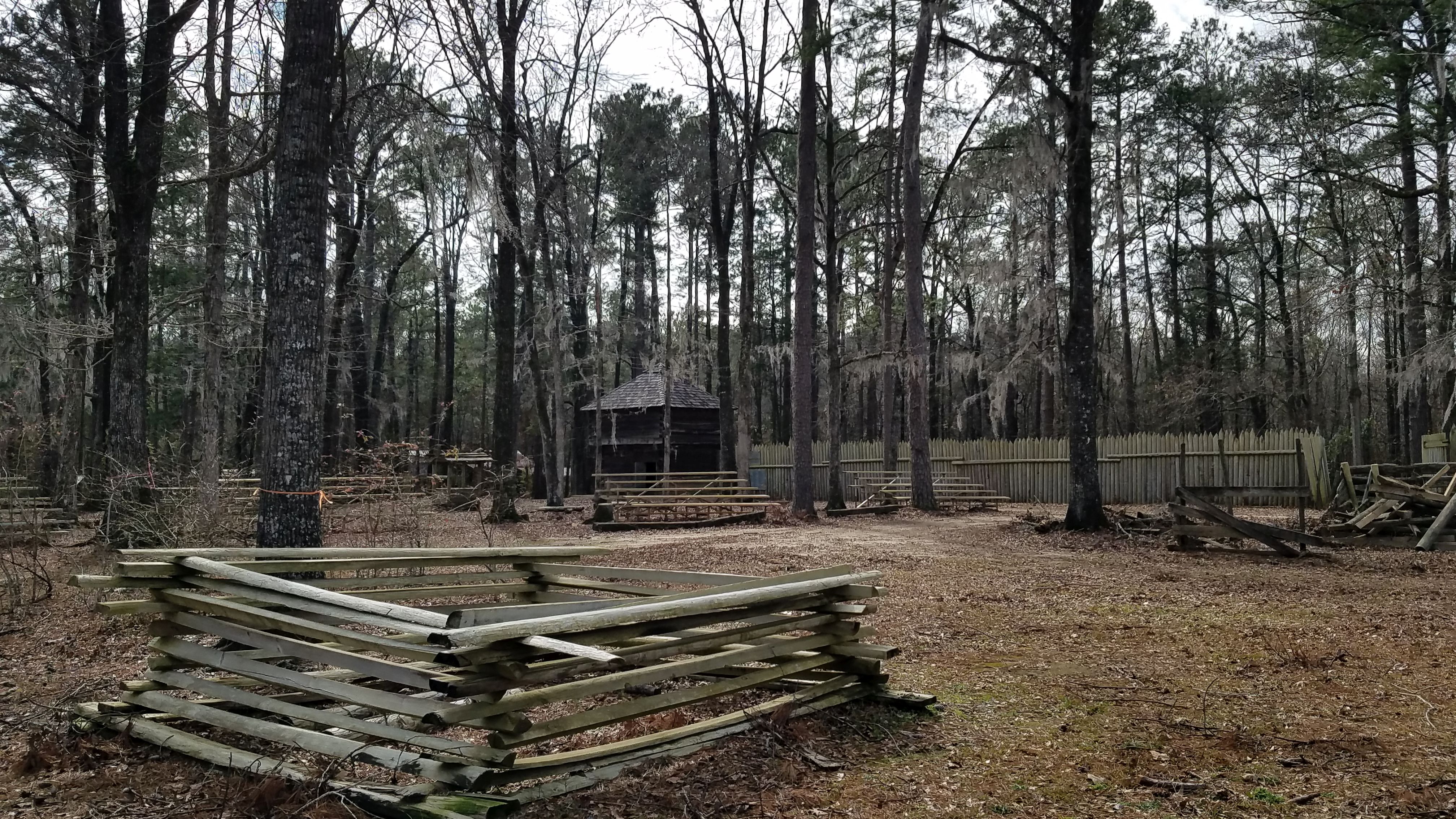
I can still remember the first day of fourth grade, walking eagerly to my desk and rummaging through the pile of books there to find what we’d be studying that year in history. This is the first time I remember being conscious of my love of history, a love that’s never waned over the course of decades. Anyone who reads this blog probably anticipated the answer, because year after year, history is the Queen of the Stacks, having lost once to science (2007) and once to religion and philosophy (2009). History was easy for me, and remains so, because as someone weaned on piles of books I approached it as just another story — only this time, a story that happened to be true. More than history being a drama that had happened, though, knowing history made the world around me more exciting. I took delight in visiting Old Cahaba and trying to imagine what was there before, or to see in my mind’s eye Creek war boats traveling down the Black Warrior river. The idea that things had once been so utterly different fascinated me, and this was increasingly the case when I got older and realized that events in history didn’t simply follow one another chronologically: they created what succeeded them, like the Crusades generating wealth for Italian merchants that led to the Renaissance, and creating interest in finding a way to the markets of the far east that did not involve paying the Turks money — and so resulting in the Age of Discovery, as the princes of Europe competed to find other paths across the world. As I age, of course, history becomes a way of rooting myself in the tradition that reared me, and in grounding me from the irrationality and absurdity of the modern age. And of course, imagining knights galloping across a field, wooden frigates deliver broadsides, and P-51s twist and dive in the sky is more exciting to me than grey boxes shooting missiles at one another.

Posted in General | Tagged , | 10 Comments

February 2023 in Review

The moving finger writs, and having writ, moves on, and now another month is gone. I think I quit myself reasonably well in February, making steady across across most of my challenges.

Do you anxiously wait all year for my big books-read pie chart, divided into genres? Do you long for graphical representation of strangers’ bookish data? Then behold! A bar graph!

I don’t think this is exactly what I was intending, but it’s close enough for the moment. Ideally, over the course of the year the grey bar will fill the orange bit. Goals for science, Dixie, and Classics Club are 2 a month or 24 all told: the goal for Climbing Mount Doom is 80. That may sound crazy, but I also have the option of casting TBR books into outermost darkness where there is wailing and gnashing of teeth (i.e. Goodwill), so it’s conceivable. The TBR titles also contain some science & cc titles among them, so I can double dip.

The Big Reads:

The Jewish Annotated New Testament: I’ve completed reading the Gospels and Acts, and have started on the essays that relate to basic background. Planning on posting the first recap at some point in March.
The Shahnameh: I didn’t even look at it. I took it down from the shelf and now it’s wandering about in the mini-piles. I will commence a search, rescue, and read operation. My hope would be to post the first-third review on March 20th, the first day of the Iranian New Year.

Climbing Mount TBR:
My Antonia, Willa Cather
Darkest Hour, James Holland
The Joyful Christian, C.S. Lewis
DISCARDED: Roads to Liberty, F. Van Wyck Mason. Or rather, returned to the friend who lent it to me last year.
PROBABLY DISCARDING: The Four: The DNA of Apple, Amazon, Google, and Facebook. The subject matter is interesting, but the author is too informal for me to take him seriously so far. I’ll give it another look before it goes in the box.

The Science Survey:

The Human Experiment, Jane Poynter. I also began reading Waters of the World

The Classics Club Strikes Back:

My Antonia, Willa Cather
Go Tell it on the Mountain, Jams Baldwin

Readin’ Dixie:
Sean of the South: Whistling Dixie, Sean Dietrich
Hidden History of Chilton County, Alabama, Billy J. Singleton
Early Alabama: An Illustrated Guide to Alabama’s Formative Years, Mike Bunn
Monroeville and the Stage Production of “To Kill a Mockingbird”, John Williams

Posted in General | Tagged | 2 Comments

“Our revels now are ended…”

This past weekend I was privileged to see one of the final performances of Greta Lambert at the Alabama Shakespeare Festival, where she performed the role of Prospero in Shakespeare’s “The Tempest”. I’d never seen or even read “The Tempest” before, in any form, and prepped by watching Overly Sarcastic Productions’ ten-minute review. For the uninitiated, the play opens with a handful of Italian noblemen and their hangers-on being caught in a terrific storm at sea, and washing up on an enchanted isle, the ship’s passengers being widely separated and cut off from one another. As we learn watching the play, this was no ordinary storm, but one conjured up by a sorcerer, Prospero, who in youth was the duke of Milan. He (or in this case, she) was sent into exile with her young daughter Miranda, and usurped by her brother Antonio. Now, with young Miranda maturing into adulthood, Prospero has arranged things to enact vengeance by getting his daughter happily married to one of the noblemen’s sons. (Not his brother’s, obviously….), aided by a fairy spirit and a demon-like thing. As expected from ASF, the acting was superb all around, especially Lamberts’, and I particularly liked the background acting of the young lady who played Arial, the fairy. What made this production so entertaining, though, was the choice of music: the play’s comic relief, a pair of drunk soldiers, kept roaring Irish sea shanties.

Posted in General | Tagged , | 6 Comments