April 2023 in Review

Well, welcome to May! I think Read of England was a tolerable success, though there were a lot of books I’d planned to read that I didn’t*, and since I did some book-buying to synch RoE with my other challenges (Our Man in Charleston and a history of the Royal Society), my effective progress on Mount Doom was more like regress.On the bright side, I got to touch on some bits of English folklore.

Read of England

Hitler’s Armada: The Royal Navy and the Defense of Britain, Geoff Hewitt
Essex Dogs, Dan Jones
Invasion: from the Armada to Hitler, Frank McLynn
The Tailor and Three Kings, Dan Jones
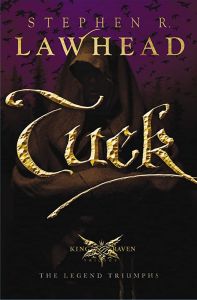
Tuck, Stephen Lawhead
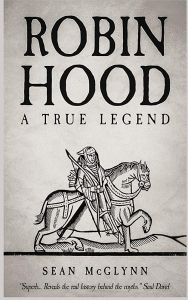
Robin Hood: A True Legend, Sean McGlynn
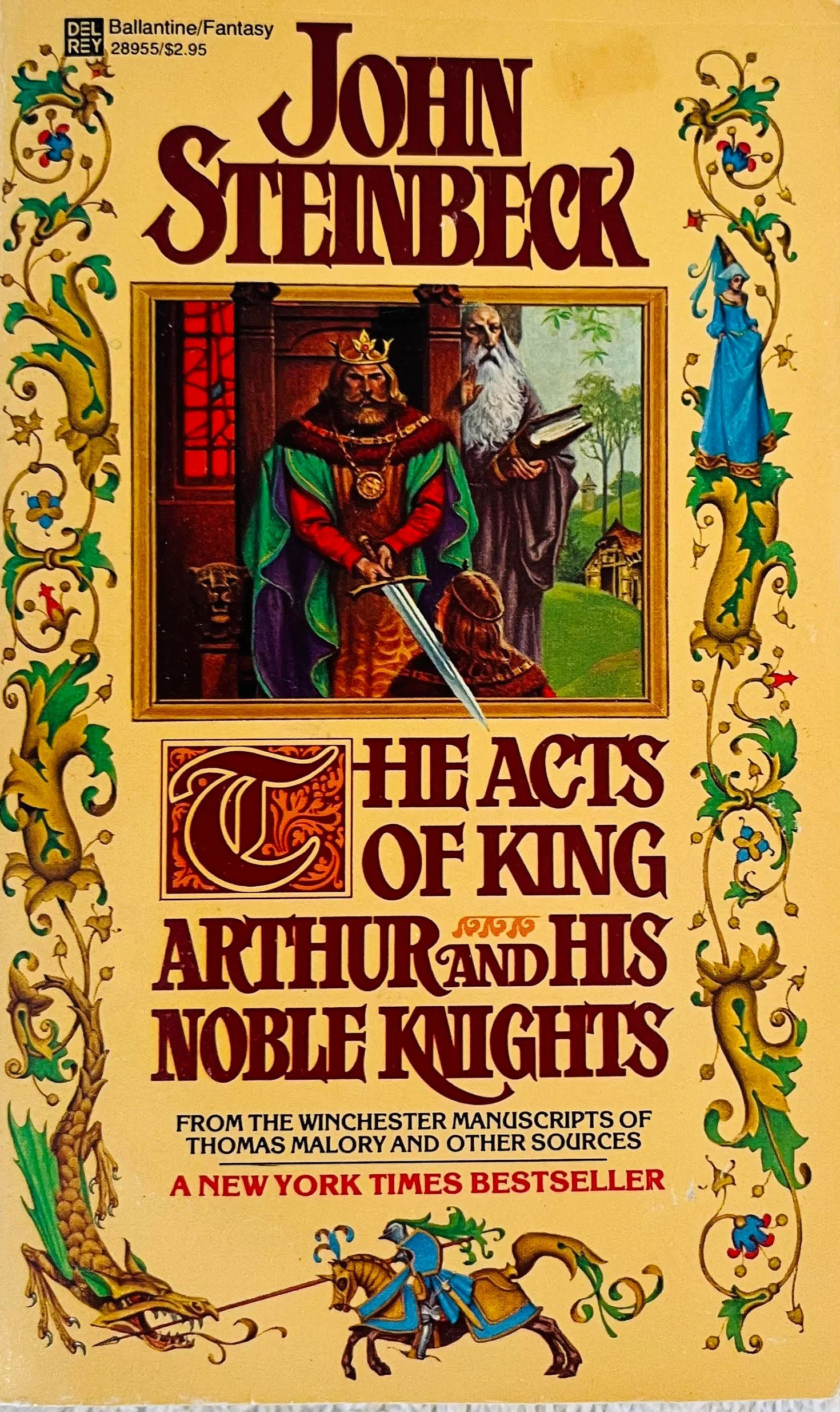
The Acts of King Arthur and his Noble Knights, John Steinbeck
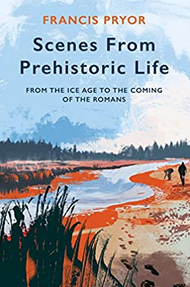
Scenes from Prehistoric Life: Britain from the Ice Age to the Coming of the Romans, Francis Pryor

The Big Reads:
Suspended in April. Back at now!

The Classics Club Strikes Back:
…. terrible. Terrible. I blame baseball.

Climbing Mount Doom:
Tuck, Stephen Lawhead
The Acts of King Arthur and his Noble Knights, John Steinbeck

The Science Survey:
The Beauty of the Beastly, Natalie Angier (Biology)
Scenes from Prehistoric Life: Britain from the Ice Age to the Coming of the Romans, Francis Pryor (Archaeology & Anthropology)

Reading Dixie:
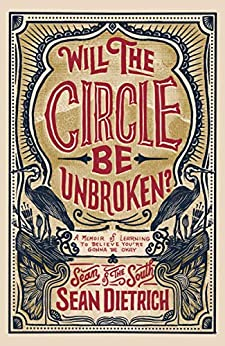
Will the Circle be Unbroken?, Sean Dietrich

Coming up in May:
I think we’re going to be all over the place, really. More England, a possible southern series, hopefully a drive to finish the science survey. I’m currently reading Our Man in Charleston and another entry in Simon Scarrow’s “Eagle” series, in which the Romans move to wipe out the Druids.

[*] Including a biography of Captain Sir Edward Pellew, two historical novels set in the English Civil War, and a few Mount Doom titles.


Posted in General | Tagged | 2 Comments

Dead Acre

Dead Acre
© 2020 Rhett C. Bruno & Jaime Castle
Read by Roger Clark. 3 hours and change

If you read Cold as Hell, you were introduced to Crowley, a gunman of the old west who died trying to protect a young woman and her daughter from his boss, the leader of a gang known as the Scuttlers. Rather than being consigned to the flames of perdition, though, Crowley opened his eyes to find himself branded with a black star and taking orders from a moody angel named Shar: he’d been made a Hand of God, his mission to seek out and destroy creatures of Hell loose on the earth, like vampires, werewolves, and similar beasts. I would have loved Cold as Hell purely because it lets me listen to Roger Clark, the narrator who is best known as the actor for Arthur Morgan, but Bruno deftly combined fantasy-horror tropes to native American theo- and mythology to make a truly interesting fantasy western, where good writing was given extra punch through Clark’s chops. Dead Acre is the Audible version of a novella slightly predating Cold as Hell, in which Crowley is sent to a small town known as Dead Acre which has the dashed rum luck of being very near a Hellmouth. Some strange goings-on have been going-on in the lawless hamlet, and he’s investigating the murder of a man and the disruption of graves that proves to be rather hairier than expected. The ending gave me pause, however, because it sees Crowley meeting the the child whose life he saved all those years ago —- and if I recall, him discovering that child all-grown up was a rather important part of Cold as Hell, meeting they’re meeting twice and then forgetting it, a bit like Darth Vader telling Obi-Wan “At last, we meet again” when Disney’s malicious handling of Star Wars demonstrates that Vader and Obi have met numerous times since they last dueled on Mustafar. Perhaps I’m remembering wrong, though. At any rate, it was enormous fun to listen to, especially as I played RDR2 and had Roger Clark’s alter-ego Arthur Morgan get into numerous drunken barfights. If you’re an RDR2 fan, there are lines that are especially funny: Crowley’s contempt for New Orleans, rather like Arthur’s hatred of St. Denis, and his description of it as being a city on a hellmouth, especially apropos when Arthur can actually encounter a vampire in the city if he follows a trail.

Samples of Roger Clark being funny


Posted in Reviews | Tagged , , , , , , | 2 Comments

Scenes from Prehistoric Britain

Scenes from Prehistoric Life: From the Ice Age to the Coming of the Romans
© 2021 Francis Pryor
320 pages

“The past is like a great country house: it is better appreciated if you can approach it from several directions. It is a lesson I have never forgotten.”

Scenes from Prehistoric Britain is a curious mix of extreme detail and fanciful speculation, visiting twelve sites in (mostly) prehistoric Britain that begin with the first trace of hominids in the area of Europe that would become Britain once the ice retreated and continuing to the Roman days. I’m not familiar with British prehistoric sites in general, save for Stonehenge, so this was a nice — if extremely detailed at times – tour of places that reveal how little we know. Pryor mixes details with speculation, so a frankly tedious description of how each stone at one site is oriented is followed by Pryor’s argument that the bluestones of Stonehenge may not have been sent by water, because that was too efficient and pragmatic for so important a construction. He believes it more likely that the bluestones were moved overland, in ceremonial progresses like those of medieval kings. This is sheer speculation, of course, but I do appreciate his awareness that not only material concerns would have motivated the ancients. Pryor frequently urges the reader to understand how dramatically our understanding can shift with context, both physical- and knowledge base. For instance, an axe head buried under a preserved wooden trackway might seem like an accident — but then other trackways also have hatchets underneath them, and we realize there is more meaning to be found here than we can know. Stonehenge is not an isolated site but is surrounded by burrows, and understanding its story involves grasping how that landscape was used and what it mean to Britons thousands of years ago. This is not a light read, but if you like archaeology it should prove interesting.

Related:
Stonehenge: 2000 B.C, Bernard Cornwell. A novel about Stonehenge.
Lives in Ruins: Archaeologists and the Seductive Lure of Human Rubble, Marilyn Johnson
Kindred: Neanderthal Life, Love, Death, and Art, Rebecca Sykes

Posted in Reviews, science | Tagged , , , | 4 Comments

The Acts of King Arthur and his Noble Knights

The Acts of so-called Arthur King and his Noble Kannnnnigits
© 1976 John Steinbeck
364 pages

It befell in the days of yore, as I rode by a book-stall in a great city, that mine eye was caught by a fair volume of great renown: the noble acts and deeds of King Arthur and his knights, written by a worthy scribe named John Steinbeck, from the fair countrie of Salinas. And I was much astonished and pleased, and took it in mine hand and paid the price thereof.  And yet so committed was I to other literary adventures that is only now,  yea  even now, that I was able to retire to my estates and cast my eye on these noble  words.  

Right, so if you’re not up on your Mallory, then I’ll translate. Two years ago while exploring a thrift store, I stumbled upon a version of the King Arthur stories by John Steinbeck, of all people. Steinbeck writes at the opening that it was Mallory who made him fall in love with language, with words that could bewitch the mind. Some stories of Arthur and his knights then follow, though not all of them: Steinbeck estimated it would be a ten-year project, given the amount of research needed to do justice to the mission, and died before its completion. 

The included tales cover the rise of Arthur,  his knights’  work in consolidating his power,   and then the rise of questing to keep  his men’s skills sharp and their minds out of mischief.    Although I found to some degree what I was expecting – Arthur, Merlin, lots of adventure and questing –   I encountered surprise after surprise. Admittedly, my sketchy-at-best knowledge of Arthurian lore helped. I knew from that faithful adaptation of Arthurian lore, Monty Python and the Holy Grail, that Arthur’s father was Uther Pendragon:  I did not know that Uther was a rapacious lech  who, on spotting his vassal’s wife , the lady Igraine,   immediately attempted to make her his and resorted to sorcery  when war would not suffice. Arthur was the result.  Fortunately for Arthur, his mum’s cuckholded hubs had the good grace to immediately  get himself killed in war, sparing any nasty scenes with Medieval Maury Povich. Another surprise was the ‘death’ of Merlin,  who was sealed up in a cave after a young woman seduced him into teaching her all of his knowledge of magical lore. Sounds villainous, but no –  she simply replaces him as a quasi-guardian of the realm.   

Although it’s his name on the front cover,   Arthur plays a curiously small role after the introductory stories. Most of the stories are about Arthur’s men, and I’d heard of very few of them.  This is a world thick with chivalry and fancy,  as knights constantly challenge one another, which is so tiresome that Merlin makes Arthur invisible at one point so he won’t be challenged for the nth time that day.   There are several stories in here more interesting than most, like that of  a young knight-errant who is mentored by a would-be warrior named Lyne, who regards herself as far more able in horsemanship and war than most knights, and indeed demonstrates studied insight into the errors of custom, as she points out to the knight the ways his armor is inferior, despite its brilliant appearance, and offers him advice into adjusting his stirrups as so not to be too top-heavy. This  gives the book an interesting mix of fine technical detail along with its fantasy elements like giants and fairy-made swords.  Another surprise came in a story about Lancelot being captured by four queens, all of whom are versed in magic, who are bored with their power and wealth and want to feature Lancelot in a little game in which he, like Paris, has to choose between their beauty and bribes.  Lancelot, protected from the lady-types thanks to his courtly devotion to Guinevere, instead argues with them, and several fascinating discussions follow.  Unfortunately for Lancelot, when he returns from questing Guinevere touches his arm in thankful greeting, and  his courtly love becomes something altogether different.   The final ramifications of Lancelot’s undoing don’t feature here, though.   Perhaps my favorite moment of the book came when a man effectively tried to kill an unarmored and unarmed Lancelot,  who survives only through wit and use of the elements around him: the vanquished brute’s wife comes out to harangue Lancelot for dispatching her  oafish mate to perdition, and he tells her (in so many words) that were he not a knight, he’d  spank her.  

The Acts of King Arthur and his Knights proved entertaining and surprising. I’m glad Steinbeck took on the project and am sad he was not able to finish it, given his love of the subject and his ability to bring these stories to life in both fancy and earnestness.


Posted in Classics and Literary, Reviews | Tagged , , , , , , , | 5 Comments

Beauty = Integrity

When I began reading The Acts of King Arthur and his Noble Knights, I expected fantasy and adventure. I did not expect frequent and serious discussions, often thought-provoking. Here is a scene in which Lancelot, discovered napping under a tree, is captured by four sorceress-queens who are bored of their wealth and power and want to play a game, in which they bid for Lancelot’s favor to see who can offer the most seductive gifts.

“Are we not beautiful?”
“I do not know, my lady.”
“That is ridiculous. Of course you know. There are no more beautiful women in the world or any half so beautiful, we’ve seen to that.”
“I guess that’s what I mean. You chose your faces and your bodies, didn’t you, and by your arts created them.”
“What of that? They are perfect.”
“I don’t know what you started with. I don’t know what you are. You can change appearance, I believe.”
“Of course we can. What difference does that make? Surely you aren’t such a fool as to think Guinevere as beautiful as we?”
“But you see, ladies, Guinevere has the face and body and soul of Guinevere. It’s all there and always has been. Guinevere is Guinevere. One can love Guinevere knowing what he loves.”
“Or hate her,” Morgan said.
“Or hate her, my lady. But your faces are not you. They are only pictures you have drawn of what you would like to be. A face, a body, grows and suffers with its posessor. It has the scars and ravages of pain and defeat, but also it has the shining of courage and love. And to me, at least, beauty is a continuation of all of those.”

Posted in quotations | Tagged , | 1 Comment

Ten Films to Watch on a Bad Day

Today’s blogging prompt from Long and Short Reviews is….”Films to Watch on a Bad Day“. I have an album of “movies I’d save in a fire’, and these all live there!

Groundhog Day.  I have watched this movie dozens of times in the last twenty years,  ever since discovering it at Blockbuster and giving it a shot because I like Bill Murray. 

The Sandlot.   The quintessential movie of American boyhood. I’ll never hear “Green Onions” without thinking of that particular scene.

The Philadelphia Story. Kathryn Hepburn,  Jimmy Stewart, and Cary Grant.   Competes with Groundhog Day for being my favorite movie.    The Stewart-Grant scenes are priceless. (“Dog-gone it, either you’re gonna sock me or I’m gonna sock you!”  “….shall we toss a coin?”)


The Three Musketeers, Disney version with Oliver Pratt,  Tim Curry, Charlie Sheen,  and Christopher O’Donnell.  Fanciful, dramatic, and imminently watchable.  Gabrielle Anwar played a perfectly lovely Queen Anne.

Lemony Snicket’s  A Series of Unfortunate Events.   The soothing narration, the story of children imperiled but finding sanctuary again and again,  and of course Uncle Monty. 

Airborne, Absolute ‘90s nostalgia for me. A surfer/rollerblader dude from Cali is stranded in snowy Minnesota, where he falls in love with the wrong girl and finds himself constantly harassed by a high school clique, one that includes Jack Black. Culminates in an epic rollerblading contest down a wickedly dangerous hill.  Also features Seth Green trying to find a cool look to the sounds of Right Said Fred’s “I’m Too Sexy”, which is hilarious in its own right. 


A Christmas Carol, Patrick Stewart.  I will never tire of stories about redemption, and this one has Patrick Stewart singing “God Rest Ye Merry Gentlemen.” Stephen Warbeck did fantastic music for this movie, especially “Fezziwig’s Party” and “Fran’s Theme”. The latter is so utterly, utterly wistful.

D2: The Mighty Ducks. The Quack Attack is back, Jack! Rollerblading hockey-playing kids take on junior hockey teams from across the world. Sidenote: the Ducks recently made an appearance in Anaheim, in Ducks jerseys, to drop a puck to kick off a game.

Bicentennial Man, with Robin Williams,  Sam Neill, Oliver Pratt, and Embeth Davitz.  Robin Williams plays an android who is defective: he has personality and self-awareness.  Like Data, he is on a journey to become more human.  Funny, heartwarming, and features Embeth Davitz in two roles –  a fact important to the plot.  This movie is how I came to start reading Isaac Asimov’s fiction.

And finally….Men in Tights. I watched this entirely too young, but it was my first introduction to Cary Ewles….and Amy Yasbeck.

Posted in General | Tagged , | 10 Comments

Will the Circle Be Unbroken?

Will the Circle Be Unbroken? A Memoir of Learning to Believe You’re Gonna be Ok
© 2020 Sean Dietrich
261 pages

A memoir about a boy growing up in the deep shadow cast by his father’s suicide has no right to be this funny. Given the profundity of this event – its psychological toll, and the sudden poverty it thrust Sean’s family into – it’s come up in Sean’s other collections, but Will the Circle be Unbroken brings it center stage, a bit like The Prince of Frogtown did for Rick Bragg’s own father. Although some of these pieces may have appeared in other collections, this is not a hodgepodge: they’re tightly knit together, telling the lifelong story of Sean’s struggles with pain, sorrow, anger, and self-doubt, always haunted by the gangly red-head taking up permanent residence in his head. Despite this pain, it carries Sean’s hallmarks of charm, sweetness, and humor, and I suspect I will remember it as one of my favorite books of 2023.

We encounter Sean’s father first an idolized hero, young Sean watching him pitch and listening to the old folks wonder at his arm – but later having to regard him with fear, as psychological turmoil sets the stage for Sean’s father to recreating the same horrors of his own childhood, anger and abuse. The sudden loss forces Sean and his mother to work constantly to keep themselves and his sister fed: Sean helps his mother deliver papers, and drops out of high school to work construction, while also developing his skills with the guitar. The early parts of this memoir are saturated with deep emotion: Sean tells us of a young girl friend who he comforted after she’s orphaned comforting him in turn, when he flees his father’s funeral. Sean took deep comfort in the Baptist community he was raised in, though when their family leaves Kansas – and the painful memories thereof – behind, they are forced to draw more on their own reserves. As Sean grows, he continues to struggle with sorrow, anger, and confusion: his dad haunts him at pivotal moments both good and ill, often in the form of a bird but once appearing as a stranger in a bar. I realize mirages abound in the realm of memory, but they make for a powerful story, especially as we witness Sean’s refusal to give in to self-pity, and his realization that each of us suffers in unique ways but are here to help support one another along. The book culminates in Sean reaching a triumphant adulthood – finding himself a musician, a writer, and most importantly a husband, and someone who at long last can love and forgive his father despite the pain his suicide bathed Sean’s life in.

Will the Circle be Unbroken is wonderful in every way.

Kindle Highlights:

She was the first girl I ever kissed. We were first graders at the time, and she tasted like Nehi soda because that’s what she’d been drinking. After she kissed me, she punched me in the stomach to remind me who was boss. Marriage, I would discover years later, is not all that different.

“Were you a pitcher?”
“Sorta. When I was a young’un, I wanted to be the next Walter Johnson.”
“Who’s that?” My father stopped stretching.
“You don’t know who Walter Johnson is? What dipstick raised you?”

The feeling was one I had never had before. It is the feeling you get when you lie in the surf and relax your body. The waves lift you, then drop you, and something works beneath you that you can’t explain. And it is as though all your experiences, the hell you’ve gone through, the minor triumphs, the pain, the self-doubt, they have been leading to this seemingly irrelevant moment. But this moment is not meaningless. It’s everything. You sense this, right when it’s happening. The veil is pulled back, and this morsel of time is perhaps one of the most important moments in your life. It is when you realize that your sole purpose is not just to survive but to help others survive. I kissed her forehead. I hugged her like she was family. And I said words I once heard a blind man say: “You’re gonna be alright.”

The girl scooted so close to me that her thigh was touching mine. I could smell her shampoo. “Oh, please,” she said. “Play us something.” A boy will do all sorts of things when he smells shampoo.

I rang the doorbell. I straightened my collar. I heard footsteps. I started to tremble. I felt like a groveling fool. I saw someone peek out the window. And I finally understood. I knew I wasn’t on that doorstep because of love. I was there because I was afraid of not being loved, and those two things are very different. Fatherless kids will do odd things to avoid being unloved. They will pretend to be people they aren’t. They’ll lie if need be. They’ll squeeze their fat feet into thrift-store shoes, buy bouquets, and spend money they don’t have. But you can’t make something true just because you want it to be. You can’t be someone you aren’t, and you can’t make people feel things they won’t.

“You ain’t gonna cry for that girl, is you?”
“I might.”
“Well, you shouldn’t. God just saved you from a mistake. That’s how God do, save us from mistakes. Hurts like the devil, but the mistake woulda hurt a lot worse.”
“I’m not sure God has anything to do with me.”
“Oh, he do.”

I’ve been a Baptist my whole life. My father converted to fundamentalism when I was a baby. He became evangelical because, as he once said, “It’s more fun to drink beer when your friends are teetotalers.”

Everything was off-limits. Most of the people within our congregation didn’t drink, and if they did, they at least had the decency to keep their beer in the garage refrigerator.

“Oh, I’ve been thinking about it a lot lately. I’m gonna go to college.”
“College?”
“You dang right.”
“Isn’t it expensive?”
“Yeah, but so is being poor.”

One day you realize that your life is one whole page of problems, and nothing ever gets solved—one ongoing equation with no equal sign at the end. But it occurred to me, beneath the canopy of a starlit heaven, that I’d been looking at my life all wrong. It wasn’t a math equation. Things weren’t supposed to add up. There was no solution. In fact, there was no problem. Life’s variables and numbers and pages of chicken scratch weren’t mathematical marks. They were art. A drawing, an abstract painting. It was meant to be beautiful, not sensical. And embedded within the mess of it all were miracles. Small ones. I had never paid attention to them because I was too busy, but it didn’t make them less real.

Posted in Reviews | Tagged , , , , , , , , , , | 2 Comments

Tuesday memes: narrators and fun-sized Messiahs

Today’s Top Ten Tuesday is favorite audio book narrators, which is a bit of problem because I haven’t listened to that many. Listening to a book takes a lot more time than reading it, so I tend to only listen (1) because the narrator is that good, because (2) I’m re-experiencing the story, or (3) because it offers something unique. Such as I have, though, give I thee:

(1) Wil Wheaton. Wheaton is, hands down, my favorite Audible narrator. I found him via a trial, when he did the audiobook of Redshirts — and boy, was that like eating meat for the first time and being exposed to bacon-wrapped grilled chicken. I’ve since listened to Wheaton on Audible several times.

(2) Roger Clark, Cold as Hell. Okay, full disclosure: I first heard Roger Clark as the voice actor for Arthur Morgan in Red Dead Redemption II, meaning I’ve listened to him for hundreds of hours already, and the fact that he was doing this character was the main reason I even tried it.

(3) Paul Scofield, narrator of one series of The Chronicles of Narnia books. Awesome.

(4) The fellow who did the American Harry Potter audiobooks. Jim Dale, I believe his name is.

(5) The fellow who did the British Harry Potter books. Stephen Fry, his name definitely is. He’s also done his own Mythos, which I’m….still…..listening to.

(6) John Cleese. I’m including him because he did the audio for The Screwtape Letters. Have I listened to it in full? No, but I know John Cleese and I can take it on faith they’re superb.

And er…that’s all I’ve got. Now for Tuesday Teases, this time from Will the Circle Be Unbroken? by Sean Dietrich.

At Halloween, my mother would only allow me to dress up as nonhorror characters. Thus, I was the only kid among my peers who went trick-or-treating as an angel or Moses or Oral Roberts, and one year—I’m not making this up—I went as Jesus. Being Jesus was my mother’s idea. She’d dressed me in her white bathrobe and then placed a Christmas wreath on my head to represent the crown of thorns. Before my mother sent me off, she kissed my forehead and almost started crying.
“Oh, look at you,” she said. “Mama’s little Redeemer.” When I visited Mister Wallace’s doorstep, he took one look at me and said,
“Well, well, if it isn’t the Ghost of Christmas Present.”
“No sir,” I pointed out.
“I’m Jesus.”
“Who?”
“The Fairest of Ten Thousand.”
“For Halloween?”
“Yessir.”
“Why haven’t you said ‘trick or treat’?”
“I’m not here for tricks, sir. I’m here to offer forgiveness.” And I held my pillow case outward. He tossed eighteen dollars into my sack and said, “
That’s all you get. I already gave last Sunday.”

Oh, and why not a bonus from John Steinbeck’s adaptation of Mallory’s Death of Arthur?

“If I should tell you that Guinevere will be unfaithful to you with your dearest and most trusted friend –“
“I would not believe you.”
“Of course not,” said Merlin sadly. “Every man who has ever lived holds tight to the belief that for him alone the laws of probability are canceled out by love. Even I, who know beyond doubt that my death will be caused by a silly girl, will not hesitate when that girl passes by. You will marry Guinevere. You do not want advice — only agreement.”

Posted in General | Tagged , , | 12 Comments

Robin Hood and his men most merrie (and Welsh)

Enter into the greenwood and consider two tales of Robin the Hood! One, the triumphant finale of Stephen Lawhead’s “Hood” trilogy, setting the Lincoln green-clad figure betwixt the rivers Wye and Severn; the other,  an examination of Robin Hood ballads and stories, and of medieval records, in an effort to see what kernel of truth is within all the legend. 

We begin with Tuck, third and last in Stephen Lawhead’s fascinating King Raven series, which sets the Robin Hood stories in Wales during the Norman attempt to consolidate its power in Britain. Rhi Bran, the prince of Elfael, was driven from his throne by the Normans  and forced to refuge with some of his people in the forest – where in Hood he took on not only the mantle of noble responsibility, but the cloak of a terrifying bird-man who took control over the King’s Road and began exacting pain on the occupiers.    Bran expected in Scarlet to be restored to the power after revealing to the Normans that their man in Wales was treacherous, but instead he returned to the greenwood empty-handed – and now, he is resigned to continuing the fight  and expelling the Ffreinc  through violence.   He’ll need allies, though, and sets off to visit his kinsmen to the north in hopes that they will join his cause; meanwhile, young Merian also visits her father, one of the local magnates who despises Bran but who might be persuaded by his dearest daughter to lend aid against the faithless outsiders. In his quest, we see Bran at his best –  passionate, clever, and indefatigable, despite continuing disappointments and constant danger. Though the late novel is mired in gloom from continuing setbacks, and the King’s army approaches to rout Bran and his followers from the greenwood,  the tides of fortune have a funny way of turning, especially in the turbulent waters around the British isles. 

Next we move to Robin Hood: A True Legend, by Sean McGlynn.  Robin Hood has a long pedigree in British folklore,  and McGlynn here  examine it to  determine when the story of the whimsical bowman began, and who, if any man, might have inspired the Robin stories.  There are problems in such a quest, McGlynn writes: what we have left is not necessarily what may have existed,  just as Cicero and others often quote classical texts which have been lost to time. Nottingham and Sherwood are popular settings for Robin Hood stories, but this may be because only stories with that setting have survived:   traveling bards often changed the setting of their stories to appeal to local audiences.   McGlynn posits that Little John, Marian, and others may have been stars in their own regional stories who were later enveloped into the Robin Hood stories, rather like the cast of separate Marvel characters who later became the Avengers.  After examining all of the early Robin Hood literature, McGlynn identifies some core characteristics of Robin Hood (the bow, the forest, a company of men, a hero/outlaw paradox) and then uses them to review and scrutinize several men who others have attempted to call The Real Robin Hood. These are all figures worth reading about, especially Hereward the Wake  and Eustace – an ex-monk turned pirate – but the only one with real plausibility, McGlynn suggests, is William of Cassingham. Otherwise known as Willikin of the Weald,  Cassingham led a resistance of bowmen against a French invasion   following the days when John was dead and the realm was run by a child and his regent. I remember nothing of that story, so it may be high time for me to read McGlynn’s Blood Cries Afar, on said invasion.   Robin Hood: A True Legend recommends itself highly as a concise review of Robin Hood lore and an inquiry into Robin’s possible historical roots.

Next up: Romans vs Druids in mortal combat.

Posted in Reviews | Tagged , , , , , , | 1 Comment

The Glory of their Times

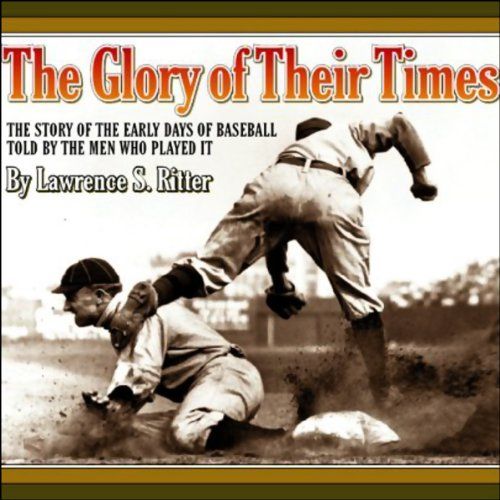
The Glory of their Times: The Story of the Early Days of Baseball Told by the Men Who Played It
© 1966 Paul Ritter
300 pages

C.S. Lewis remarked that he enjoyed nothing more than the sound of men laughing. Listeners will find plenty of that in The Glory of their Times, consisting of interviews with men who played baseball when it was just beginning to become a sport with a mass following. These were men who played for the love of the game, not for money — there was none — or for clout, because they were regarded little better than wastrels or rogues. There’s great delight to be found in these five hours of old men (some in their eighties) telling stories of the Old Days, of feats on and off the field. Since Ty Cobb’s death inspired the book, Ritter realizing that a unique generation was passing away and its stories needed to be captured, he comes up a lot in the interviews: he’s regarded as a singular talent but a bit of an ass, someone who looked down on other players because the game didn’t come as easily to them, and who interpreted the hostility he generated from his arrogance as being aimed against him because he was a Georgia hayseed playing with northern boys. (Babe Ruth is remembered more fondly as both a talented athlete and a good fella to hang around with.) There’s some discussion of the Black Sox Scandal, of course. The most unexpected part for me was the prominent Native American presence in early baseball. I suspect the print version may have more interviews, because Ritter indicated that he planned to interview over thirty men. This was an all-around pleasure to listen to.

Since this is posted on April 23rd, St. George’s Day and the anniversary of Shakespeare’s death (and traditional birth), here’s something combining….baseball and Shakespeare.

“What is the name of the gentleman in the secondary position?!”
“What is secondary!”
“I asked not who is secondary –“
“Who is primary!”
“I cannot tell!”
“He is tertiary.”
Posted in Reviews | Tagged , , , | 3 Comments