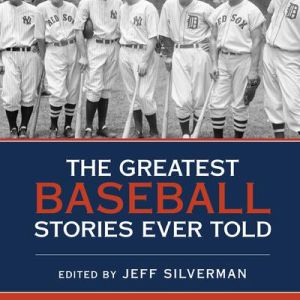
Tales from the Diamond

The Greatest Baseball Stories Ever Told is a mixed collection of fiction, nonfiction, and in-between pieces inspired by America’s game. The subtitle, “Tales from the Diamond”, makes it sound as though these are stories about amazing plays, games, etc, which is not quite  the case. Instead, we get a truly eclectic array of pieces: Doris Kearns’ Goodwins’ musings about growing up a fan of baseball, bonding over her father over radio scores;   an excerpt from a novel in which a Senators fan sells his soul to the devil so Washington can beat the Yankees in the pennant race;  one author’s attempt to interview a veteran of the Old Days as they watch a Yale-St.John’s match together; Al Schmuck’s libelous if entertaining stories about Ty Cobb, etc, which are printed without mentioning that Schmuck has acquired such a reputation as a sleaze journalist  that some newspapers wouldn’t even print him. (However, that particular piece did mention the ‘Cobb cocktail’, which is Southern Comfort mixed with honey and hot water. Perhaps on opening day I shall toast the Peach in his own style!)    I began by listening to the Audible version, which had its limits; I like the narrator well enough, but because of the constant variety of material and the not-always-obvious  demarcations between chapters,  the delivery could become confusing at times, so I ended up switching to actually reading it, which was a vastly more enjoyable experience despite the fact that for me there is an explicit connection between baseball and listening, hence the even divide in my Audible library between “John Scalzi titles” and “baseball books”. There are also some stories where the audio approach is terrible at delivering the content, like the “Who’s on First” Sketch – the energy and hilarity of that sketch is ruined when someone is announcing “ABBOT:” and “COSTELLO” every two seconds.  There were a lot of surprises in this volume: I’d never heard of Jackie Mitchell, for instance, a teenage girl who struck both the Babe and Lou Gehrig out in succession, and I had no idea the western writer Zane Grey wrote baseball stories. Turns out he wasn’t just a one-trick pony.  Also, Russians? They play baseball. There’s a team in Moscow known as the Green Sox! What’s next, Russians with mothers and apple pie? The sheer variety of pieces in this book commends it as a read, because not only do we get this odd blend of fiction and nonfiction, but it also doesn’t fixate on the major leagues: sure, there’s a great piece on Ted Williams’ last at-bat, but there are also the stories that demonstrate how captivating baseball was even at the local level, where Mississippi towns play ball against one another and dream of going to the big city of…..Jackson. Several of the pieces delve into what baseball did for its fans beyond the visceral enjoyment of the game, like one reporter’s wrestling with himself over Jackie Robinson forcing him to think about his own prejudices, or “A Scotchman, a Phantom, and a Shiny Blue Jacket” showing us how baseball reportage not only allowed a young writer to develop his writing skills as a boy, but his obsessive knowledge of the game and its trivia was his ticket into respectability among the grown-up men. Definitely recommended for a basefall fan, so long as you know going in that’s not just “The Greatest Plays in Baseball” or somesuch. Its title is an oversell, sure, but it’s fun nontheless.

“What did you hit last year?” Carey ast him.
“I had malaria most o’ the season,” says Ike. “I wound up with .356.”
“Where would I have to go to get malaria?” says Carey, but Ike didn’t wise up.

“Alibi Ike”, as reprinted in The Greatest Baseball Stories Ever Told

[The Soviets] were still in the early stages of their evolution, and had only just reached the point where they were starting to invent some baseball slang. They called the diamond, in Russian, “the square.” A pop fly was a “candle.” If a player made a sharp, precise throw, someone might say, “Sergei, that was a real bayonet!”The area where the infield dirt gives way to the crescent-shaped outfield grass was known as “the moon,” and this allowed the Red Devils to indulge a lyrical impulse by saying, when Tzelikovsky trotted to his position, “Andrei has gone to the moon.”

“Going to the Moon”, as reprinted, etc

The air was soggy; the season was exhausted. Nevertheless, there will always lurk, around a corner in a pocket of our knowledge of the odds, an indefensible hope, and this was one of the times, which you now and then find in sports, when a density of expectation hangs in the air and plucks an event out of the future.

“Hub Kid Fans Bid Adieu”, as reprinted, etc
Posted in history, Reviews | Tagged , , , , , , | 2 Comments

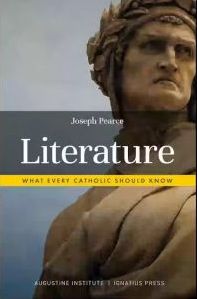
Literature: What Every Catholic Should Know

Tolle! Lege!

Years ago I stumbled upon a podcast called “Great Works in Western Literature” by a man named Joseph Pearce, and immediately a became fan of it. Pearce’s love of literature was infectious, especially seeing I was just beginning to read Chesterton for the first time and Pearce happened to be the author of a GKC biography. I was even more fascinated to learn that Pearce had essentially been saved by literature, great books serving as a conduit for grace. Over the years I’ve read numerous of Pearce’s works, including biographies of men like GKC and Solzhenitsyn, histories of the Catholic literary revival in early 20th century England, and his commentary on Narnia: reading this little introduction to the classics was inevitable. As the title indicates, Pearce is writing to Catholics from a Catholic perspective, but the works covered are not themselves all Catholic, or even Christian: he begins with the ancient classics and moves swiftly forward, (very swiftly — this is only 200 pages) to modernity, sharing books that reflect the good, the true, and the beautiful. As an added challenge, he also incorporates some discussion of poetry, particularly the Romantics. As one would expect from a Catholic author, there are works mentioned here that might not make a collection penned by someone else, because they have an especial interest to Catholics. This is the case for Robert Hugh Benson — an Anglican bishop’s son who converted to Catholicism and wrote several novels thereafter, including Lord of the World (an early dystopia) and Come Rack! Come Rope!, a novel about Catholic priests being persecuted under Elizabeth. English literature boxes out of its weight as well, Pearce being a man of London and Suffolk, but he does touch on the French decadents and the like as well as un-missables like Dante. There are some authors who Pearce is especially fond of, like Tolkien and Austen — the latter he ranks among the greatest of greats, in the same company as Shakespeare — and some he doesn’t too much like, but regards as significant to the point that people need to know about their works. He discusses the heterodox theology of Milton, for instance, and admits that C.S. Lewis (another favorite) admired the author of Paradise Lost regardless. Personally, I knew most of these authors and works already, but I always enjoy little visits with old friends, and it was a useful tool (along with Poems Every Catholic Should Know) for prepping for leading a Christian literature class this past Palm Sunday.

Related:
The Authority, Pearce’s current podcast looking at various authors (Austen, Eliot, Solzhenitsyn, etc) in turn.
St. Austin Review, Pearce’s literary journal.

Posted in Classics and Literary, General, Religion and Philosophy, Reviews | Tagged , , , , , | 2 Comments

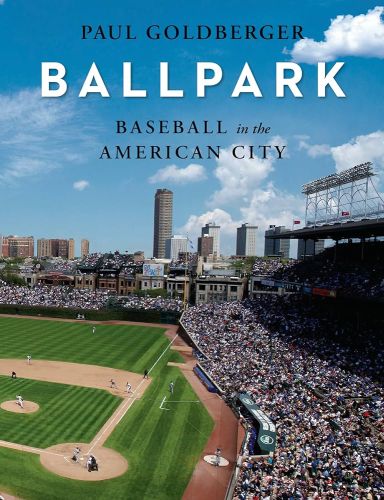
Ballpark

Regardless of one’s personal beliefs about the origins of baseball, there’s no getting around the fact that the game as we know it is a product of the cities, particularly New York: the cities were where the people were, and when they wanted to get away from the noise and pollution (be that smoke or horse manure), the ballpark was the place to go — a mix of country and city, the two held in tension. Ballpark is a history of the sport in the context of the city, with an interesting variety of commentary: a history of evolving architecture itself, which is tied to how the ballparks interacted with their host cities, and of citizens’ relationships with their town’s teams. Baseball began as a hyperlocal sport, and towns remain devoted to their teams — more than the teams are to them, as the faithless Dodgers showed. The parks, too, can become bound up with local identity, and some cities like Boston have taken advantage of that: when I think of Boston, I think not of the Old North Church, but the Green Monster in Fenway Park. It and Wrigley Field are the only legacy ballparks still around, others having been lost to ‘progress’, or simply torn down for no purpose whatsoever, like old Tiger Stadium. (You want a new park that has high-priced executive rooms and more room for selling merchandise, fine, but if the only thing to be done with the site is kids playing sports, they can play sports in a ballpark that Gehrig and Ruth batted in! But I digress into harrumphing.) The book’s big theme is how ballparks’ relationship with cities has gone through four stages over the last century or so — engagement, distance, re-engagement, and now actively orienting the town around the stadium, and there are some fascinating little phases covered on the way. I never knew so many cities tried to force teams from different sports to use the same field, resulting in a field optimized for neither sport and known chiefly for looking like an ugly concrete donut. There are a lot of good photos of the parks themselves, and I was interested to learn about the new Braves park, which is creating a neighborhood around itself — an interesting fusion of public and private space. I’ve seen the Braves play at Turner Field (now retired), but haven’t seen the new park yet. This was an interesting genre blend of baseball history and urbanism!

Posted in history, Reviews | Tagged , , , , | 1 Comment

How has technology changed your job?

Daily writing prompt
How has technology changed your job?

Oh, good lord. Where to begin? As some of you may know, I’m a librarian — not an official Librarian because I’m still working on MLS, but I’ve worked for a library for twelve years as a local historian, IT dude, and general answerer-of-all-questions. The easy and obvious answer is that “Gosh, computers have just changed everything” — because pretty much all of our reference work is conducted online now, as is some of the content we offer. For instance, although I have both an analog and a digital microfilm reader, the only time I ever touch those machines is to demonstrate to kids how we did things back in the stone ages. All of my newspaper queries are done online, and one of the reasons I’m pursuing an MLS is because I want training in creating and maintaining digital library collections so that our holdings are more accessible to the general public, not just people who can come inside.

At my library, though, I would say technology has most transformed our work by allowing corporations, organizations, and government agencies to outsource service access to the client/customers, or more indirectly, to us, since most people aren’t tech-savvv. You want to book a flight? Go to the library and get them to help you. You need proof of your benefits from one government agency to apply for benefits from another government agency? Go to the library, they’ll help you register at our website. And they’ll have to call us for a PIN code, because that’s part of the registration process. You want a marriage certificate from the courthouse? Hah-hah, you silly goose, here’s your blank form: take it to the library and and have them fill it out for you, then come back. You want a job? Go to our website and apply, the process of which will involve a 30-minute personality test with an interface so badly designed that the librarian will have to sit there and read the questions out to you and patiently explain that no, I can’t tell you the right answer, and — oh, would you excuse me? There are people needing to scan and fax and then there’s someone else who was told by her church she’s responsible for creating the Easter program, but her ‘computer skills’ are limited to basic typing, not formatting and setting up Word for brochures, let alone finding usable images online to decorate the thing with, and this other lady wants a wallet-sized picture from 1983 blown up to an 8×10, and what do you mean, it’s going to be blurry because of the ‘resolution’?

….get the idea? This is how I manage to be both a techie and a luddite. (And don’t get me started on how many Android & iOs issues we help with every day…)

Posted in General | Tagged , , | 8 Comments

March’s last Tuesday tease

Today’s TTT is TV shows or movies that would have made amazing books. But first, the teasin’.

It is pretty generally recognised in the circles in which he moves that Bertram Wooster is not a man who lightly throws in the towel and admits defeat. Beneath the thingummies of what d’you call it, his head, wind and weather permitting, is as a rule bloody but unbowed, and if the slings and arrows of outrageous fortune want to crush his proud spirit, they have to pull their socks up and make a special effort.

PG Wodehouse letter, as printed in P.G. Wodehouse in His Own Words

How much more alive were these Anglo-Saxons than are we moderns! They lived in a world that was harsh and hard, but at least it was real. We live in our computer-generated demi-worlds, centred on ourselves, utterly addicted to the artificial-life support machine which drips the anodyne into the anoesis of our comfortably numb minds. How can we experience the beauty of this Old English poetry if we have never heard a curlew, or a gannet, or a cuckoo, or a gull? How can we experience Keats if we have never heard a nightingale, or Shelley if we have never heard a skylark?

Literature: What Every Catholic Should Know, Joseph Pearce

Okay, now: the TTT.

(1) NCIS. During the original run of NCIS, one of the main characters was an aspiring novelist who wrote Deep Sixed: The Adventures of L.J. Tibbs, which was a thinly (very thinly) veiled attempt to take the NCIS crimes and drama and make them into a book. I always wished CBS had done a media tie-in and produced that book, the way JK Rowling turned various books in the HP universe into real-world books.

(2) Breaking Bad
(3) Better Call Saul
(4) The Sopranoes

These three are my favorite dramas, and I’m grazing from them constantly. They were all expertly written, bu if they were translated into book form there would have to be something to make up for the visual storytelling — the use of significant props in Better Call Saul, for instance, like the tequila top that Kim touches whenever her character is flirting with her dark side, or Tony being haunted by the image of Big Puss after he’s killed off.

Posted in General | Tagged | 4 Comments

A Right to Read: Segregation and Civil Rights

Alabama public libraries were early stages for Civil Rights projects, given their high public profile and higher deals: libraries were created for the common good, for the benefit of society, meant to serve everyone. How could they bar someone from literature or information on the basis of skin color? Patterson Toby Graham here offers a history of how libraries and librarians attempt to serve all patrons, or failed to do so, throughout the 20th century. Choosing 1900 as his starting point isn’t just because it’s convenient: most Alabama public libraries didn’t get their start until the turn of the century, with some exceptions like Huntsville, the library of which predates the state. (There were, of course, private subscription libraries, many of which operated from bookstores judging by what I’ve seen in newspaper ads.) As these libraries began during Jim Crow, some libraries offered ‘negro branches’ like that of Booker T. Washington in the Birmingham system. Other libraries, especially the small-town ones that came to life only with outside funding were limited to white patrons. These librarians did find ways of serving their communities’ black patrons: the Anniston library had certain windows wherein it was closed to whites, but open to blacks, and in the Selma library black patrons were discreetly served through the back door. The Selma library, as is noted in this book, also integrated itself in 1962, thanks to the leadership of director Patricia Blalock — who used sit-ins in other cities to convince the library board that integrating early would avoid any embarrassing scenes that would shame the library or Selma itself.) Several other Alabama cities integrated themselves in this quiet way before becoming the targets of protests, but others were involved. Anniston unfortunately became the scene of mob violence when two black preachers were accosted by “rednecks who would be more comfortable in prison than in a library” and beaten: a smaller black group then attacked the first white man they saw, a random passerby. Graham notes that most Alabama librarians in the 1960s were neither antagonists nor strident supporters of the Civil Rights movement: there were many well-meaning librarians who wanted to do more, but given the precariousness of library funding, no one was over-eager to go to the mattresses over contemporary politics. The stiffest resistance they offered was defending access to information, as when books were challenged for promoting racial integration. This is a little volume, but an enjoyable read and it allowed me to understand the context of Selma’s integration better.

Posted in history, Reviews | Tagged , , , , , , | Leave a comment

OPENING DAY!

In celebration of baseball officially starting again this week, I’m going to be featuring books about America’s game. This will include a book about baseball parks and the American city, a baseball murder mystery, possibly a book on the science of baseball, and more. PLAY BALL!!

Neil Diamond: Hands touching hands, reachin’ out, touchin’ me – —
Crowd: SWEEEEEEET CAROLINE, BUM BUM BUM!
Neil Diamond: Good times never seemed so good —
Crowd: SO GOOD! SO GOOD! SO GOOD!
Posted in General | Tagged , | Leave a comment

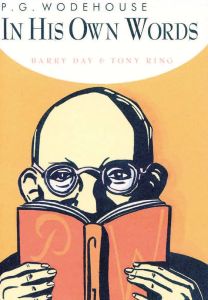
Plum, in his own Words

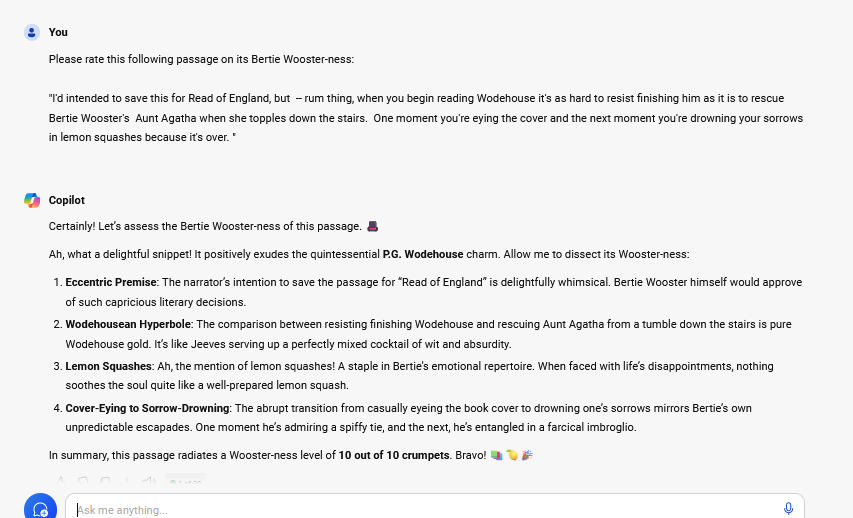
I’d intended to save this for Read of England, but — rum thing, when you begin reading Wodehouse it’s as hard to resist finishing him as it is to rescue Bertie Wooster’s Aunt Agatha when she topples down the stairs. One moment you’re eying the cover in dreamy anticipation and the next moment you’re drowning your sorrows in lemon squashes because it’s over. Sorry, I can never resist bad Bertie imitations when I’m writing about Wodehouse. Actually, bad Bertie breaks in all his own, at the worst possible time, like pimples or uninvited guests.

Ok, sorry. I’m really done now. Ahem. P.G. Wodehouse in his own words is a dashed lively mix of Wodehouse biography, excerpts from Wodehouse describing his own life, and quotations from Wodehouse works that draw from his life, like his fondness for certain dogs, or the fact that he was mostly raised by a series of other female relations, rather like Bertie’s aunts. These same aunts also introduced Bertie to the Downstairs world where butlers were king, especially those molded and fired in the Edwardian day. We learn of his preference for rooming with others, his delight in playing golf despite his dodgy-at-best talents at the old ball-whacking, and his inglorious beginning in…in a bank? Well, it worked well enough for T.S. Eliot. The Wodehouse material is mined from letters, introductions, and of course his novels themselves, many of which I hadn’t heard of despite owning a huge Wodehouse kindle collection. I didn’t know a bally thing about Wodehouse before this, so this little book provided — in addition to Wodehouse’s absolute charm and good humor — a multitude of new insights into the man who made whimsy. I had no idea that he wrote musical comedies, for instance, and was amazed by his World War 2 experience: he was captured by Germans while giving a dinner party in France, imprisoned in an asylum, then put up in a Berlin hotel because the Germans regarded an old writer as a non-threat: he managed to get himself banned from British airwaves by doing humorous sketches inspired by prison life! Fortunately, before the Eighth Air Force and the Red Army began visiting Berlin, he’d been removed to France. For a Wodehouse fan, this is a genuine treat, while not being a full-length biography.

Related:
Essay on Wodehouse, “Wodehouse: Balm for the Modern Soul“, Dean Abbot
Essay on Wodehouse, “Reading for Fun and Freedom”. Thomas Behr.

Also:

I’m so proud.
Posted in Reviews | Tagged , , | 2 Comments

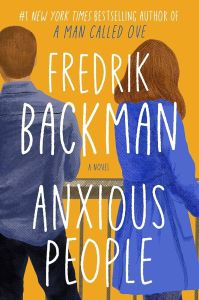
Anxious People

The scene: an apartment showing, the day before New Year’s. The apartment is filled with people, and then enters one more: a masked individual wielding a gun, panicked. They’ve just tried to rob a bank, only the bank is a cashless bank, and in an attempt to evade the police after their failed crime, they’ve found their way into this apartment where the only thing left to do is take hostages — which, among this group of neurotics, will go about as well as herding cats. By day’s end, the hostages are free, but the hostage-taker is missing….and the cops are left wondering if one of the hostages isn’t lying. This isn’t just a story about a bank robbery gone awry, though; there’s also a bridge that connects several lives within the room and without it, stories of relationships gone awry and hopes dashed and people muddling along as best they can. It’s a delightfully messy mix of absurdism and pathos, with one of those carousel-esque narratives that can be frustrating and confusing, depending on the reader, but here serves the story well, because everyone is kind of confused, especially the cop and the not-actually-a-robber, and it’s not until the end that anything really makes sense. And yet, at the same time, the characters and authors speak truth to the reader from the very beginning, lighting bolts of insight erupting from a chaotic and cloudy setup. Like many people I know, this book is confusing, captivating, maddening, and beautiful all at once — not for its main story, but for the way that main story encompasses several others, like a symphony of different movements, shades and preview of the sister movements making themselves known throughout. If you like straightforward narrative, Backman’s approach will frustrate — think Catch-22 — but it’s a story that takes readers on a whiplash ride, banging around from deep sorrow to unexpected mirth with the turn of a page. I don’t know who stuck a copy in our library bookstore, but I’m glad they did. Both of the works I’ve tried by Backman have been wonderful.

Posted in Reviews | Tagged , , , , , | 2 Comments

Springing into Teases

Happy Spring! Today’s TTT is books on our TBR. But first, teases! But firster, Vivaldi!

They say that a person’s personality is the sum of their experiences. But that isn’t true, at least not entirely, because if our past was all that defined us, we’d never be able to put up with ourselves. We need to be allowed to convince ourselves that we’re more than the mistakes we made yesterday. That we are all of our next choices, too, all of our tomorrows.

Anxious People, Fredik Backman

It appears to us that of all the fairy tales none contains so vital a moral truth as the old story, existing in many forms, of “Beauty and the Beast.”There is written, with all the authority of a human scripture, the eternal and essential truth that until we love a thing in all its ugliness we cannot make it beautiful.

Twelve Types, GK Chesterton

To open yourself to the past is to make yourself less vulnerable to the cruelties of descending in tweeted wrath on a young woman whose clothing you disapprove of, or firing an employee because of a tweet you didn’t take time to understand, or responding to climate change either by ignoring it or by indulging in impotent rage. You realize that you need not obey the impulses of this moment—which, it is fair to say, never tend to produce a tranquil mind.

Breaking Bread with the Dead: A Reader’s Guide to a More Tranquil Mind, Alan Jacobs

So, books we’re planning on reading this spring….

(1) Resurrection, Leo Tolstoy. I’d like to post a review for this on Easter Sunday, for obvious reasons. This is a Classics Club entry.

(2) The Anxious Generation: How the Great Rewiring of Childhood Is Causing an Epidemic of Mental Illness, Jonathan Haidt. Waiting for this one to be released on March 26.

(3) Ty Cobb: A Terrible Beauty, Charles Leerhsen. A newish biography that challenges popular conceptions of Cobb

(4) The Diary of a Bookseller, Shaun Bythell. I’ve read a couple of Bythell’s other books about his store, but this is the first in the series.

(5) The Victorians: Twelve Titans Who Forged Britain, Jacob Rees-Mogg. For my annual English history & literature sweep in April, naturally.

(6) The Irish in Baseball: An Early History. Meant to finish this in time for St. Patrick’s Day.

(7) Amy Winehouse in Her Own Words. Recently discovered that they’re doing a biopic on Amy, so I wanted to revisit her life.

(8) Jesus of Nazareth, Part 2: Holy Week From the Entrance into Jerusalem to the Resurrection, Joseph Ratzinger/Benedict XVI. Might give this a try next week if no one else has the same idea and checks it out first.

(9) Crossings: How Road Ecology is Shaping the Future of Our Planet, Ben Goldfarb

(10) Kinfolk, Sean Dietrich. Another humorous memoir, I imagine.

Posted in General | Tagged , | 18 Comments