How I Killed Pluto (And Why It Had it Coming)

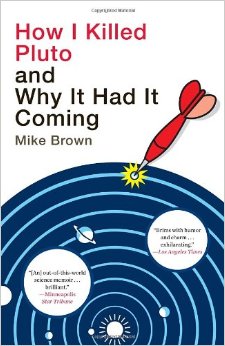
How I Killed Pluto (and Why It Had it Coming)
© 2010 Mike Brown
288 pages

Is that not the greatest title ever? How I Killed Pluto and Why It Had it Coming is the tale of Pluto’s rise and fall as a planet, delivered by an astronomer who discovered a series of objects in the Kuiper Belt in the early 2000s.  The discovery of one object larger than Pluto forced the International Astronomical Union to come to a decision: what, exactly, is a planet?  The resulting definition would famously demote Pluto to ‘dwarf planet’, in the company of Ceres and Eris.   Brown’s confession argues that the 2006 decision wasn’t the first time the concept planet had to be redrawn, and that Pluto’s status as a planet was tenuous to begin with.  Regardless of one’s own astronomical convictions,  How I Killed Pluto  is popular science at its best,

What is a planet?  School children may learn that planet stems from the Greek word for wanderer, given that Earth’s neighbors  were seen to move through the sky independently of the ‘rest’ of the stars.  To the Greek mind, ‘planet’ encompassed not only ‘our’ planets, but the Sun and Moon as well — for they, too,  were celestial roamers.  Astronomical knowledge grew throughout the medieval era, however,  arriving at a worldview in which ‘planet’ meant a body that orbited the sun — and included the Earth.  New discoveries continued to challenge the mental map, like a couple of small bodies between Mars and Jupiter. Initially regarded as planets, they would eventually be given their own distinct category — asteroids — once it realized there were not one or two bodies out there, but scores of them.   The same would had proven true for Pluto, Brown argues, had we realized how much more was out there. Instead, the limits of our technology left us ignorant of most of Pluto’s neighborhood, and without context for its placement. For seventy years, Pluto enjoyed a status that it didn’t quite merit. As much as Brown would have liked to have taken credit for discovering the “tenth planet”, thinking as a scientist he couldn’t quite stomach it. The modern map of the solar system includes distinct groups of objects: the terrestrial planets, an asteroid belt, the great gas giants, and the far-circling Kuiper belt around us.  Viewed objectively, how could a minuscule dot plucked from the Kuiper belt be considered in the same category as Jupiter, but not the others?

How I Killed Pluto succeeds in many levels.  As a pop science piece, it delivers a sense of how science works. Not only does Brown’s account cover the day to day work  of a modern astronomer — poring through computer screens, analyzing the data for what the programs missed — but the kind of organized, critical thinking required to piece together order from chaos. Brown’s passion for collecting and organizing data is, in a word, pervasive; when his daughter is born (in the same year that he discovered several bodies that were pending official names) , she becomes a science project. He charts her feeding and sleeping periods, attempting to figure out if one method of feeding is more effective than another, and creates graphs in attempt to see patterns. (He is allowed to get away with this by virtue of being married to another scientist, one whom he met in the basement of a telescope).  Brown is an excellent communicator,  using analogies that work without feeling forced.  He is an author who a reader like to hear talk, brimming with  both passion and intelligence.

Brown’s memoir was an utter delight to read, and frankly makes me fear for the rest of the year: things can only go down from here.

Posted in science | Tagged , | 5 Comments

The Best of 2015: Year in Review

Previous yearly wrap-ups:
2007 | 2008 | 2009 | 2010 | 2011 | 2012 | 2013 | 2014

Welcome to the 9th annual year in review, in which I highlight the best of the year’s reading, hopefully without producing a column of text that rivals the Bayeux Tapestry.


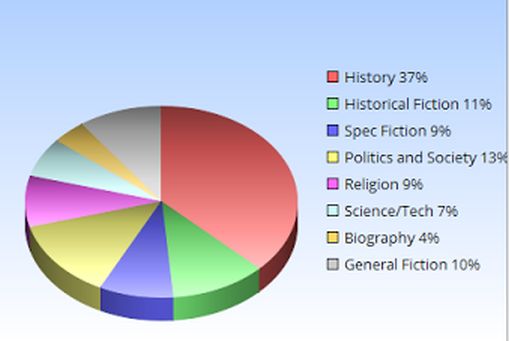
Big year for history, obviously. This chart doesn’t include everything, just the major categories. Speculative fiction includes science fiction, alt-history, horror, and (ordinarily) fantasy, but I didn’t include the Narnia books given their size.

First up, a top ten list:

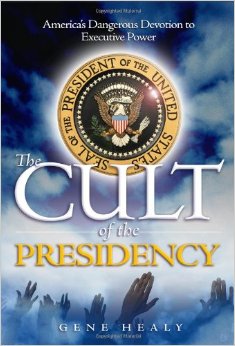
1. The Cult of the Presidency, Gene Healy
A history of the presidency’s transformation from administrator to Dear Leader, developing with rapidity after Theodore Roosevelt and Woodrow Wilson. I read this last January for Presidents’ Day, and thought about finishing the review in time for my Independence Day readings, but was fairly sick of politics by that point.

2.The Iron Web, Larken Rose
A wounded cop, a scared teenager, and a rural community of hippies and anarchists debate politics while being besieged by an out-for-blood ATF.

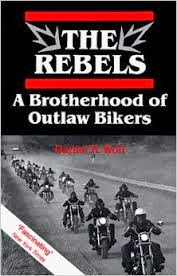
3. The Rebels: A Brotherhood of Outlaw Bikers, Daniel Wolf
A sociological study of a Canadian biker gang.

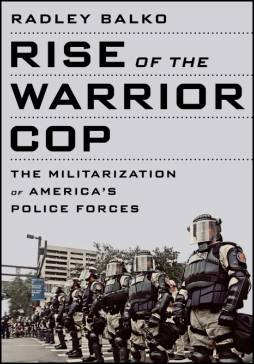
4.Rise of the Warrior Cop, Radley Balko
A history of police militarization, beginning in the 1970s but gaining steam with the wars on drugs and terror, respectively.  If I could only recommend one book this year, it would be Rise, addressing as it does issues that run deeper than the latest protests over who the police shot.

5.Happy City  Transforming Our Lives through Urban Design, Charles Montgomery
A citizen’s guide on how urban design can create a more fulfilling life — or a more frustrating one.

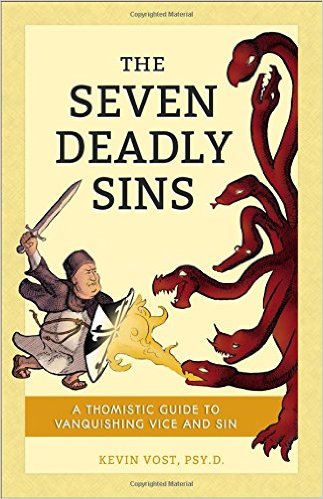
6. Seven Deadly Sins: A Thomistic Guide to Vanquishing Vice and Sin, Kevin Vost
Sums up Thomas’ Aquinas’ reflections on what  vices do to us, how they quicken in our minds, and how we can overcome them; given Aquinas’ classical background, this is heavy in advice from Stoics like Epictetus, Seneca, and Marcus Aurelius.

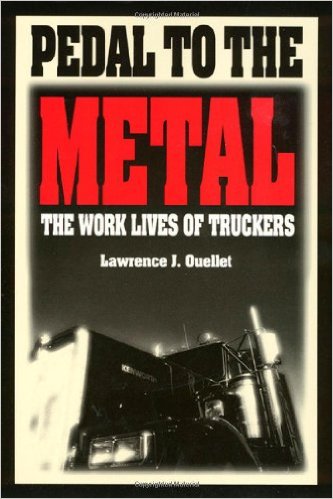
7. Pedal to the Medal: The Work Lives of Truckers, Lawrence Ouelett
A sociological study of truck drivers — dated, but right up my ally.

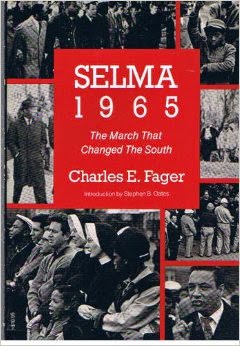
8. Selma 1965, Chuck Fager. A much-lauded and very fair history of the attack by State troopers and a sheriff’s posse on Civil Rights marchers in Selmont, Alabama, written by a student protester on the ground.

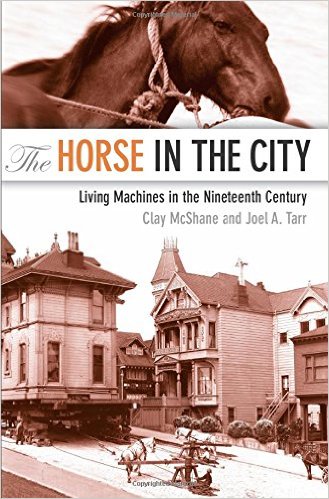
9. The Horse in the City,  Clay McShane and Joel Tarr (History)
A history of how horses shaped the urban experience in the equine Golden Age: the 19th century.

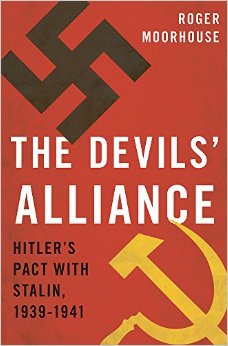
10. The Devils’ Alliance: Hitler’s Pact with Stalin,  Roger Moorhouse
A history of -….c’mon, it’s right there in the title.

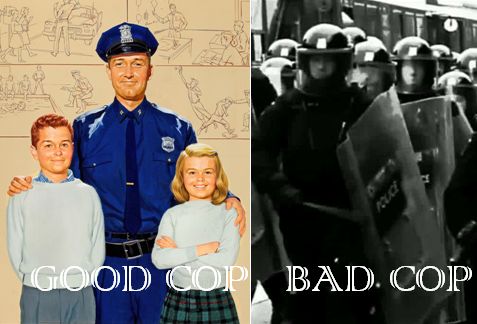
Next year will see a return to more balanced reading, with some books in science and civic interest already lined up.  My history reading should take me into fresh territory, specifically into Asia and the middle east. There will a good string of vintage literature,  I suspect, given my participation in the Classics Club, and the fact that a friend of mine wants to do a buzz-through of the Harvard Classics.  Given (or despite) the fact that near year is an election year, there will probably be a couple of relevant books. Not campaign pulp, mind you, but more interesting things like Ralph Nader’s Unstoppable: The Left-Right Alliance to Dismantle the Corporate State.   Two potential series are “The Digital World” and “Good Cop, Bad Cop”. 


..it will alternate books about police doing good work, and police doing police-state work. 

Honorable Mentions:

The Cult of the Presidency, Happy City, and The Once and Future King all deserve reviews, and have nearly-complete drafts. Perhaps I should resolve to give books I’ve missed reviewing their just deserts.


Happy New Year, all! 

Posted in General | Tagged , | 3 Comments

2015 Cumulative Reading List

Whew, what a year.

 flags books involved in this year’s Read of England series.
  marks books involved in my annual American Revolution series.

— January —
1. Lives of the Planets: A Natural History of the Solar System,  Richard Corfield (Science)
2. The Empty Throne, Bernard Cornwell (Historical Fiction)
3. Winter World: The Ingenuity of Animal Survival, Bernd Heinrich (Science)
4.  The Pigman, Paul Zindel (Fiction)
5. The Cult of the Presidency, Gene Healy (Politics)
6.  A Renegade History of the United States, Thaddeus Russell (History)
7. Nullification, Tom Woods (Politics/Law)
8. Casualties, David Rothstein (Historical Fiction)
9. Map of Betrayal, Ha Jin (Fiction)
10. Green is the New Red: A Social Movement Under Siege, Will Potter (Politics)

–February–
11. Politics on a Human Scale: The American Tradition of Decentralism, Jeff Taylor (Politics)
12. The Internet Police: How Crime Went Online and the Cops Followed,  Nate Anderson
13. The Human Zoo, Desmond Morris (Science/Sociology)
14. I Am Malala, Malala Yousafzai (Memoir)
15. Kindle Fire HD for Dummies, Nancy Muir
16. The Kindness Diaries, Leon Logothetis (Travel)
17. Whiskey Sour, J.A. Konrath (Detective Thriller)
18. The Iron Web, Larken Rose (Political Thriller)
19. The Rebels: A Brotherhood of Outlaw Bikers, Daniel Wolf (Anthropology/Crime)
20. Plastic: A Toxic Love Story, Susan Freinkel (Political Journalism)
21. The Marriage Game, Alison Weir (Historical Fiction)

–March–
22. Selma 1965, Charles Fager (History)
23. @ War: the Rise of the Military-Internet Complex, Shane Harris (Military/Technology)
24. Here  Comes Everybody, Clay Shirkey (Social Science)
25. Runaway Slaves: Rebels on the Plantation, John Hope Franklin and Loren Schweniger (History)
26. Consuming the Word: The New Testament and the Eucharist, Scott Hahn (Religion)
27. What Money Can’t Buy: The Moral Limits of Markets, Michael Sandel (Economics)
28. Breaking through Concrete: The Urban Farm Revival, David Hanson and Edwin Marty
29. “The Importance of Being Earnest”, Oscar Wilde (Play)
30. Born Fighting: The Scots-Irish in America, Jim Webb (Pop History)
31. The Adventures of Henry Thoreau, Michael Sims (Biography)
32. The Chosen, Chaim Potok (Fiction)
33. Little Women, Louisa May Alcott (Classic, Fiction)

— April —
34. Rise of the Warrior Cop, Radley Balko (Politics / History)
35. Medieval Essays, Christopher Dawson (History)
36. The Inimitable Jeeves, P.G. Wodehouse (Hysterical Fiction) 
37. Come Rack! Come Rope! Robert Hugh Benson (Historical Fiction) 
38. Armada, John Stack (Historical Fiction) 
39. Ruled Britannia, Harry Turtledove (Alt-History) 
40. Joe Steele, Harry Turtledove (alt-history)
41. The Other Queen, Phillipa Gregory (Historical Fiction) 
42. Boudica, Vanessa Collingridge (History) 
43. Faith and Treason: The Story of the Gunpowder Plot, Antonia Frasier (History) 
44. Bachelors Anonymous, P.G. Wodehouse (Fiction) 
45. In a Dark Wood, Michael Cadnum (Historical Fiction) 
46. Ender’s Game, Orson Scott Card (Science Fiction)
47. The Fiery Cross: The Ku Klux Klan in America, Wyn Craig Wade (History)

— May
48. The Fall of Saxon England, Richard Humble (History) 
49. The Copperhead, Harold Frederic (Historical Fiction)
50. Agincourt: The Battle that Made England, Juliet Barker (History) 
51. Hanging Curve, Troy Soos (Historical Fiction)
52. Very Good, Jeeves, P.G. Wodehouse (Fiction) 
53. The Everlasting Man, G.K. Chesterton (Religion) 
54. The South Since the War, Sidney Carton (Journalism/History)
55. Better Off: Flipping the Switch on Technology, Eric Bendts
56. The Wars of the Roses, Alison Weir (History) 
57. Harvest of Rage,  Joel Dyer (Politics/Sociology)
58. Patriots: A Novel of Survival in the Coming Collapse, James Wesley Rawles (Doomer Fiction)
59. The Americans: The Colonial Experience, Daniel Boorstin (History) 
60. Why Waco? James Tabor and Eugene Gallagher (Religion)

— June —
61. The Cost of Liberty: The Life of John Dickinson, William Murchinson (Biography) 
62. The Ashes of Waco, Dick Reavis (Political Journalism)
63. The English People on the Eve of Colonization, Wallace Notestein (History) 
64. American Colonies, Alan Taylor (History) 
65. The Terrorist Next Door, Daniel Levitas (Politics)
66. America’s British Culture, Russell Kirk 
67. Behind the Mask of Chivalry: The Making of the Second Klan, Nancy MacLean
68. Recarving Rushmore: Ranking the Presidents on Peace, Prosperity, and Liberty, Ivan Eland
69. The Weight of Glory, C.S. Lewis
70. American Cicero: The Life of Charles Carroll,  Bradley Birzer 
71. The Once and Future King: The Rise of Crown Government in America, F.H. Buckley 
72. A Year of Living Prayerfully, Jarod Brock
73. Last Call: the Rise and Fall of Prohibition in America,  Daniel Okrent
74. Beyond: Our Future in Space, Chris Impey

— July —
75. The Whiskey Rebels, David Liss 
76. We Could Not Fail: The First African-Americans in the Space Program,  Richard Paul and Steven Moss
77. I Am Forbidden, Anouk Markovits
78. Engines of War, Christian Wolmar (History)
79. The Politically Incorrect Guide to the 1960s, Johnathan Leaf (History/Social Commentary)
80. The Lamb’s Supper, Scott Hahn (Religion)
81. A Canticle for Leibowitz, Walter Miller
82. Pandora’s Lunchbox: How Processed Food Took Over the American Meal, Melanie Warner
83. James Madison and the Making of America, Kevin Gutzman 
84. The Great Cities in History, ed. John Julius Norwich
85. The Space Between Us, Thrity Umrigar
86. Surprised by Joy, C.S. Lewis
87. Before the Throne, Naguib Mahfouz
88. Vanished World: Muslims, Christians, and Jews in Medieval Spain,  Chris Lowney

— August —
89. Pedal to the Medal: The Work Lives of Truckers, Lawrence Ouelett
90. Cod, Mark Kurlansky
91. 10 Don’ts On Your Digital Devices, Eric Rzesut, Daniel Bachrach
91. Happy City: Transforming Our Lives through Urban Design, Charles Montgomery
92. The Devil Knows Latin, E. Christian Kopf (Social Criticism)
93. Philosophy for Life and Other Dangerous Situations, Jules Evans (Philosophy)
94. Tevye’s Daughters, Sholom Aleichem (Fiction)
95. Leofric: Sword of the Angles, S. Arnott (Historical Fiction)
96. The Spice Route, John Keay (History)
97. Christianity and Rabbinic Judaism, ed. Hershel Shanks (Religion)
98. The Quartet, Joseph Ellis (History)

— September —
99. Ornament of the World: How Muslims,  Jews, and Christians Created a Culture of Tolerance in Medieval Spain, Maria Menocal (History)
100. Here be Dragons, Sharon Key Penman (Historical Fiction)
101. The Eagle’s Conquest, Simon Scarrow (Historical Fiction)
102. The Lion, The Witch, and the Wardrobe, C.S. Lewis (Fantasy)
103. The Magician’s Nephew, C.S. Lewis (Fantasy)
104. Prince Caspian, C.S. Lewis (Fantasy)
105. The Horse and his Boy, C.S. Lewis (Fantasy)
106. The Voyage of the Dawn Treader, C.S. Lewis (Fantasy)
107. The Silver Chair, C.S. Lewis (Fantasy)
108. The Last Battle, C.S. Lewis (Fantasy)
109. A Family Guide to Narnia, Cristen Ditchfield
110. Beowulf, trans. Seamus Heaney (Classic)
111. Grendel, John Gardner (Fiction)
112. ST TOS: Foul Deeds will Rise, Greg Cox
113. Zebra Derby, Max Shulman
114. In Search of Ice Age Americans, Kenneth Tankersley
115. The Two Towers, J.R.R. Tolkien
116. The Egyptians, Barbara Watterson
117. “Saint Joan“, George Bernard Shaw
118. “A Man For All Seasons“, Robert Holt

— October —
119. The Seven Deadly Sins: A Thomistic Guide to Vanquishing Vice and Sin,  Kevin Vost
120. Anne of Green Gables, Lucy Montgomery
121. The Lady from Zagreb, Philip Kerr
122. The Way: What Every Protestant Should Know about the Orthodox Church, Clark Carlton
123. The Kite Runner, Khaled Hosseini
124. Carrie, Stephen King
125. The Great Heresies, Hilaire Belloc
126. ST Terok Nor: Day of the Vipers, James Swallow
126. Called to Serve: A History of Nuns in America, Margaret McGuinness
127. ST Terok Nor: Night of the Wolves, S.D. Perry and Britta Dennison
128. ST Terok Nor: Dawn of the Eagles, S.D. Perry and Britta Dennison
129. Joan of Arc, Hilaire Belloc (Biography)
130. Downtown: Its Rise and Fall,  Robert Fogelson (History)
131. The Miracle of Dunkirk, Walter Lord (History)
132. Hitler’s Undercover War: The Nazi Espionage Invasion of the USA,  William Breuer (History)
133. The Lost History of Christianity:  The Thousand Year Golden Age of the Church in the Middle East, Africa, and Asia, Philip Jenkins (History)
134. Battle of Britain, Len Deighton (History)
135. I Saw It Happen in Norway, C.J. Hambro (History)
136. Images of America: Selma, Sharon Jackson (History)

— November —
137. An Army at Dawn: The War in North Africa, Rick Atkinson (History)
138. V for Vendetta, Alan Moore and David Lloyd (Graphic Novel)
139. The Battle of the Atlantic,  Barrie Pitt (Time-Life History of WW2)
140. Operation Compass, 1940, Jon Latimer (History)
141. One Year After, William Forstchen (Science Fiction)
142. We Who Dared Say No to War: American Antiwar Writing, ed. Murray Polner and Tom Woods
143. Battles for Scandinavia,  John Elting (Time-Life History of WW2)
144. That Was Then, This is Now, S.E. Hinton
145. Spam Nation, Brian Krebs (Journalism)
146. Foxes of the Desert, Paul Carell (History)
147. “Jacob Marley’s Christmas Carol”, Tom Mula
148. Convoy, Martin Middlebrook (History)
149. The Horse in the City,  Clay McShane and Joel Tarr (History)
150. Blitzkrieg, Robert Wernick (Time-Life History of WW2)
151. The Rising Sun, Arthur Zich (Time-Life History of WW2)
152. Oil on the Brain, Lisa Margonelli (Journalism)
153. The Rape of Nanking, Iris Chang (History)
153. Flying Tiger: Chennault of China, Robert Lee Scott (History)
154. Devils’ Alliance: Hitler’s Pact with Stalin,  Roger Moorhouse (History)
155. Russia Besieged, Nicholas William Bethell (Time-Life History of WW2)
156. December 6th, Martin Cruz Smith (Historical Fiction)

— December —
157. Yamamoto: The Man Who Planned Pearl Harbor, Edwin Hoyt (Biography)
158. The Grid: A Journey Through the Heart of Our Electrified World, Phillip Schewe (Journalism)
159. Pearl Harbor: The Day of Infamy  — An Illustrated History, Dan van der Vat (History)
160. Horse: How the Horse Shaped Human Civilization, J. Edward Chamberlin (History..ish)
161. Bataan: The March of Death, Stanley L. Falk
162. We Band of Angels: The Untold Story of American Nurses Trapped on Bataan, Elizabeth Norman
163. Hack:  Driving a Yellow Cab, Melissa Plaut
164. Forgotten Ally: China’s World War 2, Rena Mitter
165. Horses at Work: Harnessing Power in Industrial America,, Ann Norton Greene
166. Rogue Lawyer, John Grisham
167. Emma, Jane Austen

Posted in General | Tagged | 3 Comments

Finis!

Last year, a friend on facebook challenged me to find and read the following, and now…’tis complete!

  1. A book with more than 500 pages (Politics on a Human Scale, Jeff Taylor)
  2. A classic romance (Emma, Jane Austen)
  3. A book that became a movie (The Copperhead, Harold Frederic)
  4. A book published this year  (The Empty Throne, Bernard Cornwell)
  5. A book with a number in the title (Selma 1965, Chuck Fager)
  6. A book written by someone under 30 (I Am Malala, Malala Yousafzai)
  7. A book with nonhuman characters (The Magician’s Nephew, C.S. Lewis)
  8. A funny book (Bachelors Anonymous, P.G. Wodehouse)
  9. A book by a female author (Boudica, Vanessa Collingridge)
  10. A mystery or thriller (The Iron Web, Larken Rose)
  11. A book with a one-word title (Agincourt, Juliet Barker)
  12. A book of short stories (The Inimitable Jeeves, P.G. Wodehouse)
  13. A book set in a different country (Map of Betrayal, Ha Jin)
  14. A nonfiction book (Winter World, Bernd Heinrich) 
  15. A popular author’s first book (Carrie, Stephen King)
  16. A book from an author who love that you’ve not yet read (Zebra Derby, Max Shulman)
  17. A book a friend recommended (Recarving Rushmore, Ivan Eland)
  18. A Pulitzer-Prize winning book (An Army at Dawn, Rick Atkinson)
  19. A book based on a true story (The Marriage Game, Alison Weir)
  20. A book on the bottom of your to-read list (The Search for Ice Age Americans, Kenneth Tankersly)  
  21. A book your mom loves (Anne of Green Gables, Lucy Montgomery)
  22. A book that scares you (Rise of the Warrior Cop, Radley Balko)
  23. A book more than 100 years old (Beowulf)
  24. A book based entirely on its cover (The Internet Police, Nate Anderson)
  25. A book you were supposed to read in school but didn’t (Grendel, John Gardner) 
  26. A memoir (The South Since the War, Sidney Carton)
  27. A book ye can finish in a day (The Quartet, Joseph Ellis)
  28. A book with antonyms in the title (That Was Then, This is Now, S.E. Hinton)
  29. A book set somewhere you wanted to visit (The Great Cities, ed. John Julius Norwich)
  30. A book that came out the year you were born (Ender’s Game, Orson Scott Card)
  31. A book with bad reviews (Patriots, James Rawles)
  32. A trilogy (Star Trek: Terok Nor;  James Swallow, S.D. Perry, and Britta Dennison)
  33. A book from your childhood (The Lion, The Witch, and the Wardrobe, C.S. Lewis)
  34. A book with a love triangle (The Other Queen, Philippa Gregory)
  35. A book set in future (A Canticle for Leibowitz, Walter M. Miller)
  36. A book set in high school (The Chosen, Chaim Potok)
  37. A book with color in title (Green is the New Red, Will Potter)
  38. A book that made you cry (The Pigman, Paul Zindel)
  39. A book with maa-agic (The Two Towers, J.R.R. Tolkien) 
  40. A graphic novel (V for Vendetta, Alan Moore and David Lloyd)
  41. A book by an author you’ve never read (The Americans, Daniel Boorstin)
  42. A book you own but haven’t read (The Eagle’s Conquest, Simon Scarrow)
  43. A book set in your hometown (Casualties, David Rothstein)
  44. A book originally written in different language (Tevye’s Daughters, Sholom Alecheim)
  45. A book set during Christmas (“Jacob Marley’s Christmas Carol”, Tom Mula)
  46. A book written by author with your initials (Here Be Dragons, Sharon Penman)
  47. A play (“The Importance of Being Earnest“, Oscar Wilde)
  48. A banned book (The Kite Runner, Khaled Hosseini)
  49. A book based on, or turned into, a TV show (Star Trek TOS: Foul Deeds will Rise, Greg Cox) 
  50. A book you started but never finished (The Human Zoo, Desmond Morris)
Posted in General | 7 Comments

Rogue Lawyer

Rogue Lawyer
© 2015 John Grisham
344 pages

(“Wait for 2016”, I said.  What can I say?)

Rogue Lawyer ranks with The Appeal as one of John Grisham’s most cynical and bitter pieces of fiction. Its lead character, Sebastian Rudd, is vaguely reminiscent of  A Time To Kill and The Last Juror‘s Lucien Wilbanks,  a long-haired warrior for justice who lives for picking fights.  He works for the dregs of the legal system — not the poor, but the despicable,  like a wannabe gangster who had his last lawyer killed. Part of this is idealism, but more pervasive is a contempt for practically every aspect of the legal system.   Rogue Lawyer begins with a series of disjointed sections, some of which finally converge into a more novel-worthy tale, though none of it makes for edifying reading.  Rudd spends the entire novel immersed in degradation. His clients are satanists, crimelords, and human traffickers, and when he is not with them he is attempting to manage a young San Salvadoran cage fighter, striking deals with petty crooks and pettier civil servants, or trading bitter courtroom blows with his ex-wife, as they work on their joint project of raising an emotional trainwreck of a child who will, if he survives being kidnapped by his father’s enemies to settle a score, have serious issues.  The majority of adults in this novel  spend their time plotting to  manipulate,  shake down,  or physically injure one another. The ending is suitably unsatisfying,. While it’s not as bad a novel as The Racketeer,   Grisham did street law much better in The Street Lawyer,  which saw ordinary decency matched against the inhumanity of the legal system. The problem here is there is little decency or humanity to be found. It’s nonstop violence, despair, and brooding, with the one moment of hope in the bleak collection of tragedy coming when the main character ponders packing up and leaving his life behind to go play golf.  Aside from a lead lawyer who is worlds away from Grisham’s usual main characters,  Rogue doesn’t impress.

Posted in Reviews | Tagged , , , | Leave a comment

Books for Christmas

Merry Christmas, one and all!  I trust everyone had a safe and happy holiday.  Christmas was a strange event down here in the South, as temperatures pegged the 80s and we’ve had a rash of tornadoes and flooding the last two days. Instead of seasonal sweaters, people are wearing tank-tops and shorts!  I never saw the first Christmas movie, and never really felt the bug until witnessing a woman lost in reverie listening to “O Come All Ye Faithful” on Christmas Eve.  Christmas brought very little bookish news;  I gave a couple of books as gifts (The Last Goodbye, Reed Arvin; Four, Veronica Roth) and received John Grisham’s latest, Rogue Lawyer.  I probably won’t be reading that until the new year, as my mental faculties have been taken up processing Emma. I am roughly halfway through. It will probably be the last book I read this year, but I nailed my annual target back in November.  Finishing Emma will complete that 2015 Reading Challenge in the nick of time, and mark my first entry down for the Classics Club.   The book itself has given me a challenge:

 “And then, her reserve—I never could attach myself to any one so completely reserved.”
“It is a most repulsive quality, indeed,” said he. “Oftentimes very convenient, no doubt, but never pleasing. There is safety in reserve, but no attraction. One cannot love a reserved person.”

As someone who lives in a reserved state most of the time, that statement cut a little close to the bone. Perhaps it will inspire a New Year’s resolution on my part.

Posted in General | 5 Comments

Horses at Work

Horses at Work: Harnessing Power in Industrial America
© 2008 Ann Norton Greene
322 pages

The quintessential image of horses in American history is the cowboy, of rough men moving cattle in the wilderness on horseback. But follow the cattle, and their destination is invariably the cities, for cowboys were actors in the industrial economy, moving cattle from ranches in the prairies to the railheads expanding throughout the west. Horses and industry were never far from one another; indeed, as Horses at Work bears out, horses and industrialization complemented the other, each allowing the other to flourish.  The 19th century was a golden age for horses, not in spite of but because of the burgeoning industrial economy.

Horses have been working companions for humans for millennia, for reasons the author details in the beginning of her work, evaluating them against their leading competitors, oxen and camels.   In the 19th century, however, they were successful beyond all prior imagining: never before had there been so many horses, and they were doing everything. Horses didn’t just pull carriages for wealthy aristocrats and up-and-coming merchants:   they tugged canal boats down their courses, and treading engines allowed them to power ferries as well. The same apparatus made horses the prime movers within early industrial technology.  Steam was their ally, not a threatening foe.  Rail lines could cut across distances, linking central points to one another, but they required horses to deliver goods to the consumer.  Horses created early industrial infrastructure and prospered from the opportunities it created, but they were also direct beneficiaries of its output.  The industrial system created a massive and steady supply of constantly-needed horseshoes, for instance, without which horses were at risk for lameness, and new wagons and tackle developed that made their work both less strenuous and more profitable for their owners.  Their growing numbers and economic ubiquity led to an intense amount of study, both in breeding and in science, with equine healthcare increasing in measure.  Eventually steam and horses would both run afoul of electricity, internal combustion, and political movements aimed at “cleaning up” the city, both by clearing out worker housing and getting rid of urban animal residents, The work of overhauling the economy’s circulatory system would take time, however: horse populations peaked in the 1890s, even as electric rail lines, bicycles, and primitive automobiles were appearing, and didn’t fall away significantly until the end of the Roaring Twenties.

Although written and published at nearly the same time as Clay McShane and Joel Tarr’s The Horse in the City,  these two books do not step on one another’s toes too much. Both address the role of horses in industrial America, but Horses at Work examines technical issues more in-depth — the technology used in ferry and mill transmission, the development of stagecoach lines — and features even rarer photographs.  The two books together are a perfect pair for understanding horses’ impact on early industrial America.

Related:

Posted in history, Reviews | Tagged , , , , , , | 4 Comments

Forgotten Ally

Forgotten Ally: China’s World War II
© 2013 Rana Mitter
467 pages

Two years before a mad painter’s schemes plunged the world into war, China was fighting for its life.  It began the 20th century at a crossroads; the old imperial order had faded away, and in the vacuum that followed, the great land was fair play to a variety of ambitious men from both within and without. Idealists dreaming of building a better future for themselves struggled against opposing visionaries, petty warlords and would-be-colonizers.  Scarcely had the young Republic of China begun establishing itself than it became an object of proprietary interest to the rising Empire of Japan, and after a near-decade long struggle for survival that merged with World War 2, the republic finally fell prey to internal enemies. Postwar politics made forgetting the Chinese trial against Japan easy, but in the eyes of Rana Mitter, China’s experience of World War 2 was uniquely formative. The bloodletting wasn’t just a tragic episode to be endured, but destroyed what progress had been made in the 20th century and led to a completely new economic and political order. Forgotten Ally is a mostly-political history of the war which views it was nothing less than the birth of modern China, born of a decade of frustration and sorrow.

The odds were against the Republic of China from the start. China is a vast land, and the Republic’s command of it was never perfect; the ascendant west pockmarked China’s coast with colonies, and internal division reigned, from brigands to communist rebels. Japan, increasing in both wealth and power after its own successful leap into industrialization,  took advantage of that internal weakness to announce itself as Asia’s new leader. Positioning itself as a big brother, it promised to chase off Occidental intruders and establish a new order, of Asia for the Asians.  Beginning in the late 19th century, Japan began asserting itself on the Asian mainland, and as its armies grew closer to China, the celestial kingdom stood alone.  Between world wars and depression, the United States and Britain were hardly in a place to stop them. The Russians had made noise before and gotten a bloody nose and a sunken fleet for it, and as another crisis in Europe loomed no one wanted to provoke a Japanese attack on their Asian colonies.  Relations with potential allies were tense to begin with;  Britain had opened a drug market in China and waged war against those who protested it, and Russia frequently flirted with supporting the Republic’s armed in-house opposition,  Cooperation did happen, however;  before the United States was ever attacked, American volunteers trained Chinese pilots and helped wage guerrilla aviation, and even after the Japanese had secured much of southeast Asia, the Allies sent what resources they could by air.

In addition to the ordinary destruction of war, made worse by particularly vicious invasion tactics (“Kill All, Loot All, Burn All”), China’s chronically stressed government became its own enemy. Its attempt to keep soldiers in the field caused famine, and another strategic move (destroying dikes that checked the Yellow River) slowed down the Japanese advance but led to the deaths of a half-million Chinese civilians.  Both the Nationalist government and the Communist splinter in the north developed brutal police-state agencies throughout the war, attempting to consolidate their power and expunge dissent, but the Nationalists controlled and thus disaffected more people.  Between this and Chiang Kai-Shek’s increasingly poor relations with the American commander on the ground (controlling lend-lease supplies), the Republic lost legitimacy both in China and abroad with every passing year.   Throughout the chaos of war, the Communist state grew in strength, its ranks filling with bombed-out and ordered-about peasants who considered Mao a less brutal choice than Chiang;  no sooner had the guns of World War 2 fallen silent than did a civil war erupt in China, one which saw the Nationalists exiled to Taiwan, and China overtaken by the Communists.

Forgotten Ally is largely political history, one in which the war is an essential backdrop but not the express subject.  Mitter is primarily concerned with how the war damaged the prospects of Chiang and allowed Mao’s to blossom. Mao began the war as an exiled rebel, forced to retreat to the hinterland, but he would end it as China’s new master. That is an accomplishment cut with opportunism, for while the Nationalists were taking the brunt of Japanese assault, having to move entire factories into the interior to keep the war going, the Communists were able to sit pretty, making the occasional raid against Japan but never engaging it in open battle.  Despite the inhumanity of Chiang’s regime, considering what followed after, it seems a tragedy that his China fought World War 2 through the end, only to succumb to its wounds afterwards.   Their role in resisting Japan should not be forgotten, although a little more military meat might have served this book well — demonstrating, for instance, how much of Japan’s resources were consumed in fighting the Nationalists that would have otherwise been deployed fighting the United States and the Commonwealth nations across the pacific.  Aside from this quibble,  this is a history well worth considering.

Posted in history, Reviews | Tagged , , , , , | 1 Comment

2016 Reading Challenge

A new challenge has been issued, one slightly shorter than last year’s. There are a few curveball categories (a romance set in the future..? Maybe I can count The Moon is a Harsh Mistress), but it looks like a fun set.  For those on facebook who want to throw in with others who have taken up the challenge, there is a group called the 2016 Dumbledore is Dead and Prim Doesn’t Feel Too Well Reading Challenge.

A list of books being made into movies (#11) has already been posted there.  Pride, Prejudice, and Zombies is among `em. Oh, dear…

  1. A book based on a fairy tale.
  2. A National Book Award Winner
  3. A YA Besteseller
  4. A Book Not Read Since High School
  5. A Book Set in Home State
  6. A Book Translated into English
  7. A Romance Set in Future
  8. A Book Set in Europe
  9. A Book Under 150 Pages
  10. NY Times Bestseller
  11. Book Becoming a Movie in 2016
  12. A Book Recommended by Someone You Just Met
  13. Self-Improvement
  14. Book Which Can Be Finished in a Day
  15. A Book Written by a Celebrity
  16. Political Memoir
  17. A Book a Century Older Than You
  18. A Book Over 600 pages
  19. A Book from Oprah’s Book Club
  20. A Science Fiction Novel
  21. A Book Recommended by a Family Member
  22. Graphic Novel
  23. Book Published in 2016
  24. Book with Protagonist Sharing Your Occupation
  25. A Book set in Summer
  26. A Book and its Prequel
  27. A murder mystery
  28. A book written by a comedian
  29. Dystopian novel
  30. A book with a blue cover
  31. A book of poetry
  32. First book you see in a bookstore
  33. 20th century classic
  34. Library book
  35. Autobiography
  36. A book about a road trip
  37. A book from an unfamilar culture
  38. A satirical book
  39. A book set on an island
  40. A book that brings joy
I expect Greg Iles and Wendell Berry to make appearances here.  
Posted in General | Tagged | 5 Comments

Midway (Maybe)

With the end of the year only a little over two weeks away, it’s high time for me to knock off that classic romance. I’ve had Emma checked out for weeks with little headway made, not that I’ve made a serious attempt. Better get to it, though, because someone has tagged me on facebook with the 2016 Reading Challenge.  That one actually seems easier, though a couple of entries (“A Book Recommended By Someone You Just Met”) will be more..interesting than most. 

After two months of reading I’ve finally reached 1942 in my World War 2 reading set,  and am presently giving attention to the opening action in the Pacific  I think I’m closer to the end of this set than the beginning, because  I don’t expect much else from Europe: a book on Anglo-American bombing,  a pair on the Eastern Front, then one book each on Italy, D-Day, the Bulge, and the fall of Berlin.  I’m not sure about the Pacific. I’m going to read at least one book on the Sino-Japanese war (either Forgotten Ally or When Tigers Fight), and then play it by ear. Certainly Midway will feature, and at least one island campaign. It hasn’t been too long since I read With the Old Breed, though, so I don’t need much of a refresher there. When you see The Fall of Berlin and Hiroshima, though, that’ll be the end of this, and I will have sampled a substantialportion of my library’s World War 2 selection, at least thirty books.  And to think  there still remains more yet unread…

Mixing all this up as we head into the new year will be science (with two new acquisitions not included on that TBR list) and subjects of civic or commercial interest. The first of those was Hack, a book I’ve been meaning to buy for at least five years. It’s actually made it inside my cart and then been taken out before.  (Ten years ago, I briefly considering driving cabs, and the next morning saw in the paper that a local cabby had been shot. My curiosity remains exercised only vicariously, through games like Mafia and GTA that allow the player to take fares.) 

Posted in Reviews | Tagged | 3 Comments