WHAT have you finished reading recently? Provoked: How Washington Started the New Cold War and the Catastrophe in Ukraine, Scott Horton. It’s now technically the biggest book I’ve “read” on goodreads, though a third of it was endnotes. (There are over ten thousand of them. No, I’m not exaggerating.)
WHAT are you reading now? Mostly through The Presidents and the Pastime and halfway through Star Trek Strange New Worlds: Asylum. Asylum is a quick read, Presidents more bulky. However, I’m at George HW Bush, and it only goes to 2018. (I actually have a draft review of Presidents and the Pastime ready to post, but will wait for Clinton, Bush, & Obama to finalize.)
WHAT are you reading next? SHELLI: MurderMind, Doug Brode. The sequel to SHELLI, an SF mystery featuring a human & synthetic pair of detectives.
So, today’s prompt from Long and Short Reviews is…..favorite covers. That’s a tall order given how many books I read, so I’m going to do my usual thing and just go with the books that occur to me.
Today’s TTT is a summer-themed freebie. But first, the tease!
“Which one is that, [the passive voice]?” said Ortegas. She looked at her colleagues. “What? It’s a reasonable question. Not everyone carries this information around in their head.” “‘Ortegas flies the ship,’” said Spock. Erica Ortegas leaned over and clinked the side of her glass against his. “Damn right I do, mister.” “That is the active voice,” Spock continued. “‘The ship is flown’ is the passive voice.” “Now hold on a minute,” said Ortegas. “Shouldn’t that be: ‘The ship is flown by Ortegas’?” “That is still a passive construction of the verb,” Spock said. “I’m not sure I approve,” she shot back. “How about, ‘The ship is flown beautifully by Ortegas’?” suggested Uhura (Star Trek Strange New Worlds: Asylum)
Hoover and Indian prime minister Jawaharlal Nehru were once introduced at a Series game at Yankee stadium. The ovation given catcher Yogi Berra, No. 8, dwarfed both. A day later Yogi’s childhood friend and broadcaster Joe Garagiola said, “You amaze me, Yog. You’ve now become such a world figure that you draw more applause than either a prime minister or former prez. Can you explain it?” Berra could: “Certainly! I’m a better hitter.” (The Presidents and the Pastime)
So, a summertime freebie…why not go with my favorite summer ‘reads’ of the last ten years, going back to 2014? For this, I’ll consult my “What I Read In 20_____” lists and pick out books from mid-May to end-July.
That is not a “Go Ask Alice” reference, though I suppose it could. I’m kicking this week off with an audiobook short round.
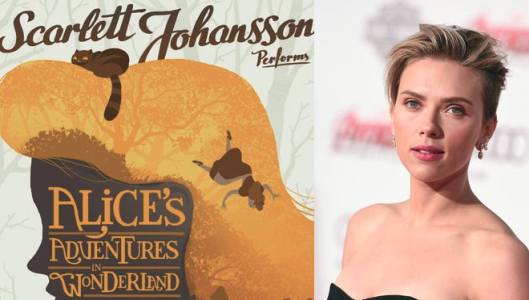
First up is The Adventures of Alice in Wonderland, read by Scarlett Johansson . I reviewed the story proper a few years back, so I just wanted to comment n the wonderful job Scarlet did in reading this. The film Her made me aware of how talented Johansson is with just her voice, so I was absolutely up for being read a classic children’s story by her. The experience was mostly enjoyable: in addition to her straight narration, Johansson also gave voices to all the characters, and used a variety of accents — including Cockney. How effectively she pulled them off is really for a Britisher to judge, but I was satisfied — and given the amount of British media I’ve consumed, including videos on different accents and dialects of the British isles, I don’t think I’m the worst judge. Some of the character voices were annying, but the characters themselves were annoying (the Queen and King), so that may have been intentional.
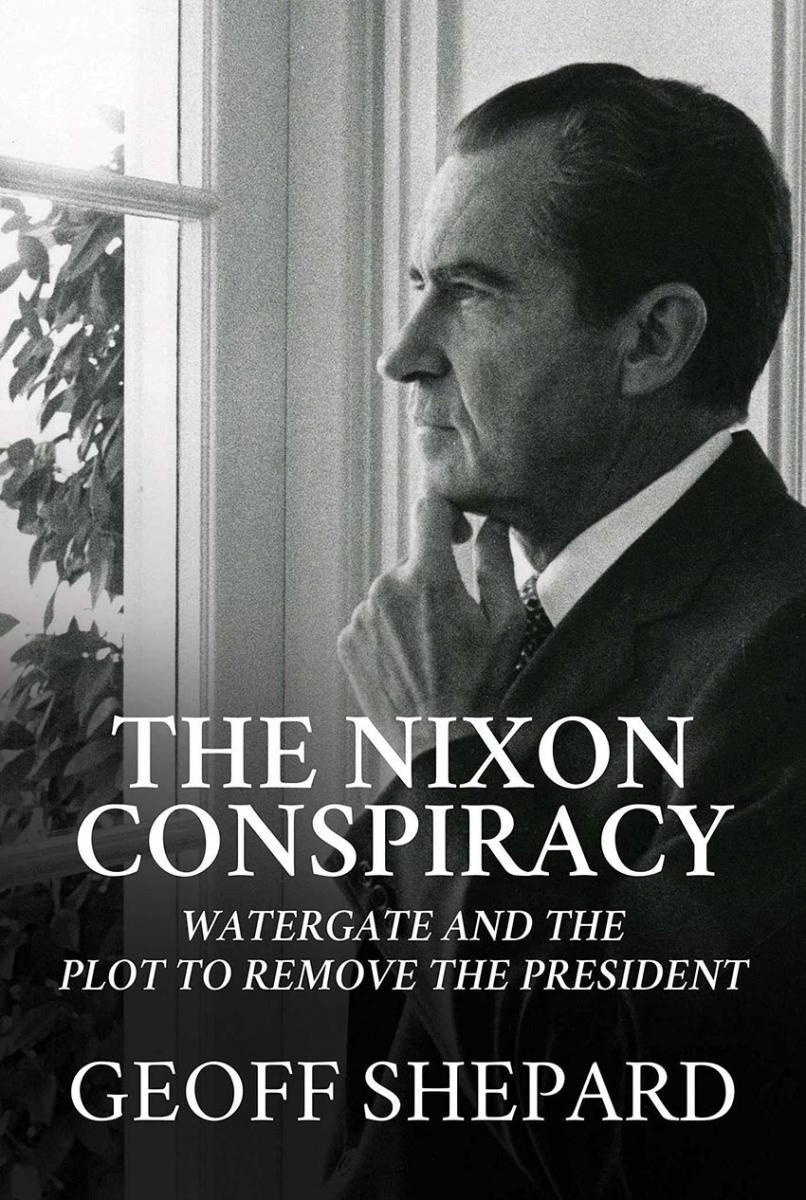
Next up, and rather more serious: The Nixon Conspiracies. This, along with the title above, is a free-with-subscription title, part of Amazon’s devlish plot to keep me subscribed even though I have multiple credits stocked up. The author, Geoff Shepard, was a low-level Nixon staffer, hired after graduating Harvard Law to help codify policy decisions by the Nixon White House, principally Nixon’s law & order-esque policies. (The war on crime and subsequent police militarization began during the Nixon admin, documented fully by Radney Balko’s excellent Rise of the Warrior Cop.) Shepard wasn’t connected to any of the shenanigans that became part of the Watergate Scandal — Nixon’s attempts to find out who kept leaking information about his office, and break-ins connected to his reelection campaign — but after multiple people were fired and the affair became a public scandal, Shepard assisted in his boss’s defense, like going through Oval Office recordings and assisting Nixon’s secretary in creating transcripts. Shepard offers both memoir and history: the scandal destroyed his faith in his bosses, resulting in him leaving public service, but after the fact he couldn’t square what he knew with what was attested, and believes that the affair was a miscarriage of justice after spending the resulting decades talking to colleagues and examining documents & transcripts made available. The principal malfactor John Dean, escaped by ratting on everyone else and never served a day of his prison sentence, and in the process he exaggerated Nixon’s role and served to help take down an administration that the DC establishment couldn’t defeat at the polls. Shepard appears to have written three books about Watergate in this vein, each responding to new evidence, and he tells a story of corruption at multiple levels — a deeply biased and often challenged judge who frequently met in private with the prosecutors, for instance. I know very little about the Watergate affair, so I won’t even begin to try to judge this book on the facts: some of his sources were anonymous, and audiobook format of my edition doesn’t serve the argument well given that it’s hard to go back and review the case that’s being built. Being a libertarian, I assume corruption in DC as the default, so I wasn’t surprised by Shepard’s allegation of what we now call lawfare. (At any rate, when I condemn Nixon it’s for his economic policies like taking America off the gold standard and subsidizing sugar, leading to both inflation and pervasive metabolic syndrome as sugar became endemic in every American foodstuff.) An interesting way to spend 11 hours, I will say. The narrator had a good voice for telling the story.
Star Wars night at Region Field, home of the Birmingham Barons
Well, so ends May, an extremely wet month here in Alabama, with most places receiving 10-12 inches of rain — the historic average being about 5 inches. I managed to watch two baseball games and one play (“The Mousetrap”, Agatha Christie — Montevallo Main Street Players) After a two-month obsession with CJ Box, Wyoming, and Joe Pickett, my May reading was more of a return to my usual mix. I finally went to work on my Opening Day stack (a metaphorical stack in this case, since there was only one physical book, Ty Cobb: A Terrible Beauty), then made progress on my reading goals, including….
……okay, it was mostly politics and baseball. Reviews were quiet in the last week because I was absorbed in Provoked, which, if its Kindle pagecount can be believed, is the largest book I’ve ever read at 2316 pages. The print version only runs to ~700 pages, but reviews say the print is tiny. I’m close to the end, though: even though I’m only halfway through percentage wise, there are thousands of footnotes and I suspect they’ll constitute at least the last 20% of the book. I’m in 2023 with frequent mentions to 2024, so the end is near — at least for the book. Can’t say as much for the people of Ukraine. I’m definitely going to be looking for some light reading after this, as I am very tired of reading about death.
New Acquisitions
The Presidents and the Pastime, a history of American presidents and baseball; One of Us, a seven hundred page history of Nixon; and Original Sin, a history of Biden’s cognitive decline and how his staffers did their dead-level best to conceal it. I promise I’m not going off on another presidential tangent like the one that consumed July 2023. One is in-progress and something if a leisure read, if big; one is read already, and One of Us may be deferred because it’s a chunkster and I’m most of the way through The Nixon Conspiracy, a history of Watergate from a White House staffer.
BookTube Highlight
This is a new thing and I’m not sure how long it will last since I don’t spend a lot of time on booktube, but recently I found a channel so lovely that I want to share it — Jess of the Shire. She does video essays on Lord of the Rings and storytelling in general, and is often in LOTR cosplay.
Coming up in June…
SF readers may remember SHELLI, a thriller featuring a synth/human detective team. Doug Brode has a sequel coming out in mid-June, so I’m definitely looking forward to that. Another cool cover! I haven’t read any science fiction this year, though I did have a Becky Chambers title checked out for a while. I’m also itching to read some Star Trek and still have two un-read releases from last year to get to.
Party Girl, 1995. Parker Posey is a dance hall fanatic who, upon finding herself financially strapped, decides to become a librarian. This film is amusing from a librarian POV because she begins working in an early 1990s system that still uses a physical card catalog, in which digital records are nonexistent. I did appreciate Parker growing to love the order of library & information sciences, and the magic of being an information voodoo operator. Also, the part where she screamed at a patron was fun.
The Year of Living Dangerously, 1982. Young Mel Gibson is a reporter from Sydney who is dispatched to Jakarata on the eve of armed unrest against a military dictatorship. He befriends a local photographer, “Billy”, as well as Sigourney Weaver, who is playing an assistant to a western military officer. He betrays both of their confidences after they feed him some information intending to save his life, and then boogies – but still gets the girl.
The Benchwarmers, 2006. Rob Schnedier repeatedly beats an entire team of children in baseball. I only watched this because it was baseball related and free to stream on prime.
After the Thin Man 1936. A cinematic sequel to the movie based on Hammett’s original novel, reusing some of the same principal actors. Amusing/engaging. .
To Die For, 1995. Nicole Kidman plays a blonde bombshell who wants to be famous more than anything, and if that means seducing a teenager or two and having them shoot her husband who has annoying ideas like “spending time together” and “having children”, then so be it. Prescient of tiktok culture.
Rookie of the Year, 1993. A dismal junior league prospect has an arm injury that heals oddly, leaving him in possession of a super pitching arm. He plays for the Chicago Cubs, employing both his supernatural arm and his innate kid ability to annoy the hell out of adults. (He’s a little Ty Cobb terror on the bases, psyching out the pitcher and constantly pushing for the steal.) Probably my favorite part was Surprise John Candy!
Angels in the Outfield, 1951. A little girl at a Catholic orphanage (St. Gabriel’s) prays for her Pirates and especially their manager as they enter a slump and the manager becomes known for his swearing and fighting. Enter the Voice of God — or at least, Gabriel’s voice, who admonishes the manager to rein in his temper and tongue and treat other people like human beings instead of obstacles and opponents. Little orphan Annie — or in this case, Bridget — later meets the manager after her claim to see angels in the outfield (hey, that’s the name of the movie!) hits the press and inspires him to become a better man. Sweet story. The 1990s remake introduced physical effects and a lot more comedy.
Donkey Baseball, 1935. I don’t know if this counts, being a short film included as an extra on the Angels disc, but hey, why not?
Legally Blonde, 2001. Reese Witherspoon is a sorority girl dumped by her boyfriend for someone ‘more serious’. To prove to him that she’s got what it takes to be a Serious Society Wife, Reese applies to Harvard Law, and once engaged grows as a character and finds she’s more interested in being a lawyer than being ex-boyfriend’s trophy wife. I wasn’t expecting much from this movie besides Reese Witherspoon, but liked how her character was developed: she doesn’t lose her love for expressive fashion or her general cheer to become Serious Lawyer Lady.
“….you….got into Harvard?” “What, like it’s hard?”
Gothic, 1986. That’s an hour and a half of my life gone. My cinema buddy sold it to me as a dramatized version of the weekend Mary Shelley spent with a few friends at Lord Byron’s, which inspired her to write Frankenstein. He neglected to mention the summoning a demon > fever dream plot that the movie turned in to. The only redeeming aspect was seeing a younger Natasha Richardson, who I’d previously seen in The Parent Trap with Lindsay Lohan.
Legally Blonde 2, 2003. Reese Witherspoon goes to Washington and becomes a lobbyist against animal testing. Sally Field plays…an antagonist?
The Last Rodeo, 2025. An aging former rodeo champion pushes himself to try for the bull-riding championship for a fourth time (decades after he retired) to earn money to pay for his grandson’s medical expenses. He has to patch up his relationship with his daughter along the way, who resents him for how he almost destroyed himself with liquor and bull-riding.
Fun fact: There are two minor Star Trek alum in this, Neal McDonough (First Contact) and Christopher McDonald (ST TNG: Yesterday’s Enterprise)
Clueless, 1995. Watched this for Alicia Silverstone and Paul Rudd. Everyone in this movie has cellphones and they talk on them constantly like they’re from ten years in the future. AS IF!
Operation Petticoat,1959. Cary Grant is a submarine commander whose mission gets complicated by the rescue of women-folk. Mostly watched for Cary Grant.
A Complete Unknown, 2024. WOW. I knew I would love this Bob Dylan biopic just based on the recording of the title track, and the fact that I have NEVER not loved a Timothee Chalomet movie, but Ed Norton was a surprise as Pete Seeger. Also appreciated the steady presence of Johnny Cash, though he could’ve been better cast and I was unaware that Johnny had such a connection to the folk scene.
For someone my age, I have had surprisingly few jobs: over half my working life has been at the same place! I volunteered in the soundroom at my parent’s church as a teenager, though that doesn’t really count considering the hours were minimal (9 a week across three services) and I wasn’t paid. It had its perks, though, like letting me sneak-read books during service. I applied to different places as a teenager and did odd jobs like yardwork and driving, but it wasn’t until I’d done two years of community college that I got a “real” job, working at safety-glass factory. We took large panes of glass and transformed them into storm windows, bullet-resistant windows, etc. One of the contracts was for HUMVEE windows, and considering that the terror-war was in its heyday (with both Iraq and Afghanistan ongoing), we took those jobs very seriously. I worked in every area of the plant, but mostly I was on the “poly” team: we cut up sheets of plastic, or polycarbonate. They would later be layered with panes of glass that had been chemically or temp-treated and turned into composite units in a place we called “The White Room”, which was really a building inside the plant that lines fed into and out of. This job was responsible for making me grow up: for the first time, I was surrounded by adults who didn’t care one bit about me. They weren’t teachers, they were workers, and the only respect they gave was to people who earned it. They were also incredibly crude, making me realize that despite my working-class roots I definitely wanted to go to university and spend my time with people who weren’t constantly swearing and telling sex jokes. This job also gave me a growing level of independence and was responsible for my being able to start breaking away from the very restrictive sect I was raised in. I suddenly had money to go out of town and safely explore forbidden things like ….movie theaters, beer, and science books. (I became a big fan of science books: beer, not so much. ) It also forced me out of my shell: quiet formality did NOT fly on a factory floor.
I left the plant to go to university and finish a four-year degree, and there I worked in one of the offices as a secretarial assistant/IT helper. During the summers I also did temp work at another factory, or babysat. After college, I graduated into the Great Recession and had to live off hope and savings until a position opened at the library, where I’ve been since. I began as a reference assistant, essentially managing the computer lab and answering questions from people on the computers, but have grown in responsibilities over the years as my skills developed and librarians pass on. These days, in addition to being general reference, I’m our resident local historian and am part of the IT staff, helping maintain our computers, network, and website. It’s a varied job where we never know what we’ll be doing on a day to day basis. I supplement that a little with pet-sitting jobs and occasional IT odd jobs, and in 2021 tried a second job (weekends only) driving a crew van for the railroad. That proved to be interesting, but a complete waste of time: I had to call in at 4:00 in the morning to put myself in the dock to be called out for jobs, but if I got called out I’d go to the bottom of the queue, and jobs varied so much that I might work for an hour or not get home until 2 am because they’d asked me to bring a crew to Birmingham, then start daisy-chaining jobs. (I stopped calling in after that last one, finally understanding why they were always hiring new drivers.)
ALTOSTRATUS is a bit of a boring cloud. Sorry if that sounds mean, but its featureless, overcast sky just hangs around, with little to say for itself. The most exciting thing Altostratus ever does is lightly drizzle. (Cloudspotting for Beginners)
Odd teaser Tuesday today. I woke up early yesterday to meet with the lady friend and spend the day visiting the Cahaba lilies and go to a baseball game, but instead it rained buckets and we couldn’t even leave the breakfast place for two hours! We created an on the fly backup plan consisting of the bookstore and a movie,The Last Rodeo.
WHAT have you finished recently reading? Original Sin, Jake Tapper.
WHAT are you reading now? I am 600 pages into a 2000 page book on geopolitics, Provoked.
WHAT will you read next? Possibly The Presidents and the Pastime, a history of US chiefs and baseball. Presumably less controversial than my last two reviews. 🤣 I also have a book on Congress and baseball, but alas! Have not found anything reading SCOTUS and baseball. Would be funny to have the trifecta.
Speaking of, despite all the rain the day ended in a pretty baseball game at Riverfront Stadium in Montgomery, Alabama, where the local team (I hate their name) beat the Pensacola Blue Wahoos 8-1. I left at the opening of the ninth inning because The Local Team was winning 8-1 and was glad I did, because I spent over an hour driving through a lightning storm that would have been a lot less fun had I been trying to navigate a downtown filled rotten with one-way streets.
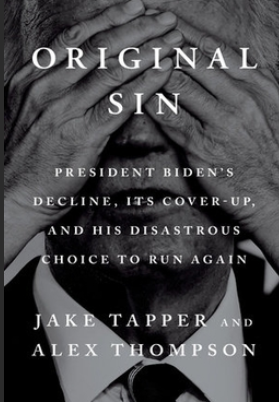
It was fairly obvious to critics of the Biden administration that the president was in cognitive decline and increasingly unfit to hold office, despite the barrage of Sharp as a Tack! statements emanating from DC’s faithful handmaidens, the corporate press. I picked this up not to learn what anyone who wasn’t rallying around the flag already knew, but to learn how culpable Biden was in the charade: was he the one insisting on running despite his increasing lapses, or was he cruelly used by the Democratic honchos or his wife? Was Biden threatened with Amendment 25 after the sad spectacle that was the Trump-Biden debate? Also on the table, at least for me: if Biden was incapable of running things, who was doing the running? As with the existence of a secret cabal of White House staffers who were interfering with Trump’s first term in office, the idea of unelected officials running government makes me — and should make any American — want to round up some tar and feathers. The book manages to be both sympathetic and critical of Biden, and places the blame squarely on his, his wife’s, and his inner circle’s shoulders, based on a series of interviews with un-named contributors. The result is something like Fire and Fury: interesting, informative to a degree, but ultimately a bit suspect.
The last ten years have not been kind to Biden: the death of his eldest son and heir-apparent in May 2015 rapidly aged him, and is blamed by his closest staffers for accelerating his cognitive decline — decline already evident in 2017 tapes, obvious during the 2020 election, and a growing cause for concern among those having to edit video during the nation’s first phoned-in election. These gave plenty of fodder for Republicans to mock, just as the Democrats used Dubya’s.penchant for malaprops against him. While it’s true that isolated clips could be collected and promoted to render a biased message, with Biden, his moments of confusion were increasingly a serious problem. The abnormal conditions of the 2020 elections, with campaigning being more virtual, helped mitigate the effect these moments would have on his campaign, and the effects a physical campaign might have on him.The cognitive stalls were not just a problem not just from an optics point of view, but for an operational point of view: Biden started stumbling through caucus meetings, forgetting to push for the legislation he was there to promote, and this was done under the full view of Peloisi, the then-leader of the Democratic party. Worse: while Dubya’s gaffes were at worst amusing, Biden tended to do things like openly call China’s dictator Xi a dictator, or declare that yep, DC was all-in on war to defend Taiwan: this necessitated DC dispatching officials to China to perform the necessary mea culpa’s. (I use Dubya and not Trump as my counter-example because Donnie’s threats to annex Greenland or turn Canada into the “51st state” are on another level than gaffe.) In office, Biden surrounded himself with a small coterie of close aides who called themselves the Politburo, meaning he was sheltered and cocooned even more than most presidents are. By 2022, the White House’s operations were actively reworking themselves around Biden’s cognitive limitations: reduced windows of when he might attend events, speeches being shortened and simplified, appearances being limited. This would only increase until that emperor-has-no-clothes moment where Biden’s mental fraility made itself undeniably obvious on the world’s stage, debating with Trump and getting into side arguments about golf handicaps. The debate night was, of course, the end for Biden, sending the DNC into panic mod and resulting in him being pressured to drop out and cede his place to Harris. The rest is history.
As much as I disliked Biden’s policies in office, his increasing mental limitations made me wonder, in 2023-2024, how much he was actually responsible for them and how much whoever was running things was. Original Sin is revealing and showing how influential the Politburo was, scripting interviews and even cabinet meetings. This same group was part of a reality distortion field: while the Bidens had a habit of ignoring ugly facts and pushing forward in faith — not letting negativity cause hesitation — the politburo were around Biden so much that his yearly decline became inwardly normalized. They became used to arranging the operations of the office to take his increasing infirmity in mind. It was outsiders who would get a view of how his function had declined and come away staggered — and evidently, it was outsiders like Biden’s political critics who could see the obvious. Were the DNC not watching the videos of Biden mentally shutting down, of having to have every single thing he did on stage written down on a card for him, etc?
This book is informative, but I don’t think it tells anywhere near the full story. There’s no mention of the autopen, for instance, and no accounting for the hostility Biden exhibited towards the DNC leadership after he was pressured into resigning. The Biden depicted here is sad and reluctant to make the decision, but he does so after funding dries up and the party leadership tells him he has to step down for the greater good. At least one person who is named in the book is now saying that the quote attributed to him was entirely fabricated. The book strikes me as a gentle scapegoating: it wasn’t the party who erred in not acting more forcefully, it was sad ol’ Joe who just didn’t realize it was time to go, and who was irresponsibly abetted in that by advisors who loved him too much for his own good.
Quotes:
“The Germans and the Japanese lost the war quite largely because their rulers were unable to see facts which were plain to any dispassionate eye,” Orwell went on. “To see what is in front of one’s nose needs a constant struggle.” Here is what was in front of our noses.
The president was fond of using the formal family motto, of giving “my word as a Biden,” but they had another, more private saying: “Never call a fat person fat.” It wasn’t just about politesse; it was about ignoring ugly facts. “Don’t say mean truths” is how someone close to the family put it. “The Bidens’ greatest strength is living in their own reality,” this person told us. “And Biden himself is gifted at creating it: Beau isn’t going to die. Hunter’s sobriety is stable. Joe always tells the truth. Joe cares more about his family than his own ambition. They stick to the narrative and repeat it.”
From 2020 until 2024, all of this resulted in an almost spiritual refusal to admit that Biden was declining.
He’s nearly eighty, he knows what he wants, and we know how to handle him—that was the message sent internally. All of these factors led to a uniquely small and loyal inner circle. Some felt that the insularity was the Politburo’s way of protecting its influence. “Five people were running the country, and Joe Biden was at best a senior member of the board,” said one person familiar with the internal dynamic.
“Before Beau died, he was one hundred percent sharper,” said one senior Biden White House official. “Beau’s death wrecked him. Part of him died that never came back after Beau died. Was he the same guy he was in 2009? Of course not.”
Some cabinet secretaries felt that, in fact, Biden relied on the cards more heavily when reporters were absent. […]
“The cabinet meetings were terrible and at times uncomfortable—and they were from the beginning,” Cabinet Secretary Number One told us. “I don’t recall a great cabinet meeting in terms of his presence. They were so scripted.” […] Cabinet Secretary Number Two said they hated “the scripts” for the cabinet meetings. “You want people to tell you the truth and have a real dialogue, and those meetings were not that.”
It was a situation unique in the history of the republic: Two candidates who both claimed to be running again for the sake of protecting the country from the other also had very real reason to run for the purpose of protecting themselves.
Even mentioning Biden’s age in the lead of a brief story on his COVID infection resulted in a White House official screaming at Shear, demanding that The Times remove his age because it wasn’t “relevant.”
“Access dropped off considerably in 2024, and I didn’t interact with him as much,” said Cabinet Secretary Number One. “I didn’t get an explanation.” Instead, the secretary would brief other senior White House aides, who then briefed the president. Cabinet Secretary Number One thought it strange and asked if it was a way of filtering out particular information so that his closest aides could brief him in the way they preferred. “Yes, the president is ‘making the decisions,’ but if the inner circle is shaping them in such a way, is it really a decision? Are they leading him to something?” Cabinet Secretary Number One wondered.
One cabinet secretary believed that Biden’s limitations had given his aides more power to steer the administration. “If you had a twenty-years- younger Joe Biden, I think he would have been more on top of the issues and what was going on,” the cabinet secretary said.
“I really don’t know what he said at the end of that sentence,” Trump said. “I don’t think he knows what he said either.” Biden turned to Trump, mouth agape, a painful moment of split screen. It wasn’t even twenty-two minutes into the ninety-minute debate.
Senior Democrats who had done work for Biden in 2024 later told us that they had watched the debate and wondered: Just who the hell is running the country?
After the interview, Harris was visibly angry with Cooper. He had been asking the questions the nation had been wondering, but she took it personally. This ———- doesn’t treat me like the damn vice president of the United States, she said to colleagues. I thought we were better than that. (Is she aware of how big a nothingburger the VP slot is? A VP is only as big as their boss lets them and their will directs them to be. Dick Cheney was a sinister grey eminence, Pence and Harris were guys-in-back)
Hur told them that all he felt was sad. How could anyone look at Joe Biden at that debate and not feel bad?
Writing from a hotel room in Portugal, Times columnist Thomas L. Friedman said the performance had made him weep. “I cannot remember a more heartbreaking moment in American presidential campaign politics in my lifetime,” he wrote, “precisely because of what it revealed: Joe Biden, a good man and a good president, has no business running for re-election.” He “clearly is not any longer” up to the job, Friedman concluded.
“We can’t get out there and say, ‘Four more years,’ ” Kuster remarked. “I don’t know if we can say, ‘Four more months.’ ”
“Do you think Kamala can win?” Biden asked. “I don’t know if she can win,” Schumer said. “I just know that you cannot.”
The image of Trump bloodied but standing defiant, fist in the air, after a bullet grazed his ear would be one of the most memorable of the year. Looking at that photo, Biden campaign aides couldn’t help but think of how this would help Trump politically. “[—-!]” more than a few said.
“Well, if anything, would you have done something differently than President Biden during the past four years?” Hostin followed up. “There is not a thing that comes to mind,” Harris said, in perhaps the worst moment of her short campaign.
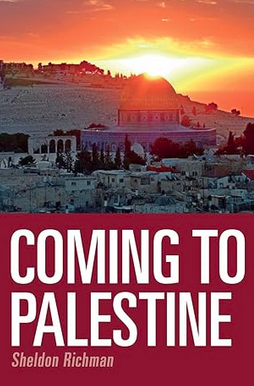
Given the current horrors going on in Gaza, and that Israel/Palestine is largely a blind spot for me, I figured this was worth a look, especially given that I haven’t read anything on the subject since Peace not Apartheid (2007!) and a lot of blood has flowed under the bridge since then. The book is published by the Libertarian Institute, many of whose books I’ve read, and Sheldon Richman is an author that Scott Horton frequently praises.
Coming to Palestine is largely a collection of essays with an Israel-Palestine connection: most were published at the Institute itself, but some are book reviews, and the book reviews can date back to the 1990s. All are sharply critical of Zionism and the State of Israel. As an atheist and an arch-libertarian, Richman has no regard for the idea of a Jewish community at all, let alone one with historic ties to the area and an especial tie to the city of Jerusalem. His critique (beyond detailing chronic human rights abuses) is moored entirely in individualism and property rights: individual Palestinians owned land, and individual Palestinians were wrongfully robbed of it. Although this makes the general scope of the work predictable — Israel is always the bad guy — the volume is not a dozen essays arguing the same thing. Some offer histories of Zionism and Israel’s expansions; some explore Israel’s bipartisan command of US policy, and so on. There are essays on how many conflicts in the Middle East owe to Great Britain and France’s arbitrary line-drawing after the Ottoman Empire fell, for instance, and an essay on how he came to his present beliefs, followed by another condemning the expansion of “anti-semitism” to mean “any critique of the State of Israel”.
I have never looked into the process why which Israel became a nation, so there was quite a bit to learn here, especially early (19th century) settlement and the hostile reaction of Reform rabbis to the idea of an Israel recreated by man rather than God. Richman argues that while settlers did “buy” land in what became Israel, they did so through absentee landlords who had no connection to the property beyond legal title, and who cared nothing for the farmers that the new owners would displace. (That it was legal title, though, would seem to undercut Richman’s pure-property-rights approach.) Other expansion has more the more straightforward pointy-stick approach.
This was an interesting if very partisan collection, one I’d rather evaluate with more knowledge of the subject matter. I did some fact-checking along the way, enough to realize Richman’s views were charged, let’s say. He announced that Israel, Britain, and France attacked Egypt, failing to mention the context of Nasser’s nationalization of the Suez Canal twelve years before the 99-year concession was due to expire, an act viewed by Britain and France as a direct violation of the treaty governing its custody. Unfortunately for Gazans, things have only gotten worse since this book’s publication, as the obscene evil of October 7 has led to an absolute orgy of violence since then, Israel appearing intent on creating a desert and calling it peace. One interesting oversight here was the lack of commentary on Netanyahu’s history of indirectly supporting Hamas for his own cynical reasons. Richman definitely doesn’t like Bibi, and I know Scott Horton is familiar with the topic, so it’s odd that that subject wasn’t addressed, this being a Libertarian Institute publication.
Coming to Palestine is quite partisan, but makes me want to learn more about the subject matter, if only to better evaluate this book. It’s informative, albeit biased, but I don’t think any level of bias can mitigate the fact that the state of Israel has acted horribly towards its neighbors, and has an adverse effect on DC’s foreign policy– whether that consists of enraging the Arabs against DC and America, or making it advocate things like “Erase Gaza and replace it with a resort managed by the president”.
Quotes:
Bush officials had demanded an election in Gaza, then regretted it when they saw the results. Indeed, Bush critic Sen. Hillary Clinton commented after the balloting, “I do not think we should have pushed for an election in the Palestinian territories. I think that was a big mistake. And if we were going to push for an election, then we should have made sure that we did something to determine who was going to win.” (Ooh, she said the quiet part out loud.)
Some justify this unstinting and unique support [3 billion dollars per year in military aid] for Israel on grounds that Israel is an American “strategic asset,” and Israeli leaders cynically talk in those terms. But this makes no sense. For one thing, as many American political and military leaders have acknowledged since 9/11, rather than being an asset, Israel has been a liability. A big reason for the Muslim terrorism directed at Americans is precisely the unconditional U.S. military assistance to, not to mention the diplomatic support of, Israel.
WHAT have you finished reading recently? Memories from the Microphone, a history of baseball broadcasting.
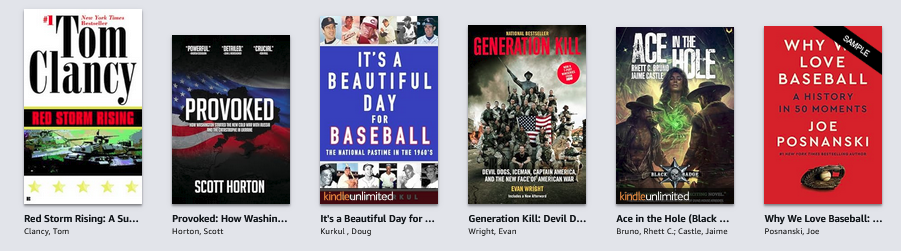
WHAT are you reading now? I’ve been nibbling at a few books this week, but am most committed to Provoked, a history of DC/NATO vs Russia since Gorbachev. I’ve read Scott Horton’s previous works and even helped in his crowd-funded one. It’s dense, though, and crammed with footnotes. (I am 13% in and am at footnote ONE THOUSAND AND THIRTY.) Kindle claims it’s over 2000 pages: the print version is closer to 700. I think the pace will quicken once I escape the Clinton administration and all of the bloodletting in Yugoslavia. The Kindle shelf:
Red Storm Rising is a library ebook that just became available. It’s dated at this point — Cold War fiction — but Red Metalsupposedly took inspiration from it. Generation Kill is one I’m looking at because I enjoy scenes from the show (specifically, the scenes with Sgt Major Sixta — po-lice that moostache!). I also know little about Iraq War II save for the debacle it turned in to.
WHAT are you reading next? Ace in the Hole, once I’ve got some more nonfiction under my belt. I will not tolerate fiction beating out nonfiction again! I’m also hoping to get a hold of Original Sin, on the Biden cognitive coverup, as I’m specifically interested in knowing if Biden himself wanted to run in his condition or if he was pressured into it by the Dem establishment of his wife. With the sudden announcement that he has aggressive cancer on the eve of the book’s publication, I’m especially interested in it.







 Reading Freely