Favorite Quotes & WWW Wednesday

Today’s prompt from Long and Short Reviews is “Favorite Quotes from Books“, which is ridiculously unfair. I am a quote-hoard. But while I despair of winnowing out ten standouts from my collection, here’s the WWW.

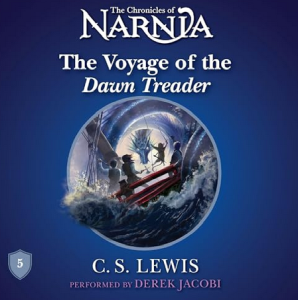
WHAT have you finished reading recently? An Audible presentation of The Lion, the Witch, and the Wardrobe, and Benjamin Franklin: An American Life by Walter Isaacson

WHAT are you reading now? The Swamp Fox, a history of Francis Marion’s irregular warfare against the Brits during the Revolutionary War.

WHAT are you reading next? Declaration: The Nine Tumultuous Weeks When America Became Independent, May 1-July 4, 1776, William Hogeland. This is an interesting period because the colonies made themselves legally independent by creating their own State constitutions, well before a formal Declaration was issued by the 2nd Continental Congress.

And now…..favorite quotes from books.

Oh, hey, I could totally cheat! But no, I’m not going to. I will, however, look back at that list to see how many of the items have stuck in my head for 13+ years. (I know one of them has, because searching for the exact quote was how I got that result.) Unfortunately, Top Ten Tuesday did a similar topic back in March with “Things Characters Said”, and a lot of my favorites are on that list. SO, I am going to restrict myself to nonfiction quotes. (We also did “Thoughtful Quotes” back in March, but a few of my very favorites are there so I’m not going to exempt them. Oh, and look, another Top Ten post on quotes! )

Neighborhoods like Georgetown or Beacon Hill are walking neighborhoods. It is not necessary to hop in the car to get an ice cream cone or a bottle of aspirin. You walk to a store — enjoying the felicities of the street as you go — and you are able to see other people along the way. You may even have a conversation with a stranger. This is called meeting people, the quintessential urban pleasure. (Or else it is called a mugging, the quintessential urban calamity.).
The Geography of Nowhere: the Rise and Fall of America’s Man-Made Landscape; James Howard Kunstler)

“I explained — with the excessive exposition of a man spending a lonely week at the airport — that I was looking for the sort of books in which a genial voice expresses emotions that the reader has long felt but never before really understood; those that convey the secret, everyday things that society at large prefers to leave unsaid; those that make one feel somehow less alone and strange.
Manishankar wondered if I might like a magazine instead.” (A Week at the Airport, Alain de Botton. One reason I like this quote so much is that de Botton is that voice for me.)

Who should ‘run’ America? No one. Or 250 million single individuals. Every man a king, every woman a queen, as the martyr Huey Long once sang. […] As Americans from Emerson to Mencken have known, following leaders is a fool’s game. Only when we restore to Americans their birthright — local self-government in prideful communities that respect the liberties of every dentist and Baptist and socialist and lesbian and hermit and auto parts dealer — will we remember what it means to be an American, first.” (America First, Bill Kauffman)

If only it were all so simple! If only there were evil people…and it were necessary only to separate them from the rest of us and destroy them. But the line dividing good and evil cuts through the heart of every human being. And who is willing to destroy a piece of his own heart?” – Aleksandr Solzhenitsyn, Gulag Archipelago

“I went into the woods because I wished to live deliberately, to front only the essential facts of life, and see if I could not learn what it had to teach, and not, when I came to die, discover that I had not lived. I did not wish to live what was not life, living is so dear; nor did I wish to practice resignation, unless it was quite necessary. I wanted to live deep and suck out all the marrow of life, to live so sturdily and Spartan-like as to put to rout all that was not life, to cut a broad swath and shave close, to drive life into a corner, and reduce it to is lowest terms.”  – Henry David Thoreau, Walden

If any man feels that the world is too complex and its evil is too big to cope with, let him remember that it is too big to drown in a glass of whiskey. – Ayn Rand, Philosophy: Who Needs It?

The most dangerous thing you can do is to take any one impulse of your own nature and set it up as the thing you ought to follow at all costs. There’s not one of them which won’t make us into devils if we set it up as an absolute guide. You might think love of humanity in general was safe, but it isn’t. If you leave out justice you’ll find yourself breaking agreements and faking evidence in trials ‘for the sake of humanity’ and become in the end a cruel and treacherous man.”  – C.S. LewisMere Christianity.

To love at all is to be vulnerable. Love anything and your heart will be wrung and possibly broken. If you want to make sure of keeping it intact you must give it to no one, not even an animal. Wrap it carefully round with hobbies and little luxuries; avoid all entanglements. Lock it up safe in the casket or coffin of your selfishness. But in that casket, safe, dark, motionless, airless, it will change. It will not be broken; it will become unbreakable, impenetrable, irredeemable. To love is to be vulnerable. –C.S. Lewis, The Four Loves

But I had a good uncle, my late Uncle Alex. He was my father’s kid brother, a childless graduate of Harvard who was an honest life-insurance salesman in Indianapolis. He was well-read and wise. And his principal complaint about other human beings was that they so seldom noticed it when they were happy. So when we were drinking lemonade under an apple tree in the summer, say, and talking lazily about this and that, almost buzzing like honeybees, Uncle Alex would suddenly interrupt the agreeable blather to exclaim, ‘If this isn’t nice, I don’t know what is.” – Kurt Vonnegut, A Man Without a Country

Be not unhappy, or discouraged, or dissatisfied, if you do not succeed in acting always by the right principles; but when you have failed, try again, and be content if most of your acts are consistent with man’s nature. Love that to which you return; do not return to philosophy as if she were a schoolmaster, but behave like those who have sore eyes and apply a bit of sponge or an egg, or like another who applied a plaster of a water lotion. For thus you will not fail to obey reason, and will find rest in it. And remember that philosophy requires only the things which your nature requires. – Marcus Aurelius, the Meditations

But when I am in an airport, that most harried image of the eternal tarmac of Hell, crowded without community, noisy without celebration, technologically sophisticated without beauty, and see people engaged in loud conversations not with one another but with a business partner in Chicago or a spouse and children far away, I see not freedom but confinement. And above them all, as if to remind us of our unhappy state, blare the everlasting televisions, telling us What Has Just Happened and What it Means, and preventing us from ever experiencing a moment not of loneliness but of solitude, not of idleness but of peace. It too is a tool of the Anticulture. For culture by its nature is conservative. It remembers, it reveres, it gives thanks, and it cherishes. A farmer tilling the land his father tilled, whistling an air from of old, in the shadow of the church where his people heard the word of God and let it take root in their hearts—that is a man of culture. He might live only fifty years, but he lives them in an expanse of centuries; indeed, under the eye of eternity. How thin and paltry our four score and ten seem by comparison! For we are imprisoned in irreverence. Our preachers are neither the birds nor the old pastor peering over Holy Writ, but the nagging, needling, desire-pricking, noisome voice of the mass educator, or of the headline, or of the television, which could never have won our attention without encouraging in us amnesia, indifference, petulance, and scorn, all destroyers of culture. – Anthony Esolen, from a First Things article I can no longer find. Phooey.)

(I know this is eleven but I couldn’t decide between my CS Lewis quotes. Oh, and here’s a bonus from Jack!)

“[My father] relied wholly on his tongue as an instrument of domestic discipline. And here that fatal bent toward dramatization and rhetoric produced a pathetic yet comic result. When he opened his mouth to reprove us he no doubt intended a short well-chosen appeal to our common sense and conscience. But alas, he had been a public speaker long before he became a father. Words came to him and intoxicated him as they came. What actually happened was that a small boy who had walked on damp grass in his slippers or left the bathroom in a pickle found himself attacked with something like Cicero on Cataline, or Burke on Warren Hastings; simile piled on simile, rhetorical question on rhetorical question, the flash of an orator’s eye and the thundercloud of an orator’s brow, the gestures, the cadences, the pauses. […] While he spoke, he forgot not only the offense, but the capacities of his audience. All the resources of his immense vocabulary were poured forth. I can still remember such words as ‘abominable”, “sophisticated”, and “surreptitious”. You will not get the full flavor unless you know an angry Irishman’s energy in explosive consonants and the rich growl of his r’s.”

C.S. Lewis, p. 23, “Surprised By Joy”.

Posted in General, quotations | Tagged , | 12 Comments

Teaser Tuesday: American-style chess

Today’s Top Ten Tuesday is books with honorifics like Doctor, Mrs, etc. I went back through my booklists all the way to 2018 to find enough titles. First up, though, a tease!

Another times, [Franklin] was playing with his equal, the Duchess of Bourbon, who made a move that inadvertently exposed her king. Ignoring the rules of [chess], he promptly captured it. “Ah,” said the duchess, “we do not take the Kings so.” Replied Franklin in a famous quip: “We do in America.” BENJAMIN FRANKLIN: AN AMERICAN LIFE, Walter Isaacson

(1) The Island of Dr. Moreau, H.G. Wells. Wells dips into SF/horror with a Frankenstein-like tale.

(2) The Professor in the Cage: Why Men Fight and Why We Like to Watch, Jonathan Gotschall.

(3) Ms. Adventure: My Wild Explorations in Science, Lava, and Life, Jess Phoenix. A geologist’s globetrotting memoirs.

(4) Dr. Johnson’s London, Liza Picard. A social history of 18th century London.

(5) The Autobiography of Miss Jane Pittman,  Ernest Gaines. The story of a woman who was a child when slavery ended, who lived to see the peak of the Civil Rights

(6) No More Mr. Nice Guy, Richard Glover. A self-help men for book advising them to stop living for the expectations/judgements of others, especially those disposed to look down on them to begin with.

(7) The Prince of Frogtown, Rick Bragg. A memoir-biography of Bragg’s troublesome father.

(8) The Awakening of Miss Prim, Natalie Sanmartin Fenollera. A cozy-philosophical novel about a librarian who moves into a village where everyone is interested in a humane life.

(9) Becoming Mrs Lewis, Patti Callahan. A novel about the relationship between Joy Davidman & C.S. Lewis.

(10) Every Man a King, Bill Kauffman. The story of a disgraced pundit who moves back to his Upstate New York hometown and tries to find meaning in his life again.

Posted in General | Tagged , | 21 Comments

Kenneth Branagh and the Magician’s Nephew

Ohh, dear reader, this is Kenneth Branagh as you’ve never experienced him. When I saw a seven-volume set of The Chronicles of Narnia on goodreads available for a single credit, with each book narrated by talents like Branagh and Patrick Stewart, I couldn’t resist — nor would I have wanted to had I could. Nevermind the fact that I already have a CD set of Narnia that’s an audiodrama narrated by Paul Scofield, with other vocal casting.

For the uninitiated, The Magician’s Nephew is chronologically first in the Narnia series, though not the first written. The book opens on a pair of kids, Digory and Polly, who become part of an unwitting experiment by Digory’s rascal of an uncle, Andrew. Andrew is an amateur magician, meaning in CS Lewis’ world he’s a reckless dilettante fooling with matters beyond his ken. Digory and Polly are thrown by a advice of Andrew’s creation into The World Between the Worlds, a peaceful wood dotted with pools that they realize can be used to travel to different “Worlds”. On their first attempt at visiting another place, they find a dying place and temptation — temptation that Digory can’t resist, and a choice that leads to the arrival of Jaydis, later known as the White Witch. As the story develops, the children will witness the Creation of Narnia, the order of which mirrors the Creation recorded in Genesis, and then meet Aslan and still more temptation. When I first read this some ten years ago, I liked the story but considered it the least of the Narnia tales. Here, I delighted in it much more, in large part due to the vocal talents of Kenneth Branagth. I’ve long favored Branagth as an actor, watching him in numerous versions of Shakespeare stories — he made a marvelous Iago, and an even better Harry the Prince — but here he shines vocally. The sheer variety of choices and characters he did was impressive, and some of them are absolutely hilarious. One of his critters sounded like of the vultures from The Jungle Book.

This was a wonderful rendition of Magician’s Nephew. I’m currently most of the way through The Lion, The Witch, and the Wardrobe, read by Michael York. (All are gathered at the Stone Stable, and Jaydis is about to demand the life of the traitor Edmund.)

Posted in Reviews | Tagged , , , | 7 Comments

Thomas Jefferson and the Tripoli Pirates

From the halls of MONteZUUUUUUMA, to the shores of Tripoli” — ever wonder where that Tripoli business comes from? While I’d sometimes encountered references to the early United States having issues with pirates in the Med in its early history, it’s not a story I ever looked into. Recently, however, Gordon S. Wood’s Friends Divided mentioned Adams and Jefferson’s initial disagreement with how to handle the problem. What was the Tripoli problem? Four Islamist states along North Africa had developed a nasty habit of sallying forth, seizing ships and enslaving their crews or passengers under the mantra that all non-Muslims were fair game.While these states’ navies were not all that daunting, continental powers like England and France had larger problems that their navies were needed for (problems like France and England), so they simply paid off the looters. American ships had been covered under the Union Jack, but after Independence the Stars and Stripes represented a new target. At first, Jefferson tried to reason with the grand poobahs who controlled the pirates and work out a diplomatic solution, but founded they wanted an absurd amount of money. As other American officers would find out in the course of this history, they were also treacherous. The American government at tried to make a payment, only to be met with humiliation as the George Washington forced to carry tribute and slaves to the bloated royals of Constantinople. Soon the US Navy was dispatched in increasing numbers, and a great victory was won — only to be dashed by some diplomat oblivious to the military scene making a treaty under his own authority. Having seized a city with an exiled royal in tow — planning for some regime change — the Americans were forced to steal away in the middle of the night.

As with other Brian Kilmeade works, this is definitely pop history with a lot of flash: there is substance there, enough to prompt me to more serious reading, but it’s one I’d be careful about recommending except to those who already know to be cautious. Some reviewers on goodreads took issue with the “islamophobia” of Kilmeade’s approach, but Gordon Woods in his far more substantial Friends Divided also noted that Jefferson was prompted to use overwhelming force by the states’ “Islamic fatalism”. Given Islam’s perpetual problem with bloody borders I’m inclined to give Kilmeade the benefit of the doubt, but may follow this up with something like Lambert’s The Barbary Wars, which is more formal.

Coming up: Benjamin Franklin and the Swamp Fox.

Posted in history, Reviews | Tagged , | 6 Comments

Friends Divided

“You and I ought not to die, before We have explained ourselves to each other.”

When I first read Gordon S. Wood, his Revolutionary Characters annoyed me in its short shrift given John Adams. Adams was one of the earliest voices inveighing against Parliament’s abuses of the American colonies, and I was flabbergasted that he was shoved to the back of the book along with a knave like Aaron Burr. In Friends Divided, he gets the attention he merits, alongside his friend and sometimes rival Thomas Jefferson. This is a double character study that explores not simply the rupture in their friendship that saw an eleven-year silence between them, but their differing views as they evolved throughout the men’s multi-decade friendship and political partnership. The book is wonderful in giving a fair notion as to how complex the minds and character were of these two men; he does not try to box and label them up, but draws heavily on their own writing (manuscripts and letters) to allow them to speak for themselves. While I was already familiar with the course of Adams and Jefferson’s friendship via Joseph Ellis, this goes into more detail and proved one of my favorite reads of this year.

Adams and Jefferson, despite their early working relationship and friendship, were two very different men. They hailed from two very different colonies, and from within different classes within those colonies. Adams came from fairly humble stock, that of a yeoman farmer whose hard and humble work had made it possible to send his boy to school – -even if the young John Adams was perfectly content at being a farmer. All Adams could boast of was his ability and desire to work, and in his studies of law and history he would be among the elite of the founding generation’s intellectuals. He was an absolute workhorse as an attorney, building a successful practice for himself before Parliament’s abuses of the colonies drove him into politics. Jefferson, on the other hand, came from more rarefied stock, and he was partially raised by relatives whose blood ran even more blue. Whereas Adams came from a rough & tumble world, Jefferson was manor-born, raised in grace and civility — at least, in the manor, removed as it was from his fields where slaves raised tobacco. Perhaps their disparate backgrounds contributed to their differing casts of mind: Adams was realistic to the point of cynical, believing people were inherently flawed and that progress could only ever be a tentative thing. Jefferson was more of an Enlightenment idealist, believing humanity could flower were institutions like government and organized religion in the way, and seeing America was the perfect place to see the next steps of humanity.

Friends Divided follows the two men’s lives through their becoming friends amid the Revolution, and their service to the early Republic. It was there, when principles met power, that the two began to grow apart. Although Adams and Jefferson had both gone to law school, it was Adams who lived, breathed, and had his very being within the law. It was the law — the English common law — that gave Adams his name and what success he had created for himself in the world, and he took it far more seriously than Jefferson, who was more more fascinated by architecture and making his home — food and servants included — as French as possible. For Adams, law was the thing that made civilization at all possible, and he not only admired the English legal constitution, he despised the actions of those like the French revolutionaries who would burn the world down to try to recreate it a new image. (He had similar views on religion, despite being more of a Unitarian, he regarded religion as fundamental element of society and his appreciation for Christianity grew with the years..) Adams correctly predicted the revolution would end in bloodshed and disaster, and his and Jefferson’s differing attitudes toward their English heritage and the”promise of the French revolution” not only led to arguments but political issues as they both served as President during the French revolution’s aftermath and the rise of l’emperour. This divide between English sympathies and French sympathies was not limited to these two men: there were armed mobs fighting each other in the capital, and a surge of French immigrants made the tension even thicker and more volatile. While Adams thought Jefferson and his compatriots’ wilful bindness as to the revolution’s bloodlust was mad, Jefferson thought Adams’ own attachment to the nation they’d thrown off political ties to — and his working with arch-Federalists like Hamilton who wanted a far more centralized and potent nation-state than either man would be comfortable with — was similarly naive. (Of course, whereas Jefferson was the leader of the “Republicans”, Adams was disliked by the Hamiltonian Federalists as well for being too sympathetic to Jefferson!) Bickering between the two of them would entail a long silence after Adams’ departure from the Federal City.

In the last few chapters, Wood looks at the successful efforts of Dr. Benjamin Rush to reunite the old friends, and this is honestly enjoyable because the reader is allowed to experience the men as men. Adams, fires off letter after letter, gabbing about whatever he’s been reading and thinking, often being facetious and trying to get a rise out of Jefferson. Jefferson, for his part, had far more celebrity status and couldn’t write as much to Adams (having many other people to write to, so much so that he dreaded the arrival of the post), but was responsive. As the larger anniversaries of the Declaration approached, Adams wryly noted that he was suddenly getting more invitations to join societies and the like, as the men of the Second Continental Congress were being pushed into sainthood. Woods notes that while Adams’ view of government was likely more accurate in the long-term , there is a reason that Jefferson’s name lives where Adams’ has only lately been recovered by the efforts of David McCullough. While Adams said things people do need to hear, Jefferson said things that inspired people to be more – and his view of America as a transcendental nation was far more able to cope with the nation the Thirteen United States grew into, with varying ethnicities and religions than Adams’ stricter view that tied it to its English legal heritage.

There is a great deal more in this book than could ever be packed into a simple review as this one. I was much impressed by it, enjoying the narrative as well as the diverse details, the long study of these extraordinary men’s lives. I’ll definitely be reading more Wood.

Quotes and Highlights (I read from both the physical and kindle versions):

But despite all that the two patriot leaders shared and experienced together—and the many things they had in common are impressive—they remained divided in almost every fundamental way: in temperament, in their ideas of government, in their assumptions about human nature, in their notions of society, in their attitude toward religion, in their conception of America, indeed, in every single thing that mattered. Indeed, no two men who claimed to be friends were divided on so many crucial matters as Adams and Jefferson. What follows is the story of that divided friendship.

“How could any Man judge,” wrote Adams in 1761, “unless his Mind had been opened and enlarged by reading.”

Jefferson’s ability to play the violin may have been more important to his courtship than a coat of arms. A story passed down through the family had two rival suitors arriving at Martha Wayles Skelton’s house at the same time. Ushered into the hall, the two men heard from an adjoining room the young widow’s harpsichord and soprano voice blending with Jefferson’s violin and tenor voice in wonderful harmony. After listening for a stanza or two, the two suitors, realizing what they were up against, took their hats and retired, never to return.

Adams tended to be more frank and honest in displaying his feelings. No one in the Congress had any doubts where he stood, and no one did more to move the delegates toward independence. Adams, Jefferson later told Daniel Webster, “was our Colossus on the floor” of the Congress. He was “not graceful, not elegant, not always fluent.” But, said Jefferson, Adams in debate could come out “with a power, both of thought and of expression which moved us from our seats.”

Adams, alive and sensitive as he was to the world around him, soaked up as much of Philadelphia as he could. He was especially impressed by the number of different churches in the city, and each Sunday he went to two or three services in order to experience nearly all of them: Anglican, Methodist, Baptist, Presbyterian, Quaker, German Moravian, and Roman Catholic. He had never been in a Catholic cathedral before, and that experience, as he reported to Abigail, revealed not only his extraordinary sensuousness but also his religious sensibility.

ADAMS’S EXPERIENCE IN EUROPE was different from Jefferson’s. For Jefferson the luxury and sophistication of Europe only made American simplicity and virtue appear dearer, while for Adams Europe represented what America was fast becoming—a society consumed by luxury and vice and fundamentally riven by a struggle between rich and poor, gentlemen and commoners.

“Reasoning has been all lost. Passion, Prejudice, Interest, Necessity has governed, and will govern, and a Century must roll away before any permanent and quiet System will be established.”

Both men enjoyed showing off their wide knowledge of Greek, Latin, and modern literature. Indeed, their letters often exploded with kaleidoscopic displays of learning in classical and Christian texts that are bound to leave a modern reader thoroughly abashed. At age seventy-five, Jefferson offered a long disquisition on the difference between the pronunciation of ancient and modern Greek, followed by a learned discussion of the changes in the pronunciation of American English. For his part Adams once mentioned Archytas, the fourth-century BC Greek philosopher, and followed that up by pointing out that “John Gram a learned and honourable Dane has given a handsome Edition of his Works with a latin translation and an ample Account of his Life and Writings.”

Adams said he considered Jefferson to be as good a Christian as Priestley. But that was not much of a compliment, since Adams later went out of his way to disparage Priestley “as absurd inconsistent, credulous and incomprehensible as Athanasius” and no different from all those other so-called “rational Creatures,” the utopian French philosophes.

It was a good thing for judges to be independent of a king, but it was a gross error to make them independent of “the will of the nation.”

“Public Virtue is no longer to Rule: but Ambition is to govern the Country…..Call it Vanity or what you will,” but Adams believed his and Washington’s administrations were the last expressions of selfless disinterested government. In the future, all the American people could hope for was that they might “be governed by honorable, not criminal, ambition.”

According to Quincy, Adams actually looked forward to his death, when like Cicero he would meet up with all those he had known. “Nothing,” he said, “would tempt me to go back” and relive his life, which was what Jefferson was willing to do. “I agree with my old friend, Dr. Franklin, who used to say on this subject, ‘We are all invited to a great entertainment. Your carriage comes first to the door; but we shall all meet there.’” If Franklin had become his “old friend,” then Adams had indeed mellowed.

Posted in history, Reviews | Tagged , , , , , , , | 2 Comments

WWW Wednesday and Visiting Literary Worlds

WHAT have you finished reading recently? Friends Divided, Gordon S. Wood. This book is why I’ve been so review-quiet the last week: it’s a beefy boy.

WHAT are you currently reading? I’m listening to Kenneth Branagh read The Magician’s Nephew, which is first-series wise in The Chronicles of Narnia. That’s more of a casual in-the-car thing, though. I haven’t committed to my next “real” read.

WHAT are you reading next? As I mused last week, I think Friends Divided will start a minor binge. I’ve picked up Thomas Jefferson and the Barbary Pirates as well as Isaacson’s biography of Benjamin Franklin. I’d like to read about members of the founding generation I know comparatively little about, though, especially John’s cousin Samuel Adams, the original Son of Liberty.

Today’s prompt from Long and Short reviews asks for literary worlds we’d like to visit. First and foremost would be Narnia, of course, preferably during the reign of the kid-kings when there’s no drama happening that requires a book being written about it. Then there’s Middle-Earth — the Shire, thank you, not Mordor or any place with monstrous spiders. I would love to visit, too, the innocent world of Bertie Wooster and join him while he legs it over to the Drones club for a few lemon squashes and general evasion of responsibilities. Oh, and can’t forget the little village from The Awakening of Miss Prim, which somehow evaded social disruptions of industrialism and modernity, and where people go around drinking tea and discussing GK Chesterton. Last, Port William, but before World War 2 — where one can still hang around Jayber’s barbershop and listen to what Burley Coulter has been up to this time.

Posted in General | Tagged , | 10 Comments

Top Ten Books I’d Like to Re-Read

Today’s topic makes me sigh a bit on the inside,because one of my intended themes for 2025 was “The Great Re-Read”, in which I’d re-read a few books that played substantial parts in changing my thinking 10-15 years ago. So far, I’ve re-read two books, only one of which could qualify for that initial premise, and none of the ones I really had in mind. And I’ve BOUGHT COPIES of the books, too, because back in the day I was reading them from university libraries. Ah, well. Oh, here’s a tease first:

In fact, said Adams, almost a half century before Tocqueville made the same penetrating observation, the desire for distinction was even stronger in egalitarian America than elsewhere. Aristocrats, of course, had to keep up their distinctiveness, “or fall into contempt and ridicule.” But in America “the lowest and the middling people,” despite their continual declamations against the rich and the great, were really no different. They were as much addicted to buying superfluities as the aristocracy. Indeed, “a free people,” said Adams, “are the most addicted to luxury of any.” (FRIENDS DIVIDED)

(1) The Meditations, Gregory Hays. I’ve read The Meditations full through twice at least, but with different translators. The Hays is a translation I’ve grown to prefer in recent years despite never going all-in on it. Hays strikes a good balance between the beauty of language and modern meaning — a bit like the RSV treatment for the Bible, I’d say. (I read the RSV bible, but I quote the KJV.)

(2) Crunchy Conservatives, Rod Dreher, a book on counter-culture conservatives, those who grow their own food, homeschool their kids, etc. When I read this I was still in a bit of transition point in my thinking about economics, politics, values, and such: I left the book a very mixed review, but found Dreher interesting enough to continue reading him online, and he’s since become one of my absolute favorite authors, alongside Wendell Berry and Anthony Esolen. He’s literally the only author I’ve ever taken a photo with.

(3) The Death and Life of Great American Cities, Jane Jacobs. It’s funny, but I can never post a review of this book that would do justice to it — not only to it itself, but the amount of times I’ve mentioned it. It shattered my worldview in the first hundred pages.

(4) Cathedral, Forge, and Waterwheel, Joseph & Frances Gies. The book that destroyed my Victorian conceit of the medieval period as one of intellectual stagnation and pushing-mud-round.

(5) Techopoly, Neil Postman. One of the two fundamental books in my own tech-skepticism. along with Nicholas Carrs’ The Shallows.

(6) That book series I read as a kid about forest animals who lived on the edge of human farms. The series was both realistic and fantastic; its fantastic element was the notion of birds, frogs, badgers, etc being able to talk — but the book was realistic in that its animals were animals. They weren’t donning robes and fighting with swords against vole-armies threatening their monastery a la Redwall. Unfortunately, I can’t remember the name of the series or any of its titles.

(7) The Plain Reader, various authors. A collection of essays on simple or plain living.

(8) The Age of Absurdity: Why Modern Life Makes it Hard to be Happy, Michael Foley. I read this thirteen years ago at the suggestion of Cyberkitten: the book sits on my bed’s headboard bookcase, I’ve re-read it several times, and still no review.

(9) Weapons of Satire, Mark Twain. On Twain as an anti-imperialist, railing against the Spanish-American war and DC’s subsequent occupation of the Philippines.

(10) Race with the Devil, Joseph Pearce. This was a fascinating story about a man who came of age preaching race-hate, but whose life was changed by grace via literature — specifically, GK Chesterton — and repented and later became a literary biographer and Catholic apologist.

Posted in General | Tagged , | 16 Comments

Sean Bean, King Arthur, and Twelve Other Angry Men

Over the weekend I listened to two audiobooks: Sean Bean reading King Arthur and the Knights of the Round Table, an edition collected by Benedict Flynn; and an ensemble cast performing the original teleplay of Twelve Angry Men, the classic American jury drama. First up, so-called Arthur-King and his silly English kaaaaaaaaaaaaaniggits!

Uther Pendragon lays dying. Evil days are ahead.

Flynn’s collection of Arthurian tales, unlike John Steinbeck’s, focuses largely on Arthur himself. We open with the imminent death of the King, Uther Pendragon, and the secreting of his son away for his safety. Arthur being a child of legend, eventually fate comes seeking him out in the form of an urgent need for a sword, and the appearance of the Sword in the Stone (not Excalibur — that was given by the Lady of the Lake, her arm clad in the purest shimmering samite). The Sword could only be pulled out by the True King of England, which gives Arthur’s adopted father a bit of a shock. From here we witness Arthur accept his duty and his creation of Camelot and the Round Table, as well as his marriage to Guinevere whom Merlin warns him against, sighing as he does because he knows perfectly well there’s no arguing with a young man in love. Sir Gwain (of Green Knight fame) and Lancelot are only members of the Table who receive significant attention, but Gwain is special because unlike Lancelot his stories are shared for their own merits, and not simply because he’s connected to Arthur’s tragic downfall. (For those who are distant from their Arthurian lore: an envious knight named Mordred uses Lancelot’s affair with Queen Guinevere to initiate civil war, leading to death all around.) While the stories are compelling in themselves, listening to Sean Bean read them is …. divine. Granted, some of my delight in his voice is association with the Sharpe character, but the Yorkshire is accent is probably my favorite local accent in England. Bean proves to be surprisingly versatile, and production-wise there are levels of “audio drama” to this despite Bean being the sole reader. The audio team added music in a few parts where it makes a difference, they amplify and distort his voice a bit for the Green Knight, and in scenes where Arthur is before the Lady of the Lake, Her Arm Clad in the Purest Shimmering Samite, a lovely soprano does vocals.

You want to see this boy die because you personally WANT IT, not because of the facts! You’re a SADIST!

Next up, Twelve Angry Men. I found this in as ridiculous a way as you can imagine: I was checking to see if Homer Simpson’s voice actor, Dan Castellaneta, had ever contributed to an audiobook. As it happens, he has a role here, and what’s more — so do John de Lancie and Armin Shimmerman, Star Trek luminaries. Twelve Angry Men is a movie I’ve watched more times than I can count, though almost always the original version with Henry Fonda. If you’ve never seen it, it’s magnificent character drama. The premise is a courtroom story: a young man stands accused of killing his father, the evidence is piled up against him, and no one will care when he’s given the chair. Except for…Juror Number Eight, an architect who was appalled by how poorly the court-appointed defender served his client, and who struggles with questions that were never asked. When the jurors are polled, he stands alone voting for Not Guilty — not because he believes the boy is innocent, but because he believes when a life is on the line there should at least be a discussion. The men sitting around him all have their strengths, their weaknesses, and their prejudices — and all of them will come into play in the hours ahead. The foreman, who is saddled with responsibilities he never wanted, plugs along and invites the gentlemen of the jury to take turns voicing why they think there’s no reasonable doubt that the boy is guilty. This is not a story about simple facts, though, it’s a story about people — and the aforementioned strengths and weaknesses. As the discussion progresses, we see men change their minds because they were exposed to questions they hadn’t thought of before; some are revealed to be so bigoted or otherwise emotionally compromised that facts never entered into it for them. There are also emotional undercurrents that don’t directly affect the arguments, but do make for a more interesting human story — like juror number 6, who is antagonistic toward those who think the boy is innocent, but will not brook any disrespect for the elderly juror who is Eight’s first ally, urging him to speak his mind even if he disagrees. It’s a compelling survey of human emotion and personality and even though I’d just re-watched the movie just a few weeks prior, even though I know the dialogue and the twists and turns, I was still as caught up in it driving around yesterday as I was the first time I watched it. I was so wrapped up in it I didn’t even try to pick out Homer or Quaaaaaaaaaaaaaaaaaaaaaaaaaaark. The recording appears to have been done before a studio audience, which detracted a bit for me because they laugh like the wine bar was two for one. However, the recording also has a half-hour interview with the wife of the teleplay’s author, which shares details on the story’s evolution from play to silver-screen drama.

Posted in Reviews | Tagged , , , , , | 3 Comments

Stephen Fry Reads Harry Potter

One of my favorite audiobook narrators is Stephen Fry, whose version of the Harry Potter series is one I’ve heard about from the very first time I tried a Harry Potter novel back in August 2007. (Interestingly, Jim Dale’s Harry Potter and the Chamber of Secrets was the first audiobook I ever ‘read’, and featured here in 2010.) As much as I like both, I figured the pair would be winsome indeed. For the most part, Fry delivers a lovely performance, drawing on his long-proven ability to voice a large cast and keep the ear tickled. One weakness, though, is Fry’s ear for music. I don’t know if he’s tone-deaf, as YouTube comments allege, but the singy-chanty bits aren’t delivered with any musicality at all. His Voldemort was also very underwhelming, but I’m so used to Fiennes’ delivery I suspect anyone but Jeremy Irons would fail to meet my expectations. (There’s a recasting idea for you. Jeremy Irons as Voldemort!) I found The Philosopher’s Stone as charming as every time I’ve read it, although reading it as an older adult I was more skeptical of the plot. If the Philosopher’s Stone was so dangerous, so in need of being guarded by a series of traps, why did most of the traps have keys and clues? It does make for a fun story, though.

On the balance, I think I prefer Fry to Dale.

Posted in Reviews | Tagged , , | Leave a comment

The changing look of “reference”.

Today while looking through library photos in hopes of finding shots that would make it possible for me to find where we buried a time capsule in 1995, I saw one that begged for a “Then and Now” type framing.

The above photo dates to 1995, with the computers shown being a gift of Bill Gates. (If you look center-left in the second photo, taken today, you can see a Bill Gates READ poster, which interestingly uses a MacOS-style menu bar as part of its design. Before 1995, which is when the library added its second wing and the original floorplan was greatly renovated, the above area was the children’s department. (Now they have half a building all to themselves!) After the renovation, it became reference. I’m not sure when part of the reference stacks were replaced by the Siegel Lab, but I know it existed at least in 2007 (I used it during Thanksgiving and Christmas break for high-speed internet, as opposed to my dial-up at home). Back then we had four computers; now we have over fifty in our adult, teen, and children’s labs. Interestingly, we had a youngish phone technician coming in today to study the building in preparation for a complete overhaul of the system, and he asked why this area was called “Reference”. We had to explain to him that before the internet, the library had vast holdings of books and maps and such and ‘reference librarians’ used their card-catalog and index voodoo to find information people needed. During my 13+ years at the library, I’ve seen books steadily disappear and computers steadily expand, though I think they have peaked — in 2012 my 21-seat lab would stay borderline full most of the day, but now our 30~ computers (half in that lab, half in our “Zoom Rooms”) are rarely always booked. The biggest change in reference has been from looking up facts to helping people navigate “self service” websites: most of the population isn’t comfortable with computers still, with no appreciation for the need for keeping up with usernames and passwords. As the local history librarian, though, I get to do more reference-digging than most of the staff.

Posted in General | Tagged | 2 Comments