
Over the weekend I listened to two audiobooks: Sean Bean reading King Arthur and the Knights of the Round Table, an edition collected by Benedict Flynn; and an ensemble cast performing the original teleplay of Twelve Angry Men, the classic American jury drama. First up, so-called Arthur-King and his silly English kaaaaaaaaaaaaaniggits!
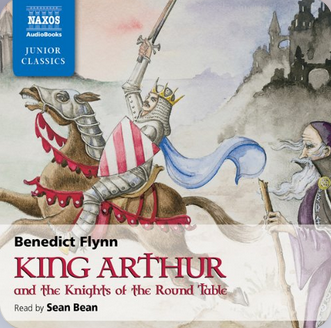
Flynn’s collection of Arthurian tales, unlike John Steinbeck’s, focuses largely on Arthur himself. We open with the imminent death of the King, Uther Pendragon, and the secreting of his son away for his safety. Arthur being a child of legend, eventually fate comes seeking him out in the form of an urgent need for a sword, and the appearance of the Sword in the Stone (not Excalibur — that was given by the Lady of the Lake, her arm clad in the purest shimmering samite). The Sword could only be pulled out by the True King of England, which gives Arthur’s adopted father a bit of a shock. From here we witness Arthur accept his duty and his creation of Camelot and the Round Table, as well as his marriage to Guinevere whom Merlin warns him against, sighing as he does because he knows perfectly well there’s no arguing with a young man in love. Sir Gwain (of Green Knight fame) and Lancelot are only members of the Table who receive significant attention, but Gwain is special because unlike Lancelot his stories are shared for their own merits, and not simply because he’s connected to Arthur’s tragic downfall. (For those who are distant from their Arthurian lore: an envious knight named Mordred uses Lancelot’s affair with Queen Guinevere to initiate civil war, leading to death all around.) While the stories are compelling in themselves, listening to Sean Bean read them is …. divine. Granted, some of my delight in his voice is association with the Sharpe character, but the Yorkshire is accent is probably my favorite local accent in England. Bean proves to be surprisingly versatile, and production-wise there are levels of “audio drama” to this despite Bean being the sole reader. The audio team added music in a few parts where it makes a difference, they amplify and distort his voice a bit for the Green Knight, and in scenes where Arthur is before the Lady of the Lake, Her Arm Clad in the Purest Shimmering Samite, a lovely soprano does vocals.
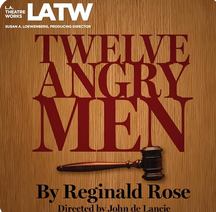
Next up, Twelve Angry Men. I found this in as ridiculous a way as you can imagine: I was checking to see if Homer Simpson’s voice actor, Dan Castellaneta, had ever contributed to an audiobook. As it happens, he has a role here, and what’s more — so do John de Lancie and Armin Shimmerman, Star Trek luminaries. Twelve Angry Men is a movie I’ve watched more times than I can count, though almost always the original version with Henry Fonda. If you’ve never seen it, it’s magnificent character drama. The premise is a courtroom story: a young man stands accused of killing his father, the evidence is piled up against him, and no one will care when he’s given the chair. Except for…Juror Number Eight, an architect who was appalled by how poorly the court-appointed defender served his client, and who struggles with questions that were never asked. When the jurors are polled, he stands alone voting for Not Guilty — not because he believes the boy is innocent, but because he believes when a life is on the line there should at least be a discussion. The men sitting around him all have their strengths, their weaknesses, and their prejudices — and all of them will come into play in the hours ahead. The foreman, who is saddled with responsibilities he never wanted, plugs along and invites the gentlemen of the jury to take turns voicing why they think there’s no reasonable doubt that the boy is guilty. This is not a story about simple facts, though, it’s a story about people — and the aforementioned strengths and weaknesses. As the discussion progresses, we see men change their minds because they were exposed to questions they hadn’t thought of before; some are revealed to be so bigoted or otherwise emotionally compromised that facts never entered into it for them. There are also emotional undercurrents that don’t directly affect the arguments, but do make for a more interesting human story — like juror number 6, who is antagonistic toward those who think the boy is innocent, but will not brook any disrespect for the elderly juror who is Eight’s first ally, urging him to speak his mind even if he disagrees. It’s a compelling survey of human emotion and personality and even though I’d just re-watched the movie just a few weeks prior, even though I know the dialogue and the twists and turns, I was still as caught up in it driving around yesterday as I was the first time I watched it. I was so wrapped up in it I didn’t even try to pick out Homer or Quaaaaaaaaaaaaaaaaaaaaaaaaaaark. The recording appears to have been done before a studio audience, which detracted a bit for me because they laugh like the wine bar was two for one. However, the recording also has a half-hour interview with the wife of the teleplay’s author, which shares details on the story’s evolution from play to silver-screen drama.


’12’ is a GREAT film. I was totally hooked the first time I saw it. No doubt it taught my childish ass quite a lot about scepticism and not following the crowd!
I rewatched the remake for the first time in 20+ years last night. Definitely prefer the original!
Twelve Angry Men is a movie that is SO outside of what I typically watch and yet I was shocked to find out how much I loved it when I watched it. It’s fantastic and forever relevant
I’m always interested in reading and learning more about Arthurian myths but SEAN BEAN narrating? I need to see if my library has this right now!