A Canticle for Leibowitz

 A Canticle for Leibowitz
© 1960 Water M. Miller
320 pages

A thousand years ago, nuclear war swept the Earth,  rendering to ashes the civilizations which inaugurated it.  In the southwestern desert, however,  there lies an outpost of another civilization – one far older. Just as an epoch earlier, when the monasteries of the Catholic Church preserved classical learning amid Gothic chaos, here the clerical orders dutifully safeguard what fragments of knowledge they can find.  Humanity is populated with genetic monsters and the landscape deadened by radiation, but in the monastery of the blessed Leibowitz there is hope. As the secular world begins to climb back to its feet, however, with new Charlemagne at the head, hope for a renaissance is mingled with anxious anticipation of what mankind will do to itself once it has recovered from the shock. Can we learn from our mistakes?

Maybe not, A Canticle for Leibowitz mournfully concludes. The story unfolds in three parts, appropriate for a novel in which the main characters are monks, and across several thousand years.  The first section is set a thousand years after the Deluge of Flame, wherein Earth was nearly sacrificed to its own bloodlust; this grim setting is made light traveling by a most inept adept – a young, bumbling monk who discovers the remains of a fallout shelter with scientific importance.  In the second section, humanity is in the midst of a rebirth, and in the third section, the wheel of destiny seems to turn again. Canticle grins skull-like even as its characters are in the midst of death.  A seemingly immortal and comic wanderer, having seen age past into age with his own eye, ties the stories together, plaguing but fascinating each sections’ characters, is a guide. Not that he narrates the story, nor ever sticks around for long, but he has seen enough of the human condition to know not to take it too seriously.

The Cold War era saw a variety of works written in obvious fear of what might happen if the bellicosity of the United States and the Soviet Union resulted in actual war: On the Beach, for instance, and Alas, BabylonCanticle is less concerned with immediate destruction, however, and more with how the human spirit may cope with it, what truths the disaster might bring to life. There’s an obvious exploration here of the tension between the culture-preserving aspects of religion, and the change-inducing inquiry of science, but I was impressed by how the monks sought to maintain dignity in everything they did, even in the face of despair.  One copies blueprints of a device from before the Flame, but pours hours – years, even – into adding lavish illustrative borders to it. The brothers fight against death;  death of the old culture and its knowledge and  the physical death of the survivors amid war and radiation poisoning. This makes them unpopular, because death sometimes seems like the easiest course of action. After the deluge, mobs killed scientists and other intellectuals for bringing down ruin on them; the monks survived this persecution only barely.  When civilization rebuilds and begins flirting with nuclear arms once more, leading to new outbreaks of radiation poisoning, some attempt to flee the pain by submitting themselves and their children to euthanasia camps. But the monks inveigh against this, urging the afflicted not to take their lives into their hands so cavalierly. Refuse to surrender to fear – live with dignity, trusting in God. It’s a diffcult message, of course, but ensures that the novel remains relevant and even thorny in our own era, even though the terrors of the Cold War are over.

The novel’s end is bittersweet, as mankind by and large repeats its mistakes. This is especially tragic given how long the humans of Canticle had lived with their ancestors’ mistakes: they were the ones living with greatly heightened levels of serious genetic disorders, and a landscape ruined in part by the ravages. They were the ones forced to claw their way back from the stone age after reaction against technology inflicted a ‘cultural revolution’ of sorts. Yet they persisted in straying near the edge yet again.  There are reasons to be optimistic, however;  at novel’s end, the church at least has realized a plan to prevent this from happening again, by sending out a colony mission. In our own lives, we survived decades of brinkmanship and incidents that could have turned deadly.. We’ll never truly learn from our mistakes, but when the consequences are as forboding as immediate and wholesale destruction, there at least we may hesitate enough to save our lives.

Related:
Nightfall and Foundation, in which knowledge is preserved by religious institutions, though in a less straightfoward manner.

 

Posted in Reviews, science fiction | Tagged , , , | 5 Comments

Surprised by Lewis

Earlier in the week I was reduced to laughing fits trying to read through C.S. Lewis’ account of his early life in “Surprised by Joy”. Somehow I knew what was coming and the anticipation made the ecstasy worse. 

[My father] relied wholly on his tongue as an instrument of domestic discipline. And here that fatal bent toward dramatization and rhetoric produced a pathetic yet comic result. When he opened his mouth to reprove us he no doubt intended a short well-chosen appeal to our common sense and conscience. But alas, he had been a public speaker long before he became a father. Words came to him and intoxicated him as they came. What actually happened was that a small boy who had walked on damp grass in his slippers or left the bathroom in a pickle found himself attacked with something like Cicero on Cataline, or Burke on Warren Hastings; simile piled on simile, rhetorical question on rhetorical question, the flash of an orator’s eye and the thundercloud of an orator’s brow, the gestures, the cadences, the pauses. […] While he spoke, he forgot not only the offense, but the capacities of his audience. All the resources of his immense vocabulary were poured forth. I can still remember such words as ‘abominable”, “sophisticated”, and “surreptitious”. You will not get the full flavor unless you know an angry Irishman’s energy in explosive consonants and the rich growl of his r’s.”

p. 22-23, Surprised by Joy, as collected in The Inspirational Writings of C.S. Lewis.
Posted in quotations | Tagged | 3 Comments

Coming Attractions

This week will see a clearing-of-the-decks as far as the American Revolution books go as I start reading a more diverse batch of books. A few weeks ago I acquired five books I’ve been waiting for over a year to purchase (one of my rules for controlling purchasing binges) and have already read two.  The others:

  • Philosophy for Life and Other Dangerous Situations
  • Happy Cities: Transforming Our Lives through Urban Design
  • and
  • The Moon is a Harsh Mistress, Bob Heinlein

Joining those will be some recent discoveries at my university library:

  • The Spice Route: A History, John Keay. This is to sample the author, who has short histories of India and China I’m interested in checking out.
  • The Great Cities, ed. John Julius Norwich (Author, A Short History of Byzantium)
  • Cod: A Biography, Mark KurlanskyFrom the author who brought us Salt! 
  • Christianity and Rabbinic Judaism, ed. Hershel Shanks
  • The Essential Writings of Mahatma Gandhi. I had intended on reading this after My Experiments with Truth. 
  • A Vanished World: Medieval Spain’s Golden Age of Enlightenment, Christopher Lowney
  • Pandora’s Lunchbox: How Processed Food Took Over the American Meal, Melanie Warner

I had planned on getting some science books, but I lost my list, and if I stayed in the library any longer I would have come home with a frightening pile.  I did buy Frozen Planet, though, so I’m still getting my science fix, albiet in narration by David Attenborough.   I’ll probably mix some novels in here as well.

Well, here’s to a summer spent hiding inside from the scorching heat and humidity with fascinating reads!

Posted in General | 1 Comment

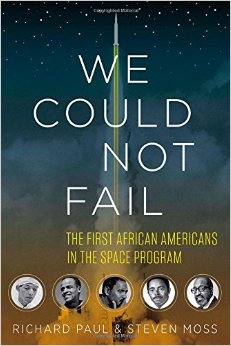
We Could Not Fail

We Could Not Fail: The First African-Americans in the Space Program
© 2015 Richard Paul, Steven Moss
312 pages

Between the murder of the Reverend Martin Luther King Jr, and both political and racial riots throughout the United States, 1968 was a tumultuous year for the American nation. It closed, however, with the glimpse of a hopeful future — a glimpse of the heavens, as three astronauts circled the Moon in low orbit in December. We Could Not Fail is a history of NASA’s connection with the Civil Rights movement, revealing how its vision of the future threw light upon the dark legacy of the Jim Crow past.  The history unfolds in a series of miniature biographies,  though only one actually approaches the astronaut program.  Most of the people involved worked as NASA technicians or within industries that supplied it.   NASA shared its history with the Civil Rights program,  and not simply because the movement’s most restive years coincided with the push for space, during the administrations of men who claimed (in JFK’s case) or devoutly cared about fulfilling the promise of the American dream. The space ideal of NASA didn’t just help inspire Americans, southerners included, to push beyond old limits — it also  provided the means for uplifting the south. Johnson,  a Texan himself, believed that the greatest hindrance to the south growing beyond segregation was its economic despondency.  Create regional prosperity in the south, he figured, and inequality and the institutions that supported it would evaporate away.  Because NASA was the most highly visible arm of the Federal government during this years, it had a special responsibility to effect more equal hiring practices.  Despite the pressure of the Kennedy brothers and Johnson, NASA struggled, more for want of material than ideas. Most engineers and support staff were recruited from the south itself, and segregated communities ceded ground only grudgingly to what NASA administrator James Webb wanted to do. One struggle, for instance, was reforming local housing politics, as discrimination kept black employees from relocating near NASA’s base of operations. Similarly, while there were black technical schools, NASA overlooked them: fortunately, men like Julius Montgomery,  a  black engineer, were advocating for the integration of places like Florida Tech.   We Could Not Fail documents well the struggle of LBJ and Webb  to make NASA’s promise a reality, through the lives of the would-be astronauts, activists, engineers, teachers, and other ordinary heroes who endured oppression with moral dignity, persevering until their value both as human beings and pioneers in a new age of exploration were recognized.

Posted in Reviews | Tagged , , | 3 Comments

I Am Forbidden

I Am Forbidden
© 2012 Anouk Markovits
302 pages

Darkness grips Eastern Europe in the 1940s as war devours millions and the hopes of generations. Jewish residents of Romania are especially hard-pressed; already viewing themselves as a people in exile, they are dispersed further afield as they flee persecution. I Am Forbidden follows the family of a Jewish scholar who rescues two orphans and raises them with his own children,  first in Paris and then in England. Sadly, not only war threatens their peace,  as two daughters growing up in an archly traditional sect of Judaism struggle to find their role within it. I Am Forbidden is a heartbreaking story of lives ruined by secrets and scrupulosity, of hardened hearts sinking any hopes for happiness.  In using  the coming-of-age of two friends (here sisters) to explore the tensions between Hasidim and modernity, I Am Forbidden is rather like The Chosen; but where the latter offered a hopeful conclusion,  this leaves the reader in despair.  There is interest here, of course, the insight given here about Hasidism — but the utter absence of mercy makes it an artfully written but distressingly sad tale.

Related:
The Chosen, Chaim Potok

Posted in historical fiction, Reviews | Tagged , , , , | Leave a comment

The Whiskey Rebels

The Whiskey Rebels
© 2008 David Liss
544 pages

“You have my word as a gentleman.”
“You are no gentleman!”
“Then you have my word as a scoundrel, which, I know, opens up a rather confusing paradox that I have neither the time nor inclination to disentangle.”

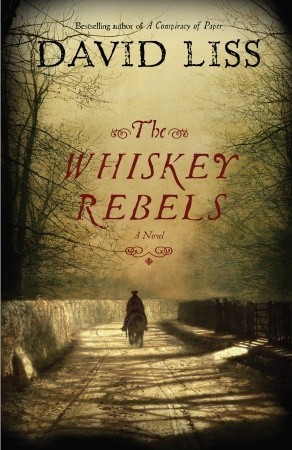
The Whiskey Rebels is a story of love, rage, and deceit set during the frontier days of the American republic. Two people, an amiable but disgraced spy and a border widow who was an aspiring author until she had to settle for instigating another revolution,  are drawn into collusion and conflict by a sinister scheme. Although the title brings to mind the Whiskey Rebellion of 1791,  David Liss’ first foray into American  historical fiction is not simultaneously his first war novel. Whiskey Rebels is instead a mystery-business thriller in the vein of The Coffee Trader and A Conspiracy of Paper: at its heart is a complicated banking scheme one must either be a financier or an author to cook up, centering on the nascent Bank of America.

Rebels is unusual in having a split narrative, as Joan Maycott and Ethan Saunders take turns in telling their own individual stories that will converge in time  amid frantic chases and gunfire. Joan is a young society woman who is too clever and audacious for her era; after she and her husband were tricked into forfeiting his backpay as a Continental soldier to take up farming on the frontier (wild west Pennsylvania),  their lives were destroyed by greedy speculators despite having turned lead into gold through the whiskey trade. Her plight, which is set several years before Saunders’, works forward to intersect with his back in Philadelphia, during the nation’s first financial crisis.  Saunders is introduced, tellingly, at a bar where he is about to fight over a woman. It is another woman who will get him into real trouble, though; his old fiance, who he left after he was accused of being a traitor. She’s married in the years since they parted ways, and now her husband is missing and her children’s lives are threatened. Would he be so kind as to help?

Saunders isn’t exactly a knight in shining armor, but he is the sentimental sort. He may dote on the bottle like it was mother’s milk and lie with the ease of breathing, but there is one woman he loves and one cause for which he will be utterly true: hers. Finding her wayward husband means attracting the attention of many nasty men who do not want a disgraced drunk roaming through their business, and who have a lot of money to lose if he doesn’t let sleeping dogs lie. Fortunately,  there are conspiracies within conspiracies here, and some parties see some use in steering Saunders to act in their interest to undermine the others. This is not a book for shoring up one’s faith in human nature, as all of the tale’s characters are busy lying to one another as they manipulate the others into doing their bidding, sometimes pursuing mutual goals. It’s a you-lie-to-me, I-lie-to-you game that ends up in stabbings, hangings, shootings, fires, and one grenade.  The temporal split works to the novel’s advantage, as the main plot is so exhaustively entangled that it takes five hundred pages for firearms and fisticuffs to break out.  The reader is allowed to work his way into the thick of things, given rest periods to read about Joan’s misfortunes in the wilderness — fire, Indian raids, and fighting violent revenuers.  Eventually her plight will drive her back to Philadelphia for revenge, only  now she’s no society woman whose idea of mischief is inviting men to take her on unsupervised walks. She’s been hardened by the west, determined to destroy a cabal and its government that has become an enemy of its people.

Hell has no fury as a woman scorned, but where is the road from the frontier to Philadelphia and Alexander Hamilton’s new bank?  The capital for said bank was to be raised with a heavy excise on whiskey, a tax heavy enough to drive frontier settlers who were just getting by into ruin.  That will drive Joan in part, but there are other factors and malfactors involved, and by and by wretched connections to Hamilton’s treasury department are discovered.  Liss handles the intersection of our two characters exceptionally well, as Joan appears as a dinner party attendee in Ethan’s story, becoming increasingly important in his own tale as well as hers.  Saunders and Joan will emerge to have a mutual enemy, but conflicting goals; while Saunder’s efforts put him in tense cahoots with Hamilton, attempting to prevent the government’s new financial plan from being wrecked, Joan sees Hamilton as the Archfiend himself.  The merge  makes the reader root for two people simultaneously who will act at cross purposes; here we have a novel whose most sympathetic characters are the other’s antagonist. Unfortunately after they meet the thicket of lies and confabulations becomes even denser. Mercifully, the jibber-jabber about stockjobbing and buying six-percents so the four-percents will float is tempered by an amiable and hilarious lead. Sure, the noble but charming rogue is something of a trope at this point, but even when he’s deep in his cups and acting heinously, the reader is beguiled into supporting him all the same.  The authorship itself is playful, the fourth wall threadbare — at one point Saunders apologizes to the reader for introducing so many women as the most beautiful in the world, but he can’t help it. He is astonished to run into so many femme fatales, himself — it’s not his fault!

Although parts of The Whiskey Rebels were strained,  it has immense appeal in having Hamilton as a side character, with Washington and Jefferson in bits parts as well. The other characters are a mix of historical and fictional, with the mutual enemy — the author of all this misery and drama — being a factual speculator. Rebel’s’ exhausting plot twists are eased with humor; it wasn’t the story I expected to read, but was well-done and entertaining all the same.

Related:
Alexander Hamilton, Rob Chernow
The Coffee Trader,  A Conspiracy of Paper; David Liss. Historical business thrillers involving speculation and beautiful women.  Hmm, I sense a pattern.

Posted in historical fiction, Reviews | Tagged , , , , | 3 Comments

Asimov and Nimoy read

Since 2007, Isaac Asimov has been my favorite author, possibly because his devotion to the full spectrum of human creativity and knowledge — science, history, language, name it and he’s written about it — is inspiring.  The retro feel of his SF and charming optimism about the future also help. Tonight I encountered a Boingboing article on facebook sharing clips of both Asimov and Leonard Nimoy reading one of the dear doctor’s favorite stories, “The Last Question”. 

Posted in General | Tagged | 5 Comments

Last Call

Last Call: the Rise and Fall of Prohibition 
© 2010 Daniel Okrent
480 pages

“Law and order should not ruin the lives of law-abidin’ people! Like that stupid law of Prohibition they had in the old days. Gangsters had to go out there and open up speakeasies, so’s  decent people could raise a glass.” – Archie Bunker

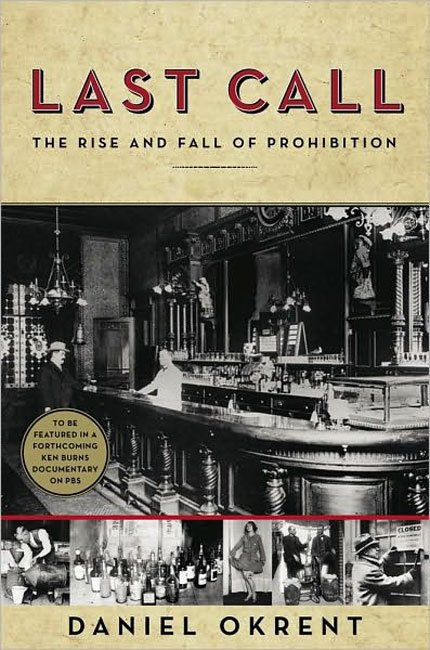
Prohibition ranks as one of the strangest and most romanticized periods in American history, a period of over a decade in which Americans earnestly sought to deny themselves a pleasure enjoyed by mankind since the first hints of agriculture: alcohol.  In Last  Call, author Daniel Okrent takes the reader back into time to find out how it happened, what it was like, and how it mercifully ended.  A history of Prohibition could easily descend into mythologizing about the Mafia, but this is an account with considerable more body than that. Indeed, Okrent  connects the rise  and execution of Prohibition to deeper political forces that make the general politics of the time more comprehensible. 

How on Earth did the American nation come to deny itself the pleasures of the bottle?  Excess didn’t help: prior to widespread sanitation systems, beer,  wine, and other kindred spirits were the safest source of water, and because they were also fun to drink, they were easily abused, and especially after distillation made chronic inebriation cheap. Various groups within the nation – worried wives, Progressive moralists, guardians of the family – all advocated for temperance, but attempts to convey this into political action were undermined by the fact that their associations tended to pick up other political causes as well, atrophying by distraction. When Prohibition passed as a Constitutional amendment, ratified by the majority of state congresses, it triumphed because of its skillful management at the hands of the Anti-Saloon League.  The ASL, hereafter referred to as the League, combined various groups into one coalition, focusing them all on one common goal and steadfastly ignoring any other social issue.
 Other social issues were at play, however.  The coalition included nativist groups like the KKK, for instance, which saw the increasing population of Jewish and Catholic immigrants from southern and Eastern Europe as a threat to both Protestant religion and the American way of life. The League, as its full name indicates, had an especial grievance against saloons, which were not merely watering holes but the nucleus of immigrant communities. 70% of saloons were owned by first-generation Americans, and their halls were host to political organizations that gave new citizens a stronger voice in the public arena.   Prohibition’s rise is even more interesting, however, connected as it was with both the women’s suffrage movement and a landmark step in the growth of the Federal government, the income tax-establishing 16th amendment.  The amount of female leadership within temperance and prohibition movements gave many suffragists their first experience in political organization and agitation, and the income tax amendment was a necessary first step for the war against booze. Without taxes on potable beverages, even the relatively small national government of the belle époque couldn’t fund its services. Soaking the rich, which politicized mobs liked the idea of, would provide enough revenue to only compensate for the decline in liquor taxation, but allow the government to reduce its tariffs to boot — a boon for the working man. Prohibition was thus a cocktail of political causes. 
The execution of Prohibition itself, of course, is a legendary failure.  Had the brewers and distillers realized that the League was a serious threat, they may have rallied to stop it. But what massive business could be seriously threatened by some locals running around in bedsheets, or a crowd of campaigning women?  Despite its passage, Prohibition trimmed off at most a third of the overall consumption of alcohol. Individuals were subverting the law from the moment it went on the books., moving alcohol into the states from outside by plane, train, automobile, and a flotilla of rum-running speedboats.  Consumer markets quickly created products that would allow people to produce homemade alcoholic beverages —  a kind of grape concentrate, for instance, that if were supplemented with yeast, sugar, and a few weeks of peaceful darkness, would turn into wine.  Beer kits were also available, and completely legal within the law.  The amendment depended on enforcement by the states, but making a law isn’t quite as easy as enforcing it.  The fact that so many people were willing to blow raspberries at the law made widespread investigation and arrests prohibitively expensive, and some states never bothered.  Those which did  were undermined by networks of corruption that kept police wallets and the speakeasies full. Even when corruption wasn’t a problem,  the amount of people being hauled into court was.  Rather than wasting an enormous amount of time plodding through a trial, judges simply levied fines – and the bootleggers absorbed them, just as they would a tax had alcohol been legal. They even managed to buy their cars and speedboats back if they had been seized by the state.  None of the presidents at the time were strict enforcers – Harding was wishy-washy, Coolidge had no interest in meddling in other people’s business, and Hoover was slow to spend money. By the time the Federal government did begin intervening, the new sanctions proved to be too much, too late.  Tipplers were outraged by the fact that the government had abruptly decided to take the issue seriously, and as the Great Depression loomed, popular support saw the wisdom in creating more jobs and generating more revenue by uncorking alcohol once again.
The Last Callfinishes as a superb history of the period; the author’s emphasis on political and social movements provides insight into the period in general, understanding that would have been missed had he simply dwelt gratuitously on the Mafia.  There’s a great deal to learn here, not only about the era but about the absurdity of the government attempting to manage people’s lives, including their spending habits.  Say what you will about the human race, we’re an adaptable species that knows the truth of “where there’s a will, there’s a way”.  
Related:

Posted in history, Reviews | Tagged , , , , , | 4 Comments

A Year of Living Prayerfully

A Year of Living Prayerfully
© 2015 Jared Brock
352 pages

Emotionally weary from his fight against human trafficking, Jared Brock and his wife sought refreshment in prayer. A yearlong traveling retreat would immerse them in the prayer traditions of Orthodox Judaism, Catholicism, Eastern Orthodoxy, and the Protestant sects. Although a passionate Christian for most of his life, Brock’s status as a thoroughly modern evangelical allows him to discover these traditions for the first time, and take lessons from them even as he retains his own convictions. Alternately reverent and cheeky, Brock is a comic but earnest guide to man’s intense desire to touch the divine.  For the devout Christian, his thoughtful analysis of what he gleans from this yearlong study will no doubt be fruitful;  for instance, the importance of “kingdom-minded prayer” in which the seeker prays not for God to simply rescue him or do something for him, but attempts to surrender himself before the will of God in his own life, to abide in the presence of God and act not for reasons of self-will, but out of genuine love for one another. There are some dodgy moments, though — Brock’s wife jumping into a cold pond au naturale after saying various Jewish prayers, because they wanted to experience the ritual baptism and surprisingly no Orthodox Jews were open to having some evangelical woman “playing temple”.  Brock purposely seeks out the bizarre — the Westboro cult, Christian nudists, people walks on coals —  and these are included more for entertainment value than anything else. The early parts of the book, however, in  which Brock visits Israel and walks a pilgrimage route in Spain, even meeting Pope Francis, offer far more substance, like Brock’s thoughtful dismay at the crass commercialization of Jerusalem.  The bizaare aspects make the work somewhat attractive to secular audiences, however.

Related:
And then There Were Nuns, Jane Christmas. One woman’s exploration of the contemplative life.
A Year of Living Biblically, A.J. Jacobs, of which this is a fairly transparent imitation

Posted in General | Tagged , , , , | Leave a comment

American Cicero

American Cicero: The Life of Charles Carroll
© 2010 Bradley Birzer
230 pages


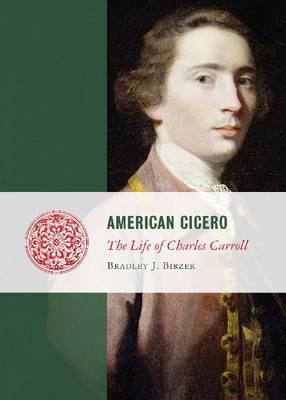
When Charles Carroll of Carrollton signed the Declaration of Independence, he was risking the biggest fortune on the American mainland.  But Carroll had yearned for independence for more than a decade before he put pen to paper, before strife ever disrupted the happy relationship between British America and Parliament.  Whatever the risk, if the cause was right Carroll could have taken no other course;  more than any other founder, he was steeped in the classical tradition and its traditions of civic virtue. When he died in 1832,  having outlived all the other founders, he was hailed as the Last of the Romans.   In  American Cicero, Bradley Birzer presents a study of his life, the tale of a Roman in a nation of would-be Jacobins.

Many of the founding generations were besotted with the classical world;   they studied the classics not as segregated and dusty literature to be discussed in clubs with other eccentrics, but as the fount of worldly knowledge. Metaphysics, politics, natural philosophy, and even farming wisdom were the gift of Greece and Rome to the American frontier, and a study of classical political constitutions would later inform the creation of the American bedrock.   Educated for fourteen years in England and France, Carroll was even more formed by the classics than his contemporaries, who all adopted Latin pen names whenever they wrote in public forums. He considered the ancients to be not only teachers, but friends – especially Cicero, whose Stoicism would undergird Carroll’s political philosophy.

Though he is little remembered today, Carroll’s early career was accomplished; after creating a reputation as a champion-patriot in  furious exchange of letters, he served as an emissary to Canada; later he attended the Second Constitutional Convention and signed both it and the Articles of Confederation; still later, when the Constitution supplanted the Articles, he was elected Maryland’s first Senator.  This was, Birzer writes, utterly appropriate given how much ink Carroll had spilled in the service of creating a genuine Republic, especially concerned with the role that  a Senate would play in maintaining an even keel amid populist furor.  If he is forgotten today,  it may owe to his  well-deserved reputation as a critic of mass democracy: like John Adams, he regarded pure democracy as dangerously unstable, a threat to the liberty of minorities and the right of property.

Carroll was especially conscious of the threat of mobs given his status as a Catholic in a predominately Protestant world.  In a list of the signers of the Declaration, Carroll is alone in his Roman devotion.  Despite Maryland’s birth as a safe haven for Catholics fleeing the persecution of the Reformation, the state was heavily settled by Protestants and actually became one of the most hostile to Catholicism. In this age, hostility toward a man’s religion didn’t mean calling him names. Seizing his land and setting him on fire were more likely. The despoiling of Catholics had happened in England, and could very well happen in America were the Rule of Law not enthroned.

Carroll feared the rage of a mob, and he had a great deal of property to lose – but he was a man who lived in hope.  His faith was more cosmopolitan than most, as he believed all those followed the moral laws of Jesus would see his face regardless of their doctrinal differences with the Church.   This universal stance was not sheer pragmatism on Carroll’s part, though he could not expect to live in peace with his neighbors, let alone play a part in the public sphere, were he antagonistic toward his Protestant brethren.   The Stoicism of Cicero also deeply informed Carroll’s beliefs, especially the belief that each man was imbued with a divine spark, a piece of the Cosmic logos,  and that this made every man and woman kin in a fundamental way, and opened the possibility of a universal republic.

A genuine Republic was possible only if people conducted themselves with virtue, however, obeying the laws of Nature and its God;   let passion reign, and the fruits of civilization will be felled under a barbarian storm.  Carroll’s staunch belief in the need for virtue predisposed him to favor administration by a relatively small group of men, chosen for the strength of their character and themselves limited by government that kept the inherent abuses of government to a minimum. (The choosing of an American president by Congressionally-appointed Electors reflected the value other founders saw in a moderated  national democracy.) He believed in genuine aristocracy, but not the arbitrary sort.    Men’s characters were to be judged by their submission  to law, both divine and civic. Before the law that bound the cosmos and the republic together, no man could stand superior.

 Like Marcus Aurelius, Carroll is an easier man to admire from afar than to enjoy having supper with. John Adams thought him a marvelous specimen of humanity, but Mr. Adams had a moral severity of his own. Contemporaries marveled at his intelligence and devotion to the Patriot cause, arguing as he did against the abuses of the king and Parliament with respect to the common law, but his long education and affluent upbringing seemed to deny him that charismatic common touch that so endeared the public to men like Jefferson, or later Lincoln. He was highly esteemed by his peers, and sometimes admired by the people, but when he passed away he was mostly remembered as a historical curiosity, the last living signer of the declaration. Like Dickinson, he helped to shape popular rage against taxes and government meddling into a respectable cause,  and is thus worth considering even if the cause took on a more incautious nature than either man cared for. 

Posted in Politics and Civic Interest, Reviews | Tagged , , , , , , , , , | 3 Comments