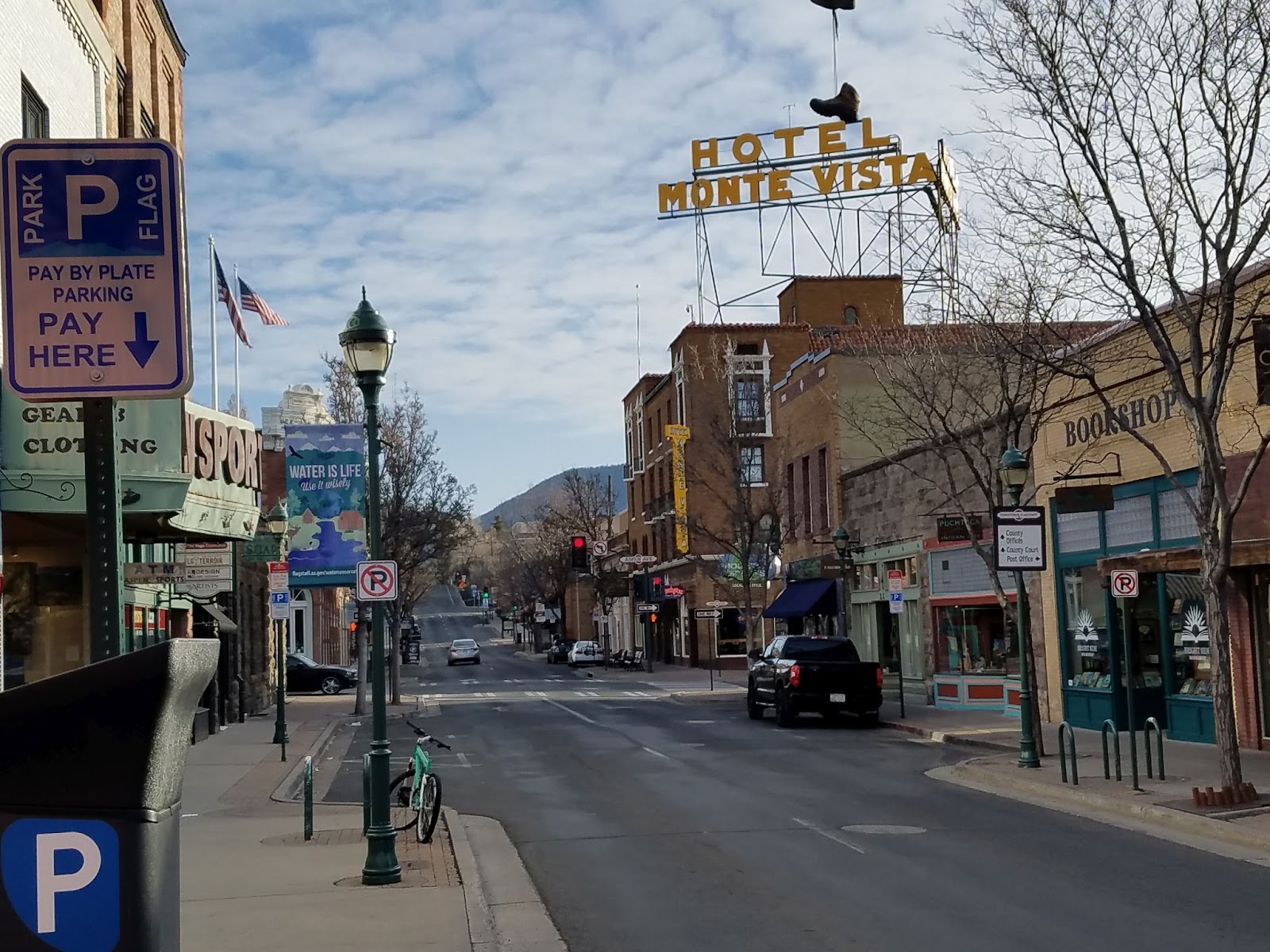
For my return to the Southwest I’d intended to land in Santa Fe, enjoy that beautiful city again, and then venture north toward Taos and the borderlands between the states of the ‘four corners’. Instead, however, in early October I was seized with the thought of going to the Grand Canyon — and when I realize I could stay in Flagstaff and use it to see several different areas of interest, I took the leap. Even beyond the natural attractions, the city itself is an incredibly pleasant place to spend time in. The city itself is not particularly old, founded in the late 19th century. It was known as a small logging town until DC destroyed the logging industry overnight. Since then, it’s focused on tourism and nurturing its university.

As soon as I landed I drove for the Canyon, but the next morning I decided to explore the town on foot. I only lived a third of a mile away, or 536 meters, so every visit to downtown Flagstaff but one was effected as a pedestrian. One of my favorite parts of living in Montevallo ten years ago was the ability to walk anywhere I needed to go, and Flagstaff brought that ease back. Because the city is so popular with tourists, virtually every block downtown is occupied by restaurants, shops, or other visitor-friendly establishments. I enjoyed a bike tour on Sunday morning, operated from the Flagstaff Sports Exchange, and was amazed at our ability to pedal along on the road without being run over. There were even bike lanes, and $1 rental bikes parked in various downtown locations. Capitalizing on the heavy amount of pedestrian traffic were street musicians, from indie kids on guitars to one very brave Frenchman playing an accordion and singing romantic songs of old Mexico. I tipped him instead of the indie kids in sheer admiration for his bravery. I think it’s legal to stone accordion-players in some towns.

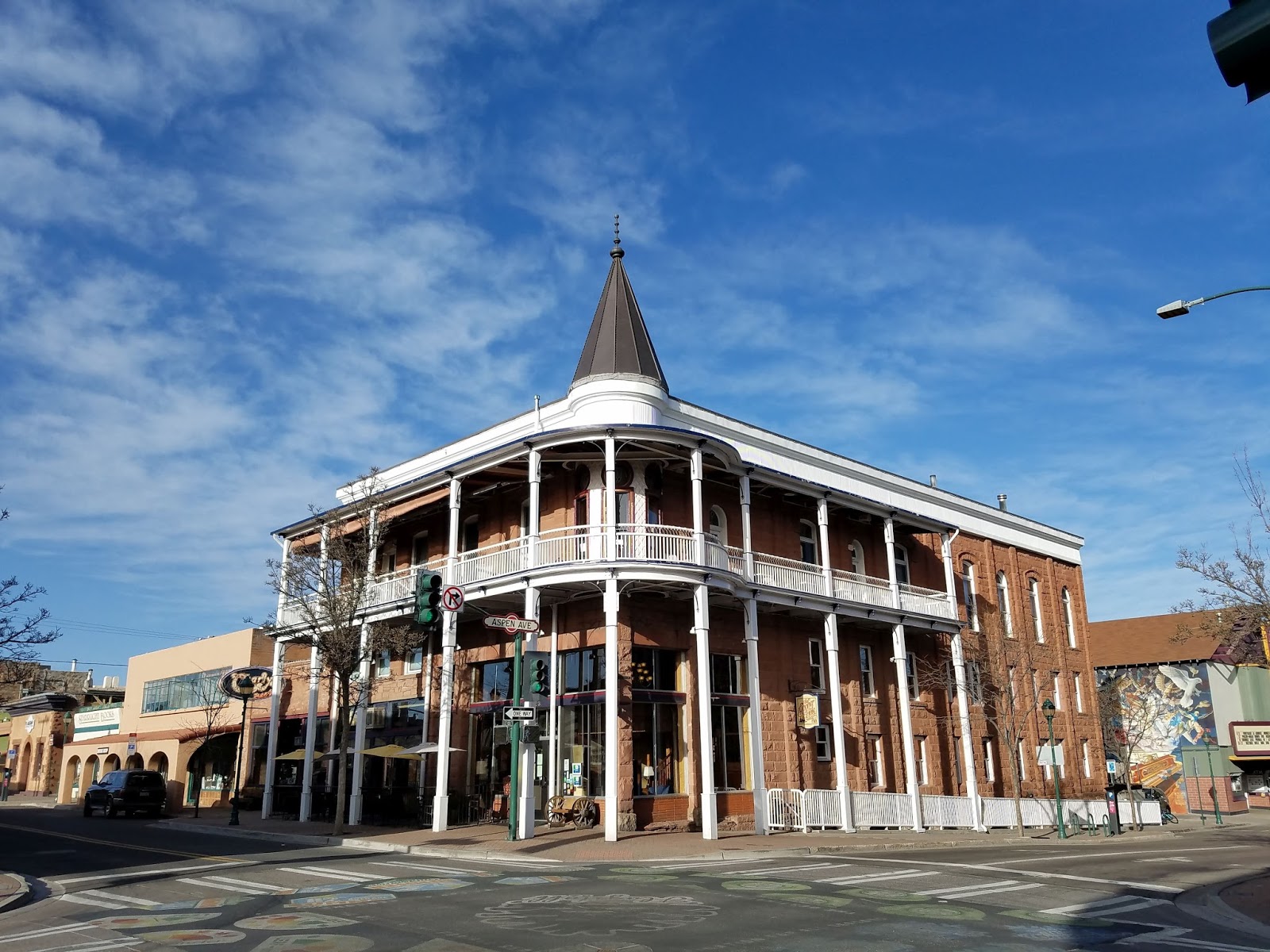
The Weatherford Hotel has a beautiful lobby and interior, and its decks were built partially from wood recovered from fires: my tour guide informed me that the city has nearly burned down several times in its history. Dry seasons and fierce winds are a combustible combination. The sidewalk outside was used for the filming of Forrest Gump, in the scene in which Forrest runs through a pile of dog doo and shrugs — “It happens” It has several bars inside, one of which serves a refreshing White Linen.
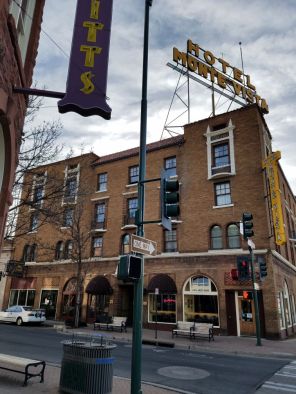
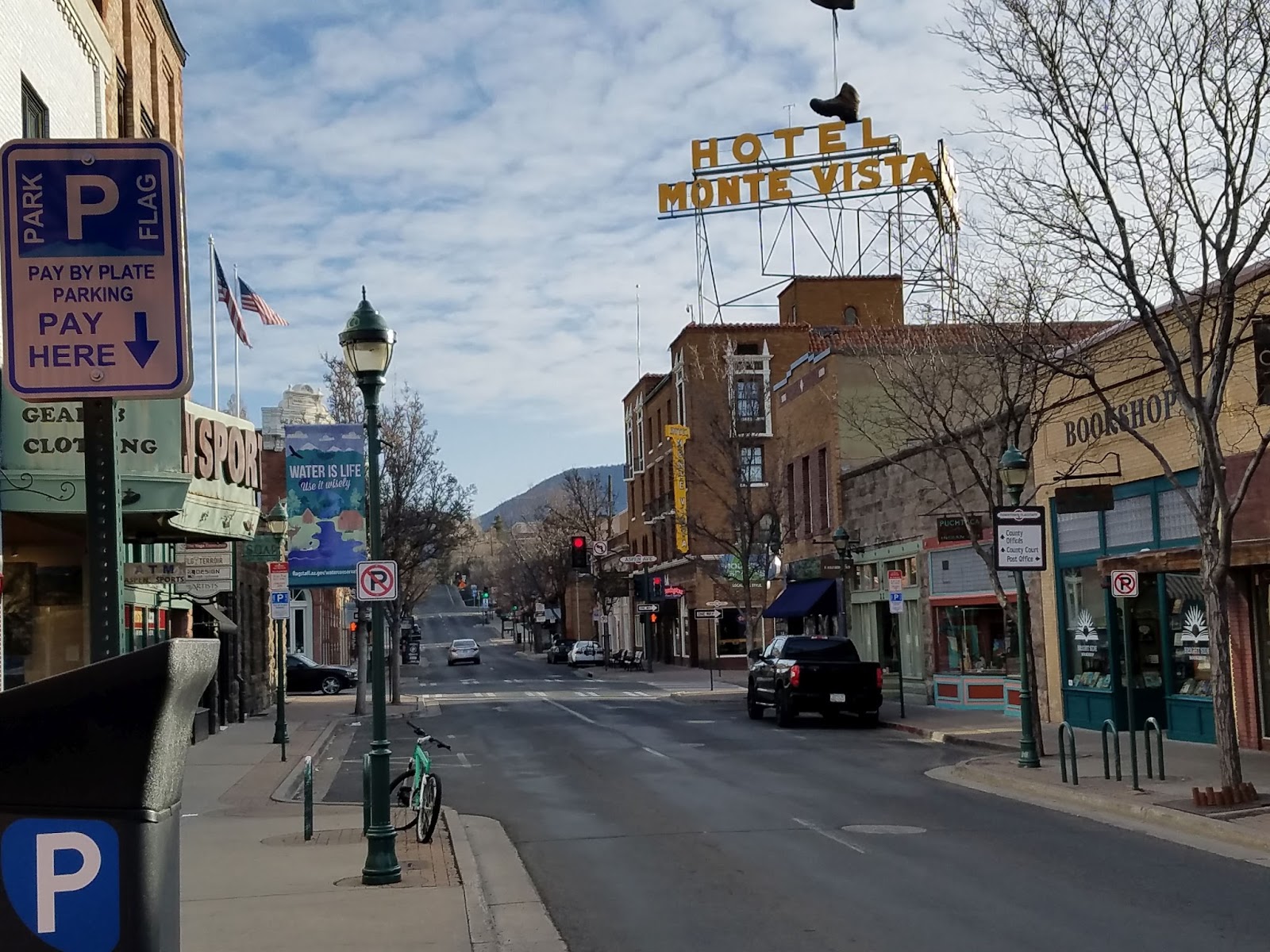
The Monte Vista was a regular haunt of mine, as it served coffee in the mornings and drinks in the afternoon. There’s another lounge in its basement, the town’s best dive bar according to a local I spoke with. On my bike tour I learned there’s an interesting ghost story on the top floor, about two prostitutes who were brought up to the room and then thrown to their deaths on the street below. According to local legend, there is now a presence in the room that disturbs men in their sleep — siting on their chest and smothering them — but leaves women to their rest. The sitting-on-the-chest-paralyzed thing comes up a lot in hauntings and has been dealt with by books like Why People Believe Weird Things by Michael Shermer, and perhaps Sagan’s Demon Haunted World. The Monte Vista has several other ghostly legends.
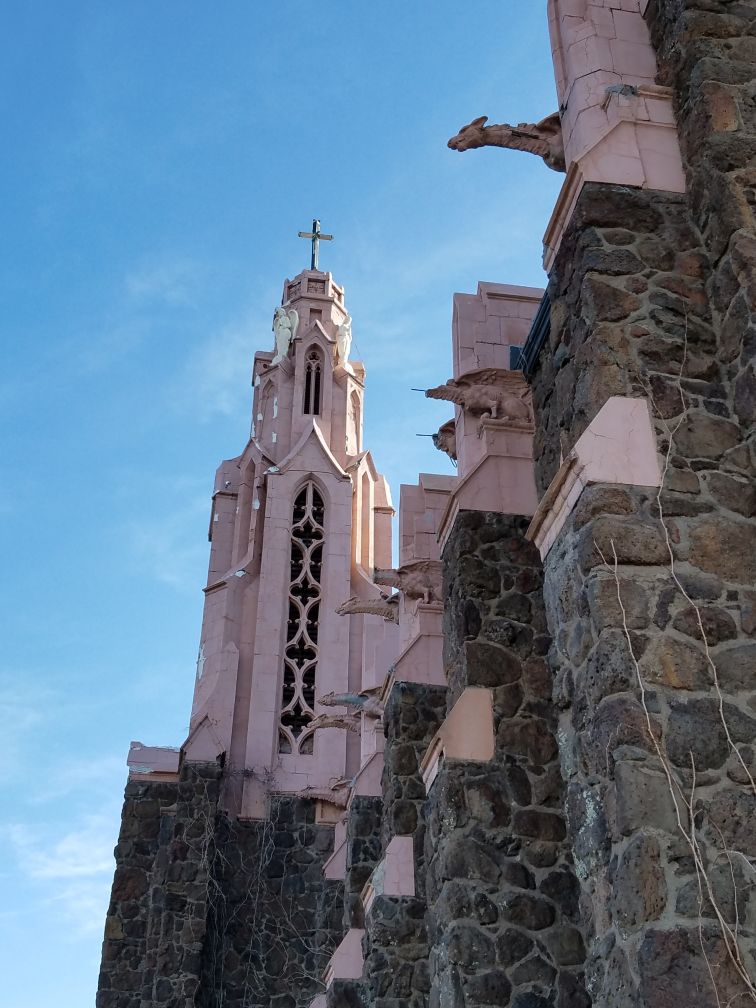
“Our Lady of the Nativity of the Blessed Lady”, which is a name that rolls of the tongue.
Dragon gargoyles! …and some headless dragons. St. George has been here.
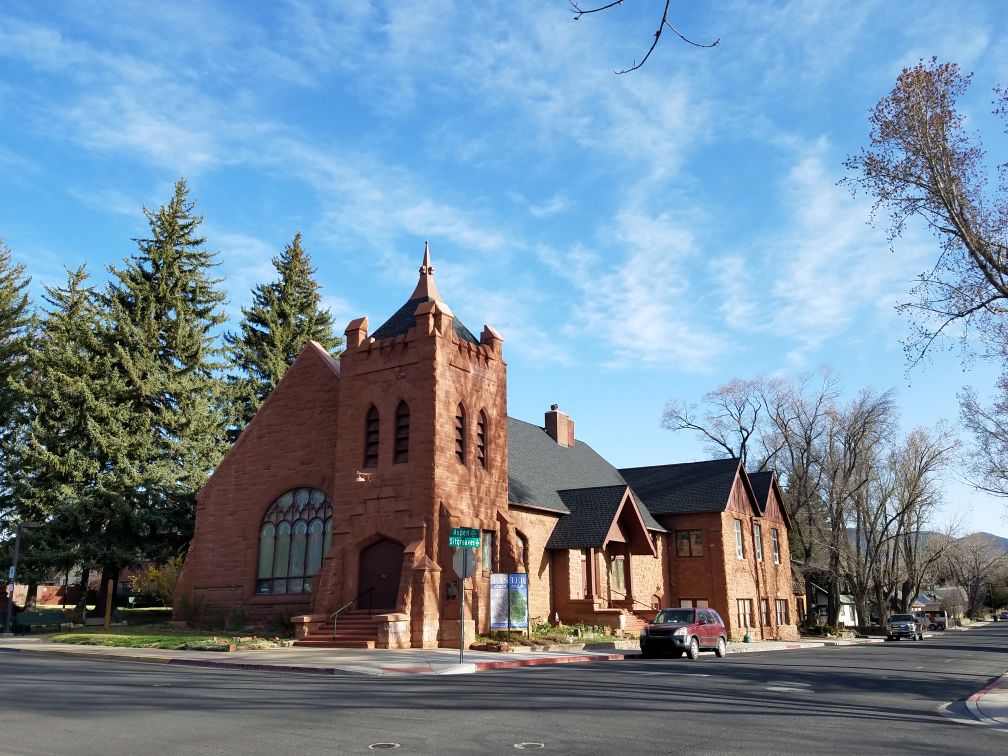
The building material of this church is moenkopi sandstone, unique to the Flagstaff region. Even modern buildings which use more widespread materials emulate the appearance of the moenkopi. The church is called the “Flagstaff Federated Community Church”, which…was surely a name chosen by a committee.
Flagstaff’s train station — still in service as an Amtrak station!!! — in the early morning. This building was constructed after international guests began arriving in Flagstaff to visit the Grand Canyon, and the much smaller depot was deemed an embarrassment to the United States by the president.
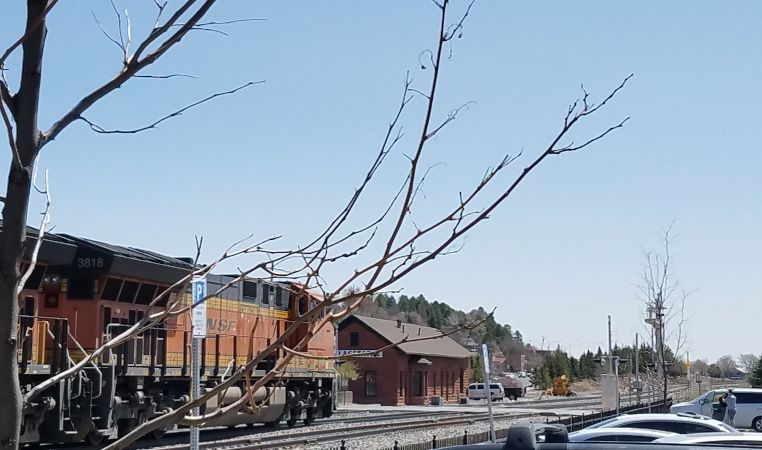
Aww, poor original depot. Passing it is one of the one hundred and sixty BNSF trains that roll through Flagstaff every day, mostly carrying shipping containers from Los Angeles.
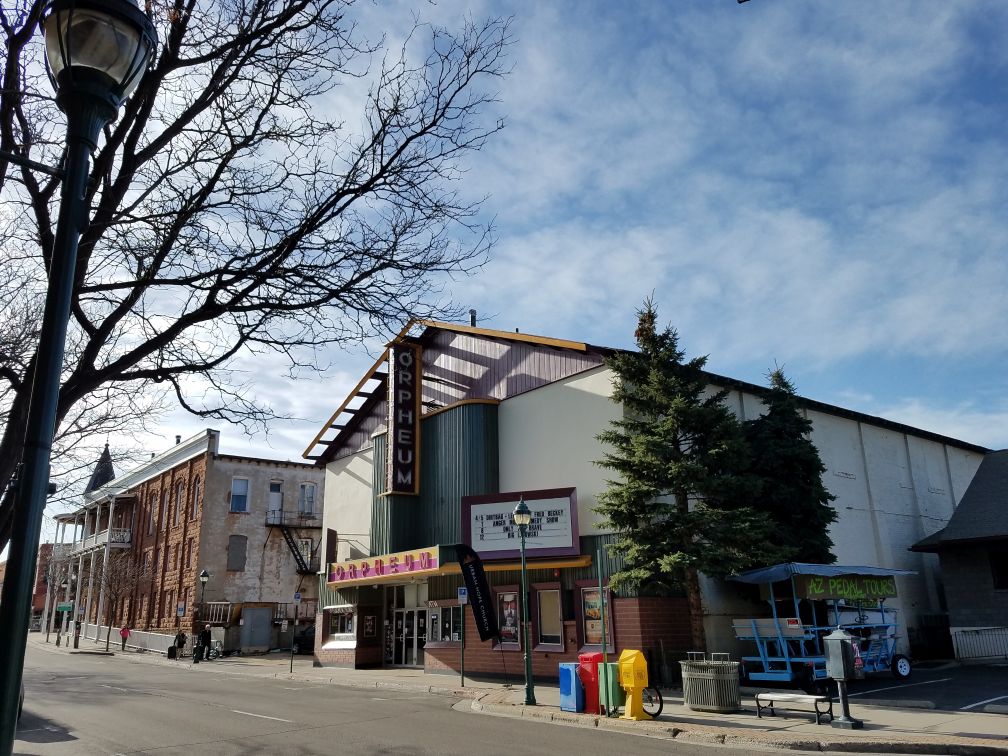
On the left: the Weatherford, followed by the Orpheum Theater. On the right but out of frame is the Sports Exchange, which hosts the bike tour. The Orpheum hosted a Big Lebowski night on Thursday.
One of the original buildings of Northern Arizona University, built with the regional sandstone. According my guide, the town fathers wanted to establish a university early on, but the territorial authorities scotched the plan. Flagstaff built a campus anyway, called it an asylum, and later changed it to a university. That’s the spirit!
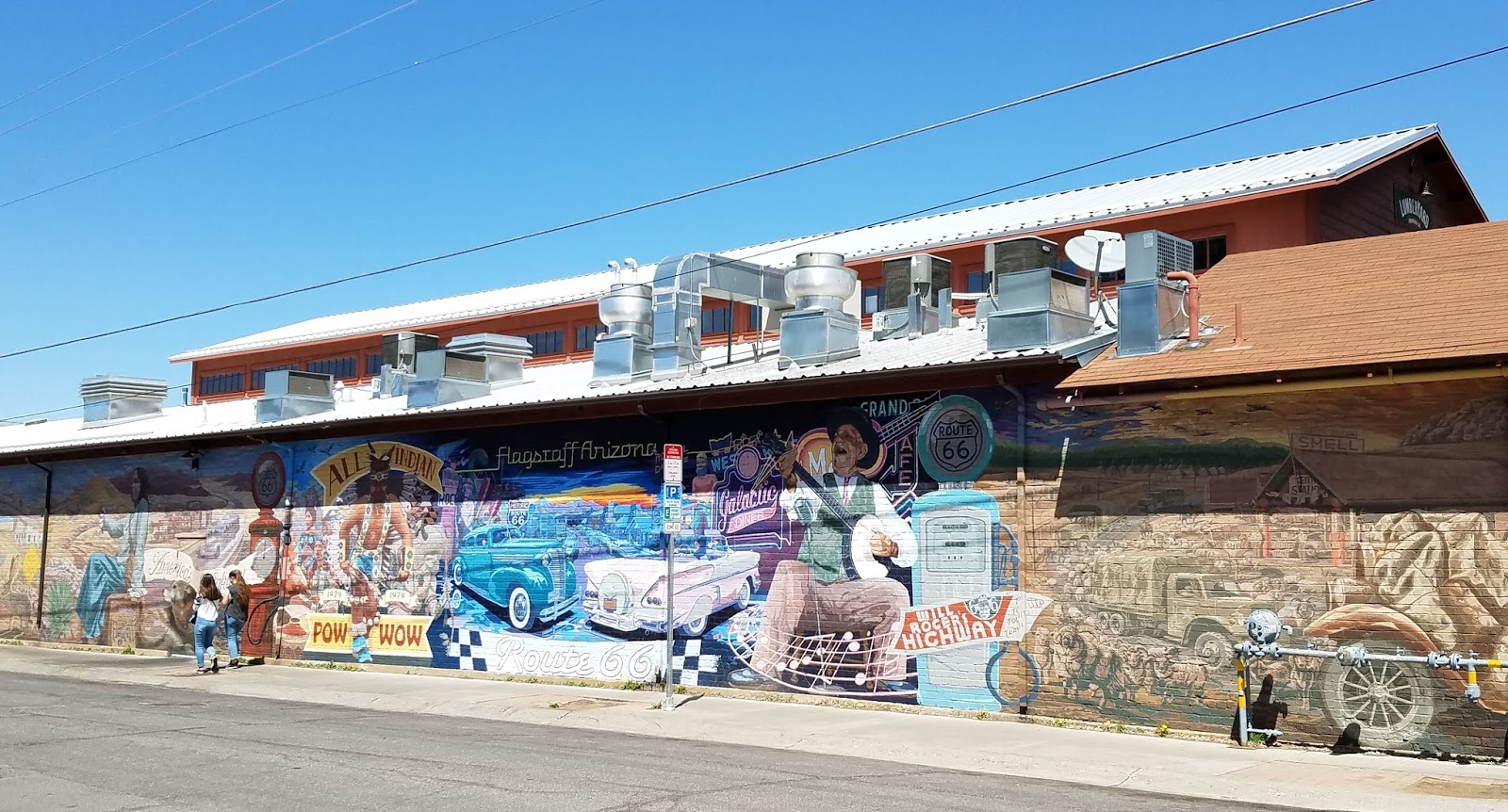
Mural depicting Flagstaff’s history
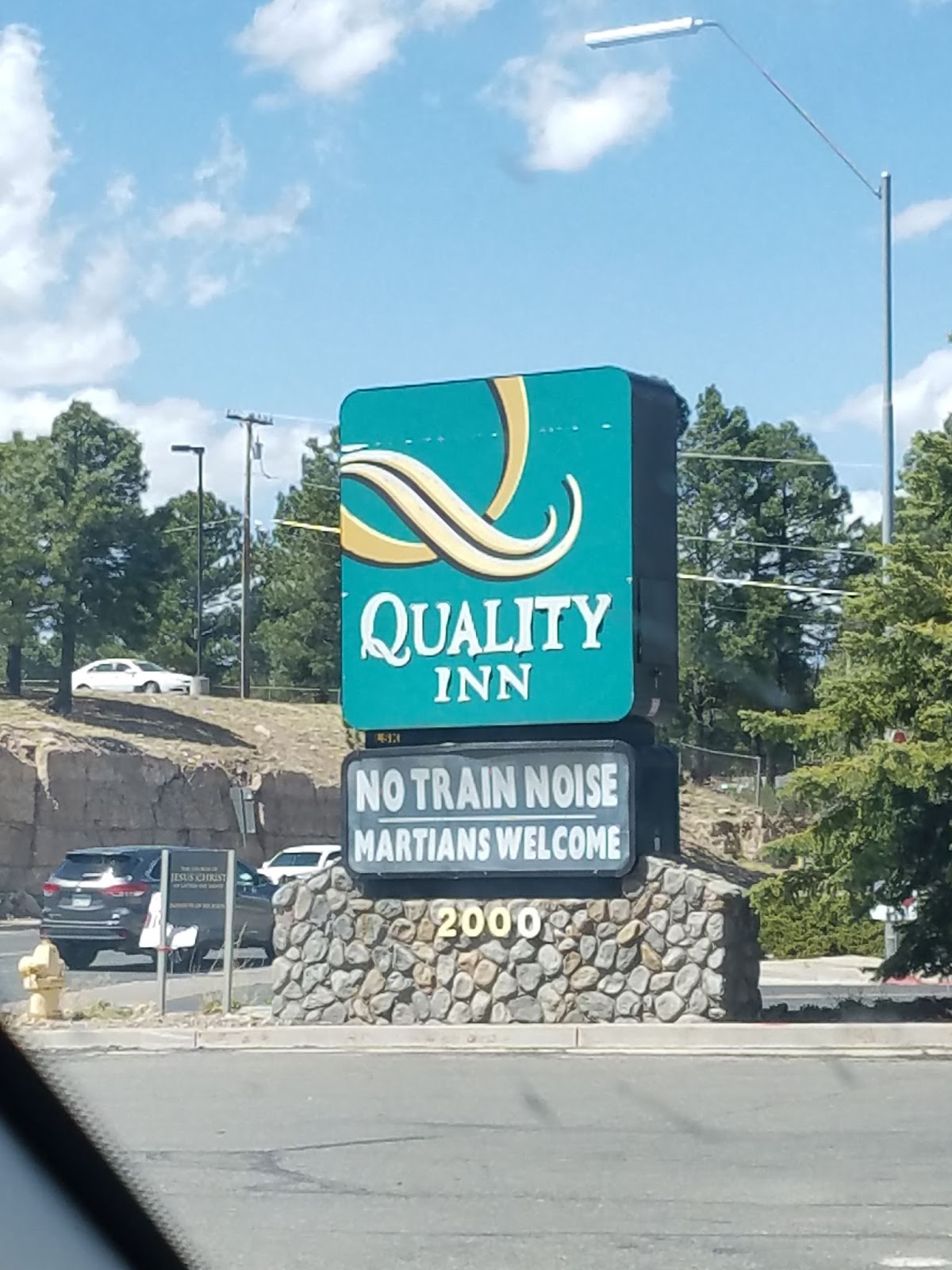
You can be a Martian, just don’t make train noise.
Overlooking the town is Mars Hill, so named because the City of Flagstaff offered the hill to a wealthy mathematician-turned-diplomat who wanted to establish an observatory to study Mars. The observatory will have its own post later today.