Tyrannosaur Canyon

Tyrannosaur Canyon
© 2006 Douglas Preston
416 pages

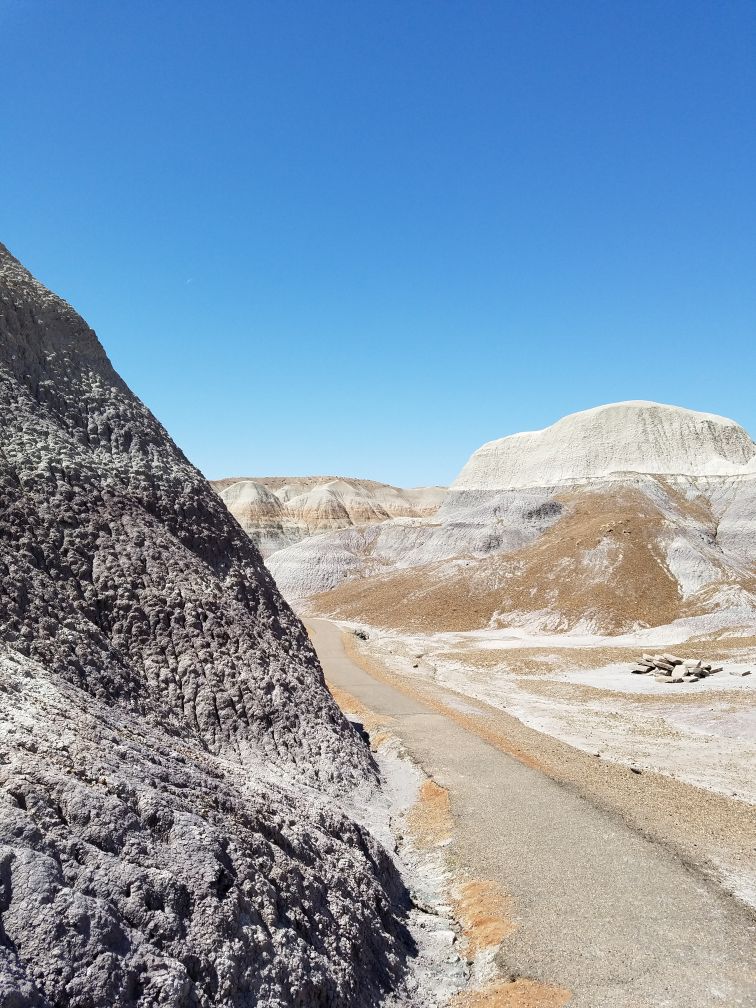
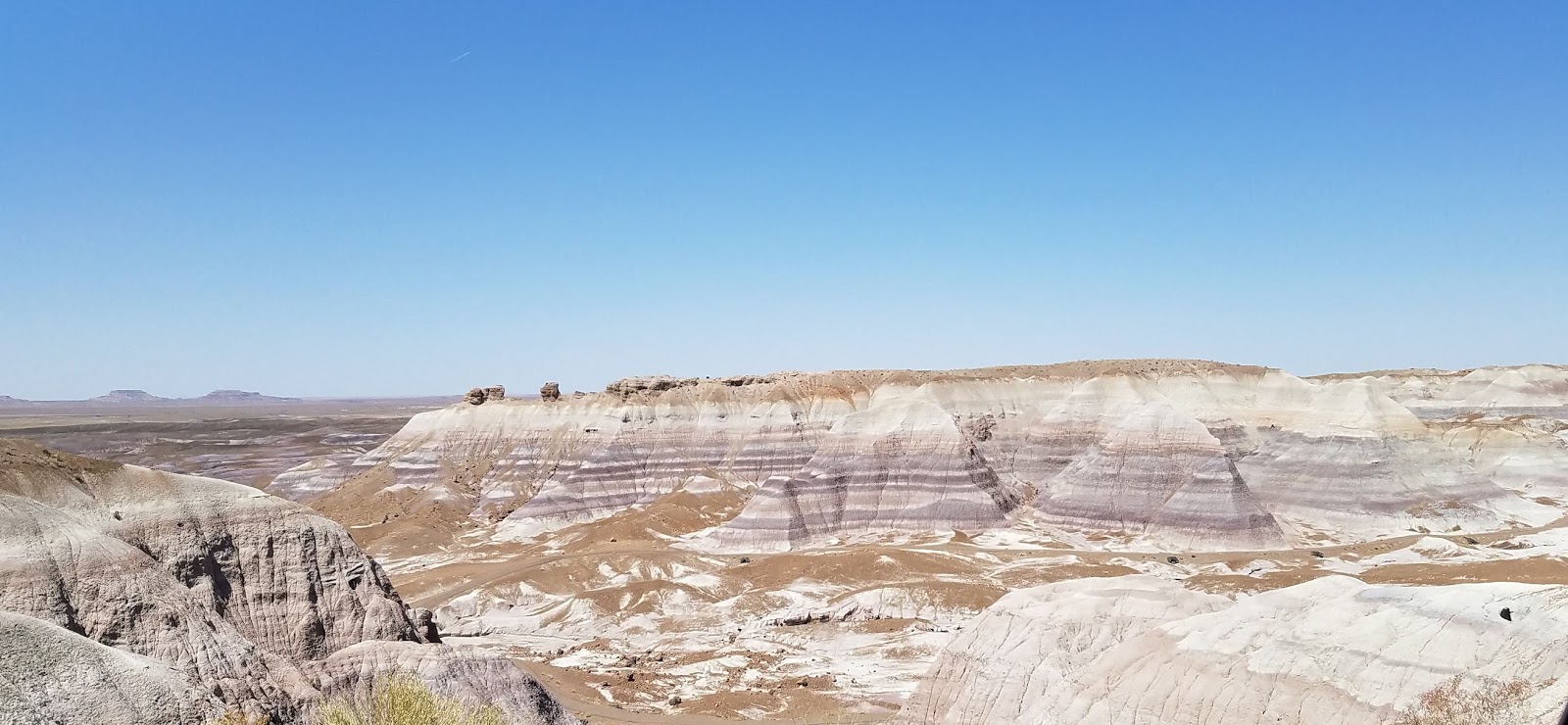
What do a ‘misplaced’ lunar sample and a fossil hunter shot dead in the high mesas of New Mexico have in common?  Their shared secret is one that would answer one of humanity’s oldest questions…and threaten our extinction. Preston, who has traveled Arizona and New Mexico extensively on horseback, puts his intimacy with the landscape of the Four Corners to use here, leading readers through ancient and winding canyons, perfect for ambushes and plot twists.

For the most part, Tyrannosaur Canyon seems like a straightforward murder mystery, made perfectly interesting by its setting of paleontological intrigue. Before going the way of the dinosaurs, the slain fossil hunter conveys a message to a local, swearing him to secrecy and begging him to get a notebook of mysterious numbers to his daughter, Robbie.  The notebook is coveted by the murderer and the man who hired him, and eventually by a retired CIA spook turned Benedictine novitiate, but when a mysterious organization armed with Predator drones surfaces, everyone realizes they’re in over their heads.  At stake is not a lusted-for paleontological prize,  but something more dangerous — so dangerous that it merits a black-ops detachment known only by a number to monitor and contain it.

Tyrannosaur Canyon found a happy audience in me for various reasons;  its main character, who values his word more than his fear;  the setting of New Mexico;  the supporting character whose contribution was her scientific work, which was shown to the reader and not merely declared;  and of course, the dinosaur angle.  Science and mystery give way to action scenes halfway through, but there are four unfolding simultaneously, involving all the characters.  Prolonged peril loses its point, but on the whole I enjoyed this first encounter with Preston’s fiction.

Note:  reading this and Dragon Teeth side by side was an accident. I started this one first, then a long-forgotten hold for Crichton’s came in on Friday, with a short-term loan. Worked out well, though..

Related:
The Monkey Wrench Gang, also involving long chases in slot canyons.

Posted in Reviews, science fiction | Tagged , , , , | 8 Comments

Dragon’s Teeth

Dragon’s Teeth
 © 2017 Michael Crichton
288 pages

Scientific discovery isn’t always a gentlemanly affair.  Dragon’s Teeth, published by the estate of Michael Crichton in his name, inserts a fictional character into the real-life feud of two paleontologists who went to such lengths to undermine the other that their rivalry was given the name “Bone Wars” and documented in books like Great Feuds in Science.    William Johnson, our main character, is an unwitting participant in the Bone Wars who signs up with Professor Marsh of Yale on a bet; he will join Marsh’s summer expedition out west or forfeit $1000, no small sum in 1876.   Suspected of being a spy for Marsh’s nemesis, Edward Cope,  Johnson is abandoned in Wyoming and forced to throw in with the man he’d been told to despise and fear.  That summer would see him help discover the first evidence of a “Brontosaurus”, and later attempt to get the bones back to civilization despite being on the front lines of the Indian wars, with nearby towns like Deadwood scarcely more safe.  Although Dragon Teeth is not a typical Crichton novel,  it is a western adventure with a science twist.  The emphasis is on western adventure, however; Wyatt Earp is an important character in the second half of the book, and the story overall is one of a soft ‘down-Easterner’ learning how to be a man — a real man, a man of the west whose hands are hard with work, aiding a mind quick enough to outwit gunslingers, avaricious treasure hunters, and lying dames.  Not your typical Crichton, but it’s a fun combination of cowboys and dinosaurs.

Posted in historical fiction, Reviews, science fiction | Tagged , , , , , | 2 Comments

Gates of Rome

I rarely give up on a book, but for this one I could never muster more than marginal enthusiasm. I’ve been watching Rome on Amazon Prime, and  contemplating Caesar’s The Conquest of Gaul, so a novel about the formation of young Caesar seemed like a perfect fit. Unfortunately, this has much historical grounding in Rome as Star Trek‘s “Bread and Circuses”. Perhaps a better Trek allusion would be to “Spectre of the Gun”:  Rome is the idea in the background, not the reality. Caesar is unrecognizable in the young boy Gaius, and his future assassin Brutus is even more implausibly depicted as an orphan raised by the Julian clan as a psuedo-brother to Caesar. That would make the assassination more poignant, but only if one could care about the plot enough to get that far into the series.  After losing his father in a slave revolt, young Gaius arrives in Rome to find it torn between  two men, Marius and Sulla, and in this age political debates involve armed gangs and mass arson.  But between the YA-esque writing and the lack of real historical substance, I stopped caring.  With a cry of “Speak, hands, for me!”, I closed the book halfway through.

I’ve also stopped watching Rome halfway into season 2 because it’s utterly depressing.  The majority of the characters are horrible people, and even the few who are are not depraved are not admirable.  The straw that broke the camel’s back, for me, was when a servant decided to induce an abortion in her mistress by slipping something into her tea, to get revenge.  I can take people being stabbed easily enough, but that sort of inhumane calculation is another monster altogether. I only continued watching Downton Abbey because a maid who did something very similar was immediately sacked. I could never have watched that show if she continued to be a presence on it.

Posted in historical fiction, Reviews | Tagged , | 6 Comments

A human is a messy receipe

“There is an important distinction between a blueprint and a recipe. A blueprint is a detailed, point-for-point specification of some end product like a house or a car. One diagnostic feature of a blueprint is that it is reversible. Give an engineer a car and he can reconstruct its blueprint. But offer to a chef a rival’s pièce de résistance to taste and he will fail to reconstruct the recipe. There is a one-to-one mapping between components of a blueprint and components of the end product.  This bit of  the car corresponds to this bit of the blueprint. There is no such one to one mapping in the case of a recipe. You can’t isolate a particular blob of souffle and seek one word of the recipe that ‘determines’ that blob. All the words of the recipe, taken together with all the ingredients ,combine to form the whole souffle. Genes, in different aspects of their behaviour, are sometimes like blueprints and sometimes like recipes.”

From A Devil’s Chaplain, Richard Dawkins

This quotation leapt out at me because I can still remember the moment, years ago, when I really realized how dynamic human beings were. I was reading something in biology or genetics, and before I’d understood genes kind of like Lego blocks:  this gene makes that part of you, that gene makes that part of you.  But I  realized suddenly  that the genes were just chemical components, and that they could react with the chemistry of their environment — so two identical eggs might develop slightly differently if they were given to two different mothers, because the mothers’ chemistry would be different. They would release different kinds and different levels of hormones depending on their own genes, and their diet (among other things).  And when we became adults, I realized further, we were still continuing to be made, our brains constantly reforming based on experience.   That was before I started reading about the life of microbacteria inside us, and how they are engaged in constant love and war with “our” cells, and how these colonies can change drastically depending on what are eating.

Posted in quotations, science | Tagged , | 5 Comments

Romans Without Laurels

Romans Without Laurels
© 1962  Indro Montanelli
352 pages

In Romans Without Laurels, Indro Montanelli delivers an affectionate history of the Roman Republic and the empire which followed. Although a work in translation, it succeeds wonderfully as narrative history, reminding and entertaining the reader with stories from Rome’s rise and fall. The author declares at the beginning that his intention was to deliver a history of the Romans as people, warts and all, avoiding the temptation to put them on a pedestal. Their own historians depicted themselves as hysterically flawed at times; why should we not do the same? Politics is the main course here, of course, but Montanelli is never far from working in literature or economics. He works these in rather cleverly, too: after the chronological history arrives at the eruption of Pompeii, he pauses to write about daily life for ordinary Italians — their work, their habits, their passions. Similarly, when Rome is transitioning, he pauses to reflect on the evolving culture, as Rome passed from dicipline to decadence. Montaelli is a laudably fair author, one who can’t bring himself to demonize anyone — not even Nero or Caligula. He reflects sadly on their few virtues before recounting the ludricrous and obscene antics of both. Montanelli even appreciates the pre-republican kings of Rome, who (aside from the infamous Tarquins) had the same essential powers as Roman consuls. As he is operating from the original Roman histories, some stories are passed to the reader verbatim — including the rumor that Caligula made his horse consul. He does offer caution from time to time, however, reminding the reader that Roman historians had their biases just as modern writers do.

For a narrative history of Rome, this is hard to find but enjoyable reading for popular audiences. The popularity of Mary Beard’s SQPR indicates that Rome continues to fascinate us, and this has the additional attraction of having been written by an Italian.

Related:
Rubicon, Tom Holland

Posted in history, Reviews | Tagged , , , , | 4 Comments

State of Fear

State of Fear
© 2004 Michael Chrichton
672 pages

I stumbled upon State of Fear via Rousseau, oddly enough. Wikiquote’s page on Rousseau included an excerpt from a Michael Crichton article rebuking Rousseau’s “noble savage” myth. The article in question scrutinized political environmentalism, and after reading it I decided to give State of Fear a try. In the article, Crichton drew the same parallel between environmentalism and cultural christianity that I personally observed about peak oil scenarios after I encountered Jim Kunstler*. Crichton‘s work is more cultural criticism than novel, however, given that his introduction effectively spoils the plot: the reader knows in advance that nothing at all is going to happen aside from a few deaths on the far side of the world. The real reason to read the novel is to understand what Crichton means by a ‘state of fear’, and how politics is involved.

The plot in question is fairly simple: an environmental group is preparing the launch of a major initiative, and as part of the campaign they want to engineer a few natural disasters that will unfold within the same week. Their major political donor catches wind that something odd is going on, and in the midst of pulling their funding he seems to commit suicide. A few good guys stumble upon the plot, midway through the Crichton Lecture arrives, and then the novel wraps up just as the introduction indicated it would. I didn’t care about any of the characters, and poked along entirely for the author arguments.

The Crichton Lecture is part of any Crichton novel, and usually apprises the reader on the limits of knowledge and the arrogance of power. Here, it speculates that since the end of the Cold War, the powers that be (a political-legal complex supplanting the military-industrial complex) have sought to maintain the same level of constant dread among the American populace through one bogey or another, and at present the imminent collapse of the environment is their favorite. It has proved to have multiple heads; looming extinctions, natural disasters, and resource depletion are but a few. As is usual for a Crichton novel, he presents readers with the same information that the characters are faced with: in this case, graphs. Crichton does not dispute the growing rise of carbon dioxide, or that humans are responsible; what he disputes is that there has been a global increase in temperatures as a result. Crichton mainly uses a series of graphs that indicates that temperatures in North America have been more constant that not, and a series of city heat records that calls the “main” graph, the one showing correlated heat and CO2 rises, into question. He argues, via one of the characters, that the data used in the main graph indicating rising temperatures is based on flawed data. How seriously can we data produced in China during its decades of turmoil, for instance? Other arguments, like that the weakening of Antarctic ice is localized to one peninsula and that Antarctica as a whole has been gaining ice — after several thousand years of losing it — are also included.

Frankly, this isn’t an argument I care to wade in to.  My environmental sensibilities are rooted in immediate stewardship, not far-off dangers —  in taking care of what is given to us. This means cleaning up after ourselves and not being wasteful; my own interests in humane urbanism and fiscal sustainability promote “environmental” measures.  That said, my  experience with doom forecasters like Kunstler, and my regular reading of  environmental writers like Wendell Berry and Edward Abbey (who have criticized DC‘s mismanagement of land) has induced a heavy amount of skepticism about the efficacy of politically-motivated technocratic intervention However, the bulk of Crichton’s argument was based on that large graph, and not on anything like ice core studies. Since reading the book I’ve been googling about reading articles about particular claims, and the flicker of interest has been squashed down again by the name-calling. I think I will just keep cleaning up after myself. If the oceans rise and we are replaced by dolphins, well — it’s not that much of a loss.

*To quote from my 2008 “Response”, written shortly after listening to Kunstler at my university:

It’s a secular doomsday scenario. While religious scenarios see society destroyed by the corruption of sin, followed by the restoration of proper living and morality, this scenario sees society undermined by a dependence on “free energy” and a return to “simpler” living, to ‘sustainability’. 

Posted in Reviews, science fiction | Tagged , | 5 Comments

Columbus was a lucky devil

The great American eclipse has come and passed, and in my neck of the woods it was scarcely noticable. According to a website, we were to have achieved 88% obscurity, which sounded like “dusk” to me. The only noticable effect was a tint to the light — not necessarily even a dimming, just a tint as if part of the light was being filtered out.

This image from Wikipedia is of a bookstore doing science outreach using interest in the eclipse. We tried to do the same at the library. Unfortunately, I couldn’t use Storms from the Sun, it being checked out. That volume came to mind because in it, the author recounts the story of Columbus being accosted by the people of Hispanolia, who were tired of feeding him. He threatened to take away the sun, knowing an eclipse was expected within days, and used the eclipse to continue their support.  I say he was a lucky devil because being at the right latitude is particularly important:  although we were only 200~ miles away from totality, we experienced virtually nothing. Had the sun merely dimmed for Columbus as he did here, he would have never returned. But of course, Fortuna smiled on him in general — how else to explain his stumbling upon new continents when he had so badly misjudged the size of the Earth?

Posted in General | 5 Comments

Ten Biographies of Interest

I was asked to create a bookmark or brochure of biographies to promote that section at the library. I used Goodreads and selected ten books which we have,  adjusting a bit to include more women.  The blurbs borrow slightly from the official descriptions.  I’ve read a couple of these and a few more are definite possibilities — particularly Wild Swans.   Hidden Figures would dovetail nicely with We Could Not Fail.

1. Steve Jobs, Walter Isaacson
The man behind the Apple II, the Ipad, and the Iphone – “The Innovator of His Generation”

2.  Hidden Figures: The American Dream and the Untold Story of the Black Women Mathematicians Who Helped Win the Space Race, Margot Lee Shetterly

3.  Marie-Antoinette, Antonia Frasier
France’s iconic queen, wrongly reviled, commanded by fate to feature in one of Europe’s most dramatic moments

4.  Alexander Hamilton, Rob Chernow
The story of a self-taught orphan from the Caribbean who rose to become the Treasury Secretary of the United States.

5. Wild Swans, Jung Chang.
The lives of three women tell the story of China’s tortuous path into the 20th century, as they lived through warlords and revolution

6. Catherine the Great, Robert Massie
The tale of a princess who went to Russia at age 14 and became one of the most powerful women in history

7.The Immortal Life of Henrietta Lacks, Rebecca Skloot
The story of a young farmwoman who unknowingly became a contributor to science throughout the 20th century, as her long-lived cells were used to combat viruses and cancer long after her death.

8. Theodore Rex, Edmond Morris
Highly-regarded treatment of a larger-than-life president famed for his energy, a man who insisted on delivering a speech even after being shot in the chest

9. John Adams, David McCullough
History on a grand scale about a colossus of independence

10. The Soul of a Butterfly, Muhammad Ali
The autobiography of the famed boxer.

Posted in General | Tagged | 3 Comments

The Art of Deception

The Art of Deception: Controlling the Human Element of Security
© 2005 Kevin Mitnick
352 pages

The Art of Deception is interesting at first, but very repetitive. Mitnick, who claims his career as a hacker was passed solely on manipulating people to gain information and access, shares stories of others who did the same. These mostly include private investigators, with at least one pair of curious teenagers and a few bits of corporate espionage. The modus operandi in all the cases is very similar: the actor engages in background research to learn a few names and some of the lingo of the business, then makes phone calls to different people and departments within the company. Information is solicited under false pretense from various people, then combined to gain further access or the answers. Mitnick refers to this as social engineering, and it’s obvious from his collection that a high degree of charisma is required to gain the trust or goodwill of subjects; Mitnick also points out how the actors manipulate the people they’re interacting with, pushing buttons for sympathy and fear. There are very few cases included here of people working in person; the simplest case involved a man studying a business to find out when the office staff left, and when the janitors arrived. He then approached the place in a suit and briefcase, and pretended to be an office worker who needed to run in and get a few things from his office — allowing him free run of the place. Mitnick ends each section, and the book in total, with advice on how to secure and compartmentalize information so employees don’t accidentally give the farm away. This includes strict policies and training to control the flow of information, emphasizing the need to verify the identity and need of people requesting information.

Posted in Reviews | Tagged , | 4 Comments

Ten Ways to Destroy the Imagination Of Your Child

Ten Ways to Destroy the Imagination Of Your Child
© 2010 Anthony Esolen
256 pages

In the spirit of The Screwtape Letters comes this, Ten Ways to Destroy the Imagination Of Your Child.  Anthony Esolen opens by observing that the western world obviously does not like its children, or it would treat them differently.  In mocking appreciation for what passes for modern education and parenting, Esolen offers a guide to what is being done well, and offers advice for even more efficiently crushing their messy little humans into conveniently-formed bricks in the wall.  Dripping with irony, this manual for childhood destruction is really a defense of being human,  calling parents’ attention to how much has been lost and reminding them what is valuable and good about being ye as children.

In his introduction, Esolen notes that American children spend the majority of their day in warehouses, surrounded by people who do not love them.  We have reduced our children to commodities — to be bussed, warehoused, and then put to use in the economy.  In the process, some of the essence of humanity — curiosity, adoration, innocent dreams — are snuffed out. (Think of the native passion for learning about the world, for instance, which is absent in most adults.)  Esolen criticizes the very nature of schoolrooms themselves, the strict age segregation and the concentration of hundreds of kids into the same spaces.  The socialization received in such institutions is the same received in prisons: the socialization of gangs and cattle.  These mass schools are Efficient, but human beings are not creatures who can be made efficiently.  We are handicrafts,  best shaped by learned hands with the experience of years in them — who know how to work out our lumps and produce something that is beautiful without having to be perfect.

The dreary mentality of the factory, the curse of Taylorism — “scientific management”, in which factory laborers were turned into efficient cogs by doing the same practiced motion over and over again —  has penetrated deep into the school.  The risky, the inefficient, are kept away. Gone are childhood adventures outside; the kids sit inside, transfixed by their phones.   Gone, too, are the self-organized games played on the street and in any vacant lot, the games that allowed children their first taste of adulthood — for there they regulated their games, improvising as they needed to to allow for limited conditions or layers.   If children ‘play’ sports now, they only do it in organized teams,  supervised constantly by adults. The little saplings are never free to bask in the sun, not with looming pines above them.  What should be done for sheer joy  is instead pursued for filling out a college resume; the commodity’s only value is for its utility.

Esolen’s criticism goes beyond education, though he fires sallies it at regularly given how much  time kids spend institutionalized.  The parent who wishes to spiritually neuter their child, to turn play into passivity, would do well to plunk them down in front of television.  Not only will it shorten their attention span and keep them fixated for hours on end, but it will take the time they could have been using to get into trouble —  exploring outside, for instance.  This trivialization of the human experience continues in the reflexive sneering-at of men and women once lauded as extraordinary, as well as the reduction of sexuality to meat and friction — instead of the dangerous, beautiful act of creation it once was. The triumph of triteness has reduced “love”  to lust, or admiration, or preference, or any old thing – but never devotion and affection.

Esolen is ultimately arguing for a childhood and a human life that is valuable for being human, not for economic utility. His version of childhood is one that is rooted in the family, not in organization; he dreams of children sitting at their parents’ feet, admiring them and heroes from fiction and history, wanting to grow up to be good men and women themselves.  Esolen renders his rebukes not in a despairing tone, but in a mischievous, playful one; the same one that appears in his lectures on Dante ,where he off-handedly mentions that the motto of a given university is in fact taken from Dante.(There is always a lone guffaw when he intones: “Lasciate ogne speranza, voi ch’intrate…“)*  Esolen’s wit is also audacious, as seen when he started mocking television…while on television. The hosts cut him off rather awkwardly. It is an argument for a humanistic education — that is, one that takes as its purpose the fulfillment of the human person, not  producing Dewey’s faithful subjects for the state.

* Abandon all hope, ye who enter here.

Related:
The Unschooling Handbook, Mary Griffith
School Sucks Podcast
Free Range Kids

Posted in Reviews, Society and Culture | Tagged , , , , , | 3 Comments