Obsidian Alliances

Star Trek Mirror Universe: Obsidian Alliances
© 2007 Keith DeCandido, Peter David, and “Sarah Shaw”
448 pages

Noticeably absent from Glass Empires were any characters or stories from Deep Space Nine,  the series which revived and expanded the premise of the Mirror Universe. Obsidian Alliances remedies that absence, with three MU stories from both Deep Space Nine and Voyager. The third story is from New Frontiers, which I ignored completely, having zero interest in that (lit-only) series.   The stories are grimmer in general than those in Glass Empires, and again are largely action and personal drama.

In “The Mirror Scaled Serpent”,  two beings from the Delta Quadrant are mysteriously thrown across the galaxy and arrive in the badlands, smack in the middle of a chase scene involving a small resistance craft and a Klingon-Cardassian Alliance warship.   After being “rescued”,  Neelix and Kes are of great interest to both sides: Kes is telepathic, and the Terran Empire destroyed all telepathic species long ago, save for the Vulcans who had the good sense not to expose theirs. Weaponizing Kes could swing the balance of the  war. Chakotay and his Maquis crew are transposed as rebels, with slight tweaks:  B’Elanna Torres is their enemy,  and Kathryn Janeway is now “Kate”, running the rebel engine room with a snarl  even after she’s had her coffee. These are not the Voyagers you know and love, of course; Torres is self-loathing and matricidal,   Harry Kim is an emotionally scarred orphan whose aim in the resistance is to kill Klingons, and Tom Paris is a er..sex slave to Torres.  Neelix and Kes’ characters are largely unchanged, confirming my suspicion that the mirror universe is less a polar opposite of the ‘real’ universe and more of an alternate history where the point of departure happened on Earth somewhere in the past. (Where, who knows? The mirror-Enterprise  title sequences hint that powers like the Nazis won in wars instead of losing, and that some power had taken control of Earth prior to the moon landing.)

The Deep Space Nine story, “Saturn’s Children”, revisits Miles O’Brien, leader of the rebellion, as he struggles with his conscience over the rebellion’s actions in the wake of having spent so much time in the Federation. He knows now that Terrans can be principled and compassionate, instead of acting like  Klingons with better teeth,  and objects to the scorched earth practices of his peer-generals.A disgraced Intendant Kira is forced to serve Chancellor Martok’s bed, but being the Intendant, promptly hatches a plan to return herself to grace and supplant her successor – the ice-cold Intendant Ro Laren.    This stories has a host of characters I was delighted to see  — Ro, of course, but also Sito Jaxa, a two-episode ensign from TNG who disappeared on a secret mission in Cardassian space. Unfortunately, her tenure here is similarly abridged. 

Both tales are enjoyable-enough action stories,  but again I was mostly interested in the characterization,  and sorely disappointed that Ro and Sito played such minor parts.  The continuing growth of the alternate Miles O’Brien is a plus, however.  He’s such a doggedly good everyman character, and I’m glad to know he’s fundamentally decent in any universe. The DS9 tale is also notable for its author, Sarah Shaw, who is in reality David Mack, Destroyer of Worlds.   I didn’t realize this until I searched for Shaw on Memory Alpha: it was very odd to me that I’d never heard of her before or since. According to Mack, he submitted the story under a psuedonym because he’d been asked to contribute to two volumes of the mirror anthology (the first being Glass Empires) but didn’t want to annoy the other authors who’d only gotten to do one story.

Next up: Shards and Shadows, which has contributions from seemingly everyone in Marco Palimeri’s rolodex.  Seriously, there are thirteen authors.

Posted in Reviews | Tagged , , , , | 4 Comments

Glass Empires

Star Trek Mirror Universe:  Glass Empires
© 2007 Greg Cox, Kevin Dilmore, David Mack, Dayton Ward, and Mike Sussman
458 pages

The original series episode “Mirror, Mirror” visited an alternate universe where familiar characters and institutions existed, but as vulgar perversions of themselves: the Federation was a cruel empire that  bullied smaller powers into subordination,  its members preyed on one another for promotion-by-assassination, and man’s animal passions rather than the better angels of his nature ruled the day.   Deep Space Nine revisited this universe, revealing that the Empire had collapsed and that humans were now slaves to a Klingon-Cardassian alliance, and leaders of a new resistance.  Glass Empires is a trilogy set throughout the rise, fall, and aftermath of the Terran Empire — opening with the reign of Empress Hoshi Sato, who leads the Empire’s expansion, continuing with the tale of how Emperor Spock single-handedly destroyed the Empire in an attempt to reform it, and ending with Jean Luc Picard and Vash’s tale of resistance as they are forced to choose between the appearance of cybernetic creatures called the Borg, and the hated Alliance.

Action-wise, I enjoyed all three novels thoroughly.  I was more interested in the characterization than the plots, since the conclusion of  the first story was a given and I’d already read the full novel-sized version of the second story. The third was the only major unknown for me.  A few of Trek’s more interesting characters are here (Shran, the Soong family), and it’s amusing to see once-familiar characters behaving somewhat badly.The Enterprise characters become more interesting in general when they’re evil, unlike the DS9 characters who were just silly. (At least, in the show: the Niners are noshows here.) The collection has some continuity bugs, though, not surprising given how many authors contributed. One story alludes to the family of Khaan Noonien Singh as the original imperial family, but another story mentions that genetic engineering was forbidden, almost as if the writers forgot this was the mirror universe. Maybe Khan and his family forbad genetic engineering to make sure they had no rivals, but if so that should have been mentioned.  Secondly,  as much as I liked the idea of an alternate Wolf 359 where a Klingon-Cardassian fleet is trashed, why were the Borg there? In the original TNG run, Picard was introduced to the Borg by Q, who wanted to punish him for his arrogance;  the Borg then became interested in the Alpha Quadrant after reading the Enterprise’s databanks and began sniffing around.  Here they just show up and start assimilating, as if it were preordained.  The problem with the mirror universe of DS9 and much of these stories is that it’s just not different enough:  the only distinction is that humans created an empire instead of peaceful federation, and interstellar affairs have developed differently as a result.  We’ll see if things improve..

Related:

  • Dark Mirror,  Diane Duane. Easily my favorite Mirror Universe novel, this was published before DS9 ever revisited the mirror universe and builds on the same premise as the original: the Enterprise-D exists, but all of our favorite characters are corrupted and evil.  Humanity itself is darker at its core: when the “real” Picard browses his counterpart’s library, he is appalled at the directions mirror-Shakespeare had taken in his work. 
  • The Sorrows of Empire, David Mack. A full-length version of the middle story here, about Spock doing his Hari Seldon impersonation. 
Posted in Reviews | Tagged , , | 7 Comments

Adieu, England?

By my calendar and clock it’s  growing late on the last day of April, so the month  is nearly ended and with it Read of England.  This year’s RoE was low-energy, despite the early start. I blame the Grand Canyon, of course —  getting ready for a trip west and then spending a week hiking, sleeping, and little else derailed things a bit. And then as soon as I returned, I went out of town again for some dogsitting.  I still have a few RoE targets outstanding that I’ll continue after in May, along with a few other things. But first, recap!

English History
The Birth of Britain Sir Winston Churchill
A Time Traveler’s Guide to Eliabeathan England, Ian Mortimer
Redcoat: The English Soldier in the Age of Horse and Musket, Richard Holmes

English Lives
Shakespeare: The World as Stage, Bill Bryson
Wisdom and Innocence: A Life Of G.K. Chesterton, Joseph Pearce
The Letters of C.S. Lewis, ed. Warren Lewis and Walter Hooper
A Hobbit, A Wardrobe, and a Great War,  Joe Loconte

English Literature
Hornblower Addendum: Five Stories, C.S. Forester
Right Ho, Jeeves!, P.G. Wodehouse
Rifleman Dodd and The Gun, C.S. Forester
Further Up and Further In: Understanding Narnia, Joseph Pearce
Love Among the Chickens, P.G. Wodehouse

Not a bad split, really! Back in March I was concerned that history would take over the pack.

Now, what’s coming?

The Han Solo trilogy, A.C. Crispin.  Crispin is a name I remember from writing Star Trek books (like Sarek)  so I was much amused to find a young Han Solo series penned by her online.  Since Solo will be released later this month, it seemed appropriate to dive into the adventures of young Solo before he did the Kessel Run in twelve parsecs.  And speaking of scoundrels, I saw on Tor recently that there will be FIREFLY BOOKS! One this year, two in 2019.    Shiny.  There will also be a barrage of Trek books, because there was a $1 sale in April and I acquired four new ones to add to the little pile of electronic Trek books I’ve bought on sale and haven’t read yet. Finally there’s a book on classics and the western tradition that I’m nearly done with.

Posted in Reviews | 5 Comments

Encompassing Flagstaff: Geology Overload

Today’s post covers a few of my “driving days”, spanning  the AZ/Nevada border almost to the AZ/New Mexico border.  One of my favorite aspects of driving in Arizona was that sometimes I’d top a hill and see what seemed to be the whole of North America laying  and waiting for me to explore it.

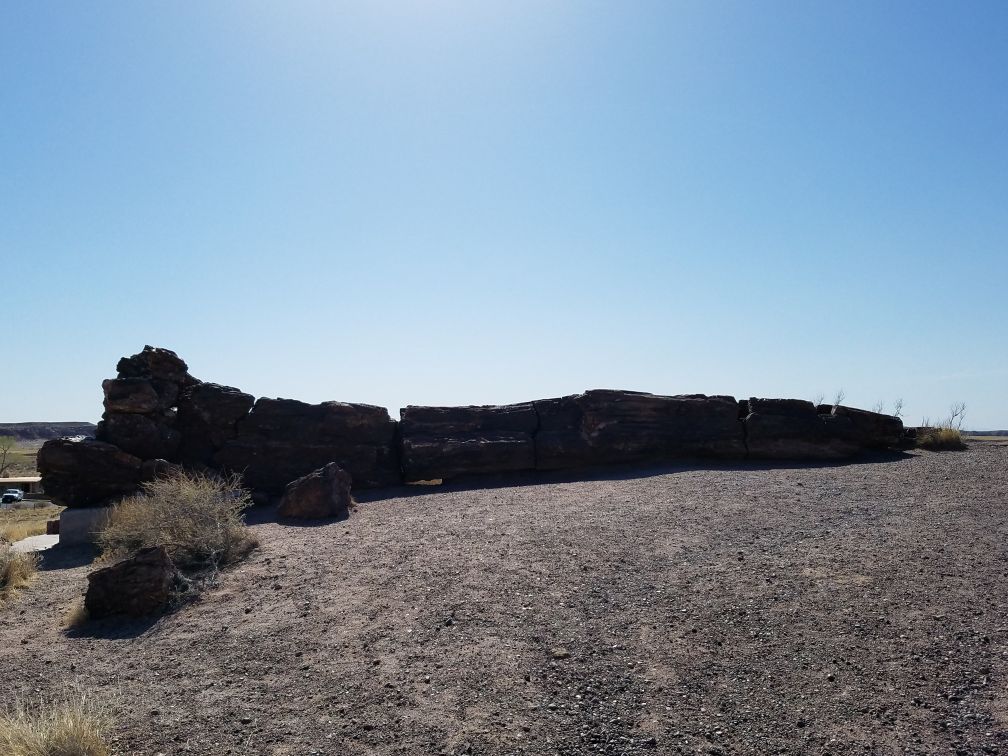
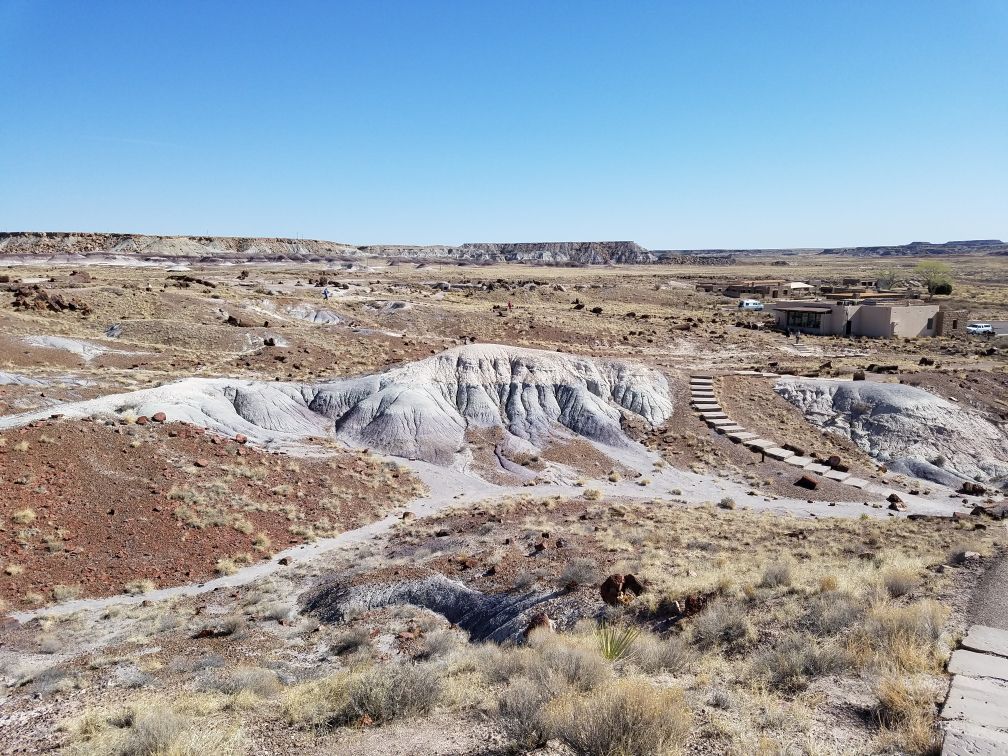
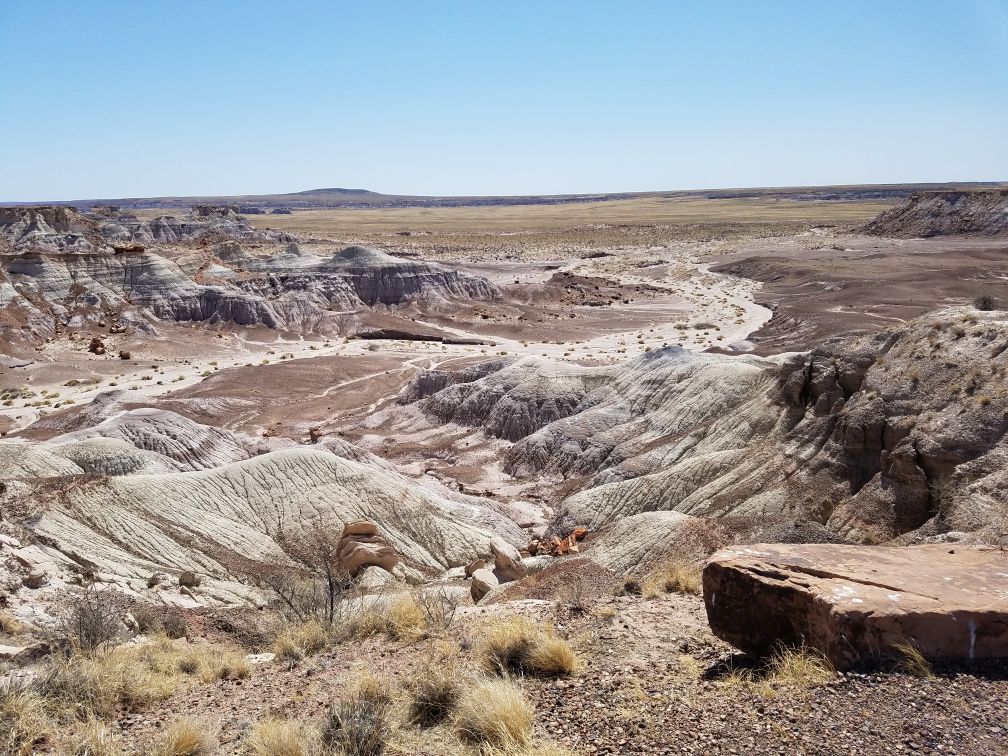
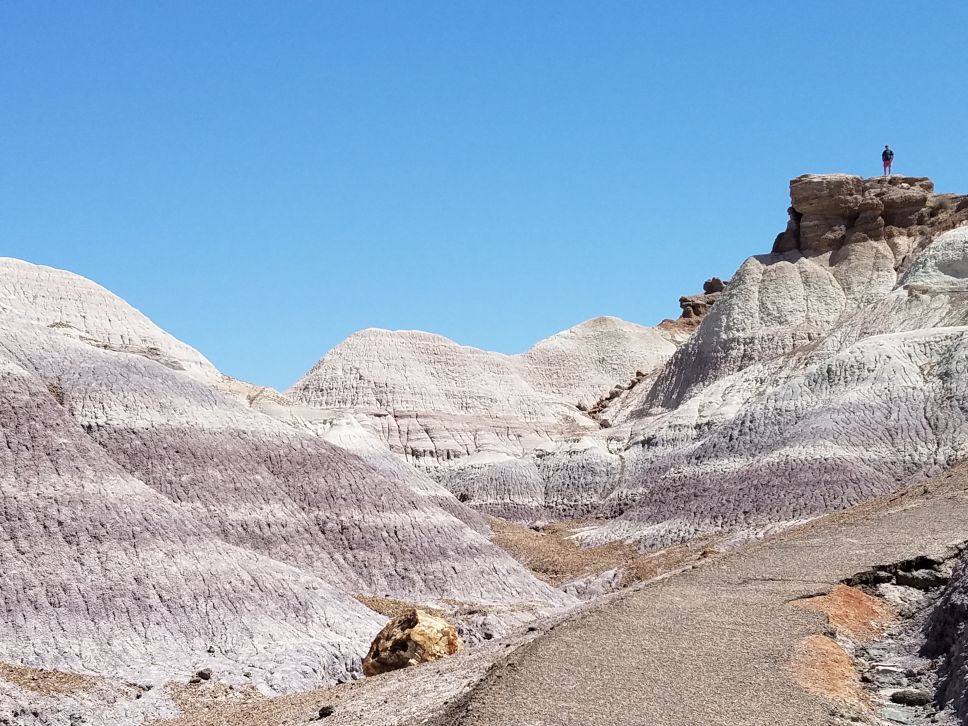
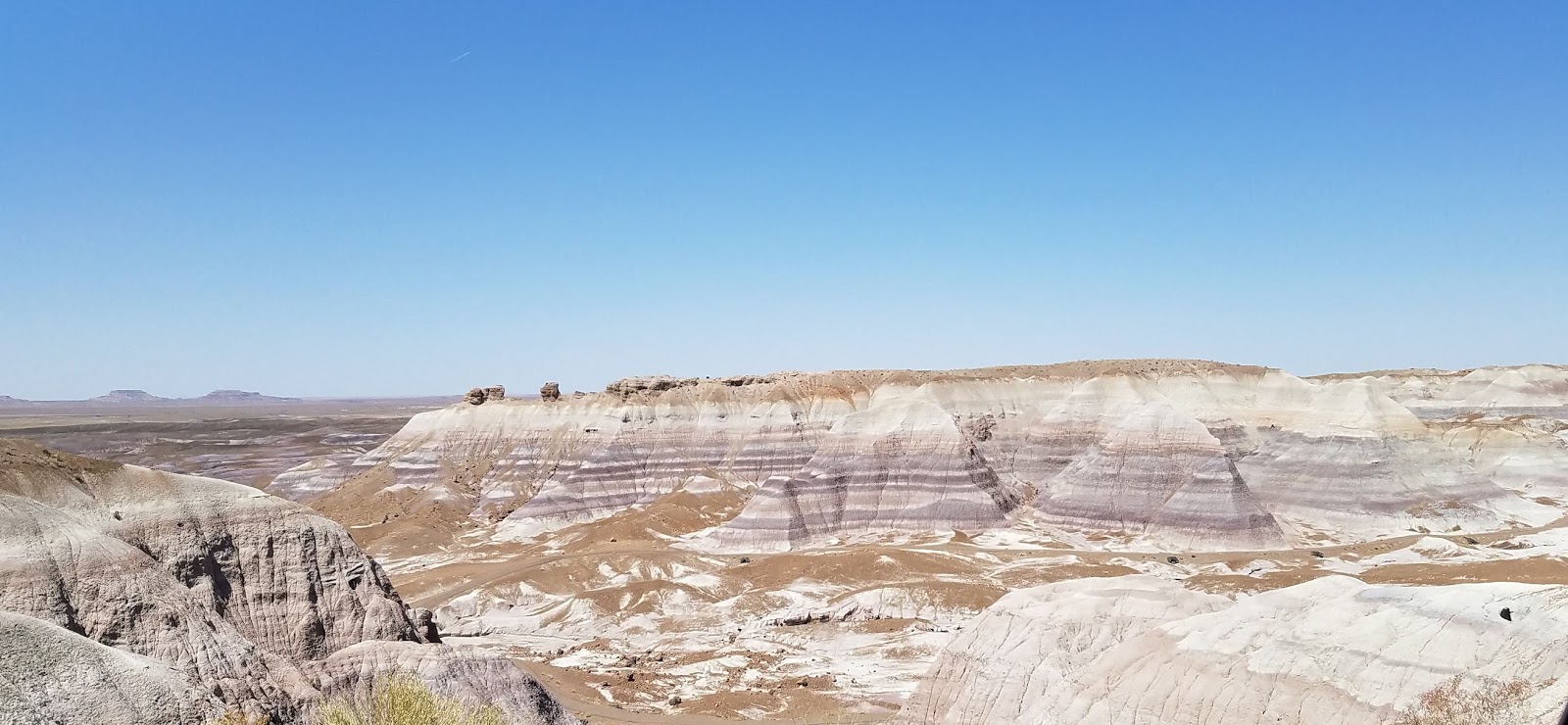
So…it turns out that once you’ve held petrified wood in your hand as a kid and marveled that it’s a rock that looks like wood, the novelty wears off. The Petrified Forest consists of essentially what you see above.

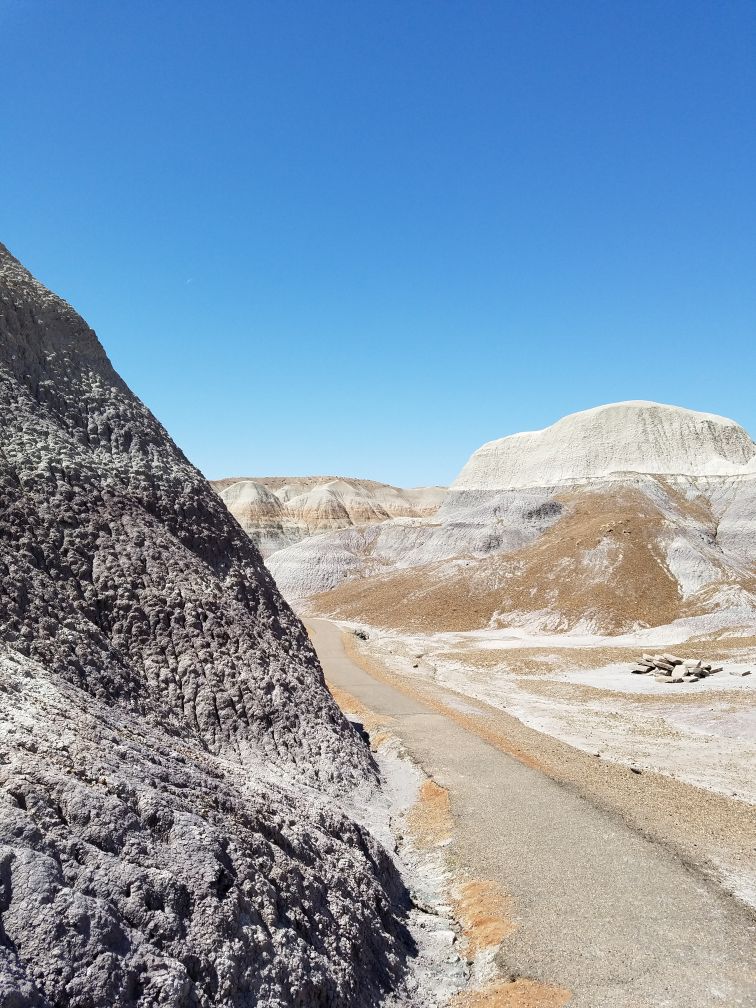
Hiking into the Painted Desert

Come on, the water’s fine!  

Lady, you don’t need a telescope. the crater is literally right there.  This is at the Winslow Crater, where I was tragically denied the opportunity to hike around the rim. Tours stop at three.  
The Pat Shipman Memorial Bridge, over the Colorado River

The Hoover Dam, spanning the Colorado River
And Lake Mead, formed by frustrated Colorado River water. 

Posted in General | Tagged , | 7 Comments

Love Among the Chickens

Love Among the Chickens
© 1906 P.G. Wodehouse
150 pages

“He’s a very young gentlemen, sir,” said Mrs. Medley, in vague defense of her top room.
“And it’s highly improbable,” said Garnet, “that he will ever grow old, if he repeats his last night’s performance. I have no wish to shed blood wantonly, but there are moments when one must lay aside one’s personal prejudices and act for the good of the race. “

Meet Jerry Garnet,  a mildly successful but currently stricken-for-ideas author whose creativity is plagued by the constant distractions of his apartment, chiefly from the musically inclined but ungifted chap upstairs.  Garnet wants to get away, and at just the right time comes his old friend Ukridge, who has just conceived a marvelous idea for getting rich quick: move to the country and keep chickens!  Ignoring a letter from another friend that says, in effect, “Ukridge will be coming to touch you for money, so clear out”,   Garnet affably joins his old companion in what quickly becomes a debacle, but one Garnet doesn’t see coming because he only has eyes for the neighbor’s daughter. P.G. Wodehouse’s first novel, Love Among the Chickens is short and amusing, though not nearly as riotous as his later works. Those familiar with the Wooster stories will recognize the germ of many a Wooster plot here, in schemes that go awry. The biggest, of course, is the notion of keeping chickens: Ukridge is so careless  about what kinds of chickens he gets that he ends up with mostly roosters. Roosters are notoriously poor at laying eggs.
Posted in Reviews | Tagged , | 3 Comments

Encompassing Flagstaff: Atop Mars’ Hill

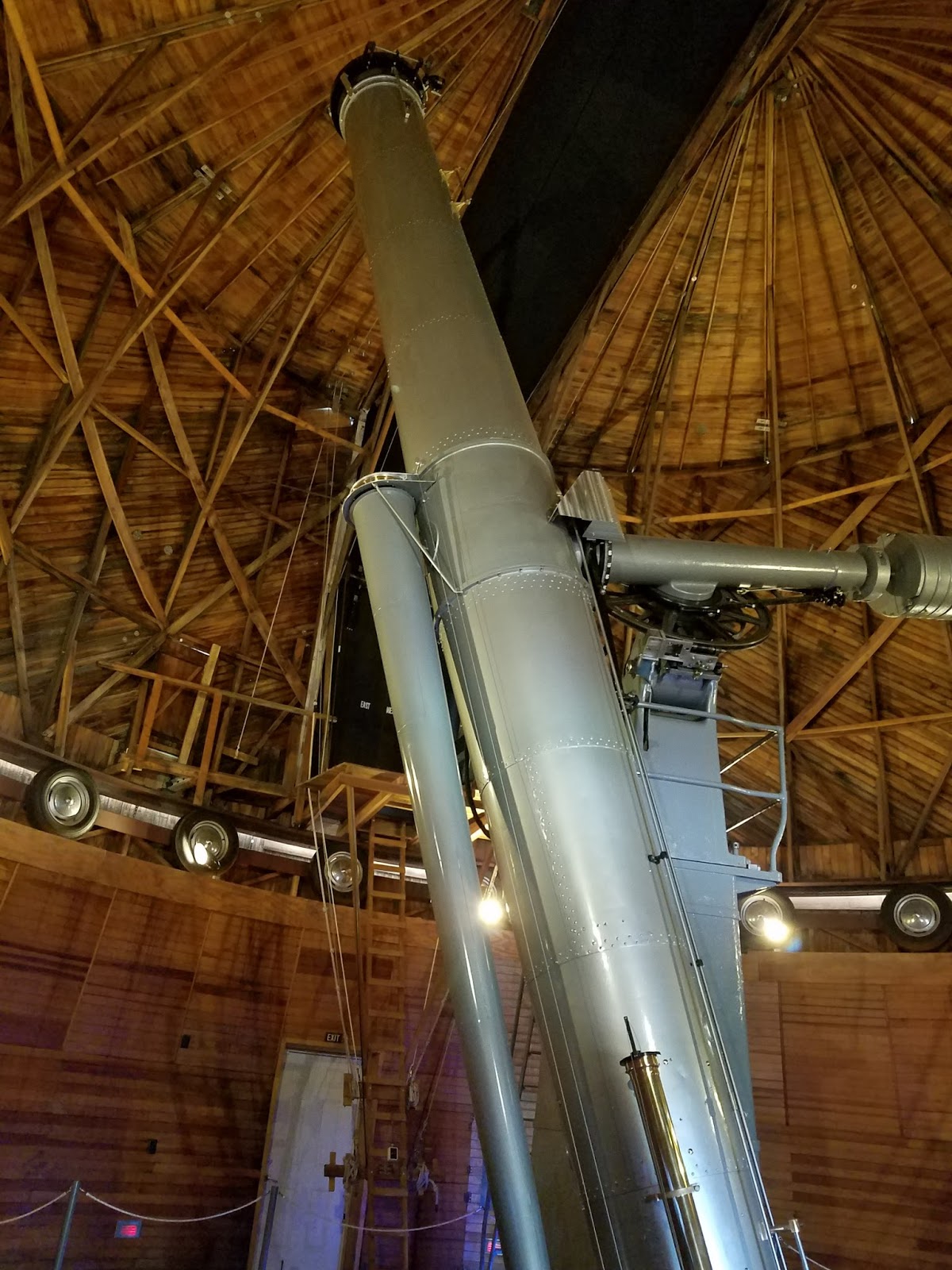
Overlooking the fair city of Flagstaff is Lowell Observatory, perched atop Mars Hill.  The founder of the Observatory, Percival Lowell, believed based on changing observations of the planet, that it was occupied by a technologically adept civilization, one which had established canals to route water from its own ice caps to fields further away.  He was a wealthy mathematician turned diplomat who had the means to establish his own private observatory, and needed a place which was dry, dark, and high. Flagstaff was ideal.  The inspiring early observations of Mars later proved problematic and the conclusion wholly wrong, but the Observatory has done great work over the years since 1894.. It was featured in Carl Sagan’s Cosmos,  as the place where Vesto Slipher discovered that galaxies were moving (and more quickly with their distance from Earth),  as well as the site of Pluto’s own discovery.   The observatory still does scientific work at its dark-skies campuses further from town, but the original site is by no means retired. Instead, it focuses on public education; I was there for four hours listening to lectures and using telescopes to look at solar flares and the stars.  I also got to see the original Clark telescope, though it wasn’t available for viewing the night I was there. Sometimes the public can look through it, however.

The Clark Telescope, with a dome originally constructed by local bicycle repairmen. 
The Clark. Spectroscopy was invented using equipment attached to this telescope. 
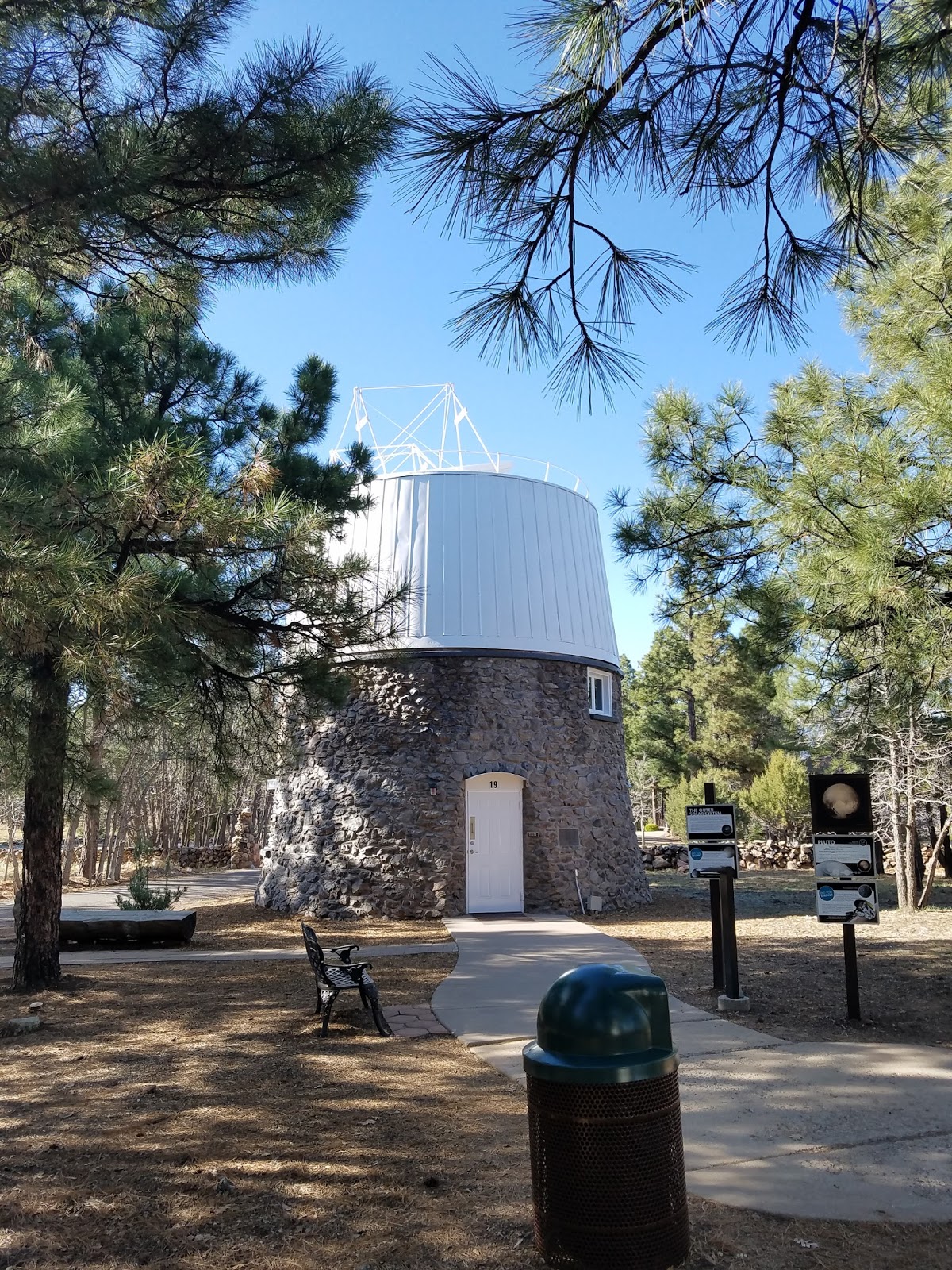
The “Pluto Walk”,  which begins with the Sun and ends at the telescope which discovered Pluto. Between them, signs for the other planets are sprinkled by scale. 
Alas, I missed the Pluto tour, so  I didn’t get to see inside.
This is…not a telescope. It was the original library, now used as the multimedia room or lecture hall. The acoustics are interesting, in that you can hear a pin drop like it’s a fifty-pound weight, conversations from one spot of the room can be heard or not heard in other spots of the room willy-nilly, and if you stand in the right spot you can hear Percival Lowell whispering that there was water on Mars, so hah HAH.
One arc, showing off what’s left of the stacks above.
Now that’s what I call a cherry ride. Percival Lowell’s old wheels are still used in Christmas parades.
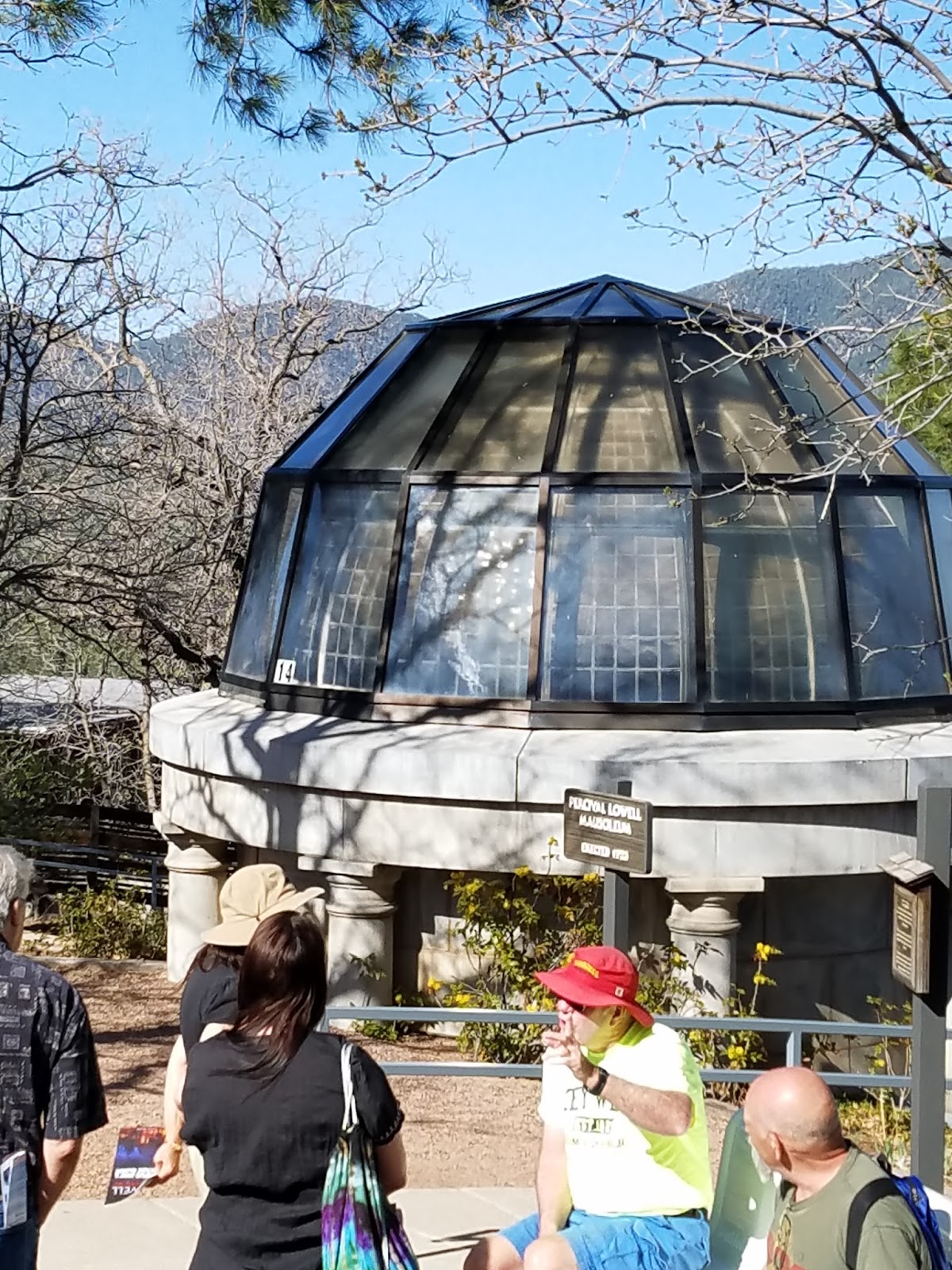
Also not an telescope this is Percival Lowell’s mausoleum. I guess on his deathbed he really did wish he’d spent more time at the office. 
Still to come: meteors, painted deserts, petrified trees, and the Canyon.

Posted in science | Tagged , | 4 Comments

For he’s a jolly good fellow

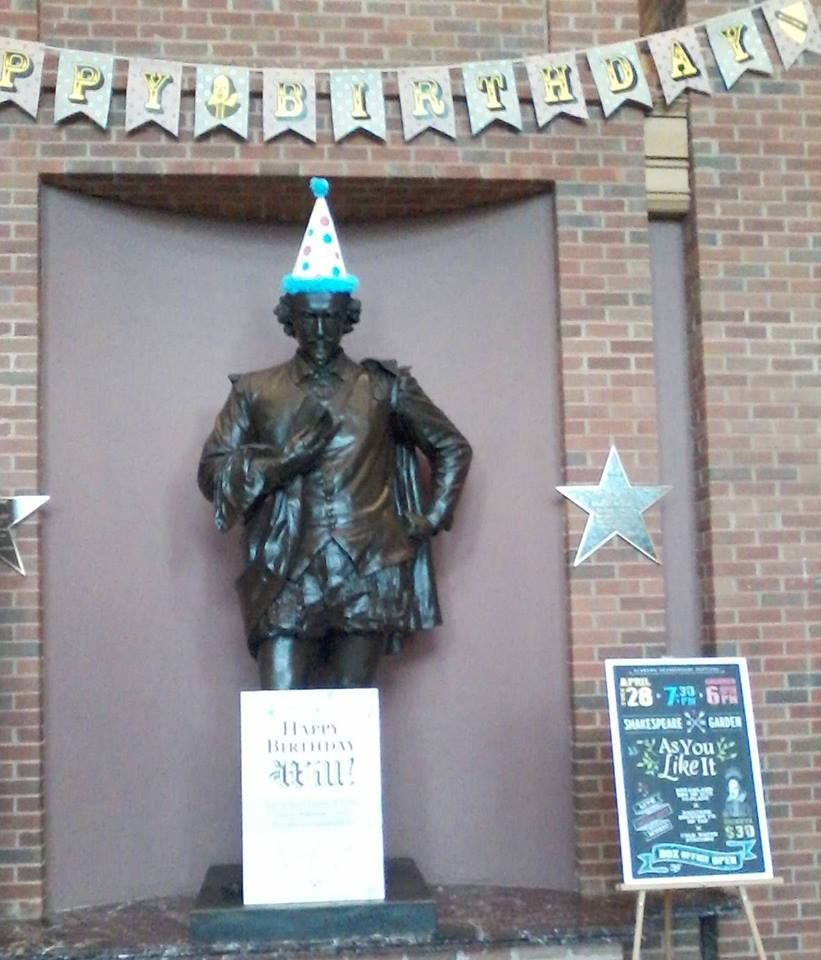
I’m a regular irregular patron of the Alabama Shakespeare Festival, a theater in Montgomery which always includes a few of the Bard’s works in their annual production season.  In the foyer of the theater stands a statue of Shakespeare, and the Festival staff like to have fun with him by dressing him up throughout the year. The usual decor in April is, of course, a birthday hat. Shakespeare died on April 23rd, and tradition holds that he was born on that date as well. (His baptism on the 25th of April is known for certain.) 

Posted in General | Leave a comment

Encompassing Flagstaff: Flagstaff Itself

For my return to the Southwest I’d intended to land in Santa Fe, enjoy that beautiful city again, and then venture north toward Taos and the borderlands between the states of the ‘four corners’.  Instead, however, in early October I was seized with the thought of going to the Grand Canyon — and when I realize I could stay in Flagstaff and use it to see several different areas of interest, I took the leap.  Even beyond the natural attractions, the city itself is an incredibly pleasant place to spend time in. The city itself is not particularly old, founded in the late 19th century. It was known as a small logging town until DC destroyed the logging industry overnight. Since then, it’s focused on tourism and nurturing its university.

As soon as I landed I drove for the Canyon, but the next morning I decided to explore the town on foot.  I only lived a third of a mile away, or 536 meters,  so every visit to downtown Flagstaff but one was effected as a pedestrian.  One of my favorite parts of living in Montevallo ten years ago was the ability to walk anywhere I needed to go, and Flagstaff brought that ease back.   Because the city is so popular with tourists, virtually every block downtown is occupied by restaurants, shops, or other visitor-friendly establishments.  I enjoyed a bike tour on Sunday morning, operated from the Flagstaff Sports Exchange, and was amazed at our ability to pedal along on the road without being  run over. There were even bike lanes, and $1 rental bikes parked in various downtown locations.  Capitalizing on the heavy amount of pedestrian traffic were street musicians, from indie kids on guitars to one very brave Frenchman playing an accordion and singing romantic songs of old Mexico. I tipped him instead of the indie kids in sheer admiration for his bravery.  I think it’s legal to stone accordion-players in some towns.

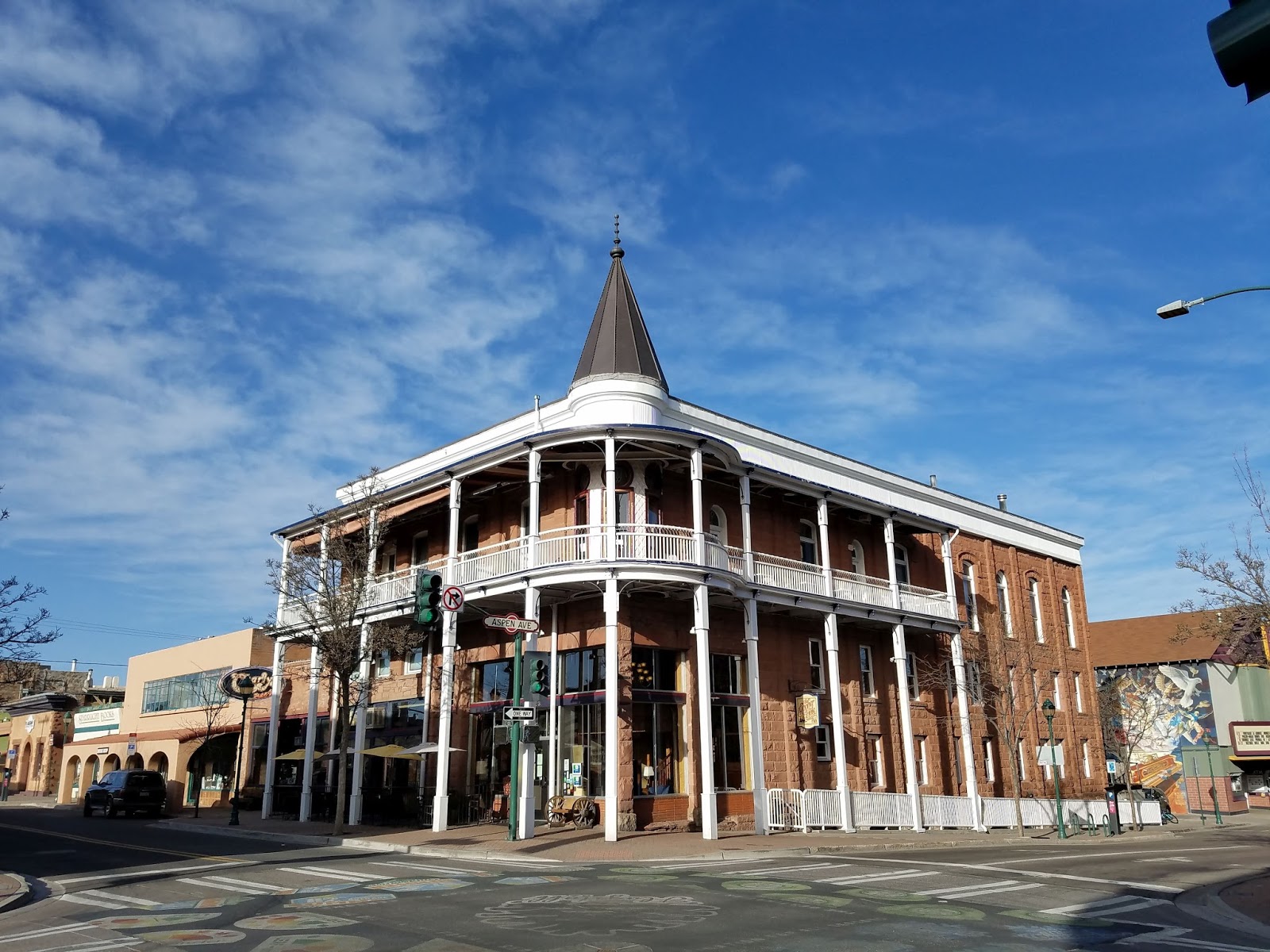
The Weatherford Hotel has a beautiful lobby and interior, and its decks were built partially from wood recovered from fires: my tour guide informed me that the city has nearly burned down several times in its history. Dry seasons and fierce winds are a combustible combination. The sidewalk outside was used for the filming of Forrest Gump, in the scene in which Forrest runs through a pile of dog doo and shrugs — “It happens”   It has several bars inside,  one of which serves a refreshing White Linen.

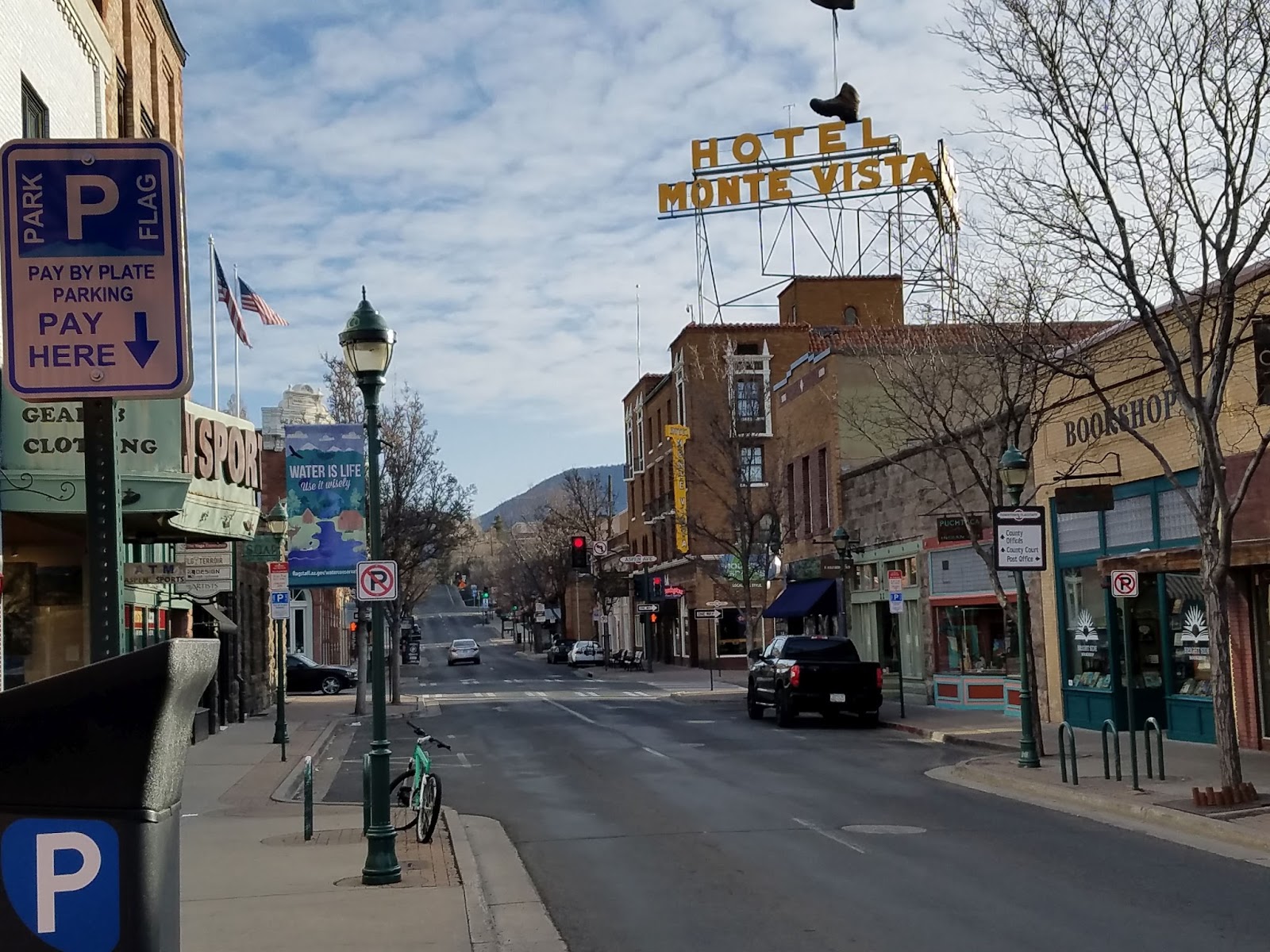
The Monte Vista was a regular haunt of mine, as it served coffee in the mornings and drinks in the afternoon. There’s another lounge in its basement, the town’s best dive bar according to a local I spoke with. On my bike tour I learned there’s an interesting ghost story on the top floor, about two prostitutes who were brought up to the room and then thrown to their deaths on the street below. According to local legend, there is now a presence in the room that disturbs men in their sleep — siting on their chest and smothering them — but leaves women to their rest. The sitting-on-the-chest-paralyzed thing comes up a lot in hauntings and has been dealt with by books like Why People Believe Weird Things by Michael Shermer,  and perhaps Sagan’s Demon Haunted World.   The Monte Vista has several other ghostly legends.

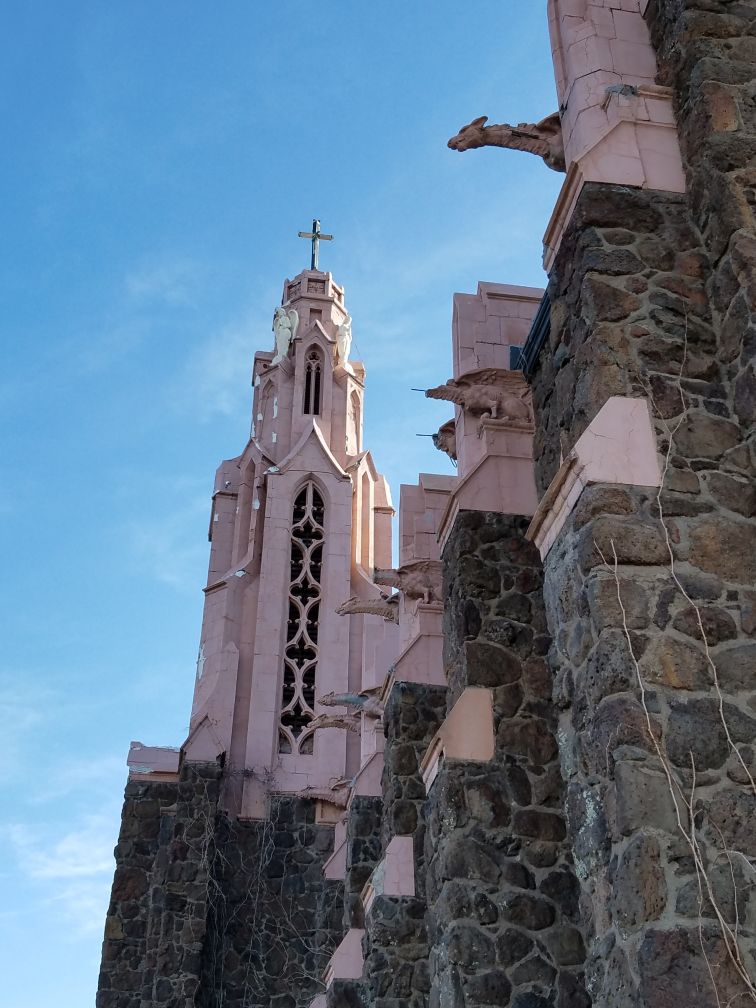
“Our Lady of the Nativity of the Blessed Lady”, which is a name that rolls of the tongue. 
Dragon gargoyles! …and some headless dragons. St. George has been here.
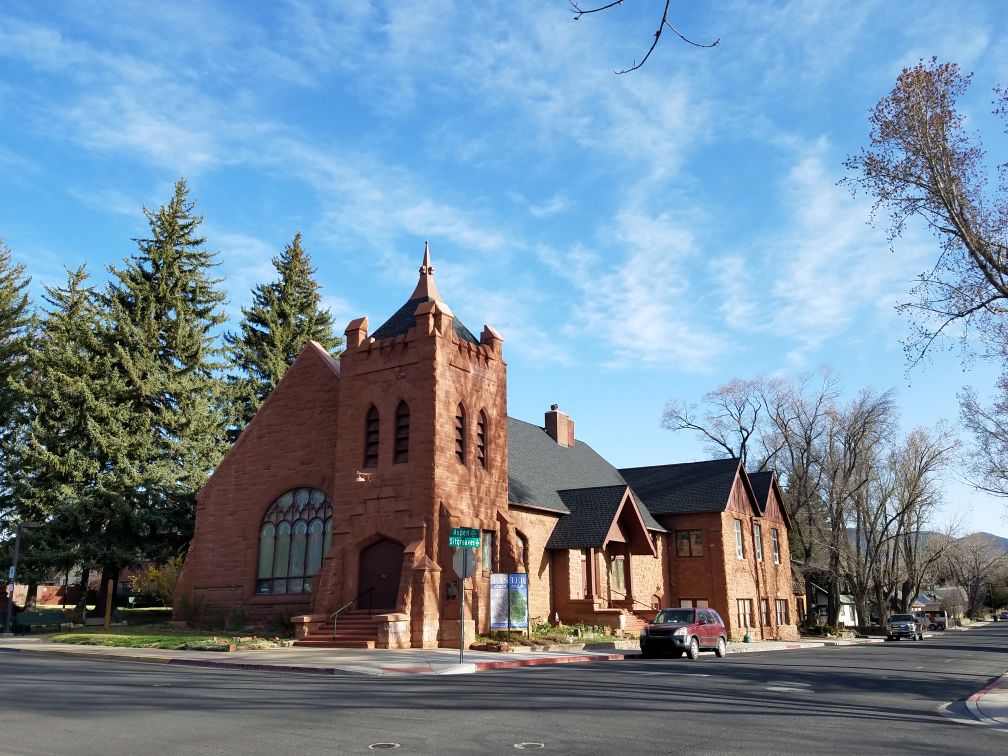
The building material of this church is moenkopi sandstone, unique to the Flagstaff region.  Even modern buildings which use more widespread materials emulate the appearance of the moenkopi.  The church is called the “Flagstaff Federated Community Church”, which…was surely a name chosen by a committee. 
Flagstaff’s train station — still in service as an Amtrak station!!! —  in the early morning. This building was constructed after international guests began arriving in Flagstaff to visit the Grand Canyon, and the much smaller depot was deemed an embarrassment to the United States by the president. 
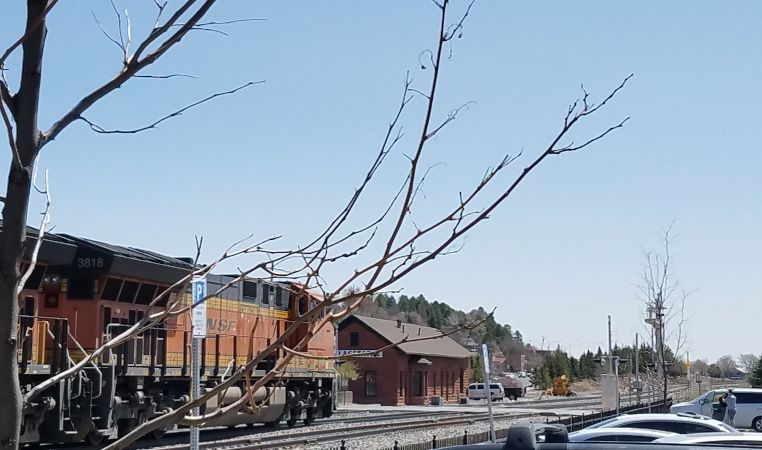
Aww, poor original depot. Passing it is one of the one hundred and sixty BNSF trains that roll through Flagstaff every day, mostly carrying shipping containers from Los Angeles. 
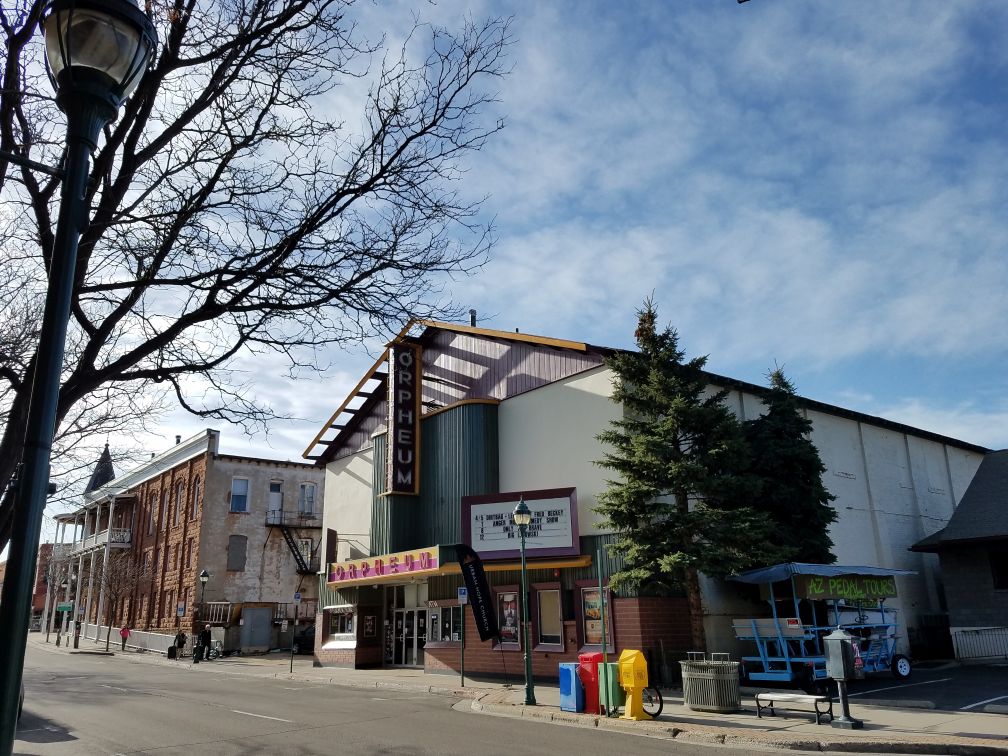
On the left: the Weatherford, followed by the Orpheum Theater. On the right but out of frame is the Sports Exchange, which hosts the bike tour. The Orpheum hosted a Big Lebowski night on Thursday.
One of the original buildings of Northern Arizona University, built with the regional sandstone. According my guide, the town fathers wanted to establish a university early on, but the territorial authorities scotched the plan. Flagstaff built a campus anyway, called it an asylum, and later changed it to a university.  That’s the spirit! 
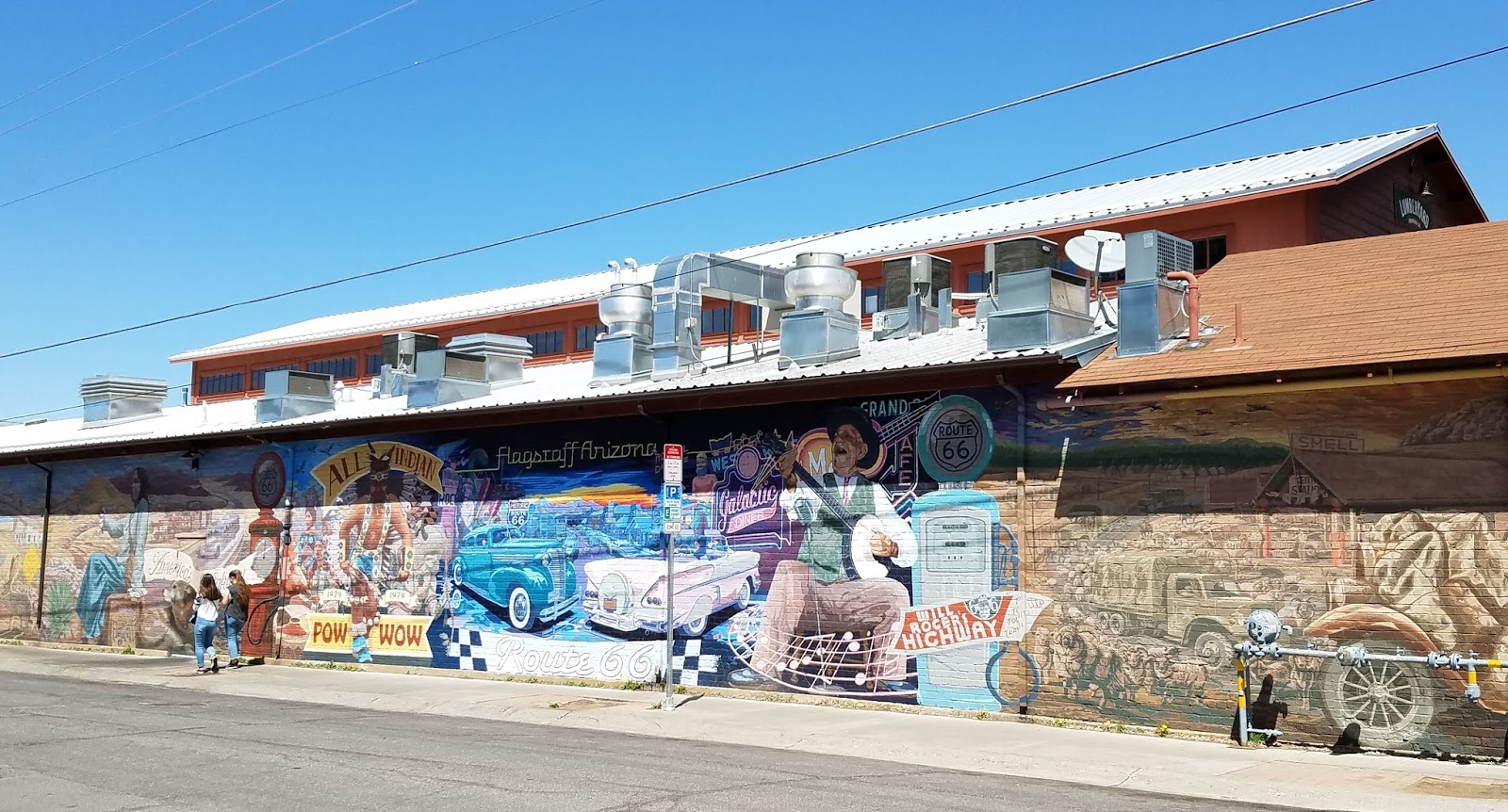
Mural depicting Flagstaff’s history
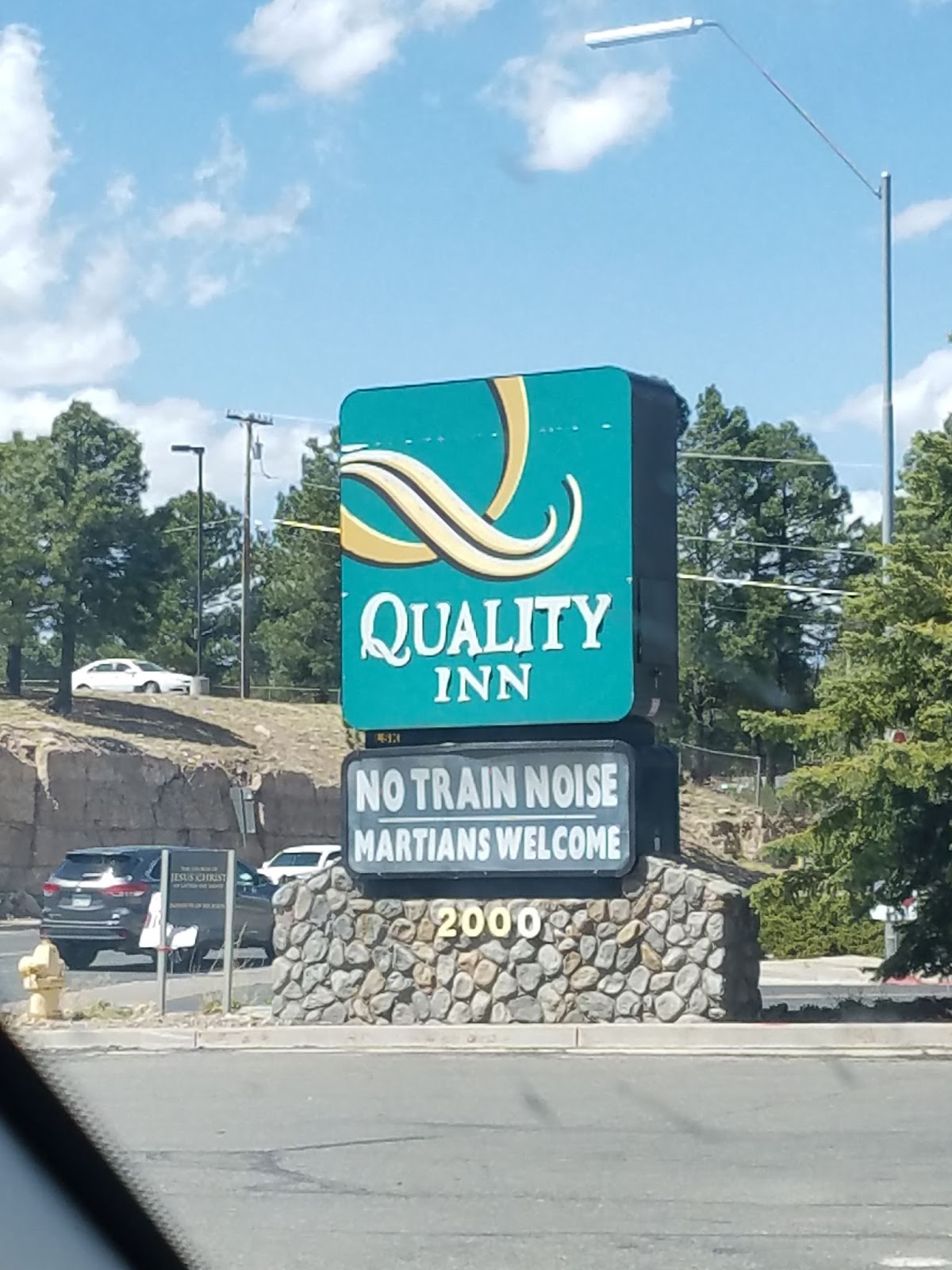
You can be a Martian, just don’t make train noise. 

Overlooking the town is Mars Hill, so named because the City of Flagstaff offered the hill to a wealthy mathematician-turned-diplomat who wanted to establish an observatory to study Mars.  The observatory will have its own post later today.

Posted in General | Tagged | 4 Comments

Encompassing Flagstaff: Ruins of the Ancients

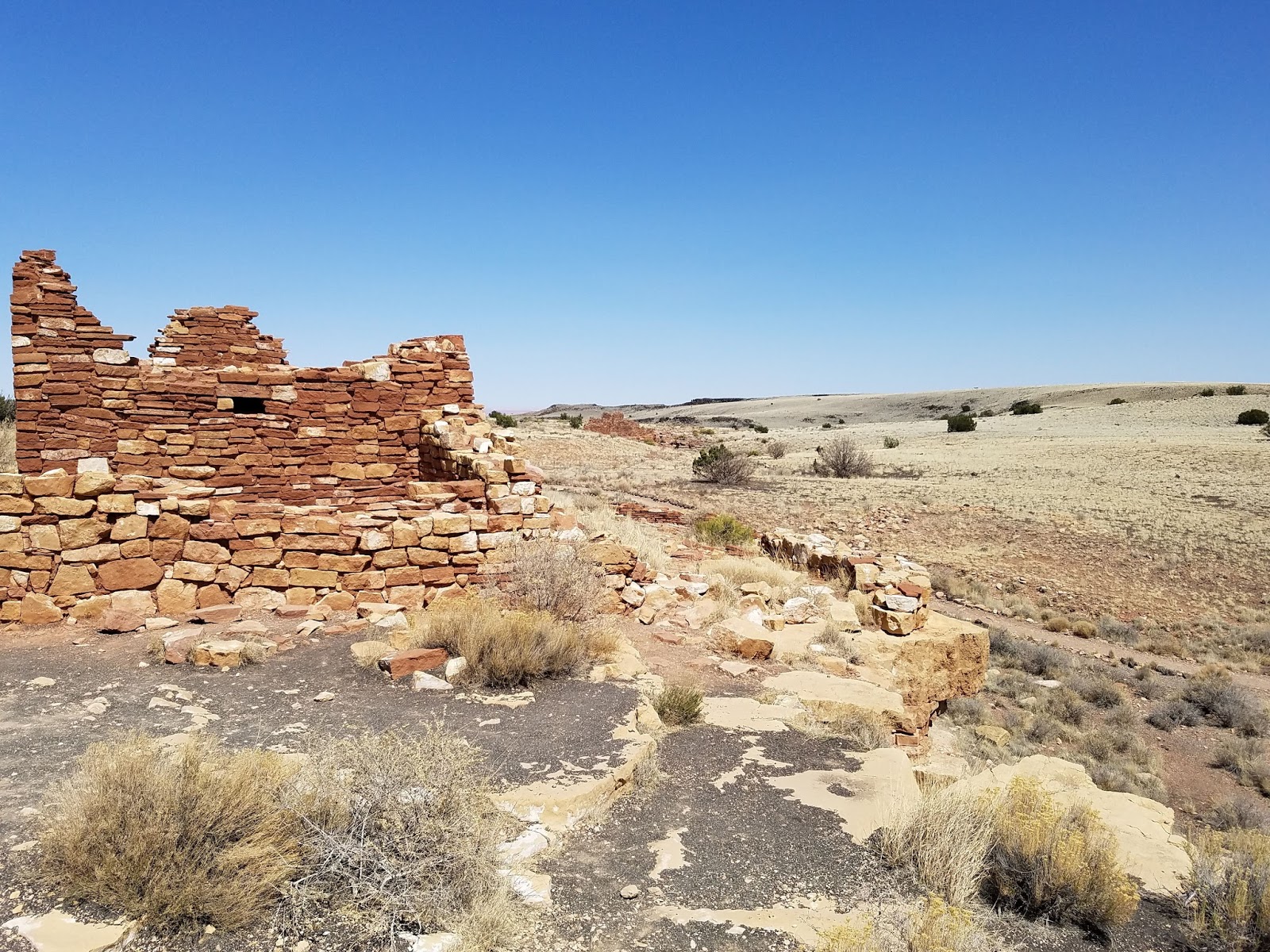
If I regretted one aspect of my visit to New Mexico back in 2016, it was forgetting or not having time to visit the remains of any native American dwellings. I made visiting a few sites a priority this time,  visiting both Wupatki National Monument and Walnut Canyon.   The two sites are very different despite being only an hour or so apart from one another;  the first offers seemingly boundless vistas, a lava field, and the broken remains of a dormant volcano which destroyed the communities around it. The other is a confined site site in rocky, wooded canyons descending to a now-vanished creek.    Despite their differences, the two sites are linked, as local authorities believe the survivors of the volcanic eruption around the Wupatki area too refuge in Walnut Canyon.

Visiting Wupatki involves a northern drive from the city, then a long and winding path back to the highway  through first barren plains, then the hillier volcanic region. It took several hours to drive the course and explore the various sites. According to signs, these sites were abandoned by 1200, and the area which the park covers encompasses three distinct cultures.  The environment is thought to have changed since abandonment, stripped in part by over-grazing. It is suspected these cultures lived by hunting local creatures (something kin to antelope) and farming small plots near “earth cracks”. The area is fascinating, geologically:  one area is known to emit streams of warm air from a hole in the ground from time to time, a highly localized thermal vent.

Looking into the little canyon that people traveled through
Hiking to the top of the “Citadel”, overlooking a natural-formed pit.
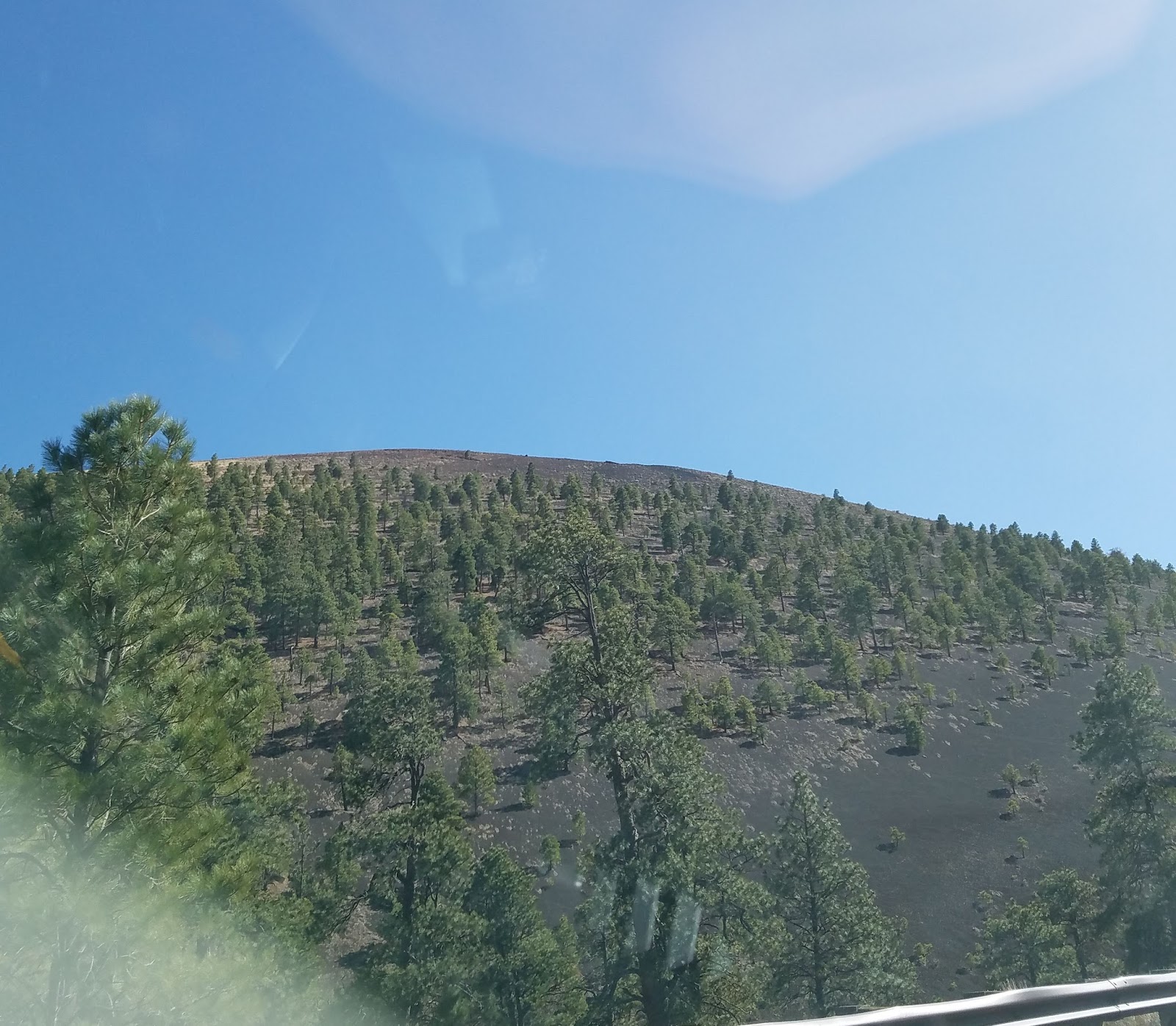
Sunset Crater, the remnants of the volcano that erupted. Until the sixties this was a popular hiking destination, with certificates awarded to those who reached the top.  Hikers wore deep ruts in the volcanic soil, however, and to stop its further destruction all hiking was barred. 
Inside the lava fields. 
Inside the fields, looking back at Sunset Crater. Only one slope has regained any vegetation.

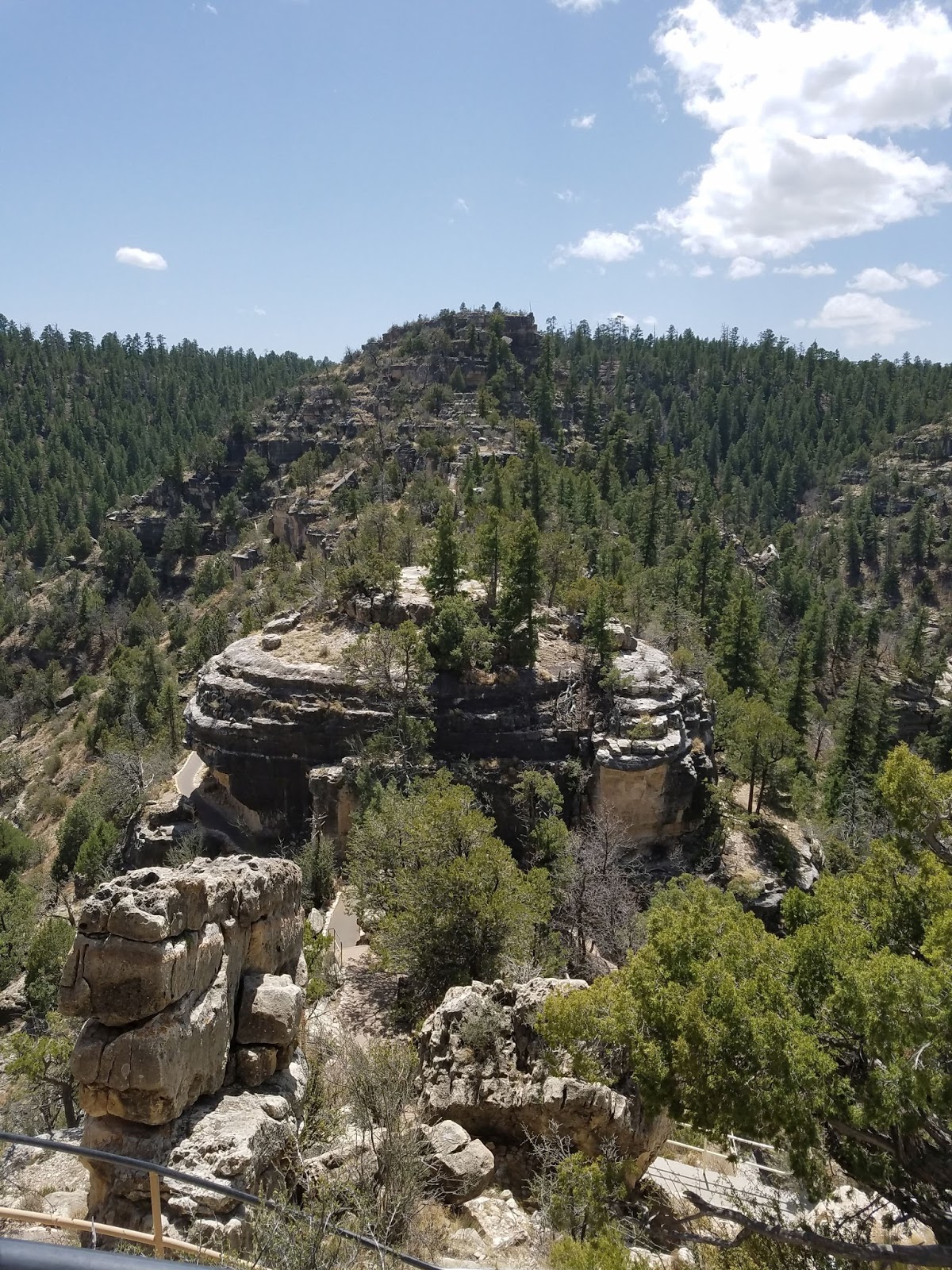
I visited Walnut Canyon later in the week, and it was easily the greatest surprise of the trip.I had no idea what to expect, and when I spotted the canyon from the visitor’s center I gasped in awe.

Look dead center, and you should see a partially-bricked up ledge.

According to the signage, a community took refuge in naturally-formed limestone shelves, bricking them up to create rooms, and eking a living from the stream below and the woods above them.  The park offers a mile-long path down into the canyon, winding around an “island” densely packed with shelters before climbing back up.  It’s a nice walk in 50 MPH wind, to say the least. The park is eight miles from the city proper, but still contained within its limits. Although this site was depopulated by 1300, the descendants of those who lived here occasionally make ritual visits.

Rooms which were broken into by looters in the 19th century
Notice the smoke vent above the door
The “island” that the hike takes visitors around. 

There are some remains near the Grand Canyon, as well, I visited these early Thursday morning, after watching the sun rise over the Canyon.

More to come: Flagstaff proper, various geological curiosities, and…THE GRAND CANYON.

Posted in General | Tagged , , , , | 5 Comments

A Time Traveler’s Guide to Elizabethan England

A Time Traveler’s Guide to Elizabethan England
© 2014 Ian Mortimer
415 pages

Previously Ian Mortimer has offered readers with access to a time machine a handbook for medieval England. Perhaps mystery plays based on Scripture are not your interest, however, and you’d prefer dining with a little more variety. Come then to Elizabethan England, where the secular theater is in its ascendancy, and the rising merchant marine is bringing the world’s produce to English plates. The Elizabethan era is commonly thought of as a golden age for England, between its triumph over the Spanish Armada and the appearance of luminaries like Shakespeare, Spenser, and Jonson.   Mortimer warns curious travelers, however, that this is still not an age for the cautious:  death  by disease, crime, war, or the law are never too far away, and Elizabeth’s crown is so questioned that “Gloriana” must rule with a firm hand, using a zealous secret service keeping tabs on the population and dealing with those who would foment rebellion.

Although Mortimer breaks from his faux-guidebook style (regarding it as contrived if repeated), he still covers the whole of everyday life in England during its 16th century.  Covered at length are dress and occupations, architecture, law, and the evolution of the theater and literature. Material from the previous book which is still in effect – -the feudal ordering of society, for instance — is  recapped but not plumbed in full again. Mortimer is forced by Elizabeth to focus an entire chapter on religion,  given that the legal union which gave her birth and rule was a religious and political controversy that led England to break from the Church, and cost many men their heads, from the noble to the base.  (Mortimer still focuses on the political aspects of religion, however, with little on religious practice;   it remains more of a background than a subject considered in full. I thought this was odd in a book on the medieval period, and it’s still odd.)

As much interest as there in in the lives of those gone on, and of the structures they created which we still use, I also appreciated Mortimer’s general appraisal of the age. He is strikingly empathetic of his medieval subjects, including those in an age which is not quite medieval but definitely not industrial-modern, and conveys this to the reader well. He gives the people who breathed and died in this age their full consideration — sharing their verse and graffiti, imagining the smells and sights,  putting readers into their heads so that we may read the landscape as they did. To them, hills and rivers were not a Windows XP wallpaper, but places to keep the sheep that kept them alive, and the best transportation away.   Mortimer’s final appraisal is that as dangerous and uncertain as their lives could be, we see in the Elizabethan age a growing self-confidence — one that saw men throw themselves into the unknown expanse of the oceans in search of new lands and possibilities, and one that allowed intellectual knowledge to definitely surpass the aura of classical learning. Despite the perils and problems of the age, it  was also one of hope and ambition, one that spurred England to become the greatest maritime power yet seen.

Oh, earlier in the week Ian Mortimer did an “ask me anything” thread on reddit, inviting questions from the public. He answered questions on his sources, inspirations, etc.

Related:
The Life of Elizabeth I, Alison Weir
The Age of Faith and The Reformation, Will Durant
The works of Frances and Joseph Gies

Posted in history, Reviews | Tagged , , , , , , | 8 Comments