Kill Decision

Kill Decision
© 2012 Daniel Suarez
512 pages


Seemingly every day people within the United States are killed,  destroyed in apparent bomb attacks.  The victims have no obvious connections, but they are not random – nor were they bomb victims.  A new generation of cheap, lethal drones are waging an undeclared war on American soil, and no one knows who is behind them.    Enter Linda McKinney, a  young American scientist,  whose study of weaver ants in Africa was interrupted when she was kidnapped, shortly before her cabin was incinerated.    McKinney hasn’t been abducted by terrorists, however:  she is the last hope of a black ops organization hunting for the drones’ controllers.  The few leads they have indicate that the same people who stole software allowing for the drones’ facial recognition software also copied McKinney’s research into swarm intelligence.   

Kill Decision
is a horse of a different color from Suarez’ other works: although still a mix of technothriller and science fiction,   there’s far less speculation here than in Change Agent and Freedom. Frankly,   the plot of Kill Decision seems like the sort of thing that could happen this afternoon.  I’ll admit to not being up to date on the latest drone technology, but given the current status of facial recognition technology,   machine intelligence, and the price of consumer electronics….the premise of Kill Decision is speculative only in the “What if this did happen” sense, and not the “What if this could happen” sense.      The novel follows the un-named group investigating the drone attacks as their efforts to get to the root of the problem only increase in the planned-for campaign being ramped up,  leading to  a prolonged action sequence where the chasee- and chaser swap places several times, with brief interludes between the bloody chaos.  

Although drones aren’t a particular interest of mine, Kill Decision succeeded in keeping my attention, in part because the drones’ behavior strongly mimics that of…weaver ants, complete with using chemical compounds for swarm communication.  The drones of Kill Decision have total autonomy behind their prescribed targets,  evaluating and taking care of unexpected threats on the fly. The drones combine the innate horror of swarm insects with the cold dread of being hunted most effectively,  especially when the team encounters the base of operations.  

Although I hadn’t intended to read Suarez’ remaining works, both of are beyond the near-future subgenre I most prefer,  having read so much of him recently has me itching to give one of them a try, if only to experience more of the author!
Related:
Drone, Mike Maden

Posted in Reviews, science fiction | Tagged , , | 3 Comments

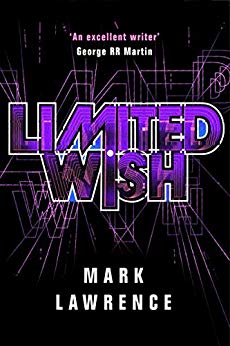
Limited Wish

The universe is trying to kill Nick. Again. Last time, it was only leukemia. Now there are multiple visitors from divergent futures asking him for help breaking into a nuclear power plant, he’s being stalked by a sociopathic mercenary, he’s stumbling through one near-miss after another, and worst of all….the fate of the universe apparently depends on him going to a dance and leaving with the right date.   Ah, to be sixteen again!

Limited Wish is a follow up to One Word Kill, a SF novel interlaced with Dungeons and Dragons lore, and set in the mid-1980s.   Limited Wish continues that fusion, although there’s not as much of the creepy mirroring of events and characters in the D&D campaign and the real world goings on.   The plot itself, however,  echoes the plot of the first book, and not accidentally; it’s something to do with temporal mechanics. History not repeating itself but rhyming is a side effect of some paradox that’s erupted.   What’s different is that while last time Nick was told exactly what was going on,  this time his visitors from the future are just as confused as he is: in fact, the future-me from the last book pops up here, but it’s an earlier him who is still trying to figure things out.

Although it’s intended for younger audiences, I believe,  this series is fun so far.

Posted in Reviews, science fiction | Tagged , | 1 Comment

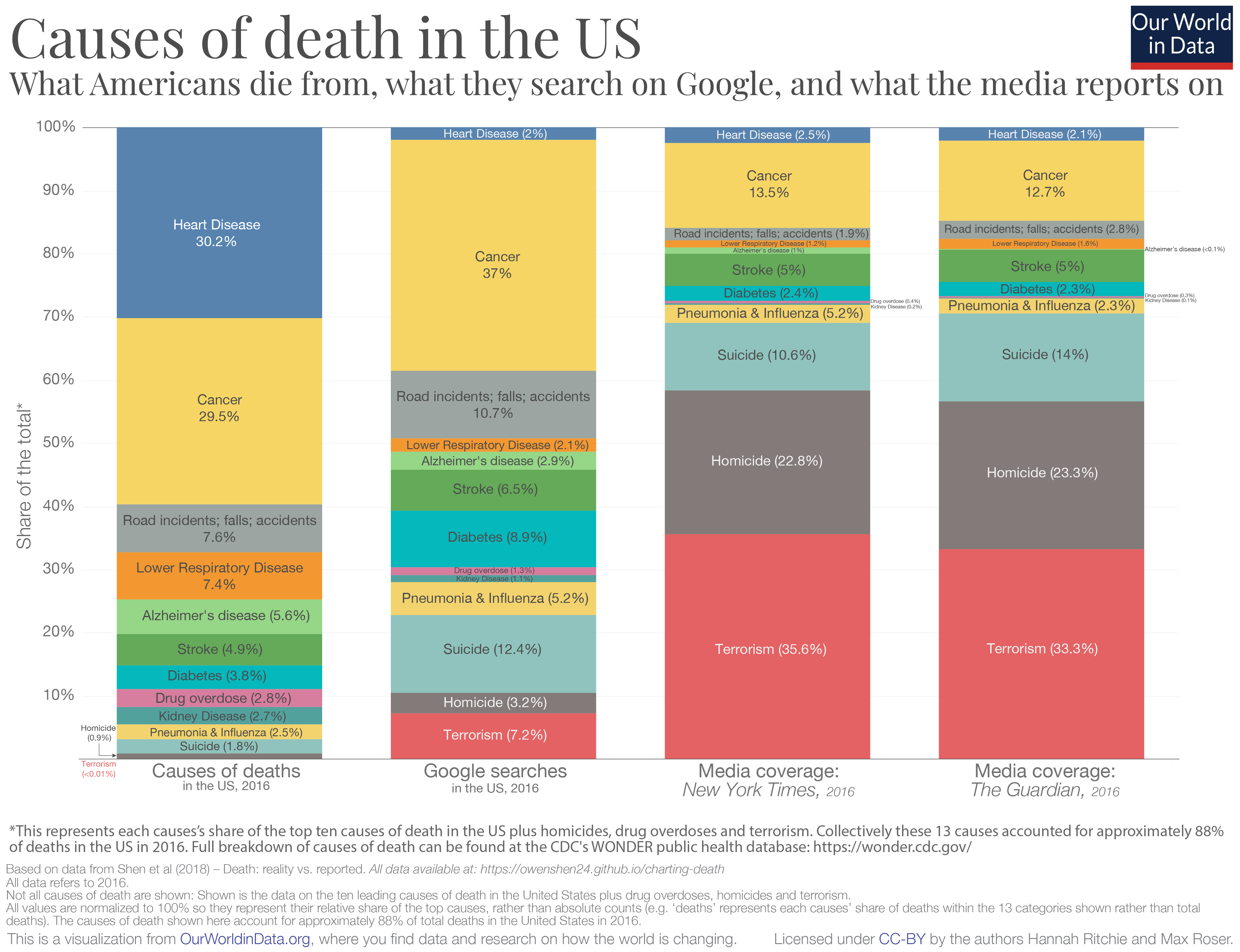
What kills us VS what we’re told to worry about

Posted in General | 6 Comments

Dinosaurs, India, and the smartphone

We in the United States  recently enjoyed a three-day weekend, ostensibly for the purpose of honoring fallen soldiers, though I suspect for most it’s just an occasion to shop and cook out before the summer heat becomes unbearable.  I took advantage of the time off to read a few books:  India Connected, The Rise and Fall of the Dinosaurs, and Change Agent, the latter of which has been  reviewed already.   A few more novels are in the offing, including Trouble is my Business (Raymond Chandler), Kill Decision (Suarez), Altered Carbon, and Limited Wish, the sequel to One World Kill.

First, the dinosaurs: as its title indicates, The Rise and Fall of the Dinosaurs is a complete-as-possible history of our Saurian predecessors that focuses special attention on why and how they became such supersized creatures, as well as the demise of most of their kind.  I say most because Brusatte argues that birds did not evolve from dinosaurs, but are literally dinosaurs.   The development of feathers and particularly wings is addressed. The author believes wings first developed for display purpose, and feathers for insulation.   Although remains of feathers have not been found with any T-Rex fossils,  other tyrannosaurs (from small to large)  were feathered, so it’s a fair bet that Rex was as well.

Next up,  India Connected. Global civilization is in the midst of change driven by the smartphone,  but nowhere does it have more explosive potential than in India.   The world’s largest democracy may be increasingly wealthy, but many millions of its people remain illiterate and impoverished.   Enter the smartphone, increasingly affordable even to the poorest.  Apps allow the rural villager to teach himself to read; they allow women  freedom to obtain information and look for opportunities for education, employment, and romance that would be otherwise warded away from them;  they allow those who can already read to learn new skills, like English and coding,   and they make it easier for people and India’s vast democracy to function.   (And then there’s dating..) 


Posted in Reviews | Tagged , , , | 4 Comments

Buddhist cyberpunk?

“As a child I’d believed there was an essential person, a sort of core personality around which the surface factors could evolve and change without damaging the integrity of who you were. Later, I started to see that this was an error of perception caused by the metaphors we were used to framing ourselves in. What we thought of as personality was no more than the passing shape of one of the waves in front of me. Or, slowing it down to more human speed, the shape of a sand dune. Form in response to stimulus. Wind, gravity, upbringing. Gene blueprinting. All subject to erosion and change.”

Altered Carbon  


I can’t say I expected to encounter the Buddhist doctrine of anatta (no-self) in a cyberpunk novel! 

Posted in General, quotations | Tagged , | 4 Comments

Change Agent

Change Agent
© 2017 Daniel Suarez
417 pages

Deep into the 21st century,   global civilization has been transformed by bioengineering.  Consumer products  which were once manufactured are now grown, from knives to car bodies; the streets are illuminated not by bulbs, but by bacteria;  and lab-grown meat is common.  Although gene editing has also been used to cure several prominent diseases in human babies,   parents are increasingly interested in going beyond repair:  they want to make their children into  designer augments, with heightened intelligence, physical strength, and so on. Enter Kenneth Durand, who uses statistical analysis to figure out where “baby labs” are so that the police can shut them down.   But the many labs shut down by Durand’s ingenuity aren’t independent operations: they’re all run by the same criminal enterprise, and they – -the Huli jing —  will  have their revenge in a most insidious way. A violent encounter at a train station leaves Durand writhing on the platform, and he wakes up weeks later — after a prolonged period of intense pain and semi-consciousness — to find himself transformed. His own genes have been edited to make him into the monster he was chasing.  Friendless and the subject of an international manhunt, a once pacifistic statistician  must find new strength within himself as he escapes police custody and descends into the underworld looking for answers and a way to reclaim his identity.

 First of all, there’s a lot of really cool things going on in the background here.  Logistical drone lanes, for one: there are so many commercial drones that they’ve been given air lanes to travel in, just like airplanes.    Screen interfaces are largely a thing of the past;  as most people have the means to have images cast directly into their eyes. (This can be a nuisance, with the advertisements, but there are countermeasures.)  All this advanced technology makes Durand’s life considerably more difficult after he’s branded a criminal;  one push notification from the police and a crowdsourced manhunt makes it impossible for him to move in civilized society.   He does, however, have one asset:  the criminal whose body he’s inhabiting happens to be incredibly intimidating, and since he wasn’t expected to survive the transformation (the gang wanted the police to think their most-wanted man had  been assassinated) , there have been no countermeasures put in place to stop Durand from taking advantage of his appearance.  Once  the Huli jing realize he’s escaped and on the move, another product of bioengineering is tasked with hunting him down.

Using CRISPR and succeeding technology opens up a world of possibilities, and Suarez explores both the good and bad. Durand’s journey will culminate in discovering horrors he couldn’t imagine people capable of,  though if he’d read Brave New World he wouldn’t be so darkly surprised.   Both the worldbuilding, and Durand’s struggle to hold on to his identity — trapped in another body, forced into doing things he’d never otherwise do —  succeed in creating a fast-moving and immersive tale of tomorrow.

Posted in Reviews, science fiction | Tagged , , , | 3 Comments

Better Off

Better Off: Flipping the Switch on Technology
© 2004 Eric Bende
256 pages

When Eric and Mary Bendes tied the knot, they chose to kick off their marriage in the traditional fashion: struggling together to make a go of a family farm.  Mary had romantic notions about homesteading, and Eric serious misgivings about the role of technology in human affairs. Together they moved to a quasi-Amish community not attached to a particular religious order, but composed of those too freethinking for the Old Order and too traditional for the modernized Mennonites.  Their mission: to spend a year living in technological simplicity, to discern how much gadgetry was really needed for a flourishing human life. 

Better Off tells the story of the Bendes’ adapting to life  within the community, both socially and technologically. Eric and Mary are outsiders, but so are a fair number of their new neighbors. They are surrounded by those who, like the authors of The Plain Reader, have yearned for a more meaningful life and found it in a community that minimizes those parts of modernity which are most disruptive.  Because it is a farming community,  tending to the family homestead is the major use of time. While this does involve manual labor, often the ‘work’ aspect – the monotony – is completely mitigated by the social aspect.  The members of this community rarely pay strict social visits: instead, relationships are established, built up, and maintained by working together.  Although Eric and Mary both  have their individual   jobs around the house, both are necessary to keep the farm itself functioning:  because they are operating without technology,  more work has to be done by hand. The lack of refrigeration, for instance , means that goods must be canned. The Bendes adopt fairly quickly to their new tech-lite life, aided by generous neighbors who find their new companions to be earnest in their intentions, quick to learn, and hard-working. Bendes is initially surprised to learn that the Minimites are not technophobes; they do not ban any form of mechanical aide on principle, but scrutinize an object’s effects on society before incorporating it.  Tool use is heavy,  but all require human  presence.  The lack of electricity in their community doesn’t require life to be miserable: it just prevents mindless automation.

I read this book years ago (2015) and have been mulling it over once again — not that I’m tempted to give up technology,   but because society is steadily increasing its own digitalization, and in physical ways so that our homes and automobiles  are increasingly plugged in. Mechanical assistance,  which at least required some human role is now being replaced by total automation. There are dangers there —   more points of failure as things increase in complexity,  the detachment of people from their own lives, the constant generation and possible manipulation of information by smart devices — but most  embrace things without a thought. It’s one thing to become wholly dependent on something outside of ourselves, but we should at least be conscious of it — and wary, in some cases.  


Posted in Reviews | Tagged , , | 16 Comments

Mark Twain and the Swiss Family Robinson


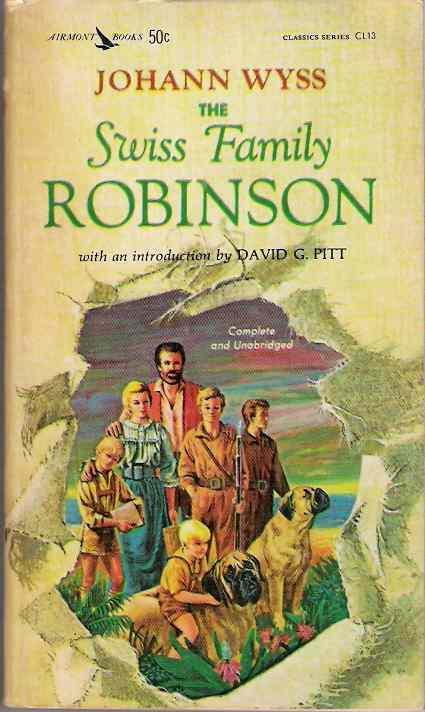
May’s theme for the classics was “Adventure”, as I paired Life on the Mississippi by Mark Twain with The Swiss Family Robinson.     Twain’s former is  a collection more than a monograph, as he presents together his recollections of growing up on the Mississippi as a pilot in training,  parts of Huckleberry Finn, and a telling of a late re-visit to the river when he was an accomplished author.  It’s certainly educational, especially when read in conjunction with a tool like GoogleMaps.    Commenting on the mercurial nature of the river, Twain explains how often the river shifts its course, and points out that one town (“Delta”) which used to be a harbor town now sits inland.    Delta is now a ghost town, but a nearby oxbow lake  shows where the river once ran. (Just for curiosity, I traced the Mississippi all the way from the gulf to its headwaters in search of similar cases. I had to stop counting the oxbow lakes after a while.)    The demands placed upon pilots to memorize the river, its daily variances, its every crossing – are almost too much to believe, but Twain insists that it was so. By the time he visits as an adult, the pilot’s job has been made much easier through bouys and signals and the like. The second part is more forgettable.


On to The Swiss Family Robinson. Believe it or not, I have never seen any movies based on this, or read the book; beyond a family crashing on a remote island and building a treehouse, I knew nothing of the subject.    The book was penned in response to the popularity of Robinson Caruso,  hence the name; it follows a family  of survivors rather than a solitary outcast.  Although the family will spend over ten years on the island  before a ship encounters them, they’re extraordinarily lucky.  Not only were they able to salvage the holdings of a colony ship for their own use, but the “island” they land has such a staggering abundance of improbable life  (fauna from other hemispheres, even) that after a while one must conclude it was the private game reserve of some distant millionaire.    This south seas island does not merely have the usual suspects like colorful birds, monkeys, and turtles.  It has pretty much everything but a moose, and those in the mood for venison can just go after some of the buffalo.  The island is similarly well set for fauna and other resources, between the salt caves, the India rubber trees, and the potato fields. Even more lucky for the family, their father is a walking encyclopedia on animals and engineering, so not when  he’s not building bridges, winches and the like, he’s  telling the children all about the wildlife.    It’s very informative, and would be enormously fun to read as a kid, I think,  but the amount  of creatures running around defies belief. 

Posted in Reviews | Tagged , , , , | 4 Comments

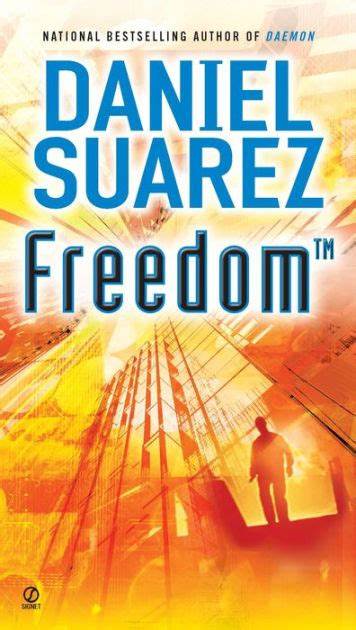
Freedom™

Freedom
©  2010 Daniel Suarez
416 pages

The global economy is crashing, nearing its end, but few are willing to recognize it. The sinking markets, soaring inflation and unemployment, and civil chaos are regarded by those in power as merely another hiccup, one which can be weathered out with enough money thrown at the problem. But away from the old centers of power, inside server rooms and sewer tunnels, a new order is being created — one driven by the vision of a legendary AI programmer, now deceased, whose death triggered the activation of a distributed AI intelligence which — in the events of Daemon — began spreading and recruiting human agents to effect its will.   In the midst of a global depression, many are dropping out of the old economy and tuning into another: the darknet economy of the Daemon,   But the one cannot tolerate the other,  and in Freedom™,   we witness their final grapple.

Both Daemon and Freedom™ are all kinds of interesting; the former, for its technical premise; the latter, for its sociological premise.  The Daemon has evolved from the first novel,  though I don’t want to go into many details for fear of spoiling anything.  Suffice it to say….the cold, ominous voice in the head no longer stars here, but rather what it and its human recruits have created does.  The distributed intelligence of the Daemon is becoming a distributive economy and democracy,  one counter to the globalized commercial order.  The imprint of the Daemon’s creator, Sobol is still very strong, as agents are ranked by classes and levels and given quests to fulfill;   those who succeed gain levels and access to additional technological abilities made possible by the augmented reality that Daemon agents live in. However, the members of this new society also guide its goals, and the quest of a main character is to prove that humanity merits freedom rather than total control by the Daemon.

Any adult will recognize the imprint of the 2008 recession on this book, from the anxiety and fear over the economic future to the outrage over abuses of corporate power. Anti-corporatism pervades this book, in part because their greed and corruption has created the global crisis– not just the inflation and such, but  increasing fragility of people and nations, depending on as they do delicate ribbons of trade and a steady stream of raw materials mined without a thought to the future.  The corporate powers also  target the darknet counter-economy, fighting against it through means both subtle and obvious. As with Daemon, I truly didn’t know where the novel was going to end until we’d arrived.  What’s most fascinating about Freedom, though, is Suarez’ implied argument about the inherent fragility of global society and the need for social structures which are more resilient.

Daniel Suarez is so effective a writer that after I finished this, I started reading Daemon again — just to experience the chilling birth of the series once more.  I’ve gotta see if Suarez’s craft is so strong when he’s not basing his story on his experience as a network engineer and D&D dungeonmaster, and so I have purchased his Kill Decision and Change Agent, tech thrillers about autonomous drones and biotech respectively.

Related:
Triangulation interview with Suarez about his book “Change Agent”; extensive interview which goes into the writing of Daemon and Freedom.

Posted in Reviews, science fiction | Tagged , , , , | 4 Comments

John Grisham: Favorites and Unfavorites

John Grisham was the first novelist whose entire bibliography I ever finished, though these days I must limit that to “adult” biblography, given his kid lawyer series.     Given that there are so many, I thought it would  be fun to list my favorites and unfavorites.   Not mentioned are many in the middlle, of varied quality.  The favorites are in chronological order, and the unfavorites are in stinklist order.    Over the years I’ve tried to re-read Grisham books from before the blog, and  I’ve linked to those with reviews.

 Favorites

A Time to Kill (1989): Grisham’s first novel opens with an outraged father taking justice into his own hands after the men who raped and beat his child are acquitted by a racially biased jury.  The novel was mostly ignored until the success of The Firm gave Grisham real name recognition, but challenges the reader with the question of when it is appropriate to take justice into one’s own hands. 

The Firm (1991): The first Grisham book I ever read, a crime thriller about a young lawyer who is accepted into an elite boutique firm, only to realize a few months in that they’re an organ of the Mafia. 

The Pelican Brief (1992): It’s been a long time since I read this one in high school, but I remember being fascinated by the idea of Supreme Court opinions.  The story tracks a series of deaths related to an explosive briefing about an endangered wetland (I…think?), and involves the New Orleans Mafia.

The Client (1993)   Again, it’s been a long time since I read this one, but the story of a young boy stumbling upon a scene he wasn’t supposed to see, and subsequently becoming an object of interest to both the FBI and the Mafia, protected only by a young attorney who focuses on child abuse,  is unforgettable. (….Grisham wrote quite a few Mafia related books early on,  I’m realizing…)

The Chamber (1994)  The Chamber is easily the most thought-provoking novel I read in high school.  Its plot involves a young lawyer taking on his estranged grandfather — decades lost to  him– as a client.  His  grandfather sits on death row, awaiting execution within the gas chamber after being judged guilty of a bombing which killed two children during the 1960s.   The Chamber is less a legal thriller and more of a novel wrestling with moral themes,  and reckoning with the past.   This novel made me think long and deep about the death penalty in high school, which is more than any bombastic political arguments could have done.

The Rainmaker (1995)  This duels with The Last Juror as my favorite, and it may not be an accident that they’re both first-person novels.   Young Rudy Baylor, a bankrupt law school grad, stumbles upon a gold mine of a case while at a legal clinic. The novel turns into a genuine David vs Goliath story, and has the most comprehensive depiction of a legal trial from soup to nuts I’ve ever encountered.

The Street Lawyer (1998). A prosperous but unhappy big city attorney suddenly finds a way to find meaning in his life when his office is held hostage by a homeless man with a mission.

The Brethren (2000).    I debated including this one on here, because I hate the ending. The setup, though, is fun. Three disgraced judges locked up in a federal pen are using their time in exile to scam up money for themselves by targeting closeted gay men for blackmail. When they accidentally snare a man handpicked by the CIA to be the next president  things get interesting.  I mostly enjoy this one for the execution of the scam; I found the mundane details of how the judges passed messages and money back and forth  interesting.

The King of Torts (2003)    Ah, this one is fun. A young attorney becomes a hotshot multimillionaire when he  is invited into the world of mass torts, but it’s definitely  a rise and fall situation.   The novel is interesting in that while Grisham uses it to talk a little politics — as he usually does —  there’s no hard line here.

The Last Juror (2004).   One of Grisham’s more interesting novels; this one follows a couple of decades in the life of Willie Traynor,  a weekly newspaper publisher, and through his press the life of Clanton, MS as Vietnam and suburbanization set their sights on American small towns.    The story is tied together through a legal case involving a brutal murder, the memory of which keeps revisiting the town.

The Unfavorites

The Associate,  2009.   A rather obvious attempt to make a story out of  the Duke  lacross team scandal, but instead of focusing on that,  Grisham uses it to dive into some conspiracy thriller involving blackmail and defense contracts. I enjoyed it at the time, although the ending was…underwhelming. It has not improved in memory. 

Grey Mountain,  2014.    A premise with great potential is squandered by feckless lead character bobbing around like flotsam in a story that goes nowhere and serves only to bludgeon the reader with a message:  Big Coal is Bad.

The Appeal, 2008.    The first Grisham novel I read and wished I could have the time and money spent on it back.  It’s a depressing tale of a mass tort case and crooked elections.

The Racketeer (2012): a bumbling lawyer who drifts into even more bumbling fraud morphs into a criminal mastermind while in prison,  lying even to the reader.  An unbelievable and obnoxious potboiler.

Rogue Lawyer (2015): nonstop despair, brooding, and violence, with a premise entirely too much like  Connelly’s The Lincoln Lawyer. Easily my most unfavorite, and if it weren’t for the fact that I receive Grisham books as Christmas gifts by people who would be annoyed if I disposed of them, I would have set fire to this one as soon as I read it. Absolutely The Worst. 

 I’m not sure what to make of the fact that I apparently enjoyed Grisham’s earlier works far more than his recent ones.    I’ve changed as a reader, I’m sure,   just as I’m sure Grisham has changed as a writer:  when he releases 1.5 books every year,     a decrease in quality over time isn’t that surprising.  Even if ideas don’t run out, passion can.


Posted in General, Reviews | Tagged | 10 Comments