On books and decluttering

I keep a photo in my  bedroom of my college dorm —  not for sentimental musings over my  halcyon college days,  but for the simplicity expressed.  The room is largely open, containing a twin bed,  an end table with a TV perched atop it, a computer table dominated by a hulking CRT monitor, and a single bookbag in the corner.  The room is utilitarian to the point of spartan; the same box that was used for my books and CD albums now  sits upturned, in used as a bedside table, while in the closet  my  jeans, t-shirts, and   laundry are simply stored  in the same boxes they arrived in.  


I keep the photo as a reminder that I have lived quite comfortably with very little at hand.  Ever since I  left college and began working,  “stuff” has accumulated – mostly books, DVDs, and game discs.   DVDs alone, for instance, run across three huge 500-disc albums and three smaller ones, plus series that wouldn’t fit in an album, like NCIS and The Office.  The books run across six bookcases and at one time, into several boxes. In recent years the sheer weight of all this stuff has stymied my ability to sort through it and find what I want when I need it, and the problem feels worse even amid efforts to organize things. (The albums exist to avoid case clutter, for instance).   Perhaps what makes it worse is the fact that I’m aware of and often advocate the virtues of a simple life. 

 In the last year, my efforts to conquer clutter have ratcheted up, as I increasingly take advantage of digital services like Kindle,  Steam, and Netflix to diminish my ‘need’ for physical media.  The last time I bought a game on discs,  I believe, was in early 2018 – for my Windows 98 PC.   I’ve also donated nearly twenty boxes of books to thrift stores and reduced my clothing to just one closet and one dresser’s worth. I have now created enough space that  I can neatly store what’s left.  


It wasn’t easy to get rid of these things, especially the books. Some may remember my ill-fated “Warp Speed Discard Challenge”,   in which, faced with boxes of Star Trek paperbacks I’d purchased on the cheap at ebay and not touched in six years, I resolved to read and discard them.  Within three months I’d decided to go through the piles and get rid of the ones which were formulaic or unoriginal (based on their plot descriptions – the numbered Trek novels could be absolute dreck in the 90s), and on the year anniversary I just abandoned the whole kit and kaboodle to Goodwill.  I’ve since further reduced my Trek collection, so that ironically it contains only 20 more books than it did ten years ago.   It was though to get to where I wanted to go,  I had to progress through stages of de-attaching myself to the books.  When I moved on to other collections,  I had to reflect on why I wanted to hold on to items that, rationally, I knew I’d never re-read.    One tactic I found which was helpful was to put books into a lidded box, and place them in the closet for a  few months: when I took them out for evaluation, I found it was much easier to discard most of them. (About 30% of a given load would return to the shelves, and I’d load  up the probation box with more.)  


As of yesterday,  I think I’ve turned a corner with all the stuff, which is why I’m writing this now, as a kind of reflection.   I think the reason I keep holding on to things is because I haven’t, or hadn’t, adjusted to the cheap affluence of modern life.  When I was growing up,  the money I made from odd jobs and got from allowance was precious, and so were the items it purchased. My books were read and re-read.    These days, however,   my access to entertainment is less like wandering in a desert and finding oases periodically, and more like living next to a river. The reason I’m not continually re-reading admittedly great novels or fascinating books,  or re-watching favorites like Boy Meets World, is because there’s always more stuff.  The torrent of cheap books and DVDs has been growing by the year, and I think I’m finally realizing that I can just fish from the stream at my leisure instead of holding on to every little thing I can.  


Posted in General | 7 Comments

One Word Kill

©  Mark Lawrence 2019
260 pages

Nick’s young life was shattered when he got the diagnosis: cancer.  Leukemia, specifically.  The odds weren’t good that he’d live five years to see the 1990s.  But whatever was happening to him, inside, something else was happening. Out of nowhere, Nick would find himself sitting in last week, or encountering ghosts of himself running down a street in terror, or casually ambling up the staircase at his friends’ home. His friends were an imaginative bunch — they loved playing Dungeons and Dragon together, wiling away entire days exploring worlds that existed only on graph paper — but they wouldn’t believe  this. And then there’s that strange, silent, man who keeps appearing in the distance — waiting, waiting. What is going on?

I almost never respond to Amazon’s frequent book adverts in my email,  but this one caught my attention. The 1980s? Dungeon and Dragons? It worked for Ready Player One, so why not here?    This is nothing like RPO, however;  One Word Kill is its own…strange…yet fascinating story.  Suffice it to say, the mysterious goings-on and the watching stranger  do not stay unaccounted for every long, and Nick and his friends are soon saddled with a dangerous quest,  one made more complicated by the presence of a sociopathic drug peddler turned casual murderer and arsonist stalking one of the kids.   What took me about this novel was not the ultimate plot, which leaves  big questions unanswered (it’s part of a series, naturally) and seems kind of silly on the face of it. Rather, it’s the emotional resonance Lawrence creates around young Nick,  who has to sit with his illness — at first alone, because he doesn’t want to tell his kids — as it changes his perspective. Maybe because I so recently experienced  Red Dead Redemption  2 and its story of a disease-stricken outlaw trying to do something good with his life, growing in wisdom and perspective even as things are falling apart around him, that Nick’s own  perspective born of despair seemed so poignant.    I plan to give the second book a try, as it seems like the other part of the story — the part that makes this one a little more sensible — will be told there.

Highlight:

“And I realised that just as the disease was starting to take me away from the world, I was for the first time, in a short and self-absorbed kind of life, starting to really see it for what it was. The beauty and the silliness, and how one piece fitted with the next, and how we all dance around each other in a kind of terror, too petrified of stepping on each other’s toes to understand that we are at least for a brief time getting to dance and should be enjoying the hell out of it.”

Posted in Reviews, science fiction | Tagged | 4 Comments

Scarlet

Scarlet
© 2007 Stephen Lawhead
443 pages

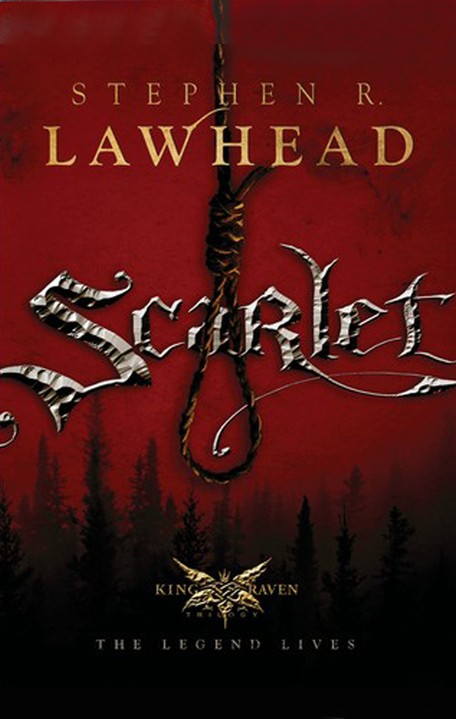
Young William Scatlock has been reduced to a landless vagrant, courtesy of  malevolent Norman lords and their toadies.  It seems as good an occasion as any to trek west and join forces with a phantom of the forest who has been giving the Normans hell – King Raven, a dark and hooded figure who puts the fear of God into the hearts of nobles and churchmen alike.  Although the Raven’s Welsh resistance fighters don’t trust a Saxon any more than the Normans, Will  quickly proves his mettle and joins their not-so-merrie band,  calling himself Will Scarlet.   One raid finds the band in a plot far more complicated than the usual corruption. At stake is nothing less than the thrones of England and of Christendom.   
When I read Hood a few years back, its historical grounding immediately won me over.  Instead of the traditional Crusades-era timeline,  Lawhead instead placed his forest rebel some time after the Norman conquest, at which time the Bastard’s heirs were spreading their rule into Wales as well.   Robin Hood became a landless Welsh princling (Rhi Bran, or King Bran), thrust into adulthood and leadership when everyone else was killed.     Scarlet continues the historical intrigue, this time by having Bran and his follows inadvertently stumble into a a plot that involves both the cold war contest for the English throne between the Bastard’s spawn, as well as the more active conflict between two men claiming to be Pope, Urban and Clement.   Will Scarlet is a most agreeable narrator, with colorful self-expression and understandable passion.  Of particular interest is the way characters are portrayed differently here; when Hood told his own story, we saw him as the weak princling, scared and uncertain, beset by his fear, anger, and self-loathing. In Scarlet’s eyes, however, Raven  is ever the strong and capable leader, with only one bout of uncontrollable anger revealing a little of the ‘other’ man who readers of Hood know is there, under the mask.
Posted in historical fiction, Reviews | Tagged , , , , | 5 Comments

Two books on deer

 Two friends of mine have deer who visit their yard on a regular basis. The does happily tolerate my friends’ presence in the yard, as they’re picking up sticks or watering the flowers. If, however, my friends have guests, and a guest goes into the yard — the deer bolt.  I found that interesting, and wondered on what basis the deer judge some humans to be threats and some not.  Do deer have extensive memories, I wondered?   To find out, I ordered the only book I could find that seem to have a chapter on deer intelligence, Whitetail Savvy.

While I was waiting for it to come in, however, I read a book in my local library: Giant Whitetails. That shares stories of the author and his brother bow-hunting particularly sizable bucks,  with a chapter following each tale on lessons learned.  The bow-hunting aspect is an important part of this book, because it involves a lot more work and cunning on the hunter’s part.  This particular author is an obsessive watcher of the fields, studying the contours of the land and the evidence of animals using it to figure out what trails deer use when, so he can find a good spot to lay in wait.   An interest in hunting deer is probably a given in reading this book.

Whitetail Savvy, on the other hand, is a comprehensive  study of deer — principally the whitetails that fill the forests throughout the United States,  but with the occasional mention of western pronghorns and elk. The author is an award winning photographer and extremely seasoned student of deer, who has created quite the book here.  After reviewing the various species of deer and their kin,  Rue delivers information on deer anatomy and behavior,  including the senses and emotions. Although I’m fairly inundated with the culture of deer hunting (most of my kin’s houses are decorated with buck heads, and even I have a big photograph of a deer standing near a foggy stream in my living room), I’ve apparently absorbed next to no actual information about deer.  The photographs certainly merit mention; deer are inherently graceful and beautiful animals, and Rue’s photographs demonstrate that grace in many forms. His work also covers the. red in tooth in claw aspect of nature, however; with shots of cougars devouring deer, or of parasitical worms infesting the noses of deer.  (You’re…welcome to that sudden mental image.) Although the section on deer intelligence was disappointingly slim, consisting mostly of anecdotes (in contrast to the tables of data present in other chapters; this is a serious study),  I was fascinated throughout, and especially by the chapters on behavior. 

Posted in Reviews | Tagged , | 10 Comments

English broadside

Well…this has been the saddest Read of England, and the saddest reading month, since my college days.  At least the few I read were all fairly good! Read of England isn’t quite over, as I’ll be working on a few more books into May.

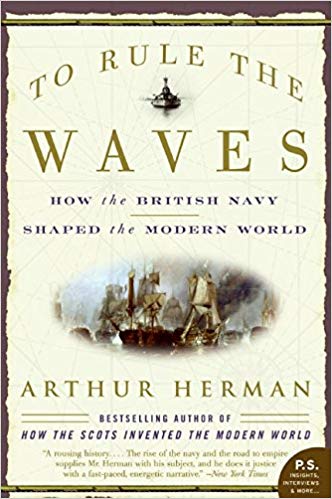
Earlier in the month I read Arthur Herman’s  To Rule the Waves, a history of the British navy which paid special attention to the impact the Royal Navy had on English and sometimes global history. This went beyond the obvious, in that the British navy was created and maintained by its massive navy, and that it was the main impediment to the plans of Napoleon for subduing the nation of shopkeepers. Although the backbone of the book is a straightforward (and detailed) naval history,  Hermanexplores areas where the navy had influence in politics and navy.  The English Civil War, for instance,  was caused partially by the crown abusing “ship money” taxes,  and the Navy would play a key part of Cromwell’s victory, as most seamen supported the roundheads. Much to my delight, Herman also covered the scientific  achievements of the English navy, especially in the 19th century.

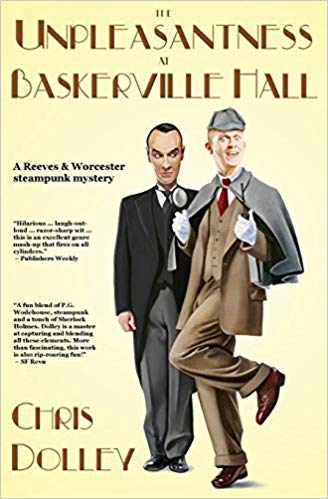
Shortly after this I finally finished The Unpleasantness at Baskerville Hall, which…it’s hard to describe. When I first picked it up, I thought it was a Jeeves meets Sherlock Holmes parody, which I thought would be interesting.  Jeeves would make an excellent detective, I was sure, and Wooster would provide comic relief. There’s no denying that this is a funny novel: from the beginning,  Dolley captured Wooster’s voice (or rather, “Worchester”,  and Jeeves has become Reeves) splendidly:

‘What ho, what ho, what ho,’ I said. ‘I’m Roderick, your long lost relation — risen from the sidings, so to speak. Reports of my flattening greatly exaggerated, what? Takes more than the 4:10 from Buenos Aires to keep a good Baskerville-Smythe down.'”

However, when Dolley was focused more on the Sherlock side of things, that Wodehouse razzle-dazzle fades quite a bit, so it’s a little….teeter-tottery.  I doubt that’s a word, but the meaning’s there.  The book is also a…”steampunk” mystery, which is not a thing I’ve read any of, and to be perfectly honest I don’t know what it entails. Here, it mean that there were reanimated bodies, Frankenstein creations, robots, and people sewing animal parts on themselves to function better, like taxidermy meets transhumanism. Altogether it was just a little too weird for me.  


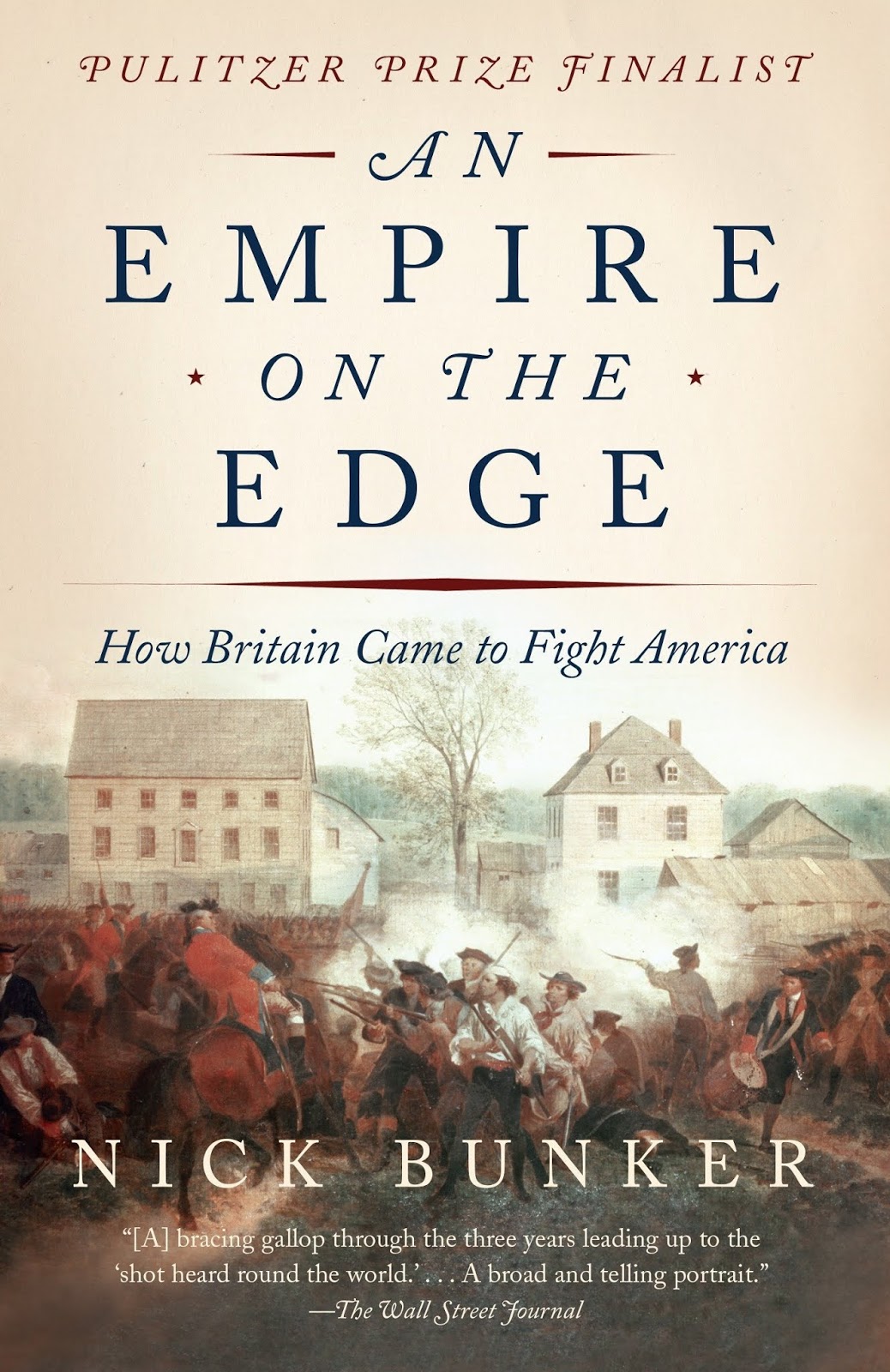
I finished the month up with An Empire on the Edge, in which a British historian who has mostly focused on Puritan America before tries to explain why Parliament wound up fighting its own people and creating through apathy and neglect a new nation. Bunker argues that Parliament paid so little attention to what was going on in America — viewing it merely as a place that provided raw materials  and a market for the empire, with the humans therein existing only to serve the mercantile economy —  that it  was caught sorely be surprise when the Gaspee burned and the tea was soaked in Boston harbor.   Distracted by continental goings-on (Britain was alone, as the four other great powers had sorted themselves into cozy couples), and not helped by the fact that it was rather new the business of global empire,  the British did not respond to the crisis so much as react and inflame it further.  The Britain of a century later would be far more thoughtful about the way it handled its growing empire in India, but in the 18th century there simply wasn’t a plan. There were also blunders on the American side, like the repeated appeals to a king who had no real power: it was Parliament that levied the taxes and intolerable acts upon the colonies, proof that tyranny is not just the product of sole tyrants.  Definitely of interest.

Posted in history, Reviews | Tagged , , , | 5 Comments

War of the Wolf

War of the Wolf
pub. 2018 Bernard Cornwell
333 pages

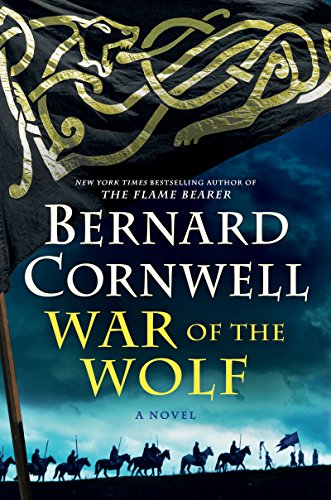
Uhtred of Bebbanburg is called a priest-killer, a chief of devils. And yet when a distressed and scarred monk came to his gates and begged that he send help to Mercia, beset by civil war, the old warlord answered the call.  He once swore to protect a young man, then the son of his beloved friend Aetheflaed, Queen of Mercia. That young man is now an accomplished young prince, one of such potential that he might help realize King Alfred’s dream: one England,  with one law, and one God.  That is a future Uhtred  does not want, for his own home is in the last pagan kingdom,  Northumbria — the last to resist Edward, Anglorum Saxonum Rex.    And yet Uhtred is a man of oaths, and so true to his word he rides forth to rescue a man who one day by be his undoing.  When he arrives, however, he finds that the man,  though besieged by rebels,  is in no dire straights, and the monk who begged for his help is not what he seemed. Someone has lured Uhtred of Bebbanberg from his forbidding castle, but for what reason?  Although his pursuit of developments gives him greater reason to fear for the future than ever — Edward is plainly dying, and his sons are all ambitious men who want to prove  and engorge themselves by attacking  Northumbria —  that kingdom has a more pressing enemy,   one who has already manipulated Uhtred and whose sorcerer draws men to his banner even as it frightensthose he stands against.  Though Uhtred can resist him with wiles and might, as he has taken countless enemies before, the aging war-prince also knows that fate is inexorable.   He can foil men, but not the gods.

The Saxon Stories are probably my favorite series of historical fiction to read, although after the first half-dozen the plots have gotten a little tiresome:  medieval Saxon politics punctuated with epic battles. It’s great, but…people being as they are, even a diet of constant steak would grow tiresome.   In War of the Wolf, we appear to be approaching the endgame, as the poet who appeared early in the series putting Uhtred’s life into verse appears here again,  complete with some borrowed Saxon poetry. Although Uhtred has an immediate enemy — a young savage with a ferocious warband and a lust for power —  the political developments of this book also hint that the ‘final battle’ will be the defense of Northumbria against the south.   What made Uhtred so interesting from the start was that he was a Saxon princeling raised by the Danes, who much preferred the company of the latter but was compelled to fight against them to realize his dream of reclaiming his family land.  Uhtred in his youth was constantly torn between  his Christian countrymen of blood, and his Danish and Norse countrymen of heart. Old Uhtred has been a partially tamed wolf: one who is wild, but mostly cooperates with the king. If push comes to shove, however,  and Christian England invades Northumbria, it’s almost certain that  the wolf will run wild again. 

Posted in historical fiction, Reviews | Tagged , , , , | 7 Comments

So it goes

This weekend has seen me reach the end of Red Dead Redemption II. I have never been as moved by the ending of a game, or by a videogame protagonist. The sheer depth of this game — so much so that its credits rolled for thirty minutes, and I was happy to watch because of the glimmers of story that continued to be revealed throughout —  puts it in a class by itself, in my opinion.   No videogame, and precious few actual movies, have had character drama this good.   I bought a PS4 just to play the game, and I don’t regret it a second. I look forward to continuing to explore this amazing world Rockstar created, but now that the first flush is over — time to go back to reading!

Posted in General | 4 Comments

Crickets

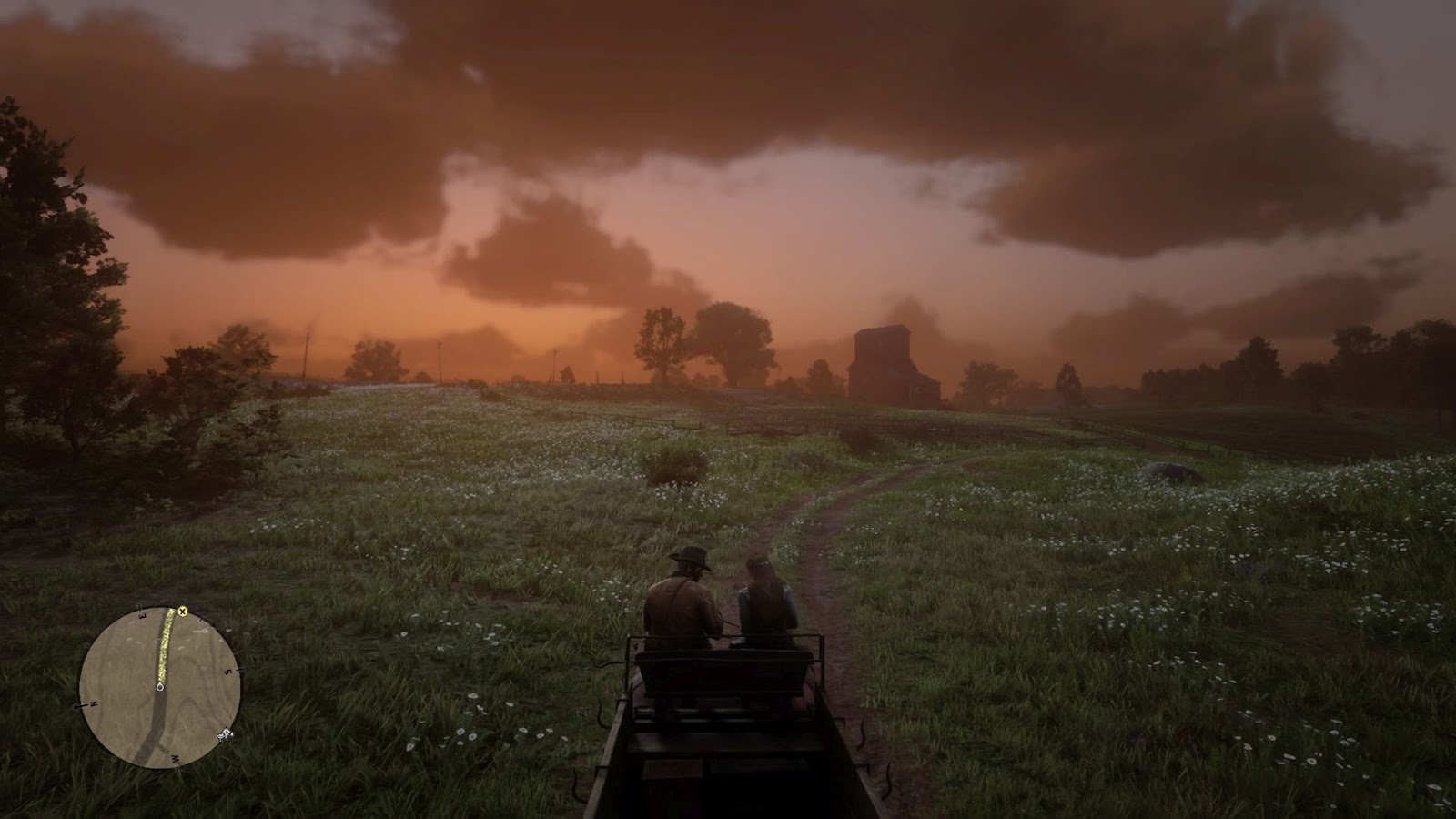
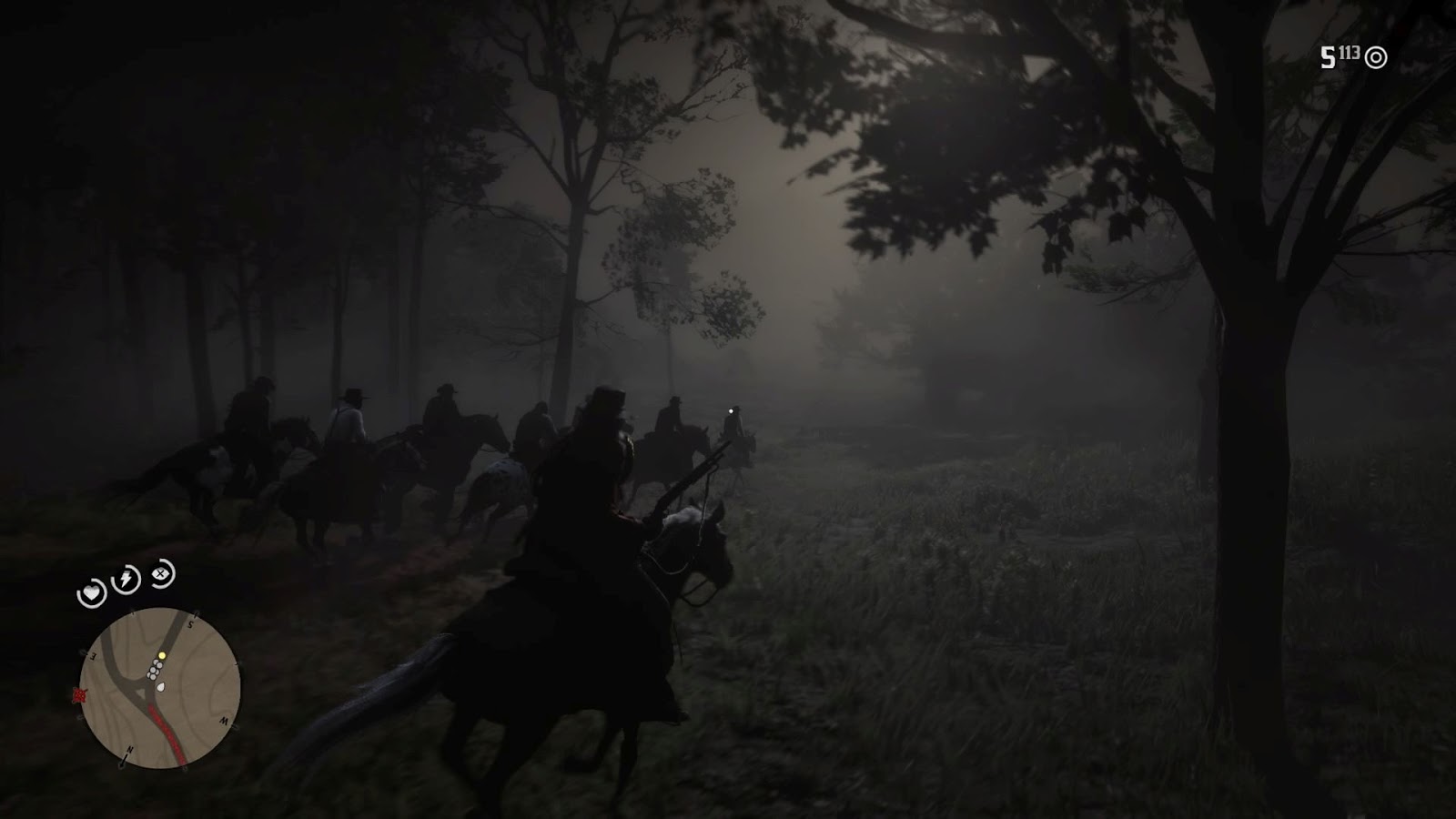
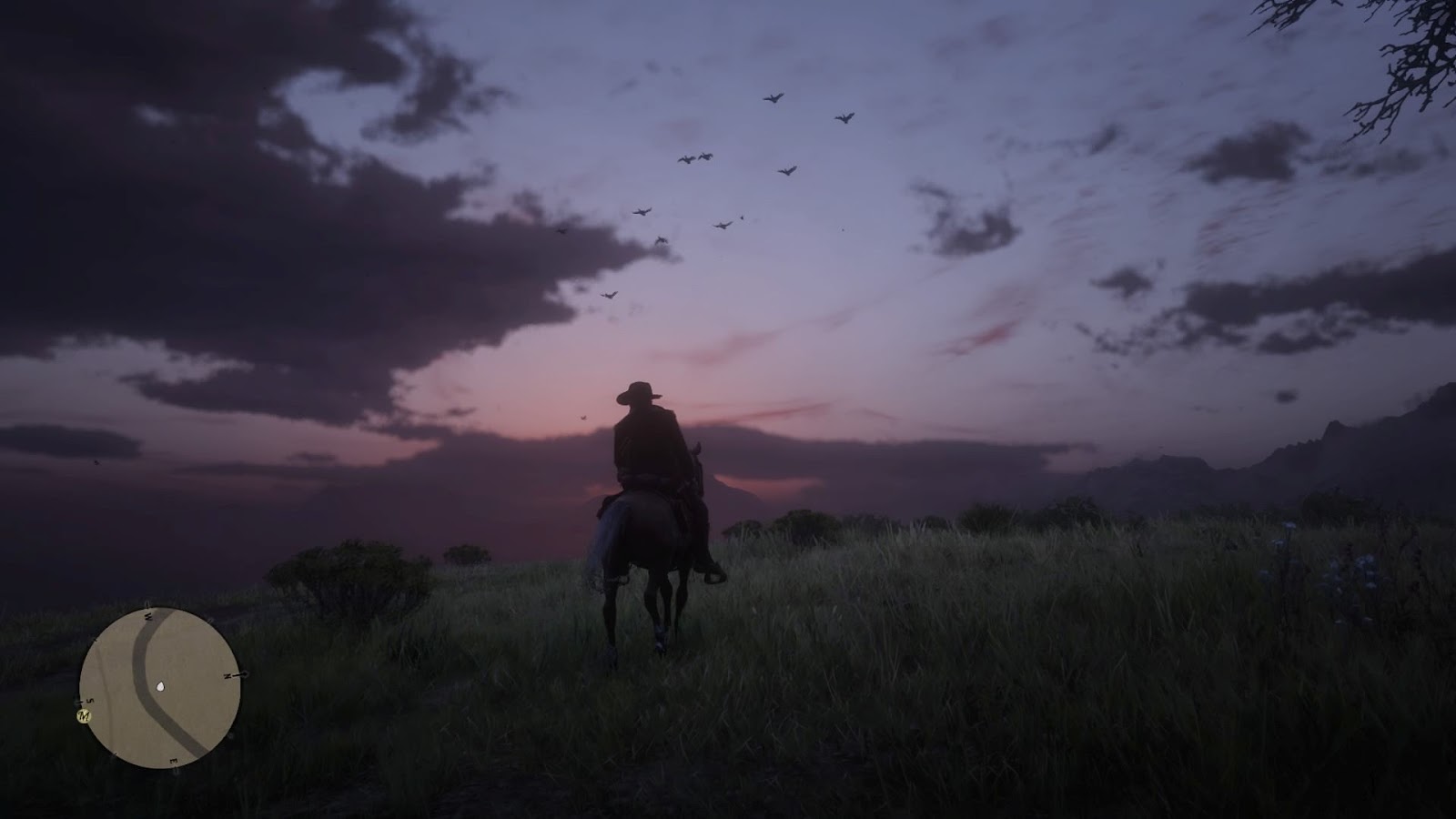
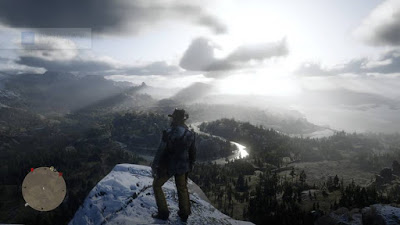
This has been a dismally slow Read of England, between a history book more dense than I’d expected, and the fact that I have been utterly absorbed in the world of Red Dead Redemption since mid-March, and when I say utterly I do mean it. I’ve listened to no podcasts, no audiobooks, and I have played almost nothing else.  And..I’ve read two books. Although I expect to be finished with To Rule the Waves  by this evening,  I thought I’d share some photos from in-game.

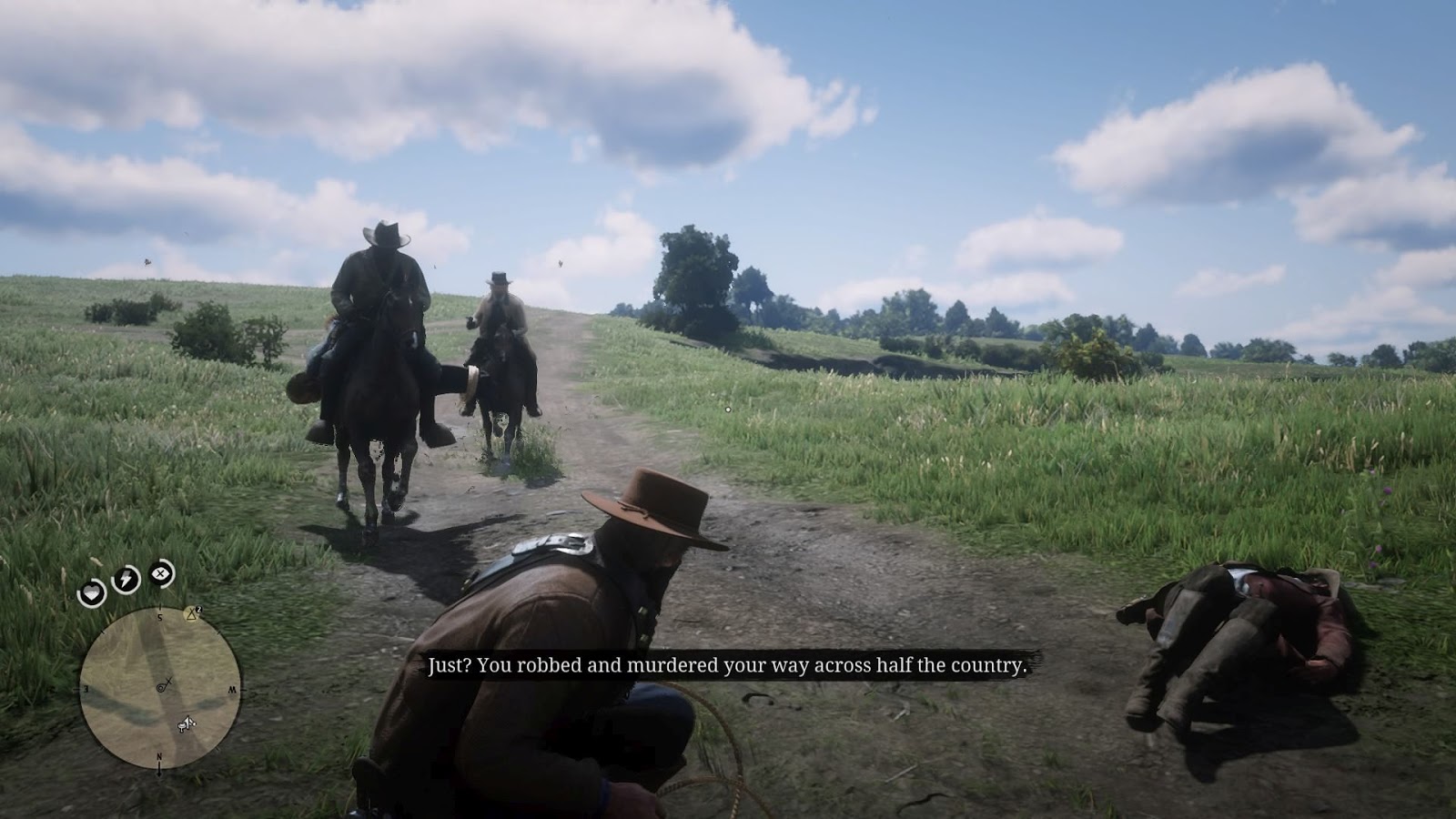
A favorite random moment of mine:  I was in the middle of some mischief when two bounty hunters rode past, lecturing their captive about his misdeeds while I crouched mid-loot in my mask.  Very awkward. 

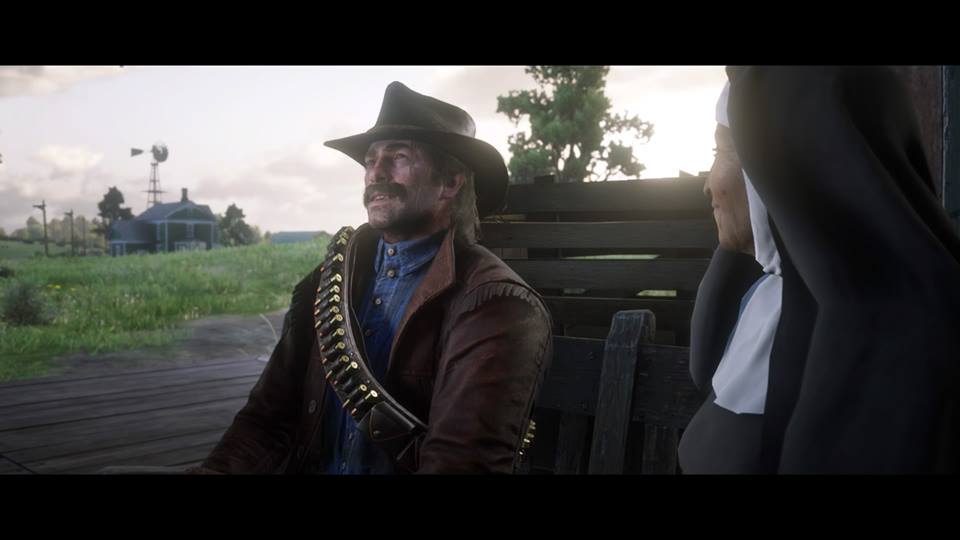
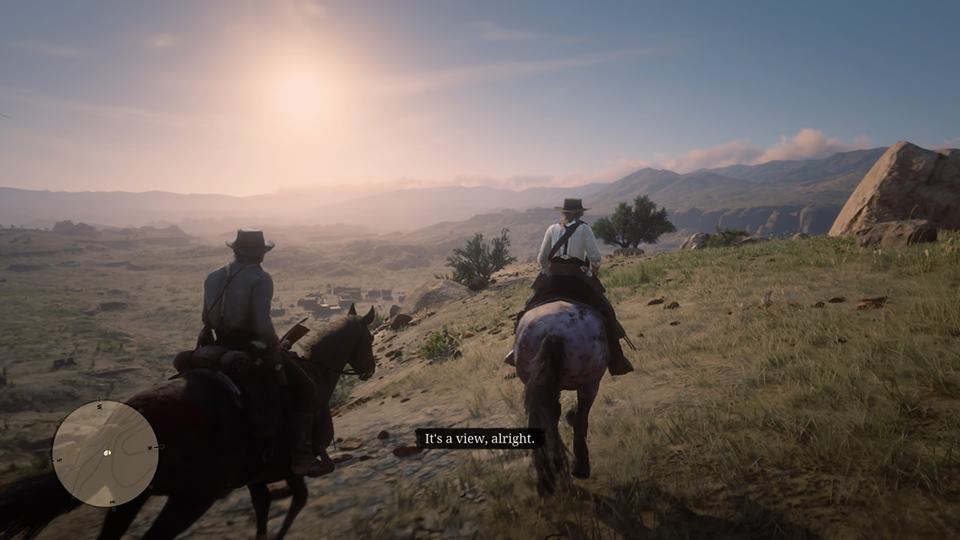
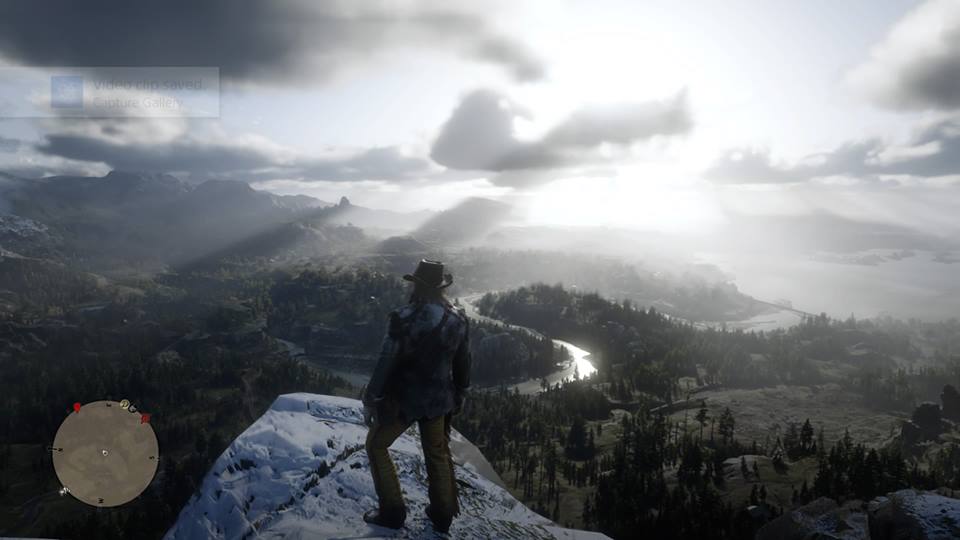
RDR2 is an open-world game set in 1899, in a time of transition;  the west is being broken and civilized, but there are more than a few stubborn diehards to keep the dream of a free life alive. The player belongs to a close-knit community of such rebels, who begin the game hiding in the mountains from some debacle. Before long the winter is over and the story really begins, with the caravan of men, women, and at least one child making their way into a comfortable camp in the woods southwest of the great plains.  Although the immediate surroundings are very reminiscent of old west landscapes, there’s much more to the game’s world than that — and from the very beginning, almost all of it is open. In my first week of playing the game I had traveled far and wide, exploring roads that let me into swamplands,  rugged dark forests,  mountain communities where the only road is a trail barely wide enough to ride a horse down, and still more. 
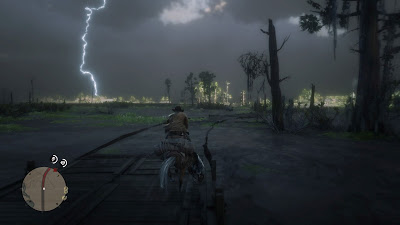
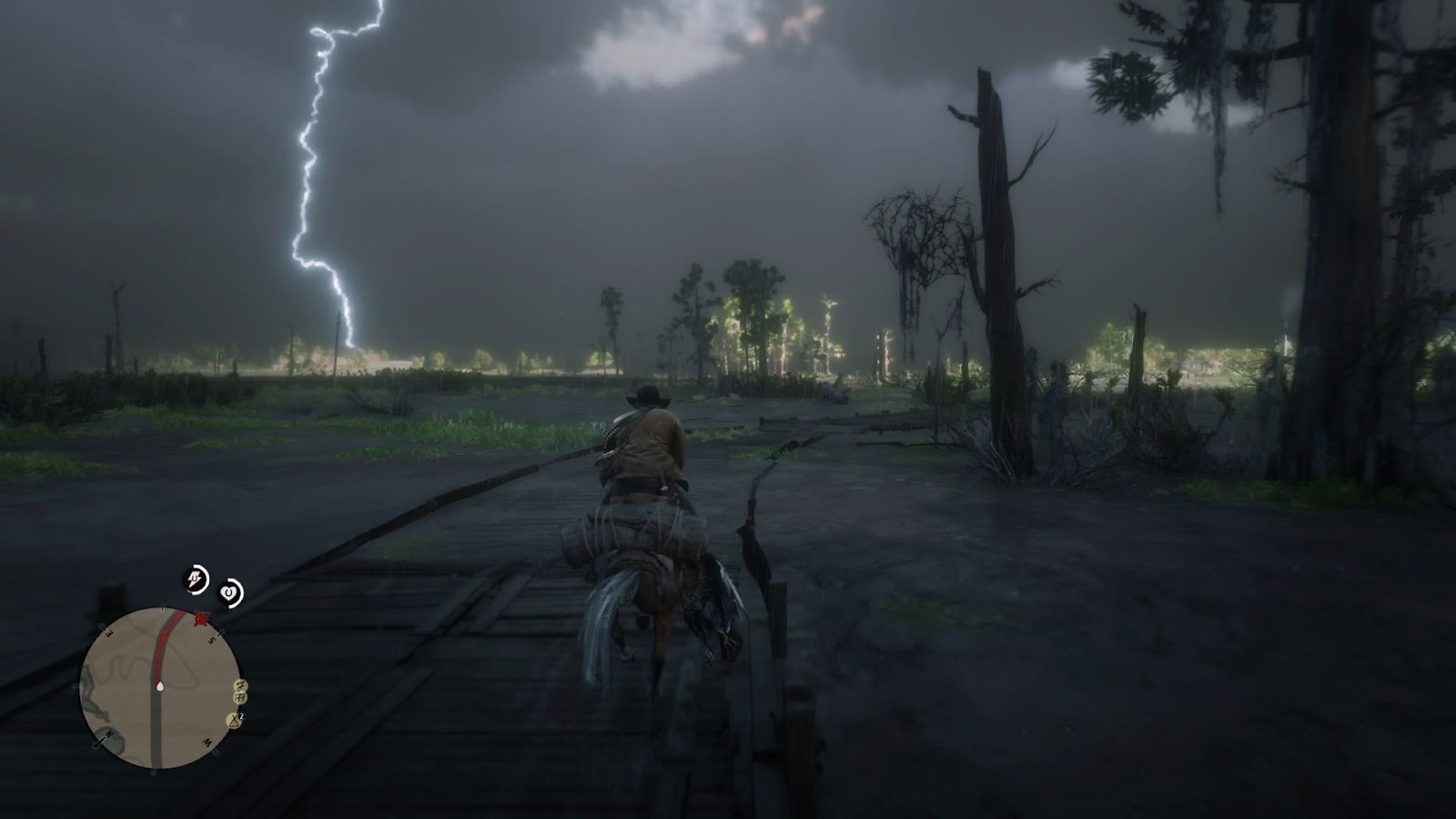
Riding back into St. Denis with a perfect alligator skin in the midst of a thunderstorm

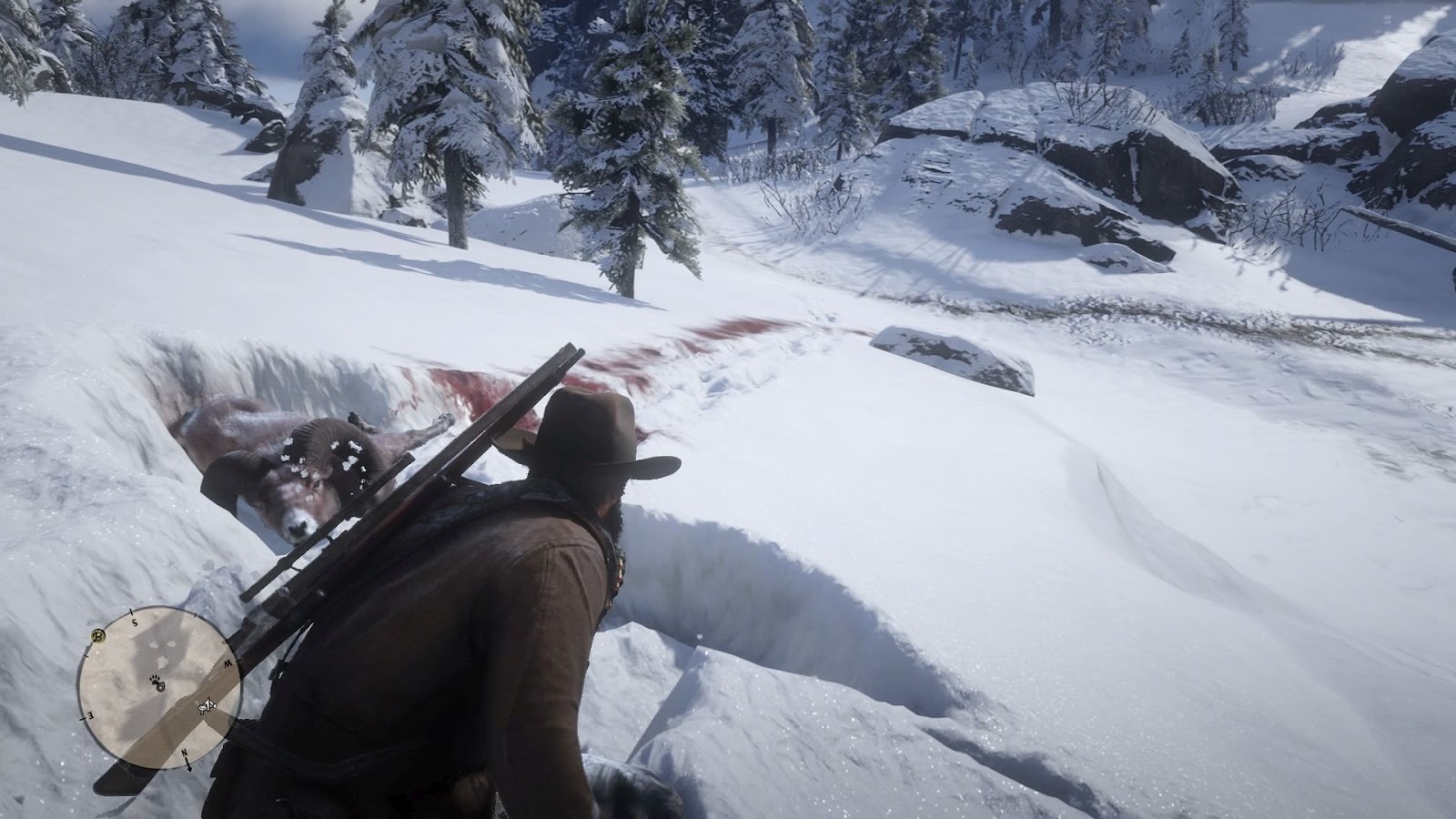
 The game’s weather system, and the constantly changing lighting effects, allow for still more experiences: the bayou is  a very different place at night, or when there’s a thunderstorm rolling through. The game’s cargo system allows players to store clothing on their horse, so if needed they can don a heavy overcoat when headed into mountain country, or strip down to just a shirt while moving through the bayou. The landscape changes with the weather; snow falls, puddles develop in wagon-wheel ruts.  I have not yet stopped goggling at the clear imprint made by a rolling wagon, or footprints, or a bloody trail left in the snow by a stricken animal.

Took a ram on my way to track a legendary bison, and had to admire the snow effects. 

While the weather goes a long way to making the world of RDR2 feel alive,   its inhabitants do most of that work themselves. The landscape is full, and I mean full, of animal life, creatures great and small.   The variety of birds is staggering, as is the number of small mammals — and then there are the big ones, like deer,  boars, elk, bears, cougars, etc.  Hunting is a big part of the game, as  one legal way of generating money the player badly needs at the beginning; it also provides food in abundance, and clothing later on.  As the player moves through the landscape,  he meets other travelers — some friendly, some not.  Others are out fishing, panning for gold, hunting,  etc — and many present opportunities to the player.  These often present the player with a simple choice, to help or to ignore, but opportunities often have unexpected consequences.  A woman  pleading for help may be in distress….or she may be a lure to lead you into an alley to be ambushed.
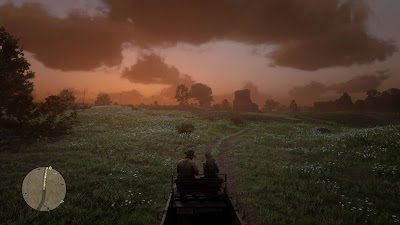
 

 The player is not the only resident of these lands capable of getting up to mischief:   there are other gangs who operate in different areas of the map who will ambush unsuspecting travelers, and if they are resisted — as I did, with dynamite and a sawed-off  —   they develop a special hatred toward the player and will deliberately target them.  It didn’t take me long to start traveling with my sawed-off at the ready, and with a wary eye casing the road ahead, looking for spots where I might get ambushed.  I often went off-road to avoid areas with a hill or  large rocks beside the road,  and when I needed to travel across a high-risk area like a covered bridge, I did so at full gallop ready to rain shot on anyone.   Other travelers are likewise cautious, and if you follow too closely they will draw on you. 

And then there’s the story,  as the player witnesses slow disintegration of a nomadic community, brought on by both the forces that oppose them (a very dedicated Pinkerton agent), the self-destructive lifestyle a few of the members live, and the fact that their leader is astonishingly bad at judgment calls. I’m approaching the end of the story, the final chapter,  and suspect I may be a little bummed when I get there. Even afterwards, however,  I think this will be a game that becomes a persistent part of my leisure, a world I enjoy spending time in — like Lost Heaven (Mafia) or Vice City.   It is by far the most visually stunning and content-rich game I’ve ever tried.

Posted in General | Tagged | 10 Comments

American Gun

 American Gun
© 2013 Chris Kyle
336 pages

Think of English history, and longbows, tall ships, and shieldwalls may come to mind; think of France, and perhaps the image is knights charging across an open field. But American history, from the colonies onward, has been written in guns. Hunting frontiersmen became rebels, created a nation, expanded its borders far and wide, and protected itself from enemies within and without. In American Gun, a much-lauded Navy SEAL reviews the history of ten firearms which have an outsized role in American history. Beginning with the long rifles of the colonial militia and wrapping up with the M-16 that began to be used two hundred years later, Kyle’s personable history mixes technical and political history; each chapter delves into the background of the firearm, the circumstances that prompted it to be designed and the path it took to be accepted. These are not all military weapons; the Colt that graces the cover of the book and the Winchester 1873 rifle were pervasive in the late 19th century as settlers filled and civilized the west, and a pistol associated strongly with the police appears in the latter half of the book. The ten guns are mostly rifles and pistols, with the Tommygun being an outlier; there are no shotguns. I read this chiefly because I thought it was such an interesting angle to view American history from, and quite appropriate. I was especially glad to read histories of pieces I have a fondness for, the Colt 1911 and the M1 Garand. There’s a lot of fascinating trivia in here; I’d long regarded the scenes of Lincoln firing Spencer repeating rifles on the White House lawn as fanciful, but apparently he was quite the shooting enthusiast. 

(Er…not quite Read of England material, but when I learned of the book I immediately wanted to read it.  The first chapter is all about England, though..it’s just that Englishmen are being shot at…)

Posted in history, Reviews | Tagged , | 7 Comments

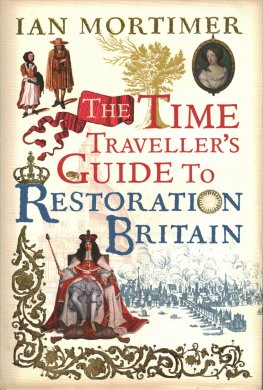
The Time Traveler’s Guide to Restoration Britain

Having previously guided readers through the Medieval and Elizabethan eras, Ian Mortimer now welcomes intrepid travelers to the Age of Restoration. The tyrant Oliver Cromwell is dead, and with him went his grim police-state ‘republic’ and the armed doctrine of puritanism.  Long live the King, the Church, and debauchery!  The return of music, theaters, and lecherous kings isn’t the only thing to celebrate;  England’s merchant ships are traveling the world and increasing the amount of interesting foods and items to buy by the year, and the razor’s edge clarity of science is now being honed.  The country is being re-made by the year; in London’s case, literally, because the Great Fire destroyed much of its medieval core and warranted a partial redesign.  This is a transitional age;  more and more people are living in cities, enough that the countryside is developing appeal as a break from the city, and traveling purely for leisure through rural areas develops.  This is still not an age modern travelers would be wholly at ease, in, however;   religious opinions are dangerous to express if they differ too much from Anglican orthodoxy (Quakers and Catholics be warned!),   gentlemen will duel at the drop of a hat, and severed heads on pikes are still civic decor. Here Mortimer revives the tour-guide delivery of the original guide to Medieval England,   detailing the different kinds of lodging and foods to expect,  points of interest, and how to avoid being arrested.   As ever, I thoroughly enjoy this visit with Mortimer.

Posted in history, Reviews | Tagged , , , | 14 Comments